8 Essential Hunting Bow and Arrow Tips for Beginners
Only about 3% of the U.S. population hunts with a bow, yet bowhunting consistently ranks among the most rewarding and skill-intensive outdoor pursuits a person can take up. The learning curve is real, but it is also manageable. These 8 essential hunting bow and arrow tips for beginners cut through the noise and give new archers a clear, practical foundation to build on from day one.
Disclosure: This post contains affiliate links. As an Amazon Associate, we earn from qualifying purchases, and at no extra cost to you.
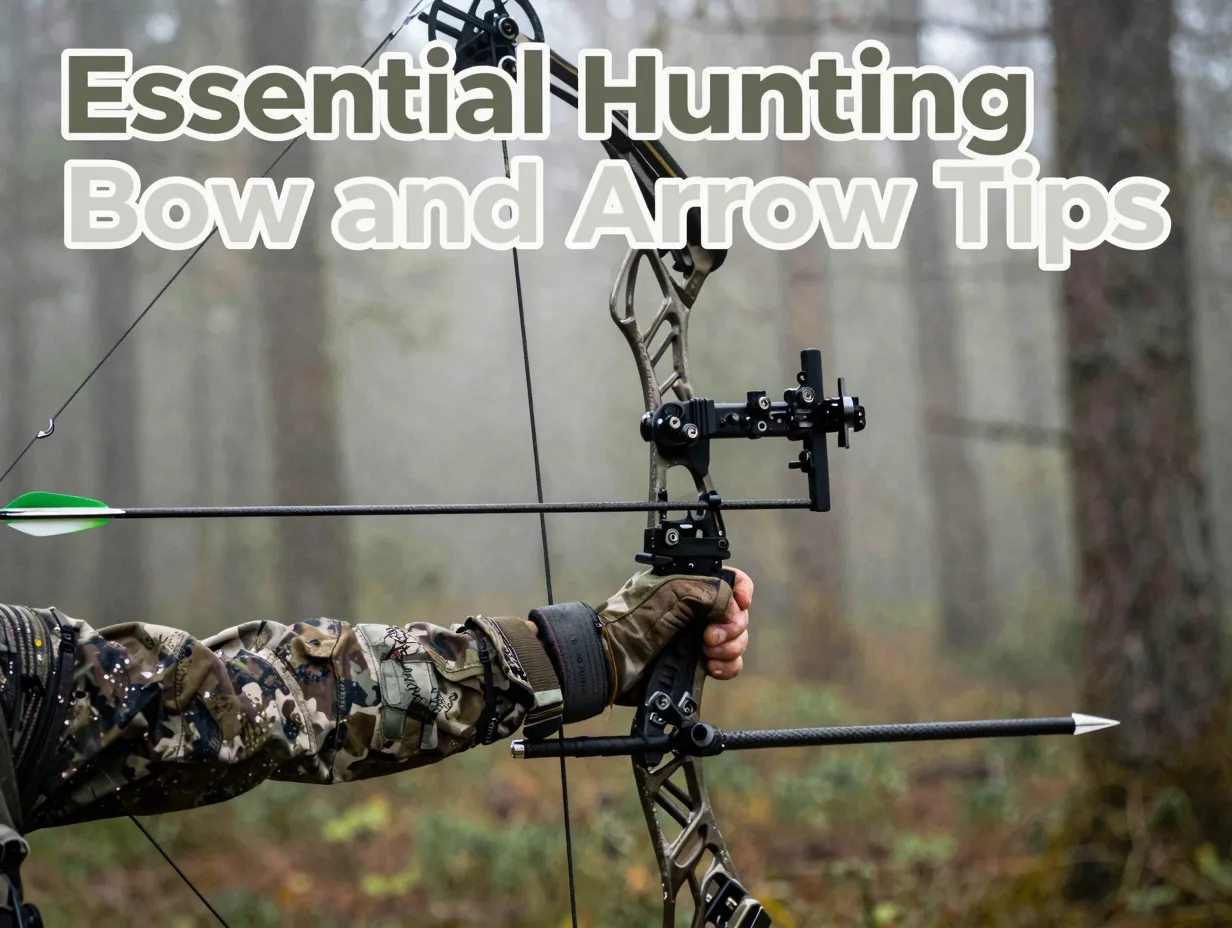
Whether the goal is harvesting a whitetail deer this fall or simply becoming a competent archer before stepping into the field, every tip in this guide addresses a mistake that beginners make repeatedly. Mastering these fundamentals early saves time, money, and frustration, and dramatically improves safety in the field.
Key Takeaways
- Choosing the correct bow draw length and draw weight is the single most important equipment decision a beginner will make.
- Consistent form, stance, grip, anchor point, and release, matters more than expensive gear.
- Arrow selection must match the bow’s specifications; mismatched arrows are both inaccurate and dangerous.
- Regular practice at known distances builds the muscle memory needed for ethical, effective shots in the field.
- Understanding state hunting regulations and practicing ethical shot placement protects both the hunter and the resource.
Why These 8 Essential Hunting Bow and Arrow Tips for Beginners Matter
Bowhunting is not simply rifle hunting with a different tool. The effective range is shorter, the margin for error is tighter, and the physical and mental demands are higher. A beginner who skips the fundamentals often develops bad habits that take years to correct. Worse, poor form or wrong equipment can lead to wounded animals and unsafe situations.
The tips below are organized to reflect the natural progression of a new archer, from choosing equipment, to developing form, to applying skills in a real hunting scenario. Each section builds on the previous one, so reading in order is recommended.
1. Choose the Right Bow Type for Your Hunting Goals
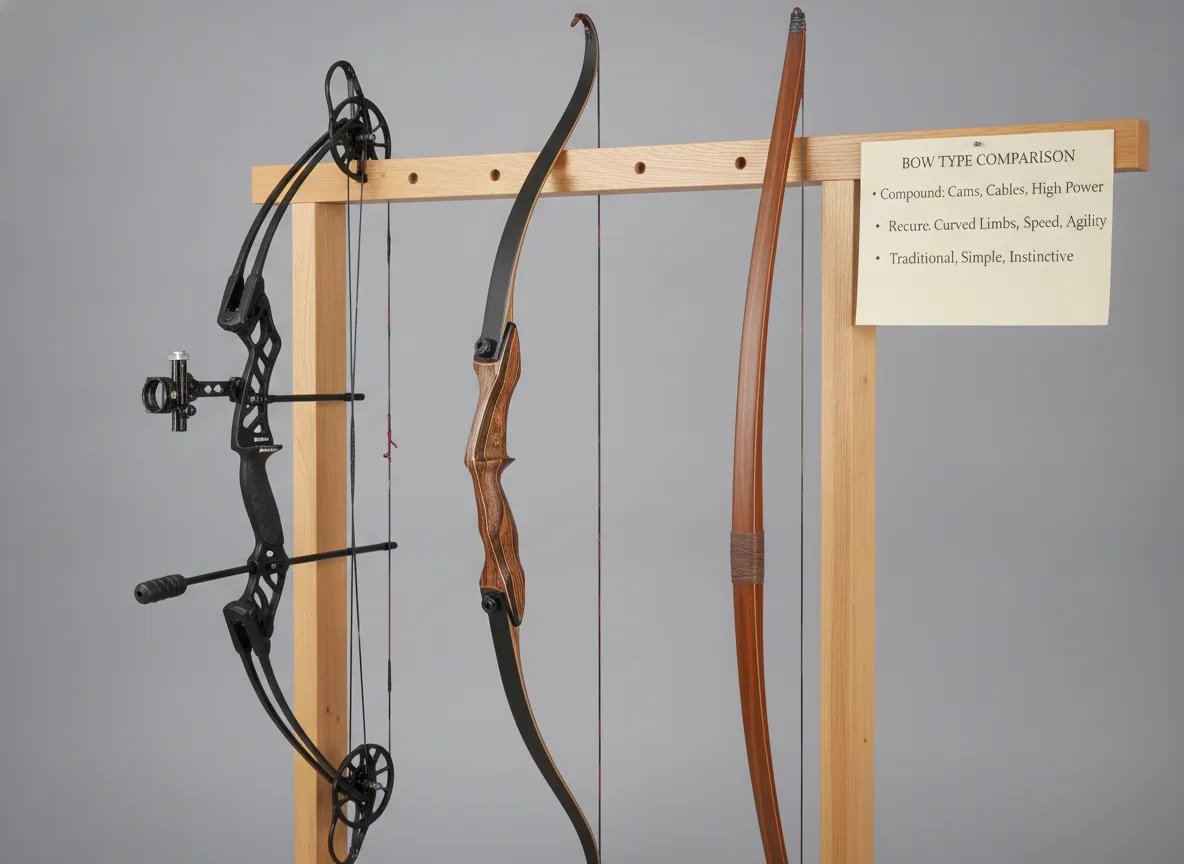
The first decision every beginner faces is bow type. The three primary options are the compound bow, the recurve bow, and the longbow. Each has distinct characteristics that affect performance in a hunting context.
Compound bows use a system of cams and cables to reduce the holding weight at full draw, a feature called “let-off.” This makes it easier to hold the bow steady while aiming, which is a significant advantage for beginners. Most modern compound bows offer let-off between 65% and 90%.
Recurve bows have curved limb tips that store more energy than a straight-limbed bow. They are simpler mechanically, lighter, and quieter. However, the archer holds the full draw weight throughout the shot, which demands greater physical conditioning and practice.
Longbows are the most traditional option. They require the most skill and practice to shoot accurately, making them a poor starting point for most hunting beginners.
For most beginners focused on hunting, a compound bow is the practical choice. The let-off reduces fatigue during long practice sessions and provides a steadier aim.
Quick Comparison Table
| Bow Type | Let-Off | Mechanical Complexity | Best For Beginners? |
|---|---|---|---|
| Compound | 65-90% | High | Yes |
| Recurve | None | Low | Moderate |
| Longbow | None | Very Low | No |
Visit a reputable archery pro shop and shoot several models before purchasing. A knowledgeable staff member can help match the bow to the archer’s body and goals.
2. Get Your Draw Length Measured Correctly
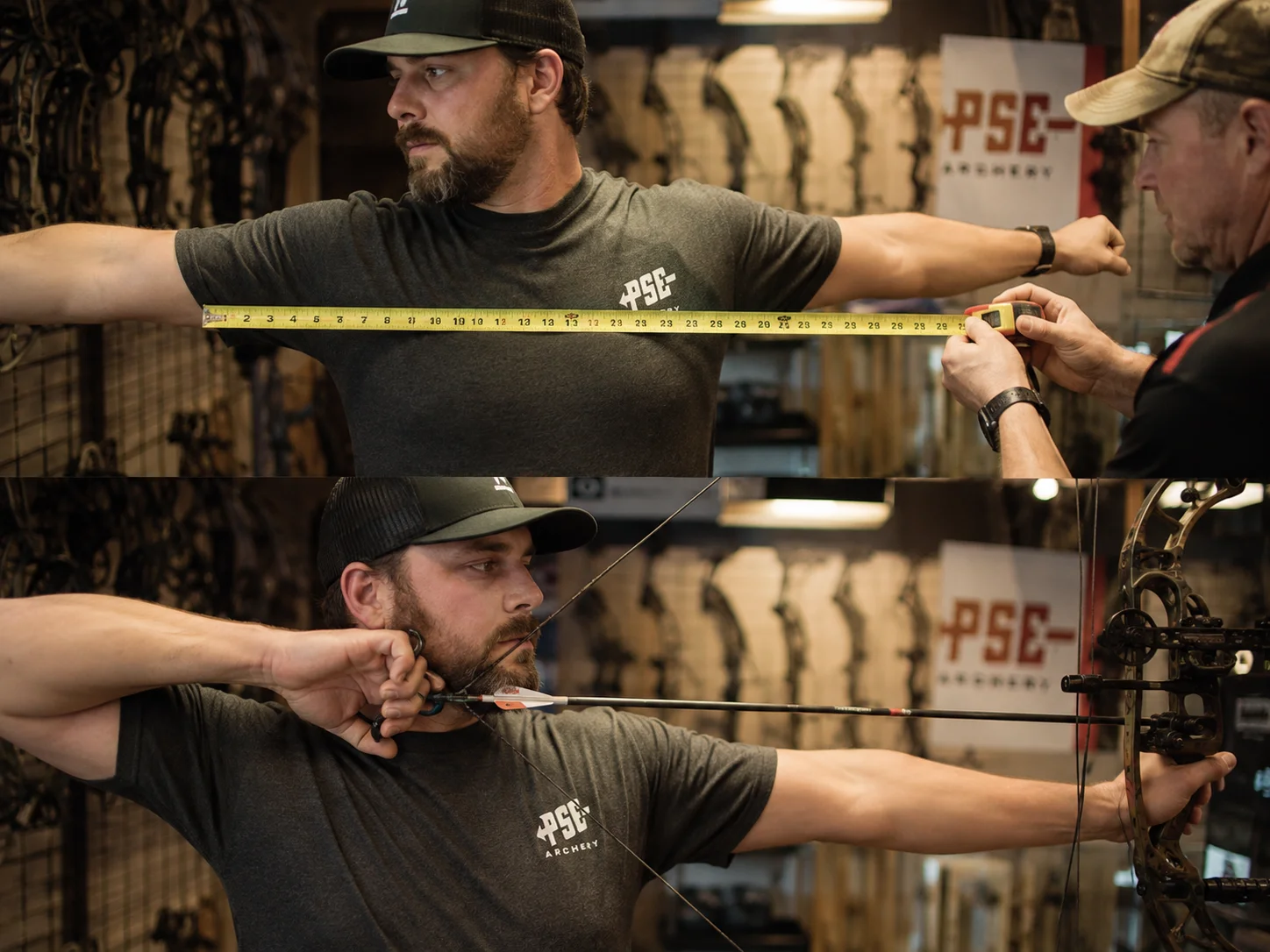
Draw length is the distance from the grip to the anchor point when the bow is at full draw. It is one of the most critical measurements in archery, and getting it wrong creates a cascade of problems, poor accuracy, inconsistent form, and potential injury.
How to estimate draw length:
Stand with both arms extended horizontally, parallel to the floor. Have someone measure the total wingspan (fingertip to fingertip). Divide that number by 2.5. The result is an approximate draw length in inches.
For example, a wingspan of 70 inches divided by 2.5 equals a draw length of 28 inches.
However, a professional measurement at an archery shop is always more accurate. Many pro shops offer this service free of charge. An incorrectly set draw length causes the elbow to collapse, the shoulder to roll forward, or the anchor point to shift, all of which destroy consistency.
Signs the draw length is wrong:
- The bow arm elbow bends significantly at full draw (too short)
- The archer must lean back or strain to reach full draw (too long)
- The string slaps the forearm consistently (often related to draw length or grip)
Most compound bows allow draw length adjustment through module changes or cam rotation, making it easy to fine-tune as the archer develops.
3. Select the Appropriate Draw Weight
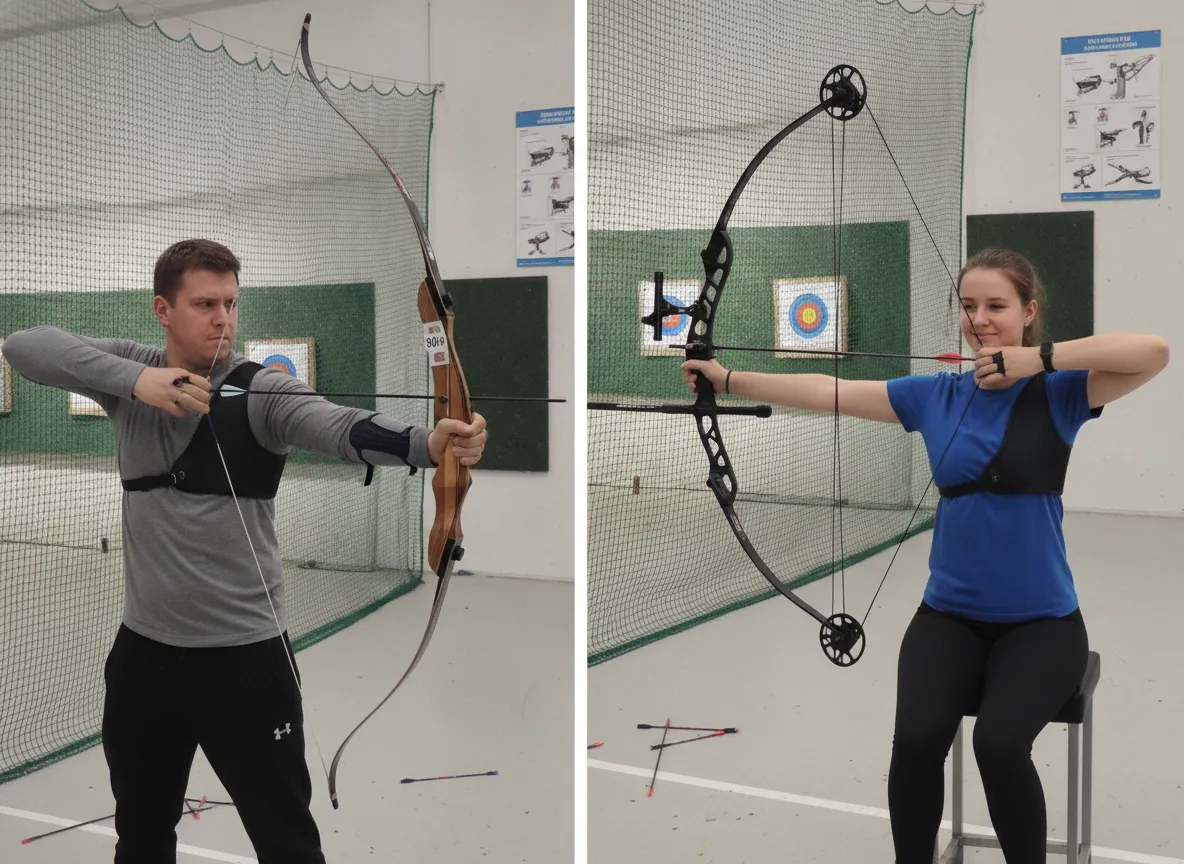
Draw weight is the peak force required to pull the bow to full draw, measured in pounds. It directly affects arrow speed, penetration, and the physical demand placed on the archer.
Many beginners make the mistake of choosing too heavy a draw weight because they associate heavier poundage with better performance. In reality, a draw weight that is too heavy causes poor form, muscle fatigue, and inconsistency, all of which reduce accuracy and increase the chance of a bad shot on game.
Recommended starting draw weights for hunting:
- Deer-sized game: 40 to 50 pounds is the commonly cited minimum; 50 to 60 pounds is a comfortable and effective range for most adults
- Elk and larger game: 55 to 70 pounds is generally recommended
- Youth hunters: 20 to 35 pounds depending on age and physical development
The goal is to choose a draw weight that can be drawn smoothly and repeatedly without straining. A good test: if the bow cannot be drawn while seated or from an awkward angle, the draw weight is likely too heavy for field conditions.
Most compound bows have an adjustable draw weight range of 10 to 15 pounds, allowing beginners to start lower and increase as strength develops.
4. Match Your Arrows to Your Bow
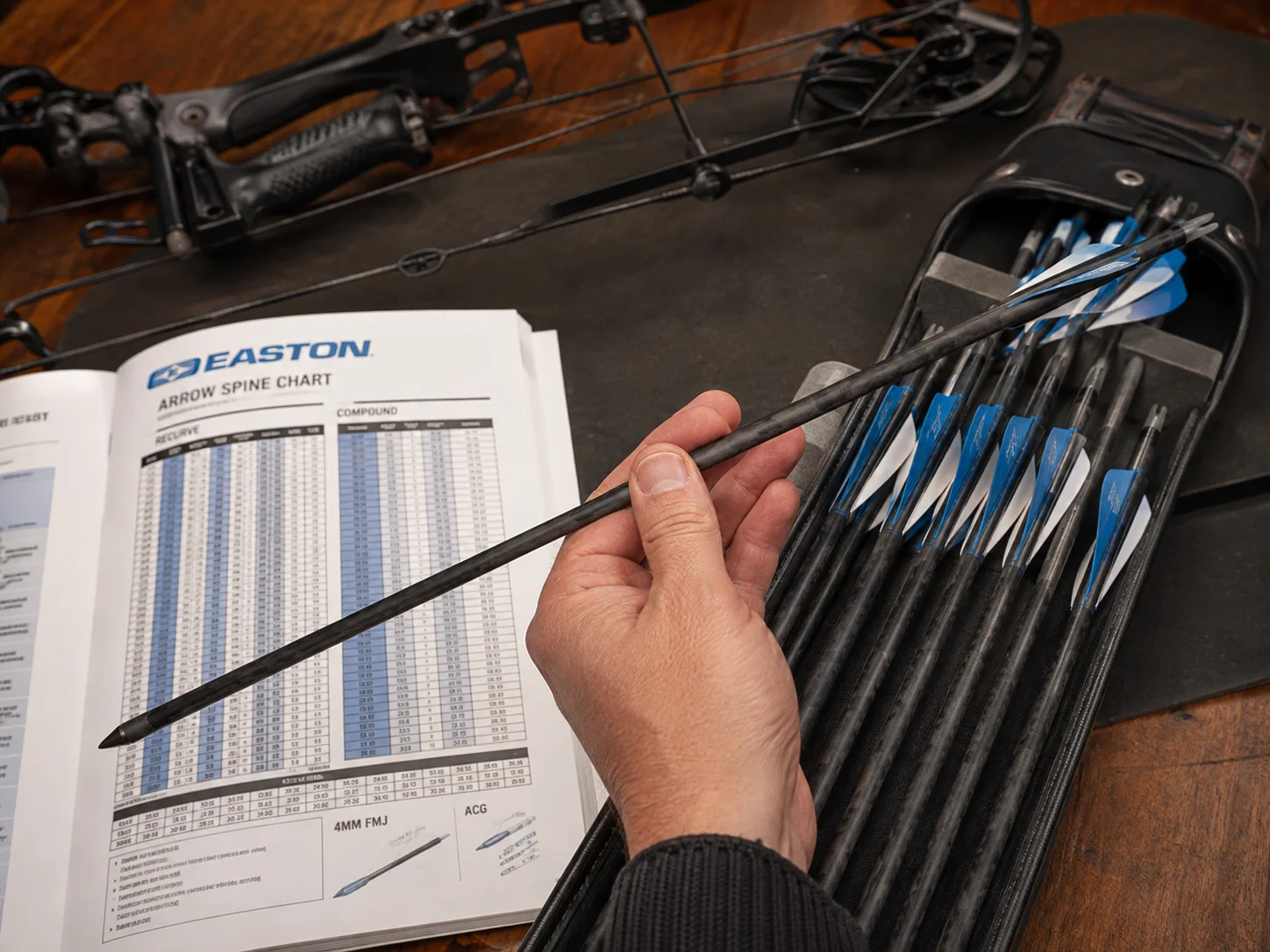
Arrow selection is where many beginners make costly and dangerous mistakes. An arrow that is too weak (under-spined) for the bow can flex dangerously upon release, potentially shattering and causing injury. An arrow that is too stiff (over-spined) will fly erratically.
Arrow spine refers to the stiffness of the arrow shaft. Manufacturers publish spine charts that correlate draw weight and arrow length to the correct spine rating. Always consult the chart for the specific arrow brand being used.
Key arrow components to understand:
- Shaft material: Carbon arrows are the standard for modern hunting. They are lightweight, durable, and consistent. Aluminum arrows are heavier and less common in hunting applications today.
- Arrow length: Arrows should extend at least one inch beyond the arrow rest at full draw. A pro shop can cut arrows to the correct length.
- Fletching: The vanes or feathers that stabilize the arrow in flight. For hunting with broadheads, larger vanes (4-inch or larger) provide better stabilization.
- Nocks: The notch at the back of the arrow that attaches to the bowstring. Nocks must fit the string snugly but release cleanly.
- Points/Broadheads: Field points are used for practice. Broadheads, fixed-blade or mechanical, are used for hunting.
Never shoot an arrow that is cracked, bent, or has a damaged nock. Inspect every arrow before each session.
5. Master the Fundamentals of Shooting Form
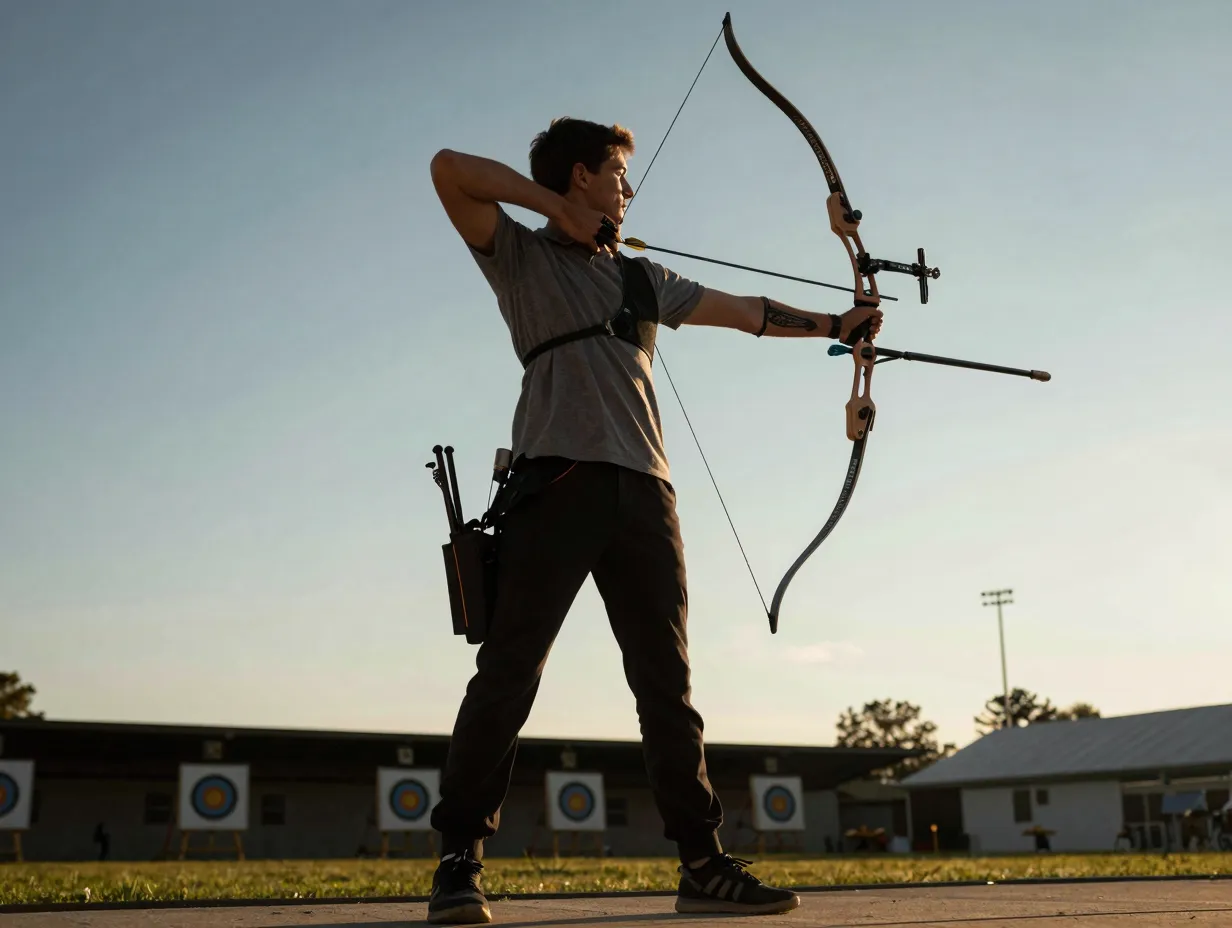
Consistent, repeatable form is the foundation of accuracy. No amount of expensive equipment compensates for poor mechanics. These 8 essential hunting bow and arrow tips for beginners place form at the center of the development process because it is the skill that transfers directly to every hunting situation.
The core elements of proper form:
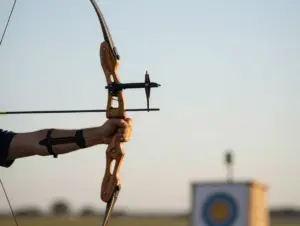
Stance: Stand perpendicular to the target with feet shoulder-width apart. The body should be relaxed but stable. A slight forward lean of the upper body is acceptable; avoid twisting the torso toward the target.
Grip: Hold the bow with a relaxed, open hand. The pressure point is the meaty pad at the base of the thumb. A tight grip causes torque, which sends arrows left or right. Many experienced archers use a wrist sling so the bow can fall forward naturally after the shot without being gripped.
Anchor point: The anchor point is where the drawing hand contacts the face at full draw. Common anchor points include the corner of the mouth, the cheekbone, or the jaw. The critical requirement is that the anchor point is identical on every single shot. Consistency here is non-negotiable.
Draw and aim: Draw the bow using the back muscles (rhomboids and trapezius), not the arm. The elbow of the draw arm should travel back in a straight line. Aim with both eyes open when possible to maintain full field of view, important in hunting scenarios.
Release and follow-through: A clean release means the fingers or release aid open without disturbing the bow hand. After the shot, hold the bow up and maintain the anchor point position until the arrow hits the target. This follow-through prevents anticipation, which is one of the most common accuracy problems in archery.
6. Practice at Realistic Hunting Distances and Scenarios
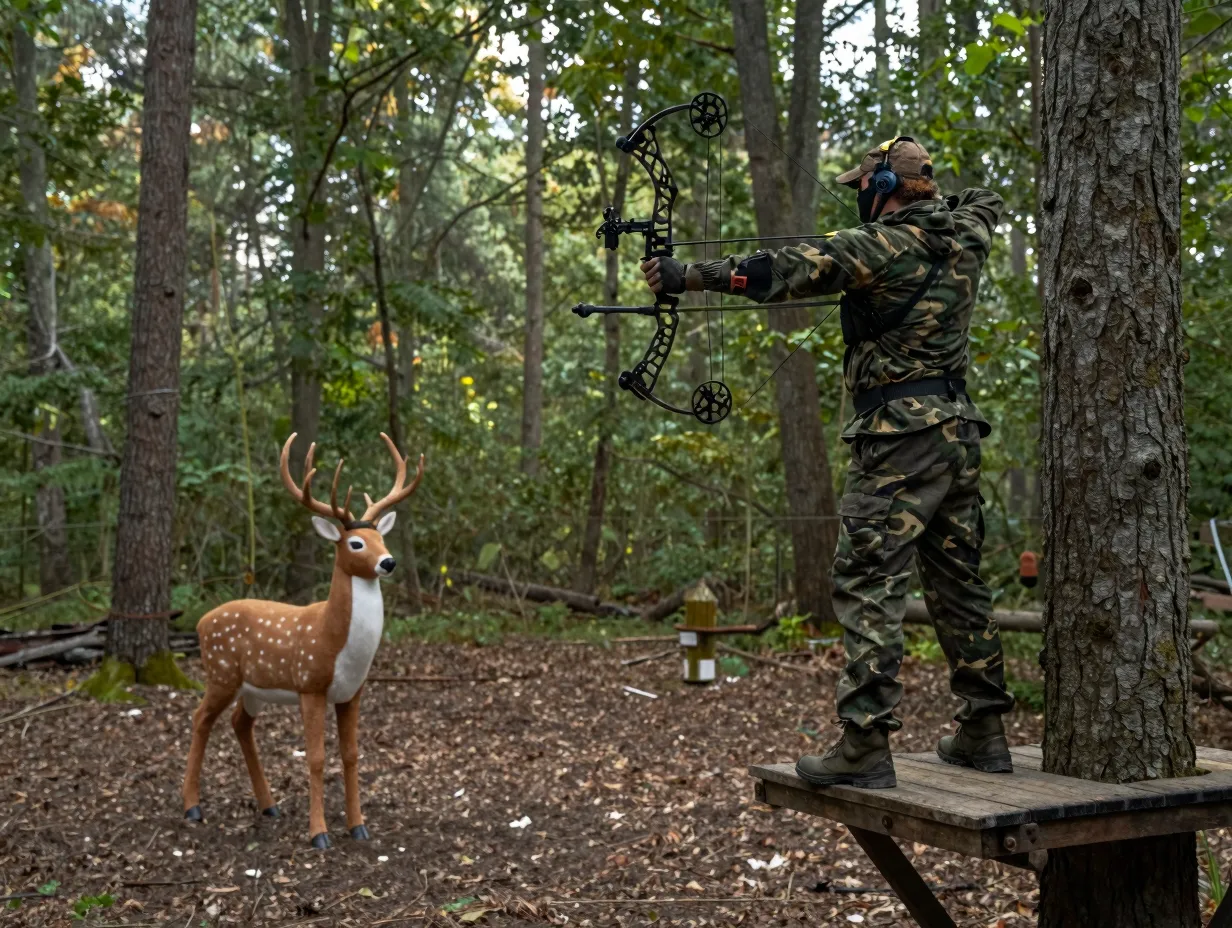
Range practice in a controlled environment is essential, but it does not fully prepare a hunter for real-world conditions. Bowhunting shots often happen at awkward angles, from elevated positions, in low light, and under the stress of adrenaline.
Structured practice recommendations:
- Begin at 10 to 15 yards and only move back when groups consistently fall within a 3-inch circle.
- Practice from a treestand or elevated platform at realistic heights (15 to 20 feet). Shooting downward changes the effective draw length and requires bending at the waist rather than dropping the bow arm.
- Practice in full hunting gear, including gloves and a face mask. Thick gloves affect the release; a face mask can interfere with the anchor point.
- Simulate hunting scenarios: shoot from a kneeling position, from a seated position, and after brief physical exertion (a short jog) to replicate the elevated heart rate of a real encounter.
- Set a maximum effective range and stick to it. Most beginners should limit shots to 30 yards or less until consistent accuracy is proven at that distance.
3D archery courses, which use life-size foam animal targets at unknown distances, are one of the best training tools available. They develop range estimation skills and simulate the mental pressure of a real shot opportunity.
7. Understand Broadheads and Shot Placement
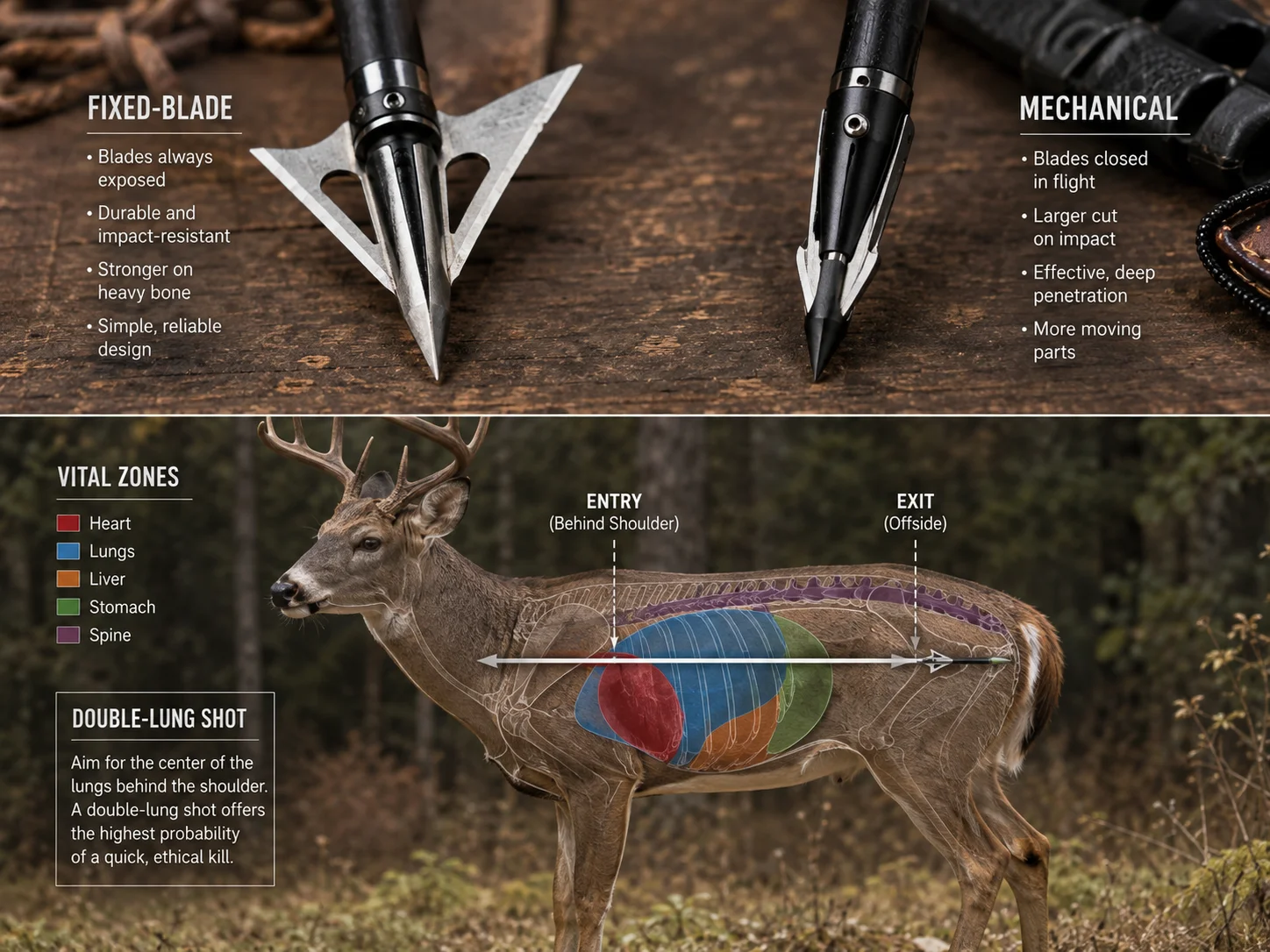
Selecting the right broadhead and knowing where to aim are two skills that directly determine whether a hunt is successful and ethical. A well-placed arrow with an appropriate broadhead results in a quick, clean harvest. A poorly placed arrow, regardless of broadhead quality, results in a wounded animal.
Fixed-blade vs. mechanical broadheads:
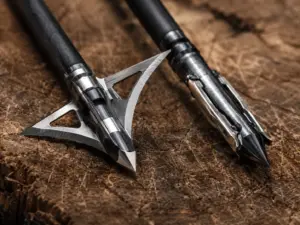
Fixed-blade broadheads have blades that are always exposed. They are extremely durable and reliable, but they require precise arrow flight because their large surface area magnifies any tuning issues. Beginners should practice extensively with the exact broadhead they plan to hunt with, as point of impact often shifts from field points.
Mechanical (expandable) broadheads have blades that fold back during flight and deploy on impact. They fly more like field points, which makes them easier for beginners to tune. However, they require a minimum kinetic energy threshold to deploy reliably, which means they are better suited for adequate draw weights (50 pounds and above).
Shot placement for deer-sized game:
The primary target is the heart-lung (vital) zone, located behind the front shoulder. A broadside shot offers the largest target. A quartering-away shot also presents a good angle. Quartering-toward and head-on shots are not recommended for beginners, the vital zone is small, and the risk of wounding is high.
The double-lung shot is the most reliable kill shot in bowhunting. The lungs occupy a large area in the chest cavity, and a well-placed arrow through both lungs results in a quick, humane harvest.
8. Know the Rules, Practice Safety, and Respect the Resource
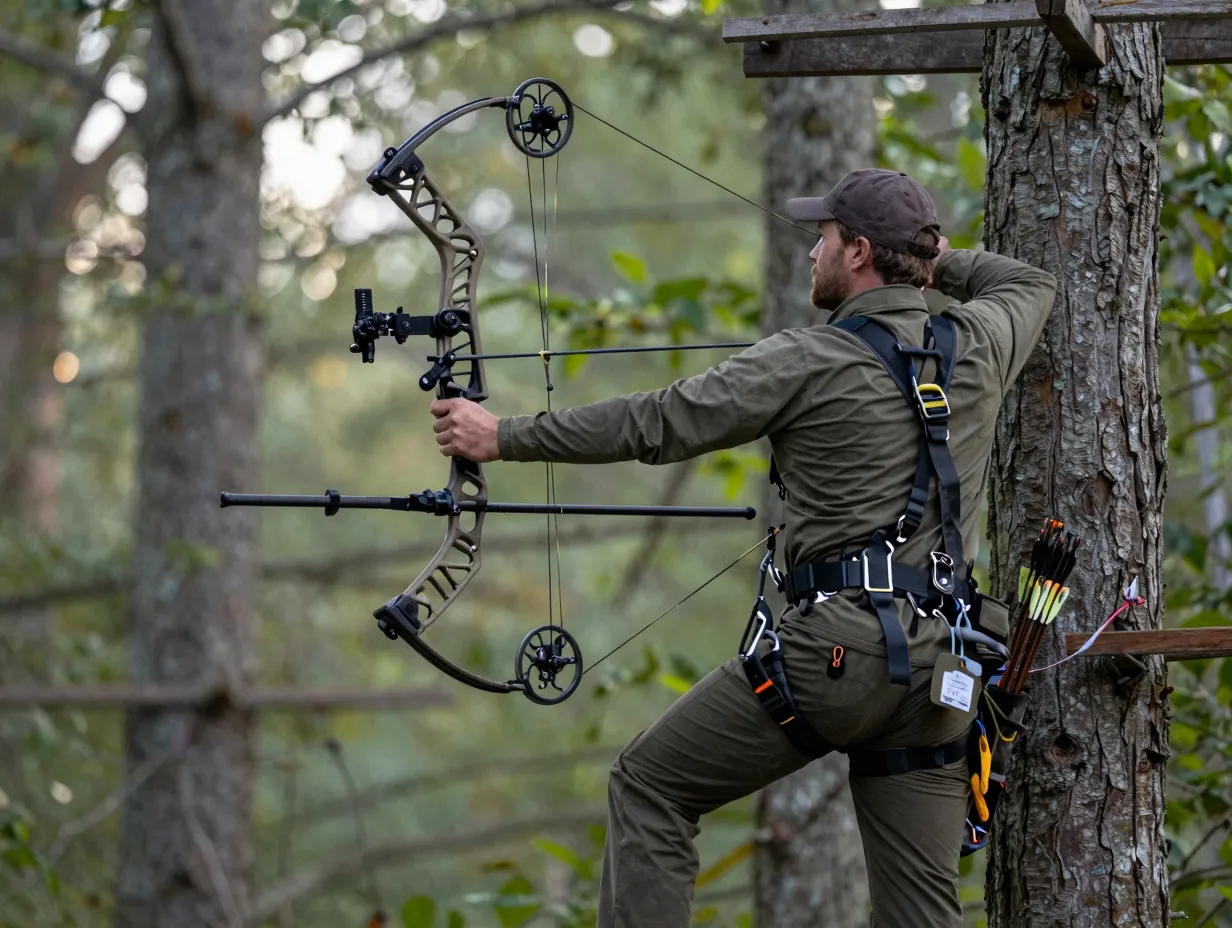
No set of 8 essential hunting bow and arrow tips for beginners would be complete without addressing the legal, ethical, and safety dimensions of the sport. Bowhunting operates within a framework of regulations that vary by state and species, and understanding those rules is a legal requirement, not optional.
Licensing and education:
Most states require a hunting license and, for new hunters, completion of a hunter education course. Many states also offer bowhunter education courses specifically. These courses cover equipment, safety, shot placement, game recovery, and field dressing. They are strongly recommended even when not legally required.
Treestand safety:
Falls from treestands are one of the leading causes of serious injury among bowhunters. Always use a full-body harness rated for treestand use. Attach the harness to the tree before leaving the ground and do not detach until back on the ground. Use a haul line to raise and lower the bow, never climb with an arrow nocked.
Arrow and broadhead safety:
- Always keep broadheads covered when not in use.
- Never dry-fire a bow (releasing the string without an arrow). Dry-firing can destroy the bow and cause serious injury.
- Be absolutely certain of the target and what lies beyond it before releasing an arrow.
Ethical hunting practices:
- Only take shots within the proven effective range.
- Wait a minimum of 30 minutes (often longer) before tracking a deer after a shot. Rushing the recovery pushes wounded animals further.
- Make every effort to recover harvested game. Wasting meat is both unethical and, in many jurisdictions, illegal.
- Respect private property, leave no trace, and follow all regulations regarding seasons, bag limits, and legal equipment.
Building on These 8 Essential Hunting Bow and Arrow Tips for Beginners
Progress in archery is measurable and rewarding. A beginner who commits to consistent practice, even 20 to 30 minutes three to four times per week, will see dramatic improvement within a single season. The skills compound: better form leads to better accuracy, which builds confidence, which leads to more ethical and successful hunts.
Recommended progression milestones for new archers:
- Achieve consistent 3-inch groups at 15 yards within the first month.
- Move to 20 yards and repeat the consistency standard.
- Introduce 3D target practice and treestand shooting by month three.
- Shoot broadheads at 20 yards and confirm point of impact matches field points.
- Set a firm maximum hunting distance based on demonstrated accuracy, and do not exceed it in the field.
Joining a local archery club or finding a mentor who is an experienced bowhunter accelerates development significantly. Experienced archers can identify form flaws that are difficult to self-diagnose, and they can provide guidance on local hunting conditions, regulations, and gear choices.
Conclusion
The path from first-time archer to confident bowhunter is straightforward when built on the right foundation. These 8 essential hunting bow and arrow tips for beginners cover the full spectrum of what a new archer needs: the right equipment, sound mechanics, realistic practice, and a commitment to ethical, safe hunting.
Actionable next steps:
- Visit a local archery pro shop this week to get draw length and draw weight professionally measured.
- Purchase a beginner-appropriate compound bow and matched carbon arrows based on the spine chart.
- Enroll in a state-approved hunter education or bowhunter education course before the season opens.
- Commit to a structured practice schedule, consistency beats intensity for skill development.
- Set a maximum effective range based on demonstrated accuracy and hold to it in the field, no exceptions.
Bowhunting rewards patience, discipline, and respect for the craft. Start with these fundamentals, build skills deliberately, and the experience will be both successful and deeply satisfying.