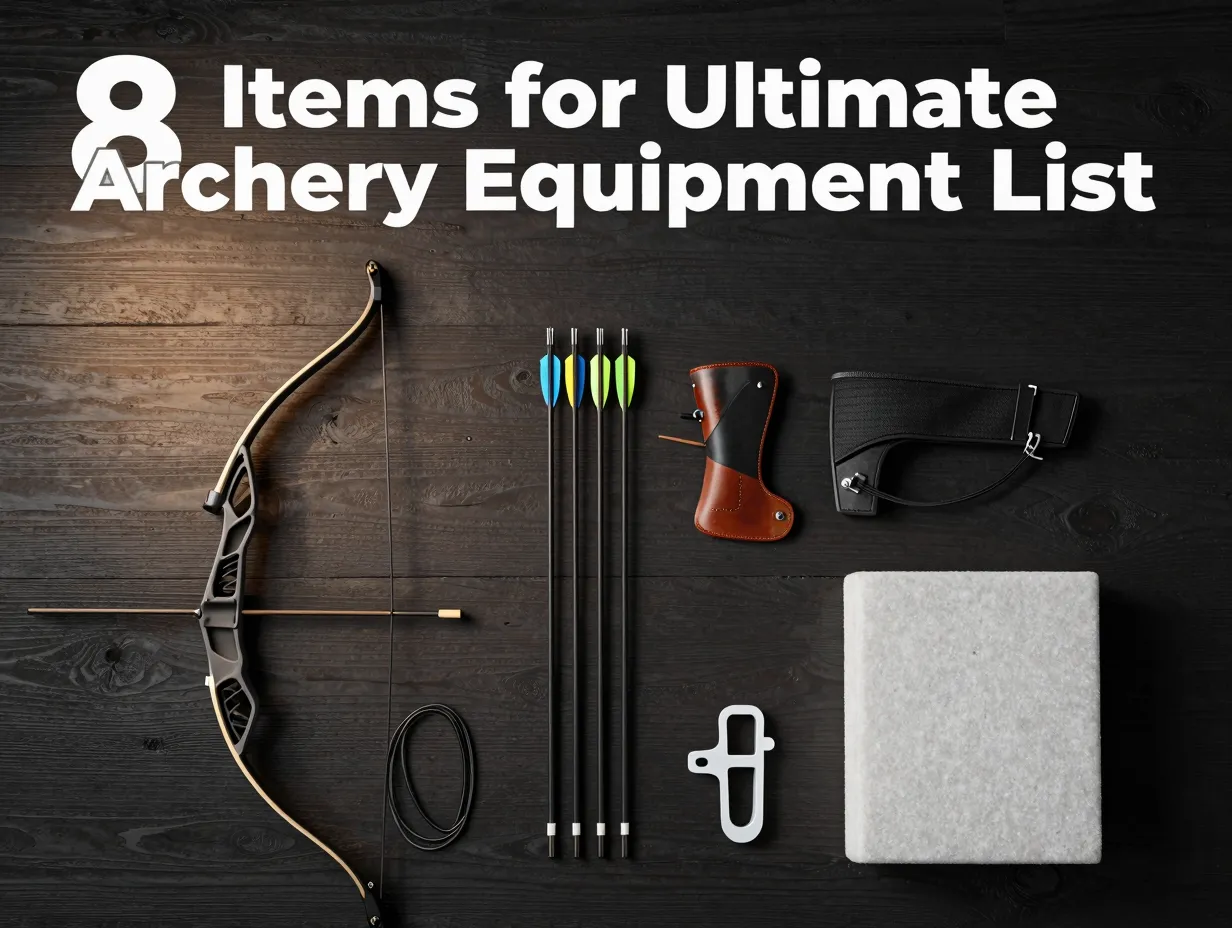
8 Items for the Ultimate Archery Equipment List
Fewer than 10 percent of new archers who quit in their first year cite lack of interest as the reason, most walk away because they started with the wrong gear [2]. Getting the right equipment from day one is not just a matter of comfort; it directly determines accuracy, safety, and whether the sport sticks. This guide covers the 8 items for the ultimate archery equipment list, drawing on current best practices and updated recommendations for 2026 to help beginners and returning archers build a kit that genuinely performs.
Disclosure: This post contains affiliate links. As an Amazon Associate, we earn from qualifying purchases, and at no extra cost to you.
Key Takeaways
- The bow is the single most important purchase; choosing the right type and draw weight shapes everything else in the kit.
- Arrows must be matched to your bow’s draw length and spine rating, mismatched arrows are a leading cause of poor accuracy and potential injury.
- Protective gear (arm guard and finger tab or glove) is non-negotiable for safe, consistent shooting.
- A bow stringer is a low-cost item that prevents limb damage and is frequently overlooked by beginners.
- Investing in quality targets and a reliable arrow rest pays dividends in practice efficiency and equipment longevity.
Why the Right Archery Equipment List Matters in 2026
The archery market has grown steadily, with participation rates climbing across recreational, competitive, and bowhunting disciplines. Manufacturers have responded with a wider range of entry-level gear than ever before, which is both an opportunity and a source of confusion. A poorly assembled kit leads to frustration, inconsistent form, and, in worst-case scenarios, equipment failure that causes injury.
The 8 items for the ultimate archery equipment list outlined in this guide are the consensus foundation recommended by coaches, national governing bodies, and experienced archers [1][6]. Each item plays a specific role, and skipping any one of them introduces a gap that no amount of skill can fully compensate for.
“The right equipment does not replace technique, but the wrong equipment makes good technique nearly impossible to develop.”
Whether the goal is casual backyard shooting, club-level competition, or hunting, this list applies. The specific models will differ, but the categories remain constant.
The 8 Items for the Ultimate Archery Equipment List
1. The Bow
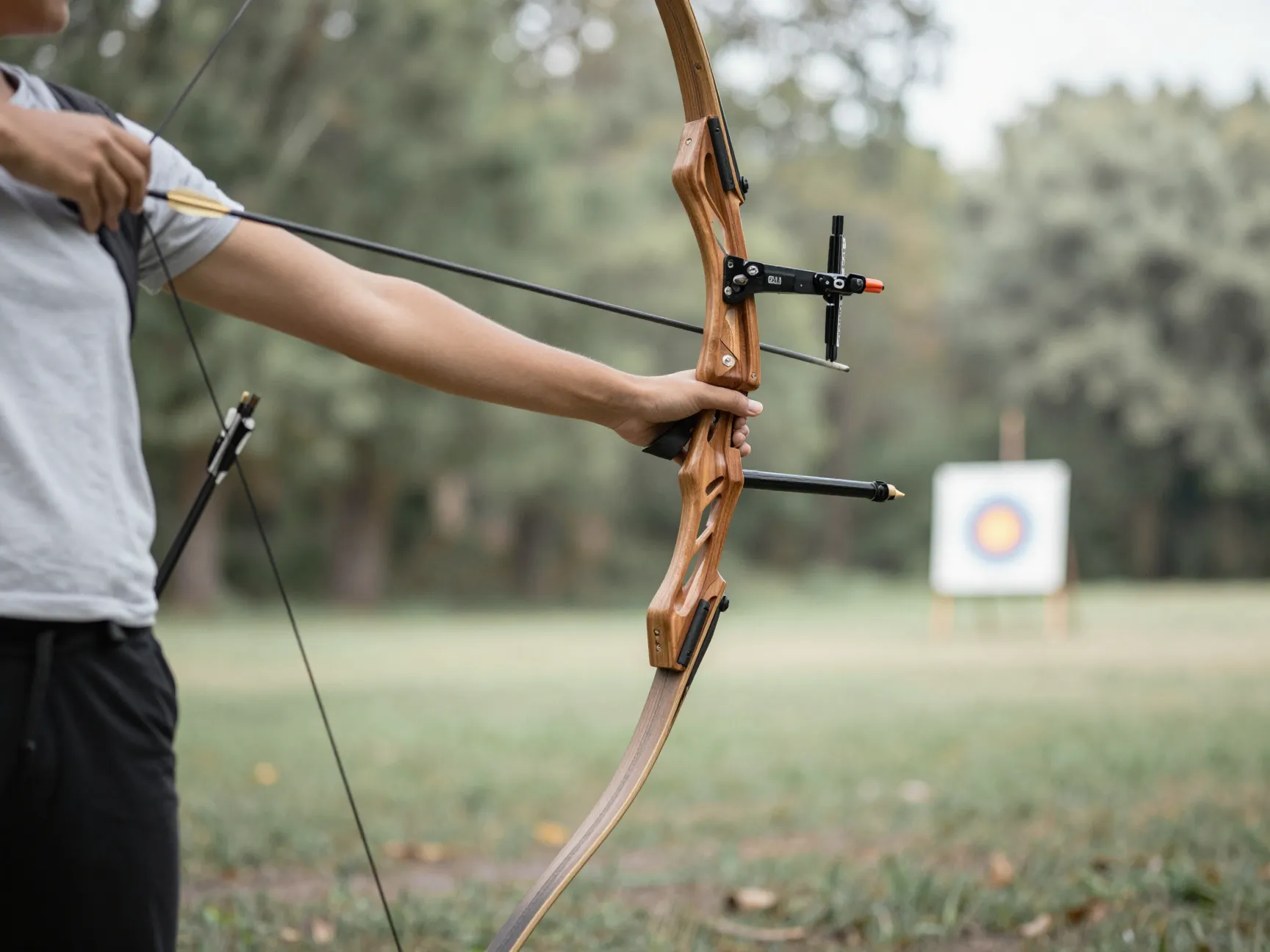
The bow is the foundation of every archery setup. Every other item on this list is selected in relation to it. Three main bow types dominate the beginner and intermediate market in 2026: recurve bows, compound bows, and longbows [4].
Recurve bows are the most widely recommended starting point. They are used in Olympic competition, widely available, and forgiving enough for beginners to develop proper form. Most archery clubs and national programs recommend a recurve as a first bow [6].
Compound bows use a system of cams and cables to reduce the holding weight at full draw, making them popular for hunting and target shooting. They require more initial setup and are generally more expensive, but the let-off system helps archers hold aim longer [4].
Longbows are the traditional choice. They are simple, elegant, and deeply satisfying to shoot, but they are the least forgiving of poor form and are best suited to archers who have a specific interest in traditional archery.
Key bow selection factors:
| Factor | Recommended Starting Range |
|---|---|
| Draw weight (adults) | 20-35 lbs |
| Draw weight (youth) | 10-20 lbs |
| Draw length | Measured individually |
| Axle-to-axle (compound) | 28-32 inches for beginners |
Always have draw length measured by a coach or pro shop before purchasing [6]. An ill-fitting bow causes poor form that becomes harder to correct over time.
2. Arrows
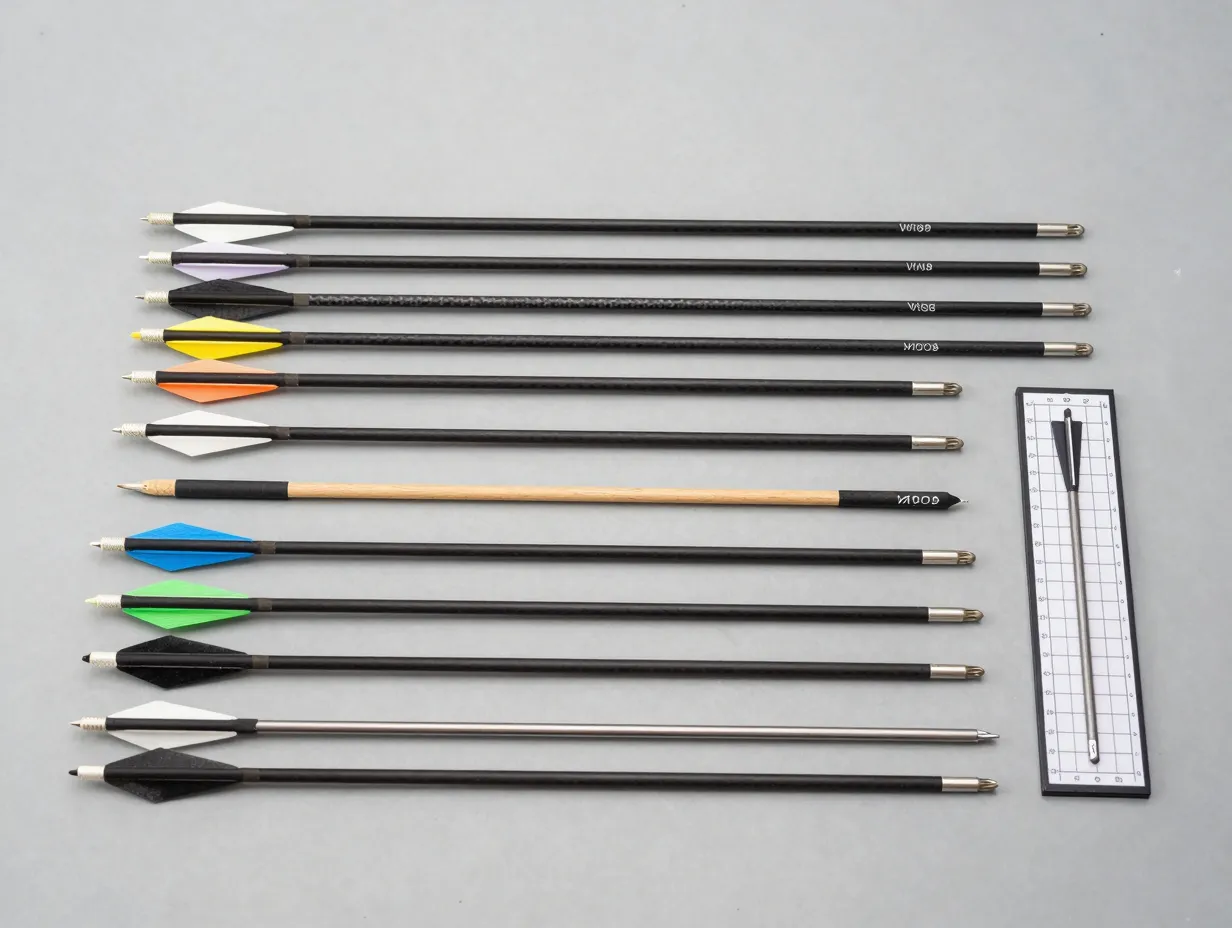
Arrows are the most frequently misunderstood item on any archery equipment list. Many beginners assume any arrow will work with any bow, this is incorrect and potentially dangerous [2].
Arrows must be matched to two critical specifications:
- Spine rating: The stiffness of the arrow shaft. A spine that is too weak or too stiff for the bow’s draw weight causes the arrow to fishtail in flight, reducing accuracy dramatically.
- Arrow length: Determined by the archer’s draw length, typically cut 1 to 2 inches longer than the draw length for safety.
Arrow materials in 2026:
- Carbon arrows are the current standard for most disciplines. They are lightweight, consistent, and durable [1].
- Aluminum arrows offer excellent consistency and are still used in target archery, particularly at the Olympic level.
- Wood arrows are traditional and used with longbows and some recurves, but they require more maintenance and checking for cracks.
For beginners, a set of 6 to 12 carbon arrows matched to the bow’s draw weight and the archer’s draw length is the recommended starting point [7]. Buying cheap, unmatched arrows is one of the most common and costly mistakes new archers make.
3. Arm Guard (Bracer)
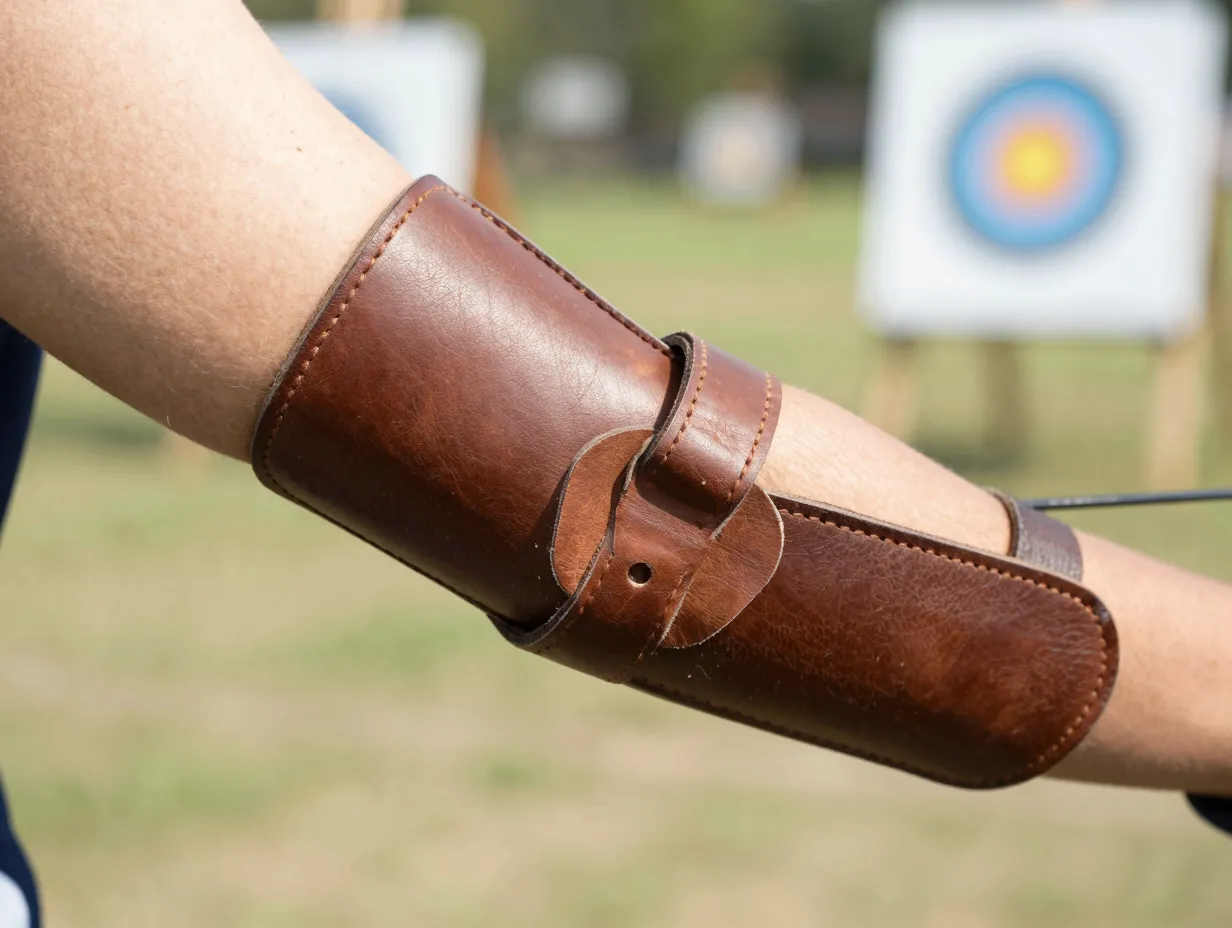
The arm guard, also called a bracer, protects the inner forearm from the bowstring’s snap upon release. Even experienced archers who have refined their form enough to rarely make contact keep an arm guard in their kit as a precaution [2][7].
For beginners, string slap is almost inevitable during the learning phase. Without an arm guard, repeated contact causes bruising that discourages practice. With one, the same contact is harmless.
Arm guard selection tips:
- Choose a length of at least 6 inches to cover the forearm adequately.
- Look for adjustable straps that allow a snug fit without restricting circulation.
- Leather and hard plastic models offer the best protection; fabric-only models are less effective.
Arm guards are inexpensive, typically among the lowest-cost items on this list, and there is no good reason to skip them [6].
4. Finger Tab or Shooting Glove
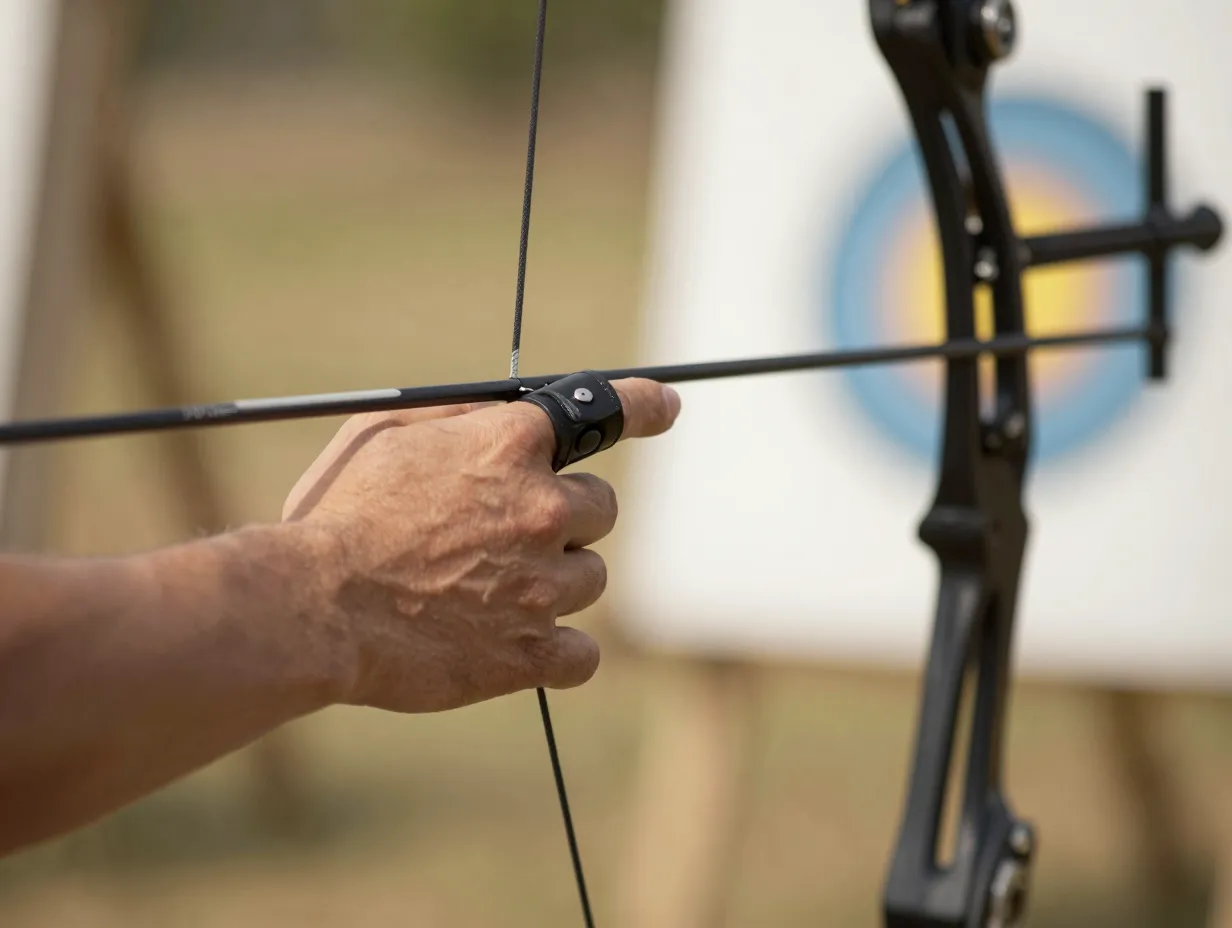
The fingers bear the full tension of the bowstring at draw. Without protection, the string cuts into the fingertips and creates pain that disrupts the release. A finger tab or shooting glove solves this problem and also promotes a cleaner, more consistent release [1][7].
Finger tab vs. shooting glove:
- Finger tabs are flat leather or synthetic pads that attach to the middle finger and cover the three drawing fingers. They are preferred in target archery and Olympic shooting because they allow a cleaner, more tactile release.
- Shooting gloves cover all three drawing fingers individually and are popular in traditional archery and hunting because they allow faster nocking without removing the glove.
Neither is objectively superior, the right choice depends on discipline and personal preference. Beginners are generally advised to start with a finger tab, as it is the standard in most club and coaching environments [6].
5. Quiver
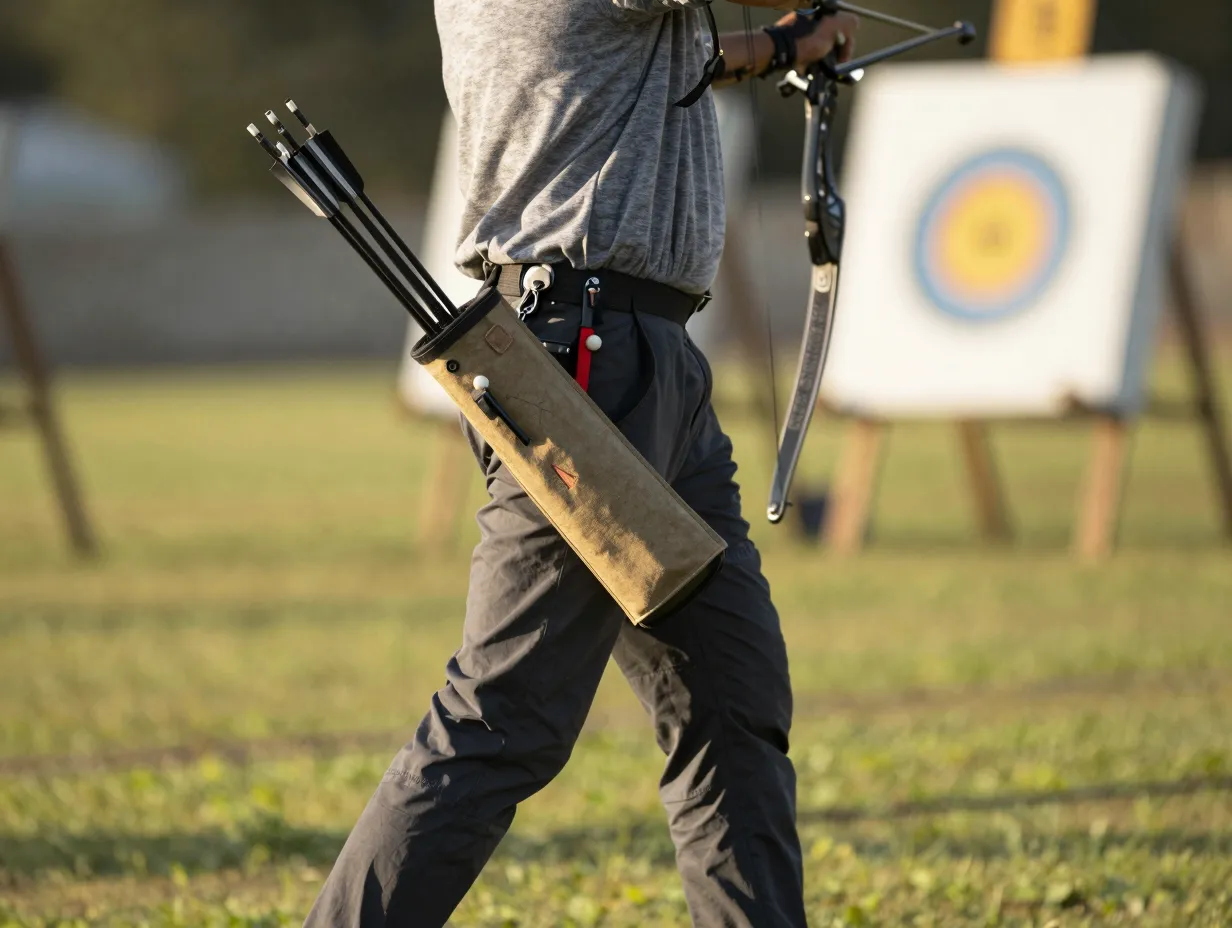
A quiver holds arrows safely and keeps them accessible during a shooting session. Shooting without a quiver means arrows are left on the ground or propped against a target stand, both practices that lead to damaged arrows and potential safety hazards [2].
Three main quiver types:
- Hip quiver: Attaches to a belt and sits at the hip. It is the standard choice for target archery and club shooting. Easy to access, stable, and available in a wide range of sizes.
- Back quiver: The traditional style, worn across the back. It is more cinematic than practical for most modern disciplines but remains popular in traditional archery.
- Bow quiver: Attaches directly to the bow riser or limb. Common in bowhunting because it keeps arrows close and reduces noise in the field.
For most beginners starting at a club or range, a hip quiver with capacity for 6 to 12 arrows is the practical choice [1].
6. Bow Stringer
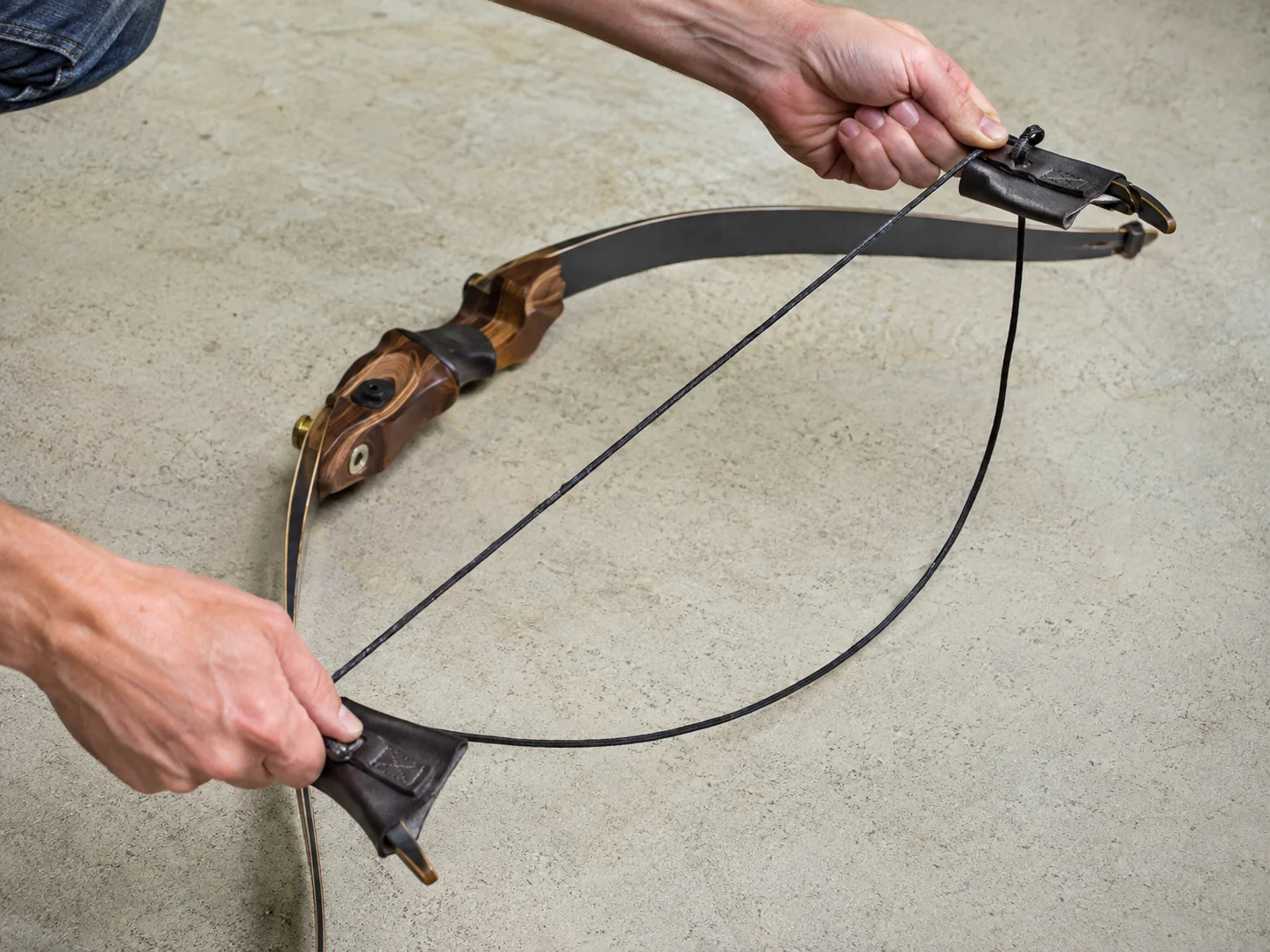
A bow stringer is a simple, inexpensive cord device used to string and unstring a recurve or longbow safely. It is one of the most overlooked items on any beginner archery equipment list, and one of the most important for equipment longevity [7].
Stringing a recurve bow by hand (the “step-through” method) is a technique that frequently twists the limbs, causing permanent damage that affects accuracy and can eventually crack the limb. A bow stringer eliminates this risk entirely by ensuring even, aligned tension during stringing [6].
Why this item matters:
- Prevents limb twist on recurve and longbow limbs.
- Takes less than 30 seconds to use once learned.
- Typically costs less than most arrow accessories.
- Recommended by virtually every archery coaching program as a mandatory beginner item [1][6].
Compound bow owners do not need a bow stringer, compound bows are strung by a bow press, which is a workshop tool, but any recurve or longbow archer should treat a bow stringer as essential.
7. Arrow Rest
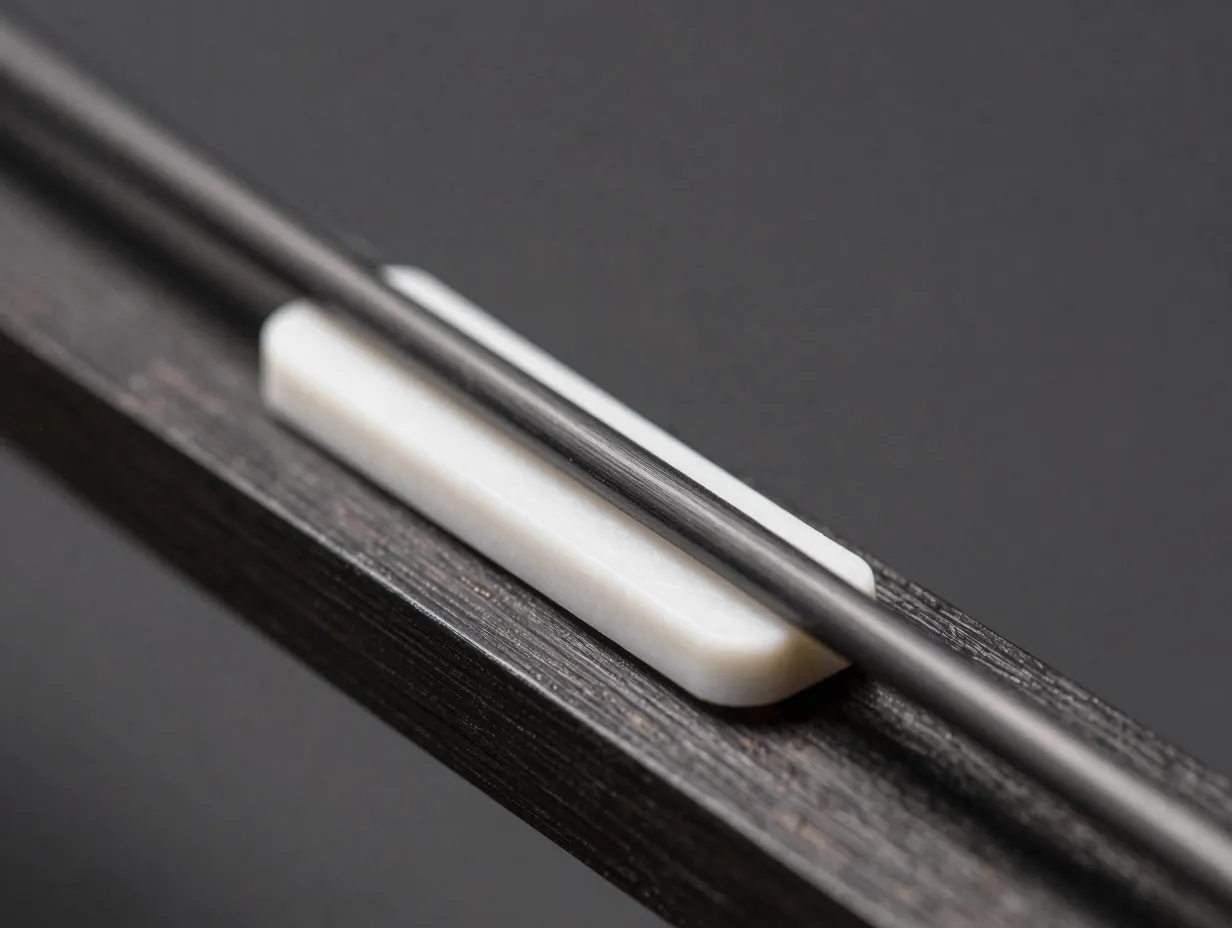
An arrow rest is a small device attached to the bow’s riser (handle) that supports the arrow during the draw and through the initial phase of the shot. Without a rest, the arrow sits directly on the archer’s hand or on a basic shelf, which introduces inconsistency and can cause the arrow to fall off during the draw [2][7].
Common arrow rest types:
- Stick-on plastic rest (beginner): Simple, inexpensive, and effective for recurve beginners. Attaches with adhesive to the riser shelf.
- Whisker biscuit: A circular rest with synthetic bristles that hold the arrow in place. Popular in compound and hunting setups because it retains the arrow even when the bow is moved.
- Drop-away rest: Activates on the draw cycle and drops away on release, minimizing contact with the arrow for maximum accuracy. Used in competitive compound shooting.
For recurve beginners, a basic stick-on plastic rest or a simple elevated rest is the standard recommendation [6]. As skill develops and the archer moves to a more advanced setup, upgrading the rest is one of the most cost-effective accuracy improvements available.
8. Target
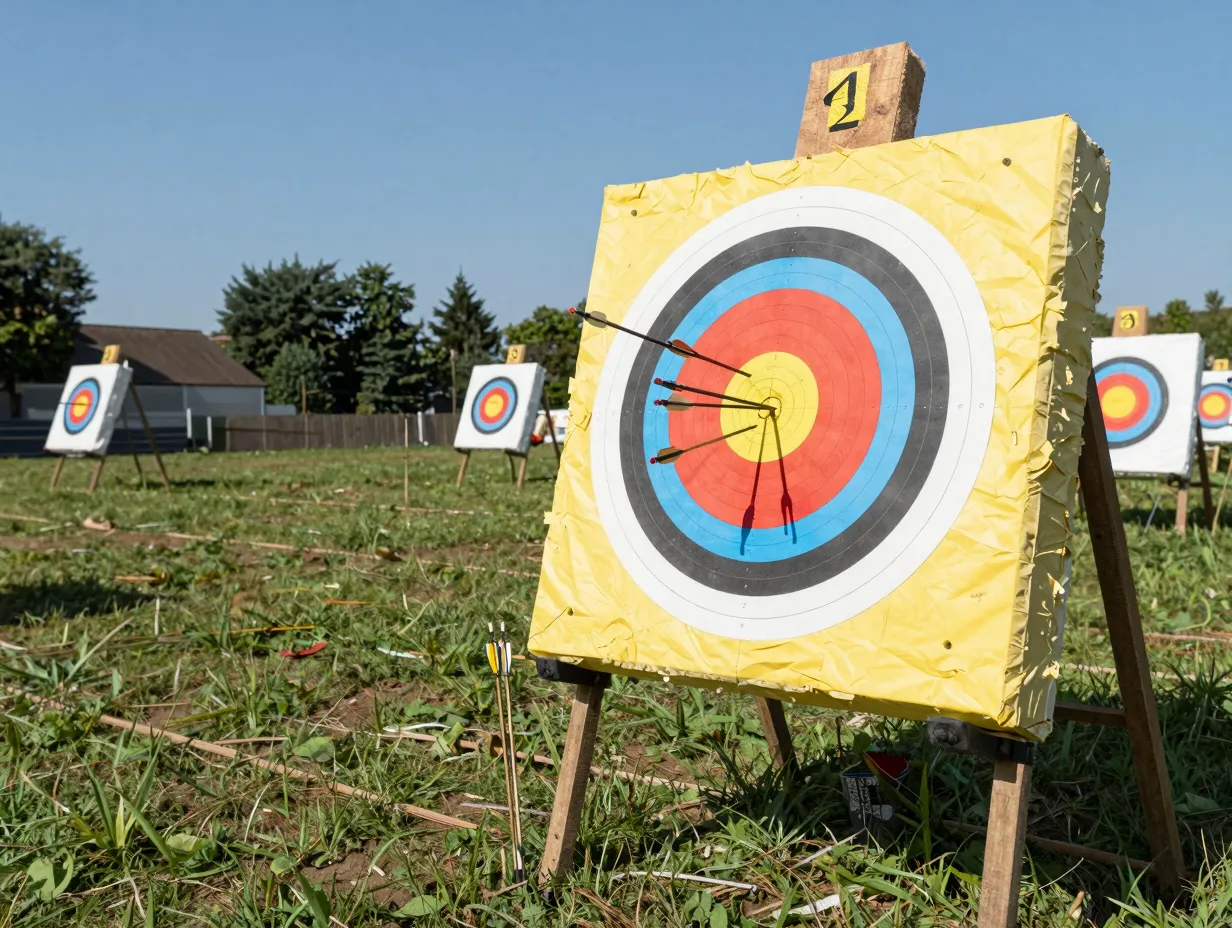
A target is the final, and often underestimated, item on the 8 items for the ultimate archery equipment list. Shooting at improvised targets (cardboard boxes, homemade backstops) leads to lost arrows, damaged arrow nocks, and safety risks if the backstop fails to stop the arrow [2].
Target types:
- Foam block targets: The most popular choice for backyard and club use. They stop arrows cleanly, are easy to score, and allow arrows to be removed without excessive force. Available in sizes from small practice blocks to large competition faces.
- Bag targets: Filled with synthetic fiber or fabric scraps. Excellent for field points and broadheads (hunting tips). Less suitable for broadheads in some models, always check the manufacturer’s specification.
- 3D targets: Life-size animal replicas used in 3D archery competitions and bowhunting practice. More expensive but highly effective for realistic shooting scenarios.
For beginners, a foam block target rated for the bow’s draw weight is the standard recommendation. Always check the target’s maximum draw weight rating, a target rated for 40 lbs will not reliably stop arrows from a 60 lb bow [7].
Building Your Complete Archery Kit: Practical Guidance
Prioritizing Purchases
Not every archer needs to buy all eight items simultaneously. The following sequence reflects the logical order of priority:
- Bow (everything else depends on this choice)
- Arrows (matched to the bow before any other accessory)
- Arm guard and finger tab (safety items, purchase with the bow)
- Arrow rest (often included with beginner bow packages)
- Bow stringer (essential for recurve/longbow archers)
- Quiver (practical for any regular practice session)
- Target (required for home practice; provided at clubs and ranges)
Many beginner bow packages bundle several of these items together, which can reduce initial cost [4][5]. However, bundled arrows are frequently low-quality and may not be correctly spined for the bow, always verify arrow spine against the bow’s draw weight before shooting.
Budget Considerations for 2026
Entry-level archery is accessible without a large investment. A functional beginner recurve kit, covering all eight categories, can be assembled for a reasonable budget, with significant room to upgrade individual components as skill and commitment grow [4][5].
The areas where quality investment pays off most quickly are:
- The bow: A well-made entry-level bow from a reputable brand will outlast several cheap alternatives.
- Arrows: Properly spined arrows improve accuracy immediately and reduce the frustration of chasing form problems that are actually equipment problems.
- The target: A quality foam target protects arrows, which are a recurring cost.
Club vs. Home Setup
Archers who join a club or range gain access to targets, coaching, and often loaner equipment. This is the most cost-effective way to start, as it defers several purchases until the archer has confirmed their interest and received guidance on equipment selection [6].
Home setups require the full eight-item list from the outset, along with adequate space and a safe backstop behind the target. A minimum shooting distance of 10 meters is workable for beginners, though most archers quickly want more range as accuracy improves.
Common Mistakes When Assembling an Archery Equipment List
Buying the wrong draw weight: The single most common beginner error. A draw weight that is too heavy causes poor form, fatigue, and injury. Start light, it is always possible to move to a heavier bow later [6].
Skipping the bow stringer: Limb twist is irreversible. A bow stringer costs very little and prevents a repair bill that can exceed the cost of the bow itself.
Ignoring arrow spine: Mismatched arrows make it impossible to diagnose form issues because the arrow’s behavior in flight is unpredictable. Always match spine to draw weight using the manufacturer’s spine chart [1][2].
Choosing a target rated below the bow’s draw weight: An underpowered target will not stop arrows reliably, creating safety hazards and causing arrows to pass through and become damaged or lost [7].
Buying a compound bow as a first bow without fitting: Compound bows have a fixed draw length that must match the archer precisely. An incorrectly fitted compound bow is difficult to shoot well and can cause injury [4].
Conclusion
The 8 items for the ultimate archery equipment list, bow, arrows, arm guard, finger tab, quiver, bow stringer, arrow rest, and target, represent the minimum viable kit for safe, effective, and enjoyable archery in 2026. Each item serves a specific function, and the absence of any one of them creates a gap that affects either safety, accuracy, or both.
Actionable next steps:
- Determine bow type based on discipline (recurve for most beginners, compound for hunting-focused archers).
- Visit a local pro shop or club to have draw length and draw weight measured before purchasing.
- Match arrow spine to draw weight using the bow manufacturer’s spine chart or ask a coach to verify.
- Purchase arm guard and finger tab at the same time as the bow, treat them as part of the same safety purchase.
- If shooting a recurve or longbow at home, add a bow stringer to the order before the first stringing session.
- Consider joining a club for the first few months to access coaching, targets, and a community that accelerates skill development.
Building the right kit from the start is the single most effective investment a new archer can make. The gear does not shoot for the archer, but it removes every obstacle between intention and performance.
References
[1] Equipment List – https://www.myarchery.net/equipment-list/
[2] Archery Equipment List – https://sportsfoundation.org/archery-equipment-list/
[4] Best Beginner Archery Bows In The Usa Top Picks For 2025 – https://archerygearjunkie.com/best-beginner-archery-bows-in-the-usa-top-picks-for-2025/
[5] Beginner Archery Sets – https://uk.bestreviews.guide/beginner-archery-sets
[6] Beginners Kit Guide – https://startarchery.co.uk/learn/beginners-kit-guide
[7] Archery Equipment Checklist – http://www.cardiotrek.ca/2017/04/archery-equipment-checklist.html