9 Inspiring Bow and Arrow Tattoos for Women: Designs and Meanings
Roughly 30 percent of American women under 40 have at least one tattoo, according to a Pew Research Center survey, and among the most searched feminine tattoo motifs in 2026, the bow and arrow consistently ranks in the top ten. That staying power is not accidental. The symbol carries centuries of layered meaning: strength, direction, focus, and the tension required before any great release. For anyone exploring 9 Inspiring Bow and Arrow Tattoos for Women: Designs and Meanings, this guide breaks down the most compelling design styles, their cultural roots, and the practical decisions that make each one work on the body.
Disclosure: This post contains affiliate links. As an Amazon Associate, we earn from qualifying purchases, and at no extra cost to you.
Key Takeaways
- Bow and arrow tattoos combine strength and femininity, drawing on mythology, nature, and personal intention.
- Design style, fine-line, geometric, watercolor, or neo-traditional, dramatically changes the mood and longevity of the tattoo.
- Placement choices such as the spine, forearm, wrist, and ribcage each interact differently with the arrow’s linear shape.
- Cultural references from Greek, Roman, and Native American traditions add depth to any chosen design.
- Consulting a skilled tattoo artist and reviewing healed portfolio work are the most important steps before committing to any design.
What Makes Bow and Arrow Tattoos So Meaningful for Women
Before diving into the full list of 9 Inspiring Bow and Arrow Tattoos for Women: Designs and Meanings, it helps to understand why this symbol resonates so deeply.
The bow and arrow is one of humanity’s oldest tools. Across cultures, it represents the balance between tension and release, the idea that pulling back is not retreat but preparation. For women, that metaphor carries particular weight. Artemis, the Greek goddess of the hunt, carried a silver bow. Katniss Everdeen made the weapon a modern symbol of female resilience. The arrow also points forward, making it a natural emblem for direction, ambition, and new beginnings.
Key symbolic meanings associated with bow and arrow tattoos:
- Strength and power
- Focus and intention
- Protection and defense
- Forward movement and purpose
- Balance between tension and release
- Independence and self-reliance
These meanings are not fixed. The design elements chosen, florals, moons, geometric shapes, animals, layer additional significance onto the base symbol, making each tattoo deeply personal.
9 Inspiring Bow and Arrow Tattoos for Women: Designs and Meanings
The nine designs below represent a wide range of styles, placements, and intentions. Each entry explains the visual concept, the meaning behind it, and the practical considerations for getting it done well.
1. Fine-Line Minimalist Arrow Tattoo
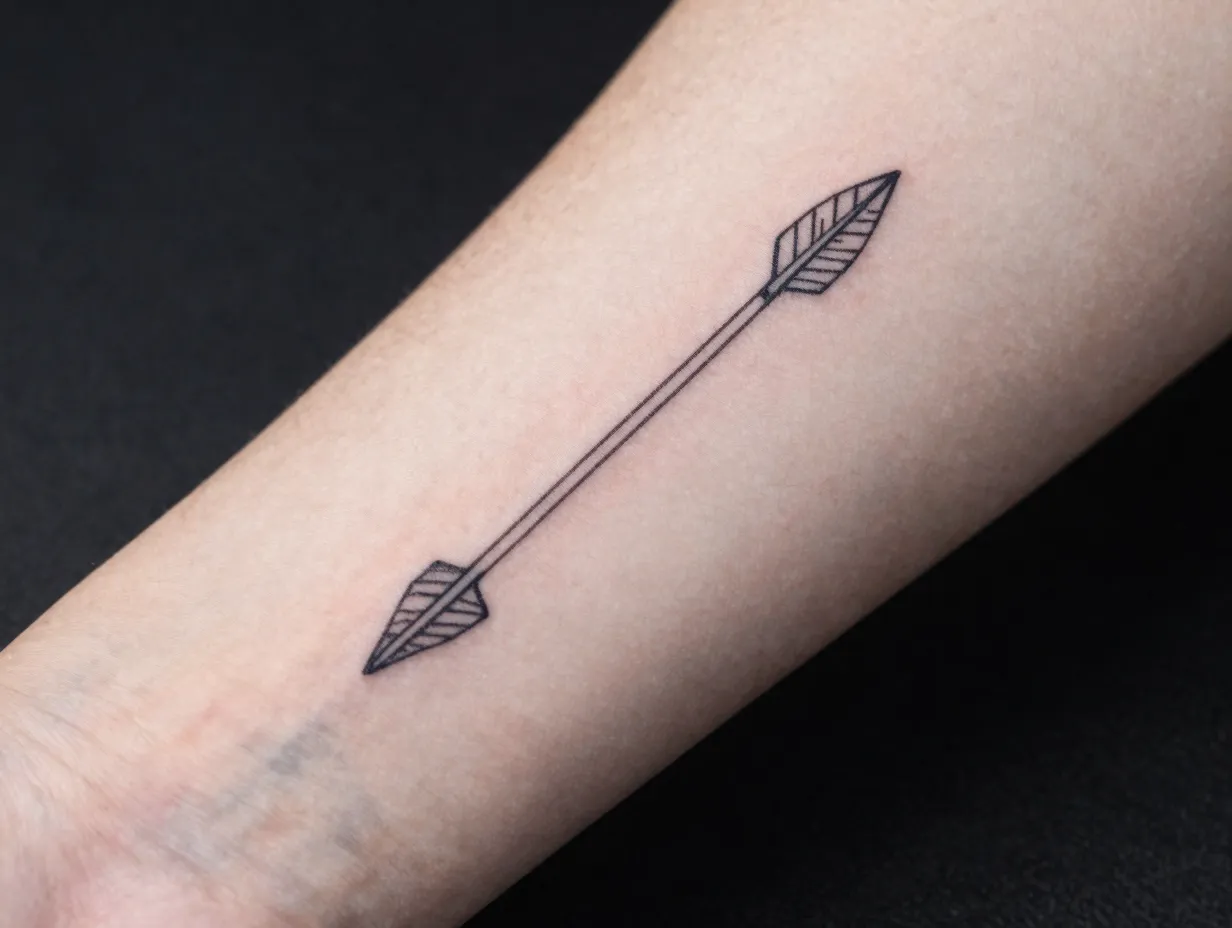
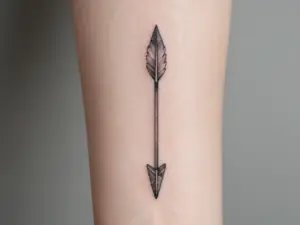
The fine-line minimalist arrow is the most popular entry point into bow and arrow tattoo designs. A single arrow rendered in thin, precise lines, often without a bow at all, conveys direction and purpose without visual noise.
Best placements: Wrist, inner forearm, behind the ear, collarbone.
Why it works: The simplicity is deceptive. A single fine-line arrow demands exceptional technical skill from the artist because every wobble in the line is visible. When executed well, the result is elegant and timeless.
Meaning: A lone arrow pointing forward symbolizes moving ahead after hardship. Many women choose this design after a major life transition, a career change, the end of a relationship, or a personal health milestone.
Practical tip: Fine-line tattoos fade faster than bold-line work, especially on areas with frequent sun exposure. Budget for a touch-up session within two to three years.
2. Floral Bow and Arrow Tattoo
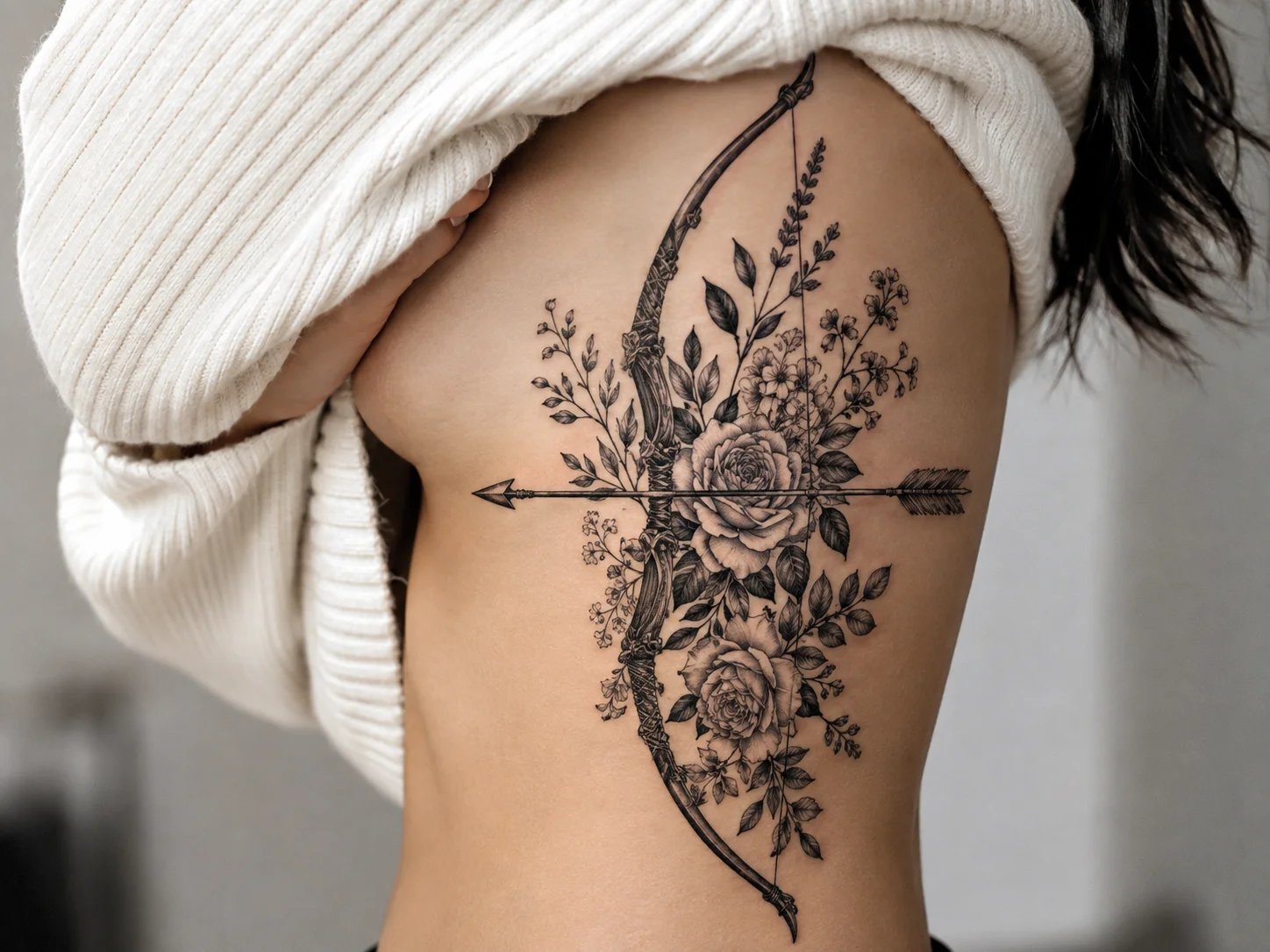
Wrapping the bow or arrow shaft in botanical elements, roses, wildflowers, lavender, eucalyptus, softens the weapon’s edge and introduces themes of natural beauty and growth alongside strength.
Best placements: Thigh, ribcage, upper arm, spine.
Why it works: The contrast between the rigid arrow and the organic flow of flowers creates visual tension that mirrors the symbol’s core meaning. The floral elements also allow for personalization; a woman might choose her birth month flower or a bloom associated with someone she loves.
Meaning: Flowers added to a bow and arrow design typically represent the coexistence of beauty and power, or the idea that strength can grow from delicate beginnings.
Style note: Blackwork florals give a bold, graphic result. Fine-line botanical drawings feel more delicate and illustrative. Watercolor flowers add a painterly softness.
3. Geometric Bow and Arrow Tattoo
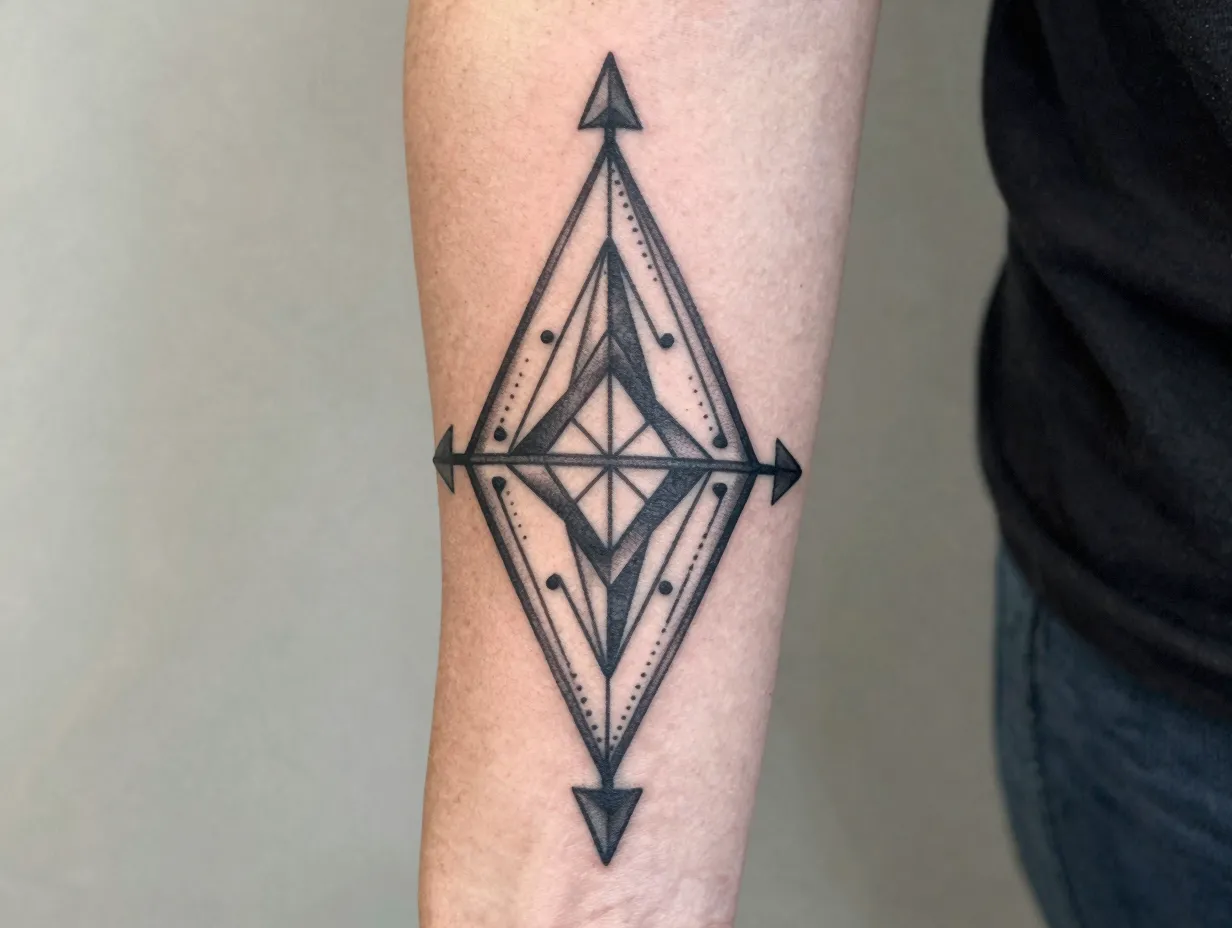
Geometric designs replace organic curves with precise angles, triangles, dotwork, and mandala-inspired patterns. The arrow itself may be constructed from diamond shapes or intersecting lines.
Best placements: Forearm, calf, upper back, sternum.
Why it works: Geometry introduces a sense of order and mathematical precision. The design feels intentional and architectural, appealing to women who are drawn to structure and logic as personal values.
Meaning: Sacred geometry has long been associated with the universe’s underlying order. A geometric bow and arrow suggests that the wearer’s path is purposeful and aligned with something larger than circumstance.
Artist consideration: Geometric tattoos require an artist who specializes in linework and symmetry. Even minor inconsistencies in angle or spacing are immediately noticeable. Always review healed geometric work in the artist’s portfolio before booking.
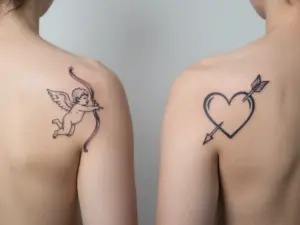
4. Watercolor Bow and Arrow Tattoo
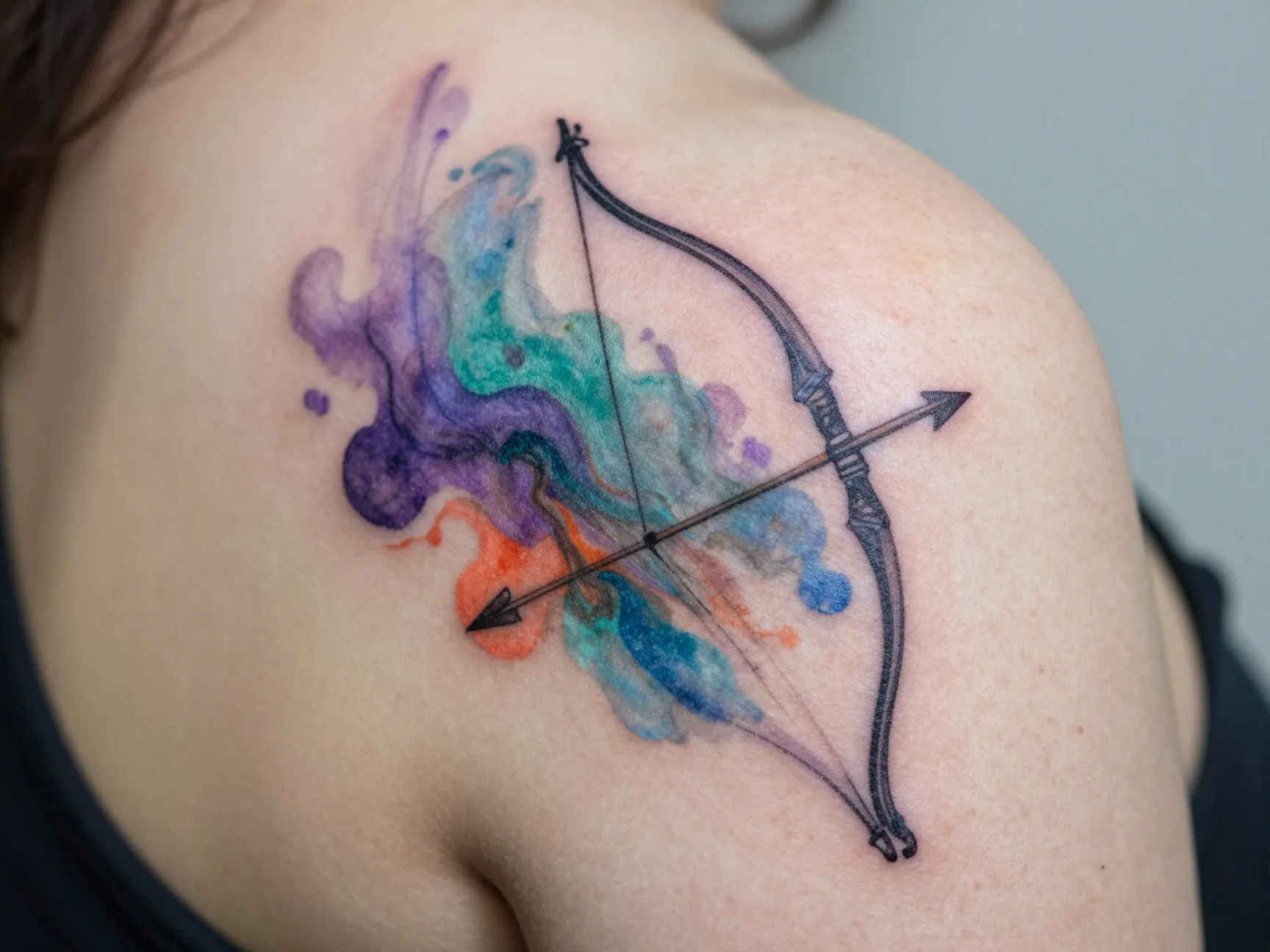
Watercolor tattoos mimic the look of paint washes, loose, flowing color bleeds that surround or fill the bow and arrow design. Purples, teals, corals, and blues are common palette choices.
Best placements: Shoulder blade, upper arm, thigh, ribcage.
Why it works: The watercolor style transforms a weapon into something that feels artistic and expressive. The color choices can be deeply personal, reflecting a favorite palette or a meaningful color association.
Meaning: Watercolor designs often emphasize creativity, freedom, and emotional expression. The fluidity of the color wash suggests adaptability, the ability to move and change while still holding a clear direction (the arrow).
Longevity note: Watercolor tattoos are the most debated style in terms of aging. Without bold black outlines to anchor the color, the washes can blur and fade significantly over time. Many experienced artists recommend adding a subtle black linework base to preserve the design’s integrity.
5. Artemis or Goddess-Inspired Bow and Arrow Tattoo
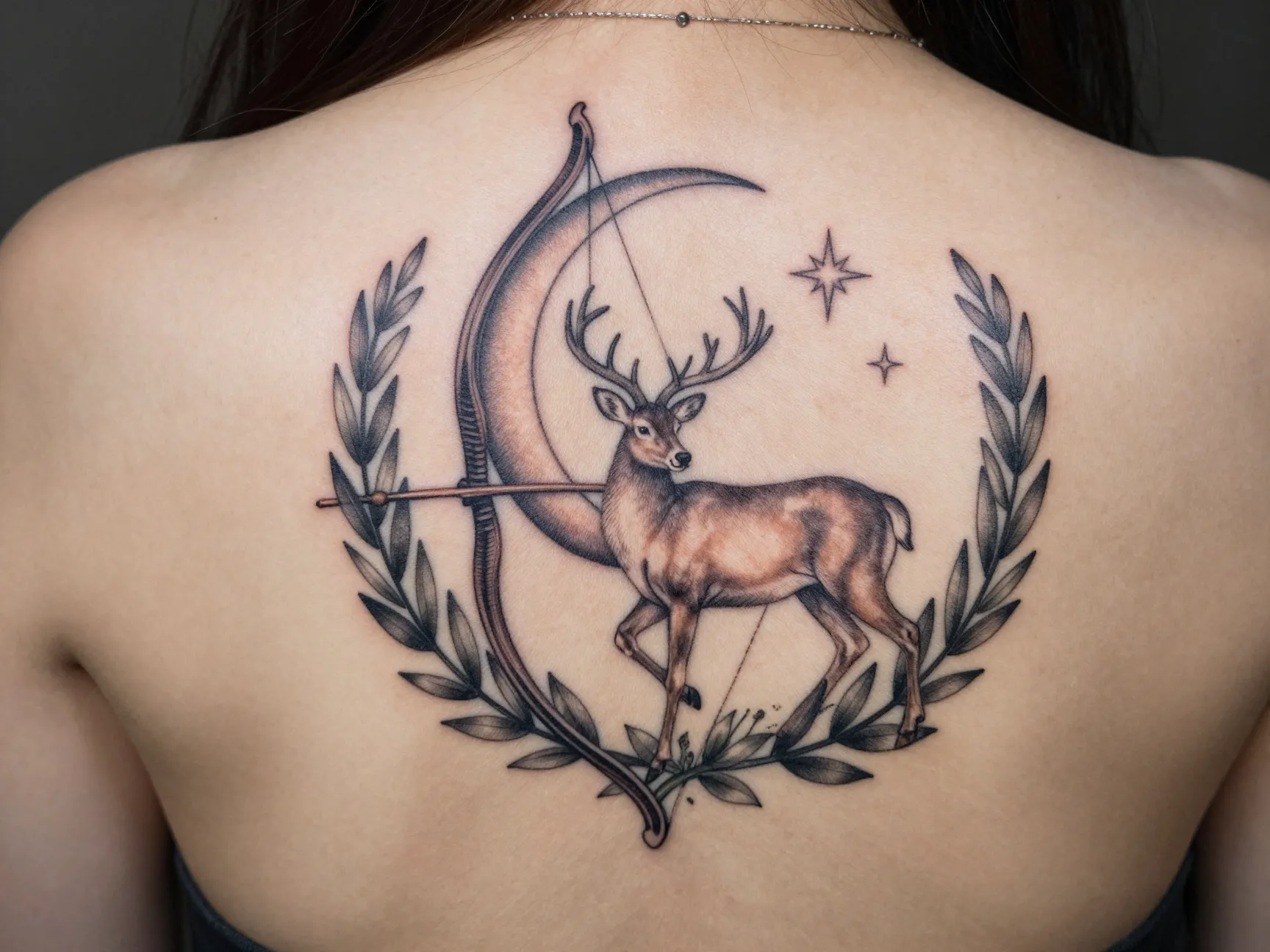
Drawing directly from Greek or Roman mythology, this design incorporates imagery associated with Artemis (Greek) or Diana (Roman), the goddess of the hunt, the moon, and wilderness. Elements might include a crescent moon, deer, stars, laurel wreaths, or a full goddess figure.
Best placements: Upper back, thigh, forearm, calf.
Why it works: Mythology gives a tattoo narrative depth. An Artemis-inspired design is not just decorative; it is a declaration of alignment with a specific set of values, independence, connection to nature, and fierce self-sovereignty.
Meaning: Artemis was one of the few Olympian goddesses who answered to no one. She was a protector of young women and a hunter of extraordinary skill. Invoking her image in a tattoo is a powerful statement of female autonomy.
Design tip: Pairing the bow and arrow with a crescent moon is the most recognizable shorthand for Artemis. Adding stars or a forest silhouette in the background deepens the mythological reference without requiring a full figurative portrait.
6. Celestial Bow and Arrow Tattoo
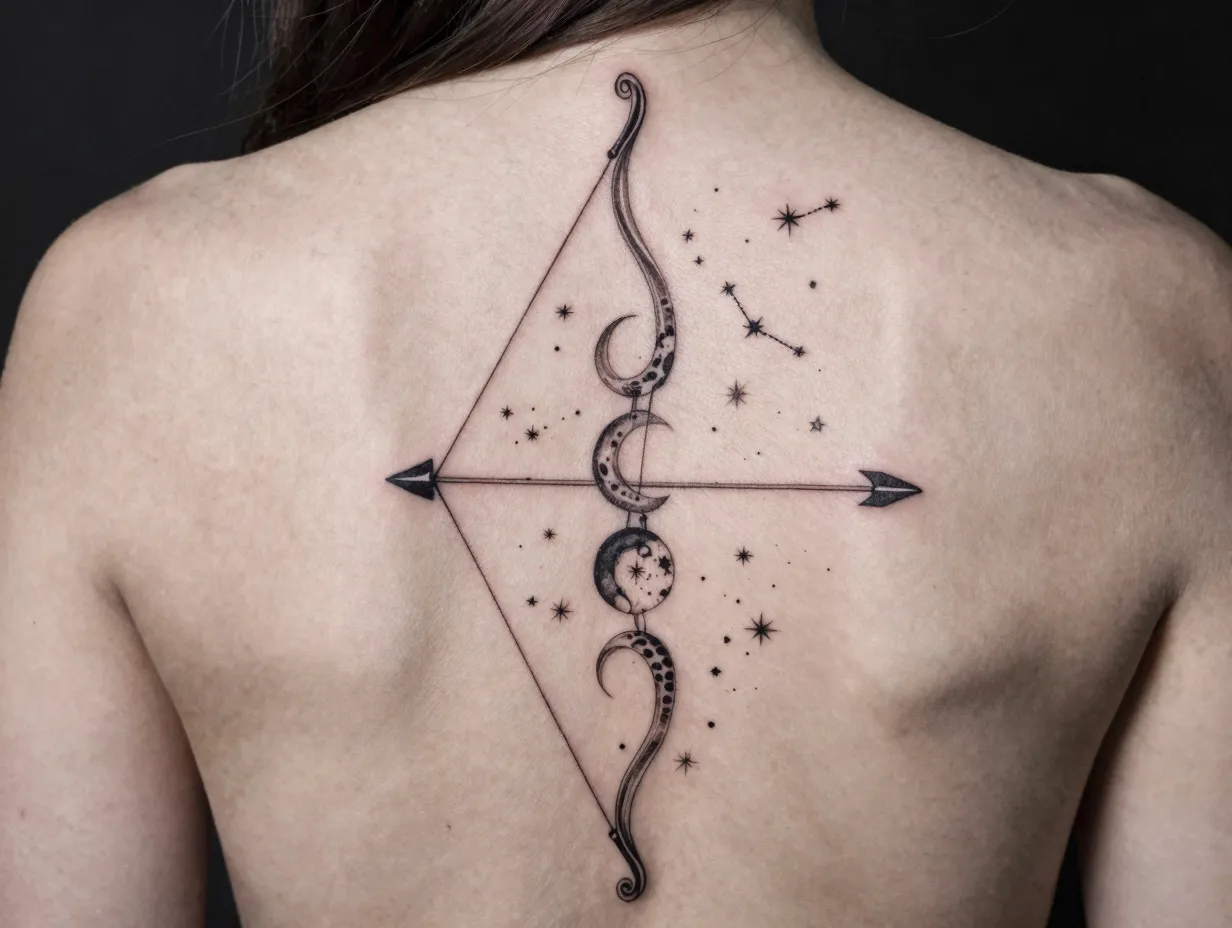
The celestial design combines the bow and arrow with moon phases, stars, constellations, and cosmic imagery. The arrow might be drawn as a shooting star, or the bow might be formed from a crescent moon shape.
Best placements: Spine, sternum, collarbone, upper arm.
Why it works: Celestial tattoos have surged in popularity because they connect personal identity to something vast and enduring. The night sky is universal, it belongs to everyone and carries associations of mystery, destiny, and infinite possibility.
Meaning: A celestial bow and arrow suggests that the wearer’s goals are sky-high and that she is guided by forces beyond the everyday. It can also represent a birth chart connection, with the arrow pointing toward a specific constellation of personal significance.
Style pairing: Fine-line blackwork suits celestial designs beautifully, allowing for intricate star maps and delicate moon phase sequences without visual clutter.
7. Arrow with Feather Detail Tattoo
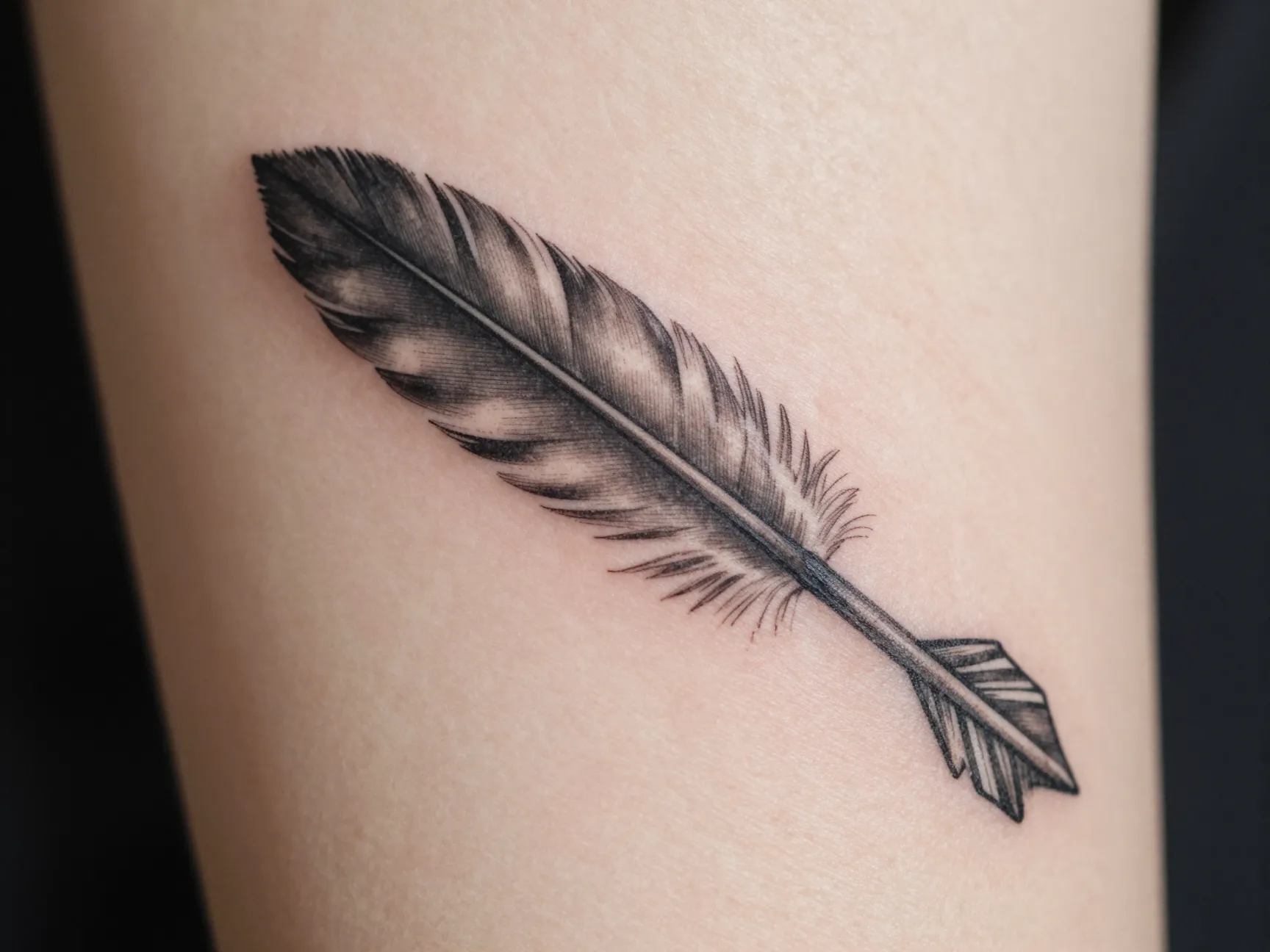
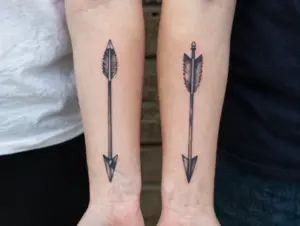
This design focuses on the arrow’s fletching, the feathered tail that stabilizes flight. The feather is rendered in careful detail, sometimes drawn as a single large plume that transitions into the arrow shaft.
Best placements: Forearm, finger, spine, behind the ear.
Why it works: The feather-to-arrow transition is a visually elegant motif that highlights the craftsmanship of the weapon. It also introduces the symbolism of feathers, lightness, freedom, and connection to the spiritual or the sky.
Meaning: In many Indigenous American traditions, eagle feathers on an arrow carry deep ceremonial significance. More broadly, feathers represent the ability to rise, to travel far, and to carry messages between worlds. Combined with the arrow, the design speaks to purposeful flight.
Cultural sensitivity note: When drawing on Native American imagery, it is important to approach the design with respect and research. Working with an artist who understands the cultural context, or choosing a more generalized feather motif, avoids inadvertent appropriation.
8. Compass and Arrow Tattoo
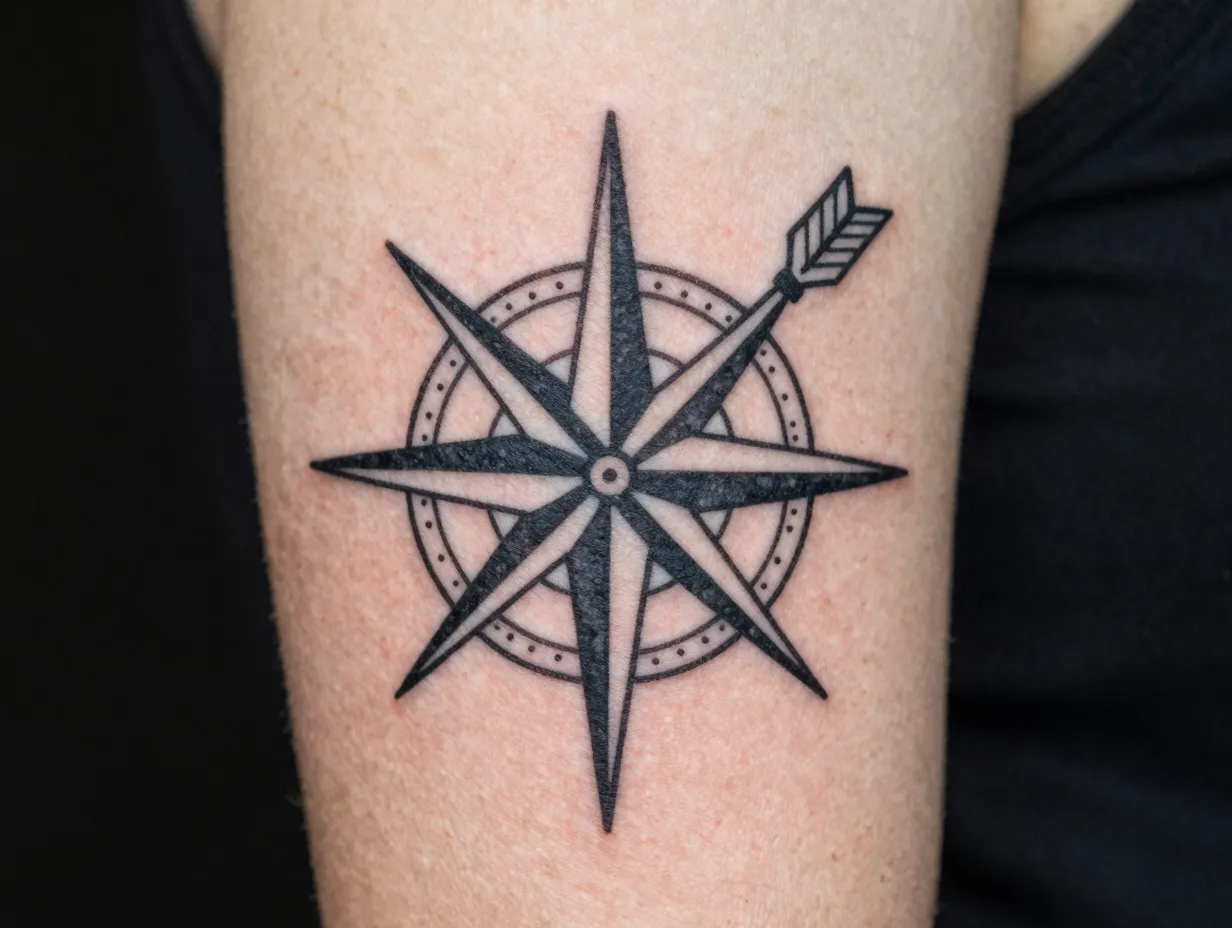
The compass rose and the arrow share a visual language of direction. In this design, the two are merged, the arrow may replace the compass needle, or the compass may frame the arrow as its central element.
Best placements: Forearm, upper arm, calf, shoulder.
Why it works: The combination doubles down on the theme of navigation and purpose. It is a natural choice for women who have undergone a major transition and want a permanent reminder to stay oriented toward their true north.
Meaning: The compass represents guidance and the ability to find one’s way regardless of circumstance. The arrow adds momentum, not just knowing the direction, but actively moving toward it. Together, they form a powerful statement about intentional living.
Style options: Nautical compass designs with traditional linework feel bold and graphic. Geometric compass roses with a fine-line arrow feel more modern and refined. Watercolor backgrounds can add warmth and color to either approach.
9. Neo-Traditional Bow and Arrow Tattoo
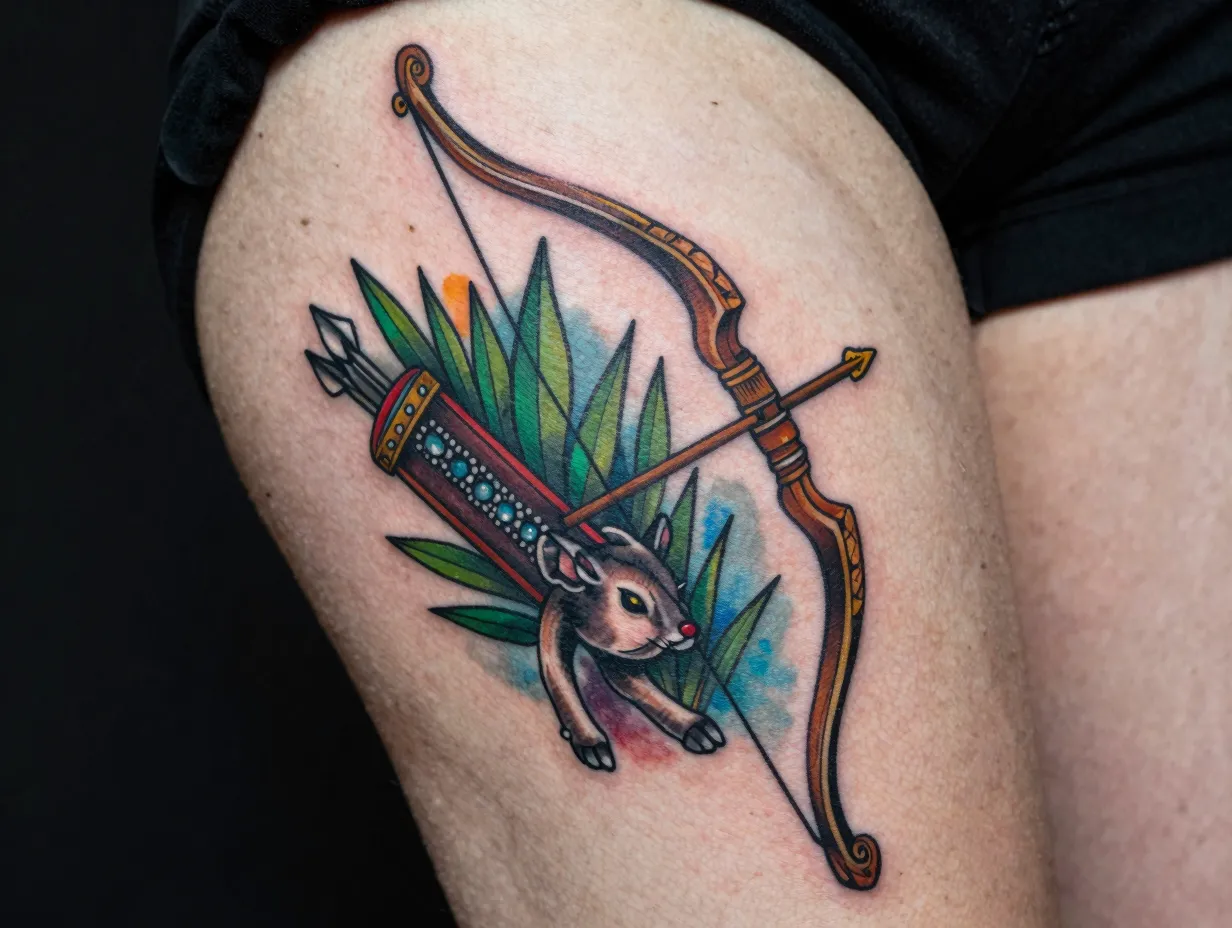
Neo-traditional tattooing updates classic American traditional style with richer color palettes, more varied line weights, and illustrative detail. A neo-traditional bow and arrow might feature a fully rendered wooden bow with ornate carvings, a jeweled quiver, and bold botanical or animal companions.
Best placements: Upper arm (sleeve), thigh, calf, upper back.
Why it works: Neo-traditional designs are built to last. The bold outlines and saturated colors age better than fine-line or watercolor work. The style also allows for elaborate storytelling within a single piece, a full scene rather than a single symbol.
Meaning: The richness of the neo-traditional style suggests depth of character and a love of craftsmanship. Women who choose this style often want a tattoo that functions as wearable art, something that rewards close inspection and tells a layered story.
Artist consideration: Neo-traditional is a highly specialized style. Seek out artists who list it explicitly as a specialty and whose portfolio shows consistent color saturation, clean line weights, and strong composition.
Placement Guide: Where to Put a Bow and Arrow Tattoo
The arrow’s linear shape makes it unusually versatile in terms of placement. The table below summarizes how different body locations interact with the design.
| Placement | Best Design Styles | Key Consideration |
|---|---|---|
| Spine | Minimalist, celestial, floral | Arrow follows the spine’s vertical line naturally |
| Forearm | Fine-line, geometric, compass | High visibility; fades faster with sun exposure |
| Ribcage | Floral, watercolor, neo-traditional | More painful; allows for larger, detailed work |
| Thigh | Goddess-inspired, neo-traditional, geometric | Large canvas; lower visibility for professional settings |
| Wrist / Finger | Minimalist, feather detail | Fades quickly; requires frequent touch-ups |
| Upper back / Shoulder blade | Watercolor, Artemis-inspired, celestial | Excellent for large, flowing compositions |
How to Choose the Right Design for You
With so many options across the 9 Inspiring Bow and Arrow Tattoos for Women: Designs and Meanings explored above, narrowing down the right choice can feel overwhelming. The following framework simplifies the decision.
Step 1: Identify the core meaning. Ask what the tattoo needs to say. Is it about moving forward, honoring a personal mythology, or celebrating a specific achievement? The meaning drives the design.
Step 2: Choose a style that matches your aesthetic. Review each style category, minimalist, floral, geometric, watercolor, neo-traditional, and notice which ones feel most like “you.” Pull reference images from tattoo platforms and save a folder of designs that consistently appeal.
Step 3: Consider placement relative to your lifestyle. High-visibility placements like the forearm and wrist are seen daily, by the wearer and by others. Lower-visibility placements like the ribcage and thigh feel more private and personal.
Step 4: Research artists by style. A watercolor specialist and a geometric linework artist are not interchangeable. Search artist portfolios on Instagram and tattoo-specific platforms, filtering by style. Look specifically at healed work, not just fresh tattoos, which always look more vibrant.
Step 5: Book a consultation before a session. A reputable artist will discuss the design, adjust sizing for the chosen placement, and flag any technical concerns before the needle touches skin.
Aftercare and Longevity Tips
The quality of a tattoo five years after it is done depends as much on aftercare as on the artist’s skill.
- Keep it moisturized. Dry skin accelerates fading. Use a fragrance-free lotion daily once the tattoo is fully healed.
- Apply SPF consistently. UV exposure is the single biggest factor in tattoo fading. Apply broad-spectrum SPF 30 or higher to any tattooed skin exposed to sunlight.
- Avoid prolonged water submersion during the healing period (typically two to four weeks). Pools, hot tubs, and ocean water introduce bacteria and can leach ink.
- Plan for touch-ups. Fine-line and watercolor tattoos in particular benefit from a touch-up session at the one-to-two-year mark.
- Stay hydrated and maintain skin health. Well-hydrated skin holds ink more effectively over time.
Conclusion
The bow and arrow is one of the most versatile and meaningful symbols available in tattoo art. Whether the goal is a delicate fine-line arrow on the wrist or an elaborate neo-traditional composition on the thigh, the designs covered across these 9 Inspiring Bow and Arrow Tattoos for Women: Designs and Meanings offer a starting point for every aesthetic preference and personal intention.
Actionable next steps:
- Save reference images from this guide that resonate most strongly.
- Define the personal meaning the tattoo should carry before approaching any artist.
- Research artists in your area or within travel distance who specialize in the chosen style, review healed portfolio work, not just fresh tattoos.
- Book a consultation to discuss sizing, placement, and design customization.
- Prepare for aftercare by purchasing fragrance-free lotion and broad-spectrum SPF before the appointment.
A bow and arrow tattoo done thoughtfully, with the right artist, the right placement, and a clear personal meaning, is a piece of wearable art that grows more meaningful with every year it is carried.
References
- Pew Research Center. (2016). Tattooed Americans: Younger, lower-income adults more likely to have tattoos. https://www.pewresearch.org
- Lineberry, C. (2007). Tattoos: The ancient and mysterious history. Smithsonian Magazine. https://www.smithsonianmag.com
- Mifflin, M. (2013). Bodies of Subversion: A Secret History of Women and Tattoo. powerHouse Books.
- Aldhouse-Green, M. (2004). An Archaeology of Images: Iconology and Cosmology in Iron Age and Roman Europe. Routledge.
- DeMello, M. (2000). Bodies of Inscription: A Cultural History of the Modern Tattoo Community. Duke University Press.