Survival Skills List Every Angler Should Master for the Wild
Roughly 700 anglers die on the water in the United States each year, and cold-water drowning claims the majority of them within the first few minutes of immersion. Most were experienced on a rod. Very few had rehearsed what to do when the rod became irrelevant. The 6 survival skills list every angler should master for the wild is not about fear, it is about closing a gap that most fishing education ignores entirely.
Disclosure: This post contains affiliate links. As an Amazon Associate, we earn from qualifying purchases, and at no extra cost to you.
This article covers each skill with enough practical depth that you can act on it, not just recognize it. The focus is on the wilderness and remote-water angler, though every skill applies equally in day-trip freshwater settings.
Key Takeaways
- Cold-water immersion is the leading killer of anglers; wearing a PFD and dressing to swim are non-negotiable in remote water.
- A float plan left with a trusted contact costs nothing and can direct rescuers to your exact location.
- Basic first aid knowledge specific to angling injuries, hooks, lacerations, hyperthermia, hypothermia, closes a gap that standard CPR cards do not cover.
- Fire, shelter, and water purification form the core bushcraft triad every remote angler should practice before they need it.
- Improvised fishing and foraging are last-resort skills, but knowing them prevents the panic that leads to poor decisions.
- Regulation awareness and responsible handling are part of survival planning, not separate from it.
1. Cold-Water Safety and Personal Flotation
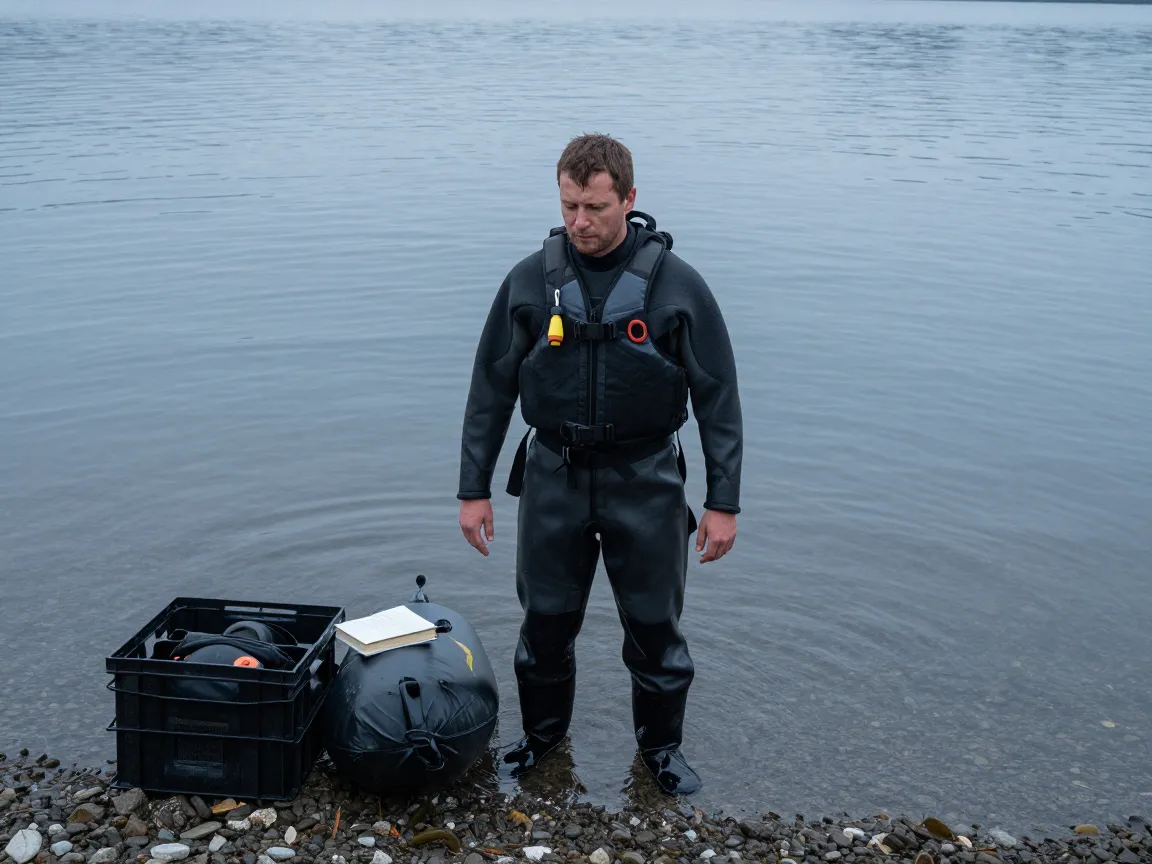
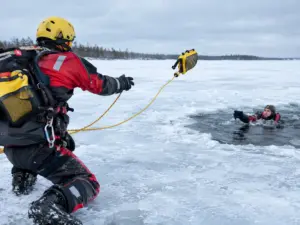
Water temperature kills faster than air temperature. At 50°F (10°C), swim failure can occur in under an hour; at 40°F, meaningful physical control disappears in roughly 30 minutes or less. The “1-10-1 principle” taught by the Cold Water Boot Camp program in Canada breaks this down simply: one minute of cold shock where breathing becomes uncontrollable, ten minutes of swimming or self-rescue capability, and then one hour before unconsciousness from hypothermia sets in. That ten-minute window is where a PFD decides whether you live.
Modern inflatable PFDs weigh less than 400 grams and compress to roughly the size of a paperback book. There is no practical reason to leave one at home. The “dress to swim” protocol goes further: it means choosing underlayers, typically a wetsuit or drysuit undergarment, that keep body core temperature stable if you go in. Waders without a wading belt fill with water and invert a person in seconds. A cinched wading belt reduces flooding rate significantly and is now standard guidance from the American Canoe Association and most kayak-angling communities.
Practicing a self-rescue wet exit in a controlled setting before your first remote trip is not optional if you fish from a kayak or small craft. Knowing how your body responds to cold water in a pool removes the psychological shock on a live river. Pair this with the habit of never fishing cold water alone, and you have addressed the single most lethal risk in the sport.
2. Emergency Planning and Navigation
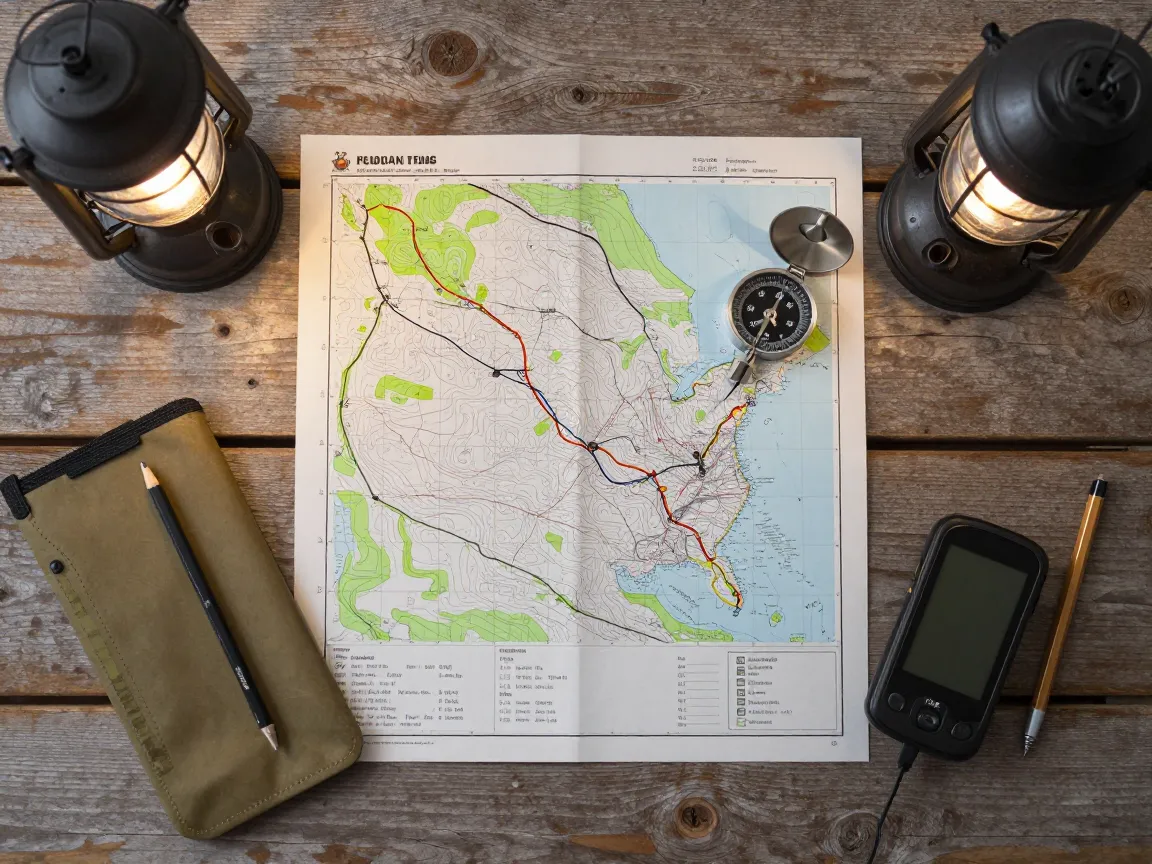
A float plan is a written or digital document left with a trusted contact that states where you are going, what route you are taking, what your vessel looks like, and when you expect to return. If you do not check in by a specific time, that person calls search and rescue. The U.S. Coast Guard and most state fish-and-wildlife agencies publish free float-plan templates. Filling one out takes five minutes. It costs nothing, and it converts a missing-person case into a targeted search with a known last position.
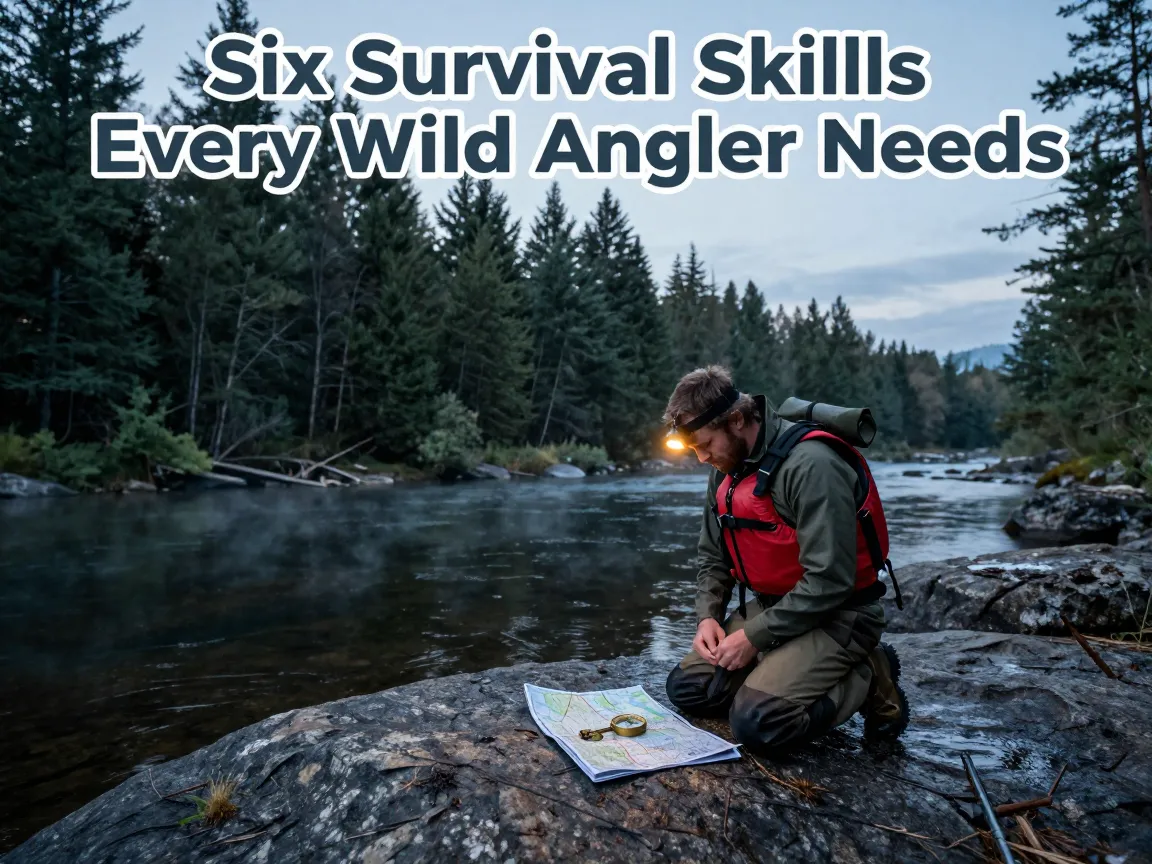
Navigation is the other half of this skill. GPS devices fail, batteries die, and cellular signals disappear well before you reach good backcountry water. Knowing how to read a 1:24,000 USGS topographic map and use a baseplate compass with declination adjustment is a durable skill that does not depend on any power source. Practice taking a bearing, following it on foot for 200 meters, and triangulating your position from two known landmarks. These are learnable in an afternoon and forgettable without practice, so run through them once per season.
Mark your put-in and camp on a handheld GPS before you leave, not after you have paddled three miles downstream. If the device fails, you have already committed your landmarks to paper. Knowing the direction of the nearest road or river mouth from your position is worth noting in your float plan as well.
3. Wilderness First Aid for Anglers
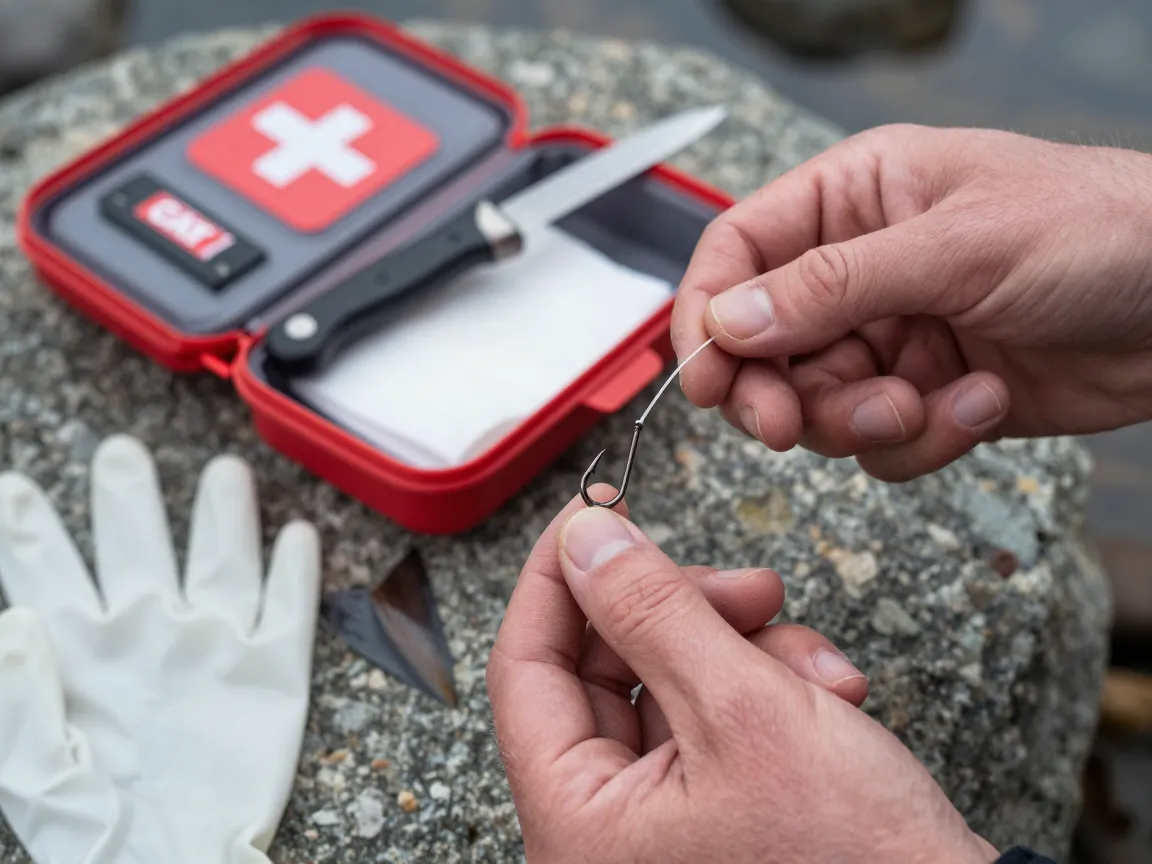
Standard first aid courses spend little time on the specific injuries that remote fishing produces. A fishhook buried past the barb in a fingertip requires a different technique than a simple laceration. The “string-yank” method, looping monofilament around the bend of the hook and applying sharp rearward tension while depressing the eye, removes embedded hooks without forcing the barb through tissue. It works reliably on small to medium hooks and requires nothing more than a piece of your own line.
Lacerations from fillet knives and fish fins are the most common angler injuries. Direct pressure for a minimum of ten minutes without lifting the dressing controls most bleeding from hand wounds. A tourniquet, the CAT (Combat Application Tourniquet) is a widely available and well-tested option, is appropriate for arterial bleeding on a limb when direct pressure fails. Carry one if you fish remote areas.
Heat exhaustion and hypothermia are equally relevant and often underestimated by anglers who think temperature management is a mountaineering concern. Hypothermia begins at a core body temperature of 95°F (35°C) and can develop in 50°F air with wind and wet clothing. The field response is to remove wet layers, insulate from the ground, and add a heat source, another person’s body heat is effective when nothing else is available. For heat exhaustion, move to shade, loosen clothing, and cool the neck, armpits, and groin with water. Neither condition requires a full wilderness medicine certification to manage effectively, but both require knowing the signs before they appear in someone in your group.
4. Fire Building, Shelter, and the Bushcraft Core
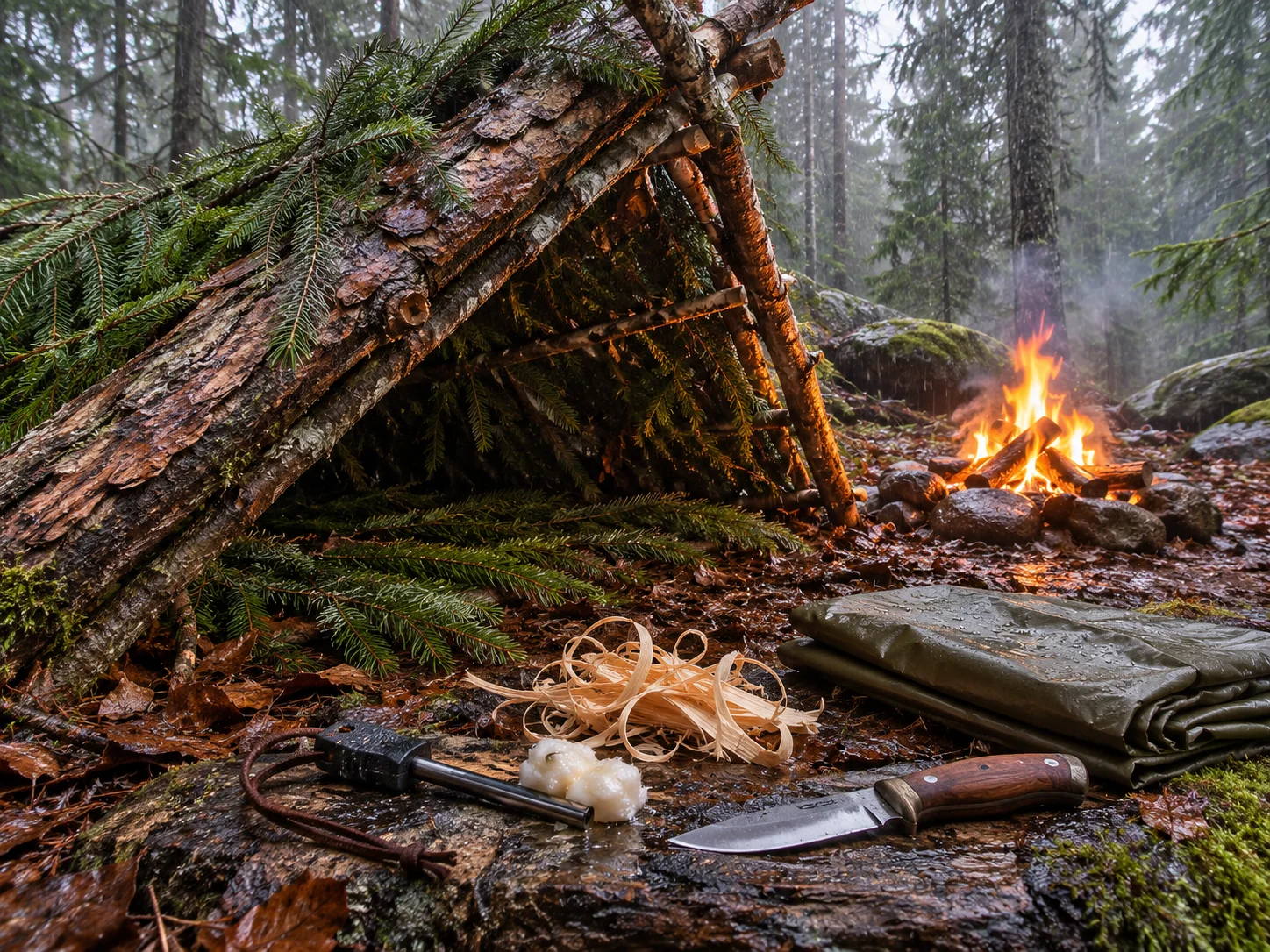
A fire provides warmth, signals rescuers, purifies water by boiling, dries clothing, and stabilizes morale. Learning to build one under wet conditions is what separates useful fire-building skill from fair-weather competence. A ferrocerium rod produces sparks at over 5,400°F and works when a lighter is wet or empty. Carry one in your fishing vest along with a small container of petroleum jelly-soaked cotton balls, which catch sparks reliably in rain. The feather-stick technique, shaving thin curls from the outer face of a dry branch without detaching them, creates ignition material from green-ish wood when dry tinder is scarce.
Shelter construction does not require a tarp to be effective, though a silnylon tarp weighing 400 grams is worth carrying on any overnight trip. A simple lean-to built from branches at a 45-degree angle, shingled with large bark pieces or boughs, sheds rain and reduces wind chill substantially. The critical rule is insulation from the ground: ground contact drains body heat roughly 25 times faster than still air at the same temperature. Pile dry leaf litter, pine boughs, or your empty gear bags between your body and the earth.
A knife is the tool that enables both skills. A fixed-blade with a Scandinavian or flat grind in the 90-110mm range performs all bushcraft tasks adequately and is easier to maintain in the field than a folding knife. Keep the edge sharp; a dull knife requires more force and causes more hand injuries than a sharp one.
5. Water Sourcing, Purification, and Basic Foraging
Dehydration impairs judgment before it produces thirst. In a multi-day unplanned survival situation, which is what a capsized kayak in a remote lake can become, water access is a faster threat than food. Running water is preferable to standing water for sourcing, and water collected above a trail or campsite is preferable to water collected below. None of that matters without treatment.
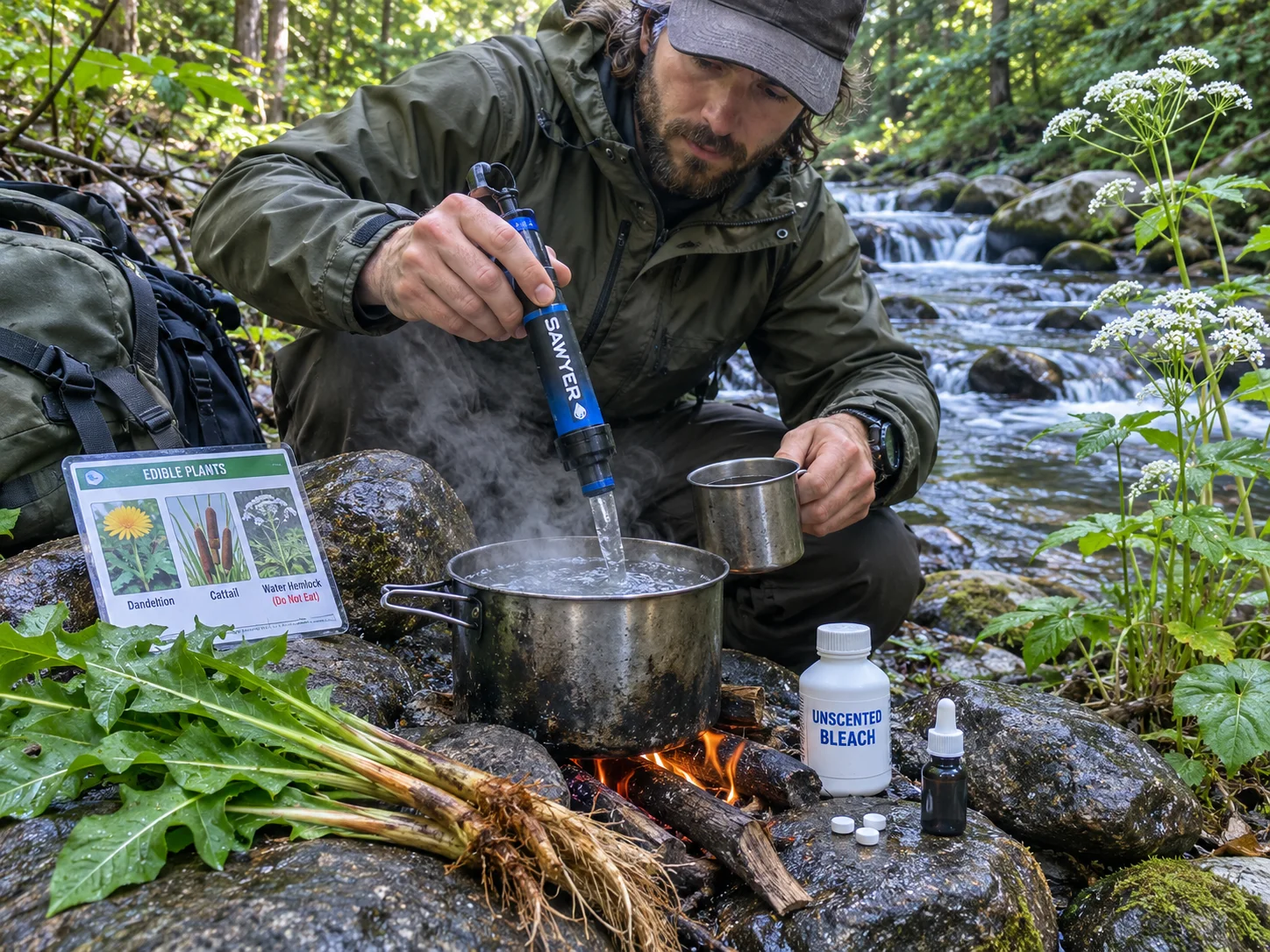
Boiling is the most reliable method and requires no gear beyond a metal container. One minute at a full rolling boil (three minutes above 6,500 feet elevation) kills all pathogens relevant to wilderness water. Portable filter straws like the Sawyer Squeeze handle most biological threats and weigh under 90 grams. Chemical treatment using sodium hypochlorite (unscented household bleach, 8-10 drops per liter) or iodine tablets handles viruses that filters miss but takes 30 minutes to work and leaves an aftertaste that makes hydration harder when morale is already low. Carry both a filter and chemical backup.
Foraging is a secondary skill for remote anglers, not a primary food strategy. Caloric output from foraging rarely exceeds caloric input in most North American environments without significant training. What foraging knowledge does provide is the ability to identify common edibles, dandelion leaves, wood sorrel, cattail rhizomes, and avoid toxic lookalikes like water hemlock, which grows at water’s edge and is one of North America’s most poisonous plants. A foraging card laminated and kept in a gear bag costs about two dollars and covers the high-value, high-risk identifications in your region.
6. Improvised Fishing, Field Processing, and Food Preservation
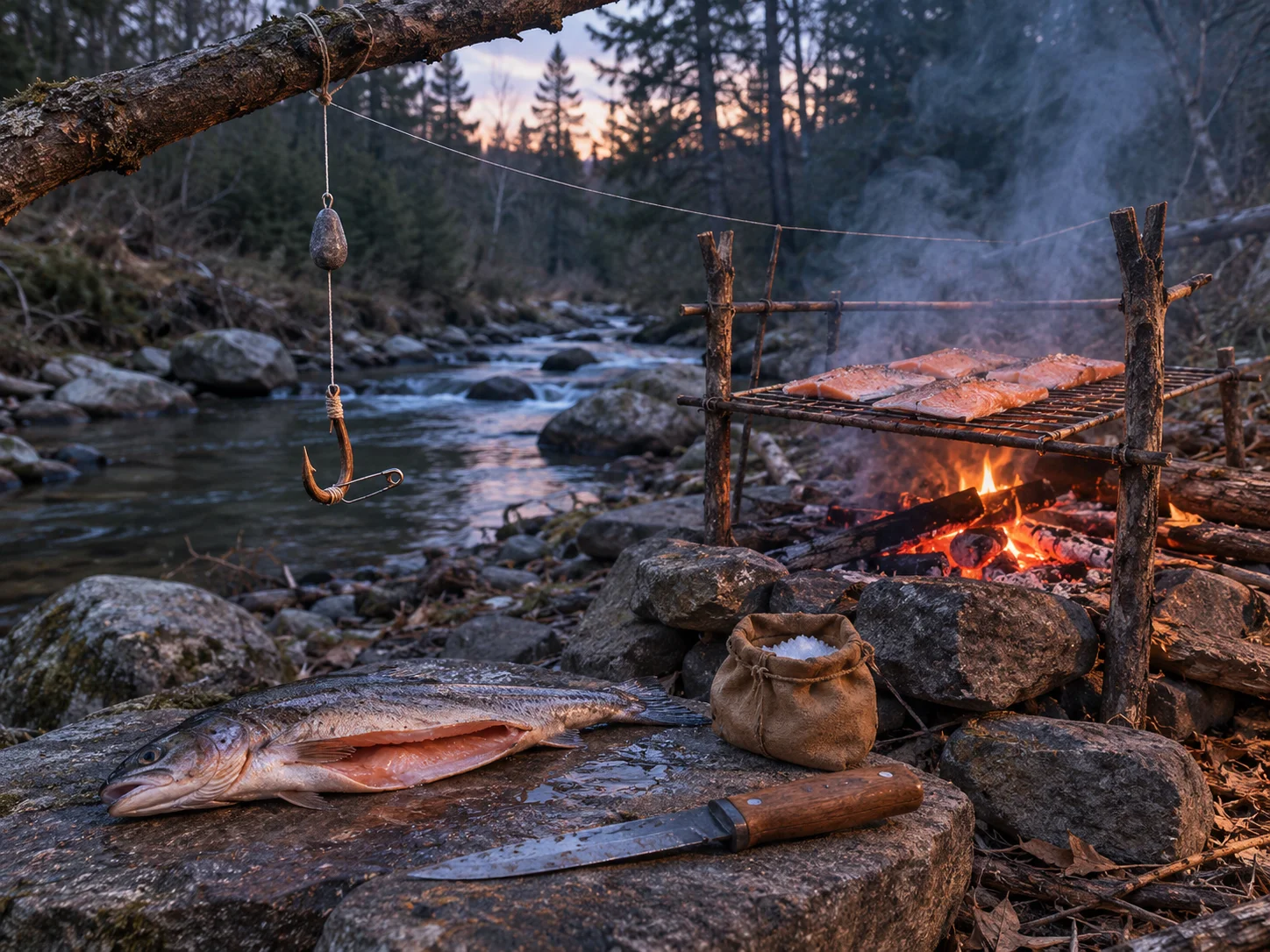
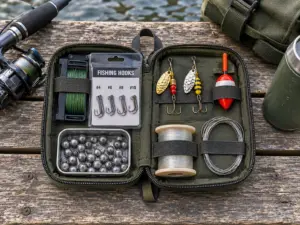
When standard gear is lost or broken, the ability to catch fish with improvised tools matters. Gorge hooks, small, sharpened slivers of bone, hardwood, or metal tied at their center to a line, predate barbed hooks by thousands of years and still work. A safety pin bent and sharpened catches pan fish. Passive methods like a set line (a length of line tied to a branch overhanging water, weighted, baited, and left overnight) require no effort and catch fish while you do other things. In a survival context, passive capture methods are more calorie-efficient than active fishing.
Field processing removes the need to carry fish alive and extends edibility. Gut a fish within two hours of catch in warm weather; gill and gut and keep cold in cool weather. For short-term preservation without refrigeration, cold-smoking over a low, slow fire at roughly 150-200°F for several hours dries the flesh enough to inhibit bacterial growth for 24-48 hours. Salt, if carried, draws moisture from fillets and extends this further. Knowing how to tell if fish has spoiled, ammonia smell, gray gill color, cloudy eyes, flesh that does not spring back when pressed, is as important as the preservation method itself.
Regulation awareness belongs here. Catch-and-release practices, size limits, and species protections exist in every jurisdiction for sound ecological reasons, and survival situations do not automatically suspend them. Many states have emergency provisions allowing harvest outside normal limits when life is genuinely at risk, but these provisions are narrow. Knowing your local regulations before you go, and knowing what a genuine survival emergency means legally, prevents both ethical lapses and unnecessary legal exposure.
Quick Comparison
| Skill | Core Tool | Minimum Practice Needed | Failure Risk Without It |
|---|---|---|---|
| Cold-water safety | PFD, wading belt | Wet-exit drill once per season | Drowning within minutes |
| Emergency planning | Float plan, compass | Map-and-compass afternoon course | Unlocatable search area |
| Wilderness first aid | First aid kit, tourniquet | Wilderness First Aid course (16 hrs) | Uncontrolled bleeding, untreated shock |
| Fire and shelter | Ferro rod, tarp | Practice in wet conditions | Hypothermia overnight |
| Water purification | Filter + chemical tabs | Read filter instructions once | Waterborne illness within 24 hrs |
| Improvised fishing | Line, improvised hooks | Set-line practice once | Starvation on extended delay |
Conclusion
The 6 survival skills list every angler should master for the wild is not an abstract preparedness checklist. Each skill addresses a specific, documented way that fishing trips go fatally wrong. Cold-water immersion is first because it is the fastest killer. Everything else buys time and options.
The most useful next step is straightforward: identify the one skill from this list you have never practiced under realistic conditions and address that before your next remote trip. For most anglers, that is the wet-exit drill or the wilderness first aid course. Both can be completed in a single day and do not require expensive equipment. Take the gap seriously before the water does.