Survival List Emergency Preparedness Must-Haves for Every Angler
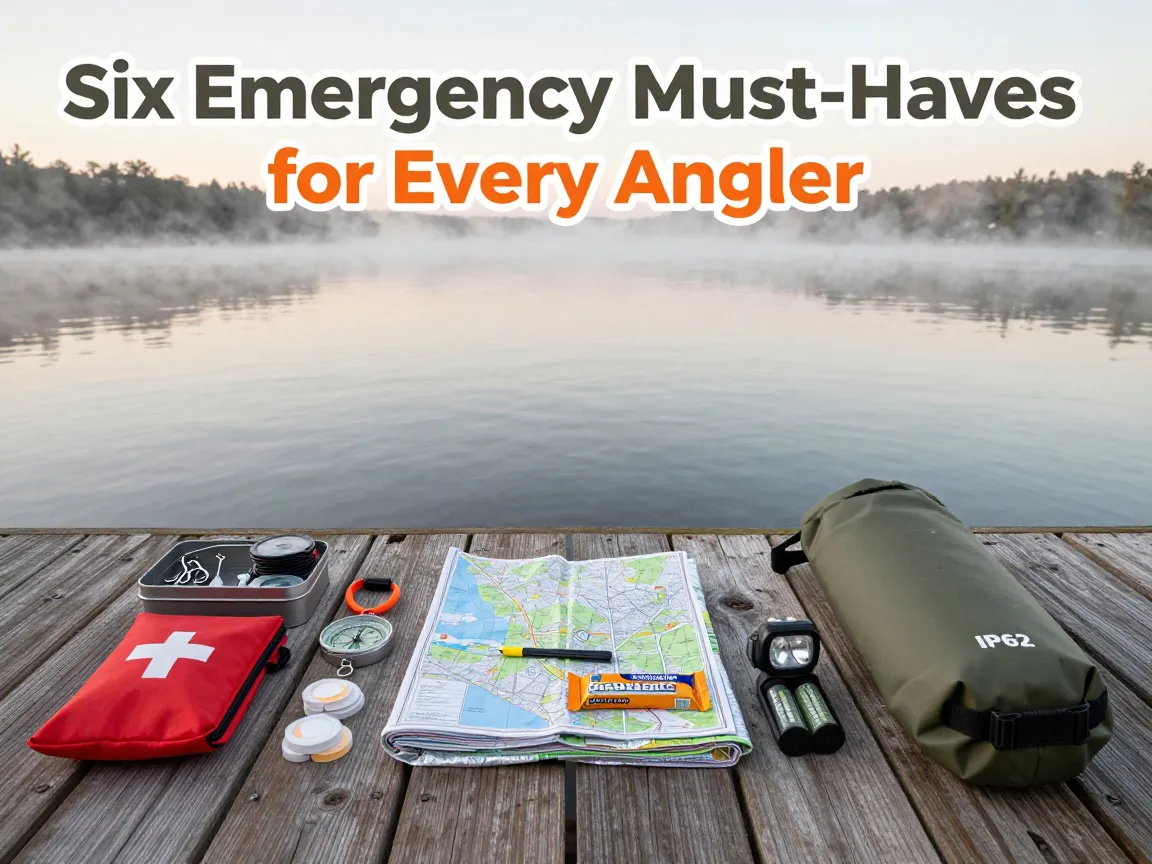
Each year, thousands of anglers who set out for routine fishing trips end up stranded, injured, or disoriented because they left the dock without basic emergency gear. The gap between a minor inconvenience and a life-threatening situation on the water often comes down to what’s in your pack. The 6 survival list emergency preparedness must-haves for every angler covered here address the most common failure points, from getting lost on a large lake after dark to dealing with a fishhook wound miles from the nearest road. These aren’t optional extras. They’re the floor, not the ceiling, for anyone who fishes remote or semi-remote water.
Disclosure: This post contains affiliate links. As an Amazon Associate, we earn from qualifying purchases, and at no extra cost to you.
Key Takeaways
- Survival fishing tackle is the foundation of any angler emergency kit, but it needs to be paired with shelter, signaling, and medical gear to be genuinely useful.
- At minimum, carry 30 to 50 feet of 12 to 20 lb line, at least 10 assorted hooks, split shot weights, and a few simple lures or spinners.
- A first-aid kit stored in a dedicated dry bag and kept within reach is non-negotiable for isolated water access.
- Signaling and navigation redundancy, meaning a whistle plus a compass plus a charged phone, reduces the risk that a single failure leaves you undetected.
- Shelter and fire-starting tools address hypothermia, which is one of the most common causes of death in cold-water fishing accidents.
1. Core Survival Fishing Tackle
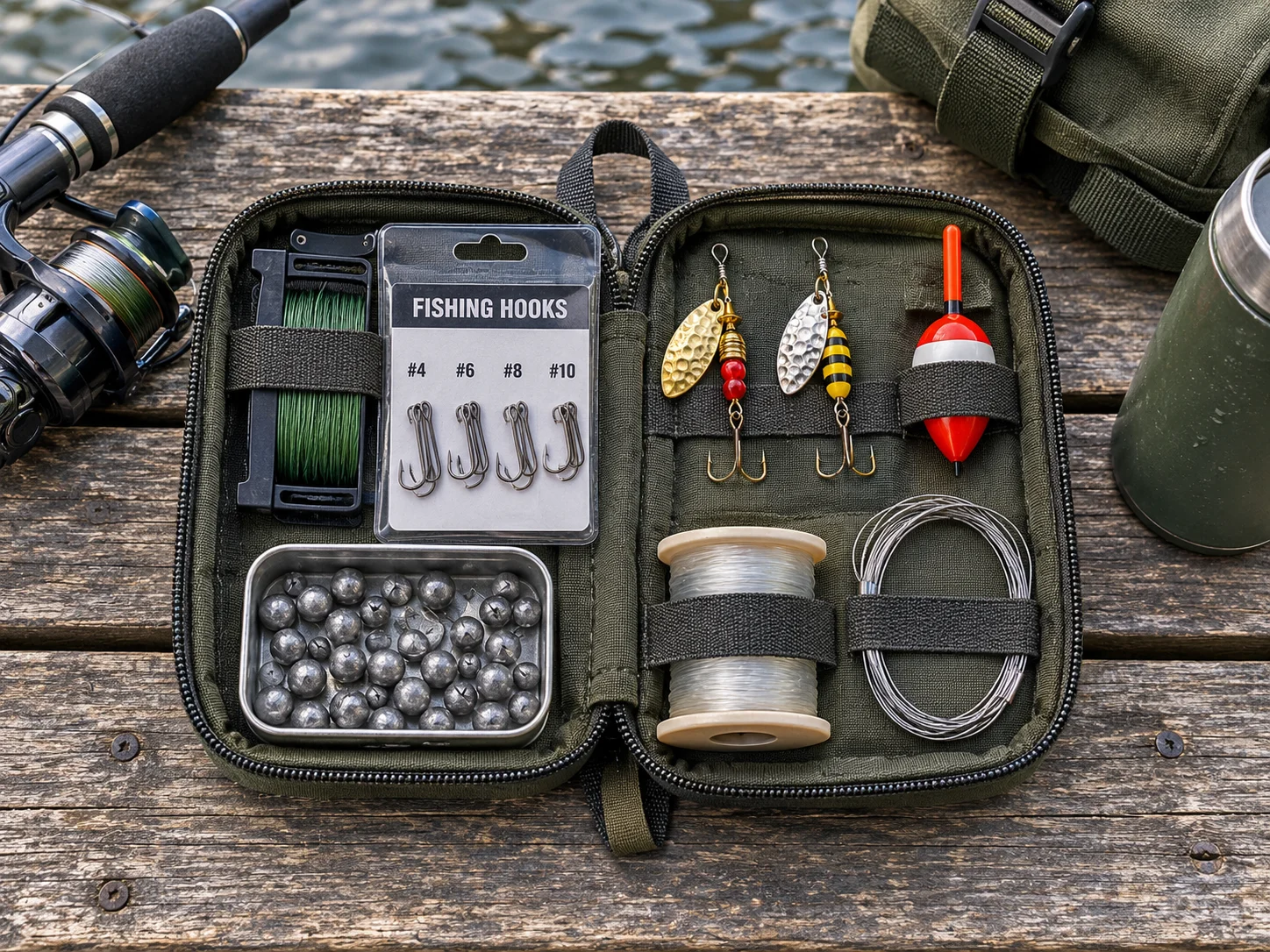
The single piece of gear that separates a stranded angler from a stranded angler who can eat is a compact, purpose-built tackle kit. Without it, local water becomes useless as a food source, especially in remote areas where resupply is days away.
The quantitative minimum that survival kit guides consistently land on is 30 to 50 feet of 12 to 20 lb braided or monofilament line, at least 10 hooks in assorted sizes (commonly #4, #6, #8, and #10), 10 or more split shot sinkers, a few basic spinners or inline lures, and a small float. Some kits push further, adding 40 or more hooks in weedless configurations, snare wire, and micro-spools rated to 20 lb to increase versatility across species and water types. A handline spool or Cuban yo-yo lets you fish effectively without a rod, which matters when you’re working from a pack rather than a tackle box.
Braided line in particular earns its place twice over. It handles fish, and it doubles as cordage for rigging limb lines across a stream or constructing a basic snare. That versatility makes it the single most load-bearing item in a survival fishing kit.
The trend in 2026 is toward pocket-sized, everyday-carry formats: keychain-style hook cards, micro-spools, and dog-tag lure sets that integrate with general EDC gear. These are genuinely useful as a minimum-viable setup for casual outings. For planned remote trips, build your kit around your target species and local water conditions rather than buying a generic commercial set. A trout stream in the Rockies needs different hook sizes than a bass lake in Georgia, and that local knowledge is something no off-the-shelf kit can account for.
2. Waterproof First-Aid Kit
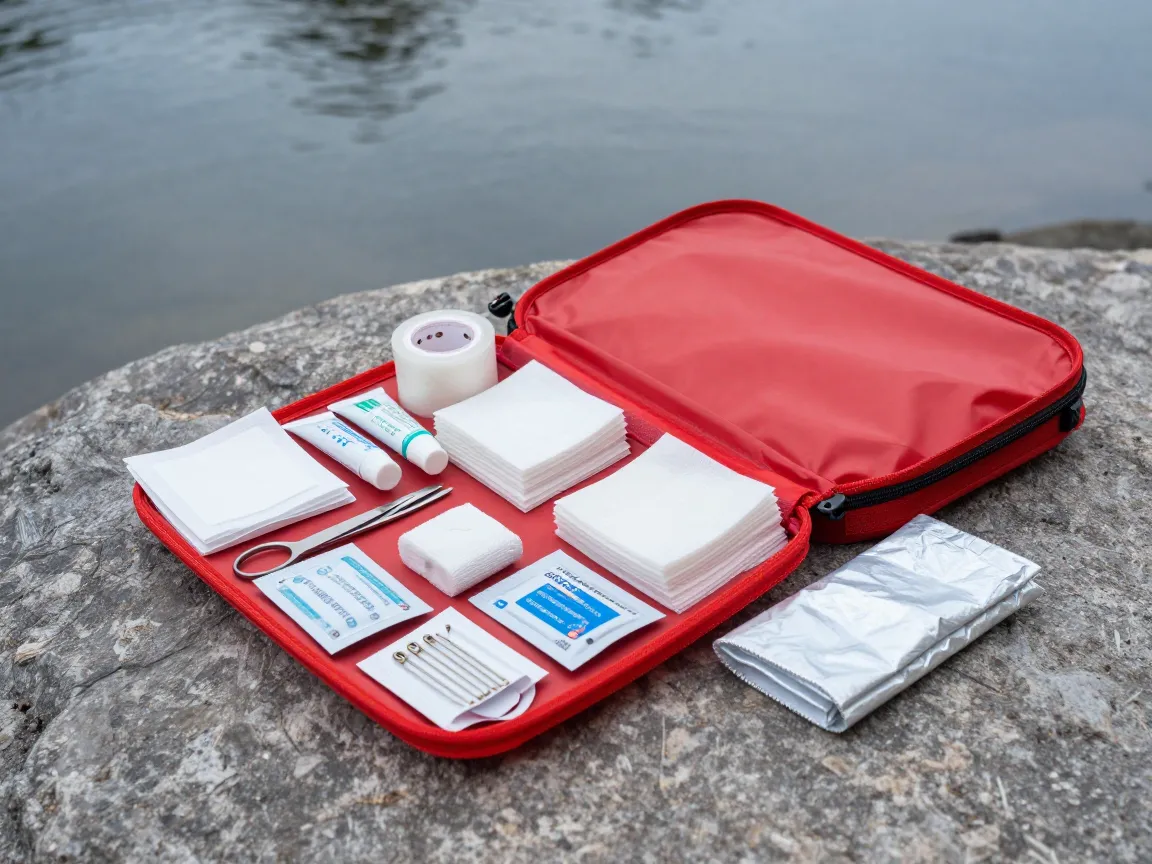
A fishhook buried past the barb in your thumb is a nuisance two miles from the car. The same injury thirty miles up a wilderness river, without antiseptic or the right tools to remove it, can turn septic before you get back to cell service. Medical preparedness is now treated as a core survival requirement, not an afterthought.
A properly stocked angler first-aid kit includes antiseptic wipes, antibiotic ointment, sterile bandages in multiple sizes, gauze pads, medical tape, scissors, tweezers for hook removal, pain relievers, antihistamines (for unexpected allergic reactions to insects or bites), elastic wraps, safety pins, and an emergency mylar blanket. Hook-removal supplies deserve specific mention because they address an angler-specific injury that standard first-aid kits often skip.
The storage method matters as much as the contents. Keep the kit in a dedicated dry bag, sealed and secured where you can reach it one-handed from the water. Bass angler emergency checklists repeatedly emphasize this point: the kit that’s buried at the bottom of a waterlogged pack is functionally the same as no kit at all.
Customize the contents for your planned trip length. A half-day lake trip near a road warrants a compact pouch. A multi-day float trip into backcountry means adding a compression bandage, blister treatment, and a prescription antihistamine if you have access to one through your doctor. Know how to use what you carry. A pair of needle-nose pliers is better than tweezers for deep hook removal using the string-yank method, and that’s a skill worth learning before you need it.
3. Signaling, Navigation, and Communication Gear
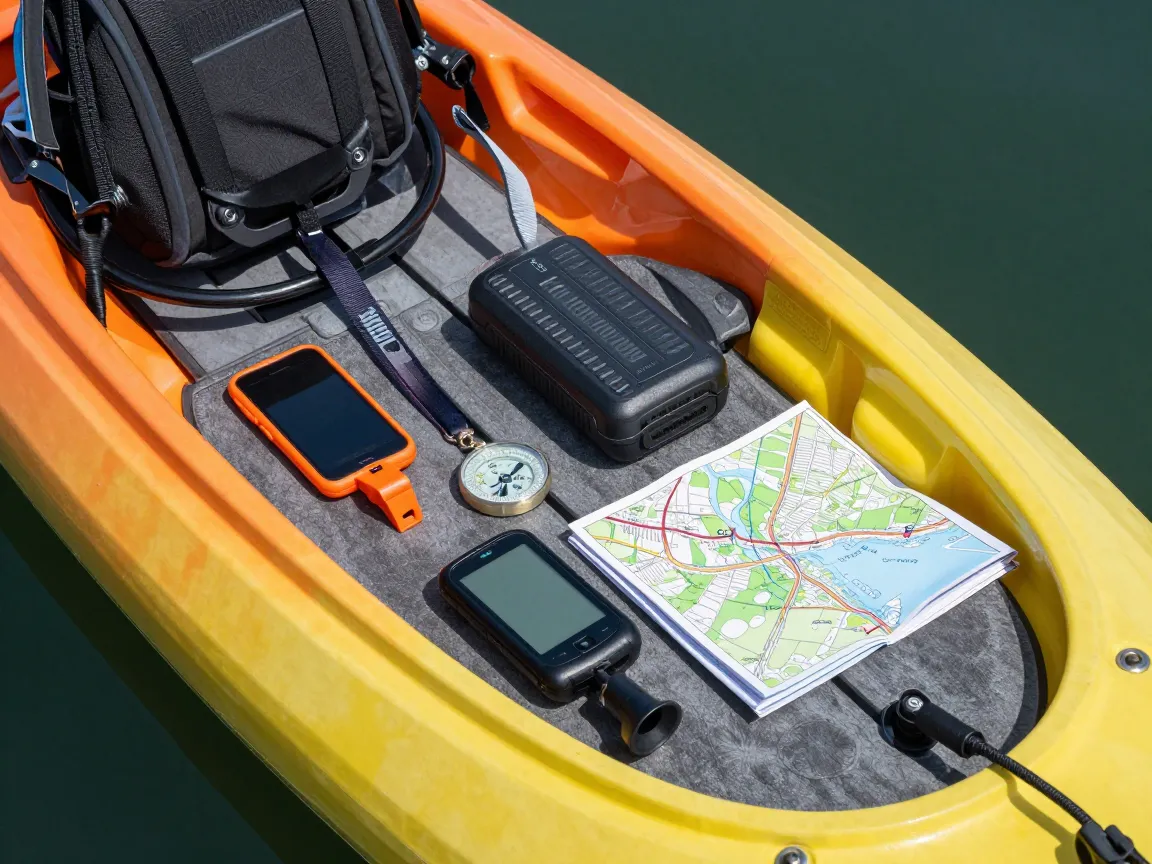
Getting lost is not just a wilderness problem. Anglers lose their bearings on large reservoirs, coastal inlets, and fog-covered bays every season. The fix is not one good piece of navigation gear. It’s layered redundancy.
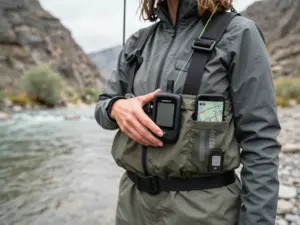
The core signaling and navigation setup for any angler includes a loud whistle or compact air horn, a charged mobile phone in a waterproof case or dry bag, a backup battery (power bank), a compass, a handheld GPS unit, and paper maps for the specific water body you’re fishing. Each item covers a different failure mode. The whistle works when the phone is dead. The compass works when the GPS battery dies. The paper map works when you’ve lost satellite signal in a canyon.
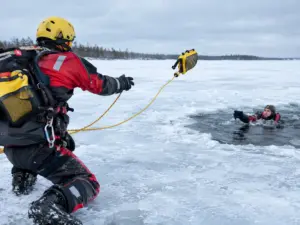
A throwable flotation device belongs in this category too, specifically for small-boat and kayak anglers. It addresses the scenario where you or a passenger capsizes and needs immediate assistance before signaling can even start.
The practical habit is to charge every device the night before any trip and confirm the maps are downloaded offline before you leave cell range. A power bank rated at 10,000 mAh adds meaningful runtime to a phone used for GPS navigation without adding significant pack weight. Coastal and large-lake anglers should additionally look at a personal locator beacon (PLB) or satellite messenger for trips beyond reliable cell coverage. These devices send a rescue signal independent of cellular infrastructure and have a proven record of shortening search-and-rescue response times in remote locations.
4. Shelter and Fire-Starting Tools
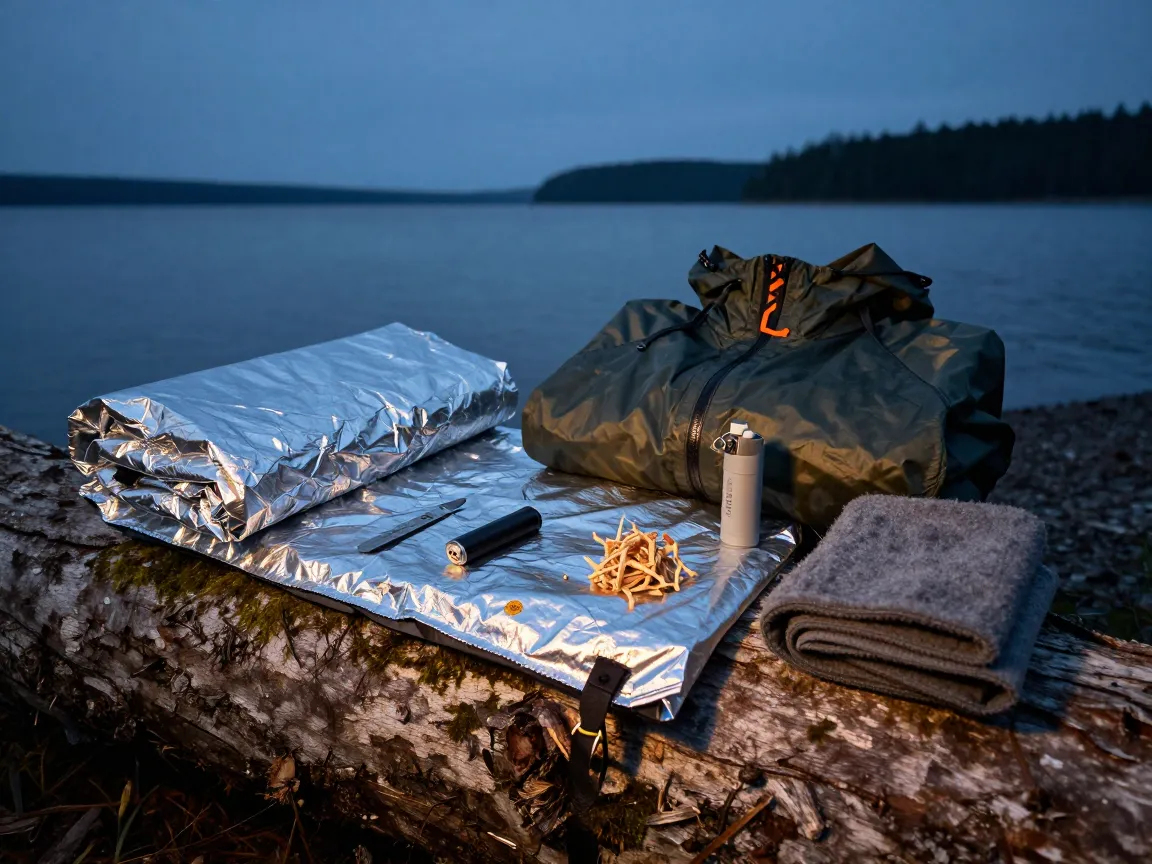
Hypothermia does not require freezing temperatures. Water that sits at 60 degrees Fahrenheit can drop a person’s core temperature fast enough to impair judgment within minutes of capsizing. For anglers, exposure and cold-water immersion are among the most statistically significant risks after an on-water accident, and shelter gear addresses both.
The minimum shelter kit for any angler is a mylar emergency blanket, rain gear or a waterproof outer layer, and at least one fire-starting method. A compact emergency tarp or tube tent adds meaningful protection if you need to wait out an unexpected overnight, which happens more often than most anglers plan for. Engine failure, weather changes, an ankle injury at dusk, all of these can turn a day trip into an unplanned night out in conditions that cool quickly after sunset.
Fire-starting tools should include at minimum a waterproof lighter and a ferrocerium striker as backup. Neither is reliable alone. Lighters fail in wind and wet; strikers require dry tinder, which can be hard to find after rain. Carrying both costs almost nothing in weight or space.
Modern fishing-focused survival kits frequently bundle a mylar blanket and a fire starter as a matched pair because that combination addresses the two fastest paths to hypothermia: wind chill and wet clothing. If you’re building your own kit, treat these as a single unit that stays together and is always accessible, not buried in the bottom of your dry bag.
An extra synthetic or wool mid-layer beyond what seems necessary for the planned conditions is worth the space. Cotton kills in wet environments. Synthetics and wool retain insulating value when wet.
5. Water Purification and Emergency Nutrition
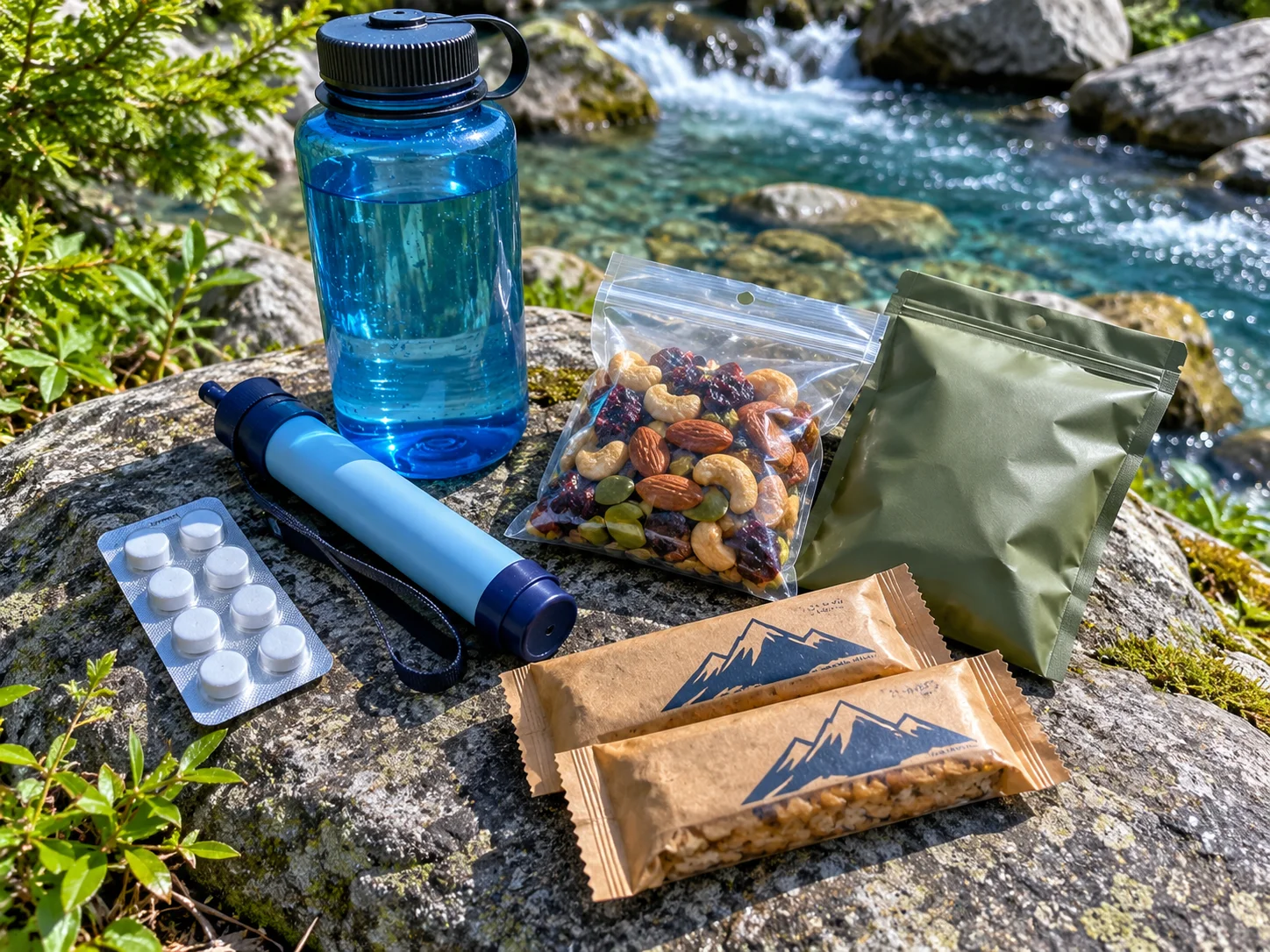
Remote fishing locations frequently sit on water that looks clean and isn’t. Giardia, cryptosporidium, and bacterial contamination are present in natural water sources across North America and are invisible to the naked eye. Drinking untreated water during an extended emergency scenario adds illness to an already difficult situation.
Water purification tablets are the lightest, most compact solution available. A standard pack of iodine or sodium dichloroisocyanurate (NaDCC) tablets treats multiple liters per tablet and weighs almost nothing. A compact inline filter straw, such as the type rated to filter 1,000 liters, adds more versatility and removes chemical tastes that tablets leave behind. Carrying both covers chemical contamination (which some filters don’t address) and high turbidity water (which tablets handle poorly on their own).
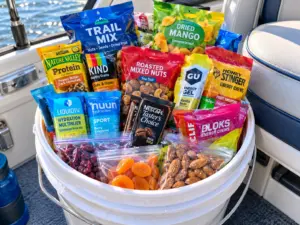
Food is a secondary concern in most short-term survival scenarios, water is primary, but anglers on remote water should carry compact, high-calorie backup nutrition regardless. Energy bars, dried fruit, and nuts with high fat and protein content provide reliable caloric density without refrigeration. The fishing tackle kit handles longer-term food acquisition, but it doesn’t deliver immediate energy when blood sugar is low and you’re trying to make decisions under stress.
A detail worth remembering: strong braided line from your survival tackle can rig a limb line or basic snare that works while you sleep, turning your tackle kit into a passive food-acquisition system. That’s a meaningful upgrade from active rod fishing when you’re conserving energy during an extended wait for rescue.
6. Reliable Lighting and Waterproof Storage
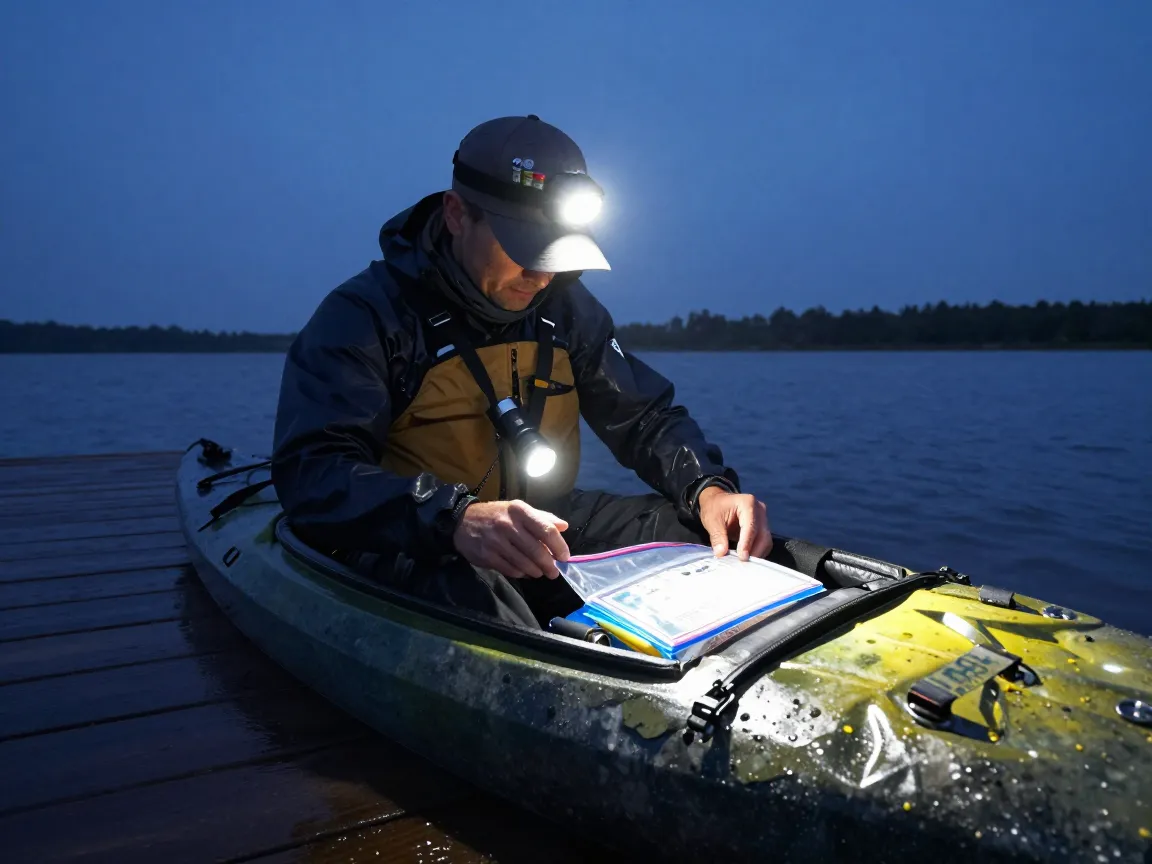
Low light is when small problems become serious ones. A capsized kayak at dusk, a tangled line in a tree at the end of a long cast, a navigation decision made in the dark on an unfamiliar lake, all of these are manageable with a headlamp and genuinely dangerous without one. Lighting ranks as a must-have precisely because anglers consistently underestimate how often conditions push past sunset.
A headlamp that runs on AA or AAA batteries is preferable to a rechargeable-only model for survival purposes because replacement batteries are more universally available. Carry a spare set. A compact flashlight as backup adds minimal weight and means a dead headlamp battery doesn’t leave you in total darkness. Several 2026 gear comparisons note that well-regarded survival fishing kits now ship with integrated flashlights and power banks specifically to close this gap.
Waterproof storage is what keeps every other item on this list functional. A dry bag rated to at least IP67 for the main survival kit, and resealable zip-lock bags for items you need frequent access to, protect gear against spray, rain, and full submersion after a capsize. For kayak and small-boat anglers this is particularly critical: a waterlogged first-aid kit or a dead phone in a soaked pocket negates the preparation that went into building the kit.
The practical system is two layers of waterproofing for anything critical. Phone in a waterproof case, then inside a dry bag. First-aid kit in its own sealed pouch, then inside the main dry bag. It adds ten seconds of setup time before launch and removes the chance that a single failure, one cracked seal, one unexpected wave over the gunwale, destroys the gear you need most.
Quick Comparison
| Must-Have | Primary Risk Addressed | Minimum Spec |
|---|---|---|
| Core fishing tackle | No food source in prolonged emergency | 30-50 ft line, 10+ hooks, split shot, 2-3 lures |
| Waterproof first-aid kit | Infection, hook injuries, wound care | Antiseptic, bandages, tweezers, pain relief, dry bag storage |
| Signaling and navigation | Getting lost, capsizing, communication failure | Whistle, compass, GPS or phone, paper map, power bank |
| Shelter and fire tools | Hypothermia, overnight exposure | Mylar blanket, rain layer, lighter, ferrocerium striker |
| Water and nutrition | Dehydration, illness from untreated water | Purification tablets, inline filter, 1,500+ kcal backup food |
| Lighting and dry storage | Dark-condition emergencies, gear water damage | Headlamp, spare batteries, dry bag, resealable pouches |
Conclusion
The 6 survival list emergency preparedness must-haves for every angler share one underlying logic: routine fishing trips fail in predictable ways, and each item on this list addresses a specific, documented failure mode. The next concrete step is to audit what’s already in your pack against the minimum specs listed above, starting with tackle and first-aid, then filling the gaps before the next trip rather than after. Build the kit around the actual water you fish and the conditions you’re likely to face, not around what a generic commercial kit happens to include.