Desert Survival Tips for Anglers Chasing Fish in Arid Country
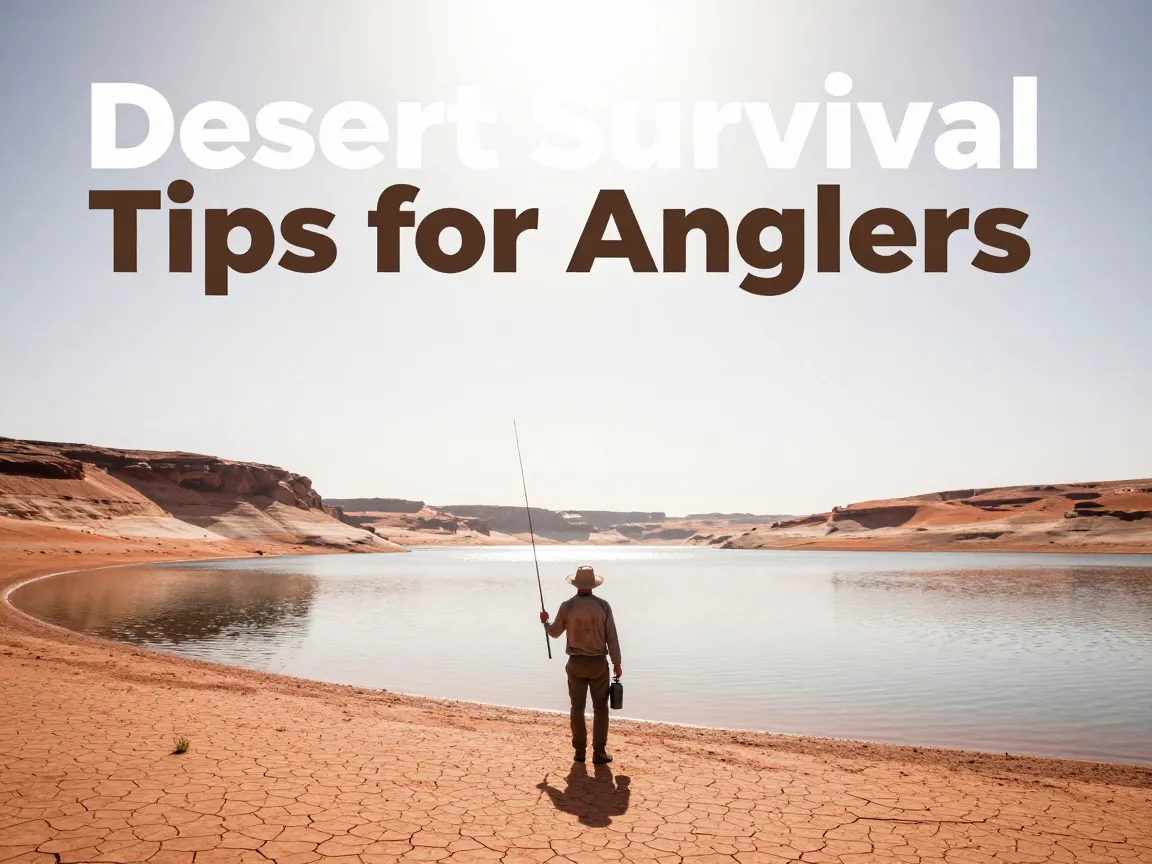
Roughly 400 people die from heat-related illness in the United States every year, and that number climbs during drought cycles. Desert anglers are uniquely exposed: they spend hours in full sun near reflective water, often far from roads, and they’re focused on the fish rather than their own condition. These 6 desert survival tips for anglers chasing fish in arid country won’t make the desert less dangerous, but they can keep you functional long enough to catch something and drive home.
Disclosure: This post contains affiliate links. As an Amazon Associate, we earn from qualifying purchases, and at no extra cost to you.
Key Takeaways
- Carry significantly more water than you think you’ll need and drink on a fixed schedule, not by thirst.
- Fish at first light and get off the water before mid-morning during hot months.
- Sun protection is not comfort gear; it’s the layer that slows water loss and prevents incapacitation.
- Desert weather, especially flash floods and monsoon storms, can change within minutes at a fishing location.
- Share a detailed trip plan with someone before you leave, and keep it conservative.
1. Carry Water as if Your Fishing Depends on It, Because It Does
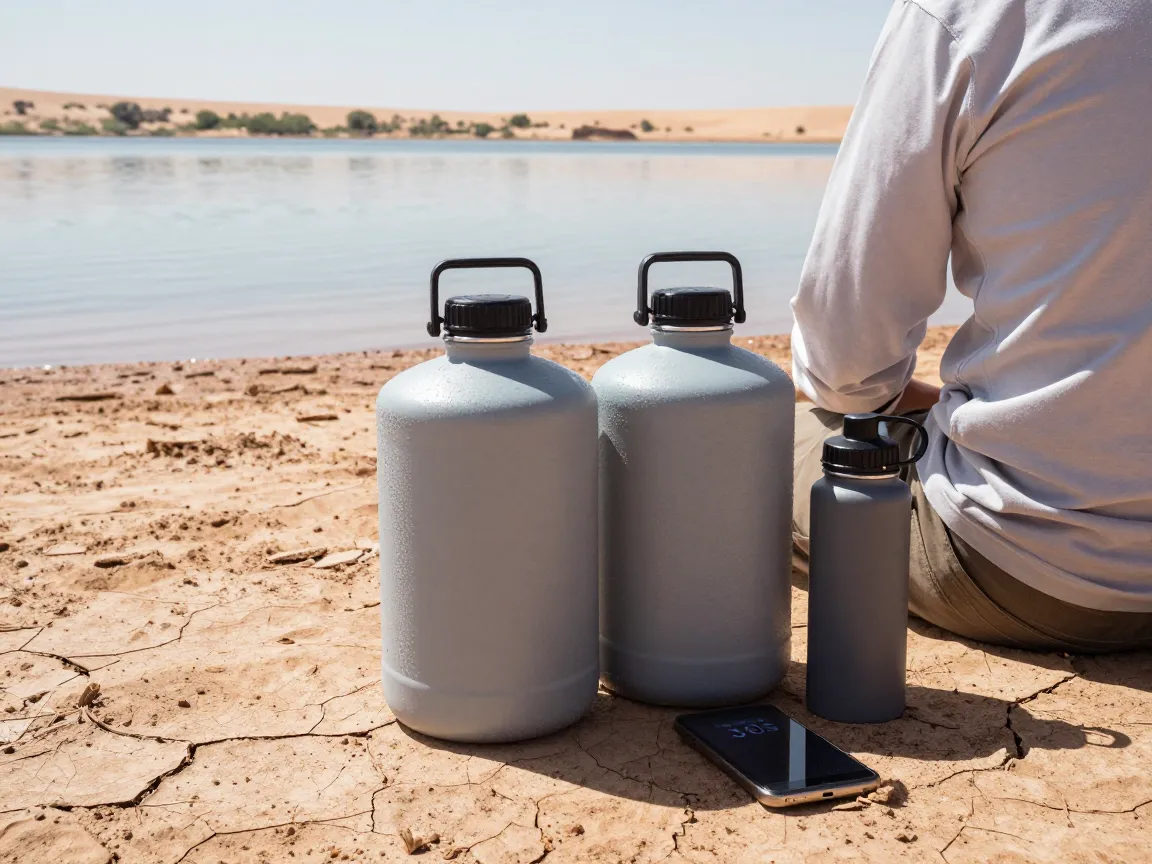
The human body can lose more than one liter of sweat per hour in direct desert sun. At that rate, a standard 500ml water bottle covers about 30 minutes of protection before you’re already running a deficit. The standard survival advice is one gallon per person per day for sedentary desert travel. Anglers are not sedentary. Plan for at least 1.5 gallons for a half-day trip in temperatures above 90°F, and store it in insulated containers that keep water cool enough to actually drink in volume.
The bigger mistake is treating water as a reserve. Anglers often rationalize “I’ll drink when I get back to the truck,” and that’s how mild dehydration becomes a problem. By the time you feel thirsty, you’ve already lost around 2% of your body weight in fluid, which is enough to degrade concentration, coordination, and your ability to judge your own condition. Set a phone alarm for every 20 to 30 minutes and drink 400 to 500ml regardless of whether you feel like it.
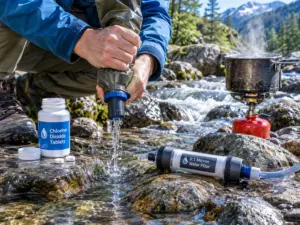
One practical constraint worth acknowledging: desert lakes, oases, and stock tanks look like a water source, but most are not safe to drink without treatment even with a quality filter, because agricultural runoff and livestock contamination are common in arid regions. Carry your own water in. Never plan your hydration around whatever’s at the site.
2. Fish at Dawn and Treat Late Morning as a Hard Deadline
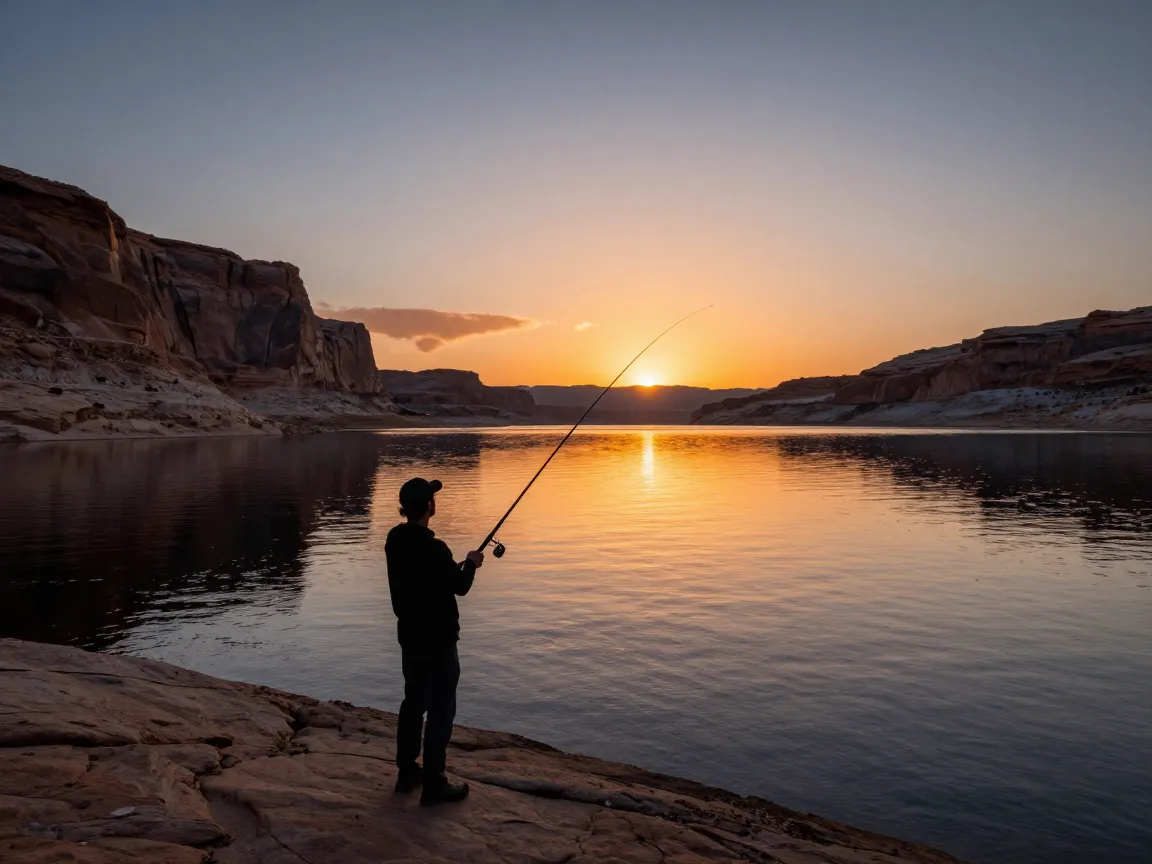
Desert air temperatures can rise from comfortable to dangerous within two hours after sunrise. At a site like Lake Havasu or the lower Colorado River in July, air temperature can jump 15 to 20 degrees Fahrenheit between 6am and 10am, and surface rock temperatures around you will climb far higher. The practical fishing logic and the survival logic point in the same direction: bass, catfish, and many desert-water species feed most aggressively in low-light hours anyway, so you’re not sacrificing much by committing to a strict exit time.
Set your pack-up time before you leave the truck, not in the field when you’re warm and the fish are still biting. It’s much easier to override the decision before you’re heat-compromised than after. A good rule for midsummer in the Sonoran or Mojave is to be off the water by 9:30am, out of direct sun by 10:00am, and in a shaded or cooled vehicle by 10:30am. If you want afternoon fishing, wait until the sun drops below the canyon walls, typically after 4:00pm depending on the terrain.
Evening fishing carries a secondary risk that’s worth planning for: flash floods triggered by monsoon thunderstorms often arrive at desert washes and canyon-bottom reservoirs after afternoon storms that formed miles away. You may have clear skies and hear thunder in the distance and still face a wall of water within 20 minutes. Know the upstream terrain of wherever you’re fishing.
3. Dress to Slow Sweat Loss, Not to Stay Cool Through Exposure
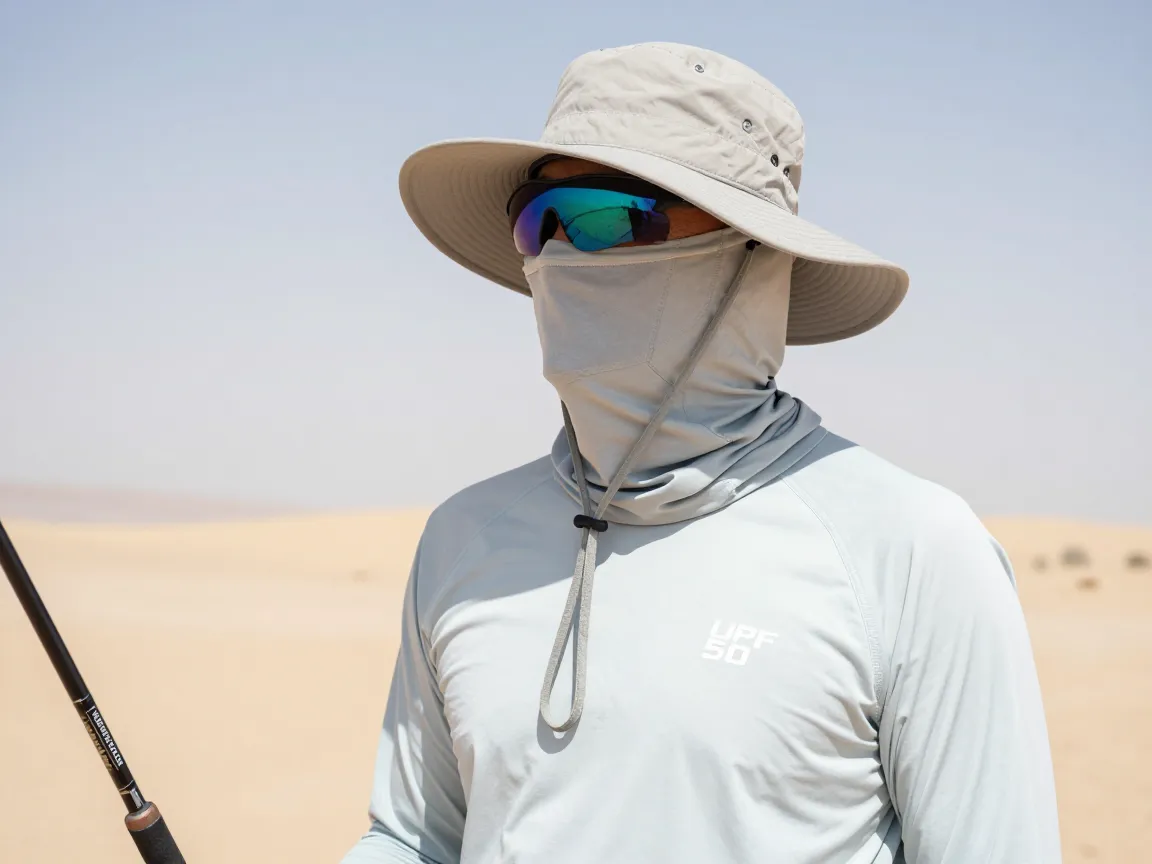
Bare skin in direct desert sun produces more water loss, not less. UV radiation drives skin temperature up, which forces the body to sweat harder to compensate. A well-chosen long-sleeve sun shirt made from lightweight, light-colored, moisture-wicking fabric keeps skin temperature lower than exposed skin, reduces total sweat output, and dramatically lowers sunburn risk. Columbia’s PFG line, Simms’s SolarFlex series, and several Huk garments have UPF 50+ ratings and are built specifically for angling in hot conditions.
The same principle applies to the head and neck. A wide-brim hat (minimum 3-inch brim) and a UV-rated neck gaiter together block the two areas where sun exposure most quickly raises core body temperature. Polarized sunglasses matter too, partly for spotting fish but mainly because squinting in bright desert light contributes to eye fatigue and headaches that accelerate heat stress.
One counterintuitive point: dark colors absorb more radiation than light colors, but modern technical fabrics with high UPF ratings can still perform well in dark colors because the weave structure blocks UV rather than relying on reflection. Light colors remain the safer choice when you’re not sure of the fabric’s UPF rating. Cotton is worth avoiding entirely; it retains sweat and dramatically increases chilling risk if temperature drops or wind picks up, which is a real concern in high-desert terrain above 5,000 feet.
4. Monitor the Weather Before and During the Trip
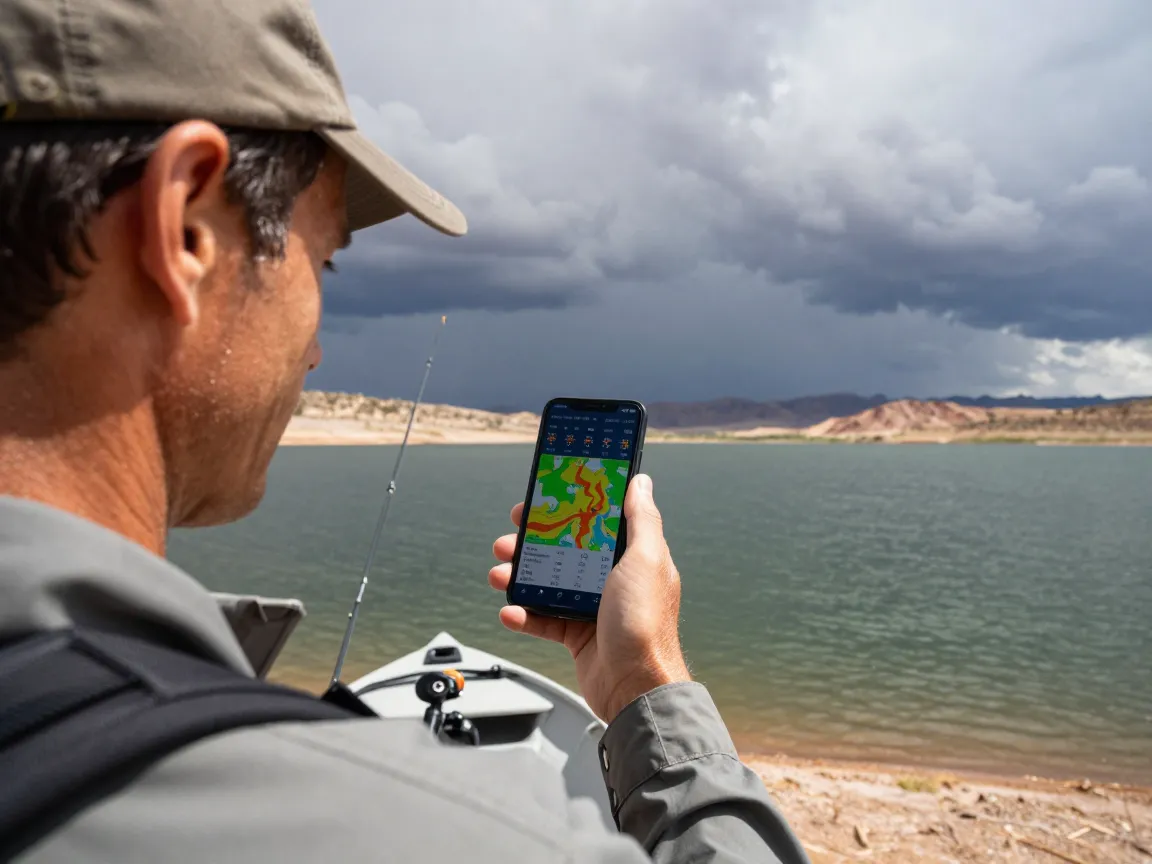
Desert weather monitoring is not about checking whether you’ll get wet. It’s about tracking three specific threats: extreme heat advisories, monsoon storm development, and high-wind events that can strand a small boat. The National Weather Service’s forecast pages for desert regions include hourly temperature projections and convective outlook maps that show where afternoon thunderstorm development is likely. Checking these the evening before and again the morning of a trip takes about five minutes and gives you real data to make go or no-go decisions.
Monsoon season in the American Southwest runs roughly from mid-June through September. During that window, storms can build from clear skies to full lightning and flash flood conditions in under an hour. If you’re fishing a canyon reservoir, a desert wash, or any low-lying water feature during monsoon season, establish a visual trigger before you launch: “If I see anvil-shaped cloud development over the ridge to the north, I’m off the water immediately.” Making that call in advance removes the bargaining that happens when you’re in the middle of a hot bite.
Wind events are worth watching in open desert lake environments. Sustained winds above 20mph on a large flat desert reservoir can create wave conditions that swamp or flip small watercraft quickly, and wind-driven dust reduces visibility enough to make navigation dangerous. Most anglers who check the weather are checking temperature. Add wind forecasts and convective outlooks to that routine.
5. Plan Shelter and Shade as Seriously as You Plan Tackle
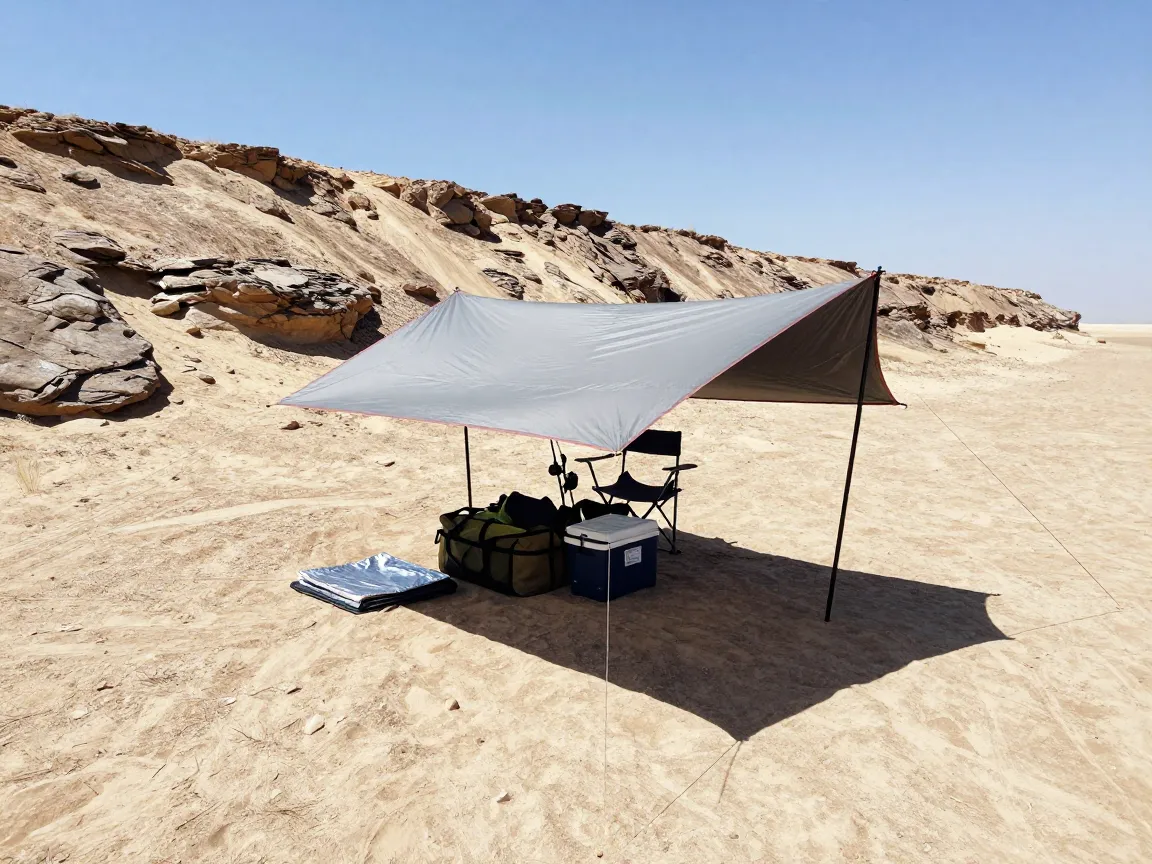
If your fishing location has no natural shade within a short walk, bring it. A compact shade tarp or a pop-up canopy takes about 10 minutes to set up and can drop the temperature in a sitting area by 15 to 20 degrees Fahrenheit compared to full sun exposure. For bank fishing on exposed desert shoreline, this is not optional equipment on a hot day; it’s a core piece of survival gear.
Planning shade also means scouting your location before committing to it. Google Earth and satellite map tools can show you whether a stretch of shoreline has cliff overhangs, dense riparian vegetation, or bridge structures that provide natural shade at particular times of day. A steep west-facing cliff that provides no morning shade may be fully shaded from noon onward. Knowing which sections of the bank are shaded at which hours lets you schedule your position accordingly rather than scrambling for relief once the sun is overhead.
Emergency shelter matters for a different reason: desert temperatures can drop sharply at night, particularly at elevation. The same angler who was managing heat at noon in the Chihuahuan Desert may be dealing with 50-degree temperatures by 9pm if something goes wrong and they’re stuck out. A lightweight emergency bivy or foil space blanket weighs almost nothing in a pack and covers both extremes. Keep one in the bottom of your tackle bag and never take it out.
6. File a Trip Plan and Handle Fish Carefully in Warm Water
Search and rescue teams in desert regions frequently report that the single factor that most delays finding lost or incapacitated anglers is the absence of a filed trip plan. Tell someone specific: where you’re going, which access road you’re using, what your fishing location looks like on a map, what time you expect to be back at the vehicle, and what time they should call for help if they haven’t heard from you. Leave that information in writing, not just a verbal mention.
A conservative trip plan means building in margins. If you think you’ll be back by 2pm, tell your contact person to call authorities if they haven’t heard from you by 4pm. That two-hour buffer accounts for a flat tire, a wading mishap, or the early stages of heat exhaustion when you lose track of time and decision-making degrades. Desert emergency response times can run several hours in remote areas; that buffer is what gives responders time to find you before a bad situation becomes a fatal one.
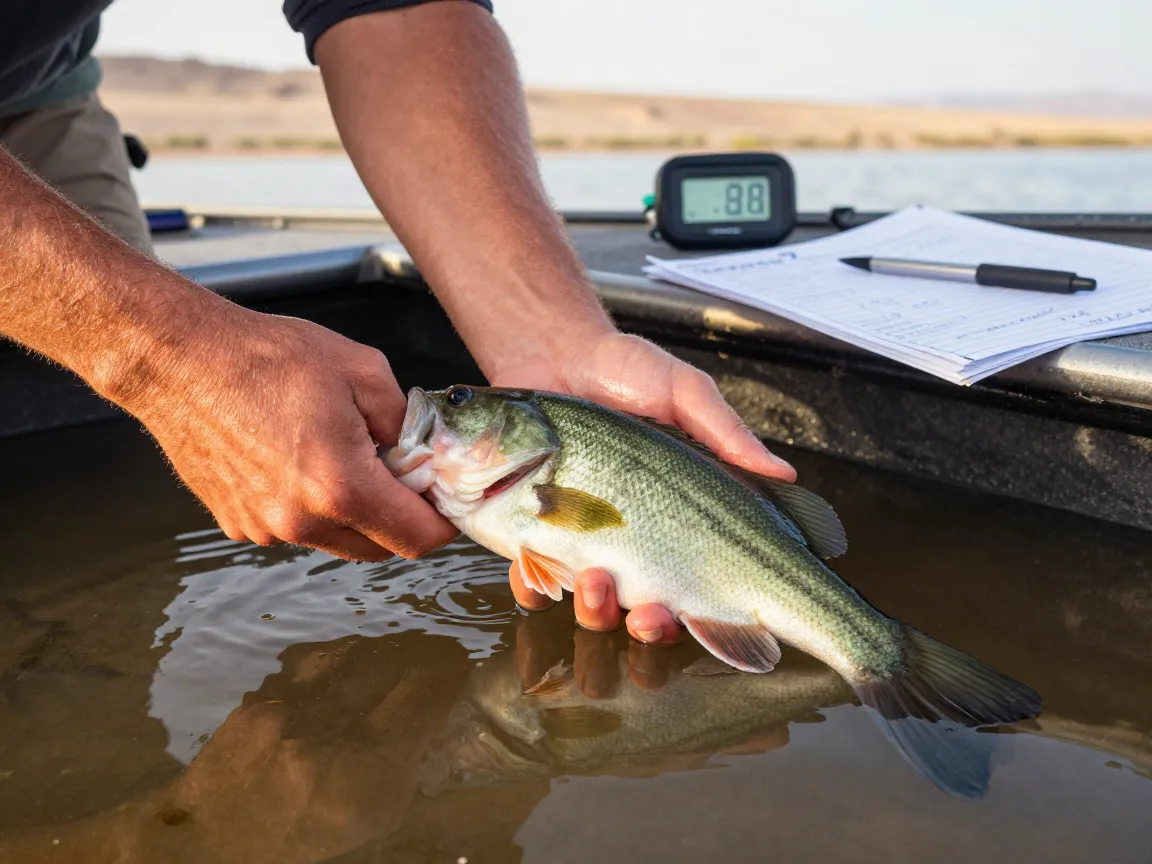
Fish handling deserves a note specific to desert waters. Drought conditions and high summer temperatures push water temperatures in desert reservoirs and rivers well above the stress thresholds for cold-water species. Water temperatures above 68°F in trout fisheries, for example, are associated with significantly elevated post-release mortality, particularly when fight times are long. In warm-water species like bass and channel catfish, the equivalent stress point is roughly 85 to 90°F water. If you’re practicing catch-and-release in desert conditions, minimize handling time, keep the fish in the water during the unhook, and use a thermometer to check water temperature before fishing catch-and-release water. If the water is too warm, consider keeping legal fish for the table rather than releasing them into conditions where post-release survival is low.
Quick Comparison
| Tip | Primary Risk Addressed | Key Action |
|---|---|---|
| 1. Water volume and schedule | Dehydration / heat exhaustion | 1.5 gal minimum; drink every 20-30 min |
| 2. Dawn fishing and hard exit | Heat stroke in peak sun hours | Off water by 9:30am in midsummer |
| 3. Sun-protective clothing | Sweat loss and UV exposure | UPF 50+ shirt, wide-brim hat, neck gaiter |
| 4. Weather monitoring | Monsoon floods and extreme heat | NWS hourly forecast + convective outlook |
| 5. Shade planning | Sustained heat exposure at site | Portable tarp or scouted natural shade |
| 6. Trip plan and fish handling | Delayed rescue and fish mortality | Written plan with contact; check water temp |
Conclusion
The tips in this guide are most useful before you leave home. Heat exhaustion and dehydration reduce decision-making capacity early enough that you may not recognize the problem while you’re in the field. The one action that ties everything else together is the trip plan: once someone knows exactly where you are and when to call for help, every other mistake becomes recoverable. Write it down before the next desert trip, leave it with someone reliable, and set your exit time before you rig up the first rod.