Female Archery Aesthetic Ideas for a Strong, Stylish Look
A 70-meter archery range built from metal and glass inside a Paris museum is not something you see every fashion season. When Dior staged exactly that for its Spring/Summer 2025 show, with a competitive archer performing live shots down the runway, it confirmed something archery communities have known for years: the bow is not just a tool, it is a style statement. This article breaks down 6 female archery aesthetic ideas for a strong, stylish look, drawing on runway inspiration, competitive gear trends, and historical imagery that together are reshaping how women dress for the range, the field, and everyday life.
Disclosure: This post contains affiliate links. As an Amazon Associate, we earn from qualifying purchases, and at no extra cost to you.
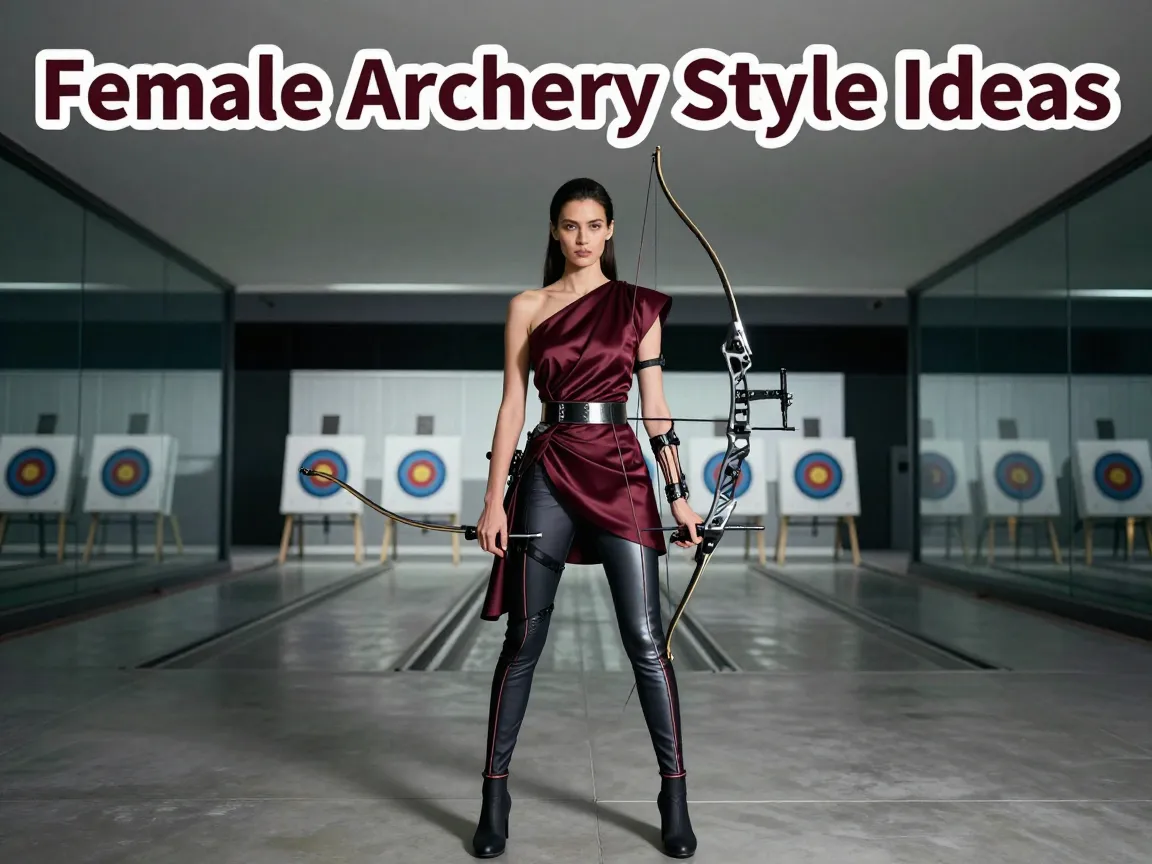
Archery apparel for women is no longer an afterthought stitched from men’s patterns. Industry data shows women now make up roughly 35 percent of the archery apparel market and are its fastest-growing segment, with demand climbing faster than the men’s category. That shift is pushing designers, both on runways and in technical sportswear labs, to build looks that are functional for the draw and release while also looking unmistakably confident. The six ideas below cover that full spectrum, from high-fashion inspiration to practical competition wear.
1. The Modern Amazon Silhouette
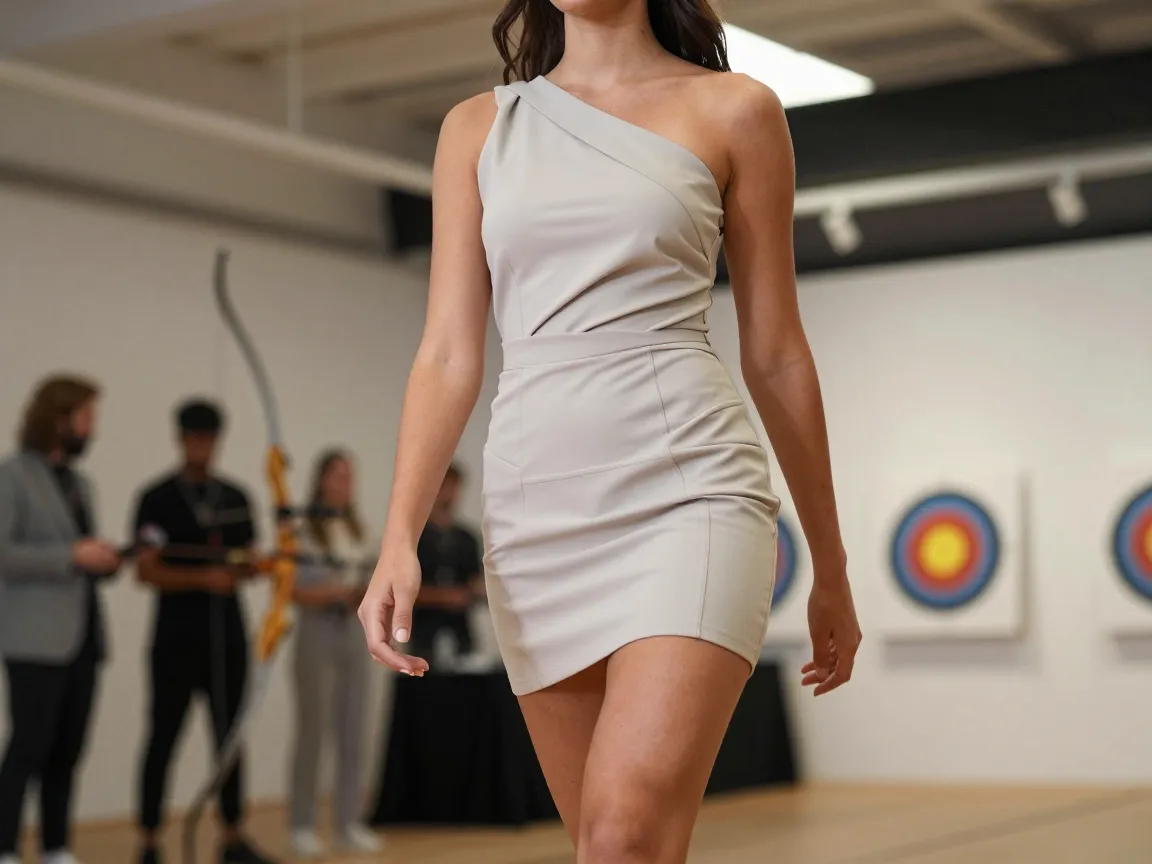
The look that anchored Dior’s recent collection traces back to Christian Dior’s 1951 Amazone dress and the classical statue of Diana of Versailles, both built around the image of a female hunter who moves freely and strikes with precision. Translating that into a wearable 2026 aesthetic means choosing pieces that free the shoulders and hips: think one-shoulder tops paired with paneled mini skirts, or a toga-style evening gown with a slit that would not restrict a stride or a draw.
Picture a woman at an archery club social event wearing a draped one-shoulder dress with a thin crossbody strap doubling as both accessory and nod to a quiver sling. The effect reads as elegant but unmistakably athletic, because the garment implies readiness to move rather than stillness. This is the core trick of the Modern Amazon idea: the clothing should look like it was made for motion, even in a non-athletic setting.
The caveat is fit. A true Amazon silhouette depends on structure, not just drape, so cheap stretch fabric can undercut the effect. Look for pieces with reinforced seams at the shoulder and waist, since those are the stress points that keep the look sharp whether you are posing for photos or actually drawing a bow.
2. Body-Conscious Athletic Cuts
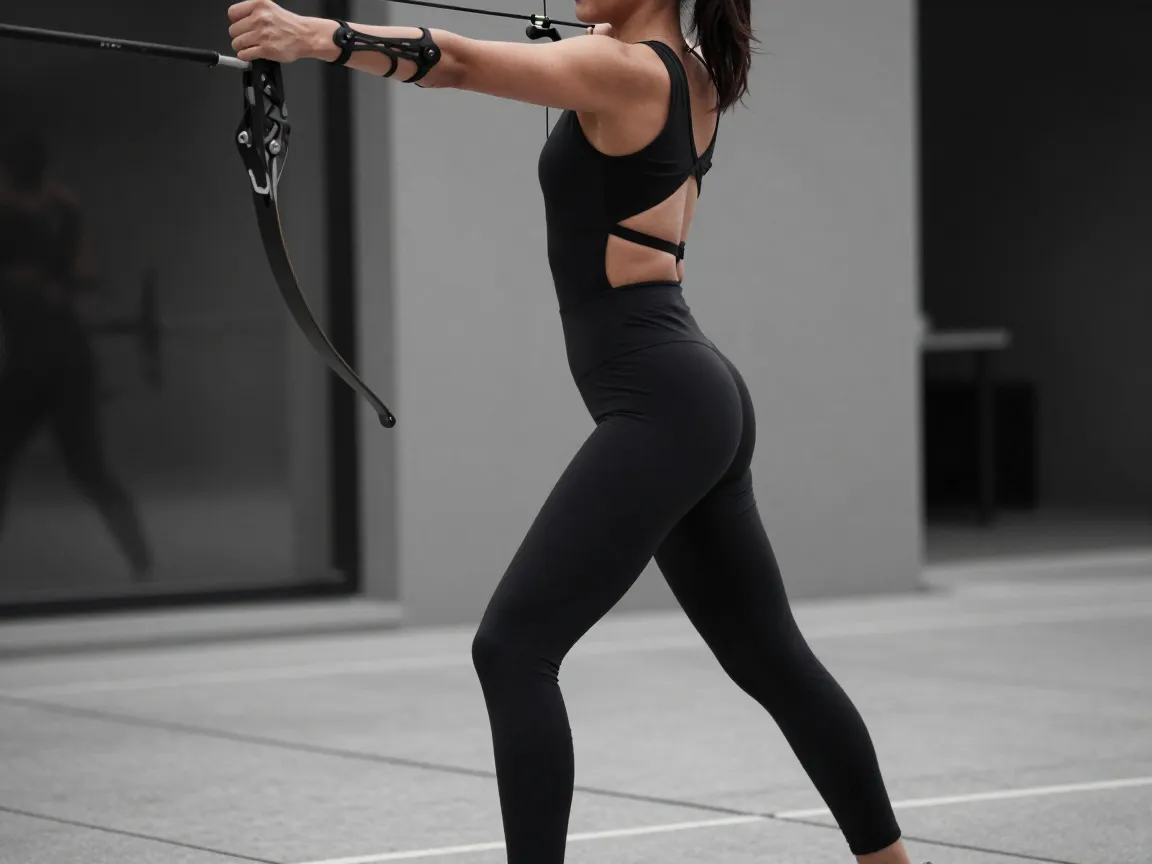
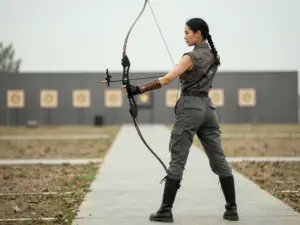
Where the Amazon silhouette leans toward drama, this second idea is about close-fitting, performance-driven shapes. Brief skirts, asymmetrically cut bodysuits, and cutout one-pieces made from stretch knitwear are now common on and off the runway, designed to twist closely around the body so every line reads as motion rather than bulk.
A competitive archer warming up before a tournament in a fitted cutout bodysuit and compression leggings is not dressing for spectacle. The cut exists because loose fabric at the chest or underarm can catch the bowstring on release, so the aesthetic and the function are the same decision. Off the field, the same silhouette works as streetwear: a bodysuit under tailored trousers, or a cutout top paired with straight-leg jeans, keeps the athletic signal without full sportswear.
One practical note: body-conscious cuts only look strong when the fabric has real recovery, meaning it snaps back to shape after stretching. Fabric that sags after a few wears will undercut the sleek line that makes this aesthetic work, so it is worth checking fabric composition before buying rather than relying on looks alone.
3. Harness and Strap Detailing
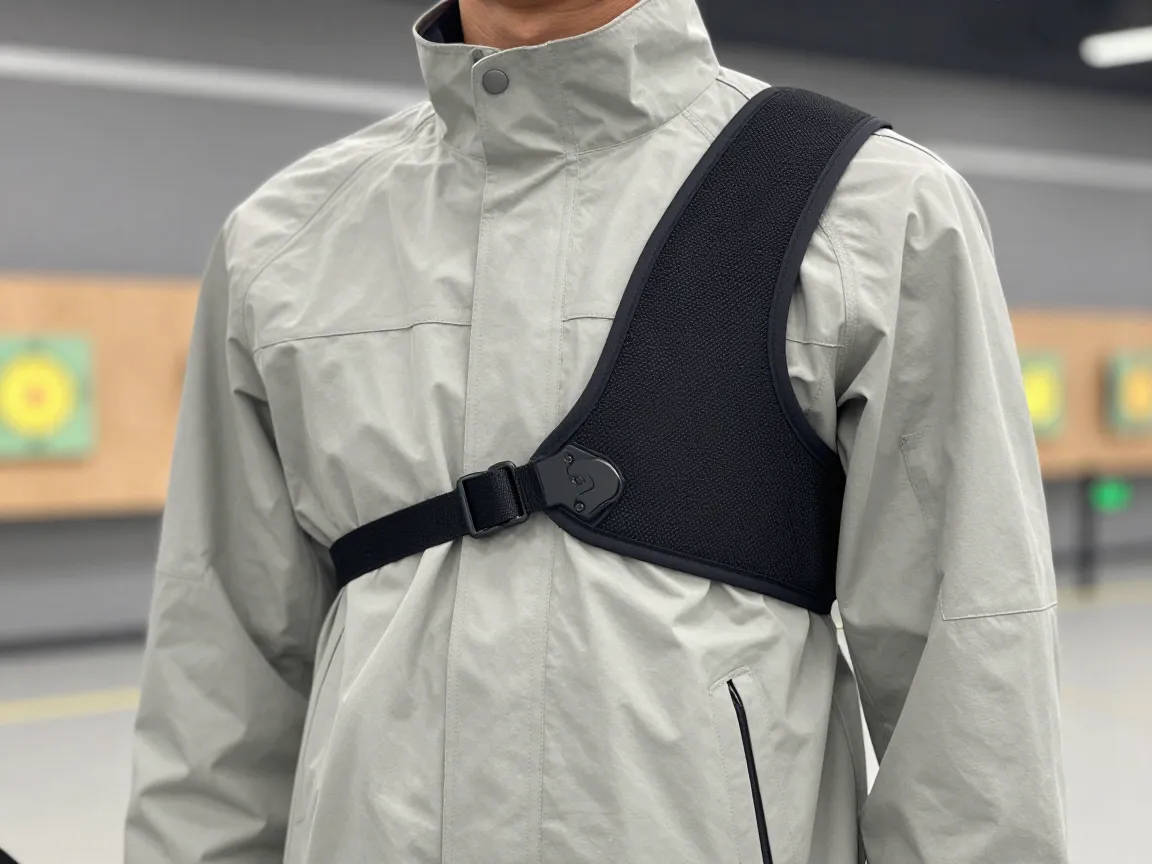
Utilitarian gear has become a style statement in its own right. Archery-inspired harnesses, chest straps, and racer-style jackets are showing up as fashion pieces, not just field equipment, turning what used to be purely functional kit into a visible symbol of capability.
Consider a jacket with a built-in chest harness strap, worn buttoned over a plain top. On the range, that strap might anchor a quiver or stabilizer pouch. Off the range, it simply reads as structured and purposeful, the kind of detail that makes an outfit look engineered rather than decorative. The same goes for knee-high gaiters, originally meant to protect the shins from brush, now worn with skirts or shorts as a graphic accent that elongates the leg line.
The follow-up question many women ask is whether these details actually need to be functional. They do not have to be. A decorative harness strap on a going-out top borrows the visual language without needing to hold any real weight, which means the aesthetic can be adopted by anyone, including people who have never drawn a bow, while still signaling the archer-inspired strength theme.
4. Sport-Coded Color and Stripe Work
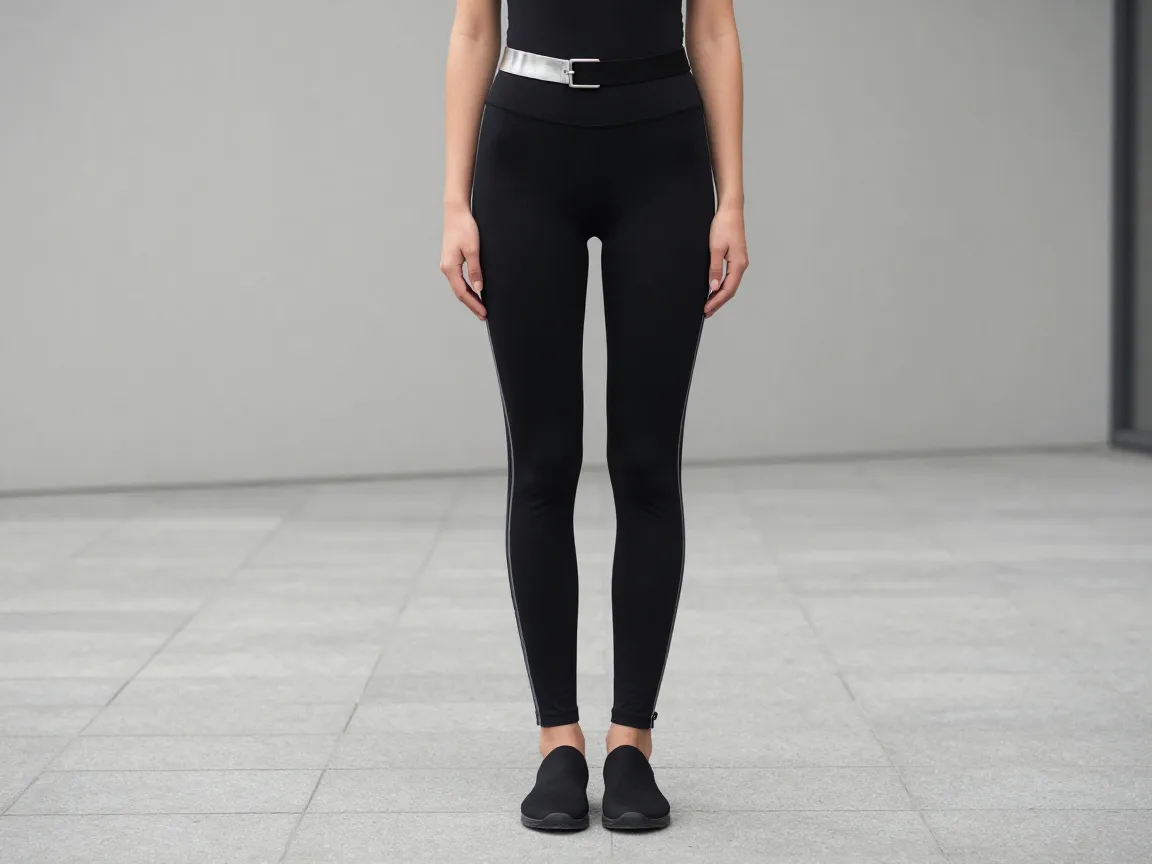
Color choice does a lot of quiet work in this aesthetic. Monochromatic palettes, black and metallic bathing-suit style pieces, and linear go-faster stripes running down the leg or sleeve borrow directly from athletic uniform design, where stripes have always signaled speed and alignment.
A woman assembling an archery-inspired outfit for a casual day might start with all-black separates, then add a single metallic accent piece, a belt or a strap, to keep the monochrome from feeling flat. Adding a thin stripe down the outer seam of leggings or trousers finishes the look with that sense of directional energy, as if the body is built for forward motion even while standing still.
This idea pairs naturally with the harness detailing from the previous entry, but it should not be mixed with too many patterns. The strength of sport-coded color work comes from restraint, limiting the palette to two or three tones so the stripe or metallic accent actually stands out instead of competing with busy prints.
5. Technical Performance Wear Built for the Draw
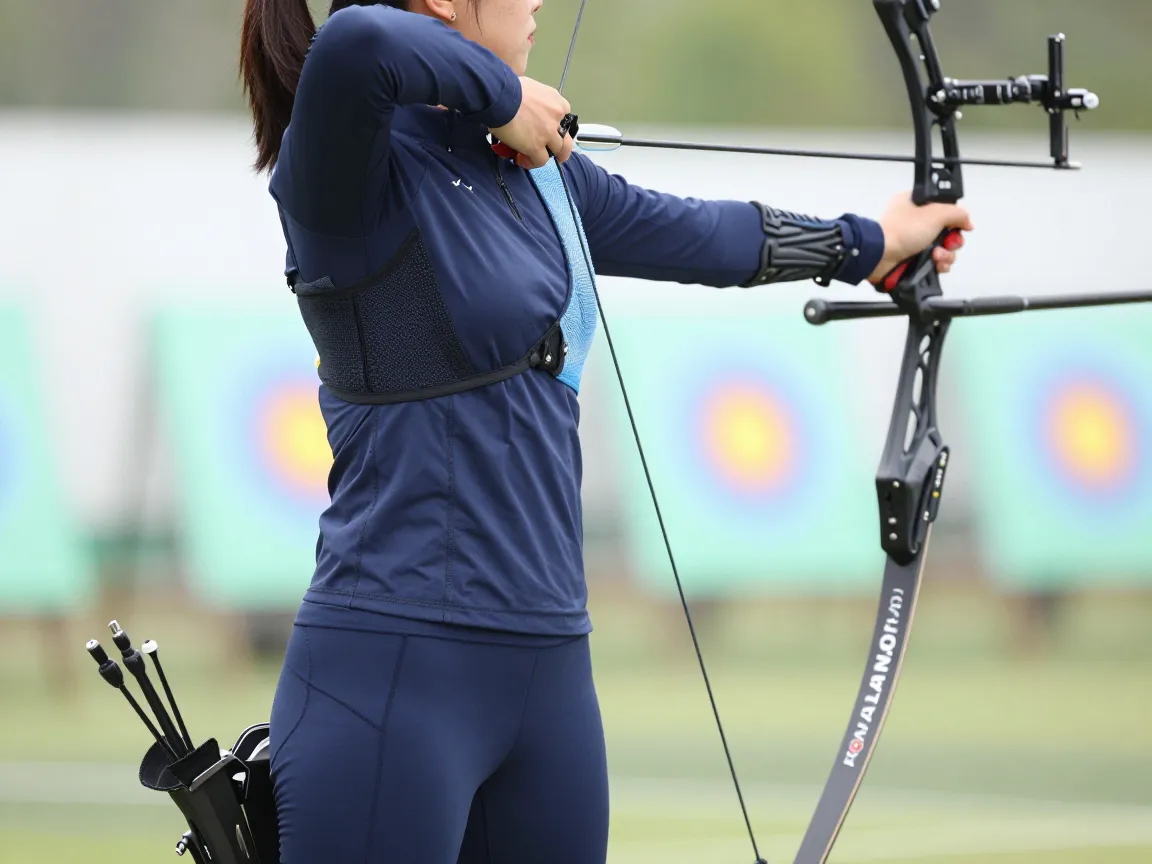
Away from the runway, the real engineering happens in technical fabric design. Modern women’s archery apparel increasingly uses moisture-wicking synthetic blends, anatomically optimized fit profiles, and re-engineered seam and dart placement specifically to prevent fabric bunching during the draw and release. Sleeve angles and torso proportions are adjusted so the fabric does not interfere with the bowstring path across the chest.
Dedicated women’s ranges from performance brands now include leggings and tracksuits cut specifically for archers, often marketed around the idea of feeling confident and unrestricted through every shot. A woman training for competition benefits directly from this kind of garment, since a dropped stitch or a loose cuff at the wrong moment can throw off an entire shot sequence.
Surveys within the sport suggest a large majority of female archers, roughly two-thirds, want gear that blends real performance with visible style, not one at the expense of the other. That demand is exactly why this technical category keeps expanding, and it is worth prioritizing fit testing over appearance alone when shopping for anything meant to be worn during actual shooting.
6. Personalized Team and Historical Statement Pieces
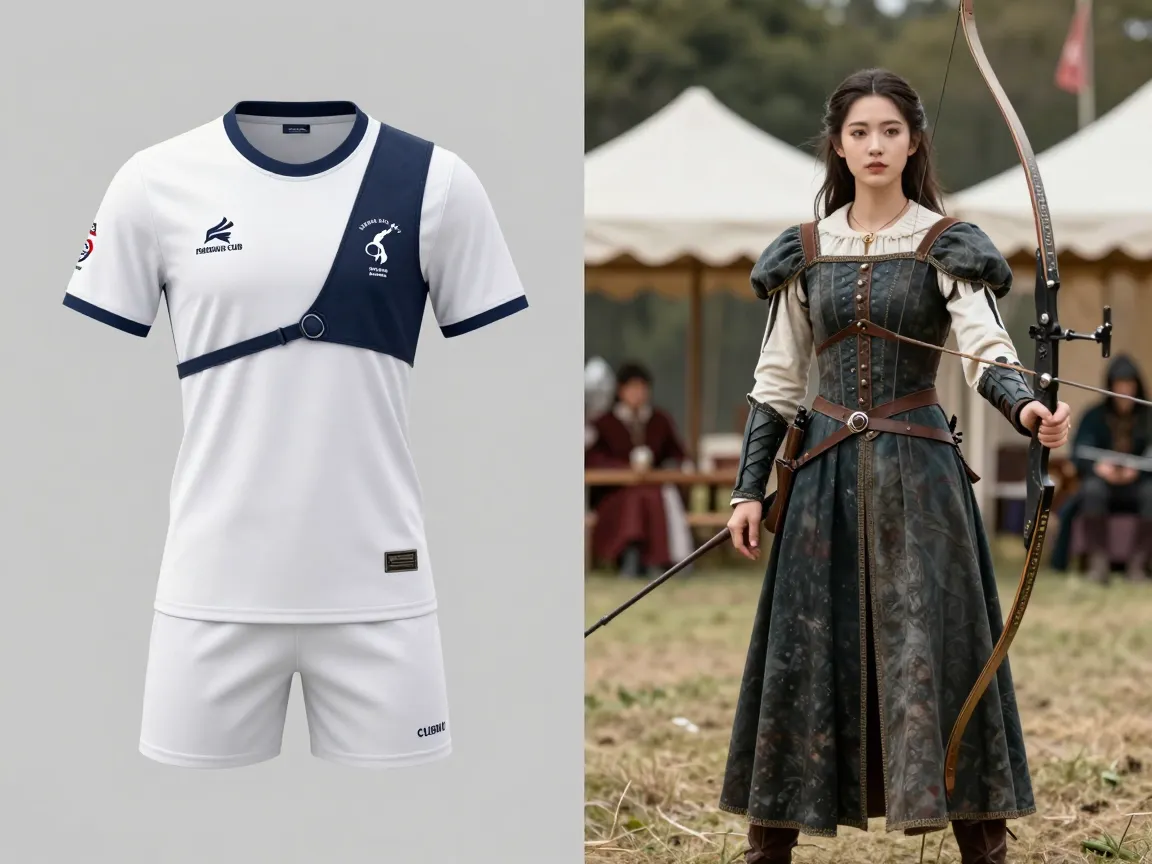
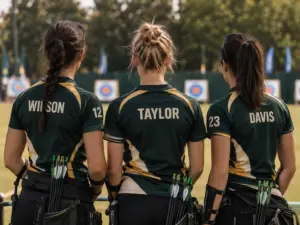
The final idea covers two related but distinct directions: modern customization and historical costume. On the modern side, online marketplaces now offer personalized archery club shirts, women’s polo jerseys, and tournament apparel that let a team or an individual encode identity through logos, names, and coordinated color schemes. A club captain ordering matching jerseys for a regional tournament is using clothing to build group identity as much as to dress for the sport.
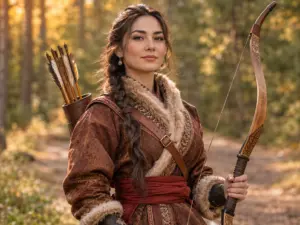
On the historical side, fantasy and medieval-inspired collections, such as Armstreet’s Archeress line, draw on fourteenth-century dress shapes with flaring gores, long skirts, and draping sleeves to create a comfortable but visually dramatic huntress look. This version of the aesthetic is especially popular at LARP events and Renaissance fairs, where the goal is full costume immersion rather than athletic function.
These two directions rarely overlap in a single outfit, but they share the same underlying appeal: both let a woman visibly claim the archer identity, whether through a modern team crest or a centuries-old silhouette. Anyone building a personal archery-inspired wardrobe should decide early which direction fits their actual use case, since mixing competition-ready technical wear with heavy medieval draping tends to look costumed rather than styled.
Conclusion
These 6 female archery aesthetic ideas for a strong, stylish look share one thread: clothing that implies readiness, whether that means a draping Amazon-style dress, a technical legging built for a clean release, or a personalized team jersey. The simplest next step is to pick one idea that matches an actual need, training wear if you compete, a statement piece if you want the look without the sport, and build outward from there rather than trying to combine all six at once.