Desert Island Survival Activities That Teach Fishing Skills Fast
Roughly 70% of Earth’s surface is water, yet most people have never caught a fish without a tackle shop nearby. Strip away the gear, the GPS, and the grocery store, and fishing shifts from a weekend hobby to a survival priority. The 6 desert island survival activities that teach fishing skills fast work precisely because they remove convenience and force repeated, low-resource practice. Each one compresses months of casual angling experience into a few intense sessions, which is why survival instructors and emergency-preparedness guides consistently return to them.
Disclosure: This post contains affiliate links. As an Amazon Associate, we earn from qualifying purchases, and at no extra cost to you.
Key Takeaways
- Improvised gear building teaches hook, line, and float mechanics faster than any classroom session.
- Passive systems like trotlines and set-lines generate continuous feedback on fish behavior without demanding constant attention.
- Shoreline and tidal-zone foraging anchors fishing practice inside a full survival routine, keeping energy expenditure sustainable.
- Scenario-based drills from structured courses such as SIGMA 3’s Hunter Gatherer program condense multi-day fishing instruction into concentrated, hands-on blocks.
- Running multiple devices simultaneously accelerates learning by multiplying the number of “results” collected per hour of daylight.
1. Improvised Gear Building from Raw Materials
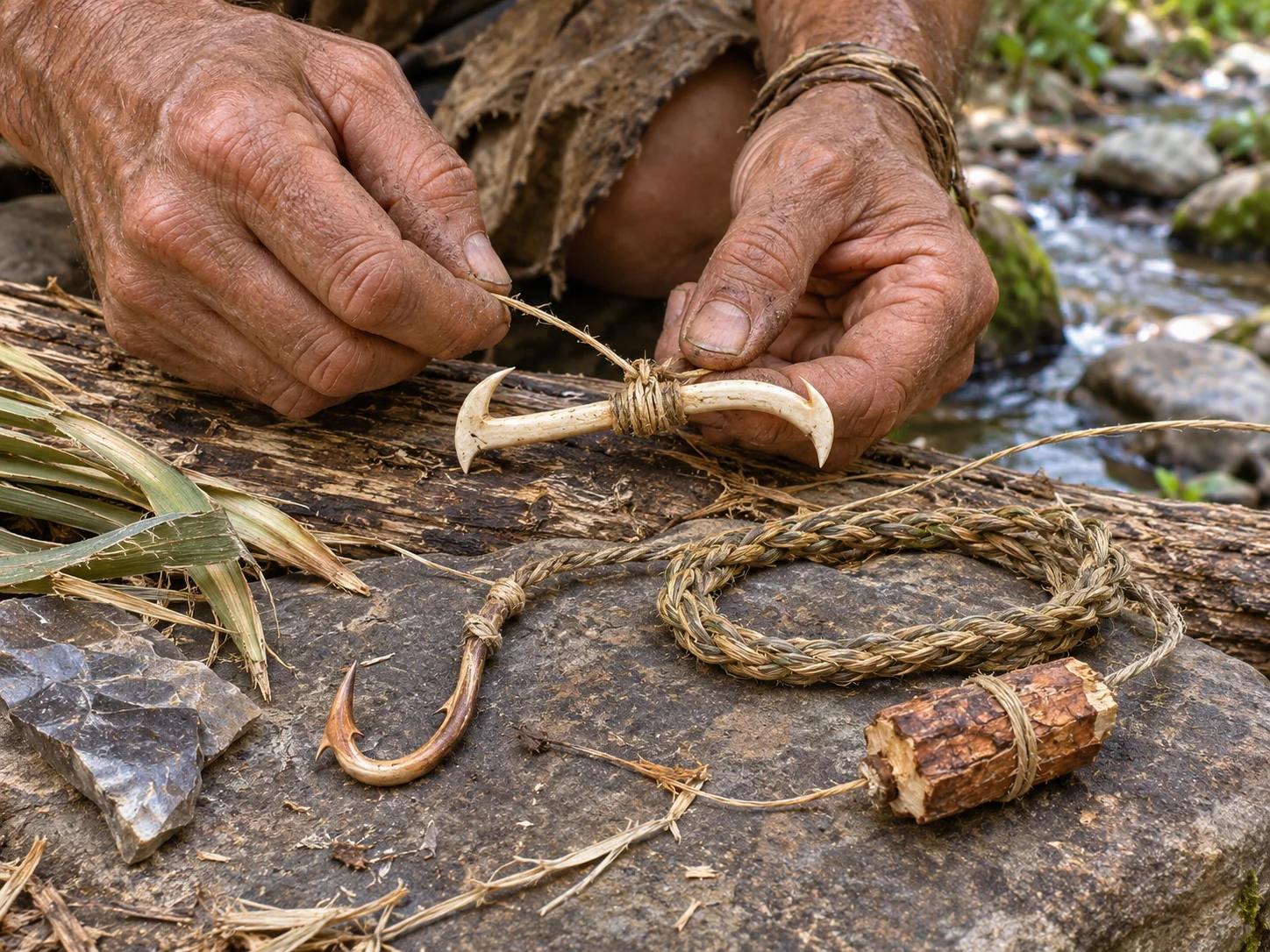
The fastest way to understand how fishing tackle actually works is to build it from scratch with nothing useful in reach. When you whittle a gorge hook from a chicken bone, sharpen a thorn into a J-hook, or braid plant fibers into a hand-line, you stop thinking of tackle as an object you buy and start thinking of it as a set of mechanical problems: tensile strength, sharpness, buoyancy, sink rate. That shift in thinking transfers directly to better fishing decisions in any context.
Practical starting points include stripping long-leaf agave fibers and twisting them into cordage, shaping a gorge hook from a small twig or bone fragment (a straight piece sharpened at both ends, tied at the center, designed to lodge sideways in a fish’s throat), and lashing a bark chip as a float indicator. Off The Grid News and Outdoor Life’s updated survival-fishing guides both emphasize that “any available material” can be turned into functional tackle, the act of experimenting with failure rates is itself the training.
A realistic drill: spend 90 minutes building three different hook types and test all of them in the same water within a two-hour window. You’ll quickly learn which profiles hold bait, which snap under tension, and which sizes attract strikes from the fish actually present. That single session teaches more about hook mechanics than reading about it for a week.
2. Setting and Managing Passive Trotline Systems
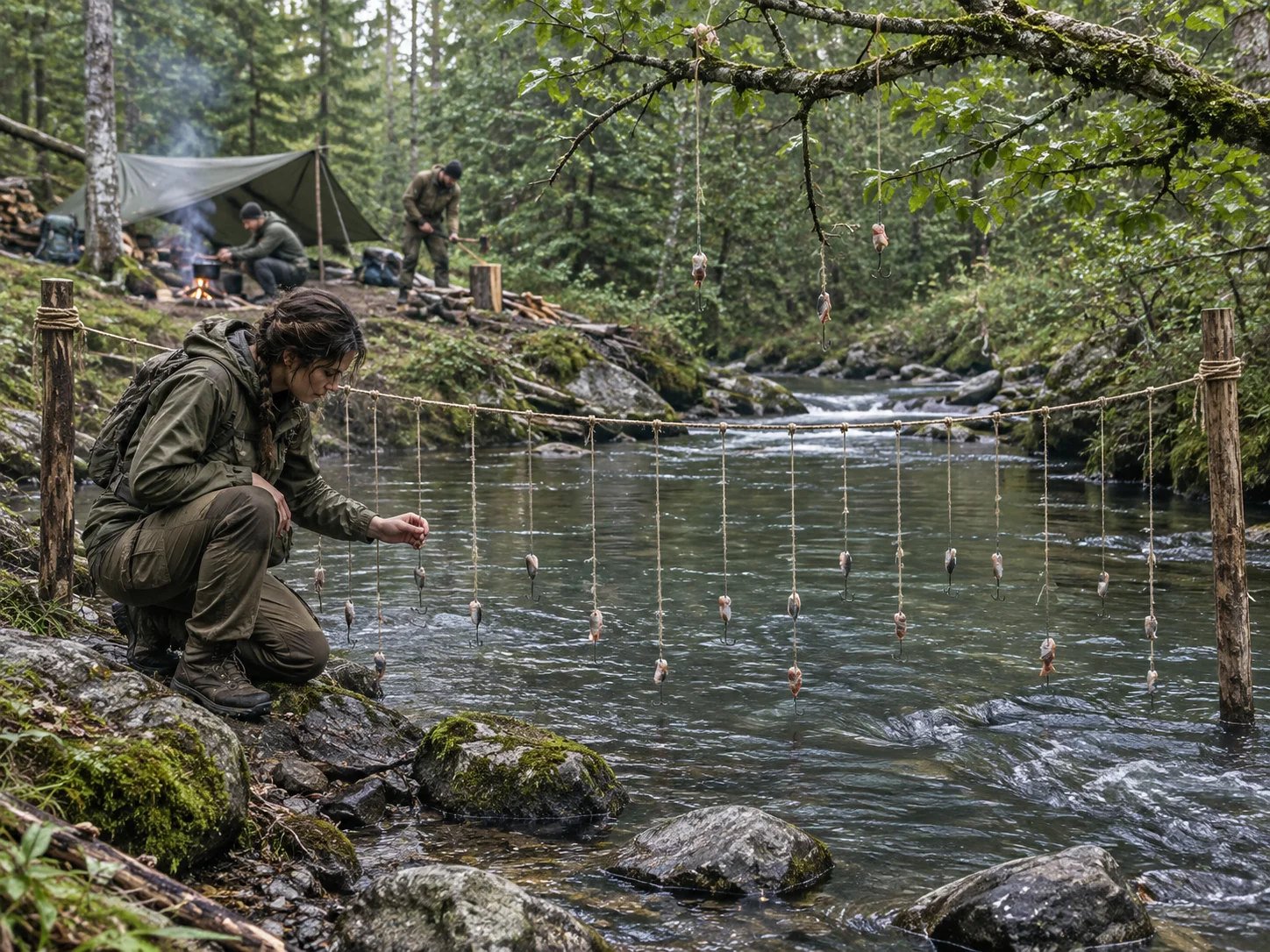
A trotline is a horizontal line anchored at both ends with multiple drop lines hanging from it, each carrying a baited hook. Setting one is simple. Managing it over 12 hours while handling other survival tasks, gathering water, maintaining shelter, signaling, teaches fish behavior in a way that active casting simply cannot replicate.
The learning mechanism is repetition at scale. Survival guides recommend running 15 to 20 baited lines simultaneously, suspended from branches over a stream or secured between two stakes in a tidal flat. Every time you check those lines, you get real data: which bait was taken, at what depth, in which part of the water column, at what time of day. Within 48 hours of running a trotline in unfamiliar water, most people can identify where fish are holding, what they’re eating, and when they feed. That’s information a single rod-and-reel angler might take several weekend trips to accumulate.
Passive systems also introduce the survival principle of multitasking. The lines keep fishing while you do something else. Survival World and Secrets of Survival both flag this as a high-leverage habit, not just for catching food, but for training attention across multiple inputs simultaneously, which is a core competency on any stranded scenario. Adjust bait type, change depths, and relocate anchors each time you check; each adjustment is a controlled experiment that sharpens your read of the water.
3. Constructing and Placing Fish Traps
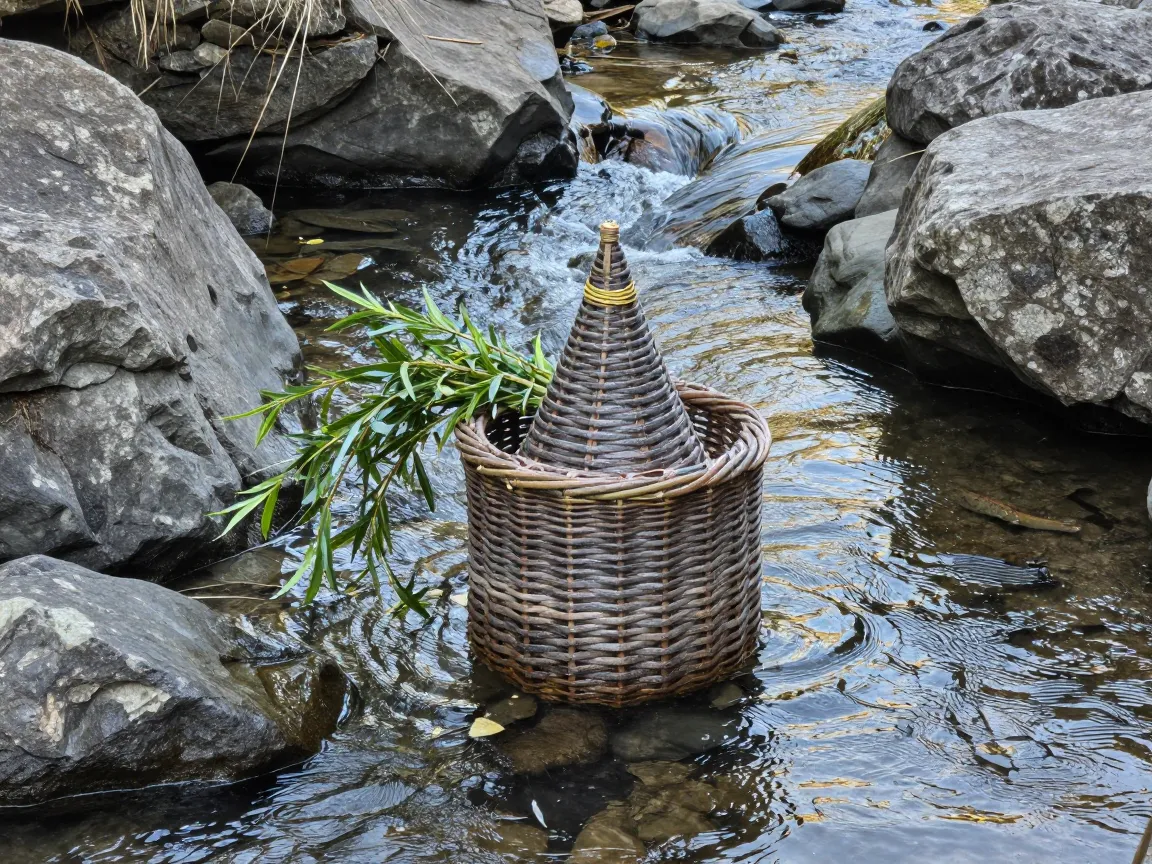
A woven branch or bark fish trap requires no line, no hook, and no bait in some configurations, just an understanding of how fish move through confined water. Building one forces you to think about current direction, funnel geometry, and the natural paths fish take when feeding or fleeing. These are observational skills that make every other fishing method more effective.
The classic design is a cone-within-a-cylinder: an outer basket with an inward-pointing cone entrance that fish can swim into but struggle to exit. Willow shoots, split bamboo, and flexible green branches all work. Placement matters more than construction quality, a well-placed crude trap outperforms a poorly placed refined one. Set it at a stream’s narrowing, at the base of a waterfall where fish congregate, or along a tidal channel edge where fish follow the outgoing water.
What this activity teaches specifically is reading water structure. Before you can place a trap effectively, you have to identify holding water: slower current behind a rock, a depth change at a channel bend, a shaded pool where fish rest during midday heat. Those same observations apply directly to trotline placement, shoreline angling, and net deployment. The trap-building activity is effectively a forced lesson in fish habitat that pays off across all other methods.
4. Shoreline Foraging and Tidal-Zone Fishing
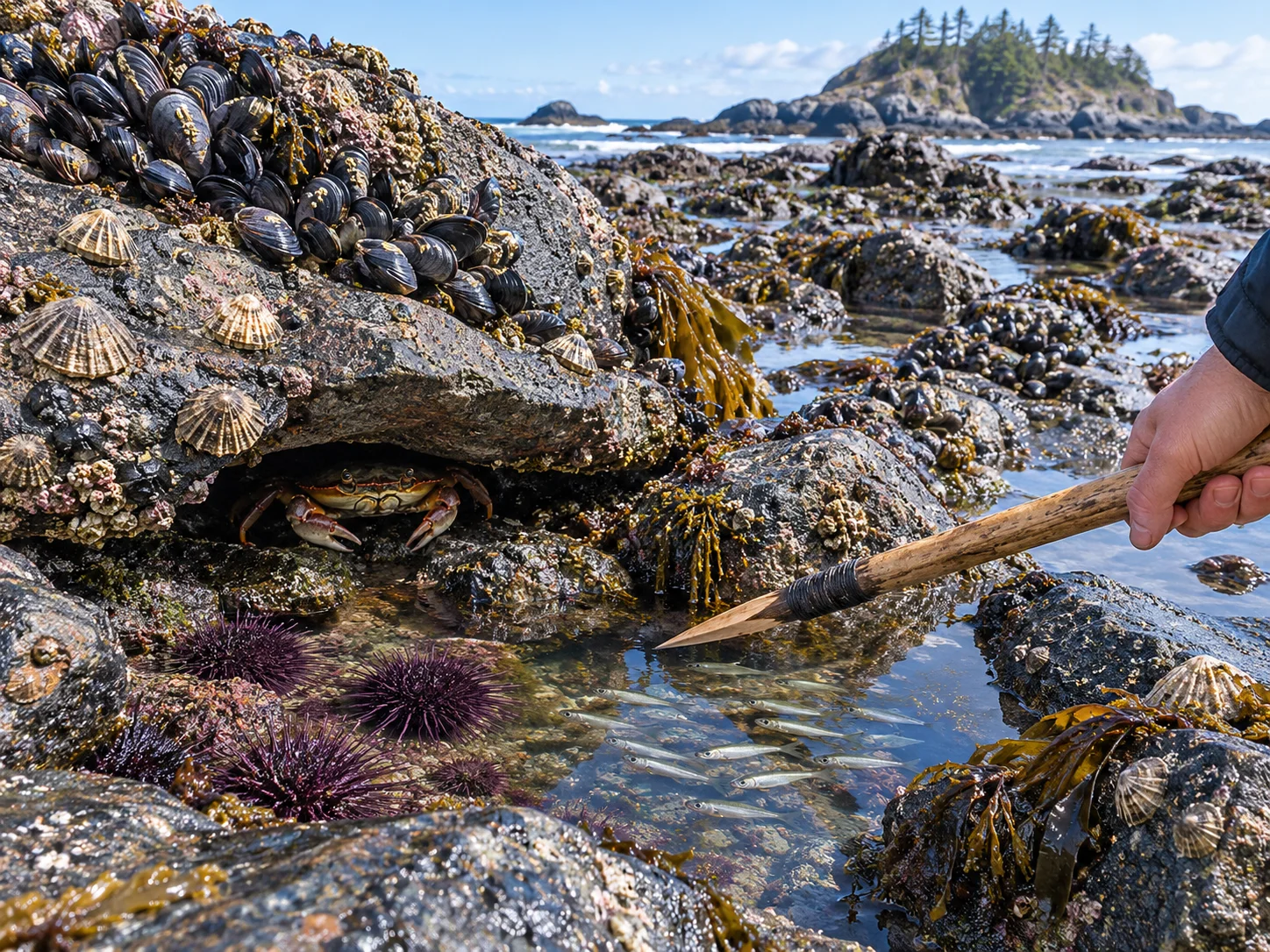
On a coastal desert island, the shoreline at low tide is a food system in itself. Limpets, mussels, crabs, sea urchins, and small baitfish in tidal pools are all catchable by hand or with improvised tools. Integrating this foraging into a daily survival routine builds observational habits that translate directly into better fishing.
The connection to fishing skill is timing and habitat reading. Tidal pools cycle every six hours. Fish move into the shallows to feed as the tide rises and retreat as it falls. A survivor who spends time in the intertidal zone learns to track those movement patterns, where the baitfish concentrate, what predator fish follow them, and which rock formations provide cover. That knowledge maps directly onto where to set lines and traps in the adjacent nearshore water.
A 2026 survival field guide from prepare.blog makes the practical point that effective island survival requires staying stable enough, hydrated, sheltered, and fed on accessible coastal food, to invest consistent energy in fishing practice. Shoreline foraging provides that caloric baseline with low-energy expenditure. It also teaches patience and observation without the pressure of “catching dinner or going hungry,” which makes it a low-stakes training environment where skill develops without desperation distorting decision-making.
Work the low-tide zone systematically: check rock undersides for crabs, probe sand flats for buried bivalves, and use a sharpened stick to spear small fish trapped in shallow pools. Each session sharpens the visual search image you use when scanning water for fish presence.
5. Compressed Scenario-Based Survival Drills
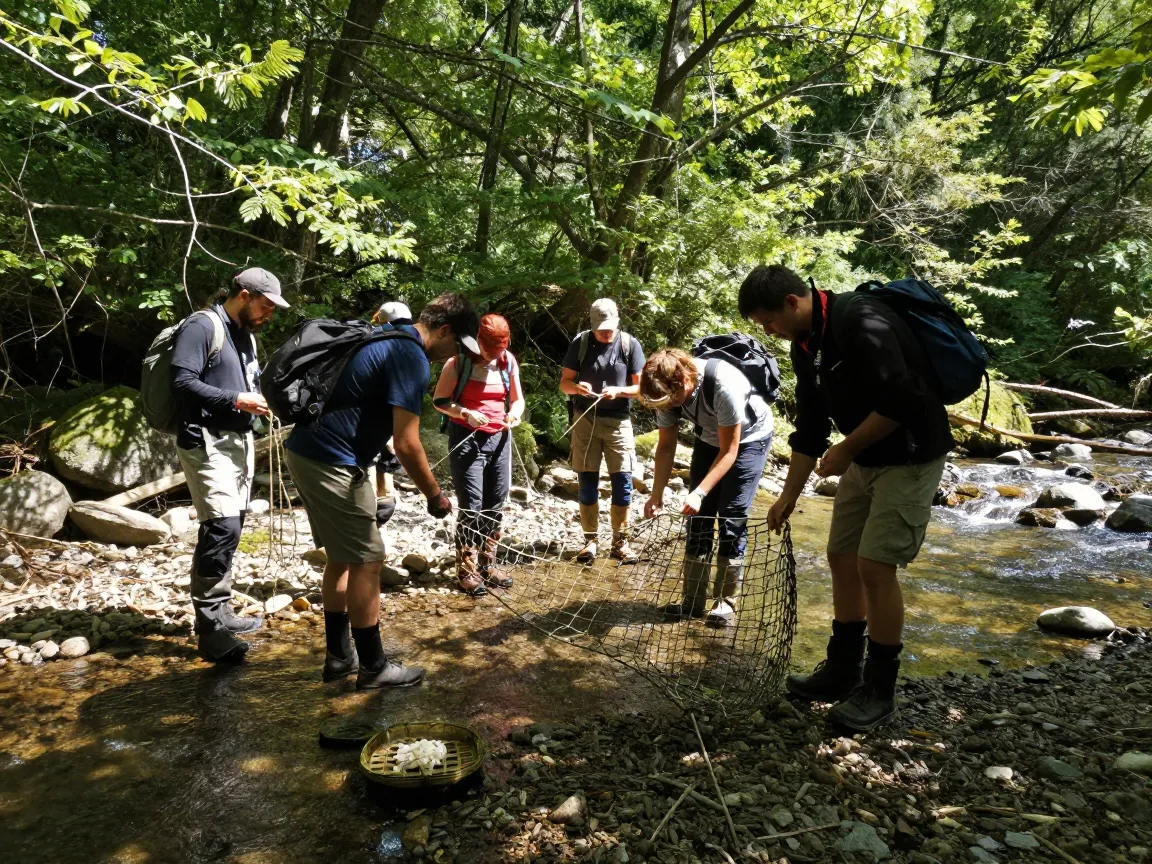
Structured survival courses now offer some of the most reliable, fast-tracked fishing training available. SIGMA 3 Survival School’s Hunter Gatherer course, a five-day program with sessions running in fall 2026, dedicates Day 3 entirely to wilderness fishing: gear usage, primitive methods, and multi-day food-securing strategy in remote terrain. The course format compresses what would otherwise take months of casual practice into concentrated, hands-on blocks.
What makes scenario-based drills effective for fast skill acquisition is constraint. When you’re told to feed a group using only found materials over a 24-hour period, every decision carries real consequence. You can’t pause the scenario to look something up. You run your trotlines, check your traps, adjust your baited hooks, and iterate based on what actually happens, not what a manual says should happen. That direct feedback loop is why SIGMA 3’s format, and similar compressed survival programs, produce measurable competency faster than classroom instruction.
For anyone who can’t attend a multi-day course, the same principle applies in a backyard or local creek. Set a constraint, no store-bought bait, no modern hooks, 90-minute time window, and fish within it. The constraint forces improvisation and close observation of results. Similar one-day programs, like the NPFVOA Practical Survival Techniques class (November 2026) and BIM’s basic safety training in Ireland, use the same design logic: short, intense activity blocks with hands-on repetition rather than lecture. Apply that structure to self-directed practice and the learning rate jumps noticeably.
6. Redundancy Drills, Running Multiple Systems Simultaneously
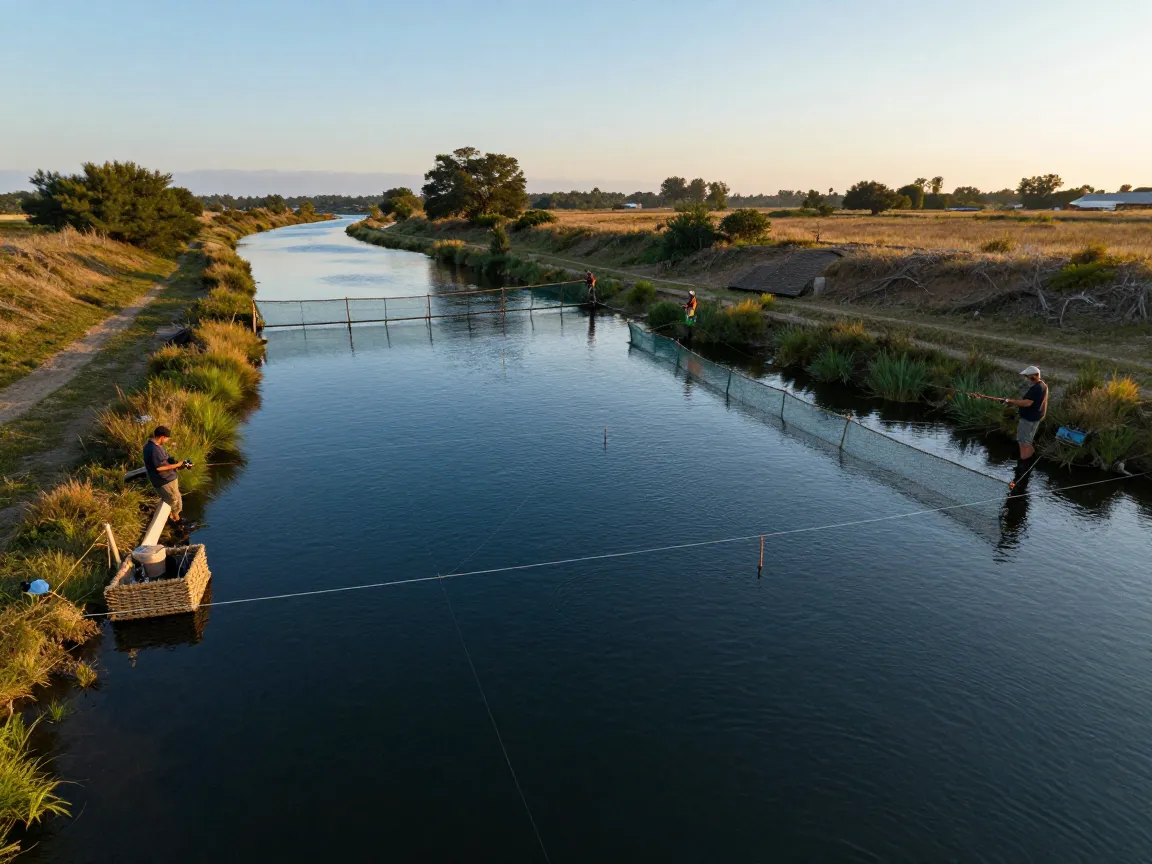
The most underused training method in survival fishing is running every available technique at the same time. Set a trotline, place a trap, hang three branch-based hand-lines over different depth zones, and lay a makeshift gill net across a channel, all within a 200-meter stretch of water, then check each system every 90 minutes for a full day.
This isn’t just about catching more fish. It’s about generating enough data points to understand what’s actually working. If your trotline picks up four fish and your trap catches none, that tells you something specific about how fish are moving in that waterway on that day. If the hand-lines fished at mid-depth outperform the bottom-hung lines, you’ve just learned the feeding depth. Each system functions as a separate experiment, and running them in parallel compresses the learning timeline dramatically.
Emergency fishing manuals are consistent on this point: keep several devices in the water at all times, work other survival tasks between checks, and adjust each system based on results. Outdoor Life’s updated survival-fishing guide suggests 20 simultaneous baited lines on different branches as a realistic baseline, not because one person can manage 20 lines with precision, but because the variation across 20 placement decisions generates faster situational understanding than 3 carefully placed ones. The redundancy principle also builds the multitasking habit that separates people who get fed in a stranded scenario from those who don’t.
A practical structure for this drill: before dawn, deploy all systems. At 90-minute intervals, check and re-bait or adjust each one. Note which methods produced results and what variables changed. Repeat the following day with deliberate modifications, different bait, different depth, different location. Within two to three days of this routine, your read of unfamiliar water becomes reliable enough to apply in any new location.
Quick Comparison
| Activity | Primary Skill Built | Time to First Feedback | Gear Required |
|---|---|---|---|
| 1. Improvised gear building | Tackle mechanics and materials knowledge | 1-2 hours | None, found materials only |
| 2. Passive trotline systems | Fish behavior and feeding patterns | 4-12 hours | Cordage and hooks |
| 3. Fish trap construction | Water reading and habitat identification | 6-24 hours | Flexible branches or bark |
| 4. Shoreline and tidal foraging | Observation and tidal pattern timing | 1-6 hours | None |
| 5. Scenario-based survival drills | Decision-making under constraint | 1-5 days | Varies by course |
| 6. Redundancy multi-system drills | Comparative analysis of technique performance | 1-2 days | All improvised methods combined |
Conclusion
The six activities above share one design principle: they force you to work with limited gear and to read results honestly. None of them require a fishing license, a tackle box, or a boat. What they require is a willingness to fail, adjust, and try again, which, in a stranded scenario, is the only curriculum that matters.
If you take one step from this article, run a redundancy drill in a local creek or pond before you need the skill in an emergency. Set three different improvised systems, check them every 90 minutes, and log what each one produces. That single afternoon will teach you more about practical fishing than most multi-day courses, and it’ll identify the gaps in your knowledge while you’re still somewhere you can fix them.