Vintage Fishing Gear Finds Worth Restoring, Displaying, or Actually Fishing With
Roughly 40 percent of American households store at least one piece of old fishing tackle they have never touched again, according to general sporting goods inheritance surveys. Much of it is worth far more than the garage shelves it sits on. The 6 vintage fishing gear finds worth restoring, displaying, or actually fishing with covered below range from bamboo fly rods that estate buyers now warn owners never to touch with sandpaper, to mid-century spinning reels that still cast smoother than many reels sold new in 2026. Knowing which path, restoration, display, or active service, is the right call for each category can be the difference between a profitable heirloom and an expensive mistake.
Disclosure: This post contains affiliate links. As an Amazon Associate, we earn from qualifying purchases, and at no extra cost to you.
1. Classic Bamboo Fly Rods
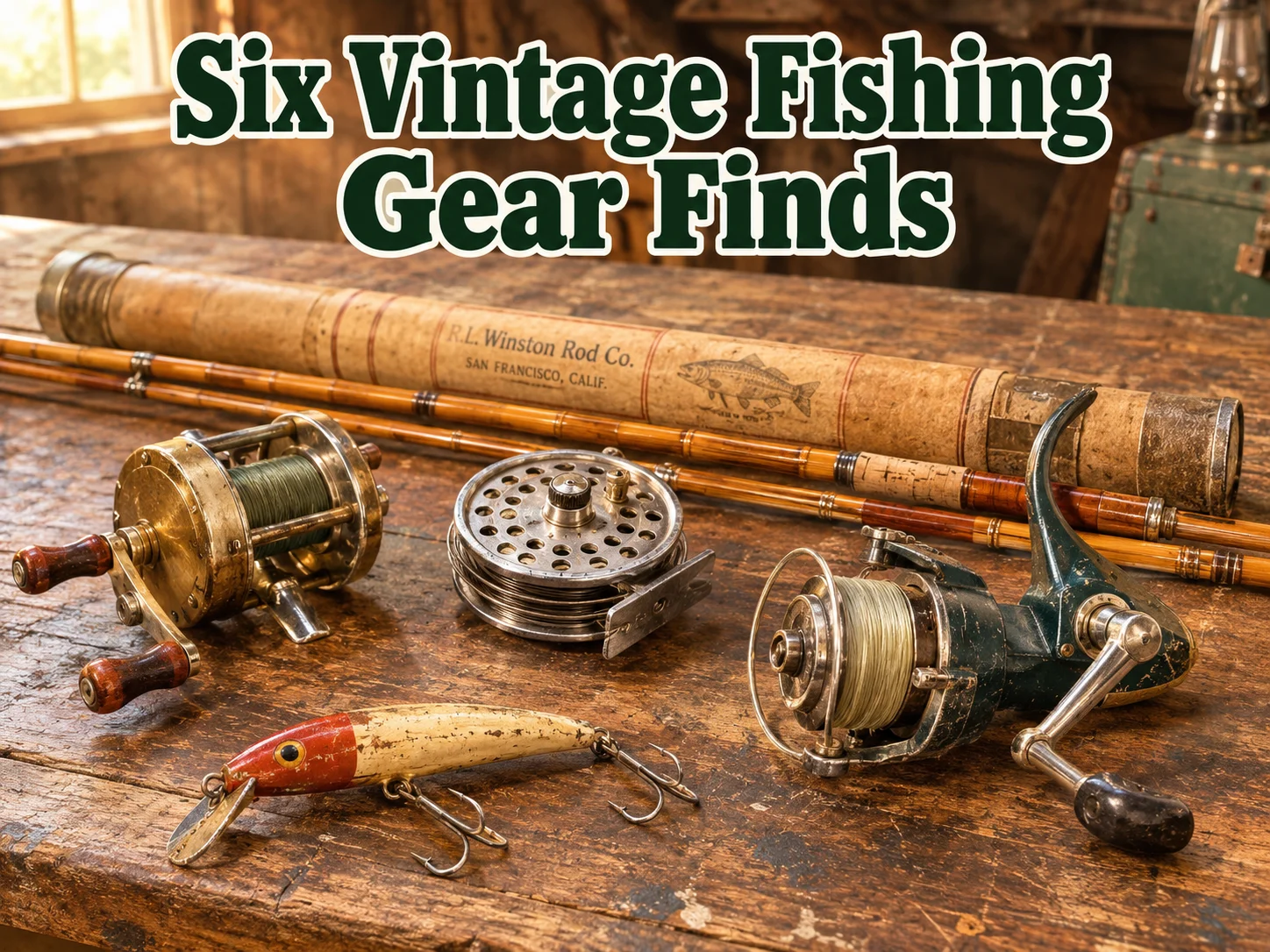
The names that consistently come up when estate buyers and rod historians talk about bamboo are H.L. Leonard, Jim Payne, Heddon, Wright & McGill Granger, and R.L. Winston. Any rod from these makers sitting unidentified in a tube or a corner deserves careful examination before anything else happens to it.
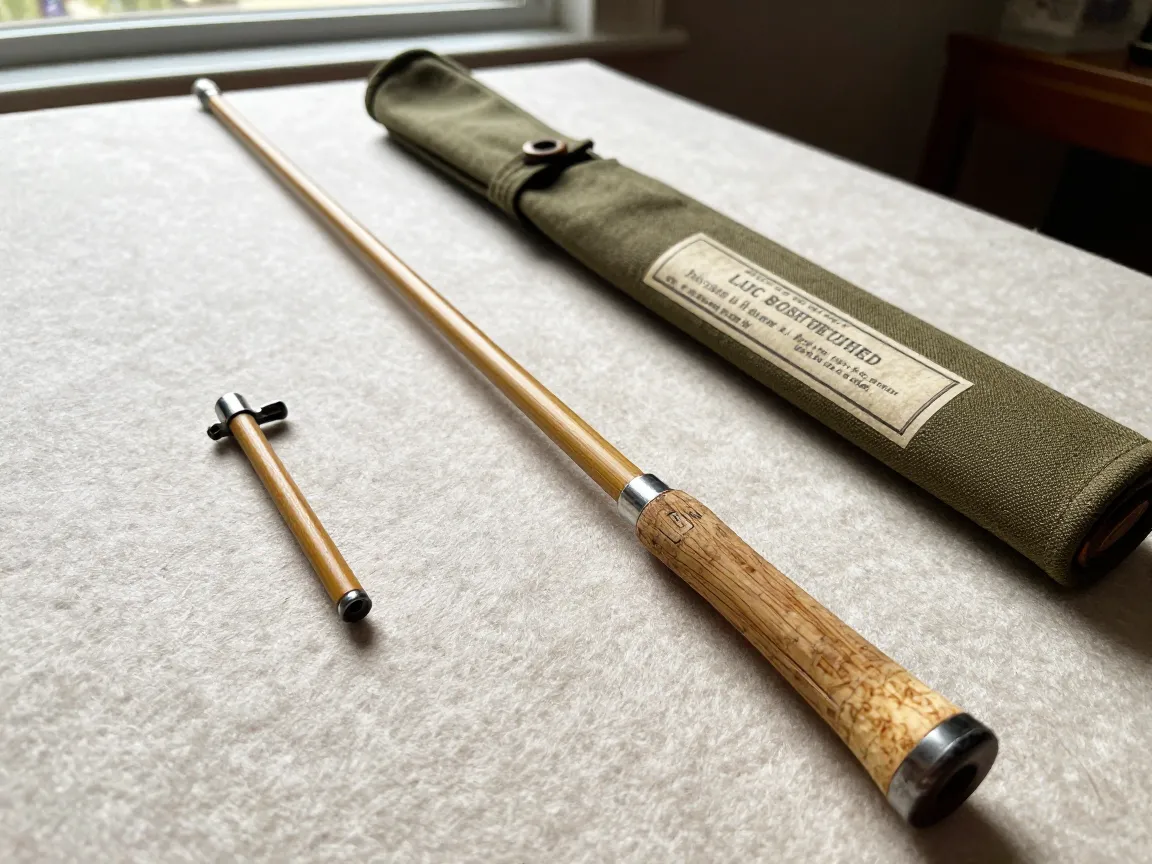
The single most repeated warning from collectors and from American Museum of Fly Fishing historian Jim Schottenham is straightforward: do not re-varnish, do not re-wrap the guides, and do not strip the finish. Original wraps and original varnish are what collectors pay for. A Jim Payne rod with its factory wraps intact can command prices that a re-finished rod of identical model and year cannot approach. The moment you try to make it look “fresh,” you remove the evidence of authenticity that drives value.
What you should do instead depends on what you have. If the rod is from one of the high-priority makers listed above, verify the ferrule stamps, check the original finish, and get a proper identification before any cleaning at all. If it turns out to be a museum-quality piece, the right move is storage in a temperature-stable environment with the original tube. If it is a more common production bamboo rod in reasonable condition, light cleaning with a dry cloth and a tiny amount of paste wax on the cork handle is acceptable. Some of these rods, particularly Heddon production models, are still genuinely fishable and cast well for trout and panfish.
Display-worthiness is not just about the rod blank. Original rod bags, labeled ferrule plugs, and factory tubes with paper labels all contribute to provenance, which is one of the four factors, alongside condition, originality, and correct identification, that determine whether a bamboo rod is worth four figures or forty dollars. If a tube has a Payne or Leonard label still readable, do not throw it away.
2. Early Fiberglass and First-Generation Graphite Rods
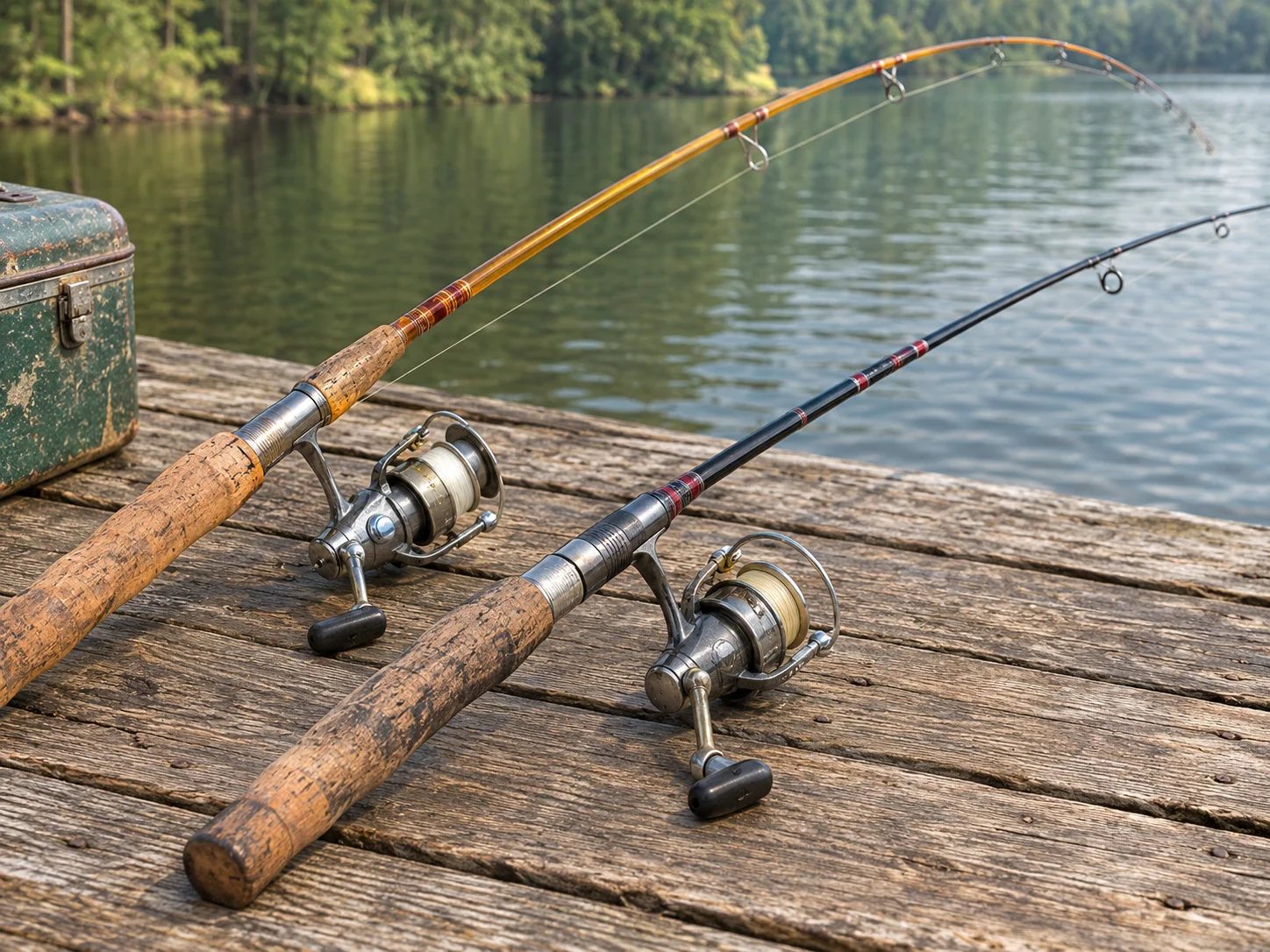
Fenwick built two separate generations of collectible rods. The Feralite fiberglass fly rods from the 1960s and early 1970s are now on estate buyers’ short lists as premium finds. The later HMG graphite series, introduced in the late 1970s, is on a separate list of gear that may already be worth more than many rods sold new today.
The practical difference between these two generations matters. Early fiberglass Fenwicks and comparable production rods from makers like the original Park Falls-era St. Croix rods are genuinely fishable. They cast a full fly line with a distinctive slow, full-flex action that some fly fishers actively prefer over modern fast-action blanks. If you find one with its original guides and a solid tip section, using it on the water is a reasonable choice. The fiberglass will not shatter, and even worn cork can be lightly sanded and re-shaped without destroying collector value the way stripping a bamboo rod would.
Graphite is different. Early Fenwick HMG rods in original condition, meaning original wraps, original reel seat hardware, and the correct tip section, have appreciated steadily. If you have one with all those elements intact, it sits in the same category as the bamboo rods in terms of what not to do. No re-wrapping, no tip replacement with modern blank sections, and no polishing of the aluminum reel seat. Use it only if you accept that every trip carries some risk of tip breakage and the resulting drop in collector value.
Both fiberglass and early graphite rods are worth identifying by maker marks before anything else. Many older St. Croix, Fenwick, and similar production rods look similar to untrained eyes. The specific model number stamped near the handle determines whether you have a user rod or a display-worthy collectible.
3. Pre-1980 Baitcasting Reels
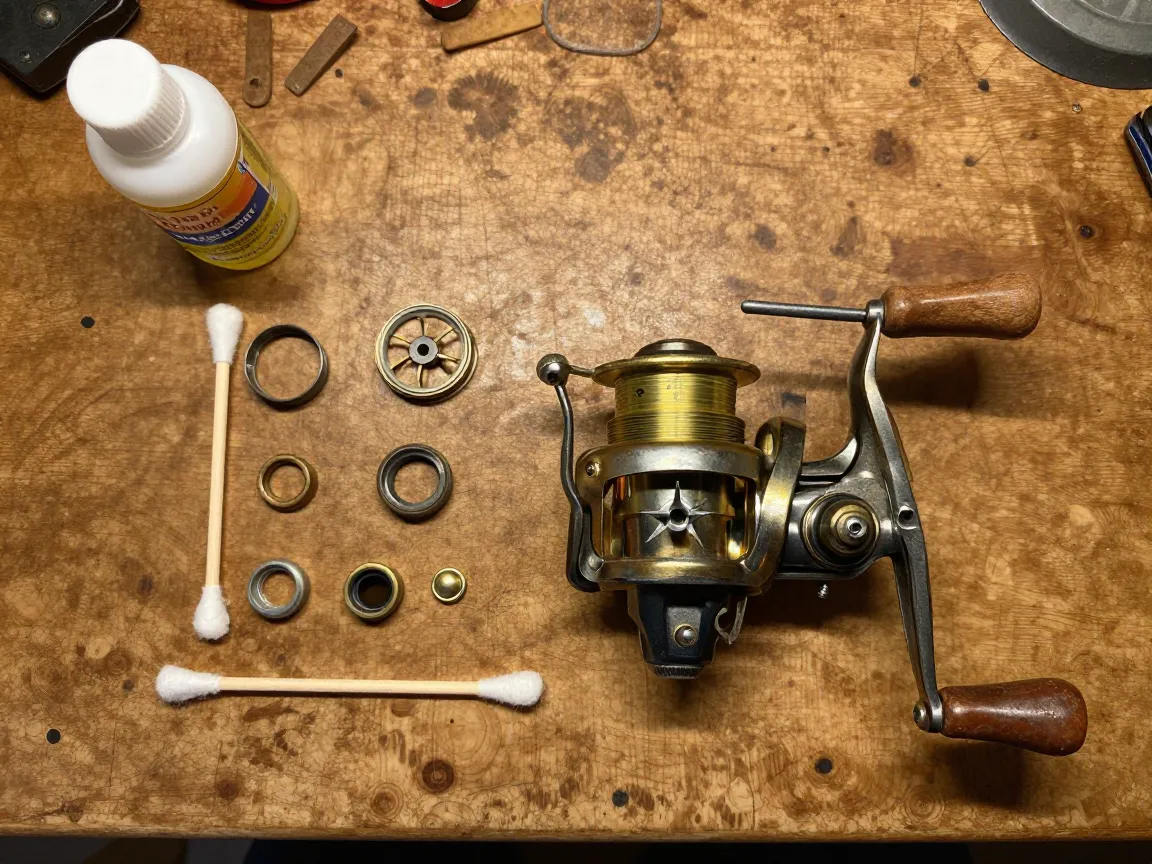
The June 2026 breakdown of old gear worth more than new rods specifically names pre-1960 Pflueger Supreme reels and pre-1980 Penn Senator reels as premium finds, and both categories share the same restoration logic. Verify what you have before you clean it.
Pflueger Supreme reels made before 1960 were machined to tolerances that many collectors compare favorably to Swiss watchmaking. The level-wind mechanism, the brass spool, and the star drag components were designed to last decades with periodic lubrication. Many that have been sitting in a tackle box for thirty years need nothing more than disassembly, old grease removal, re-lubrication with modern light reel oil, and reassembly to cast smoothly again. A May 2026 restoration video showed a lot of six vintage reels, including a Shakespeare Wonder Wheel FK model, being brought back to full function through exactly this process, with no replacement parts required.
The critical warning from multiple collector channels in 2026 applies to all baitcasting reels: do not polish the metal, do not replace handles with modern substitutes, and do not swap out any original screws. These changes make the reel look better and immediately reduce its collector value. A pre-1960 Pflueger Supreme with original handles and unpolished, lightly cleaned brass is worth significantly more to a serious collector than the same reel with a bright cosmetic polish and a replaced handle knob.
Penn Senator reels occupy a slightly different position because they were built as heavy-duty saltwater tools and many are still being fished. Pre-1980 examples with original factory components are worth identifying and setting aside as potential display pieces. Post-service examples that have already had some parts replaced are better candidates for continued fishing use. Either way, confirming the production era through the frame markings and comparing with documented examples before making any decisions is worth the hour it takes.
4. Classic Fly Reels from Hardy Brothers and Fin-Nor
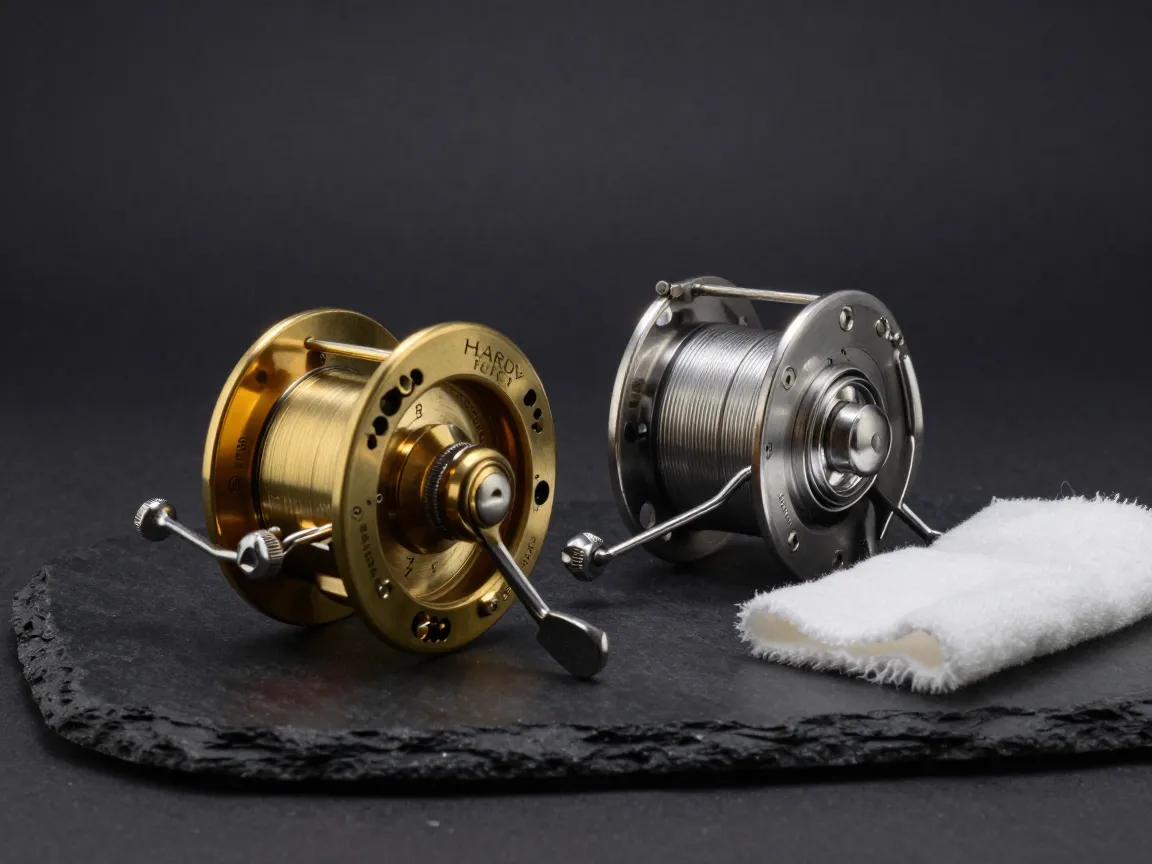
Hardy Brothers fly reels from before 1980 and Fin-Nor “wedding-cake” spool reels occupy the top tier of collectible fly fishing hardware. Both are explicitly named in mid-2026 collector discussions as gear that may be worth more than complete modern fly fishing setups.
The Hardy Brothers operation out of Alnwick, England produced reels with individually fitted parts through much of the 20th century. Pre-1980 Hardy reels often carry serial numbers that can be cross-referenced with factory records to establish precise production years. A Hardy Perfect or Lightweight from the 1950s or 1960s in original condition, with original finish, original check mechanism, and no replaced foot screws, represents both a functional reel and a documented piece of fishing history. Many still fish perfectly after a strip-down and re-grease with modern Penn reel grease, and some fly fishers deliberately use them for the check sound and the drag feel, which are unlike anything made today.
Fin-Nor wedding-cake reels take their name from the stacked anodized spool rings that give them a distinctive layered appearance. Made in Miami from the 1950s onward, they were priced at the top of the market new and have held value accordingly. These reels were built to handle large saltwater fish, and a properly serviced example is fully capable of going back on a 10-weight or 12-weight rod for tarpon or permit fishing today. That dual-use reality, serious display piece and genuinely capable fishing tool, is exactly what collector and restoration channels in 2026 mean when they describe gear that serves both purposes.
Both Hardy and Fin-Nor reels should be cleaned with dry cloths and cotton swabs before any solvent touches them. The anodizing on Fin-Nor reels and the lacquer on Hardy reels respond poorly to aggressive chemical cleaning. The hydrogen peroxide discussions that surfaced in mid-2026 specifically warned that products meant to lift rust can lift original anodizing and factory lacquer as readily as they remove grime.
5. Vintage Lures from Heddon, Creek Chub, and Similar Makers
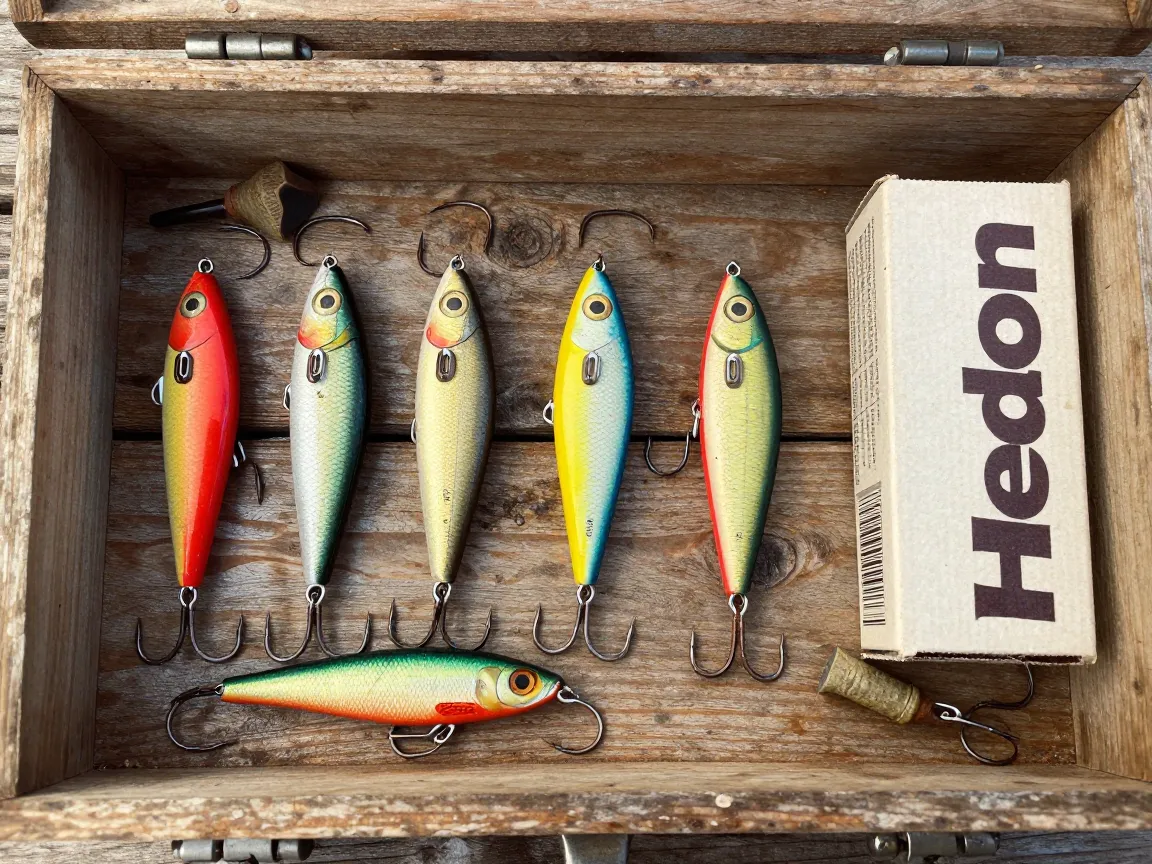
A tackle box full of old plugs gets underestimated constantly. Mixed vintage lure lots currently sell in the twenty-to-fifty-five dollar range in US markets, and that is for undifferentiated collections where no one has identified what is actually in the box. Individual Heddon lures in good condition sell in the fifty-five to two-hundred-eighty dollar range depending on color, hardware, and box. Creek Chub lures run twenty-five to seventy dollars per piece. Those numbers are for single lures that someone took the time to identify correctly.
The practical sorting process for a tackle box of old lures starts with hardware condition, not paint. The hook hangers on early Heddon and Creek Chub lures were made in specific styles that changed at known dates. A “toilet-seat” hook hanger on a Heddon lure, for example, places it in a narrow production window that collectors know precisely. That identification requires a copy of a lure collector reference guide, not expert knowledge on your part.
Paint condition is where the display-or-fish decision gets made. A lure with original factory paint, all three hook positions present, and the original box has real display value. The same model with chipped paint and replaced hooks is a fishing lure. Both are worth something, but in different ways. A vintage Bomber crankbait or a Mepps No. 3 spinner that happens to have a mediocre paint job and no box is still a fully functional fishing lure, and community discussions from 2026 note that some older designs swim in ways that differ from modern versions and remain effective on bass and trout.
The worst thing to do to a potentially valuable lure is to clean it with hydrogen peroxide or any rust-removing chemical. The two-part warning that appeared in late-summer 2026 from tackle restoration channels was specific: hydrogen peroxide can lift early lacquer paint in minutes. If a lure has rust on its hooks and the paint looks original, replace the hooks with modern equivalents of the correct size and leave the body alone. That approach preserves display value while making the lure fishable.
6. Mid-Century Spinning Reels
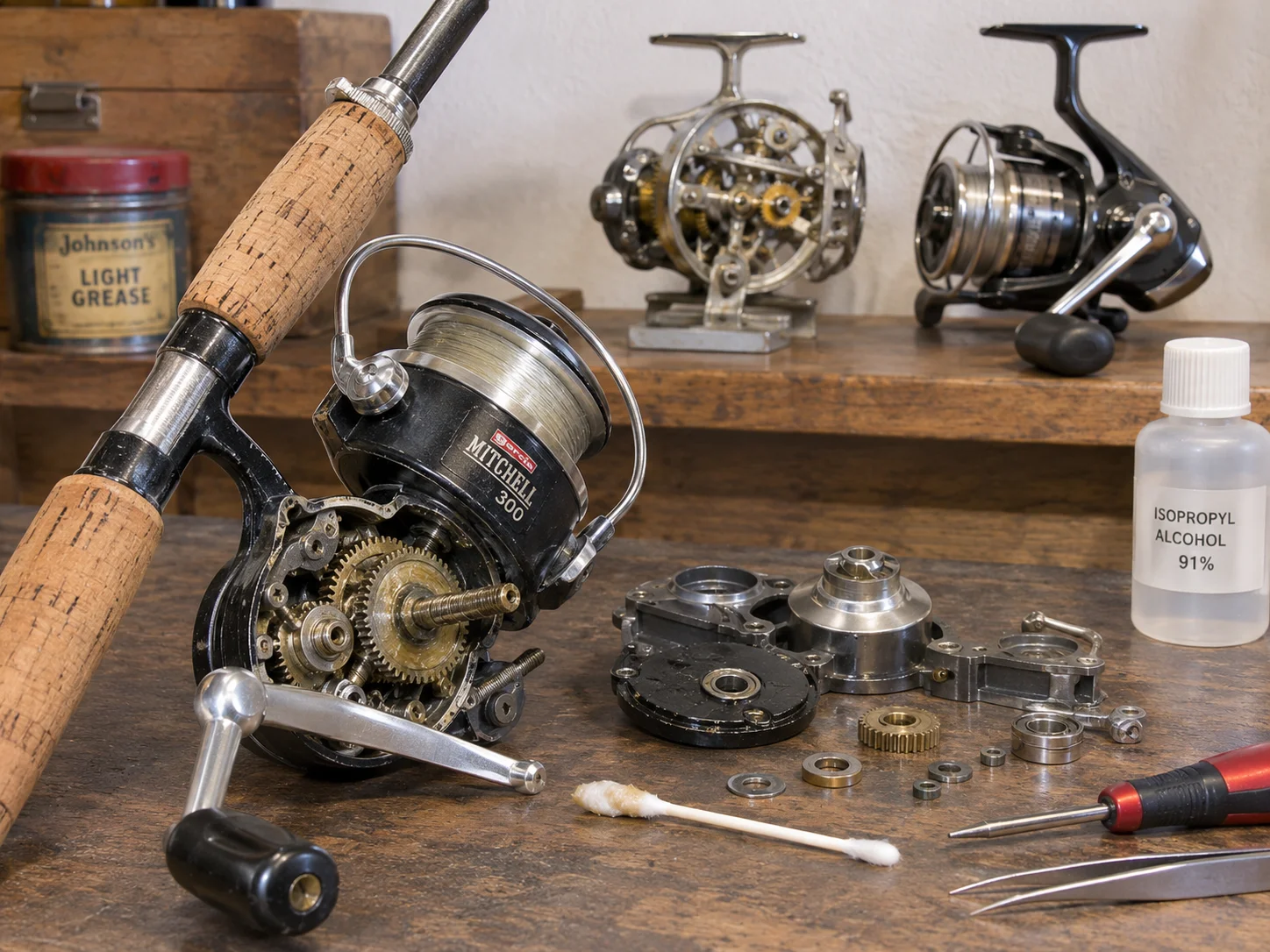
Spinning reels from the 1950s through the mid-1970s sit in an interesting position in the collector and restoration world. They are not at the top of the price charts the way Hardy fly reels or Pflueger Supreme baitcasters are, but they are also the category most likely to be found in inherited tackle boxes in usable condition, and many can be returned to smooth operation with basic service.
The Alan Tani reel repair community, one of the most detailed DIY repair resources updated through late 2026, publishes disassembly and lubrication guides for dozens of mid-century spinning reel models by makers including Garcia, Mitchell, and Shakespeare. What contributors there repeatedly report is that the bail mechanisms, main gears, and oscillating spools on well-made 1960s spinning reels were over-engineered by modern standards. A Garcia Mitchell 300 from 1962 that has been sitting unlubricated for twenty years will often spin freely again after a full strip-down, cleaning with isopropyl alcohol on a cotton swab, and re-packing with light grease on the main gear and thin oil on the bearings.
A thread on old and unusual spinning reels documented through November 2026 highlights designs that look odd by modern conventions, some with exposed gears, some with unusual bail geometries, but which cast and retrieve cleanly once serviced. These make excellent display pieces precisely because of their visible mechanical character. Putting one on a shelf next to a modern sealed spinning reel illustrates fifty years of design change in a way that photographs cannot.
The practical limit for spinning reel restoration is line twist management. Some early spinning reel designs introduced line twist that modern anglers find annoying. If you restore a mid-century reel and find that it twists line significantly, the most honest categorization is display, not fishing use. That is not a failure of the restoration; it is an accurate description of the design. Many reels in this category will fish fine. Some will not, and knowing the difference after one test session is better than fighting tangled line for a whole season.
Conclusion
The consistent thread across all six categories is that the highest-value outcome, whether financial or functional, almost always starts with correct identification. Before cleaning, before oiling, before deciding whether to hang something on a wall or spool it with line, know what you actually have. Estate buyer guidance, collector reference guides, and community forums like Alan Tani’s reel repair index are all accessible without cost. Spending an hour on identification before touching a piece of vintage gear is the one step that separates a good decision from an expensive one.