DIY Survival Heater Ideas to Stay Warm in a Cold Fishing Cabin
Hypothermia can set in at air temperatures as mild as 50°F (10°C) when a person is wet and stationary, a situation that describes most ice fishers and cold-water anglers on a bad day. A fishing cabin with no working heat source is not a shelter; it’s a slow-motion problem. These 6 DIY survival heater ideas to stay warm in a cold fishing cabin range from zero-cost emergency options you can build in under an hour to semi-permanent off-grid systems that heat a small cabin reliably through a full winter season. Each one uses materials that are either already in a cabin or available from a hardware store for less than a typical heating bill.
Disclosure: This post contains affiliate links. As an Amazon Associate, we earn from qualifying purchases, and at no extra cost to you.
Key Takeaways
- Six distinct DIY heating methods cover every scenario from emergency overnight warmth to sustained cold-weather use in a fishing cabin.
- Solar air heaters cost almost nothing to build from salvaged cans and produce real daytime heat with zero fuel cost.
- Rocket mass heaters burn wood at high efficiency and store heat in thermal mass, making them the best long-term off-grid option for a fixed cabin.
- Candle-based heaters are strictly emergency backup, they cannot heat a space; they reduce the chill for one person at close range.
- Carbon monoxide risk applies to every combustion heater indoors; ventilation is not optional.
- Matching the right heater to the scenario (emergency vs. overnight vs. multi-day stay) prevents both fuel waste and danger.
1. Solar Air Heater Built from Aluminum Cans
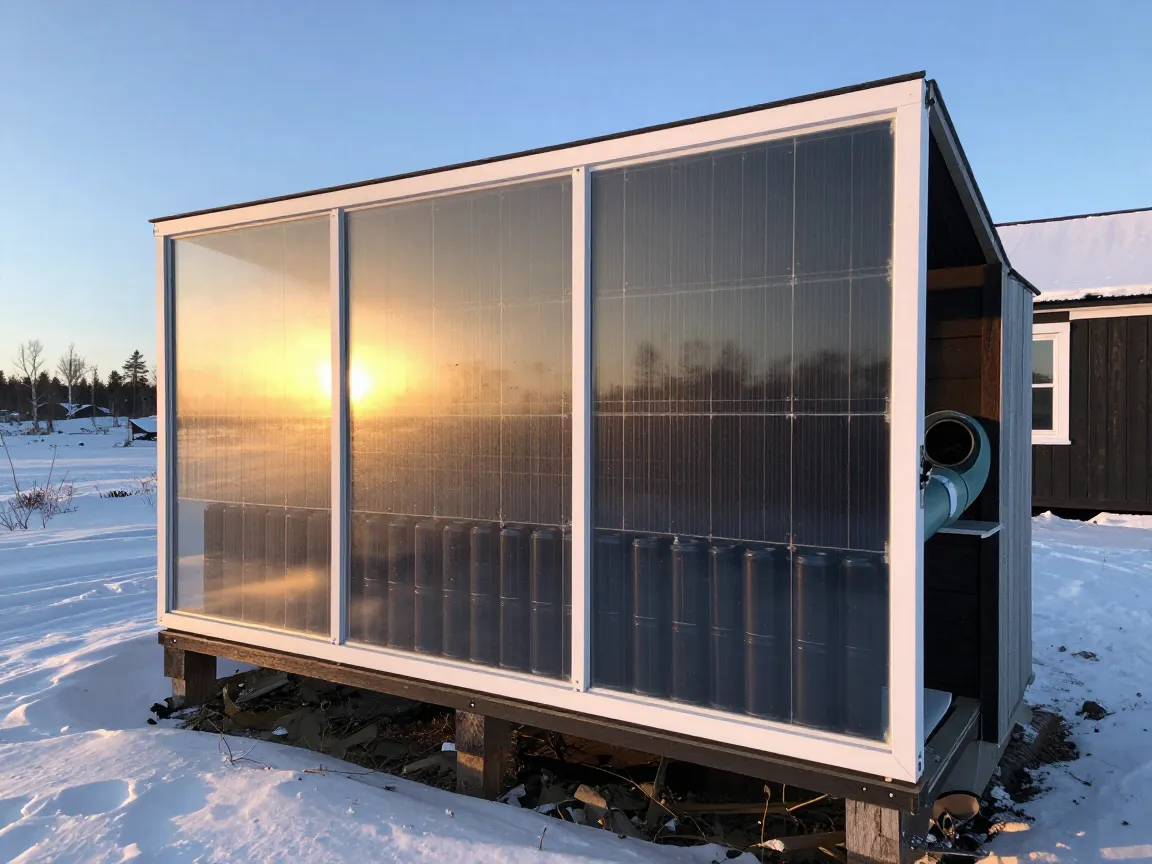
A well-built solar air collector made from recycled aluminum cans can raise the temperature of incoming air by 30°F to 50°F on a clear winter day, pushing that warm air into the cabin through a simple wall duct. The build requires roughly 200 soda cans, a sheet of plywood or polycarbonate glazing, flat black spray paint, and a small 12-volt computer fan, all sourced for under $30 if you gather the cans yourself.
The principle is straightforward. Cans are cleaned, the top and bottom punched out, and stacked in columns inside a painted wooden frame. Sunlight heats the black metal. Cold air enters at the bottom of the panel, passes through the heated can columns, and exits as warm air into the cabin. No fuel, no combustion, no moving parts beyond the optional fan. On a clear January day at 40°F outside, a panel measuring 4 feet by 8 feet can deliver a continuous stream of 100°F+ air through a 4-inch duct.
For a fishing cabin with a south-facing wall, this is the most cost-effective daytime heating supplement available. It doesn’t replace a primary heat source for overnight use, but it handles daytime chill without burning any fuel. Building two panels side by side extends output enough to maintain comfort in a well-insulated 12-by-16-foot cabin during daylight hours. Seal the duct with a backdraft damper, a simple flap cut from a plastic bag, so cold air doesn’t reverse-flow through the panel at night.
The main constraint is obvious: it only works when the sun is out. Plan this as one part of a layered system, not a standalone solution.
2. Rocket Mass Heater as a Thermal Battery
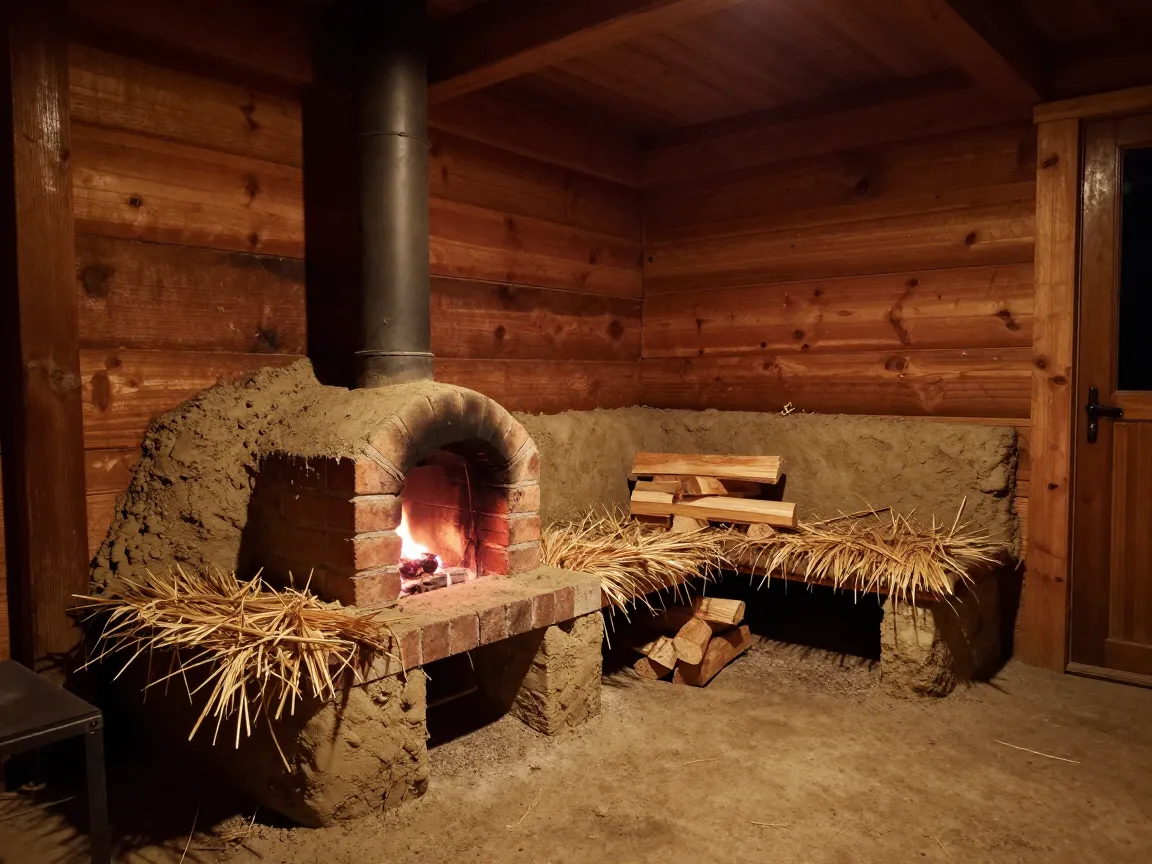
A rocket mass heater burns small-diameter wood (1 to 3 inches thick) in a J-shaped combustion chamber that creates a powerful upward draft. Combustion temperatures exceed 1,800°F in the burn tunnel, which is hot enough to combust the gases that a conventional woodstove wastes up the flue. The result is a heater that extracts two to three times more heat per pound of wood than a standard stove, produces very little smoke, and exhausts mostly water vapor and CO2.
What makes it exceptional for a fixed fishing cabin is the thermal mass. The exhaust gases travel through a long horizontal run of flue pipe embedded in a bench or platform built from cob (clay, sand, and straw) or poured concrete. That mass absorbs heat during the burn and radiates it back for 12 to 24 hours after the fire goes out. A single two-hour burn with a small armload of scrap wood can keep a cabin at 65°F through a cold night.
Building a basic rocket mass heater requires firebrick, standard brick, stovepipe, and cob material. Total material cost runs between $100 and $300 depending on what’s on-site. The critical dimension is the heat riser, the vertical section above the burn tunnel, which should be at least 12 inches taller than the horizontal feed tube to maintain draft. The mass bench should have a minimum of 1,500 pounds of thermal material for meaningful heat storage.
This is the highest-performance permanent DIY heating option on this list. It demands more build time than the others, a weekend at minimum, but it pays back that investment every cold season for years. For a cabin used regularly from November through March, nothing else on this list matches its efficiency-to-cost ratio over time.
3. DIY Stove-Top Cabin Heater Using Alcohol or Propane
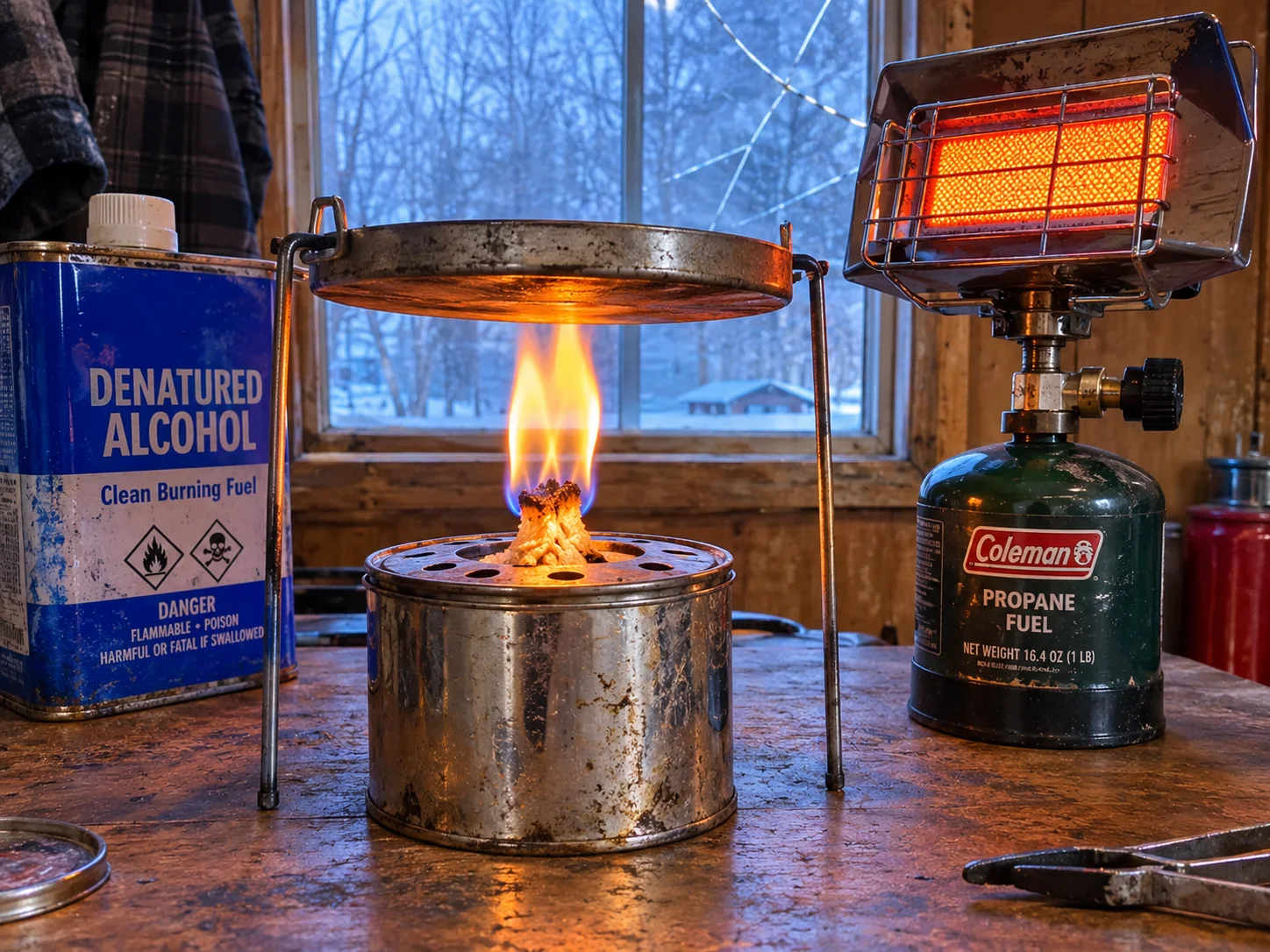
Portable stove-top heaters, meaning a small radiant heater element placed over or beside a camp stove burner, solve the problem of fast heat in a small, cold space when you arrive and need warmth within minutes. An alcohol-fueled version uses denatured alcohol or isopropyl alcohol (90%+) in a simple wick-and-can burner. A propane version uses a standard 1-pound canister with a burner head and a radiant ceramic element clamped above it.
Denatured alcohol burns cleanly and stores indefinitely, which makes it a practical choice for a cabin that sits empty between trips. A 32-ounce can of denatured alcohol costs roughly $6 to $8 and provides about 3 to 4 hours of burn time at moderate output. The flame produces no visible smoke and minimal carbon monoxide at correct wick height, but “minimal” is not “zero,” so a cracked window or door gap remains mandatory.
The build for a DIY alcohol heater is simple: a wide-mouth metal can (a large paint can works), a fiberglass or cotton wick pulled through a punched lid, and a ceramic or metal heat diffuser placed 6 to 8 inches above the flame to radiate warmth outward rather than straight up. Total heat output is modest, roughly 1,000 to 2,000 BTU, which won’t heat a 200-square-foot cabin but will take the edge off a 10-foot-by-10-foot space and prevent water lines from freezing.
For propane, a Coleman camp stove with a Buddy Heater-style radiant attachment costs about $45 total and produces up to 9,000 BTU. This is the fastest way to warm a cabin on arrival. It burns through a 1-pound canister in roughly 2 to 3 hours at medium setting, so fuel planning matters on extended stays.
4. Terracotta Pot Candle Heater for Emergency Warmth
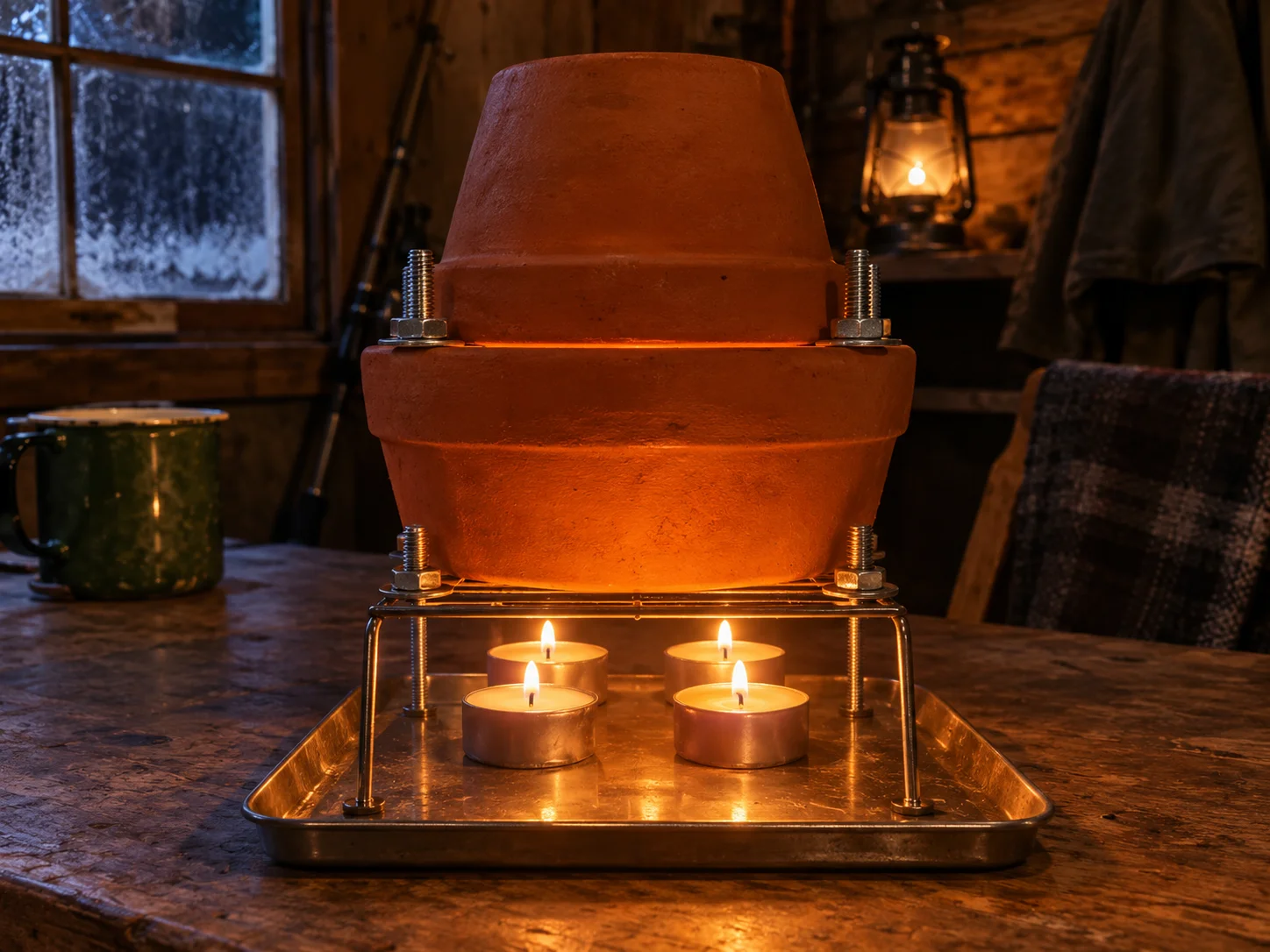
The terracotta pot heater is the most discussed DIY emergency heater on the internet and also the most misunderstood. It does not generate more heat than the candles burning under it. What it does is concentrate radiant heat in one direction, toward the person sitting closest to it, instead of letting the candle’s warmth disperse upward immediately.
The build takes ten minutes. Stack two or three unglazed terracotta pots of decreasing size, nested over each other with bolts and washers as spacers, and suspend the assembly on a metal rack over three to four tea-light candles. The clay absorbs heat from the candles, reaches a surface temperature of around 150°F to 170°F, and radiates that warmth outward at face and chest level. Four tea-light candles produce roughly 160 BTU total. For context, a 1,500-watt space heater puts out about 5,100 BTU.
This heater won’t warm a cabin. It will warm the person sitting 18 to 24 inches in front of it. That’s a meaningful distinction when the alternative is nothing. Keep the candles on a non-flammable surface, never leave them unattended, and use unscented candles to avoid headache from the concentrated fumes in a small space. Place this option in the “last resort” category, useful for one person staying still, not useful for general cabin heating.
The real value is in the components. Tea lights and two terracotta pots weigh almost nothing and pack into a tackle bag. As a backup to a failed primary heater on a cold overnight trip, they can prevent misery or worse.
5. Commercial Candle-Powered Survival Heater as Cabin Backup
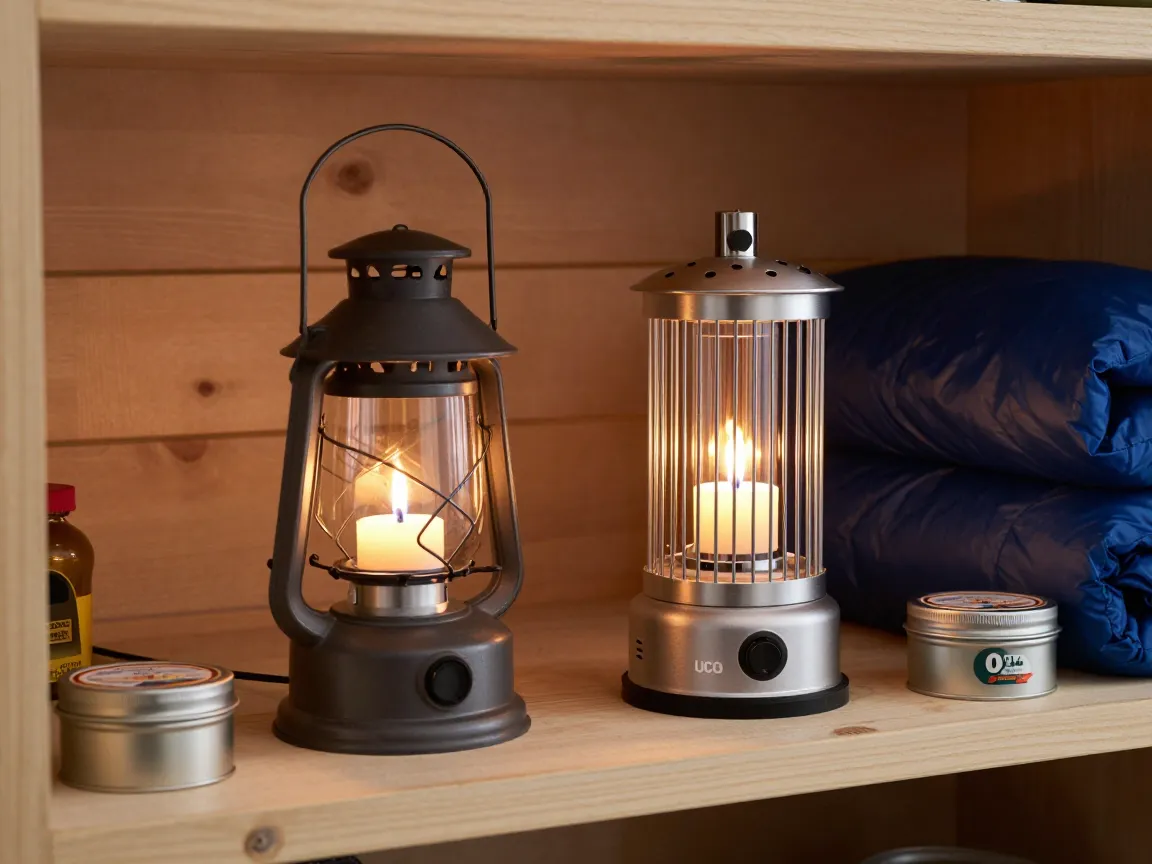
Several manufacturers produce self-contained candle-powered survival heaters designed specifically for the scenario described in this article, an unheated shelter with no electricity and no combustion fuel other than candles. The UCO 9-Hour Candle Lantern and the Stansport Emergency Candle Heater are two examples widely available online and at outdoor retailers. These differ from the DIY terracotta version in that they’re engineered for consistent airflow around the flame, more stable candle retention, and controlled heat radiation.
A single 9-hour emergency candle rated at roughly 400 BTU/hour running in one of these units produces consistent warmth for one person at close range. Run two units simultaneously and you approach the radiant output of a small electric desk heater, still not enough to heat a cabin, but sufficient to maintain survivable temperature in a very small, well-insulated space while also providing light.
The practical advantage over the DIY version is reliability and portability. These units fold flat or nest inside a bag, light reliably in cold and wind, and don’t require assembly under stress. For a cabin kit stored year-round and used only when primary heat fails, spending $20 to $35 on a commercial unit is reasonable. Keep four to six 9-hour candles per unit stored in a sealed tin. At 9 hours per candle, four candles per person provide 36 hours of backup heat and light, enough to outlast most cold-weather emergencies.
Pair this with a good sleeping bag rated to 0°F and the combination shifts from “surviving the night” to “being uncomfortable but fine.” The sleeping bag does most of the thermal work; the candle heater handles the ambient chill that makes staying in the bag miserable.
6. Portable Propane or Diesel Heater with Direct Venting
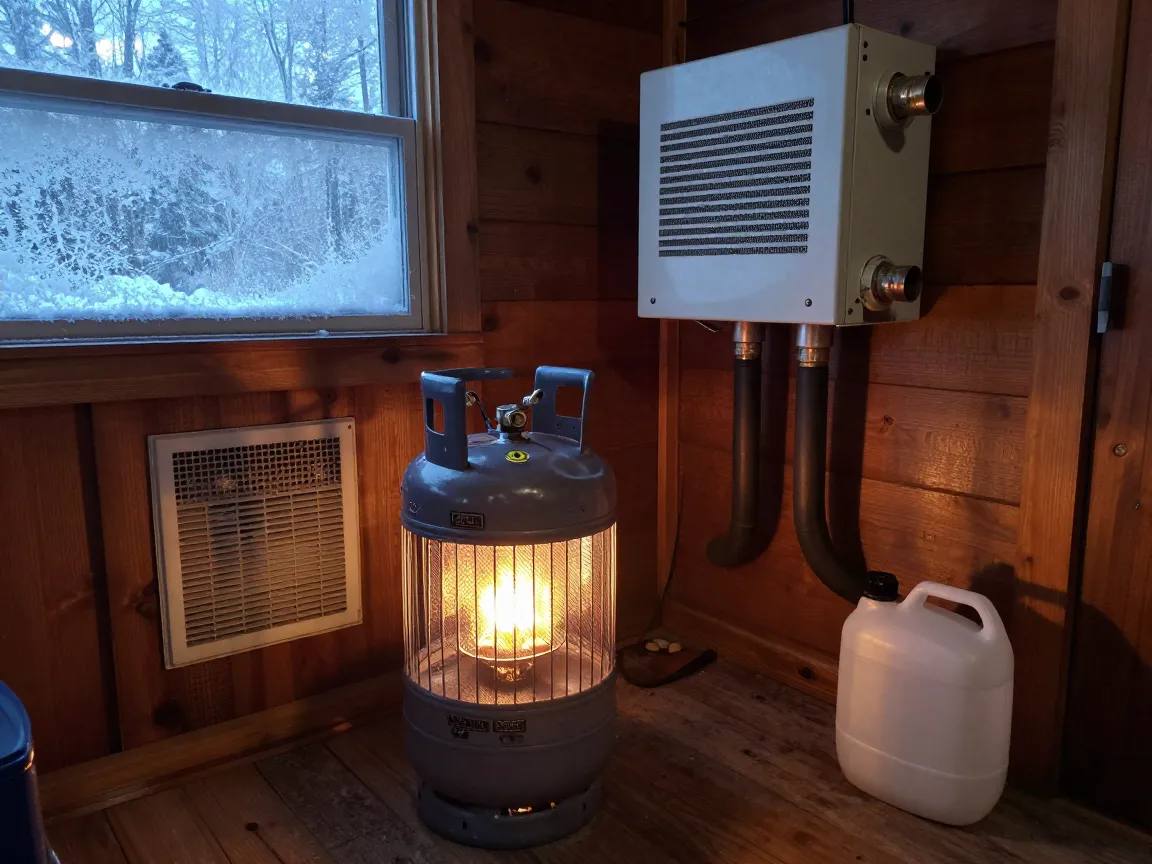
When sustained cold, multiple nights below 10°F, is the actual scenario, the right answer is a portable propane heater or a diesel-fired unit with direct venting to the outside. These are not pure DIY builds, but mounting and venting one correctly in a cabin is a DIY installation job that most cabin owners can handle in an afternoon.
The Mr. Heater Big Buddy produces 18,000 BTU and can heat a 450-square-foot space on a standard 20-pound propane tank for roughly 48 hours on the low setting. It has a built-in oxygen depletion sensor and an auto-shutoff tip sensor, making it one of the safer indoor propane options. A 20-pound tank costs $25 to $30 to fill and is available at most gas stations and hardware stores near fishing areas. For a weekend trip in deep cold, two tanks provide reliable heat with margin to spare.
Diesel-fired direct-vent heaters, the type used in ice fishing shacks and work trailers, step up from there. Units like the Webasto Air Top 2000 STC run on diesel or kerosene, draw combustion air from outside through one pipe and exhaust through another, and burn so efficiently they produce no meaningful indoor air quality concern. Output ranges from 7,000 to 11,000 BTU, fuel consumption at full output runs about 0.09 gallons per hour, and a 5-gallon jerry can provides 50+ hours of heat. These units cost $400 to $600 for the heater alone, putting them at the high end for this list, but the installation, cutting two 1-inch holes in a wall, running the intake/exhaust tubes, and mounting the unit, is a half-day task with basic tools.
For a cabin used heavily through winter, a direct-vent diesel unit mounted permanently is worth every dollar. It runs cleaner than propane, the fuel stores without stabilizer for up to two years, and there’s no indoor combustion air consumption. The only real maintenance requirement is a filter cleaning once per season.
Quick Comparison
| Heater Type | Approximate Cost | Heat Output | Best Use Case | Fuel Required |
|---|---|---|---|---|
| Solar air collector | Under $30 | Moderate (daytime only) | Daytime supplement | None |
| Rocket mass heater | $100,$300 | High, 12-24 hr stored | Permanent off-grid cabin | Small wood |
| Alcohol/propane stove heater | $10,$45 | Low to moderate | Fast arrival warmth | Alcohol or propane |
| Terracotta candle heater | Under $10 | Very low (personal only) | Single-person emergency | Tea-light candles |
| Commercial candle survival heater | $20,$35 | Low (personal only) | Backup heat and light | Emergency candles |
| Portable propane/diesel heater | $60,$600 | High | Sustained cold spells | Propane or diesel |
Conclusion
The six options above aren’t equal, they serve different conditions and budgets, and stacking two or three of them together is smarter than relying on any one. A fixed cabin used through winter benefits most from a rocket mass heater as the primary system, a solar air collector for daytime supplementation, and a portable propane unit for backup during extended cold snaps. A cabin used for occasional weekend trips needs less infrastructure: a propane heater for primary warmth and a candle-based option as an emergency fallback costs under $100 and fits in the back of a truck.
The one step worth taking before the next cold trip: check the carbon monoxide detector in the cabin. Every combustion heater on this list produces CO under some conditions. A working detector costs $20 and is non-negotiable when burning anything indoors.