Silly Fish Drawings That Will Make You Smile Every Time
Humorous fish illustrations have been making people grin for well over a century, the Victorian illustrator Lucien Pissarro was already captioning a comically bewildered fish with “Ah you silly silly fish” back in 1894. That tradition is very much alive in 2026, with commercial stock libraries now hosting more than six thousand cartoon fish images and dedicated artists publishing entire weekly series devoted to nothing but goofy underwater characters. This collection of 6 silly fish drawings that will make you smile every time draws on the best of that long, lighthearted lineage. Whether someone is looking for drawing inspiration, a creative warm-up exercise, or simply a dose of visual joy, these six ideas offer something genuinely fun to explore.
Disclosure: This post contains affiliate links. As an Amazon Associate, we earn from qualifying purchases, and at no extra cost to you.
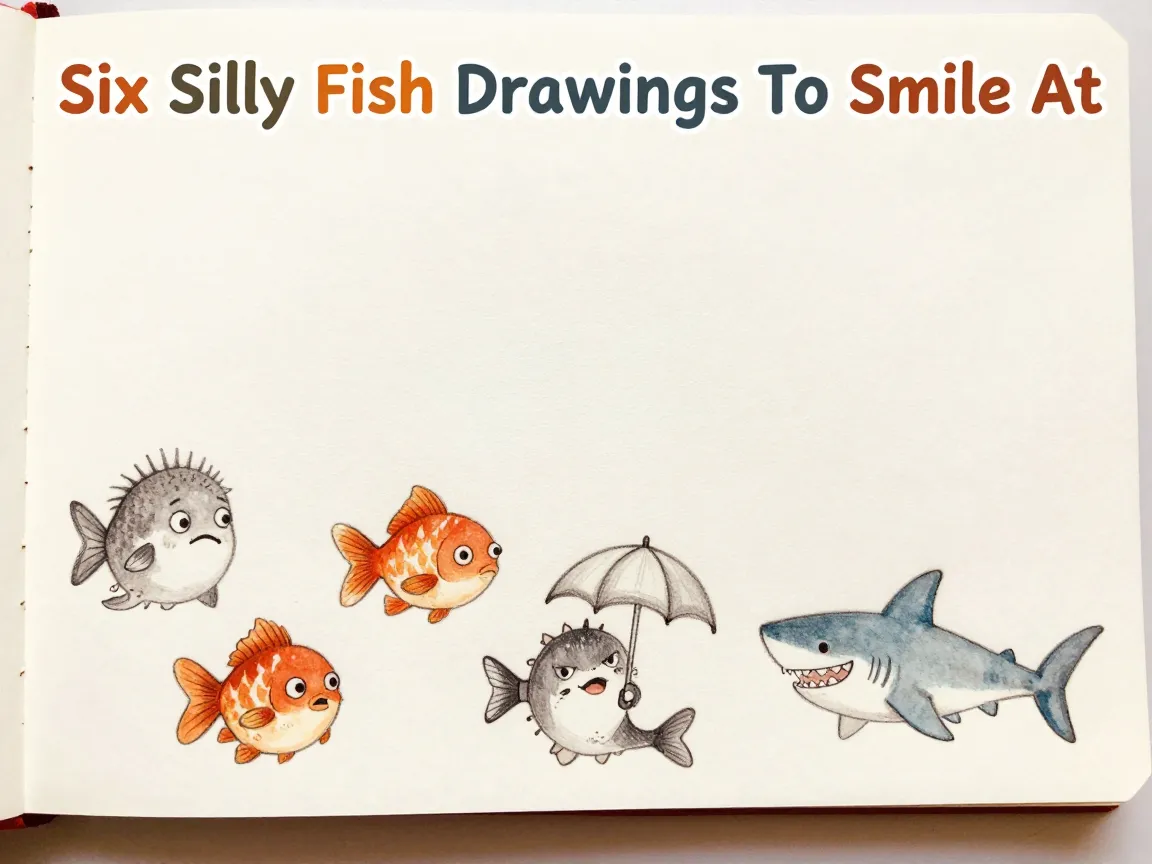
1. The Droopy-Faced Blobfish
Few creatures in the natural world are better suited to a silly drawing than the blobfish. In its deep-sea habitat the blobfish looks perfectly normal, but once it surfaces and loses the pressure that keeps its body together, it transforms into something that resembles a melting, disappointed face. That involuntary expression is precisely what makes it such a gift to cartoonists and casual sketchers alike.
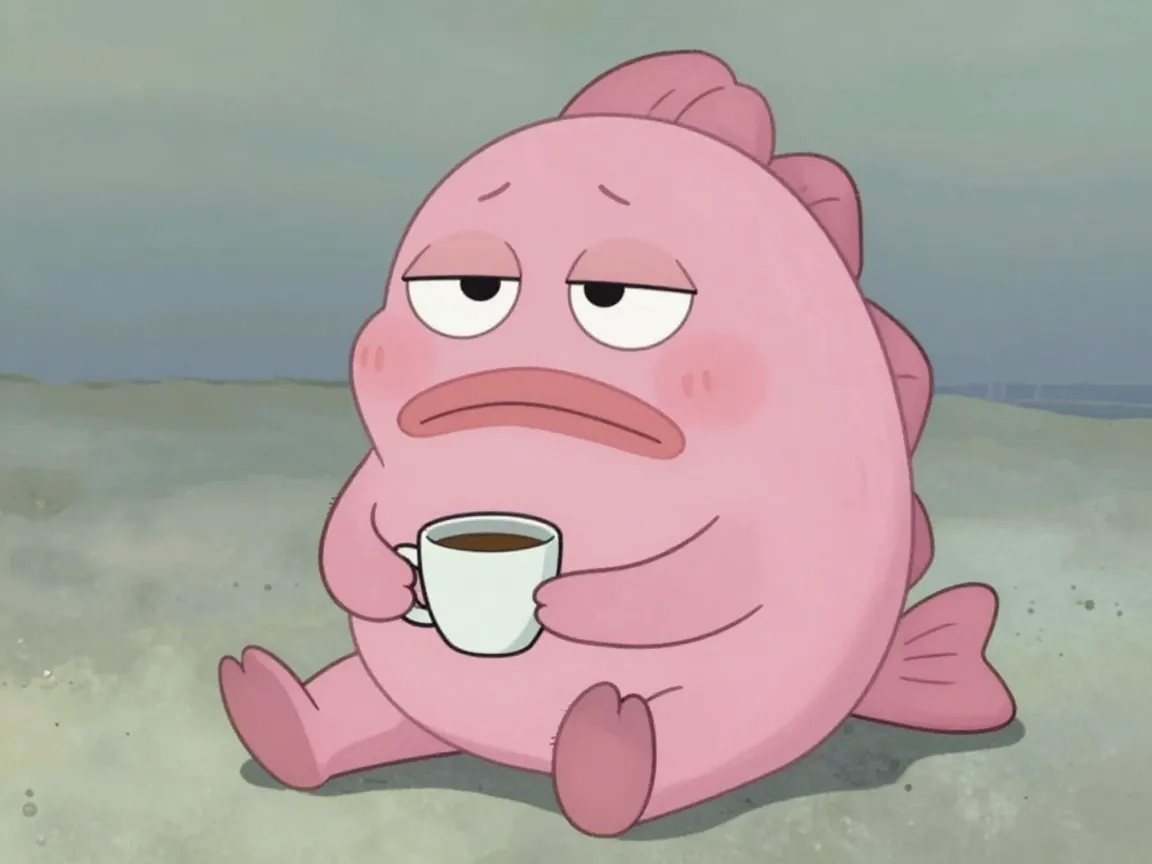
The key to a truly smile-inducing blobfish drawing lies in the lines. Rather than crisp, confident strokes, the most effective approach uses soft, wobbly outlines that reinforce the creature’s droopy, gelatinous quality. The body should look like it is slowly losing a battle with gravity. A heavy lower lip, half-closed eyes, and a nose that protrudes like a tired little bump complete the effect. The resulting sketch looks as though the fish has just received some mildly disappointing news and has decided to simply accept it.
What makes this character so universally relatable is that the expression requires almost no artistic skill to achieve. Even the wobbliest beginner line drawing will end up looking intentionally loose, which only adds to the charm. Children in particular respond to this subject because there is no “wrong” way to draw a blobfish, the sloppier the linework, the more authentically blobfish-like the result. Art educators have leaned into this idea, using the blobfish as a confidence-building subject for young students who worry about making mistakes. When the subject itself looks like a happy accident, every version of it succeeds.
A fun follow-up challenge is to give the blobfish a simple prop, a small cup of coffee, a tiny hat, or a half-read newspaper, and let the expression remain completely unchanged. The contrast between the mundane object and the fish’s tragic droop is where the real comedy lives. It is the kind of drawing that tends to get photographed and shared, which is not a bad outcome for a few minutes of doodling.
2. The Chubby Goldfish with Enormous Eyes
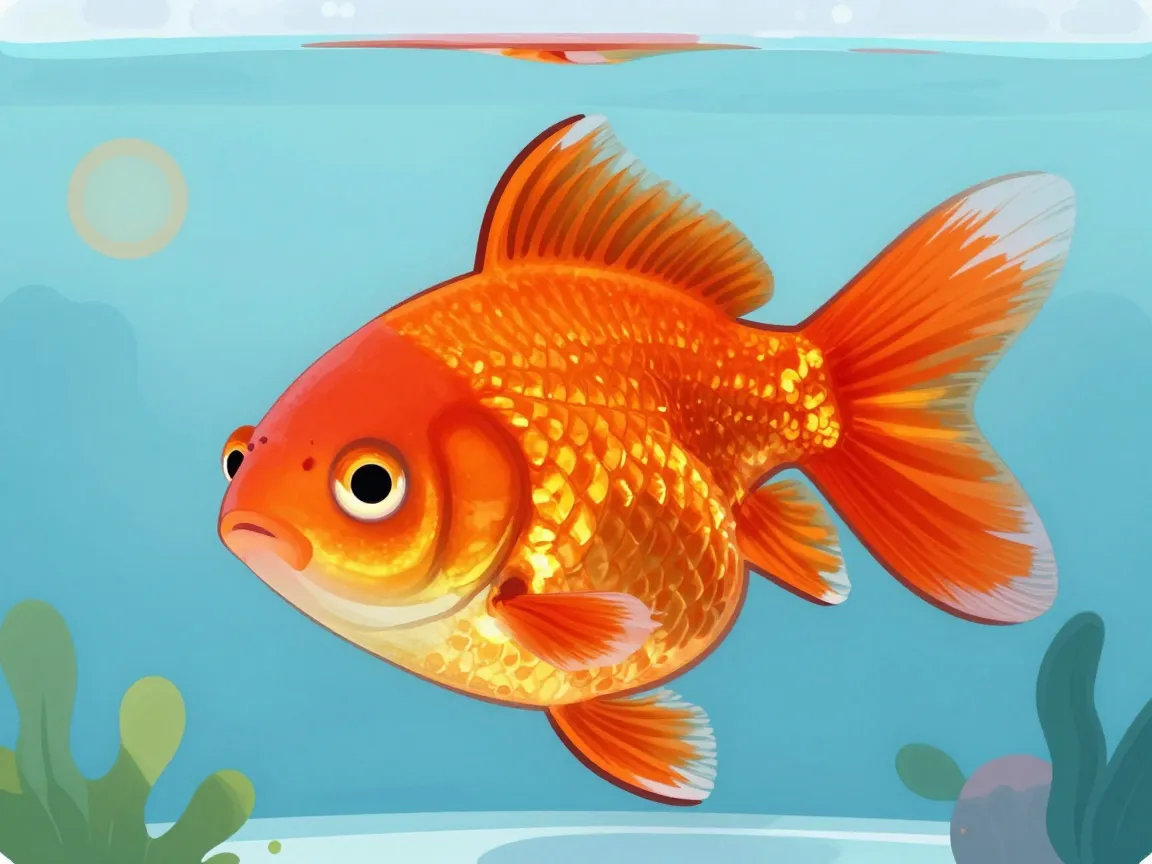
Goldfish occupy a unique space in popular culture. They are universally recognized, associated with childhood and simplicity, and carry a gentle air of mild obliviousness that lends itself perfectly to cartoon comedy. A stylized, round-bodied goldfish with eyes disproportionately large for its head is one of the most reliably cheerful images a person can put on paper.
The anatomy of this drawing leans heavily on exaggeration. The body becomes a near-perfect circle, the tail fin flares out wide like a ruffled skirt, and the eyes take up roughly a third of the entire head. Those eyes are the emotional engine of the piece. Wide, slightly unfocused irises give the fish a look of permanent, innocent wonder, as though it has just discovered that the castle ornament in the fish tank was there all along, which is roughly the level of surprise a goldfish seems to experience on a continuous loop.
Sketchbook artists who specialize in small, quick character studies find goldfish with oversized eyes to be a perfect subject because the design is forgiving and fast. The round body takes about thirty seconds to establish, and the personality lives entirely in those two circles of eye. Varying the direction of the gaze, one eye looking left, the other looking slightly up, immediately adds a comedic dimension without any additional complexity. It is a simple trick, but it transforms a decent fish drawing into one that earns a genuine laugh.
Color choice amplifies the silliness considerably. A vivid tangerine orange paired with white highlights on the eyes gives the finished drawing a sticker-ready quality. Many illustrators note that this design translates exceptionally well to digital formats, making it a popular choice for emoji-style assets, greeting card graphics, and playful social media content. The commercial appetite for this type of character, as evidenced by the thousands of cartoon fish vectors available through stock platforms, confirms that the chubby goldfish with big eyes is not just fun to draw, it is genuinely in demand.
3. The Bewildered Pufferfish
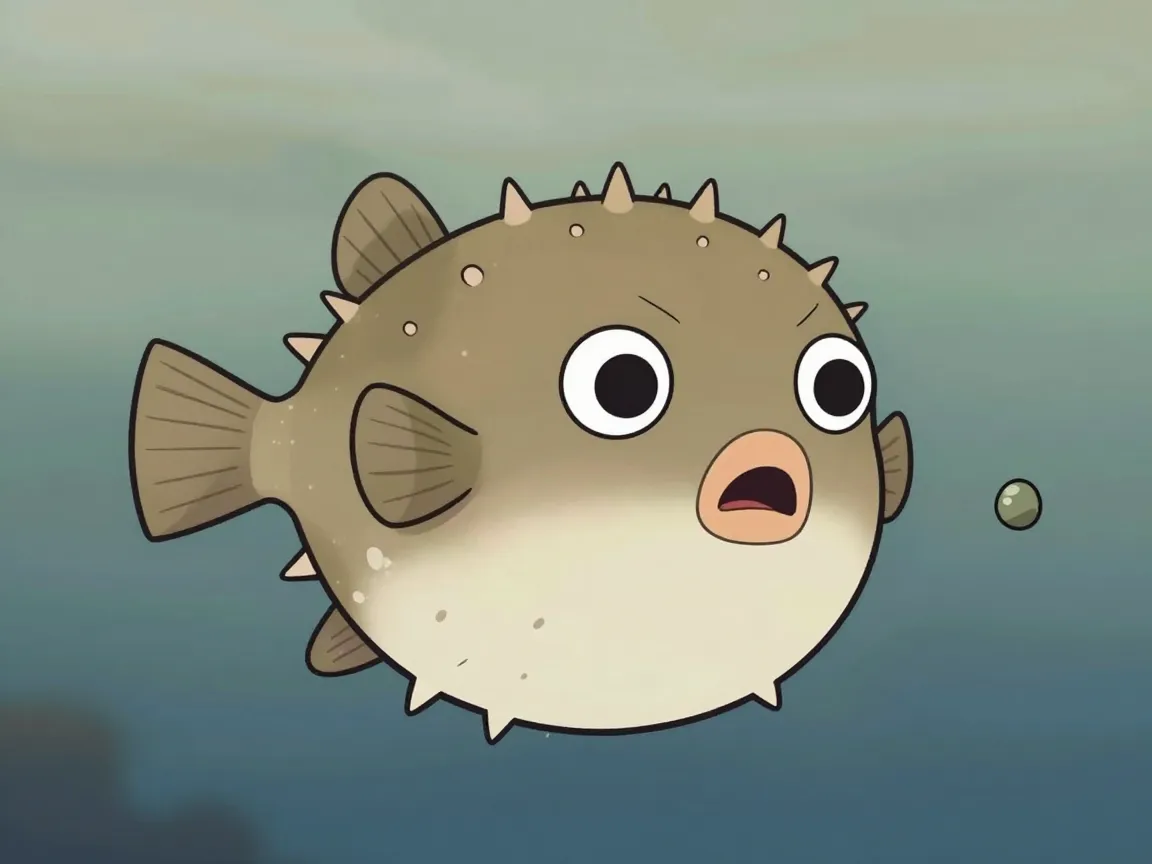
A pufferfish in its inflated state already looks like a living cartoon, so a drawing that pushes its natural form just a few degrees further into absurdity requires very little effort to become deeply funny. The appeal comes from the inherent contradiction built into the creature: it is trying very hard to appear threatening, and it is failing in the most adorable way possible.
The silhouette of an inflated pufferfish is essentially a spiky sphere, which is one of the most readable and satisfying shapes to draw. The spikes should be rendered as soft, rounded points rather than sharp geometric triangles, this small choice softens the overall impression from “dangerous” to “trying its best.” The face, pressed into the front of that round body, benefits enormously from two large, startled eyes and a small, slightly open mouth. The fish should look as though it inflated itself in a moment of panic and now has no idea how to un-inflate.
One of the most effective variations on this concept involves scale contrast. Drawing a tiny pufferfish floating next to a very small, completely unimpressed object, a pebble, a single bubble, a miniature anchor, reinforces the idea that the pufferfish’s alarm was entirely unwarranted. This kind of environmental storytelling is what separates a competent drawing from one that earns a genuine, sustained smile. The viewer does not just see a fish; they understand a tiny drama, and that narrative dimension is what makes the image stick.
For beginners, the pufferfish is an excellent subject precisely because its roundness is easy to manage. Artists who struggle with organic, flowing fish shapes find that a nearly circular body removes much of the technical anxiety from the process. The spikes, however randomly placed, look intentional because that is simply what pufferfish spikes look like. The result is a drawing that feels polished even when it is entirely freehand and unplanned, which is a rare and welcome quality in a beginner-friendly subject.
4. The Fish Trying to Use an Umbrella
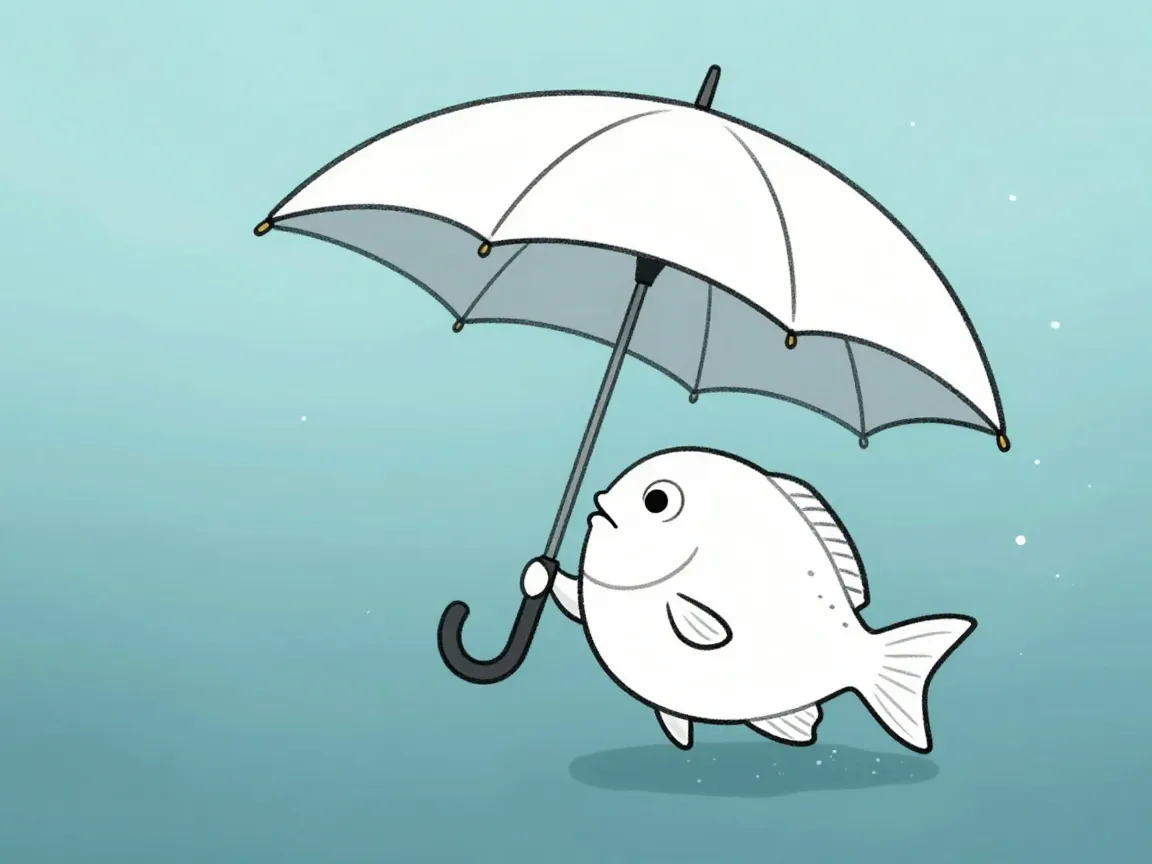
Of all the imaginative prompts circulating in the illustration and sketching community in 2026, one of the most persistently delightful is the idea of a fish attempting to use an umbrella. The humor is immediate and self-evident: a fish lives in water, is by definition already completely wet, and yet here it is, earnestly holding up an umbrella with a fin, expression deadly serious.
The concept works because it takes a recognizable object from the human world and places it in a context where it is entirely useless, then gives the fish a face that communicates total commitment to the task. The fish is not confused about the umbrella. It is not questioning whether this is a sensible idea. It has decided that an umbrella is what the situation requires, and it is proceeding accordingly. That unearned confidence is the comedic core of the image.
Technically, this drawing asks a little more of the artist than a simple character portrait. There is a prop to design, a pose to consider, and a relationship between the fish and the object to establish clearly. The fin holding the umbrella handle needs to suggest a grip without looking anatomically alarming, which typically means keeping it simple, a curved fin wrapping loosely around the stick is enough. The umbrella itself should be drawn large and clearly open, ideally tilted at a slight angle as though it is catching a current, adding a small layer of physical comedy to an already absurd scenario.
This type of prompt is specifically recommended by drawing communities as a way to prioritize humor over technical perfection. The goal is never a flawlessly rendered illustration but rather a drawing that communicates the joke within two seconds of being seen. When that happens, when a viewer’s eye lands on the image and they immediately understand and appreciate the absurdity, the drawing has achieved exactly what it set out to do. That is a satisfying creative outcome at any skill level.
5. The Catfish with Exaggerated Whiskers
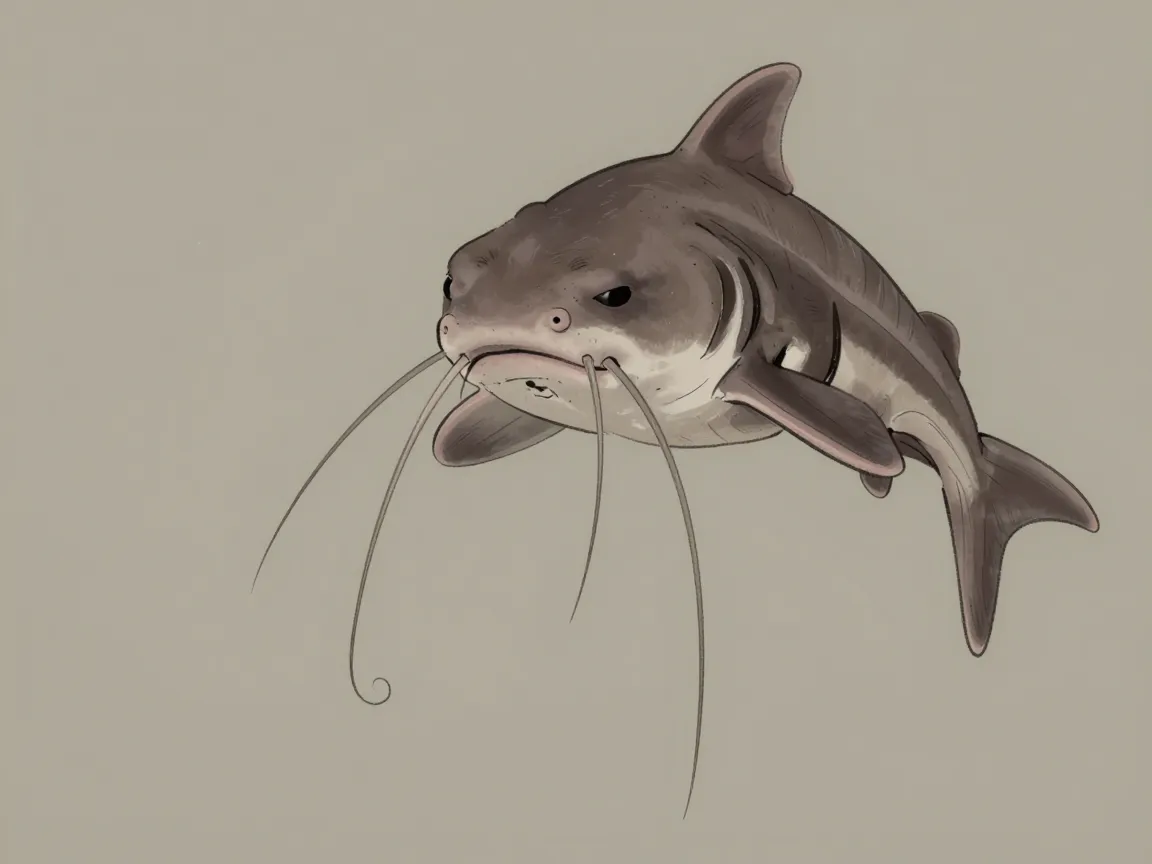
The catfish is an underused subject in casual illustration, which is a genuine missed opportunity. Its defining feature, the long, drooping whiskers, is inherently expressive and lends itself to an enormous range of emotional readings. A catfish drawn with whiskers that hang all the way to the bottom of the frame immediately reads as world-weary and philosophical, like a fish that has seen too much and chosen to simply float and reflect.
The whiskers are the personality delivery mechanism. Drawn curling upward at the tips, they suggest cheerfulness and mischief. Drawn straight and drooping, they communicate exhaustion or mild existential concern. Drawn asymmetrically, with one curling one way and one the other, they create a lopsided, slightly unhinged energy that is reliably funny. The artist’s job is to decide what emotional state the catfish is broadcasting and then let the whiskers tell that story as directly as possible.
A well-executed catfish drawing often benefits from minimal additional detail. The body can be relatively simple, a smooth, tapered shape in a muted gray or brown, because the whiskers are doing all the expressive work. Giving the fish a pair of heavy-lidded eyes and a slightly pursed mouth completes the portrait of a creature that takes itself extremely seriously despite having no particularly good reason to do so. That gap between the fish’s evident self-regard and its objective situation as a bottom-dwelling river fish is where the humor quietly lives.
Catfish drawings also transfer exceptionally well to small-scale formats. Sketchbook artists who specialize in tiny, quickly executed character studies find that the catfish design is complete and readable even at postage-stamp size. The whiskers provide immediate visual recognition, the expression provides emotional content, and the whole thing can be drawn in under two minutes. For anyone maintaining a daily drawing practice or filling a sketchbook page with character studies, the catfish with exaggerated whiskers is a reliable and endlessly reinterpretable subject.
6. The Shark with an Irrepressible Grin
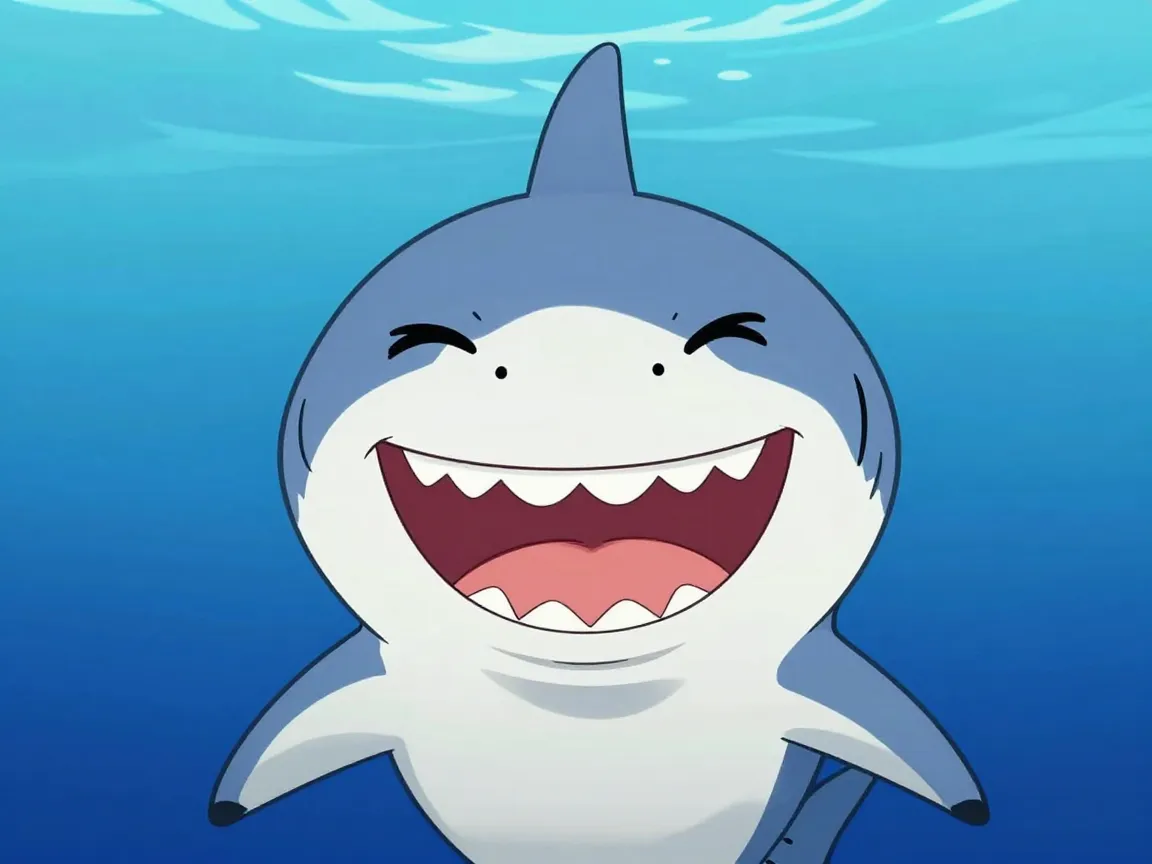
Sharks carry significant cultural weight as symbols of danger, efficiency, and predatory power. A drawing that takes all of that intimidating potential and replaces it with a wide, goofy, closed-mouth grin, not a threatening display of teeth, just an enormous, earnest smile, creates a productive tension that most viewers find immediately disarming and funny.
The design challenge here is calibration. The shark needs to retain enough of its characteristic anatomy, the dorsal fin, the torpedo body, the slit-like eyes, to remain recognizable as a shark. If it looks too generic, the joke is lost. But within that recognizable silhouette, the expression must be completely, unambiguously friendly. The grin should be the kind that takes up the entire lower third of the face, pushing the cheeks up and squinting the eyes slightly, the way a smile does when it is entirely genuine and slightly too large for the face wearing it.
The comedic payoff comes from the gap between what a shark is supposed to represent and what this particular shark is actually communicating. It is not trying to be menacing. It is not even aware that it is supposed to be menacing. It is simply very, very happy to see whoever is looking at the drawing, and it wants that happiness to be clearly communicated. That uncomplicated, good-natured obliviousness is one of the most effective comedic registers available in character illustration.
Tutorial collections focused on cartoon-style marine animals frequently feature the smiling shark as one of their most popular entries, and it is easy to understand why. The design rewards experimentation: changing the angle of the smile, adding small round pupils instead of slits, or giving the shark tiny, ineffective arms all build on the same joke without exhausting it. Each variation produces a slightly different flavor of the same fundamental comedy, a genuinely friendly predator who is thrilled about everything, and that resilience makes the smiling shark one of the most rewatchable and re-drawable characters in the entire catalog of silly fish art.
Conclusion
The six drawings covered here, the droopy blobfish, the wide-eyed goldfish, the bewildered pufferfish, the umbrella-toting fish, the philosophical catfish, and the irrepressibly cheerful shark, each work because they tap into something specific and recognizable. They are not just fish. Each one has a clear emotional state, a readable situation, and a visual joke that lands without explanation.
For anyone looking to put these ideas into practice, the most useful next step is simply to pick the concept that feels the most personally funny and start with the loosest, most imperfect version possible. Silly drawings do not benefit from careful, cautious linework. They thrive on commitment to the concept and a willingness to let the character be as ridiculous as the subject demands. The blobfish does not need clean edges. The catfish’s whiskers do not need to be symmetrical. The shark’s grin does not need to be anatomically plausible. What every one of these drawings needs is confidence in the joke, and that is something any level of artist can bring to the page.