Fun Ice Fishing Drawing Ideas for Cold Winter Days
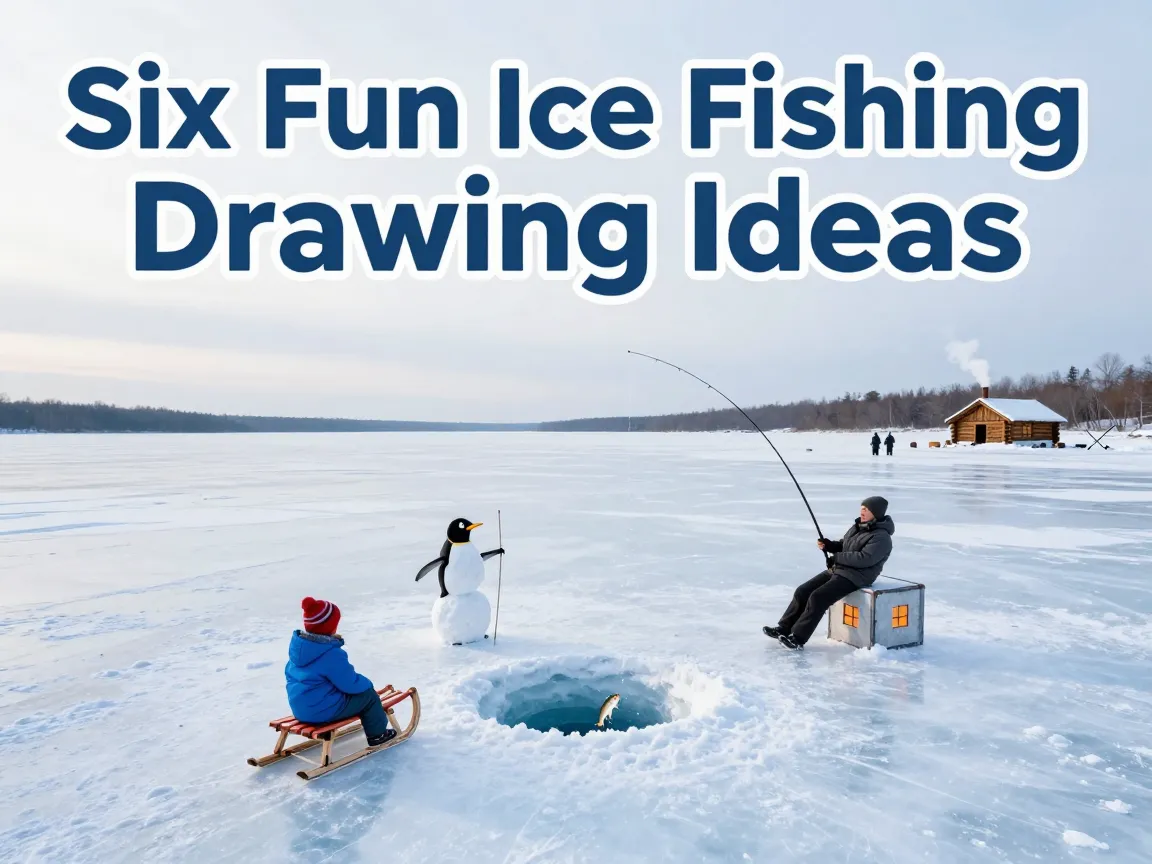
Only about 27% of licensed anglers have ever tried ice fishing, according to survey data from one state wildlife agency. For the vast majority of people, their entire mental picture of the sport comes from art, coloring pages, children’s books, greeting cards, and social media illustrations. That means ice fishing drawings carry surprising cultural weight, shaping how millions of people imagine a frozen lake, a bundled angler, and a fish darting beneath the ice. Whether you are an artist looking for fresh seasonal subject matter, a teacher building a winter unit, or a parent searching for a rainy-day project, these 6 Fun Ice Fishing Drawing Ideas for Cold Winter Days deliver range, accessibility, and genuine creative challenge.
Disclosure: This post contains affiliate links. As an Amazon Associate, we earn from qualifying purchases, and at no extra cost to you.
1. The Bundled-Up Kid on a Sled
Few winter drawing subjects feel as immediately warm and inviting as a child dressed for the cold, perched on a sled beside a fishing hole cut into a frozen lake. This classic composition appears repeatedly in professional coloring page collections and children’s tutorial sites for good reason: it combines simple geometric shapes with rich opportunities for color and storytelling.
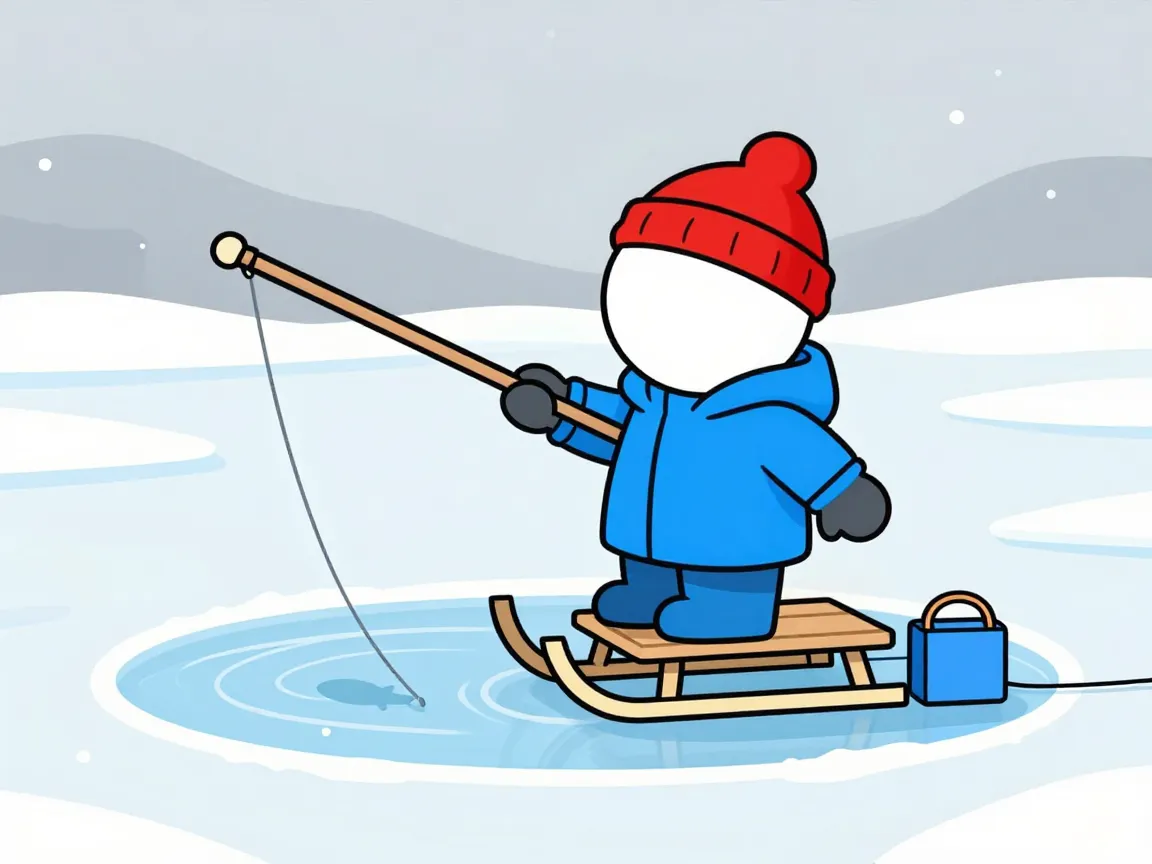
Start the figure with a large circle for the head and a rounded rectangle for the coat-covered body. The arms extend outward, gripping a long, straight fishing pole whose line drops into an oval hole in the ice below. The sled beneath the child can be built from two parallel horizontal lines connected by short vertical legs. Keep the proportions slightly exaggerated, a big head, stubby limbs, oversized mittens, to give the drawing an approachable, cartoon quality that works well for all skill levels.
Color choices dramatically change the mood of the scene. A red knit hat and bright blue coat against a pale blue-white ice surface creates the kind of saturated, cheerful contrast found in popular children’s illustrations. For more atmosphere, try muting the palette slightly and adding a soft gray sky. Optional details like falling snowflakes, a small tackle box beside the sled, or a fish shape visible just below the ice hole surface all reward careful observation without overwhelming the composition. This idea also works beautifully as a coloring page, the bold outlines and contained areas of color make it easy for young children to fill in.
For a classroom project, this composition pairs naturally with a brief discussion of ice fishing safety and gear. Students can label parts of their drawing, the ice auger hole, the fishing line, the bobber, turning the artwork into a light science and vocabulary exercise at the same time.
2. Penguin Ice Fishing Scene
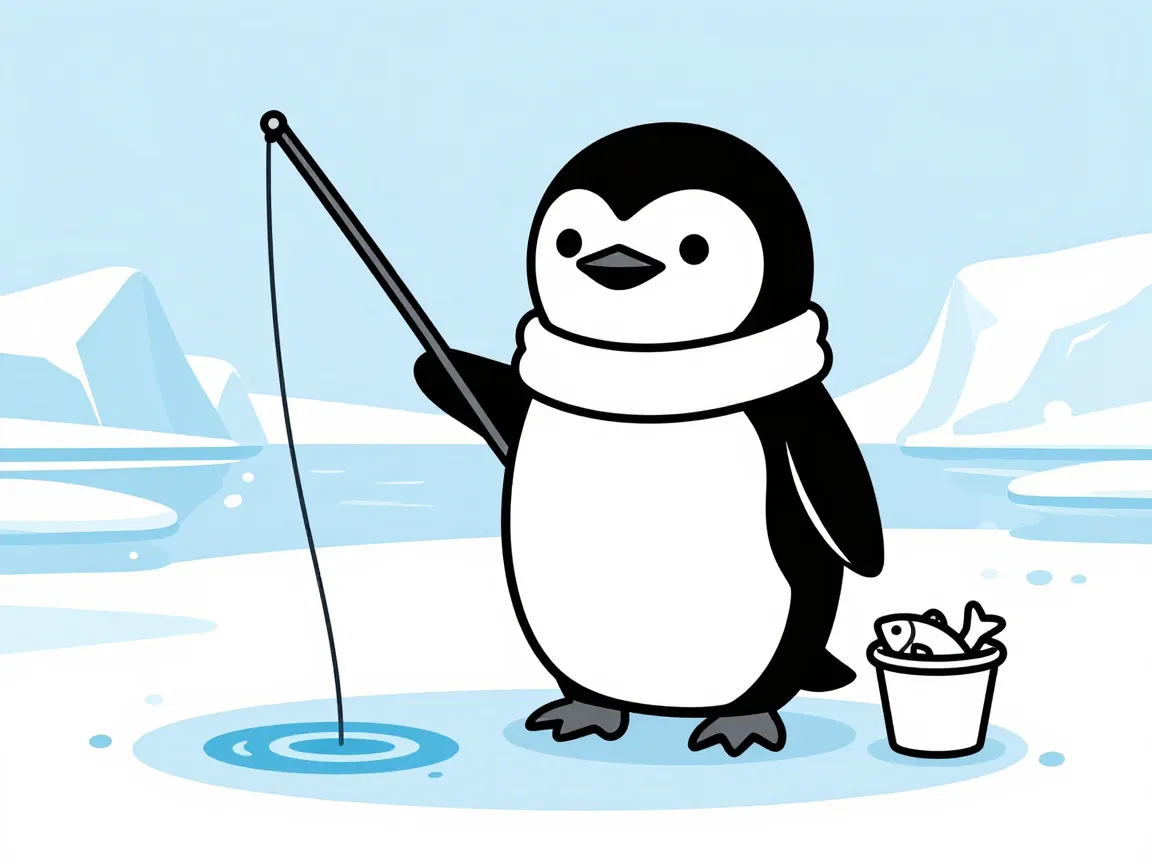
Animal mascot drawings have been a staple of ice fishing art in 2026, with professional illustrators and hobbyist artists alike gravitating toward penguins, polar bears, and foxes as stand-ins for human anglers. Among these, the penguin ice fisher may be the most satisfying to construct because the bird’s natural body shape maps almost perfectly onto basic drawing shapes.
Begin with a circle for the head and a larger egg shape for the body, tilted slightly forward to suggest anticipation. Add a white oval on the front of the body for the tummy, two small flipper-like wings angled downward, and a simple triangle beak. The fishing pole can be a thin straight line held in one wing, with a curved line suggesting the fishing line dropping through a flat oval ice hole drawn at the character’s feet. Two small dot eyes and an optional scarf add personality without complicating the structure.
What makes the penguin concept especially versatile is that it functions equally well as a cute standalone character illustration and as the centerpiece of a larger Arctic scene. Place a few simple icebergs in the background, add a small bucket of fish beside the character, or populate the scene with two or three penguins of varying sizes to suggest a family outing. The natural black-and-white coloring of a penguin also makes this composition ideal as a printable coloring page, since the base palette is already built into the animal’s markings.
Professional illustrators have noted the sustained commercial appeal of this concept. One popular design platform showcased a “Cute Polar Bear Ice Fishing” piece alongside similar penguin variations as part of a broader trend in whimsical winter character design. Artists looking to build a portfolio or create greeting card content will find this composition both marketable and genuinely enjoyable to develop.
3. Snowman Angler at a Frozen Lake
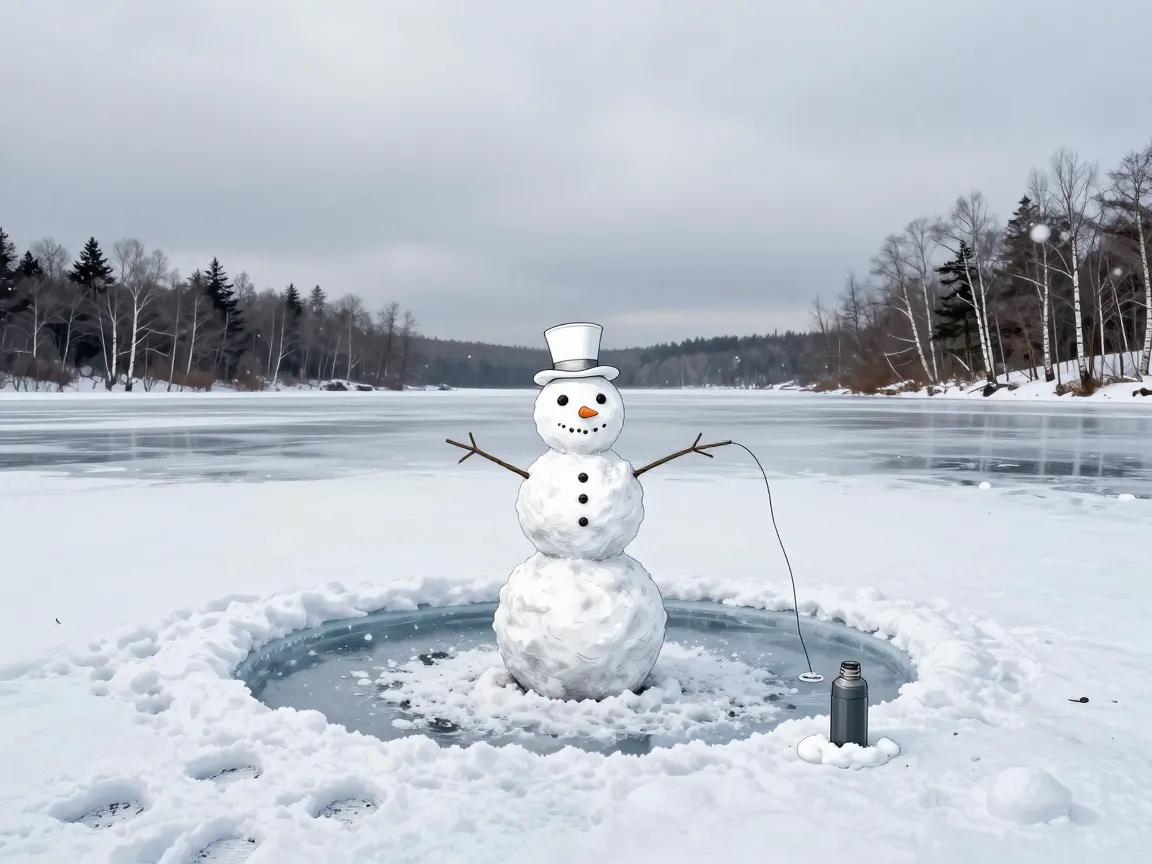
The snowman is perhaps the most universally recognized winter icon, and combining it with an ice fishing scene produces a drawing idea that feels fresh while drawing on deep visual familiarity. Updated winter coloring collections published in late 2026 have included snowman-meets-ice-fishing scenes specifically because the pairing surprises viewers just enough to hold attention while remaining immediately legible.
Constructing a fishing snowman is straightforward. Build the standard three-sphere body, large base, medium midsection, small head, then add stick arms, a carrot nose, button eyes, and a top hat or knit beanie for personality. The fishing rod can be one of the stick arms extended outward, gripping a simple pole. Draw an oval ice hole in front of the snowman, with a short curved line indicating the fishing line descending into the dark water below.
The real creative opportunity here lies in the background and setting. A wide frozen lake stretching toward a treeline of bare winter birches creates a serene, atmospheric composition. Snowflakes drifting down from a heavy sky, boot prints leading to the fishing hole, and a small thermos sitting in the snow beside the snowman all add narrative richness. These small environmental details reward the viewer who looks closely, which is exactly what elevates a simple seasonal drawing into genuinely engaging artwork.
For educators, this idea bridges art and weather science in an interesting way. A snowman ice fishing only makes sense in conditions cold enough to freeze a lake solidly, typically when sustained temperatures stay well below freezing for an extended period. That observation can open a natural classroom conversation about ice thickness, regional climate, and why ice fishing participation tends to be higher in areas with longer, more reliable winters.
4. Solitary Angler Action Moment
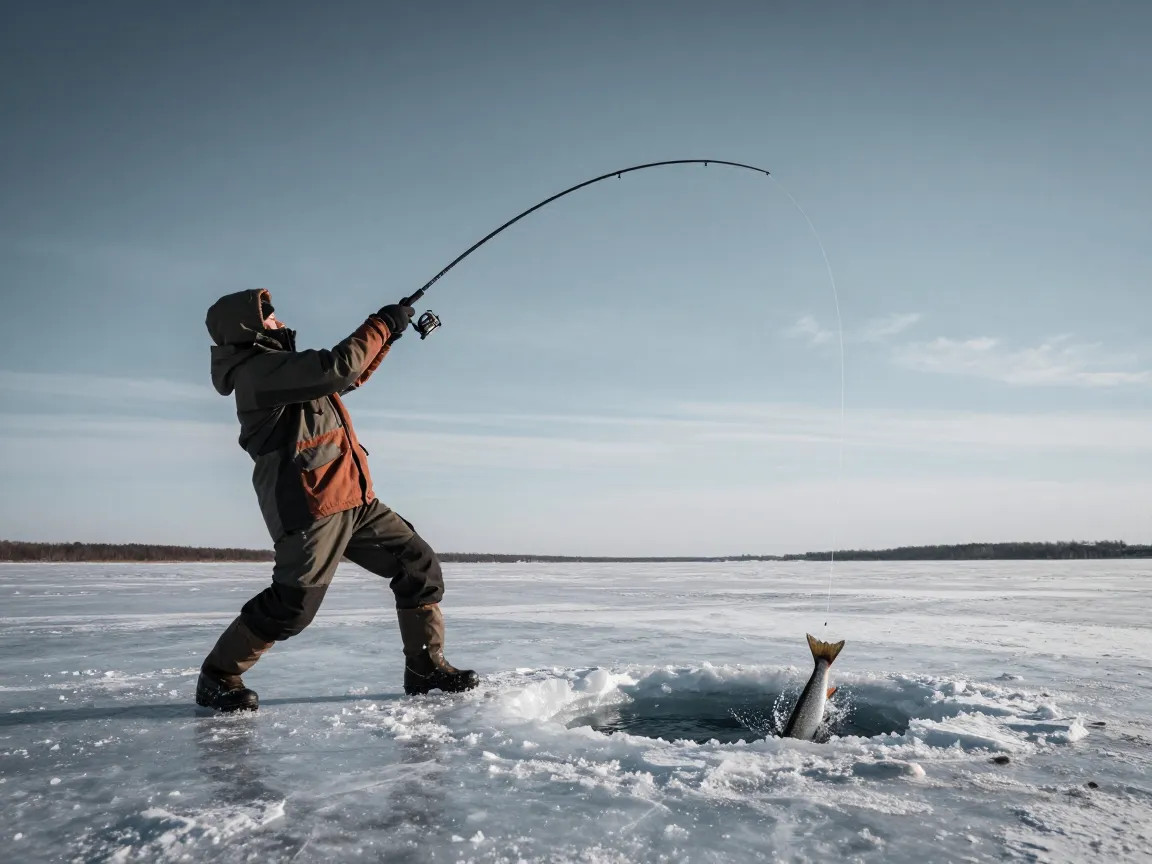
Most ice fishing drawings show a figure waiting patiently, but the moment of action, a fish on the line, the angler leaning back to haul in the catch, produces dramatically more dynamic artwork. Stock illustration libraries in 2026 show a clear demand for poses that capture motion: a figure standing and pulling hard on a line, a bent rod under tension, a splash of water and ice at the hole’s edge where a fish is breaking through.
To draw this scene, start with a figure in a wide stance, weight shifted back on the heels, both arms raised and pulling. The fishing rod should arc dramatically, bending under strain, this is a simple curved line, but the direction of the curve communicates everything about the tension in the moment. The fishing line runs taut from the rod tip down through the ice hole at a sharp angle, and near the hole’s edge, a simple fish shape, an elongated oval with a forked tail, can be half-visible, partially out of the water.
Clothing details add realism and character to this composition. A heavy insulated jacket with a hood, thick gloves, and waterproof boots painted in muted greens, oranges, or dark blues give the figure the look of a committed, experienced angler rather than a casual day visitor. Research into who actually ice fishes regularly points to rural, frequent anglers who invest seriously in the sport, that demographic cue translates into richer, more convincing gear details in the drawing.
The background for this scene benefits from simplicity. A vast expanse of flat ice, a low horizon line, and a wide winter sky with just a suggestion of clouds all focus the eye on the action at the ice hole. The contrast between the stillness of the landscape and the tension of the moment is what makes this composition stand apart from more restful ice fishing scenes.
5. Isometric Ice Fishing Shelter Scene
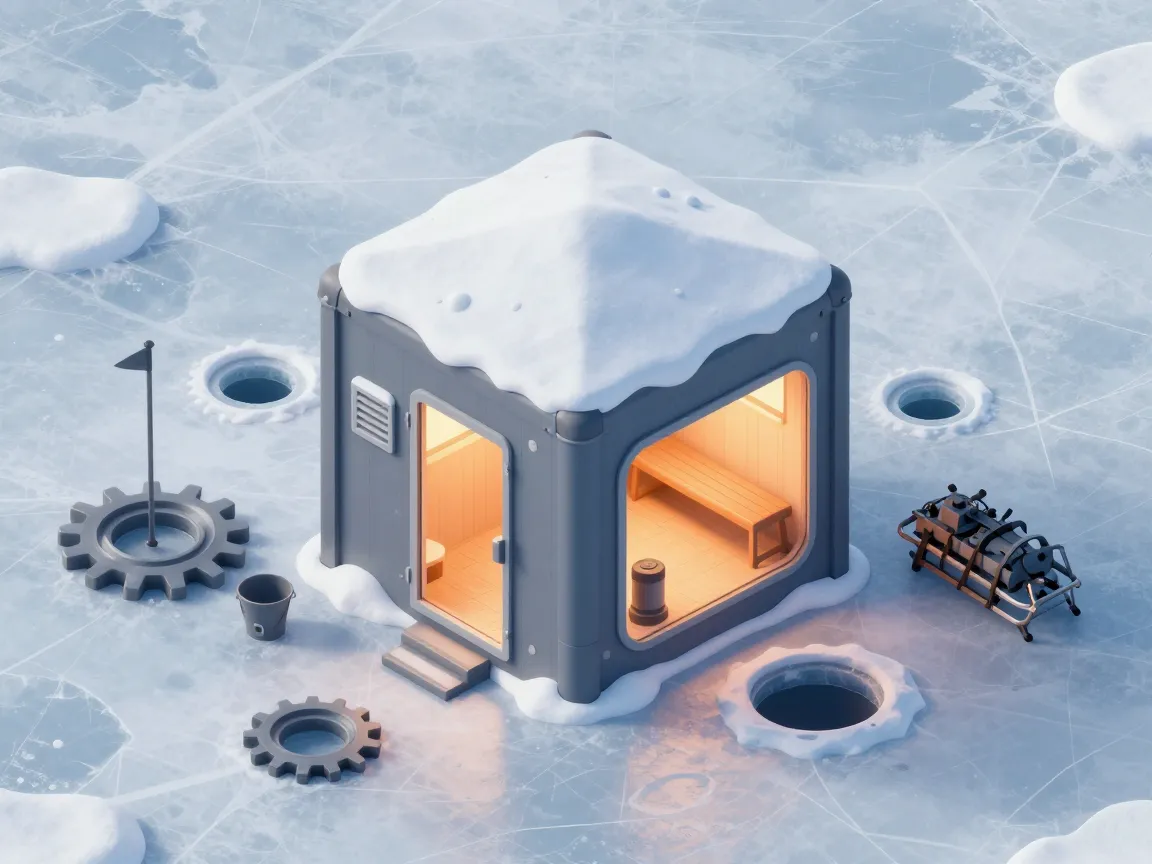
The isometric illustration format, a three-dimensional, bird’s-eye-angle view rendered without true perspective, has become one of the most recognizable styles in contemporary digital illustration, and it translates exceptionally well to ice fishing subject matter. An isometric ice fishing shelter scene gives the artist room to design the full setup: the shanty or hub shelter, the surrounding ice, the drilled holes, and the figures inside or around the structure.
Begin by sketching the basic isometric cube that forms the shelter. From three visible faces of the cube, the front panel might show a door slightly ajar, the side panel a small ventilation window, and the top panel a subtle snow accumulation. Surrounding the shelter on the flat ice plane, add circular drill holes, tip-up flags (simple T-shapes that signal when a fish has taken the bait), a sled loaded with gear, and perhaps a bucket of catch near one of the holes.
The Minnesota Department of Natural Resources has used exactly this kind of shelter design thinking as an educational exercise, asking students to create floor-plan and exterior drawings of custom ice fishing shelters. That structured approach, thinking about interior layout, door placement, and gear storage, produces drawings that are architecturally interesting rather than just decorative. Including a cutaway view of the shelter’s interior, showing a bench seat, a portable heater, and a fishing hole cut through the floor, adds an informational dimension that makes the drawing genuinely instructive.
Color and texture work powerfully in this format. Snow drifted against the shelter walls, a warm orange glow from inside suggesting a heater, and cold blue-gray tones across the surrounding ice create a sharp, inviting contrast that communicates both the harshness of the environment and the coziness of the shelter. This contrast, brutal cold outside, warmth inside, is a central emotional truth of ice fishing that great drawings of this type communicate without a single word.
6. Two Kids Ice Fishing with a Cabin Background
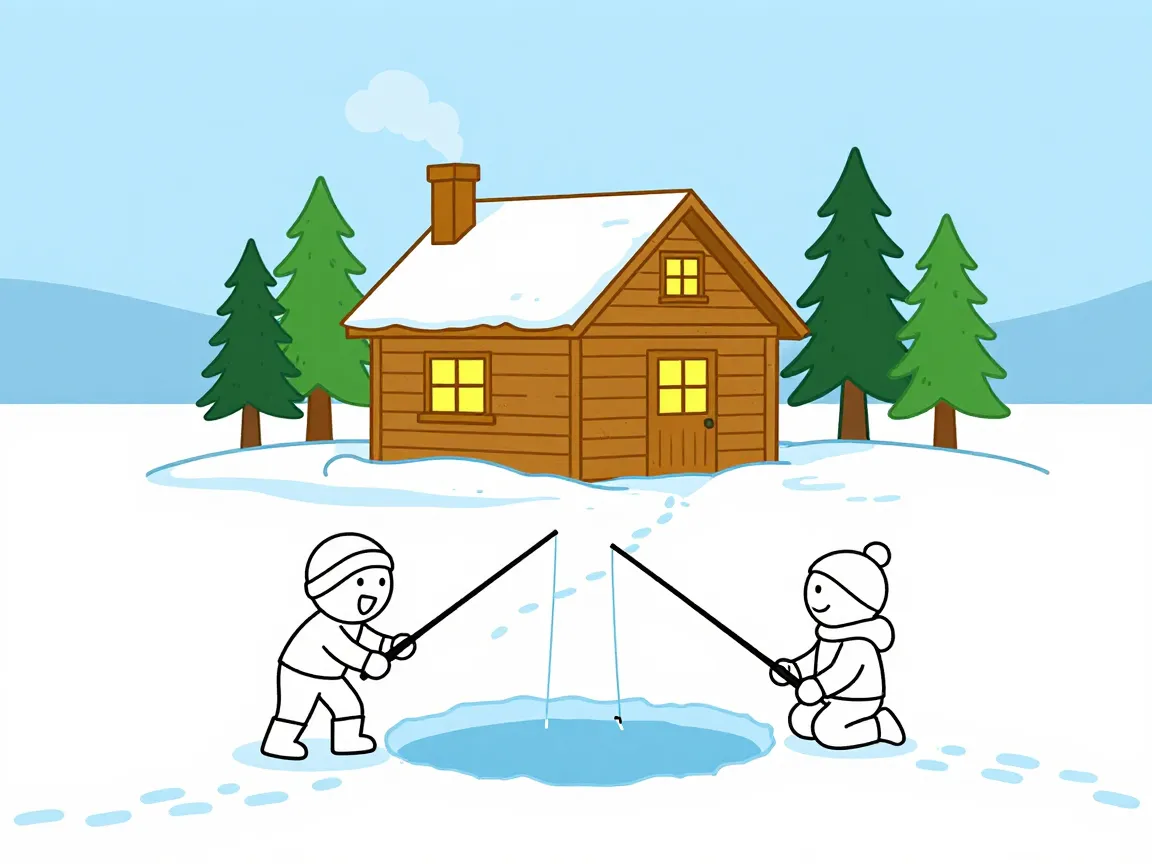
Compositions that place two figures together at an ice hole, with a small cabin or shelter visible in the background, appear consistently across professional coloring page collections and family-oriented illustration libraries. The appeal is straightforward: the scene tells a complete story at a glance. Two children sharing an experience, the reassuring solidity of shelter in the distance, and a frozen lake stretching between them and home, it is a visual narrative about companionship and adventure in a cold season.
To draw this scene, position two child figures on opposite sides of a shared ice hole, their fishing poles crossing slightly in the air above the opening in the ice. Give each figure a distinct outfit and posture, one leaning forward with excitement, the other sitting back patiently, to suggest different personalities and make the scene feel lived-in. Simple oval or round faces work best at this scale, with expression conveyed through body language rather than detailed facial features.
The cabin background benefits from deliberate simplicity. A rectangular structure with a pitched roof, one or two small lit windows glowing warm yellow-orange, a simple chimney with a curl of smoke, and a few pine trees flanking the structure are sufficient to anchor the scene. The depth between the foreground figures and the background shelter creates a natural sense of scale that makes the frozen lake feel genuinely vast. A line of boot prints leading from the cabin to the fishing hole connects foreground and background and adds a satisfying narrative detail.
This composition works equally well as a fully rendered illustration and as a clean line-art coloring page. When designed as a coloring page, the warm-versus-cold color story, icy blues and whites for the lake and sky, warm amber and forest green for the cabin, gives young artists clear guidance about color temperature and mood without being prescriptive. For educators, the scene opens conversations about distance, perspective, and how artists use foreground and background to suggest depth, making it one of the more pedagogically rich options among these 6 Fun Ice Fishing Drawing Ideas for Cold Winter Days.
Conclusion
Each of these six drawing ideas approaches winter and ice fishing from a distinct angle, from the gentle simplicity of a child on a sled to the architectural complexity of an isometric shelter, from the action-packed tension of a fish on the line to the quiet narrative warmth of two kids sharing a frozen afternoon. The best next step is to pick the one that matches the available skill level and time, gather a few reference images from coloring page libraries or stock illustration sites, and start with the basic shapes before adding detail. Cold winter days are long, and a blank page is a generous invitation.