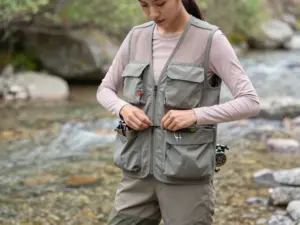
Fly Fishing Apparel Essentials Every Angler Needs for a Comfortable Day on the Water
Anglers who wade into a cold Montana river wearing cotton jeans typically end their day early. Not because the fish stopped biting, but because their clothing stopped working. The difference between a full day on the water and a miserable retreat to the truck almost always comes down to what you’re wearing. These 6 fly fishing apparel essentials every angler needs for a comfortable day on the water are not luxury upgrades. They are functional gear that determines whether your body stays warm, dry, and protected long enough to actually fish.
Disclosure: This post contains affiliate links. As an Amazon Associate, we earn from qualifying purchases, and at no extra cost to you.
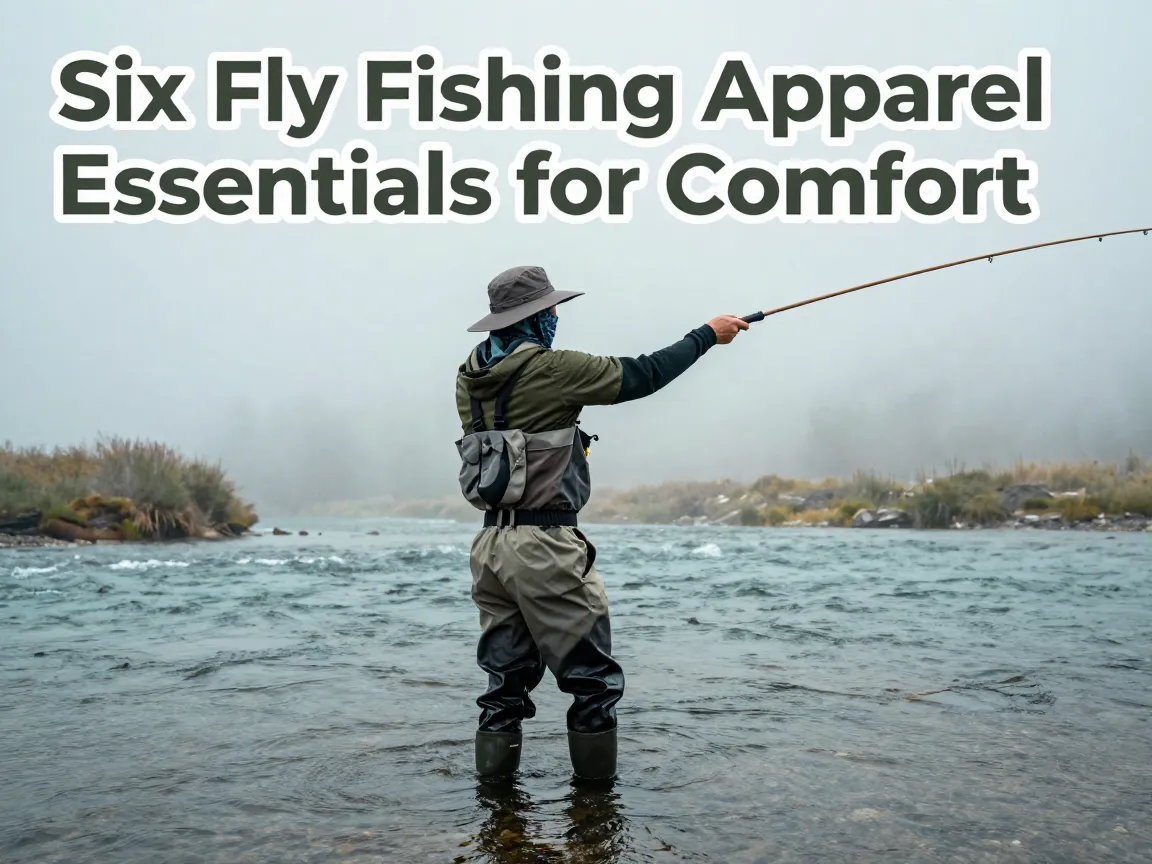
Each item below addresses a specific physiological reality of standing in cold water under a hot sun, or wading through rain, or hiking a mile of riverbank to reach a good run. Skip one and the whole system breaks down.
1. Technical Base Layer
Cotton kills the comfort of a fishing day faster than any other single mistake. When cotton gets wet from sweat, splash, or rain, it stays wet and pulls heat away from your skin. Synthetic fabrics like polyester and nylon, or merino wool, do the opposite: they wick moisture away from the skin and continue to insulate even when damp.
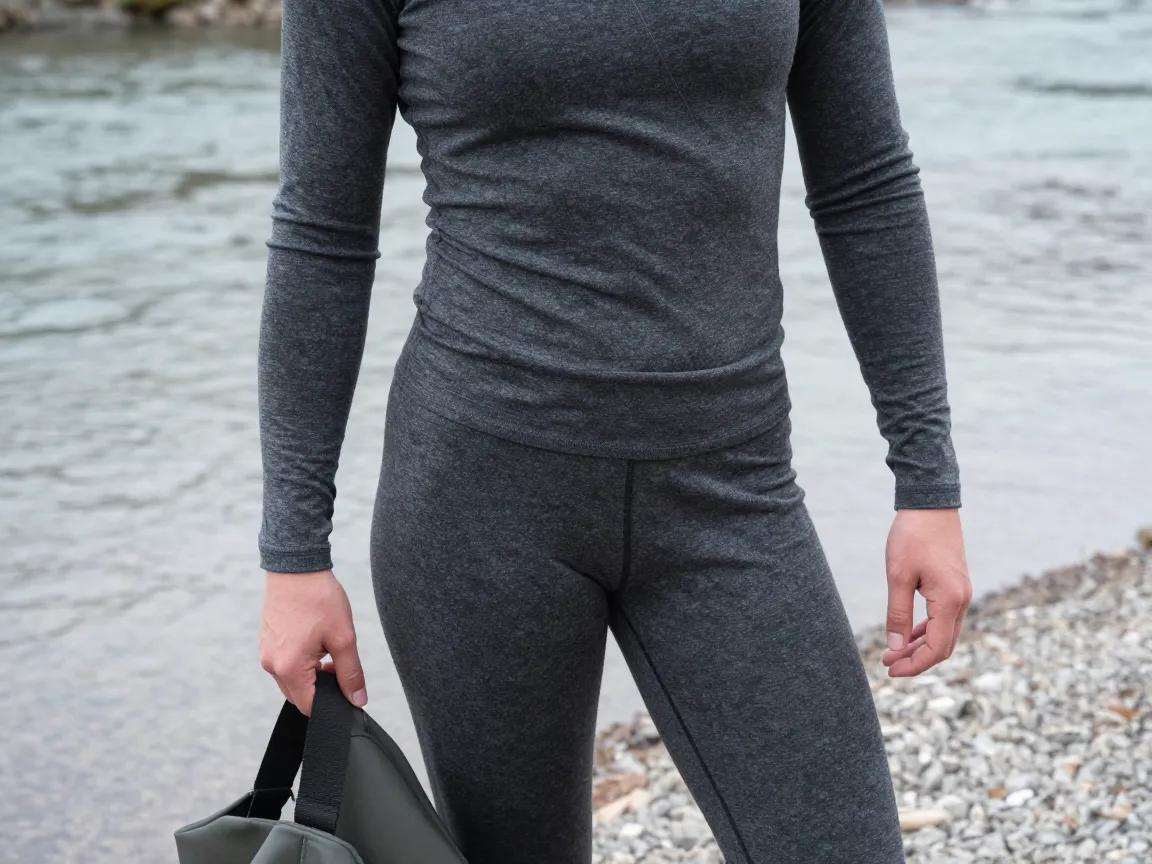
A good base layer for fly fishing fits close to the body without being restrictive. It should cover both the upper and lower body, particularly if you’ll be wading in cool or cold water. Major outfitters consistently advise dressing for water temperature, not air temperature. If the river is 45°F on a 65°F afternoon, your base layer needs to reflect that cold water exposure, not the pleasant air above it.
Merino wool is worth the higher cost for most anglers. It manages odor better than synthetics, which matters on multi-day trips, and it handles a wider range of temperatures comfortably. For early morning starts on cold tailwaters or high-elevation streams, a mid-weight merino set is a sound investment. For warm summer months, a lightweight synthetic version does the job without overheating.
One practical point on fit: the base layer will sit underneath waders and other layers. Anything too bulky adds friction, restricts movement, and makes pulling on waders a struggle. Slim, stretchy cuts designed for active use are the right choice here.
2. Insulating Mid-Layer
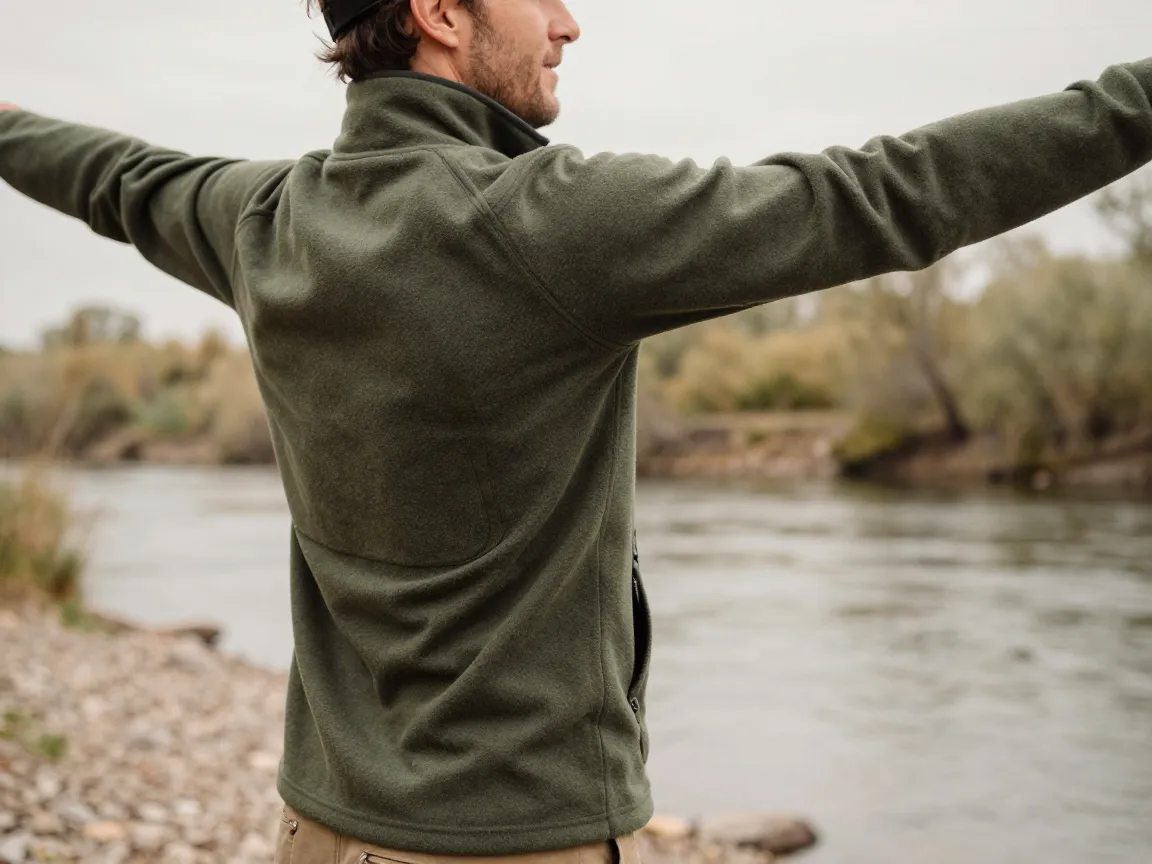
The base layer manages moisture. The mid-layer manages heat. These are distinct jobs that require distinct garments, and trying to do both with one piece of clothing is a tradeoff you’ll feel by mid-morning when conditions change.
A fleece pullover or jacket is the most common mid-layer for fly fishing, and for good reason. Fleece retains warmth even when wet, dries quickly, and is easy to pack down into a vest pocket or wading pack when the temperature climbs. Synthetic puff jackets offer more warmth for the weight but compress bulk slightly, which can interfere with casting motion if the fit is too generous in the shoulders. A slim-cut fleece that allows full shoulder rotation is typically the better choice for active fishing.
Wool mid-layers are also worth considering for anglers who fish cold, wet climates regularly. A 200-weight merino fleece handles surprising cold and transitions well from camp to riverbank.
The mid-layer goes over the base layer but under the wading jacket or outer shell. This means the fit needs to work in a stack. Try the full three-layer combination before committing to any one piece. A mid-layer that creates bunching or restricts the casting stroke will get left in the truck after the first few trips, which makes it no layer at all.
3. Waterproof Wading Jacket or Outer Shell
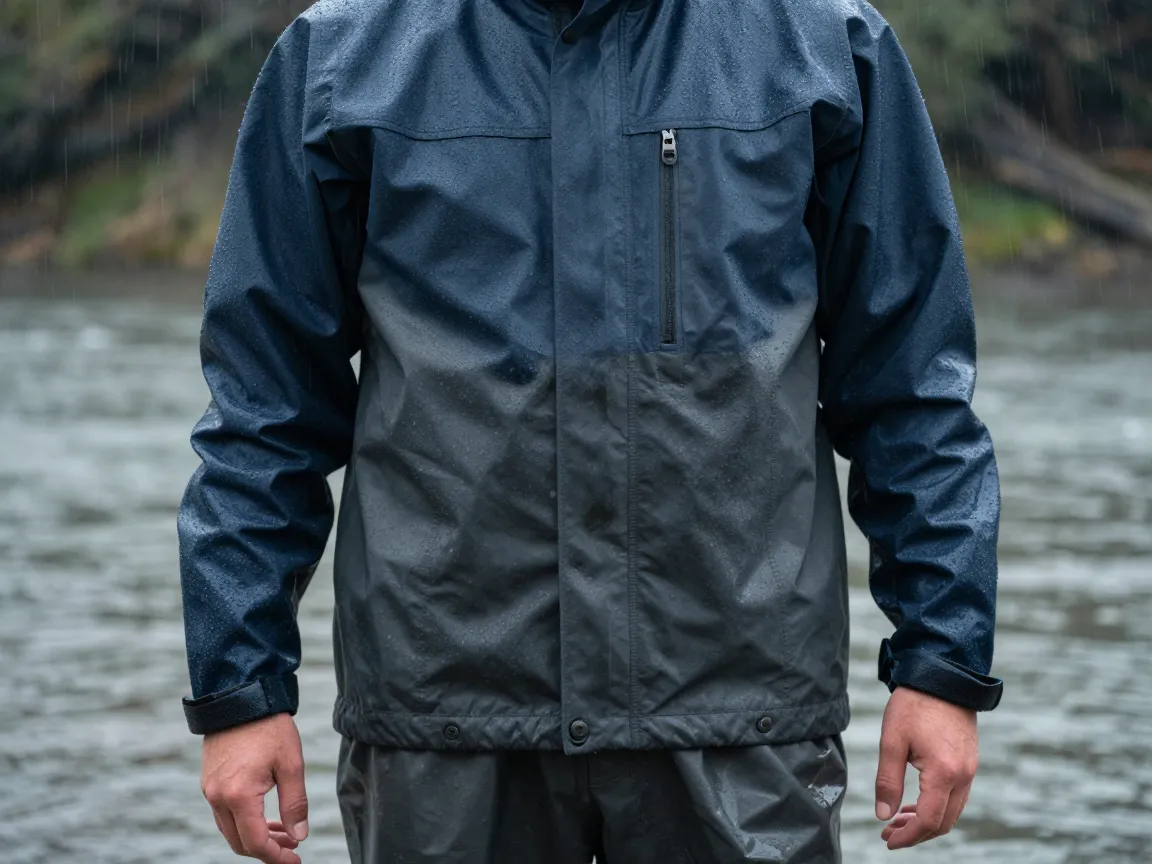
A wading jacket does something a standard rain shell cannot: it’s cut to work with chest waders. Standard rain jackets hang at the hip or lower. Wading jackets are designed with shorter hems that sit above the wader waistband, hand pockets positioned high enough to stay out of the water, and seams placed to avoid pressure points when you’re leaning into a cast or crossing a current.
Breathability is non-negotiable. A fully waterproof jacket that doesn’t breathe will soak you from the inside with trapped sweat within an hour of active fishing. Gore-Tex and similar laminate membranes allow water vapor to escape while blocking external water. That combination is what makes a wading jacket functional rather than just water-resistant.
Look for fully taped seams, a high collar that can accommodate a neck gaiter or buff, and adjustable cuffs that seal around your wrist. Some wading jackets include a built-in hood sized to sit over a cap or brimmed hat, which is worth having for surprise rain. Patagonia, Orvis, and Simms all produce wading-specific outer shells with these features, and several outfitter packing lists for guided Montana trips list a waterproof wading jacket as mandatory gear regardless of the forecast.
One sizing note: if you’re wearing a fleece mid-layer underneath, size up one from your normal jacket size. The layering system only works when each piece has enough room to move freely.
4. Breathable Chest Waders
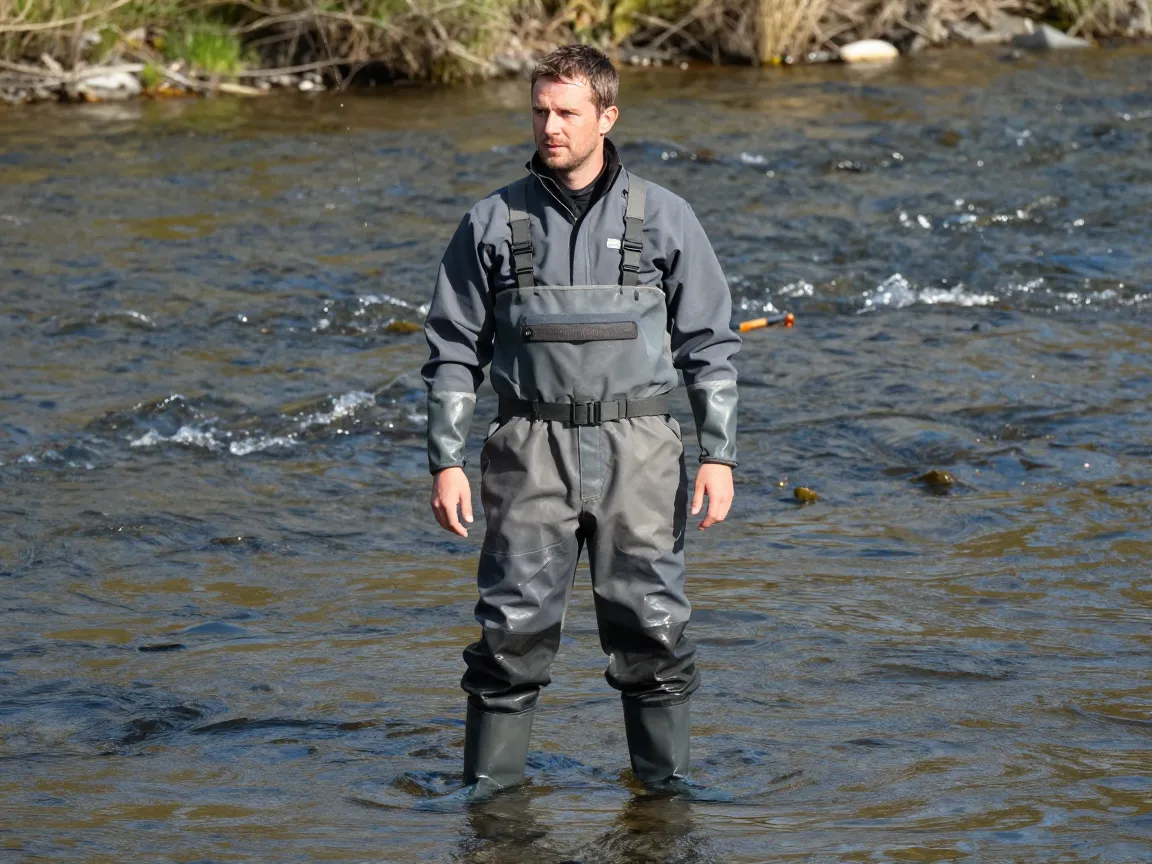
Waders are the single piece of fly fishing apparel that most defines your ability to access fish. Without them, you’re limited to bank fishing or wet-wading in conditions warm enough to allow it. With properly fitted, breathable chest waders, you can position yourself in the river, control your drift, and fish water that most anglers can’t reach from shore.
Breathable waders, most commonly built with a Gore-Tex or similar multi-layer laminate, replaced neoprene as the standard for three-season fishing because they’re significantly lighter, more packable, and far more comfortable during active use. They move with you, don’t overheat in mild weather, and pack down small enough to fit in a duffel alongside everything else. For warm-weather and shoulder-season fishing, 3-layer or 4-layer breathable constructions are the practical choice.
Late fall and winter fishing changes the equation. When water temperatures drop below 40°F and you’re standing still more than moving, neoprene or fleece-lined waders provide thermal protection that breathable fabrics can’t match without heavy layering underneath. Some anglers keep one pair of each; others layer aggressively under breathable waders and accept the tradeoff.
Fit matters enormously. Waders that are too tight restrict leg movement and strain seams. Too loose and they bag at the knees, create drag in the current, and make wading unstable. Most manufacturers offer short, regular, and tall inseam lengths as well as stocking-foot and boot-foot options. Stocking-foot waders paired with separate wading boots give you better ankle support and more flexibility in footwear choices. Boot-foot waders sacrifice some fit precision but are faster to put on and work well for float trips.
5. Wading Boots with Grippy Soles
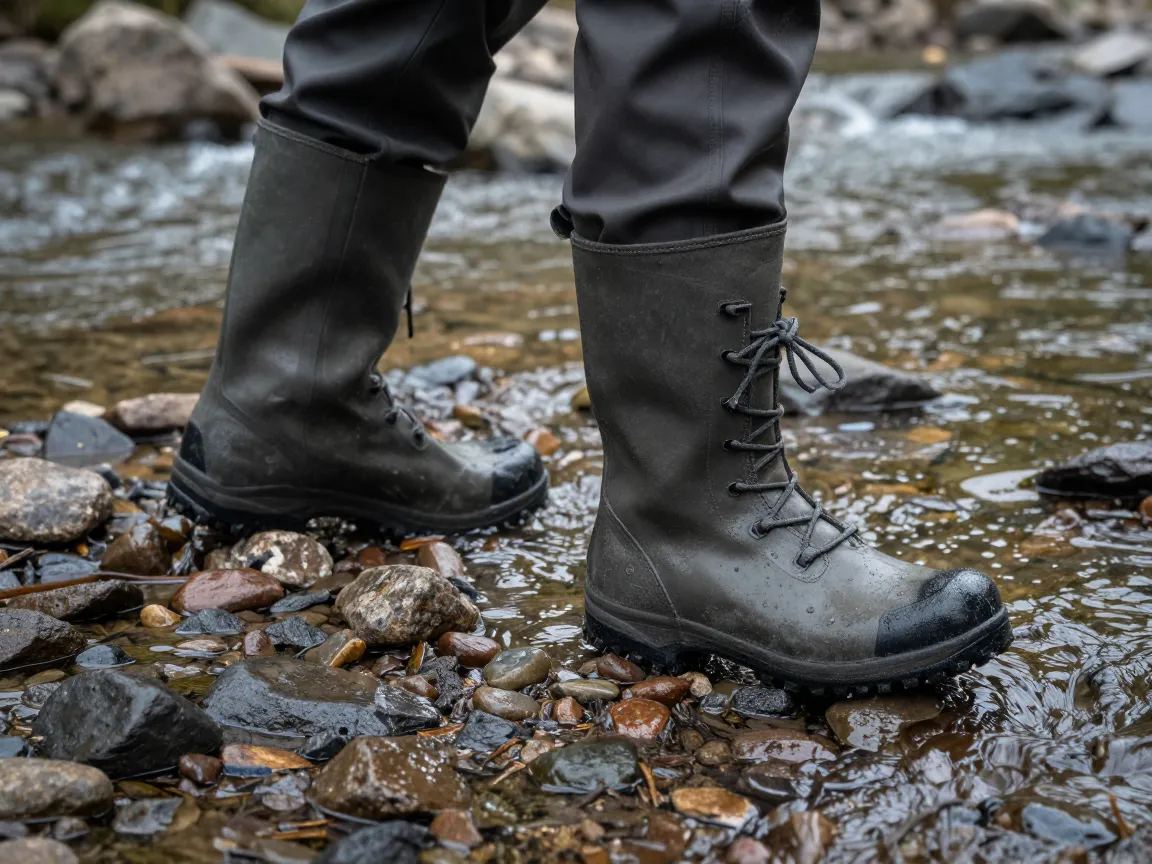
The wading boot is where your entire body weight meets a slick, uneven riverbed, often in moving current. A boot with inadequate grip or poor ankle support is not just uncomfortable, it’s a safety issue. Falling in a fast-moving river with a loaded vest and chest waders is dangerous in a way that most fishing gear failures are not.
Rubber lug soles are now the most widely recommended sole type for general wading. Felt soles, which were once considered the gold standard for grip on smooth, algae-covered rocks, have been banned or restricted in multiple U.S. states and Canadian provinces due to their role in spreading aquatic invasive species like didymo. Modern rubber compounds, particularly Vibram and similar high-friction blends with deep lug patterns, provide comparable grip on most riverbed surfaces while remaining legal everywhere and drying faster between uses.
Ankle support is the second critical factor. Wading boots designed for technical wading have higher ankle collars, reinforced toe boxes, and lacing systems that lock the heel down. Orvis and Columbia both produce wading-specific boots designed to stay comfortable during long approaches over cobble and boulder fields before you even get in the water. Comfort during the hike in matters as much as performance while wading.
When sizing wading boots, account for the neoprene stocking foot of your waders and any sock layers underneath. Most anglers size up one full size from their street shoe size, sometimes more with heavy wool socks. Getting this wrong means either a compressed sock layer that loses its insulating value or a loose boot that shifts underfoot on uneven ground.
6. Sun-Protective Shirt and Head Coverage
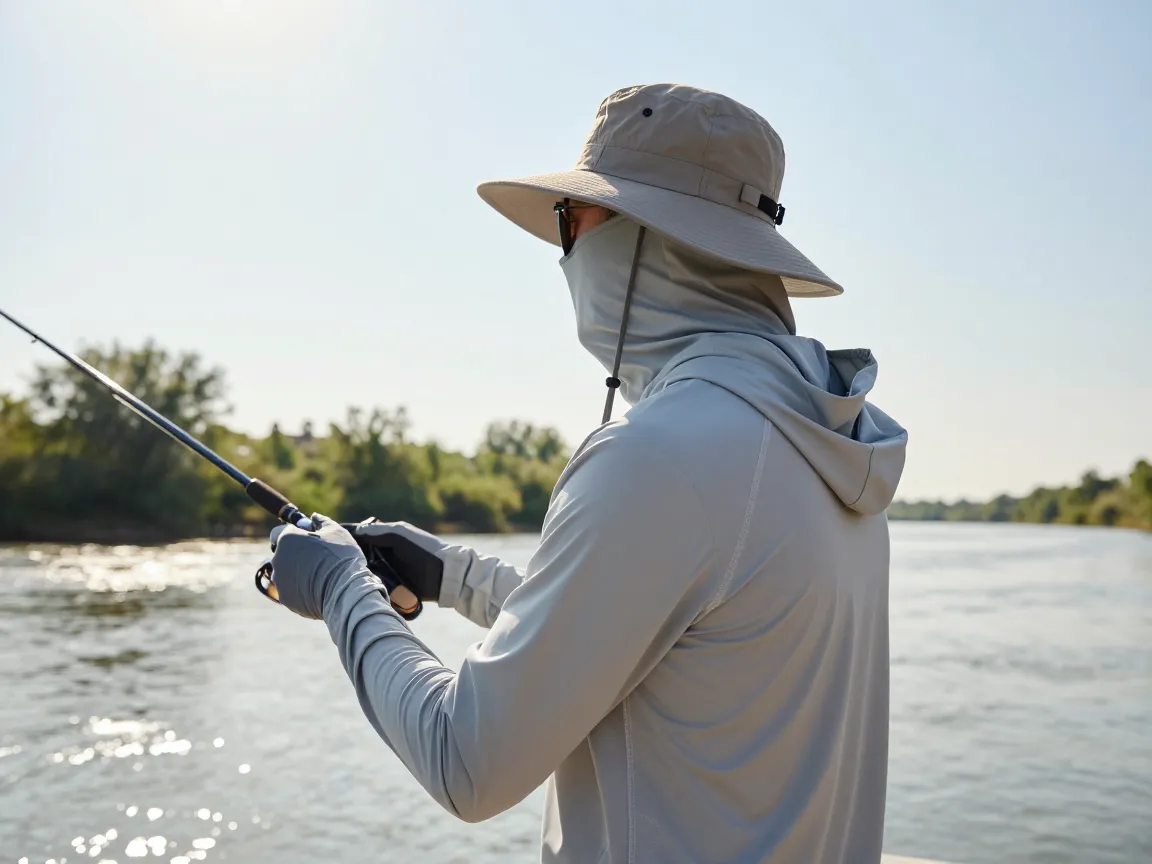
Fly fishing puts you outside for six to ten hours in direct sunlight, often reflected off the water’s surface, without the shade cover of forests or buildings. The UV exposure is higher near water than most anglers account for. Sun-protective shirts and proper head coverage are not optional accessories, they are the layer that determines whether you end the day comfortable or badly burned.
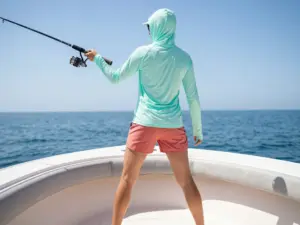
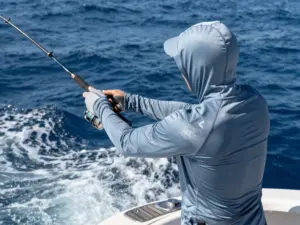
Long-sleeve sun shirts with UPF 50+ ratings, quick-dry synthetic or nylon fabrics, and high collars or integrated hoods are now standard in every major fly fishing brand’s lineup. Orvis markets a dedicated “Sun Defense” shirt line. Columbia’s recommendations for river fishing consistently include collared, long-sleeve sun shirts. Trident’s 2026 apparel collection prioritizes high-coverage sun layers over short-sleeve options. The shirt should cover your wrists when your arms are extended in a casting position, a detail worth checking in the store.
Head and neck coverage completes this layer. A brimmed hat with a 3-inch or wider brim blocks sun from the face, ears, and the back of the neck. A neck gaiter or buff fills the gap between the shirt collar and the hat brim. Sun gloves protect the backs of the hands during extended days. In cold weather, swap the sun hat for a wool beanie and add an insulated hood. NRS, Orvis, and Southern Tier Fly Fisher all include warm headwear and neck coverage alongside sun protection in their guided trip gear lists.
One practical combination that works across seasons: a hooded sun shirt worn under a mid-layer with the hood accessible when needed. In summer, the hood provides sun and wind protection. In spring or fall, it adds a thin layer of warmth under a fleece. It’s one piece that earns its place in every pack.
Pulling the System Together
These six items don’t function in isolation. A base layer without a mid-layer leaves you cold when clouds roll in. Waders without the right boots make technical wading risky. A sun shirt without head coverage means sunburned ears by noon. The system works when all six components are present and sized to work together.
Seasonal adjustment follows naturally from this framework. Summer setups run lighter on the insulating layers and heavier on sun protection. Winter setups add warmth at every level, often swapping breathable waders for neoprene. The core six items stay the same in both cases; only the specific products and weights change.
Fit compatibility between layers is worth one more mention. Try the complete stack before a trip, not on the morning of one. A jacket that works perfectly over a base layer may bind uncomfortably over a fleece mid-layer inside waders. Catching that problem at home costs nothing. Discovering it on the river costs most of your day.
The single most useful next step for any angler building or auditing this kit: start at the base layer and work outward, confirming that each layer moves freely over the one beneath it, and that the full stack fits inside your wading jacket without restricting a full overhead casting stroke.