Fishing Pants Outfit Ideas That Keep You Comfortable All Day
Anglers who fish more than 50 days a year spend roughly 400 hours standing, kneeling, and sitting in their pants. That number makes the clothing choice less trivial than it sounds. The right fishing pants outfit does not just protect skin from the sun. It manages sweat, dries after a wave slap, moves with a casting stroke, and still looks decent when you stop for lunch. These 6 fishing pants outfit ideas that keep you comfortable all day cover the full range of conditions, from bluebird-sky flats to overcast mountain streams, so you can build a kit that actually works across a full season.
Disclosure: This post contains affiliate links. As an Amazon Associate, we earn from qualifying purchases, and at no extra cost to you.
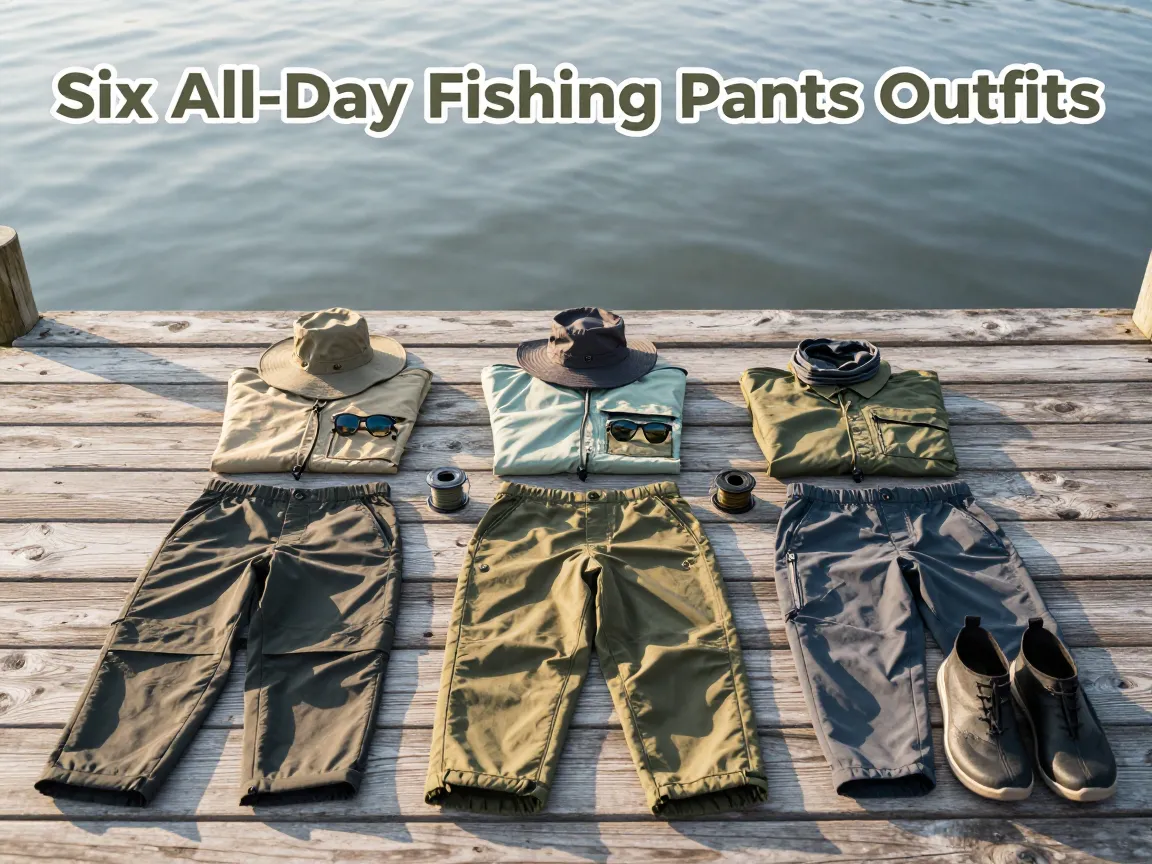
1. The Sun-All-Day Boat Outfit: UPF Shirt, Synthetic Pants, and Sun Accessories
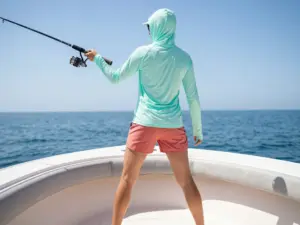
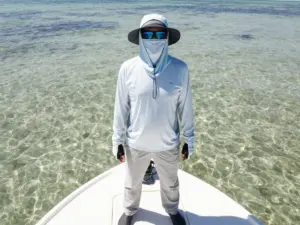
Spending six or more hours on open water without shade is a UV exposure problem before it is a fashion problem. The standard that works here is a long-sleeve UPF 50+ fishing shirt paired with a pair of lightweight synthetic fishing pants rated at UPF 30 or higher. Fabrics in this category typically use a tight polyester or nylon weave that blocks UV without adding weight. Columbia’s PFG and similar lines achieve this with fabrics that weigh roughly 3 to 4 ounces per square yard and dry in under 20 minutes after getting wet.
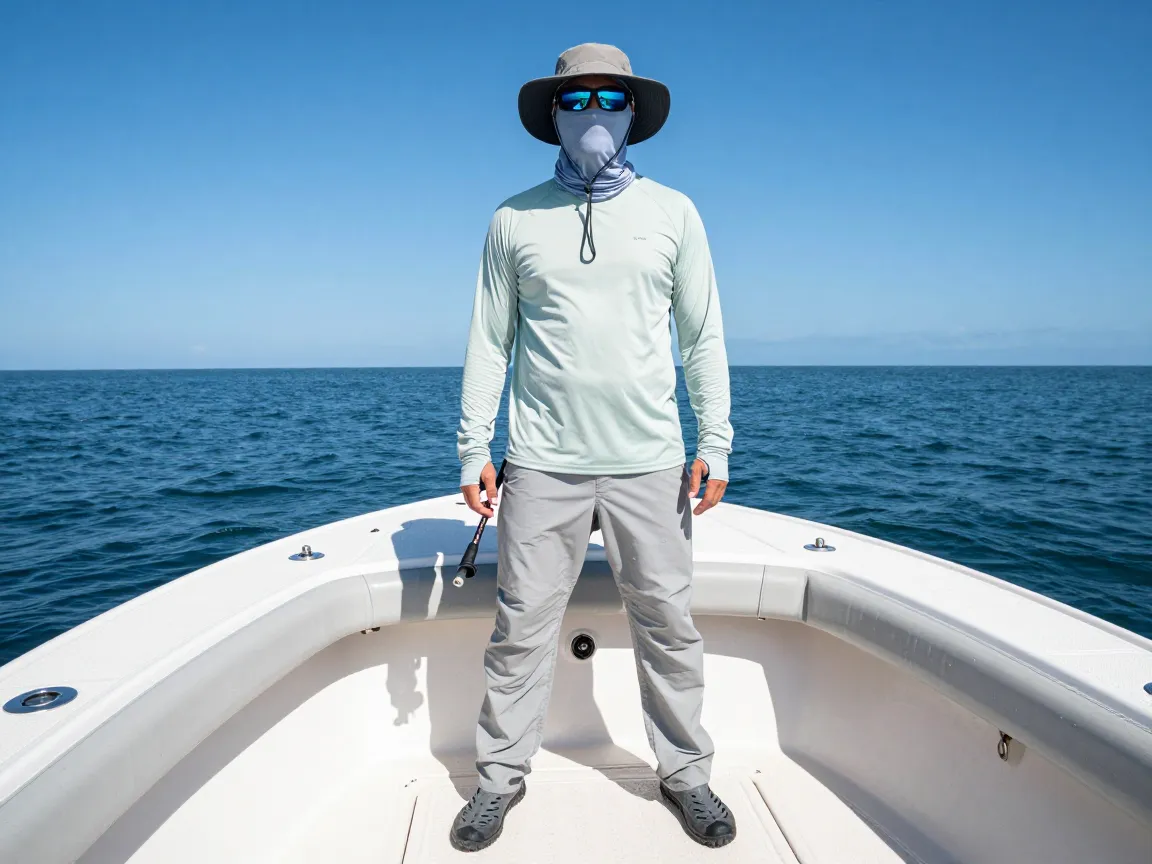
The accessories in this outfit carry more weight than most anglers give them. A wide-brim hat with at least a 3-inch brim blocks UV that a shirt cannot. Buff-style neck gaiters cover the gap between the collar and the hat’s shadow. Polarized sunglasses are non-negotiable on the water because they cut surface glare and reduce eye fatigue over long days. These three items, combined with the UPF shirt and pants, reduce sun exposure on exposed skin by roughly 90 percent compared to a T-shirt and shorts setup.
Footwear for this outfit depends on whether you’re on a hard deck or wading. Closed-toe water shoes with drainage ports handle both. The key is a rubber sole with enough grip to prevent slipping on wet fiberglass. This combination forms the most practical all-day foundation for saltwater flats, offshore trips, or any day when shade is not available.
2. The Casual Long-Trip Outfit: Patterned Shirt and Solid Technical Pants
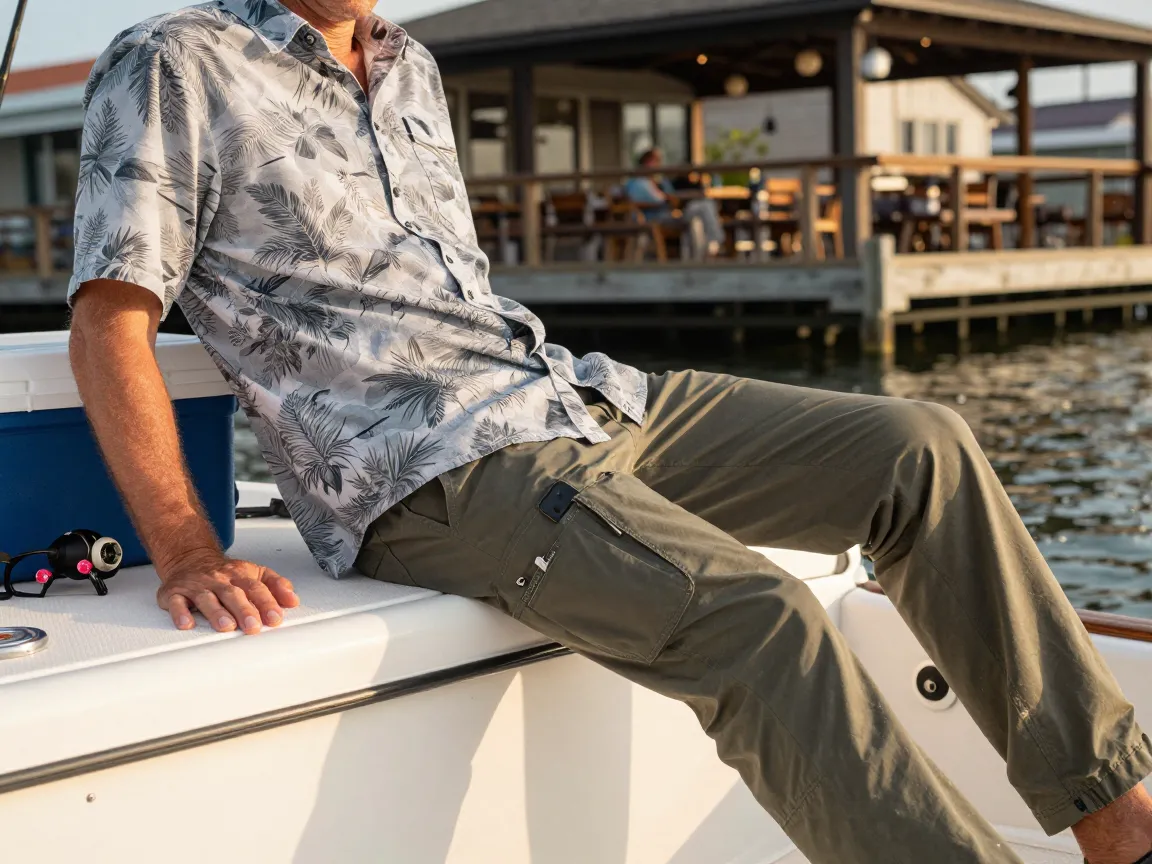
Not every fishing day is a technical mission. Some trips run six or eight hours because the conversation is good and the cooler is well-stocked, not because the fish are constantly biting. For those days, a patterned button-down fishing shirt in a tropical or plaid print worn over solid-color technical pants creates a relaxed look that still delivers performance where it counts.
The shirt pattern is doing social work here. A solid-on-solid outfit reads as workwear. A patterned shirt reads as intentional, which means you can walk into a waterfront restaurant after the trip without looking like you forgot to change. The pants do the technical heavy lifting: stretch fabric for getting in and out of the boat, quick-dry construction, and multiple pockets for tools, a phone, and a license. Colors like khaki, olive, or slate hold up across the most outfit combinations and do not show fish slime the way white does.
One practical note: avoid shirts with large flat panels of synthetic material in this pairing. They tend to cling when wet and show sweat patterns in a way that a linen-cotton blend does not. A moisture-wicking shirt in a loose weave handles perspiration better in this context than a tight athletic cut.
3. The Utility All-Day Outfit: ATG-Style Pants That Go from the Water to Errands
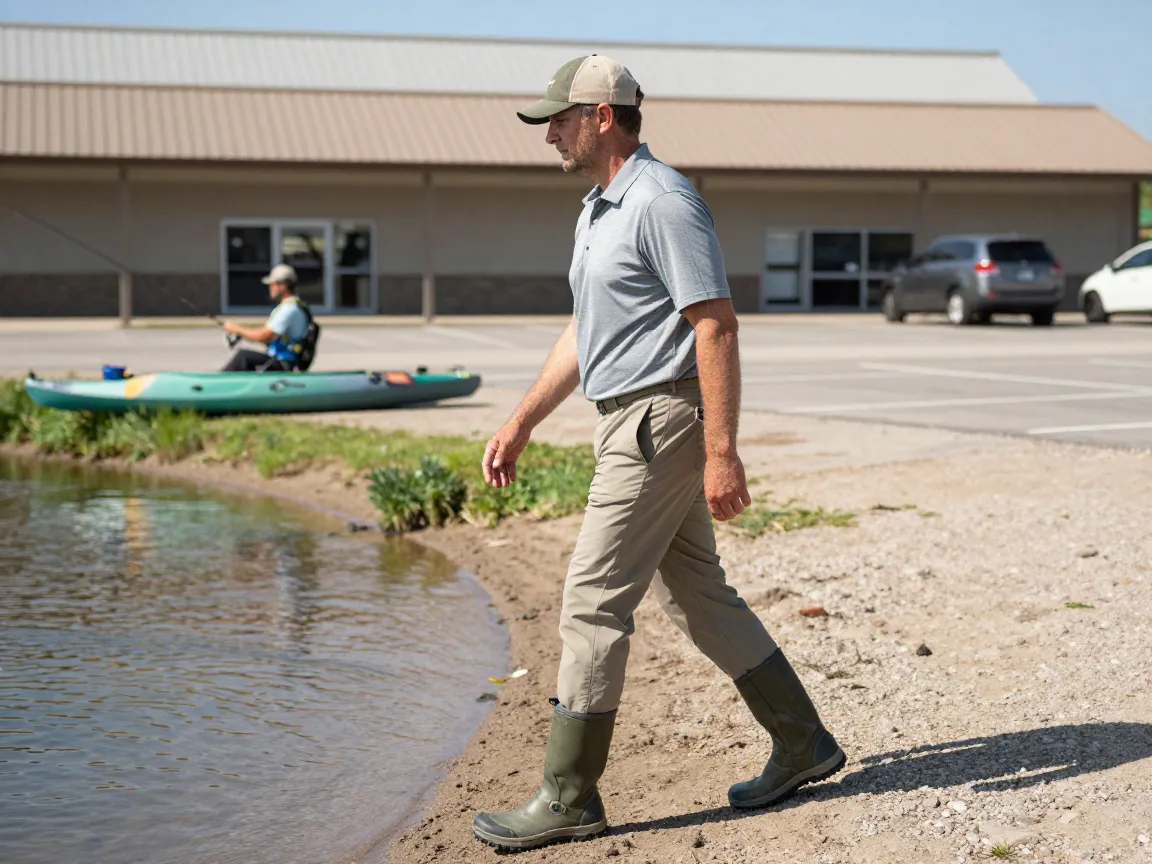
There is a category of fishing pants built around the idea that most anglers do not go home between the morning trip and the afternoon errand run. The ATG by Wrangler Cliffside pant is a good example: it uses a stretch-woven nylon-spandex blend, includes a hidden phone pocket, articulated knees, and a straight-leg cut that reads as casual rather than technical. The result is a pant that works at the water, at the hardware store, and at a school pickup without requiring a wardrobe change.
The outfit built around this type of pant keeps things clean. A solid short-sleeve performance polo or a simple merino T-shirt on top keeps the look put-together. Trail runners or clean rubber-soled shoes replace dedicated fishing footwear when the day’s agenda splits between the water and regular errands. A packable baseball cap rather than a wide-brim fishing hat carries the same sun protection with less visual weight off the water.
This outfit works best for freshwater fishing from a bank or a kayak where you are unlikely to get soaked. The trade-off is that utility-focused pants typically have slightly lower UPF ratings than purpose-built fishing pants. If the sun is intense, adding a UPF arm sleeve closes that gap without changing the outfit’s overall look.
4. The Technical Performance Outfit: Built-for-Fishing Pants with Wet-Ready Everything
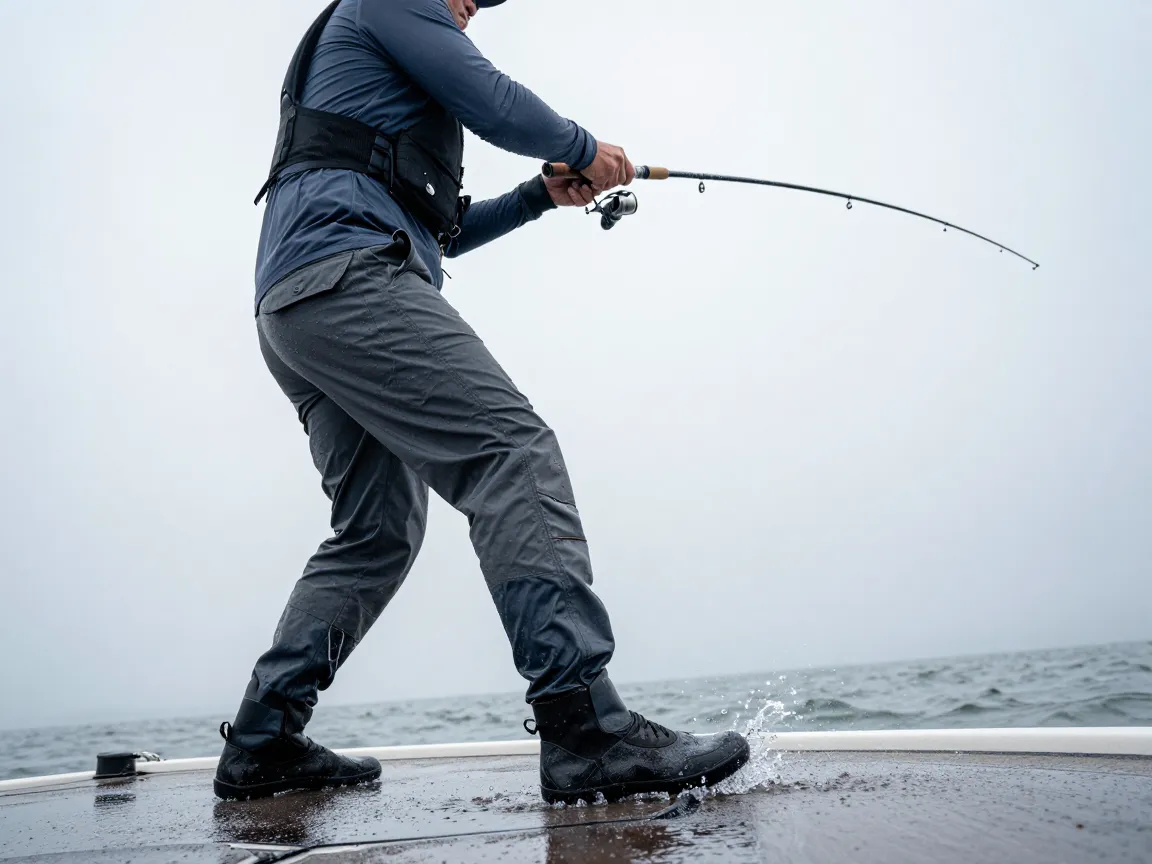
When the fish are running and conditions are demanding, a fully technical outfit removes every variable that comfort and function can fix. Huk’s Next Level pants are a good anchor for this outfit. They use a 4-way stretch woven polyester that handles full range of motion for casting, include sealed pockets that resist water intrusion, and have a moisture transfer rate that keeps sweat moving outward even at high exertion levels. Paired with a fitted sun shirt and wet-ready footwear, this outfit is built to work hard from the first cast.
The sun shirt in this pairing should fit closer to the body than the casual option in outfit two. A tighter fit reduces the chance of fabric snagging on hooks or rod guides during active fishing. Look for flatlock seams that sit flat against the skin and do not create pressure points under a life jacket or wading belt. Neoprene or rubber-soled water shoes with ankle support handle both a wet boat deck and a quick wade to reach a structure.
This outfit has a higher entry cost than the others, but the per-hour performance value over a full season makes it worth the investment for anyone fishing 20 or more days a year. The technical fabrics in purpose-built fishing pants typically outperform general outdoor pants on moisture vapor transmission rate, which is the standard measure of how quickly fabric transfers body heat outward. Higher MVTR ratings mean you stay drier longer, which directly reduces fatigue on a full-day trip.
5. The Hot-Weather Cargo Outfit: Columbia Silver Ridge Pants and a Vented Shirt
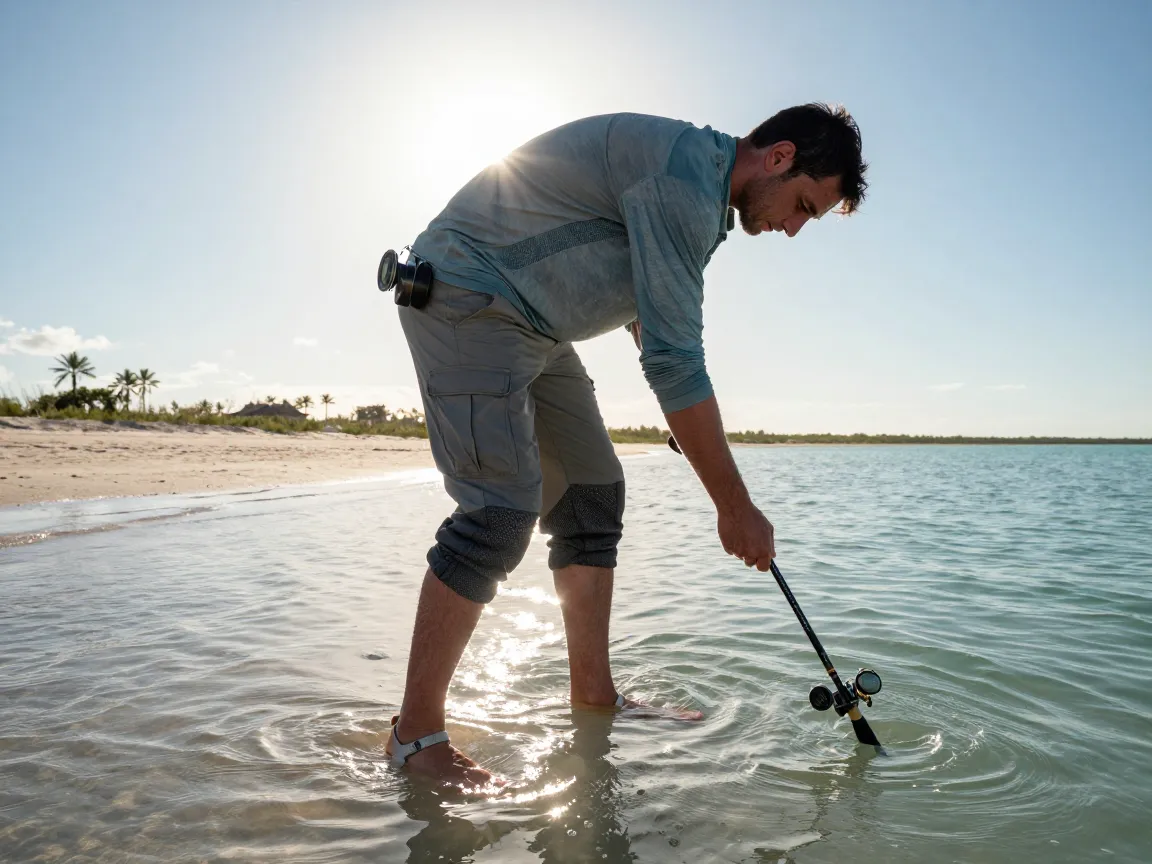
Heat and direct sun create a specific problem for anglers fishing in exposed environments like desert lakes, tropical saltwater flats, or Southern marshes in summer. Columbia’s Silver Ridge pants address this with an Omni-Wick fabric system and a mesh-lined venting structure at the knees and inner leg. The cargo pocket layout on this pant also carries more gear than most technical fishing pants, which matters for wade anglers who need to carry tools, tippet spools, and a phone without a vest.
The vented fishing shirt that pairs with these pants matters as much as the pants themselves. A back-venting yoke, mesh-panel underarms, and a loose chest fit create passive airflow during walking that cuts the felt temperature significantly compared to a standard long-sleeve shirt. Brands like Orvis, Simms, and Columbia all make shirts in this configuration. The key spec to look for is a vented back panel that opens when you raise your arms, which happens constantly during casting.
For footwear in this outfit, lightweight sandals with ankle straps work for bank fishing on sandy or rocky ground. They increase ventilation around the foot, which is where a surprising amount of body heat accumulates during long walk-in trips. If the ground cover involves brush, a low-cut trail runner with mesh uppers handles ventilation while protecting against scrapes.
6. The Convertible Pants Outfit for Mornings That Turn Hot
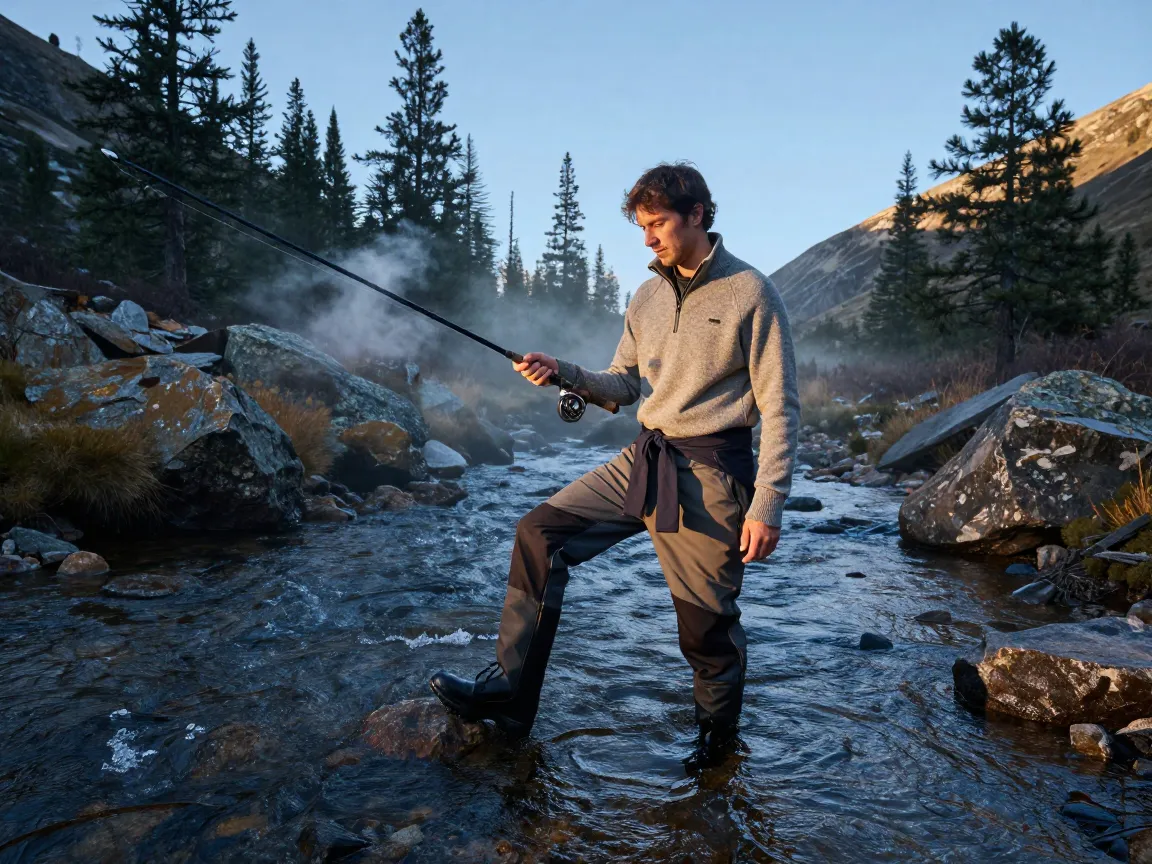
Mountain streams, high-country reservoirs, and spring trout fishing all share a common pattern: cold at first light, warm or hot by noon. Convertible zip-off pants solve this without requiring a pack or a change of clothes. The zip-off design lets you start the morning in full-length pants and convert to shorts when the temperature rises, without leaving the water.
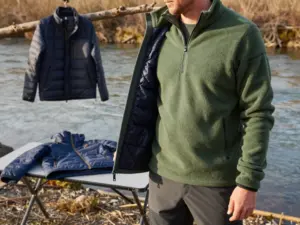
The outfit built around convertible pants works best when the top layer is a mid-weight merino or synthetic quarter-zip that you can tie around your waist once the day heats up. Merino wool at 150 to 200 grams per square meter regulates temperature better than synthetic in variable conditions because it insulates when wet and does not hold odor over a multi-day trip. This matters for anglers who drive to a destination the night before and fish through the next day without returning to camp.
The one limitation of convertible pants worth knowing is that the zip seam creates a slight gap in the leg’s UPF rating and structural integrity. Most convertible pants use a nylon-spandex blend that rates around UPF 30 at the full-length configuration, but the zip line itself is not reinforced fabric, so it can be a point of wear over heavy seasons. For anglers who fish more than 40 days a year in this style, a dedicated pair of full-length pants and a separate pair of fishing shorts often outlasts and outperforms the convertible option.
Choosing Fabrics That Actually Perform All Day
Across all six outfits, the fabric is doing most of the work. Two technical benchmarks separate real performance fishing pants from outdoor pants that look similar on the shelf. Moisture vapor transmission rate (MVTR) measures how much moisture in grams passes through one square meter of fabric in 24 hours. Fishing pants from purpose-built brands typically achieve 5,000 to 10,000 g/m2/day. Quick-dry time is the second metric: purpose-built fishing pants in nylon or polyester blends dry in 15 to 30 minutes when wet, compared to 60 to 90 minutes for cotton-blend outdoor pants.
Fit also determines function. An articulated knee cut, where the knee panel is shaped with a slight forward angle, reduces binding during the crouched position most anglers use when landing fish from a low bank or kayak deck. A gusseted crotch panel matters more than most anglers realize until they spend eight hours on the water without one. These construction details are worth checking on a spec sheet before buying.
For women anglers specifically, the pull-on UPF pant with an elastic waistband and wide-leg or straight-leg cut resolves the fit problem that affects most technical fishing pants designed with a male standard cut. The pull-on design also makes boat seating significantly more comfortable over a full day, since there is no rigid waistband pressing against the hip when seated for hours.
Conclusion
The right outfit for a full day of fishing is a system, not just a pair of pants. Each of these six fishing pants outfit ideas pairs specific fabric performance with practical layering and footwear choices to solve a real condition. If you fish in one primary environment, start with the outfit built for that condition and optimize from there. If your season covers multiple types of water, outfits one, four, and six cover the widest range with the least overlap. The next practical step is to check your current fishing pants against the MVTR and UPF specs for your most-fished conditions. If they fall short, that is the first replacement to prioritize before the next long day on the water.