Vintage Fishing Clothing Picks That Bring Classic Angler Style Back
Orvis expanded into apparel in the 1940s, Vogue put a model in waders and a multi-pocket coat in October 1995, and by 2026 a cropped fishing vest is considered a wardrobe essential by mainstream fashion editors. That is not a niche revival. It is a full-circle moment for clothing that was always built to last. This guide to 6 Vintage Fishing Clothing Picks That Bring Classic Angler Style Back treats each piece on its own terms, covering what makes it worth wearing, where to find originals, and how to wear them without looking like a costume.
Disclosure: This post contains affiliate links. As an Amazon Associate, we earn from qualifying purchases, and at no extra cost to you.
1. The Aran Cable-Knit Fisherman Sweater
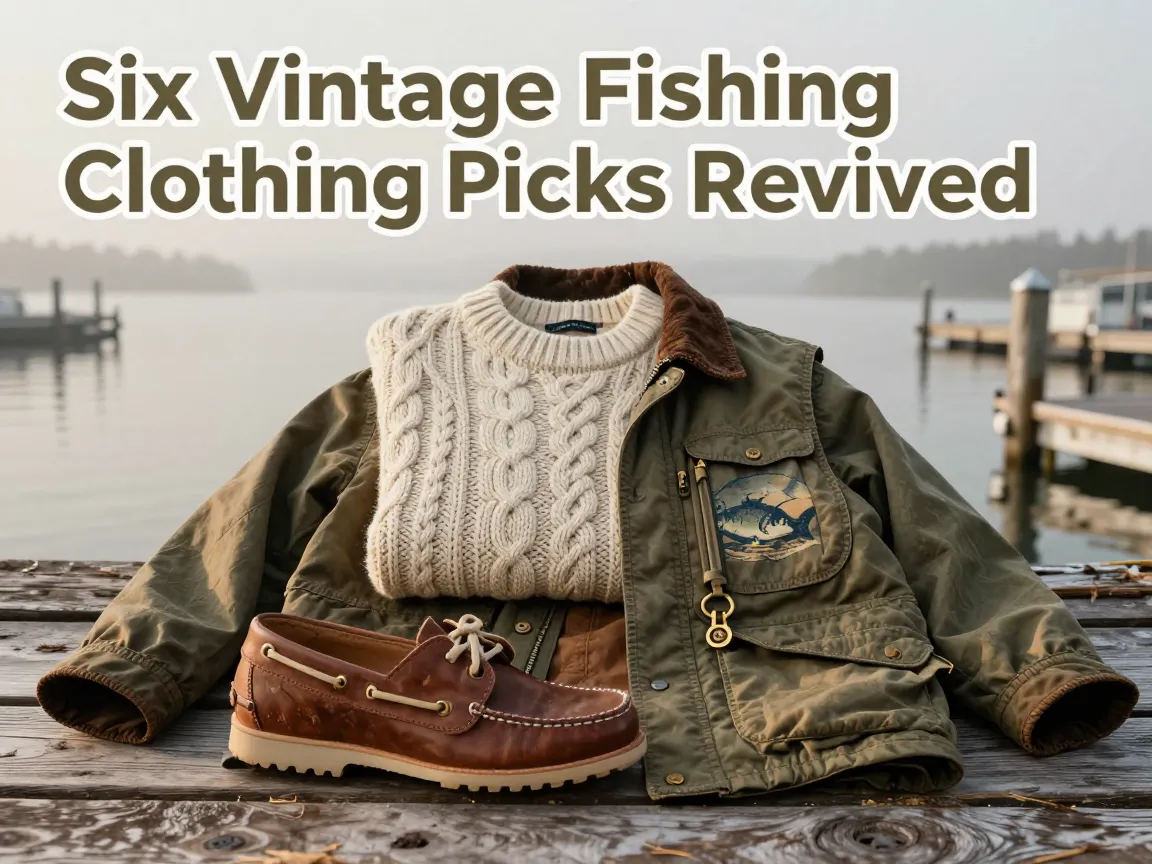
The cable-knit fisherman sweater is the single garment most closely associated with classic angler style, and that reputation goes back centuries before fashion editors discovered it. Aran Island knitters in the west of Ireland developed the sweater as working gear, using undyed wool that retained natural lanolin, which repelled water well enough for a full day on the water. The chunky cable patterns were not decorative choices; they added structural insulation in the same way a corrugated surface traps air. That functional logic is exactly why the sweater has held its shape in fashion through every decade since it crossed into mainstream menswear in the 1950s.
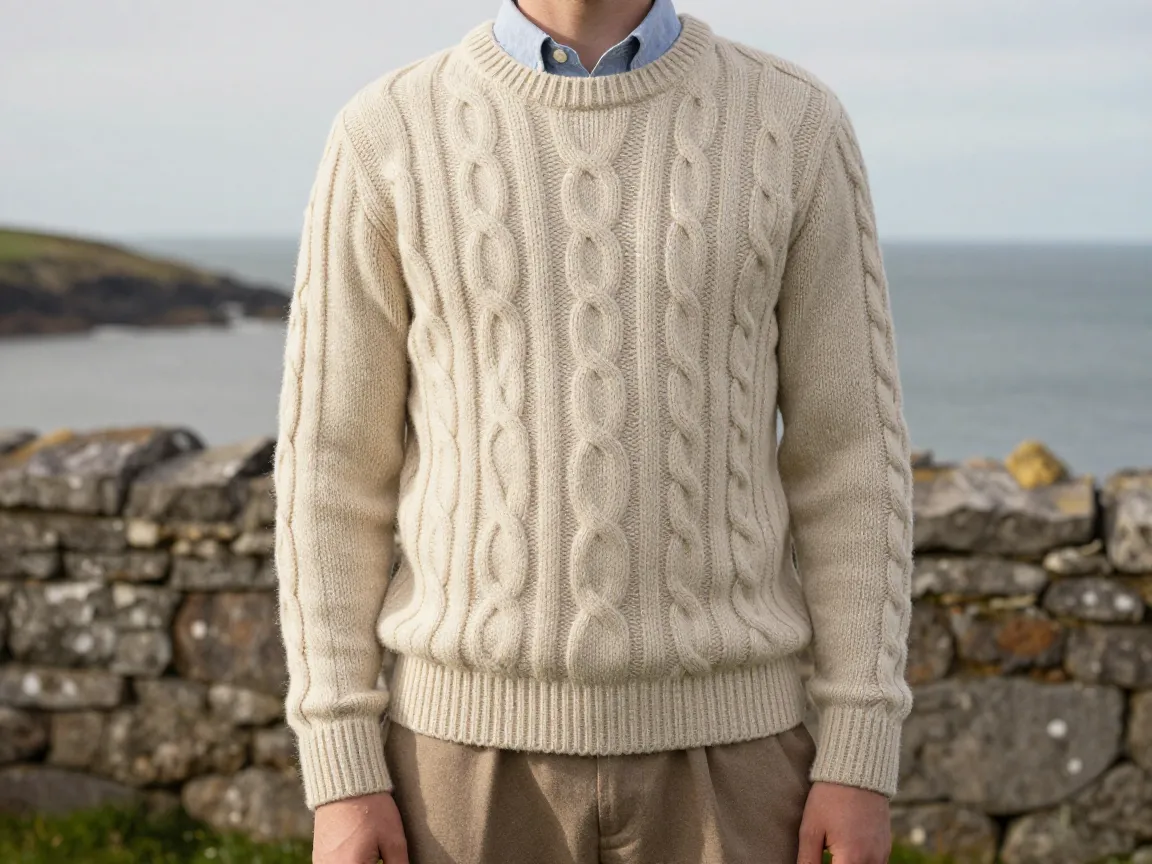
For vintage angler style specifically, cream and oatmeal are the right colors. They read as authentic because commercial fishing communities did not dye these sweaters, and undyed wool was cheaper to produce. A chunky gauge knit with raised cables across the chest and arms is the silhouette to look for. Modern fast-fashion versions tend to use acrylic blends that flatten out visually and pill quickly. Genuine wool versions from smaller Irish knitwear producers or thrifted originals hold structure and develop a pleasing texture over years of wear.
Good Housekeeping’s spring 2025 style guide and multiple fisherman aesthetic roundups from January through May of that year named the cable-knit as the foundational layer for the look. Country Living’s January 2025 feature on the fisherman aesthetic extended this further, treating the Aran sweater as an economic and cultural artifact, not just a clothing item. That context matters if you are buying: a sweater with actual provenance from an Irish producer carries different weight than a lookalike from a fast-fashion retailer. Worn over a chambray shirt and paired with relaxed trousers, it delivers the classic coastal angler silhouette without effort.
2. The Multi-Pocket Fly-Fishing Vest
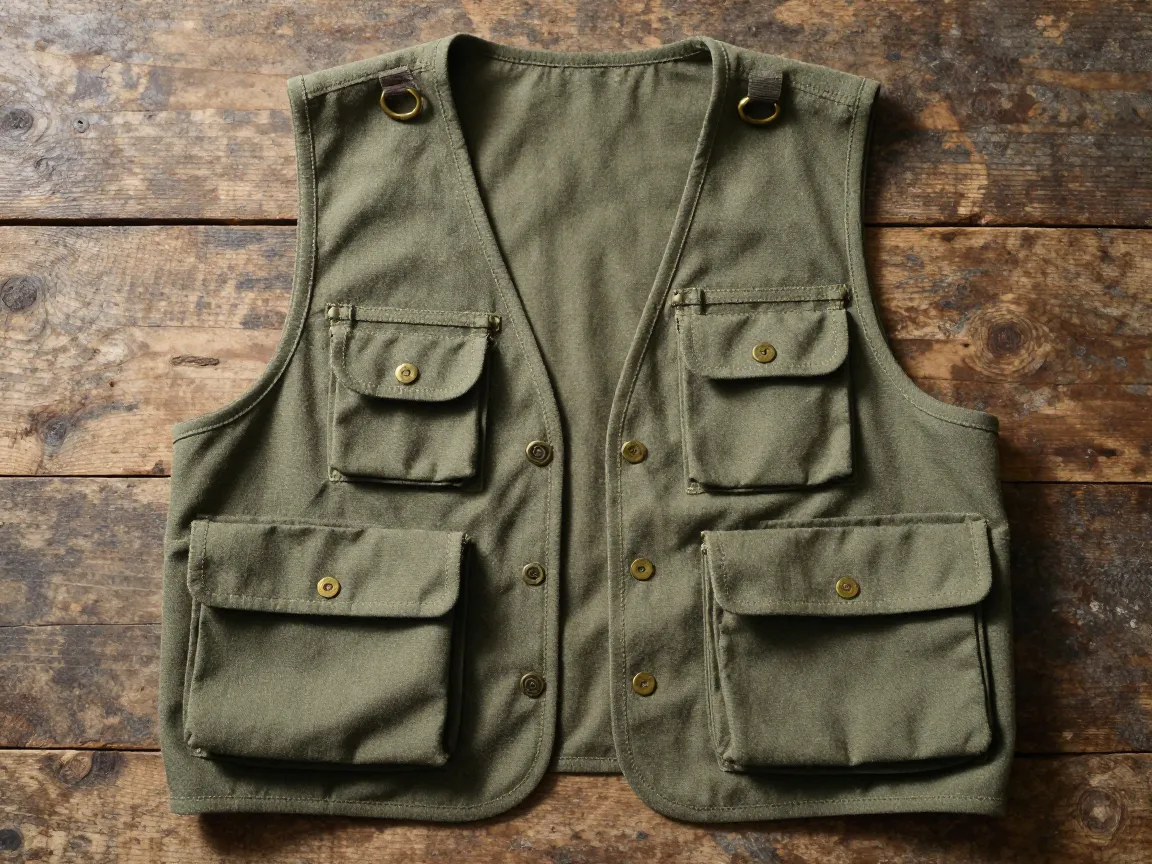
No garment reads as “angler” faster than a fishing vest, and the vintage versions from the 1960s through the 1990s are substantially better made than most modern equivalents. The original design logic was pure utility: a wading angler needed both hands free and a dozen different compartments within reach. Early vests from that period used brass D-rings, sewn-in rod holders, and double-flap pockets with snap closures, all details that fashion labels are now paying designers to replicate.
Etsy’s dedicated “Vintage Fishing Wear” and “Filson Fishing Vest” categories show strong inventory of exactly this type of piece. Listings include multi-pocket fly-fishing vests from the 1960s through 1990s and Filson tin-cloth cruiser vests, which are among the most copied silhouettes in contemporary outerwear. A genuine Filson or Orvis vest from that era will have heavier canvas construction than any current fashion-label imitation, and the hardware will not loosen after a season.
The fashion market confirmed the appeal of this silhouette in June 2025 when a Kith collaboration with Columbia and Japanese brand South2 West8 placed multi-pocket nylon jackets and mesh shirts with fishing-style flap pockets at the center of a menswear moment. Those pieces cost around $190 to $295 new. A comparable vintage original in good condition, found through Etsy or a specialty vintage retailer, will often cost less and carry more visual authenticity. The streetwear version of the fishing vest is not going away. The original version started the conversation.
3. The Golden-Age Sportfishing Shirt
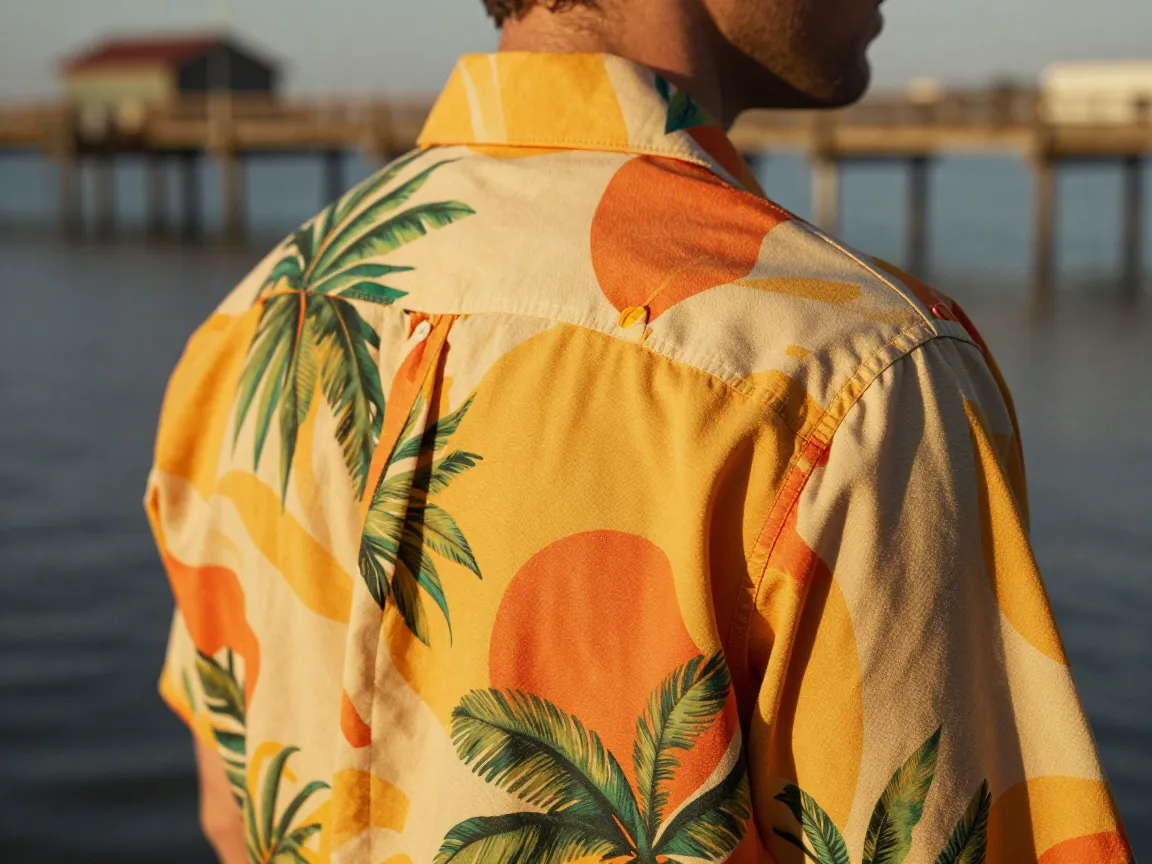
The years between 1950 and 1970 produced some of the most collectible casual shirts in American menswear history, and fishing-specific designs from that period are a category of their own. A September 2025 retro menswear guide treats this era as the “golden age of sportfishing” shirts, with specific construction details that set originals apart from reproductions. Cape-back vents, which are pleated fabric panels sewn into the upper back to allow airflow, appear on the best examples from this period. Single-stitch construction along the seams is the other tell: post-1980 manufacturing shifted almost entirely to multi-stitch seams that look cleaner but date the shirt immediately to a later era.
Search terms matter when sourcing these. “1950s loop collar shirt” returns shirts with fabric loops at the collar points, designed to hold a string tie, a detail specific to the mid-century American sportswear market. “60s rayon sport shirt” covers the Hawaii-influenced fishing shirts in bold prints that remain the most recognizable garment from this period. “Vintage Pendleton fishing” and “Orvis button-down” are brand-specific searches worth running on resale platforms because both companies made shirts during this period that hold up structurally and are well documented enough to date accurately.
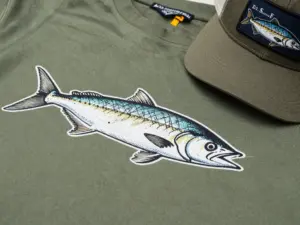
By late 2026, vintage-style fishing shirts had also expanded into a graphic tee subcategory with retro lure badges, state fish illustrations, and dad-gift slogans on soft-washed cotton. These are distinct from the original camp-collar rayon shirts but serve the same visual function in a more casual outfit. If you are building toward a strict vintage look, the construction-dated originals are the right choice. If the goal is a relaxed daily-wear aesthetic, a quality retro graphic tee on a classic boxy cut does the job without requiring research on stitch counts.
4. Weatherproof Outerwear With Maritime Roots
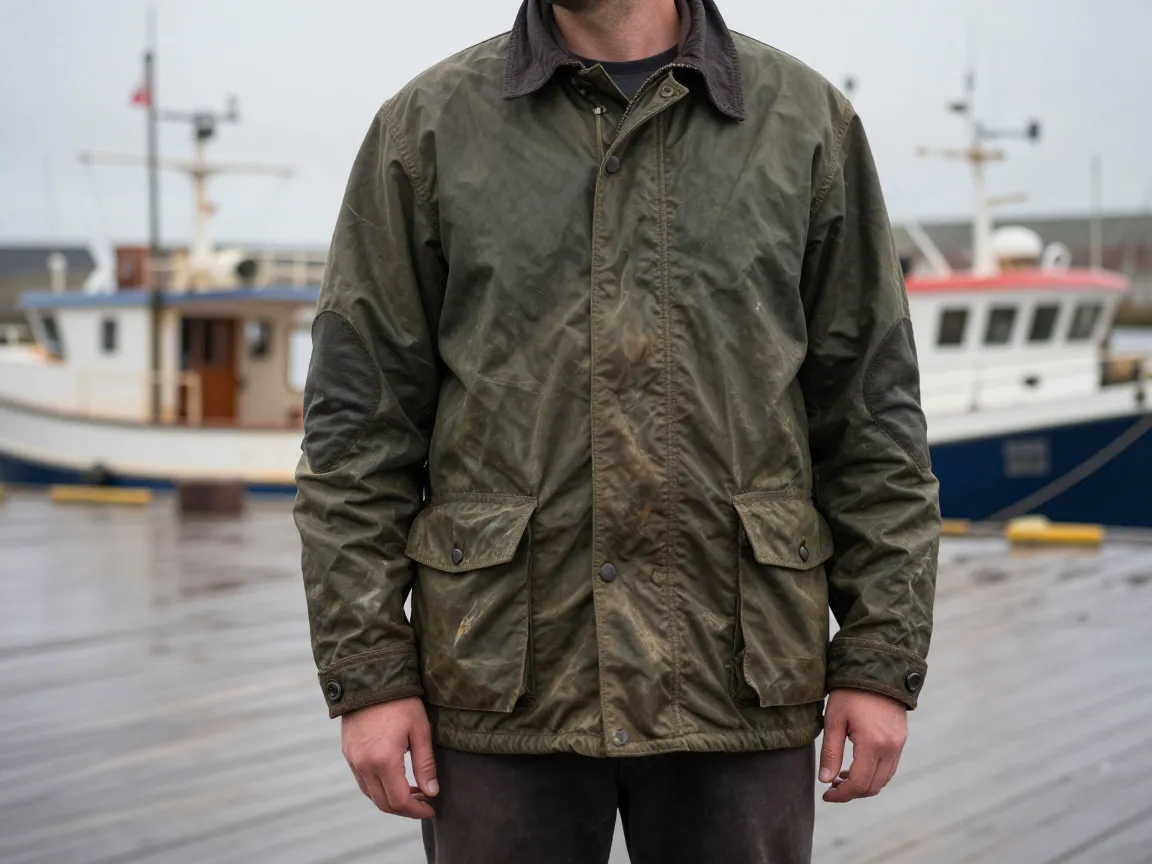
Classic angler clothing was always built around the assumption that weather would be bad. The waxed canvas jacket, the rubberized rain slicker, and the heavy canvas coat were standard gear for commercial and sport fishermen alike before synthetic weatherproofing existed. That functional history gives vintage outerwear a visual weight that modern technical shells do not carry, and several January and May 2025 fashion guides pointed directly to this category as a core pillar of the fisherman aesthetic.
Waxed cotton jackets in olive or brown, with storm collars, bellows pockets, and boxy maritime cuts, are the most versatile option here. British brands like Barbour popularized this construction for field sports in the mid-20th century, but American commercial fishing produced its own lineage of rubberized and oilskin coats that are distinct in silhouette and weight. Grundéns bibs, which are the yellow rubberized overalls associated with North Atlantic commercial fishing, appear repeatedly on fisherman aesthetic mood boards and in reporting from May 2025 that identified the trend as a top global fashion moment. The Grundéns bib is not everyday wear, but it anchors the visual reference point for why maritime outerwear reads as authentic.
For practical purposes, a heavyweight canvas or waxed cotton coat from a heritage outerwear brand, found through vintage resale, covers both the aesthetic and the weather. Look for original wax coating that has not been stripped by dry cleaning, reinforced elbows, and storm cuffs that can be cinched. These jackets are durable enough to function in real outdoor conditions while reading as vintage angler at a glance. That dual-use quality is what has kept them central to every iteration of fisherman-inspired style from the 1970s through the present.
5. Classic Boat Shoes and Utility Sandals
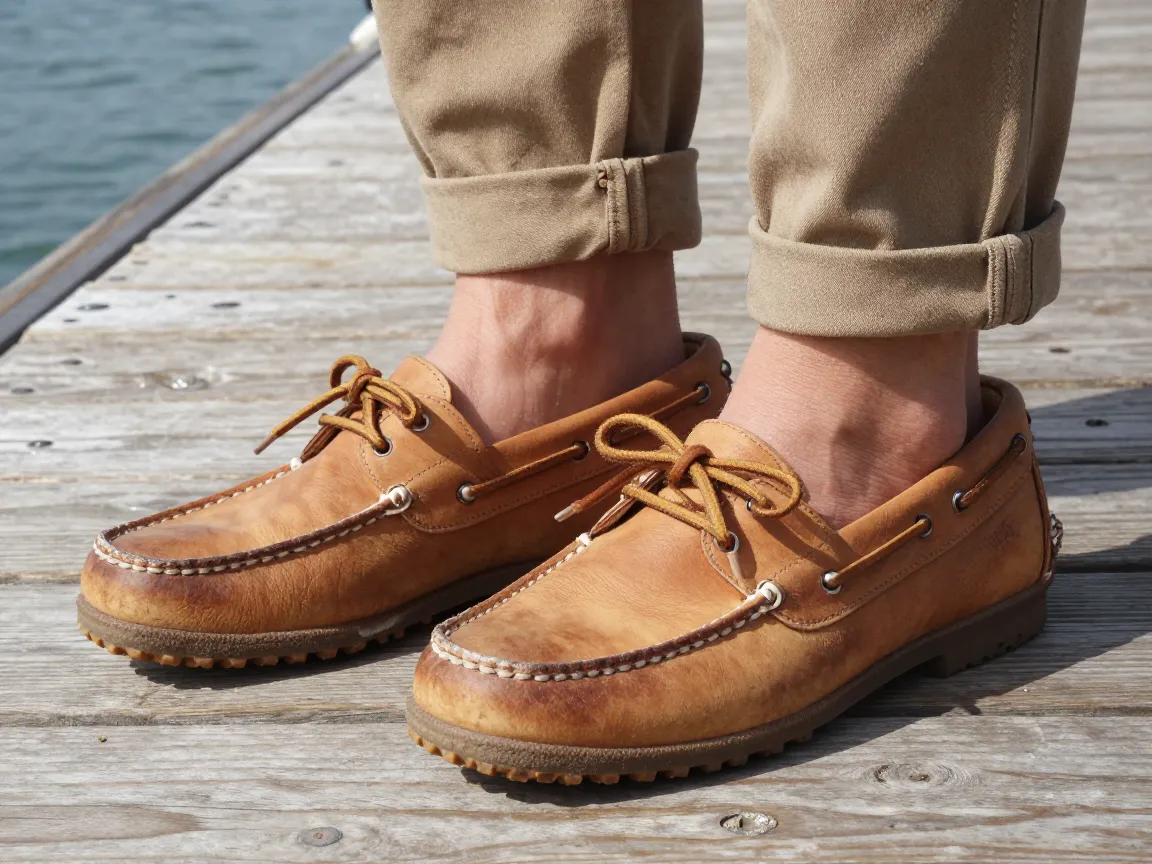
Footwear anchors an outfit in a specific time and context more immediately than most other clothing categories. For vintage angler style, two types of shoes do that work. Boat shoes and rugged adjustable sandals both have direct functional roots in dock and fishing contexts, and both have been specifically called out in 2025 style guides as the right footwear choices for a fisherman aesthetic outfit.
The Sperry Authentic Original is the most recognizable example in the boat shoe category. Paul Sperry developed the original design in 1935 after watching his cocker spaniel run on ice and studying the paw’s traction structure. The resulting siped rubber sole and hand-sewn moccasin construction became standard gear on sailboats and fishing docks throughout the mid-20th century. Vintage examples from the 1970s and 1980s have thicker leather upper panels than current production versions and a different sole compound that develops a more textured look over time. They are findable on resale platforms and worth seeking out if the goal is period accuracy.
The sandal category operates differently. Adjustable strappy sandals with heavy footbeds, comparable to Birkenstock or Suicoke designs, fill the same visual role that deck sandals and wading sandals played in mid-century angling culture. Good Housekeeping’s spring 2025 guide and the Lemontrend fisherman aesthetic piece both recommended this type of sandal as a natural complement to the fisherman look, specifically because they read as functional rather than decorative. In an outfit built around utilitarian clothing, a shoe that looks like it has a purpose reinforces the overall visual logic. That is a more useful framing than “wear boat shoes because they’re trending.” They fit because the whole wardrobe category was built around the idea of being ready to move.
6. The Fishing Graphic Tee and Retro Fleece Sweatshirt
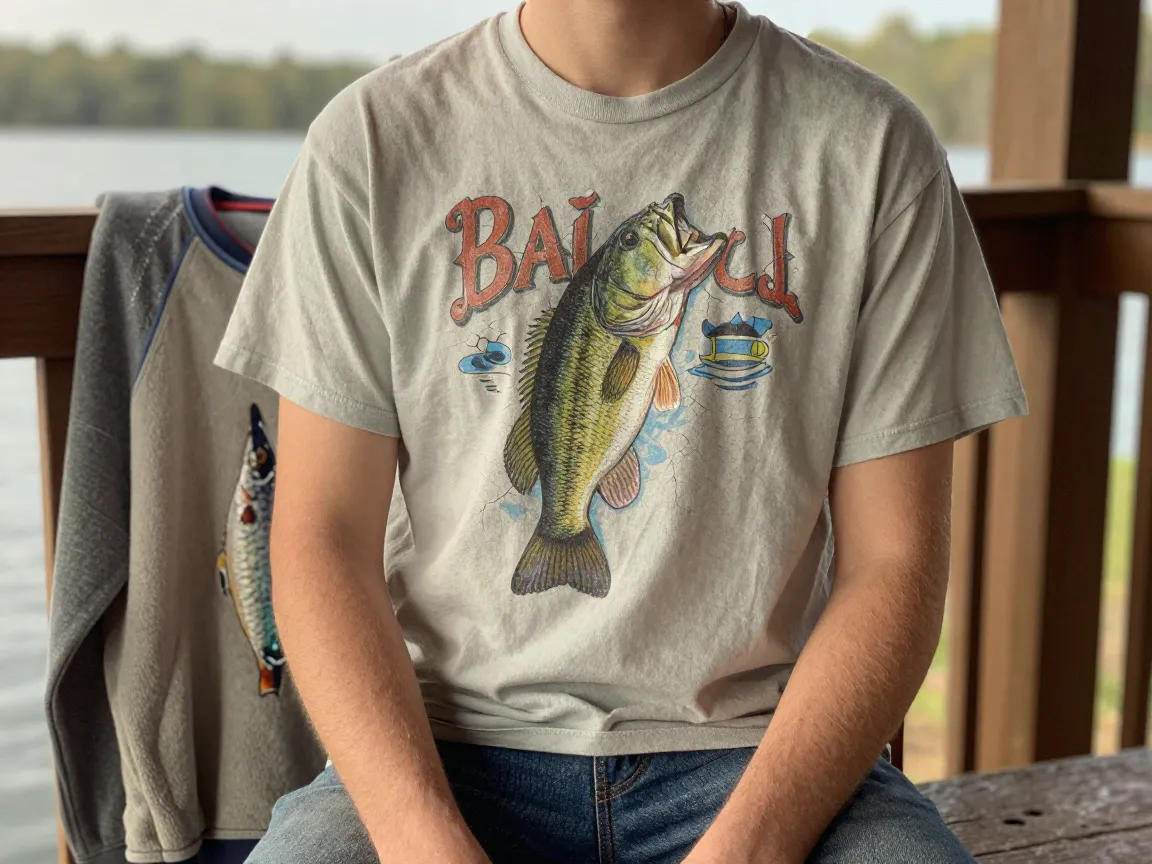
The last category in this set of classic angler picks is the most recent in origin but the most accessible in practice. Vintage graphic tees from the 1980s and 1990s featuring regional fishing tournaments, hand-drawn bass illustrations, state fish silhouettes, and fishing-club event text are legitimate collectibles. Etsy’s vintage fishing wear category has active listings for 1990s smallmouth-bass graphic tees, and these shirts carry the same nostalgic authority as vintage band tees or sports team shirts from the same era.
The aesthetic has also expanded into a “fisherman grandpa” subcategory that became recognizable on Pinterest through 2025. Sardine-themed fleece sweatshirts, faded fishing-brand crew necks, and soft-style graphic tops with retro lure badges now occupy their own corner of vintage angler dressing, sitting alongside more formal pieces like cable-knit sweaters and fly-fishing vests. This is the entry point for the aesthetic. A faded graphic fishing tee costs less than a vintage Aran sweater, requires no sourcing expertise, and communicates the same set of cultural references.
What separates a graphic tee that works from one that does not is print quality and shirt construction. Screen-printed originals from the 1980s and early 1990s have a cracked, faded ink texture that cannot be convincingly reproduced by modern distressing techniques on a close inspection. The shirt itself should be a heavier boxy cut, not a modern slim-fit blank, because the silhouette is part of the signal. For the sweatshirt version, raglan seams and a slightly oversized body read as vintage without trying, while fitted crew-neck blanks read as new regardless of the graphic printed on them. Get the shell right, and the print carries the rest.
Conclusion
The six pieces covered here, the cable-knit sweater, the fly-fishing vest, the golden-age sport shirt, maritime outerwear, dock-appropriate footwear, and the graphic tee, each have direct functional roots in real angling history. That is what makes them hold up visually where purely trend-driven pieces do not. The next useful step is to pick one entry point based on what you already own. If your wardrobe runs casual, start with a vintage graphic tee or a waxed canvas jacket. If you dress in a more considered way, the cable-knit sweater or a genuine 1960s fly-fishing vest gives you something with real age and construction quality behind it. Build from one piece outward rather than trying to assemble all six at once.