Fishing Outfit for Ladies That Blends Comfort and Style
Women make up roughly one-third of all recreational anglers in the United States, yet for years the fishing apparel market treated them as an afterthought, shrinking men’s designs, keeping the same boxy cuts, and calling it a day. That gap has closed fast. The 6 fishing outfit for ladies that blends comfort and style covered in this guide reflect a real shift: major outdoor brands and specialist women’s fishing labels now build dedicated collections around women’s proportions, sun protection science, and the practical reality of spending six hours on the water in changing conditions. The result is gear that photographs well, performs technically, and does not leave you roasting by noon or soaked by a rogue wave.
Disclosure: This post contains affiliate links. As an Amazon Associate, we earn from qualifying purchases, and at no extra cost to you.
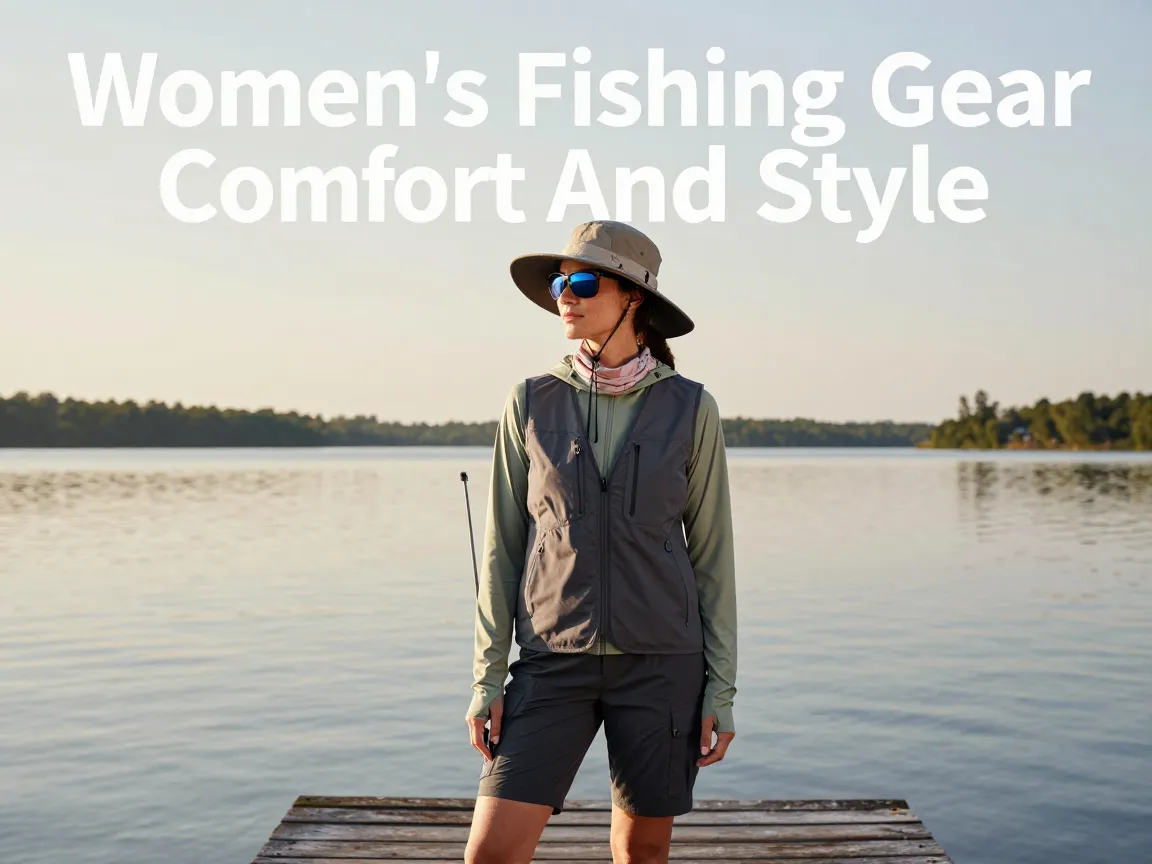
Each outfit here is built around a problem you actually face on the water, UV exposure, restricted casting motion, rain squalls, cold mornings that become warm afternoons. The goal is not fashion for its own sake. It is clothing that handles the job and still looks deliberate when you step off the boat.
1. The UPF Sun Hoodie and Quick-Dry Shorts Combination
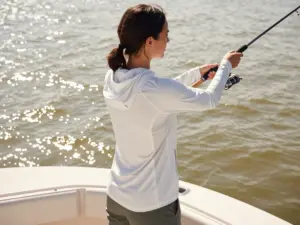
Sun exposure is the most consistent threat on the water, and a UPF 50+ hooded shirt is the single most practical piece any woman angler can own. UPF 50+ is the highest ultraviolet protection rating available in fabric, blocking over 98 percent of UV radiation. Modern versions combine that protection with sweat-wicking construction, mesh ventilation panels under the arms, thumbholes that keep sleeves in place during a cast, and removable neck gaiters, so you get coverage from scalp to wrist without wearing a stiff, heavy fabric that traps heat.
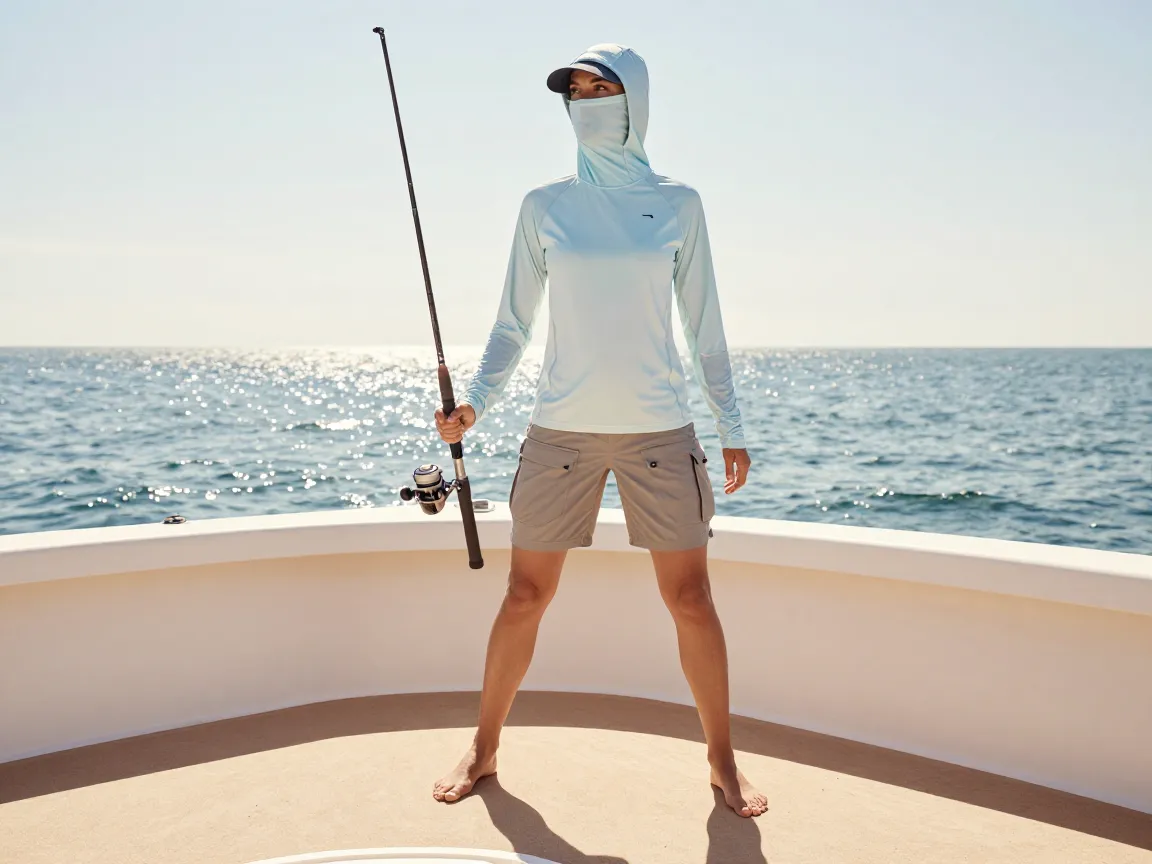
Pair that hoodie with quick-dry fishing shorts that include tool loops and at least three accessible pockets. Women’s dock shorts built specifically for fishing feature UPF 50+ in the fabric itself, so even when you roll up your sleeves or the hoodie rides up, your legs stay protected. The quick-dry construction matters more than it sounds: a wave over the gunwale, a wading misstep, or even sweat on a humid July afternoon will soak cotton shorts and keep them damp for hours. Technical fabrics dry in under thirty minutes in most conditions.
This combination works from kayak fishing to offshore charters because it scales. On a calm, warm day the hoodie hood stays down and the outfit reads as relaxed beachwear. When the sun climbs and wind picks up, the hood goes up, the neck gaiter deploys, and you are fully protected without changing clothes. The cuts available in 2026 from brands building women-specific lines favor a fitted but not tight silhouette, close enough to prevent fabric catching on rods or tackle, loose enough to cast freely.
2. The Three-Layer System for Variable Conditions
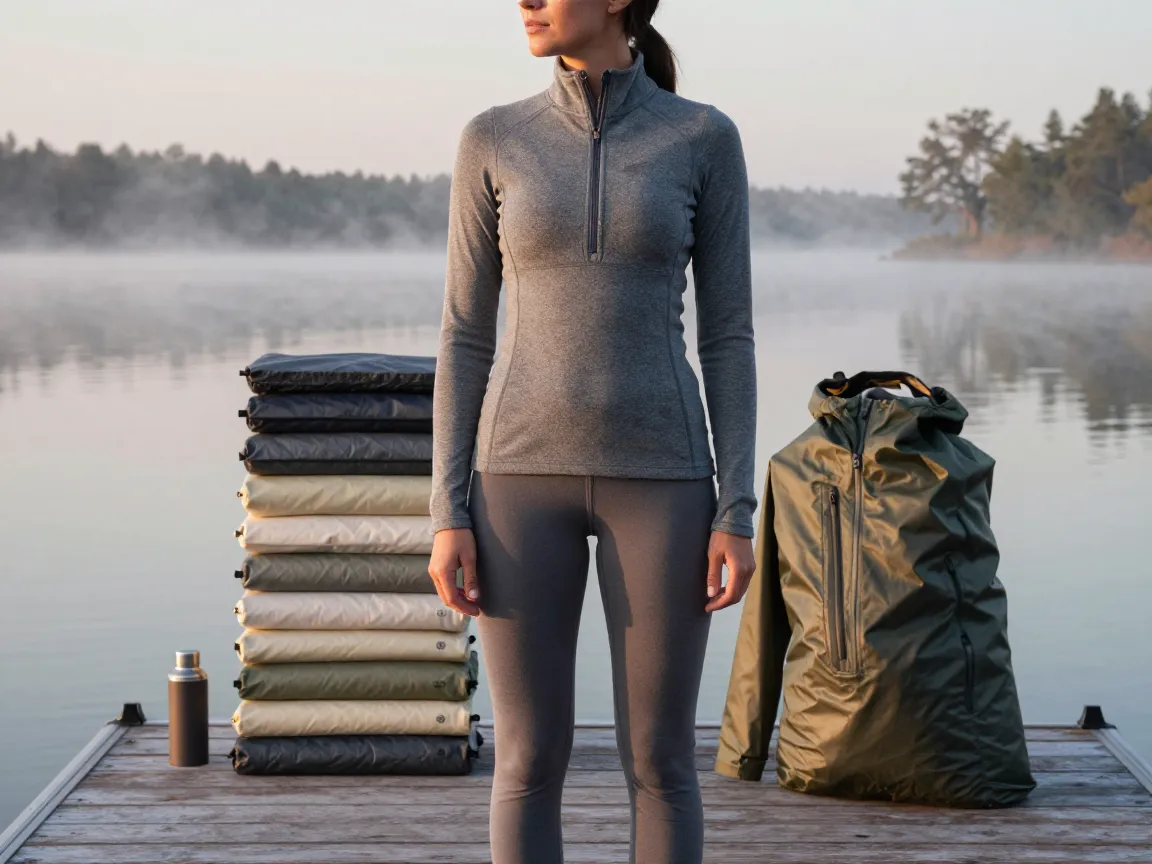
A single-layer outfit works on a stable summer day. It fails the moment a cold front moves through or you leave at 5 a.m. for a full-day trip. The three-layer system, base layer, mid layer, outer shell, is the standard framework guides and apparel specialists recommend for good reason: each layer has a specific job, and you can add or remove pieces as conditions change without being stuck in one temperature-inappropriate outfit all day.
The base layer sits directly on skin and manages moisture. For women, fit matters here more than anywhere else in the system. A base layer cut for a man’s torso will bunch under a jacket, ride up during a cast, and compress oddly under waders. Women-specific base layers are proportioned for a narrower shoulder, defined waist, and longer torso, which means they lie flat, stay put, and do not create pressure points. Soft, moisture-wicking fabrics like polyester blends or merino wool keep sweat away from skin, which is what prevents that clammy cold feeling when you stop moving.
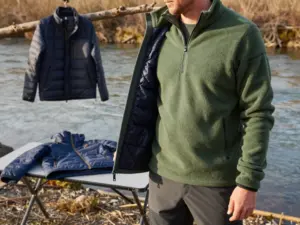
The mid layer, a fleece quarter-zip or lightweight insulated vest, provides warmth without bulk. A vest is particularly useful for fishing because it keeps your core warm while leaving your arms completely free for casting. Over that goes the outer shell: a waterproof, breathable jacket with a membrane that blocks rain and wind but allows sweat vapor to escape. Anglers who fish year-round consistently prioritize this membrane quality above all other jacket features, because a jacket that traps moisture defeats the purpose entirely. Packable versions compress to fist size and stow in a dry bag or tackle bag when you do not need them.
The style payoff of a layered system is that each piece can be worn independently. The fleece vest looks polished over a collared base layer for a morning coffee stop. The shell jacket, in a fitted women’s cut, reads as a sharp rain jacket in town.
3. Cargo Capris or Stretchy Leggings for Lower-Body Freedom
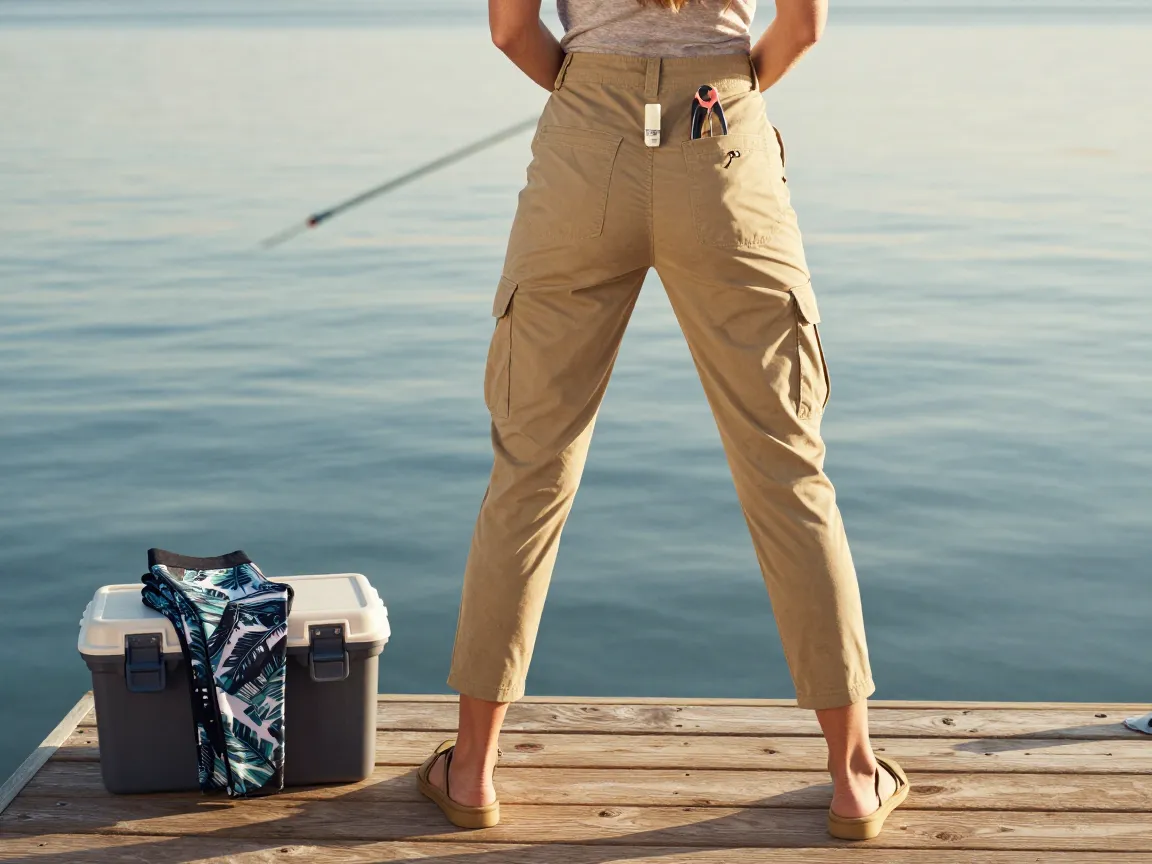
Casting a rod and fighting a fish both require full hip-to-ankle range of motion. Tight jeans, stiff chinos, and anything with a rigid waistband fight you on every movement. Cargo capris and performance leggings solve this in different weather windows.
In warm weather, cargo capris with a stretchy waistband hit the sweet spot. The capri length keeps legs cooler than full pants while still protecting shins from low-angle sun and dock debris. The cargo construction gives you actual pockets, not the decorative 2-inch slits found on regular women’s pants, but deep side pockets that hold a compact tackle box, lip balm, a fish grip, and your phone without shifting or flopping around. Stain-resistant fabric finishes also appear on most technical capris now, which matters when you are handling bait, flies, or fish slime all day.
In cooler conditions, performance leggings or fishing joggers made from stretch fabric layer cleanly under waterproof waders or rain pants without bunching. They are warm enough on their own for mild autumn mornings and thin enough not to overheat under a shell. The key spec to look for is four-way stretch, it means the fabric moves with you in every direction, not just along one axis.
Printed performance leggings from specialist women’s fishing brands occupy an interesting middle ground: they are built with the same technical fabric as plain-black fishing leggings, but graphic patterns and color make them look like athleisure. That crossover matters for women who fish but also want clothing that works for a waterfront lunch or a drive home. The outfit does not announce itself as fishing gear when you do not want it to.
4. The Technical Fishing Vest for Pockets and Polish
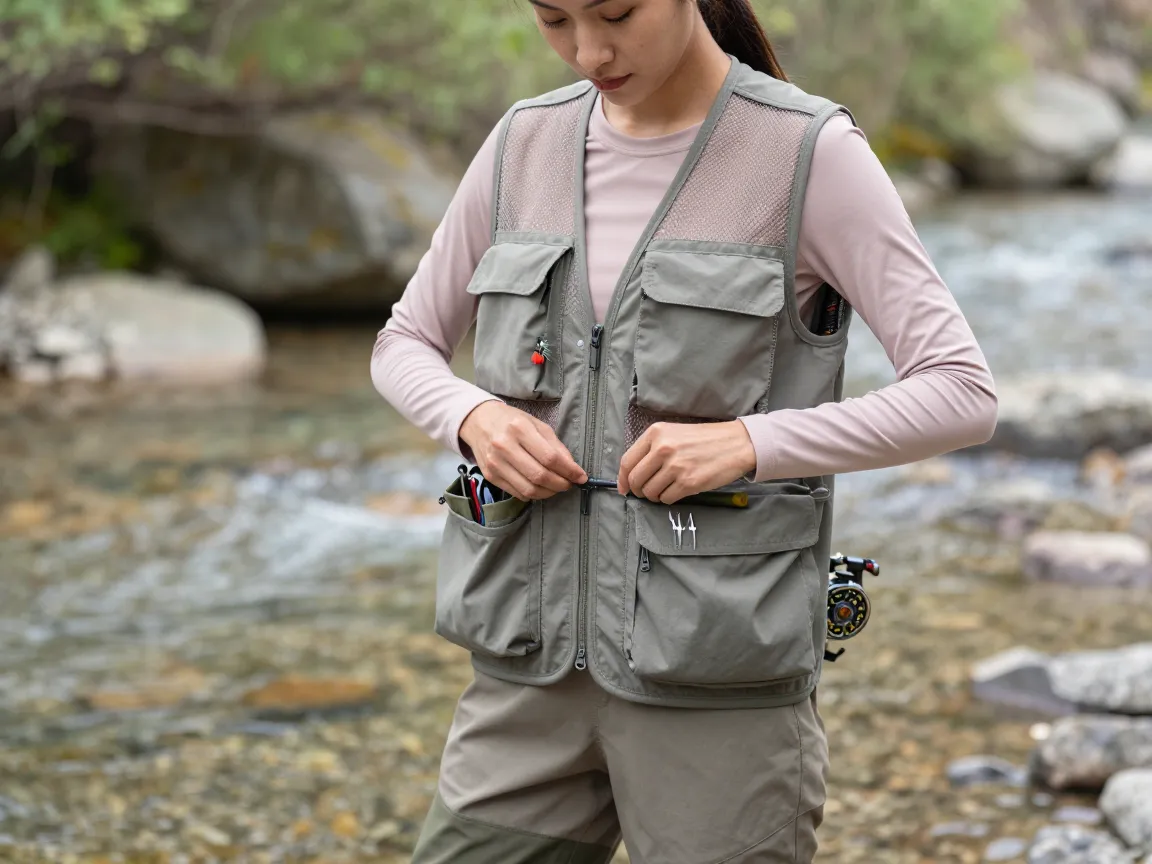
A fishing vest worn over a base layer or sun hoodie is one of the most functional pieces in a women’s angler’s kit, and one of the most underused. The historical version was a tan or olive men’s vest with forty mismatched pockets and no waist shaping. What brands are building now for women is different: tailored to the female torso, cut shorter at the hem, with organized pockets sized for fly boxes, tippet spools, forceps, and a compact reel rather than for items only relevant to men’s gear.
The functional logic is straightforward. Every item you carry on a vest is accessible with one hand. You do not dig through a bag. You do not set your rod down and lose it overboard. Pockets with zippers keep critical items secure when you lean over the gunwale. Mesh back panels on warmer-weather vests allow airflow that a closed-back jacket cannot provide.
Style-wise, a fitted women’s vest in a neutral (slate, olive, dusty rose) worn over a slim long-sleeve sun shirt creates a layered, intentional look that works equally well for fly fishing a mountain stream or pier fishing with friends. The silhouette has enough structure to look put-together in photos, which matters for women who fish and want their gear to reflect the seriousness they bring to the sport. Gear loops positioned at the chest and waist keep tools visible and accessible without cluttering the look.
A practical note: when trying vests, check that the armhole depth allows a full casting range. Some unisex vests cut the armhole too high and restrict the shoulder at the top of a backcast. Women-specific cuts account for this.
5. Waterproof Footwear That Handles the Terrain
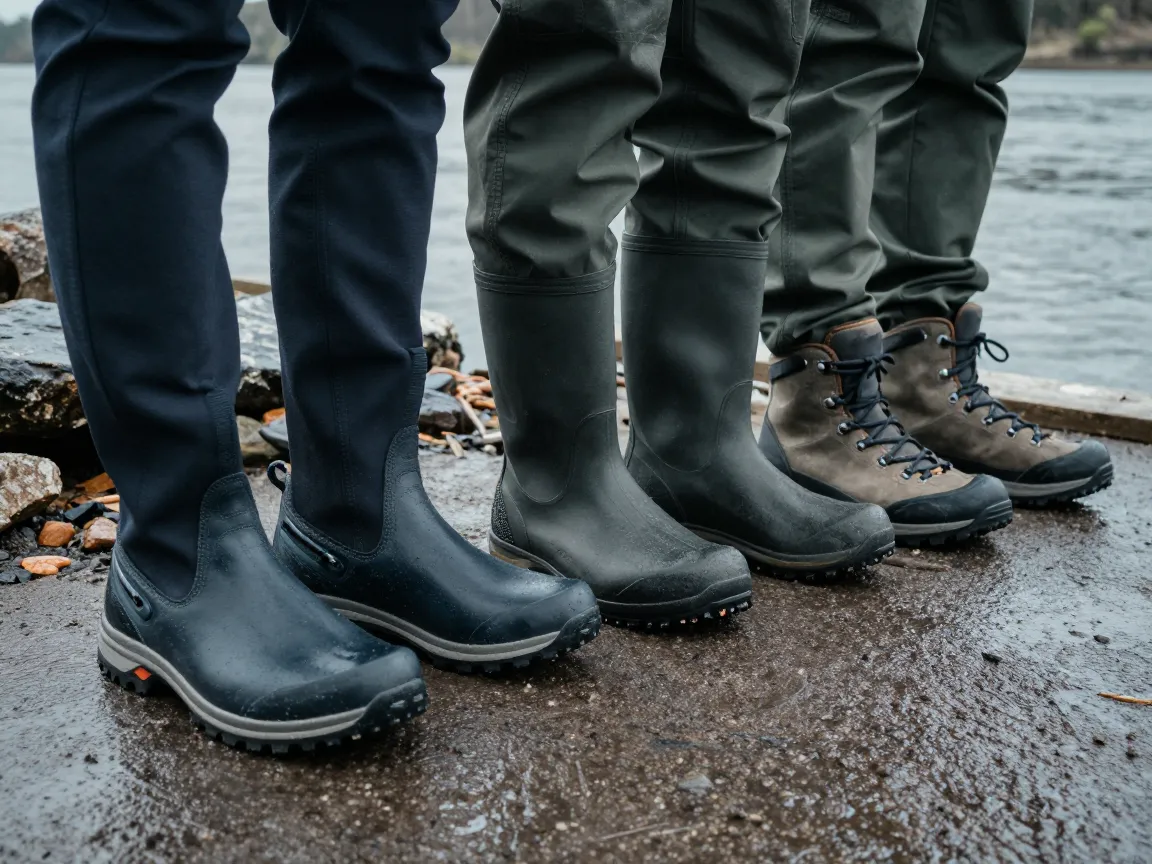
Footwear is the piece of a fishing outfit most likely to end a day early. The wrong shoes mean wet socks, blisters, slipping on algae-covered rocks, or cramped toes after four hours of wading. The right footwear keeps you comfortable for a full day and stable on whatever surface the fishing location throws at you.
For boat fishing and dock fishing, closed-toe water shoes or technical boat shoes with non-marking rubber soles and drainage ports are the standard. The drainage port design, small holes near the sole, means water that enters the shoe during a wet boarding or a splash exits quickly instead of sitting against your skin. Neoprene uppers add warmth in cooler weather. Several brands now produce these in women-specific widths and lengths with color options that do not sacrifice technical performance for style.
For wading, river fishing, flats fishing, or any situation where you walk through water, wading boots paired with neoprene or breathable waders are the correct choice. Felt soles grip better on smooth river rock. Rubber studded soles work better in muddy or sandy conditions and are required at many fisheries where felt is prohibited to prevent invasive species transfer. Women’s waders have improved significantly in fit: proportioned at the chest, hip, and thigh for a female body rather than cinched-down men’s waders, which previously made wading uncomfortable and even dangerous if the fabric restricted a stride.
For shore fishing and pier fishing where you stay mostly dry, waterproof hiking boots or trail shoes provide ankle support, grip, and weather resistance. These look practical rather than purely technical, many cross into casual wear without looking out of place.
6. Accessories That Complete the Outfit Without Cluttering It
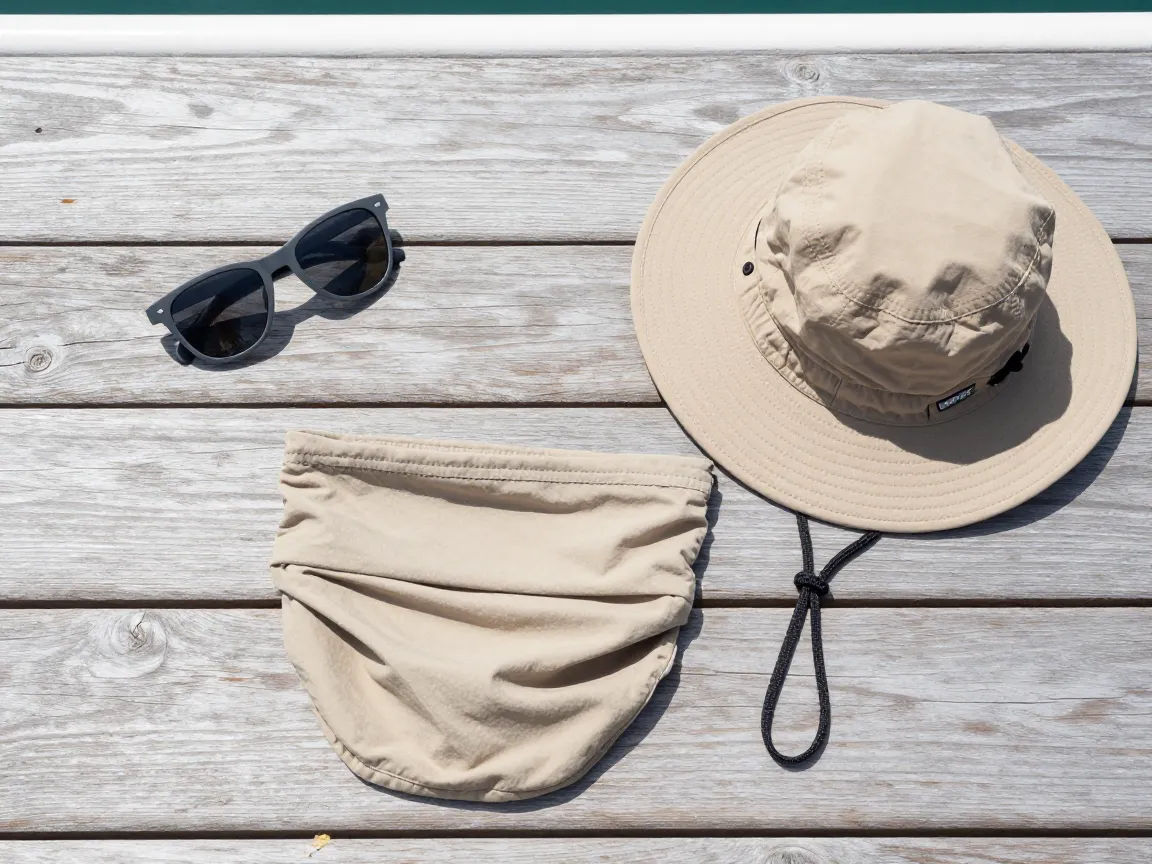
The right accessories do specific functional work and happen to sharpen the overall look. The wrong ones create drag, annoyance, or danger on the water. Three accessories are genuinely worth building into a fishing outfit: polarized sunglasses, a wide-brim performance hat, and a lightweight neck gaiter or buff.
Polarized lenses are not a style preference, they cut the glare off the water surface that otherwise makes it impossible to see fish, structure, or depth changes. Gray or brown lenses work best in bright conditions; amber or yellow lenses improve contrast in low light or overcast skies. Wraparound frames provide more coverage and stay on during a backcast. Floating straps keep them recoverable if a wave knocks them off.
A wide-brim performance hat, specifically one with UPF-rated fabric and a chin strap, protects the face, ears, and back of the neck in ways a baseball cap cannot. The chin strap is not optional on a boat; a 20-mph headwind will send a brimmed hat overboard within the first hour if it is not secured. Crushable styles pack flat and do not lose their shape in a dry bag.
The neck gaiter or buff is a tube of stretchy, UPF-rated fabric that pulls over the neck and lower face when sun angle or wind makes protection necessary. It weighs almost nothing, packs flat in a pocket, and can double as a wristband or hair tie. Models with moisture-wicking fabric are more comfortable for extended wear than those made from thicker fleece.
Together these three accessories unify a fishing outfit visually, matching or complementary tones in hat, sunglasses frame, and gaiter give a finished, coordinated appearance, while doing real protective work that makes hours on the water more sustainable.
Conclusion
Assembling 6 fishing outfit for ladies that blends comfort and style comes down to prioritizing fabrics and fits that solve real on-water problems: UV exposure, moisture, restricted movement, and changing conditions. Every item covered here has a technical job to do, and when each piece fits a woman’s body correctly, the outfit works as a system rather than a collection of compromises.
The single most useful next step is to identify where your current fishing wardrobe falls short. If you overheat by mid-morning, a UPF sun hoodie with mesh ventilation addresses that directly. If your lower body restricts your cast, stretchy cargo capris or performance leggings are the fix. Start with the problem and build from there.