Ice Fishing Photography: Mastering the Art of Shooting on Frozen Waters
Fewer than 15% of ice anglers who carry a camera return home with an image worth printing. The gap between a forgettable snapshot and a compelling frozen-water photograph is not equipment, it’s understanding how cold, flat, white environments behave in front of a lens.
Disclosure: This post contains affiliate links. As an Amazon Associate, we earn from qualifying purchases, and at no extra cost to you.
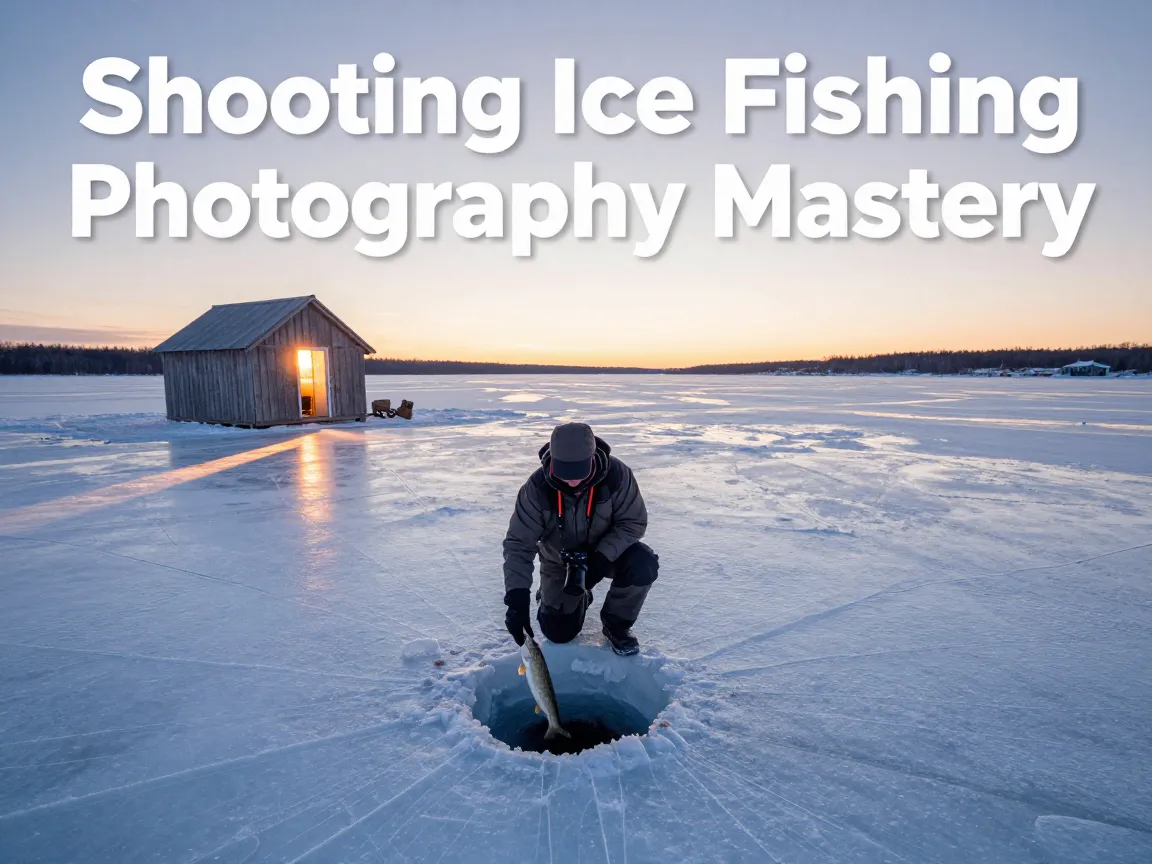
Ice Fishing Photography: Mastering the Art of Shooting on Frozen Waters covers every variable that matters: light, timing, gear protection, composition, and the evolving visual styles shaping editorial and stock markets in 2026. Whether you’re shooting a weekend outing on Flathead Lake or a fish house community on Lake of the Woods, the principles here apply directly.
Key Takeaways
- Camera condensation from moving between heated shelters and open ice is the top technical hazard; allow about one hour of acclimation time before shooting.
- Photograph fish immediately at the hole, before color fades on ice, and keep the sun at your back to avoid blown-out highlights on snow.
- Low sun angles in winter produce soft, flattering light, early morning on the ice is an asset, not a hardship.
- Drone-style aerial views, abstract ice textures, and intimate interior shelter scenes are the dominant compositional trends in 2026 editorial and stock work.
- Modern weather-sealed smartphones and compact mirrorless bodies handle close-range ice fishing storytelling as well as full-size DSLRs.
Six Core Principles for Ice Fishing Photography: Mastering the Art of Shooting on Frozen Waters
Mastering frozen-water photography means working with a small set of repeatable principles rather than reacting to conditions you didn’t anticipate. Each principle below is drawn from documented editorial practice, agency stock trends, and conservation photography programs active through winter 2026.
1. Manage Camera Condensation Before You Shoot
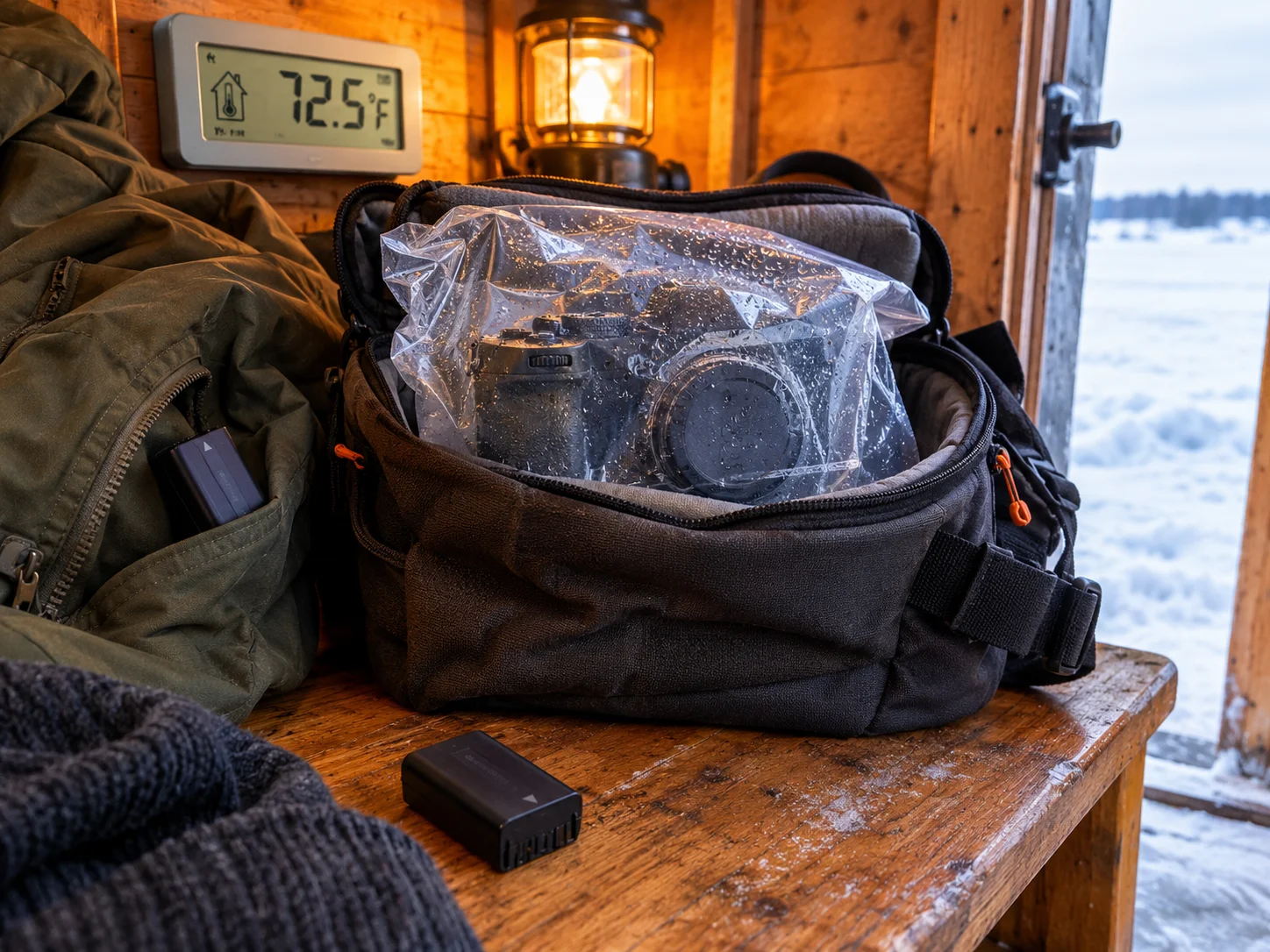
Moving a cold camera body from a 60°F fish house into sub-zero outside air, or the reverse, creates condensation inside the lens and on the sensor. This is the most common technical failure in ice fishing photography and one of the easiest to prevent.
The fix is time: allow your camera to acclimate for roughly one hour before shooting when transitioning between warm and cold environments. Keep the camera sealed in a bag during the transition so moisture condenses on the bag, not the optics. If you’re shooting inside a heated shelter and then stepping onto open ice, give the body time to cool before removing the lens cap. Skipping this step costs you usable images.
Batteries also discharge faster in cold. Carry two batteries minimum, keep spares inside your jacket against your body, and rotate them every 30 to 45 minutes in temperatures below 10°F.
2. Use Natural Light and Low Sun Angles as an Advantage
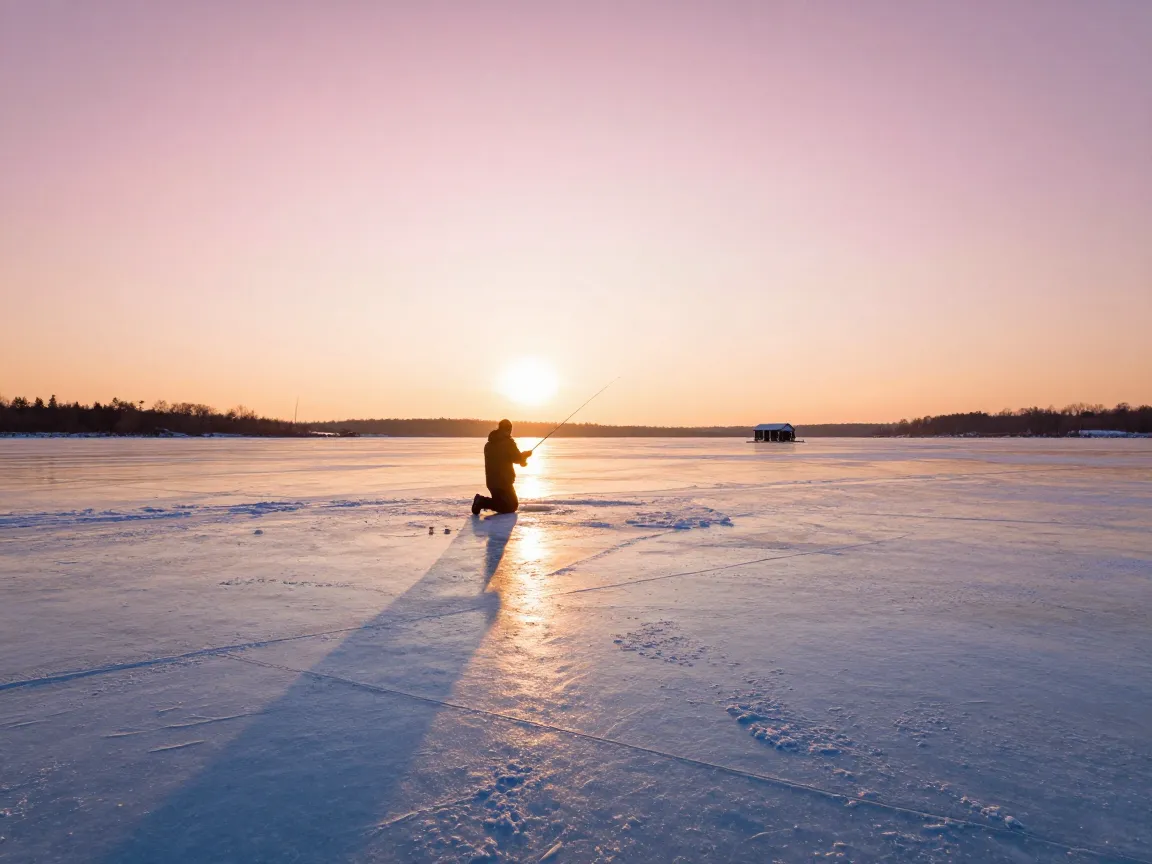
Winter light is not a limitation. At ice fishing latitudes, the sun stays low even at midday, which means soft, directional light lasts for hours rather than the narrow golden-hour window you get in summer. Early morning on a frozen lake produces long shadows across ridged ice, pastel skies, and warm tones on snow that contrast sharply with the blue-grey of pressure cracks.
A fly-fishing photography guide noted that winter in northern climates brings “soft, flattering light and dramatic skies”, advice that translates directly to open ice. The lesson is not to treat winter as a photographic compromise. Treat it as an extended golden hour.
Face your subject toward the sun and position yourself with the sun at your back. This keeps natural color in both the angler’s face and any fish at the hole, and prevents the blown-out white highlights that ruin snow-and-ice scenes when the light source is behind your subject.
3. Photograph Fish at the Hole, Not Minutes Later
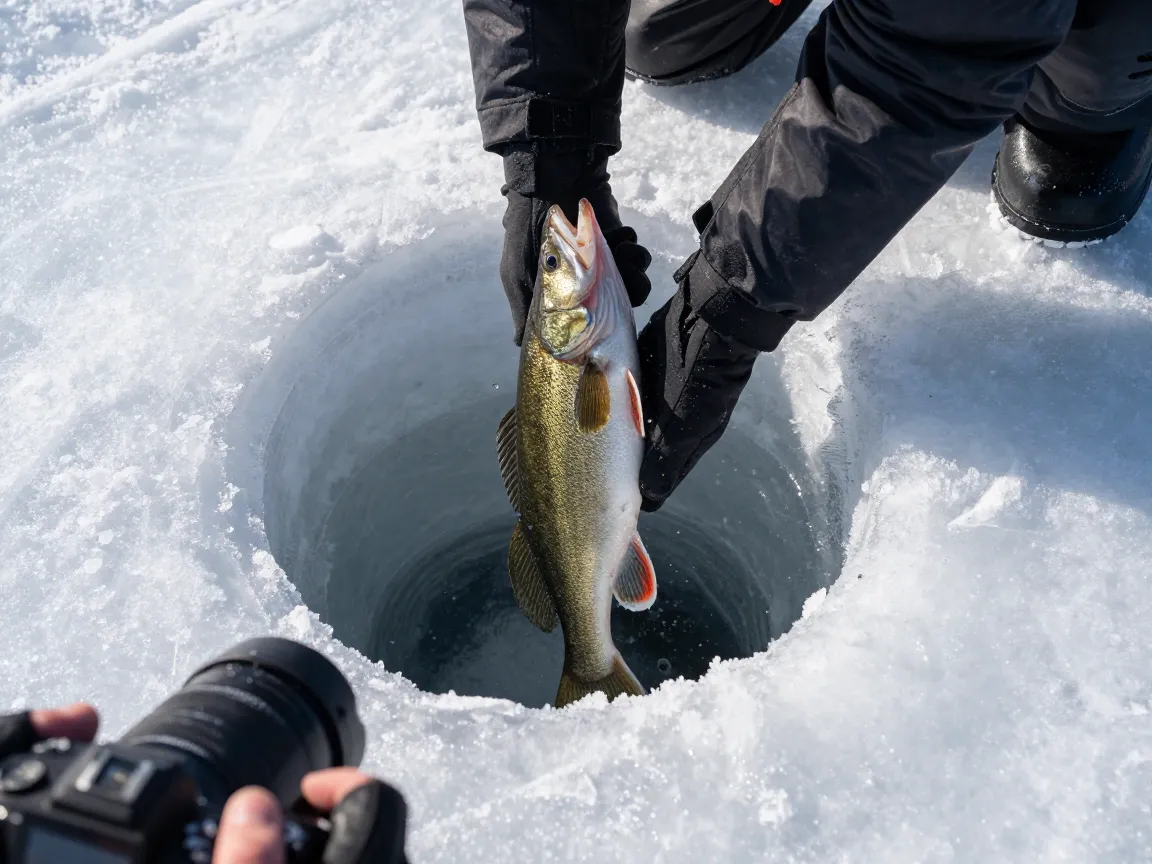
NOAA’s “Catch and Click” program states this plainly: photograph fish immediately upon landing, before they lose color on ice. Walleye, perch, and northern pike show vivid patterning for roughly the first 30 to 60 seconds out of water. That window closes fast in cold air.
Set your exposure before the fish comes up. Cold-white backgrounds blow out easily, so dial in a negative exposure compensation of -1/3 to -2/3 stop if you’re shooting in bright conditions. Have someone else handle the fish so you can focus on the shot rather than juggling both. The goal is a sharp, well-lit image at the moment of the catch, not a grip-and-grin taken after the action has passed.
4. Apply the Rule of Thirds to Flat, Featureless Ice
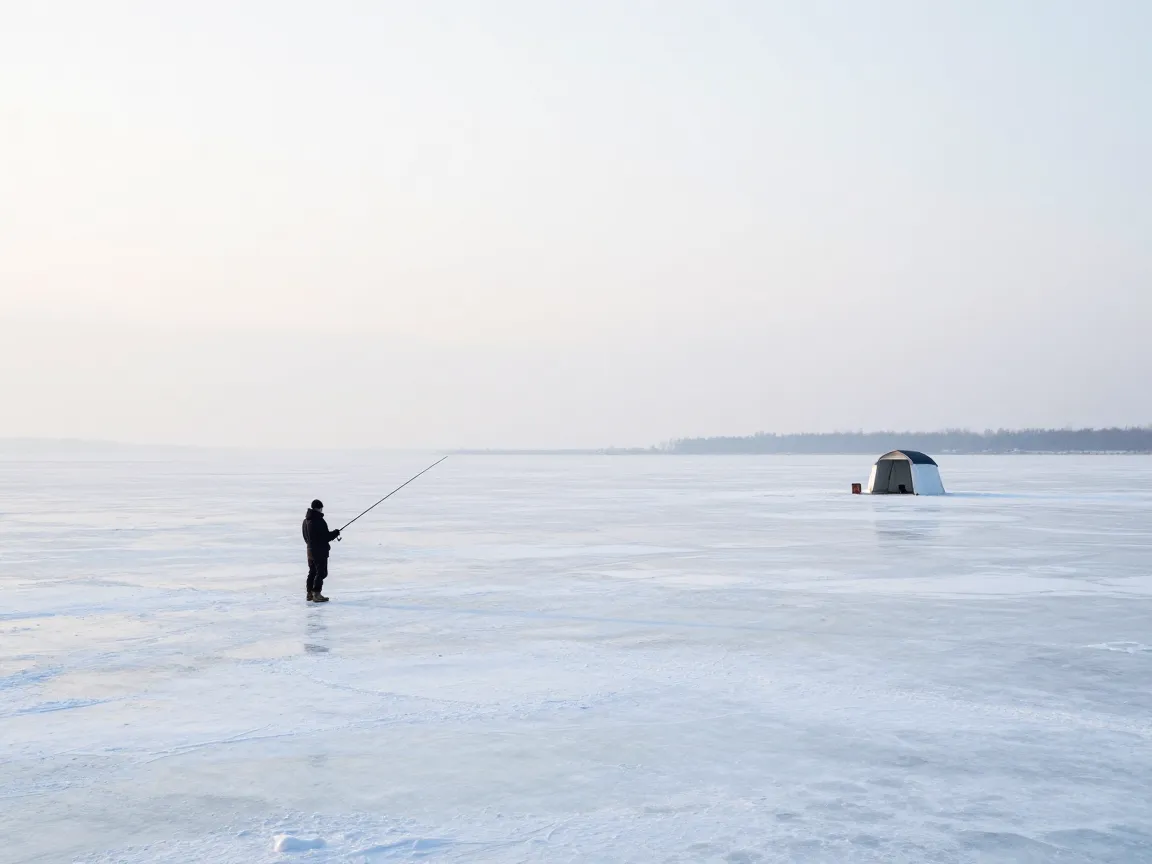
A frozen lake offers almost no natural foreground variation, which makes composition harder than it looks. The rule of thirds is the most direct solution: place the horizon on the upper or lower third of the frame rather than through the center, and position your main subject, an angler, an auger, a shelter, on a vertical third line.
This creates visual tension and depth in scenes that would otherwise feel static. When you have both a subject and a shelter in the frame, let the shelter recede toward a corner while the angler occupies a foreground third. The empty ice between them does real compositional work.
The Minnesota Department of Natural Resources’ Minnesota Conservation Volunteer published a photo essay by Mitch Kezar in late 2025 that demonstrates this principle throughout its interior fish house scenes: Kezar consistently anchored human subjects off-center, letting the warm ambient light of the shelter fill the remaining frame. The images feel inhabited rather than posed.
5. Shoot Macro Details and Abstract Perspectives
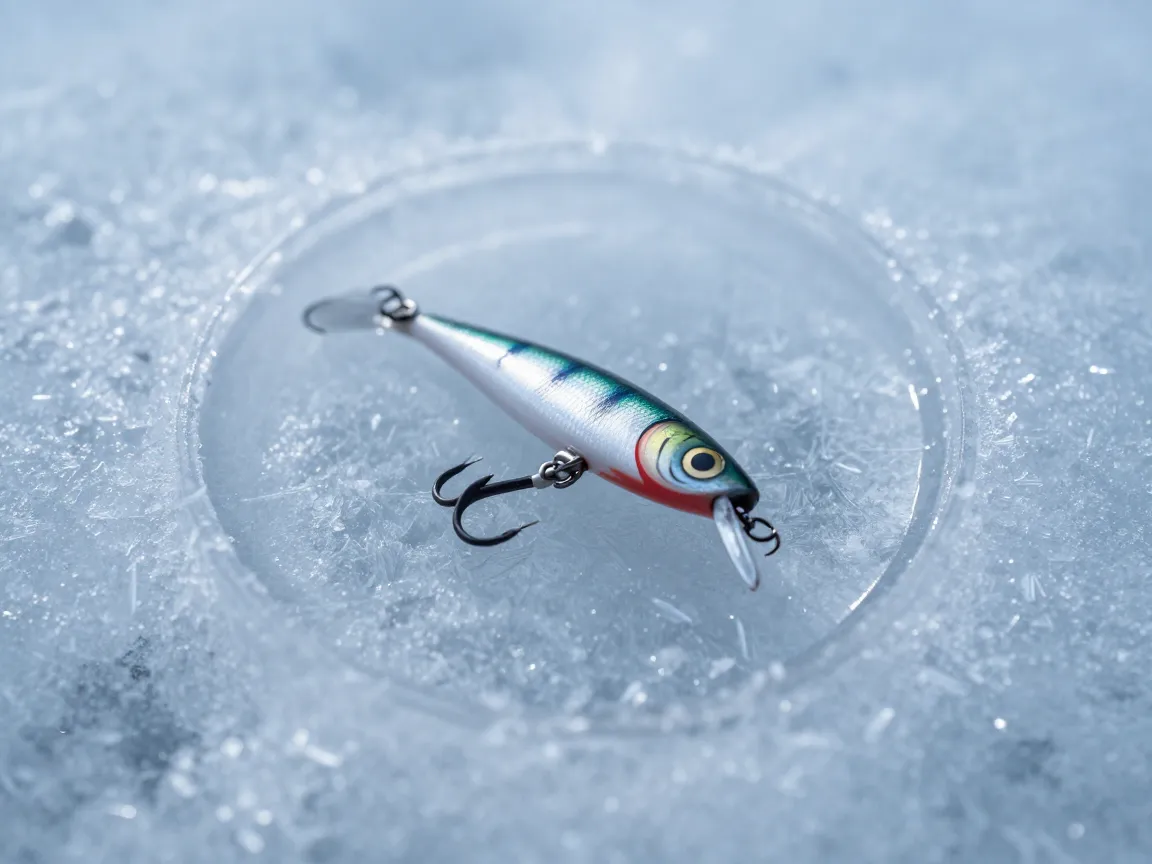
Close-up work on ice is underused. Rod guides crusted with ice crystals, the circular edge of a fresh auger hole, a lure resting on a glossy refrozen surface, these details read as storytelling elements that wider shots can’t provide.
Macro or close-focus shooting at f/5.6 to f/8 keeps the subject sharp while blurring the ice background into clean texture. If your lens doesn’t focus close enough, a simple macro extension tube or a close-up filter costs under $30 and fits any kit lens.
Abstract work has become a distinct category in 2026 stock and editorial photography. Photographer Erik Hoffner’s ongoing Ice Visions series documents the geometric patterns left by ice fishing communities, drag marks, refrozen cut holes, the radial cracking around an auger entry point, as gallery-quality graphic images. Stock agencies list aerial and top-down ice fishing compositions as among their faster-growing categories, with dedicated collections covering Canada, the Baltic states, and Scandinavia showing consistent demand for overhead and abstract views.
6. Choose the Right Gear for the Cold Environment
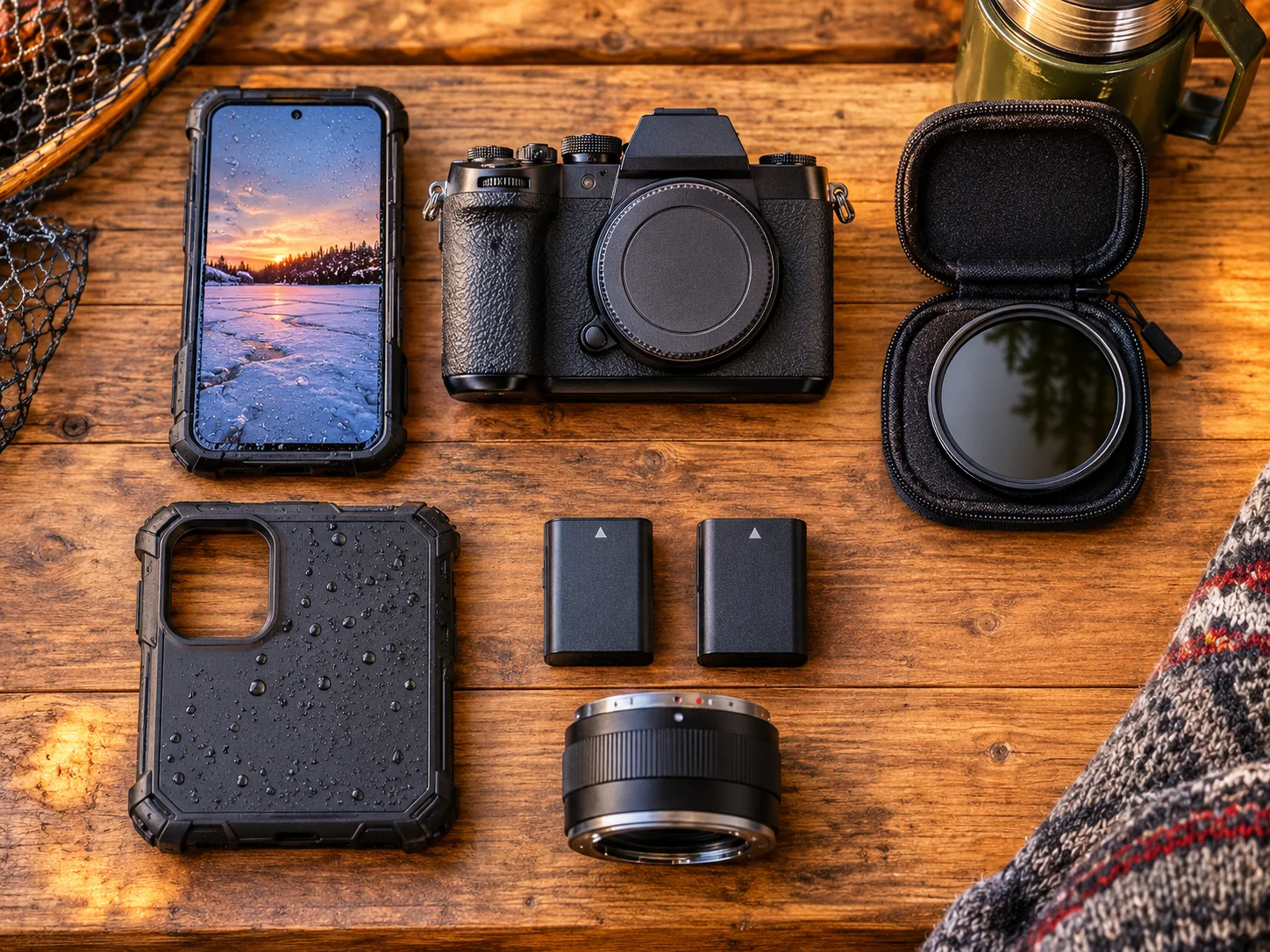
The camera debate for ice fishing photography is settled in 2026: a modern weather-sealed smartphone or a compact mirrorless body handles the work. Regional photo features from New Jersey, Cape Cod, and Montana in early 2026 consistently show photographers working at close range with lightweight equipment rather than telephoto setups from a distance.
| Camera Type | Best For | Key Limitation |
|---|---|---|
| Weather-sealed smartphone | Quick captures, interior shelter shots, sharing | Battery drains fast in cold |
| Compact mirrorless (e.g., Fujifilm X-S20) | Versatile, lightweight, weather-sealed options | Smaller battery capacity than DSLR |
| Full-frame DSLR | Low-light interior, editorial quality | Heavy, bulky on ice, condensation risk higher |
| Drone (Part 107 licensed) | Aerial patterns, shelter layouts, wide lake context | Cold reduces flight time; check local regulations |
Polarized filters reduce glare on wet ice near holes and improve color accuracy in overcast conditions. A circular polarizer costs under $50 for most filter sizes and is one of the highest-return accessories for frozen-water shooting.
Water-resistant cases for smartphones are sufficient for most conditions; full waterproof housings are only necessary if you’re shooting at the edge of open water or in heavy sleet.
Compositional Trends Shaping Ice Fishing Photography in 2026
The visual vocabulary of frozen-water photography has split into two distinct directions since 2024, and understanding both helps you produce work that finds an audience.
The first direction is documentary and narrative: anglers, shelters, fish, gear, and the social life of a fish house community. The Minnesota DNR’s Mitch Kezar work is a strong model here, interior scenes with family interaction and dogs, shot in available light, that function as environmental portraits rather than product shots. Regional outlets from Montana, New Jersey, and Cape Cod are actively commissioning this type of work in 2026, and stock libraries list over 12,769 ice fishing rod images and more than 2,200 Canada-specific ice fishing scenes, showing robust editorial demand.
The second direction is abstract and fine-art: the ice surface treated as a subject in its own right. Hoffner’s Ice Visions series represents the leading edge of this, turning auger holes and pressure ridges into graphic compositions that have more in common with aerial landscape photography than traditional fishing imagery. Stock trends confirm this shift, drone-style overhead perspectives, blue-toned top-down flatlays of fish on ice, and close-ups emphasizing texture have all appeared with increasing frequency in 2026 contributor uploads from Ukraine, Latvia, Denmark, and Lithuania.
Conservation framing is the third thread running through both directions. NOAA’s fish photography guidance, the Minnesota DNR’s editorial choices, and outdoor travel photographers like James Smedley, who runs ice fishing photography workshops on Elliot Lake in Northern Ontario, all frame frozen-water images within a stewardship narrative. Quick release, respectful handling, and fish photographed with care rather than displayed like trophies are increasingly standard expectations from editorial outlets and conservation agencies commissioning this work.
Storytelling Inside the Fish House
Interior shelter photography requires a different technical approach than open-ice shooting. Available light inside a modern fish house ranges from warm LED strips to the cold blue light coming up through the hole. That contrast is compositionally useful: expose for the angler’s face using the warm ambient light, and let the hole glow as a natural focal point in the lower frame.
Mitch Kezar’s Fish House Memories essay shows what’s possible at slow shutter speeds (1/30 to 1/60 sec) with ISO 1600 to 3200 on a modern sensor. Motion blur on a dog shaking water, or the slight softness of a child reaching for a rod, reads as warmth rather than technical failure in this context. Perfecting the shot matters less than capturing the moment before the fish runs.
Working With Aerial and Drone Perspectives
Drone registration rules and Part 107 licensing requirements vary by country, but where flight is legal, overhead perspectives on ice fishing setups produce images that no ground-level shot can match. A grid of a dozen fishing holes across grey-blue ice, a cluster of brightly colored shelters surrounded by white, or the radial pattern of a community ice fishing event from 200 feet up, these compositions work because they reveal structure invisible from the ice surface.
Cold temperatures cut drone battery life by 25 to 40% compared to manufacturer specs. In January conditions at northern latitudes, a battery rated for 30 minutes may deliver 18 to 20 minutes of flight time. Carry three batteries minimum and keep them warm until launch.
Building a Workflow for Cold-Weather Shooting
Consistency on ice comes from a pre-shoot checklist rather than improvisation. Here’s a practical field workflow:
Before leaving the vehicle:
- Acclimate camera bag in a transitional space (car trunk with windows cracked) for 20 minutes if moving from heated interior to cold exterior.
- Charge two batteries; a third in a hand-warmer pocket.
- Set base exposure: aperture priority, f/5.6, ISO 400, -0.7 EV compensation for bright snow.
On the ice:
- Scout compositions before the fish come up: identify your horizon placement, the shelter position, and the direction of the sun.
- Pre-focus near the hole so you’re not hunting for focus when a fish surfaces.
- For macro work, switch to manual focus once you’ve established distance, autofocus hunts in flat, low-contrast subjects like ice crystals.
After shooting:
- Do not open the camera bag immediately upon returning to a warm vehicle. Leave it sealed for 30 to 45 minutes to allow gradual temperature equalization.
- Back up memory cards before cleaning gear, cold sometimes causes cards to report errors that clear after warming, but a corrupted card is permanent.
Conclusion
The frozen lake is a disciplined photographic environment. Light behaves predictably. Subjects move in limited space. The technical hazards, condensation, battery drain, blown highlights on snow, are all manageable with preparation.
Start with condensation management and exposure compensation; both cost nothing and fix the two most common failures immediately. Then work your composition: use the rule of thirds on flat ice, get close for macro details, and step back, or up with a drone, for the abstract overhead work that editorial and stock buyers are actively seeking in 2026.
If you want to develop a body of work rather than a collection of single frames, pick one direction: documentary narrative inside a fish house community, or abstract fine-art work on the ice surface itself. Both have clear editorial markets and distinct visual languages. Trying to do both in the same shoot produces neither.
Bring a second battery, allow an hour for acclimation, face the sun at your back when a fish comes up, and shoot the moment it clears the hole. The rest follows from there.