9 Pro Kayak Fishing Tips to Help You Catch More Fish
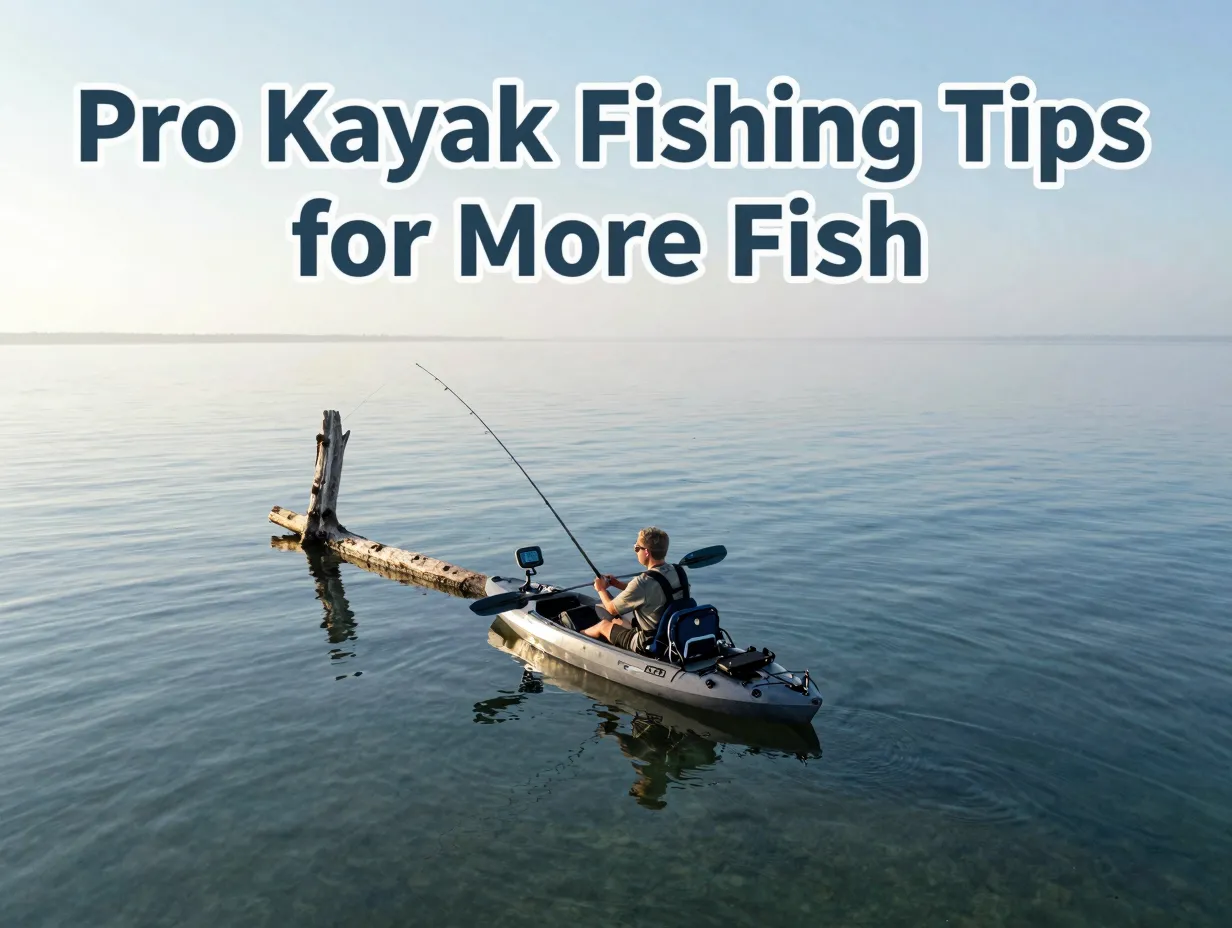
Kayak anglers consistently outfish boat anglers on pressured water, not because they have better gear, but because a low-profile, near-silent platform puts them within casting distance of fish that never see traditional boats. If you want to maximize every hour on the water, these 9 Pro Kayak Fishing Tips to Help You Catch More Fish will give you a structured, proven framework to upgrade your approach from the moment you launch.
Disclosure: This post contains affiliate links. As an Amazon Associate, we earn from qualifying purchases, and at no extra cost to you.
Key Takeaways
- Kayak positioning and stealth are the single biggest advantages a kayak angler has, protect them at all costs.
- Matching your tackle and lure selection to seasonal fish behavior dramatically increases strike rates.
- A properly rigged kayak with the right safety and navigation tools keeps you fishing longer and safer.
- Reading structure, current, and water temperature is more valuable than any single lure or rod upgrade.
- Consistent anglers develop a pre-launch checklist and post-session review habit that compounds results over time.
Why Kayak Fishing Demands a Different Strategy
Kayak fishing is not simply boat fishing in a smaller vessel. The physics, the ergonomics, and the tactical opportunities are fundamentally different. A kayak sits inches above the waterline, creates minimal wake, and can access water as shallow as six inches. Those advantages are only realized, however, when the angler understands how to exploit them deliberately.
The tips below are drawn from tournament-level kayak fishing strategy, fisheries biology, and practical on-water experience. They apply across species, bass, walleye, redfish, trout, pike, and across water types. Work through them systematically and the improvement in your catch rate will be measurable.
The 9 Pro Kayak Fishing Tips to Help You Catch More Fish
1. Master Kayak Positioning Before You Touch a Rod
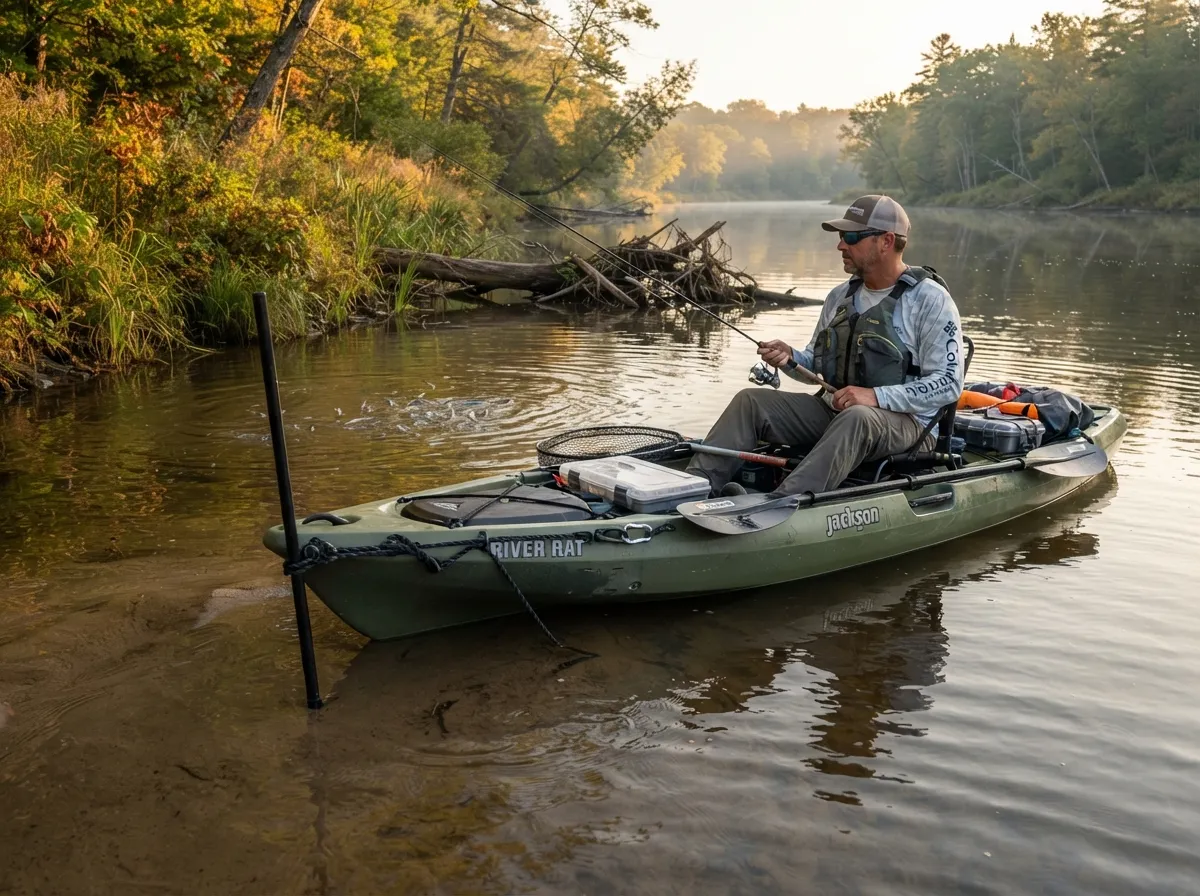
Position is the foundation of every other tip on this list. Before making a single cast, decide exactly where the kayak needs to sit to deliver the presentation you want without spooking the fish.
Key positioning principles:
- Approach target structure from downwind or down-current so the kayak drifts away from, not into, the strike zone.
- Anchor or use a stake-out pole when you need to hold position in current or wind rather than constantly paddling to stay put.
- Keep the sun at your back when possible so your shadow falls away from the fish.
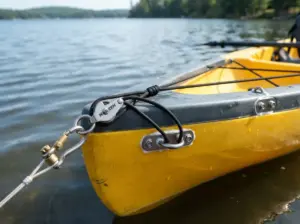
- Use a 360-degree anchor trolley system so you can swing the kayak to face any direction without repositioning the anchor.
“The angler who controls their drift controls the presentation. Everything else is secondary.”, Common tournament kayak fishing maxim
A poorly positioned kayak forces rushed casts, awkward retrieves, and unnecessary paddle strokes that broadcast noise through the water column. Invest in a quality anchor trolley system and a stake-out pole, they are among the highest-return gear purchases a kayak angler can make.
2. Eliminate Noise at Every Stage
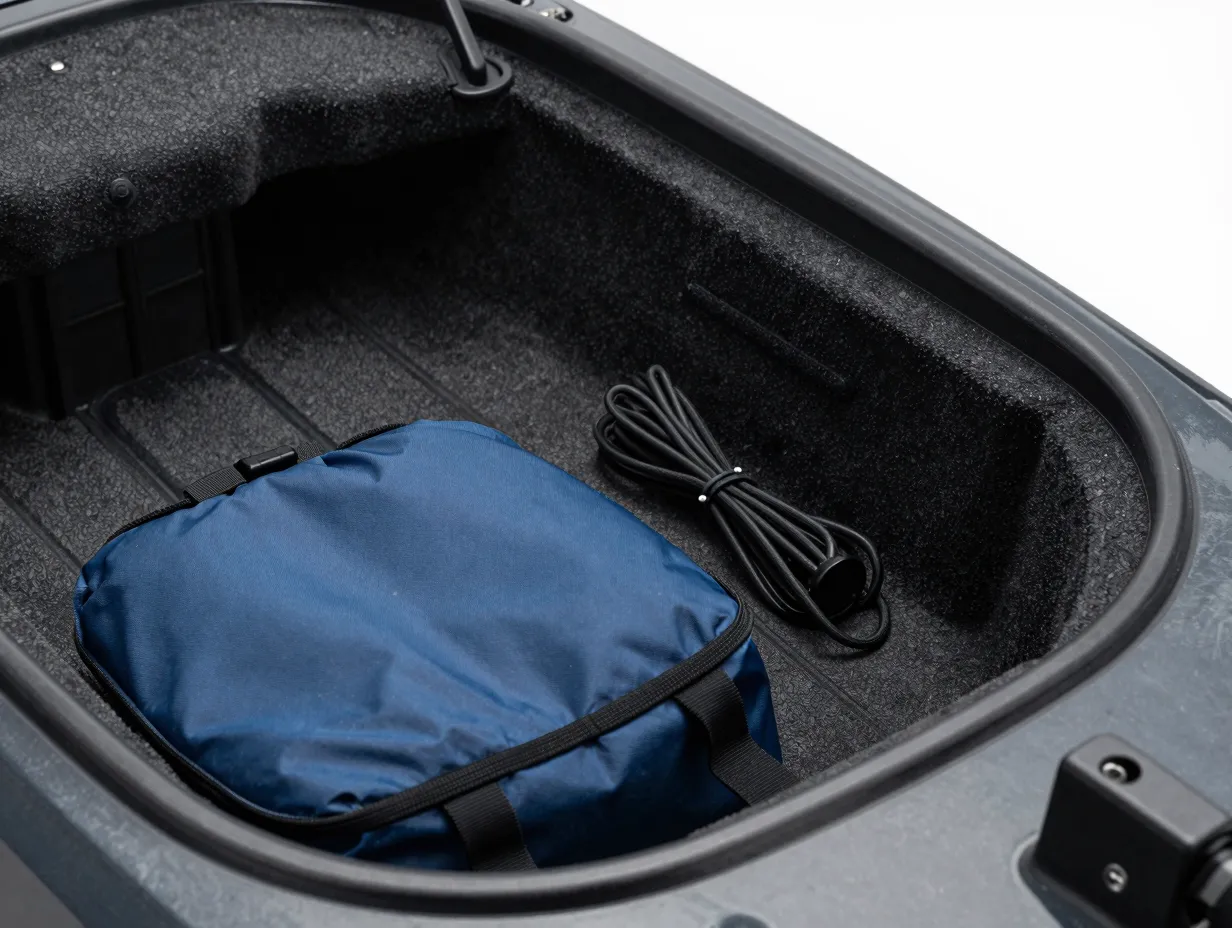
Sound travels approximately four times faster through water than through air. Every clank of a tackle tray, every paddle blade slap, and every dropped pliers sends a pressure wave that reaches fish before your lure does.
Noise reduction checklist:
- Line all hard storage compartments with closed-cell foam or rubber matting.
- Use rubber-coated paddle grips and practice feathering the blade entry at a low angle.
- Replace metal tackle trays with soft-sided bags where possible.
- Secure loose gear with Velcro straps or bungee cords before launch.
- Avoid dragging the paddle shaft across the kayak hull between strokes.
Sit-on-top kayaks with open deck designs are generally quieter than sit-inside models because there is no hollow hull cavity to amplify sound. If fishing in extremely shallow or clear water, consider switching to a hand paddle or pole for the final approach.
3. Read Structure and Cover Like a Professional Guide
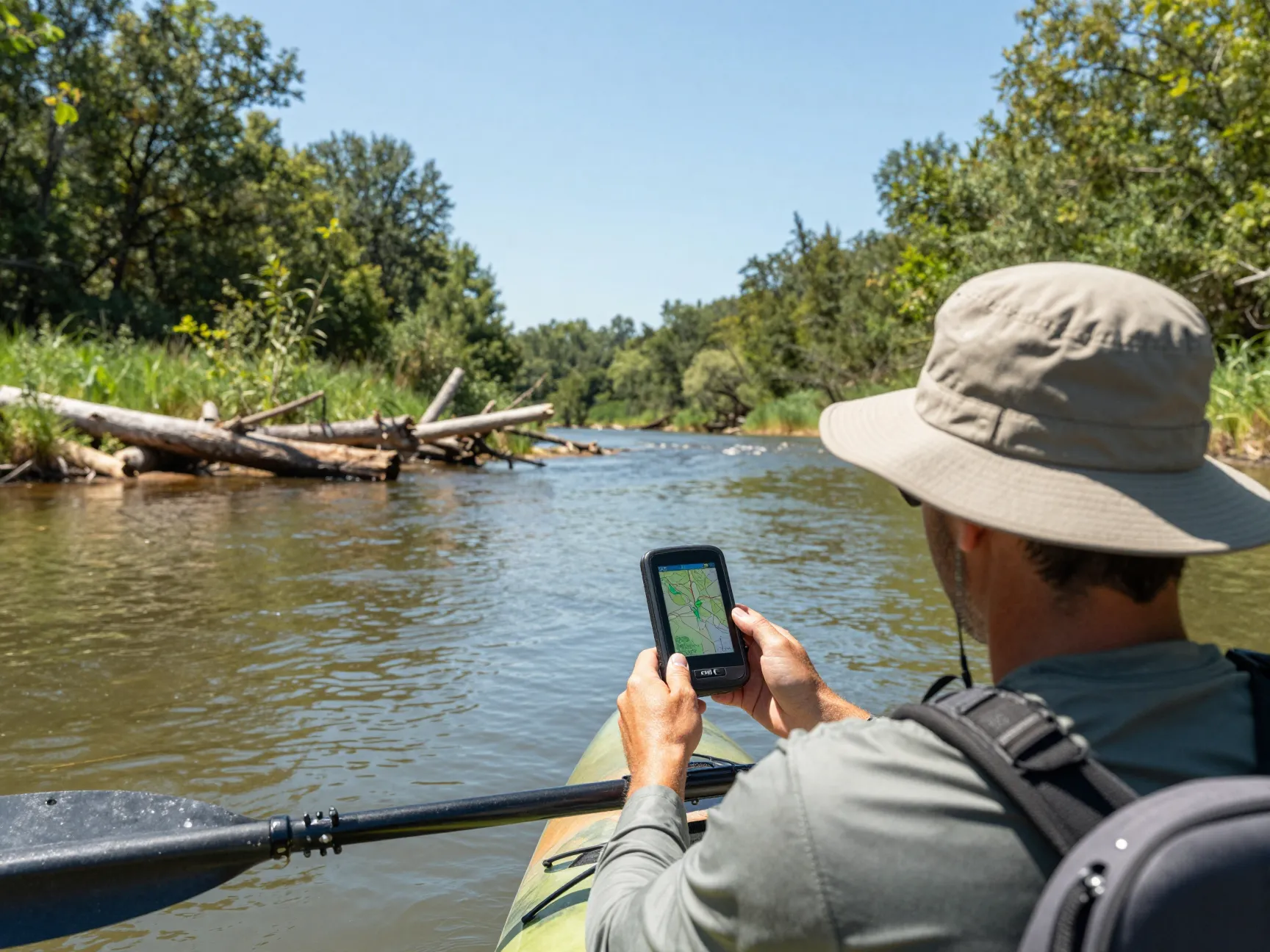
Fish do not distribute randomly. They relate to structure, the physical shape of the bottom, and cover, the objects sitting on or above that bottom. Understanding the difference and knowing how to find both from a kayak is what separates consistent anglers from occasional ones.
Structure vs. Cover, Quick Reference
| Type | Examples | Why Fish Use It |
|---|---|---|
| Structure | Points, humps, channels, ledges, creek bends | Navigation routes, ambush lanes, depth transitions |
| Cover | Fallen timber, dock pilings, grass beds, rocks, lily pads | Shade, ambush points, protection from current and predators |
The kayak angler’s edge here is access. A kayak can slide into a flooded timber field, under overhanging willows, or into a back-bay grass flat that no motorboat can reach. Prioritize these high-pressure-free zones, especially on heavily fished public water.
Use a handheld GPS or a kayak-mounted fish finder to mark productive structure and build a personal waypoint library over multiple seasons.
4. Match Lure Selection to Water Temperature and Season
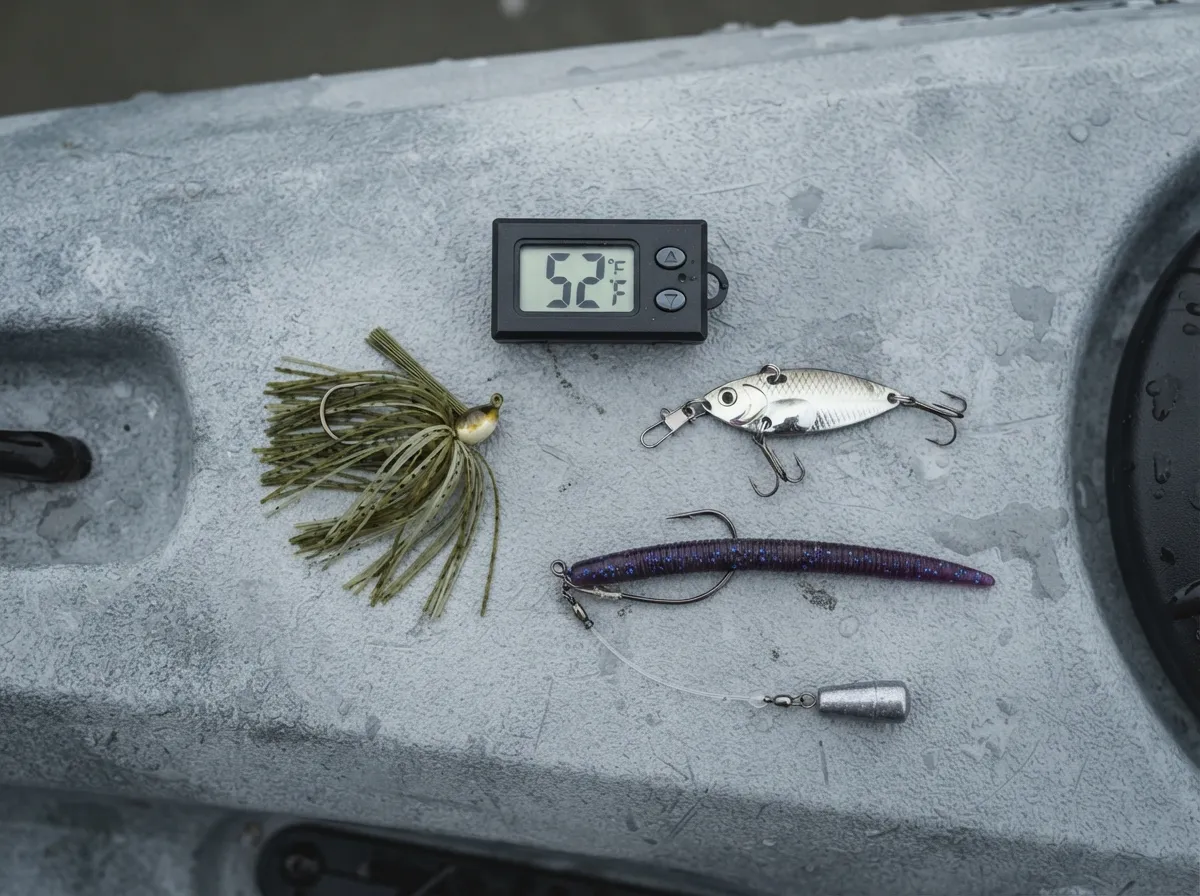
Water temperature is the single most reliable predictor of fish behavior. It governs metabolism, spawning cycles, feeding windows, and depth preferences. Carrying a small digital thermometer and checking surface temperature at launch takes thirty seconds and can completely redirect a game plan.
Seasonal lure strategy framework:
- Winter (below 50°F / 10°C): Slow down. Drop-shot rigs, blade baits fished with long pauses, and small finesse jigs worked on the bottom. Fish are lethargic and will not chase.
- Pre-spawn / Spring (50-65°F / 10-18°C): Aggressive reaction baits become effective. Crankbaits, swimbaits, and spinnerbaits along staging areas near spawning flats.
- Spawn (65-72°F / 18-22°C): Sight-fishing with soft plastics. Target visible beds and use subtle presentations. Polarized sunglasses are non-negotiable here.
- Summer (above 75°F / 24°C): Early morning topwater bite, then transition to deep structure midday. Frogs over grass, then drop-shots on deeper points.
- Fall (cooling back toward 60°F / 15°C): Shad imitations and fast-moving baits as fish feed aggressively ahead of winter.
Carrying too many lures is a common beginner mistake. A focused selection of eight to twelve proven baits covering the seasonal range outperforms a tackle bag with two hundred options that creates decision paralysis on the water.
5. Use Stealth Paddling Techniques to Approach Fish
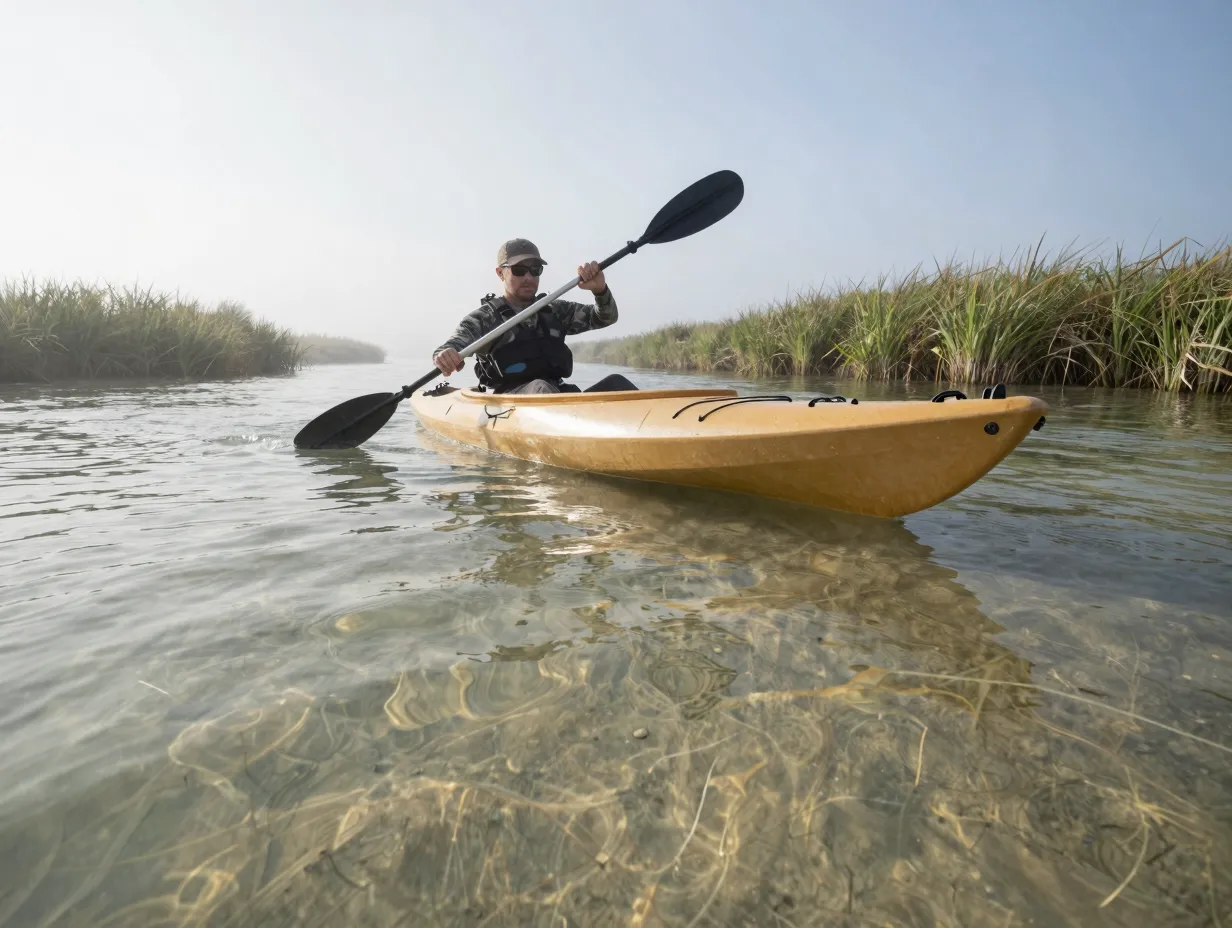
The approach is often where the fish is won or lost. A kayak that glides silently into position gives the angler a clean first cast into undisturbed water. A kayak that announces its arrival with noise and wake gives the fish a head start.
Stealth approach techniques:
- Switch to a shorter paddle or a single-blade canoe paddle for the final twenty yards of approach.
- Use a push pole in water shallower than four feet, it is the quietest propulsion method available.
- If the wind is cooperating, deploy a drift sock or simply stow the paddle and drift the final distance.
- On pedal-drive kayaks, disengage the drive unit and glide in rather than pedaling to the spot.
- Approach parallel to the bank rather than bow-first to reduce the visual profile presented to fish.
Pedal-drive kayaks offer a significant stealth advantage in open water because hands remain free for the rod at all times. However, in very shallow or weedy environments, a paddle kayak is often quieter because there are no drive fins creating turbulence below the hull.
6. Rig Your Kayak for Efficiency, Not Just Aesthetics
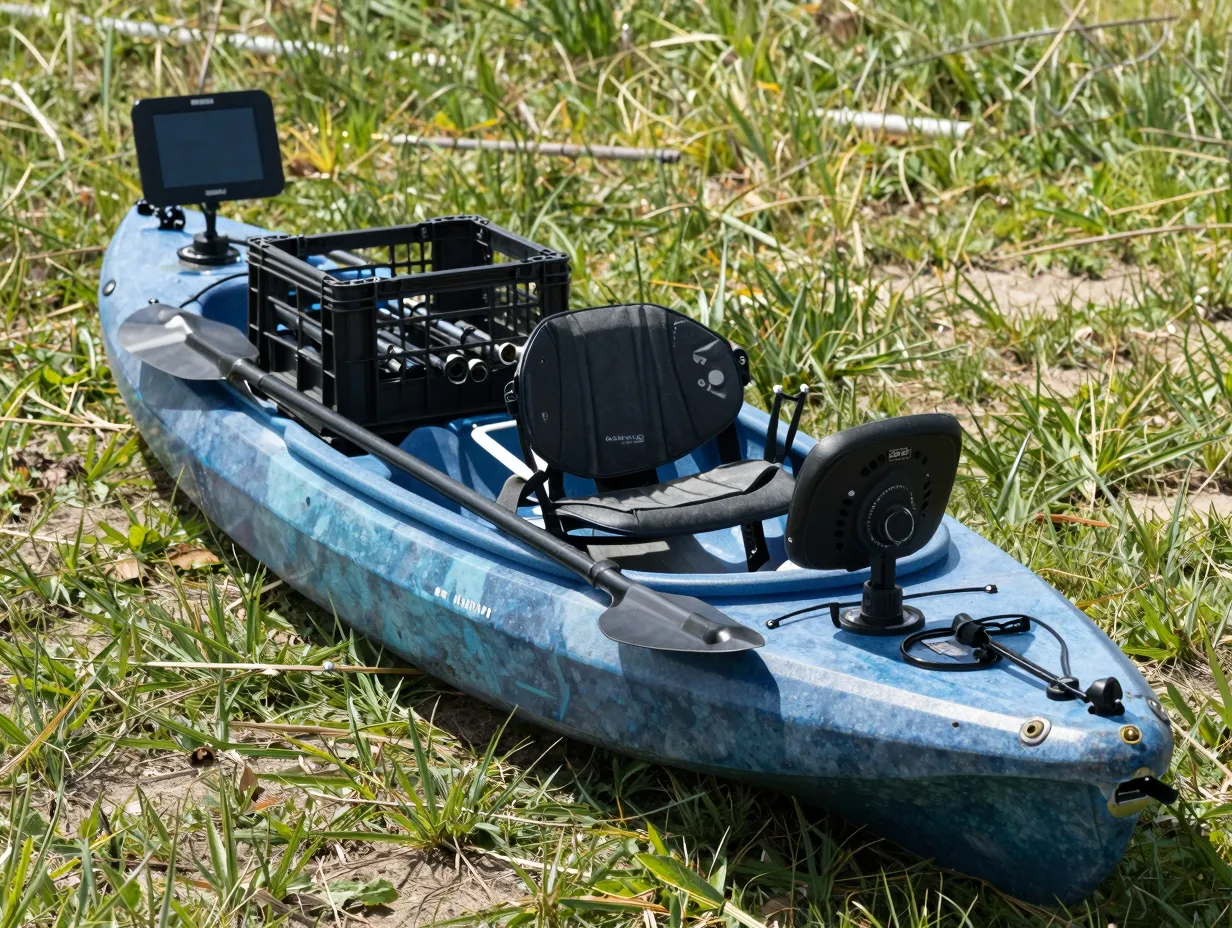
A well-rigged kayak reduces the time between strikes and follow-up casts, keeps critical gear accessible under pressure, and prevents the fumbling that costs fish. Rigging is a functional discipline, not a cosmetic one.
High-priority rigging upgrades:
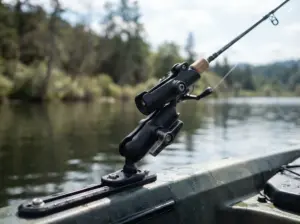
- Rod holders: Flush-mount holders angled forward for trolling rods, RAM-mount adjustable holders for active rods within reach.
- Fish finder: A compact unit like a Garmin Striker or Lowrance Hook series mounted on a RAM ball arm at the bow provides real-time depth and structure data without obstructing casting lanes.
- Crate system: A milk crate or purpose-built tackle crate behind the seat holds rod tubes, tackle bags, and a cooler while keeping the deck clear.
- Paddle leash: Prevents losing the paddle when fighting a fish, a scenario that happens to every kayak angler eventually.
- Dry bag or waterproof box: For phone, keys, and safety gear. Non-negotiable.
Avoid over-rigging. Every additional accessory adds weight, windage, and potential noise. Prioritize the items that directly support fishing efficiency and safety, and leave the rest at home until a specific need is identified on the water.
7. Develop a Systematic Drift Fishing Strategy
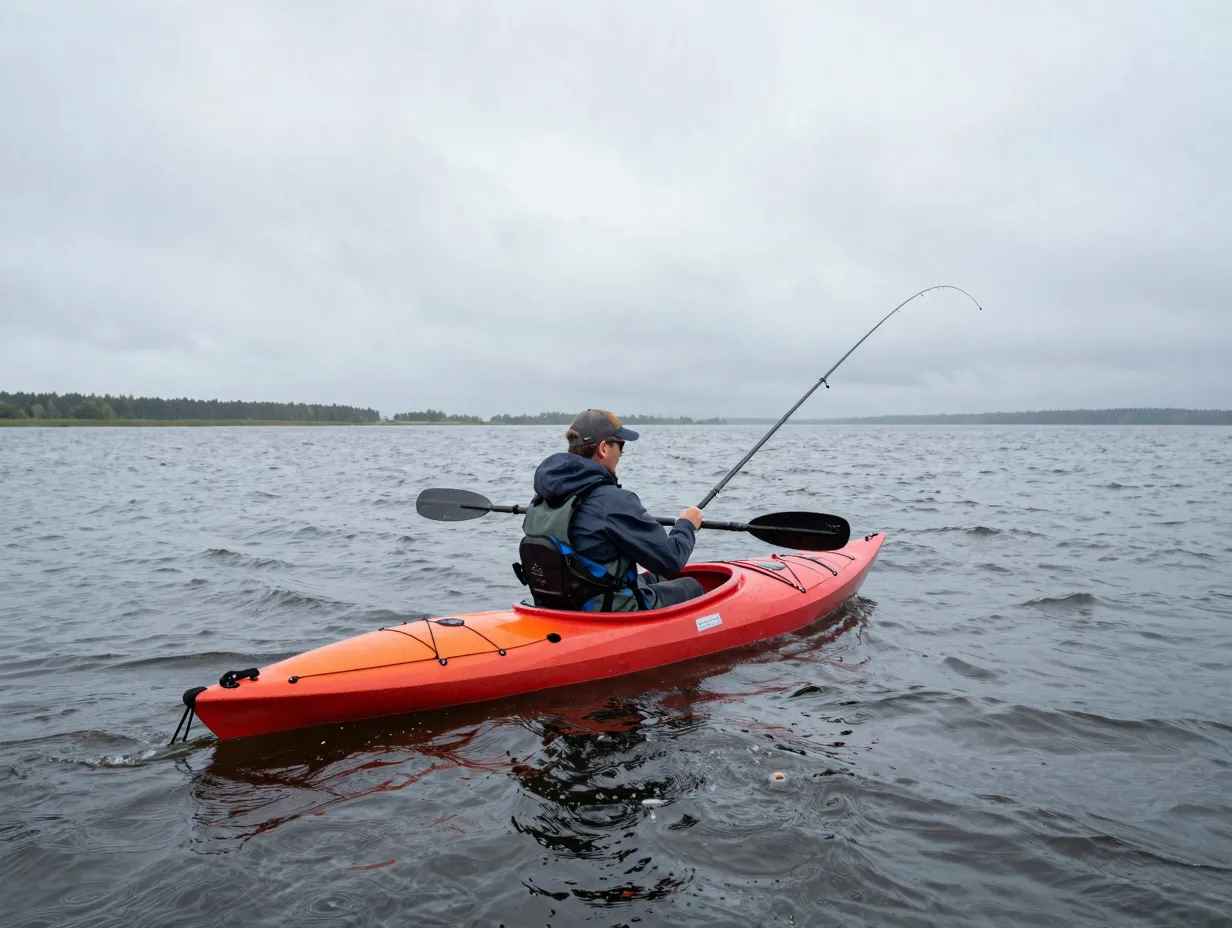
Drift fishing from a kayak is one of the most underutilized and productive techniques available. Rather than anchoring and fan-casting a single spot, a controlled drift covers water efficiently and presents the lure naturally with the current or wind.
Building a productive drift pattern:
- Identify the wind or current direction before launch using a weather app and on-site observation.
- Paddle or pedal upwind or up-current of the target zone.
- Deploy a drift sock (sea anchor) to slow the drift to a manageable speed, typically one to two mph is ideal.
- Work lures that complement the drift: jigs, ned rigs, and soft plastics on a drop-shot all fish naturally when the kayak is moving slowly.
- At the end of the drift, reel in, reposition, and repeat the same path if it produced strikes.
Drift fishing is particularly effective for walleye on large reservoirs, redfish on coastal flats, and trout on river systems. It also covers far more water than a stationary approach, which is valuable when fish are scattered.
8. Prioritize Safety Gear That Doubles as Fishing Gear
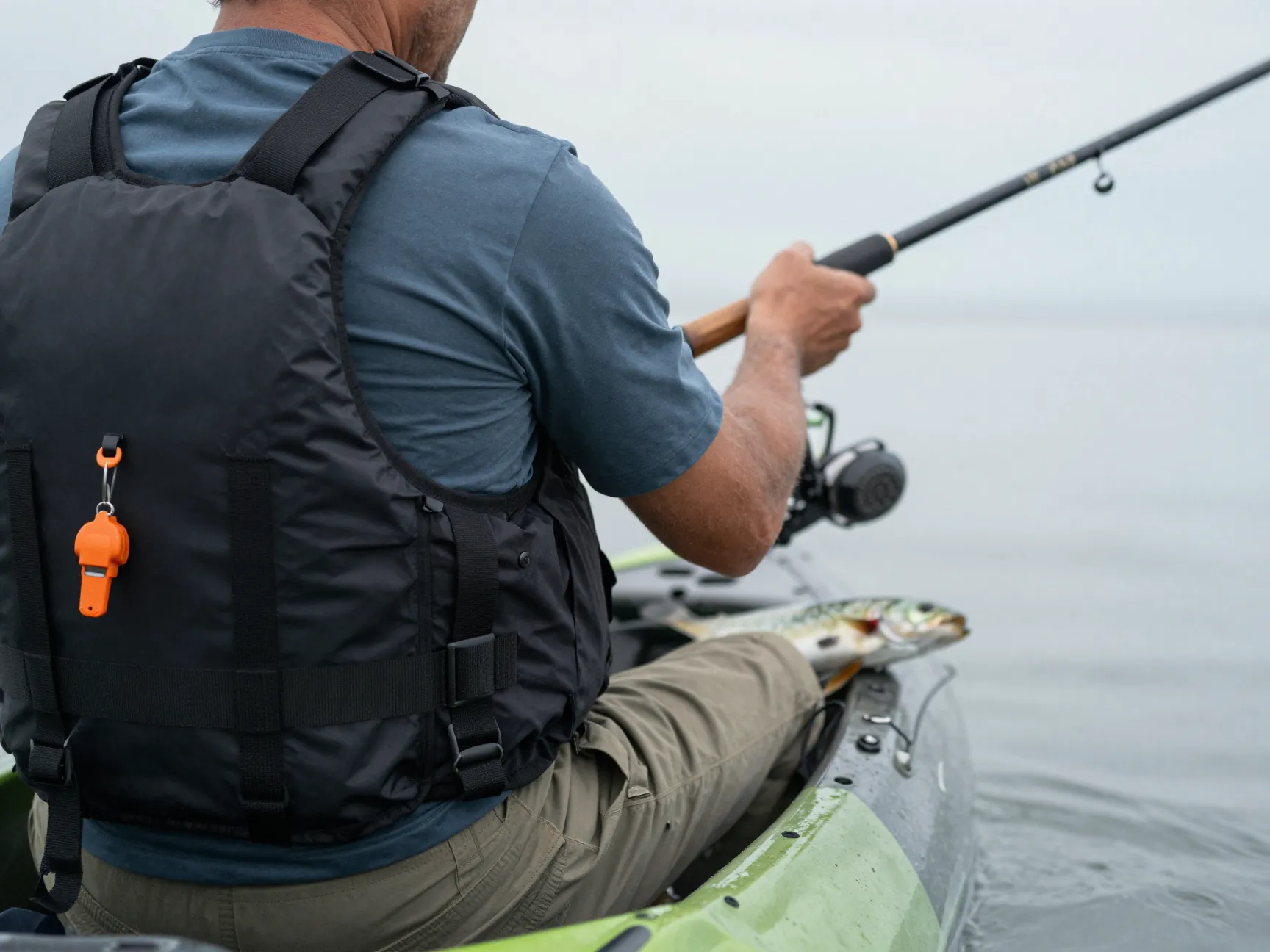
Safety on a kayak is not optional, but the best safety setups for fishing are designed so that safety gear and fishing functionality reinforce each other rather than compete for space.
Essential safety gear for kayak anglers:
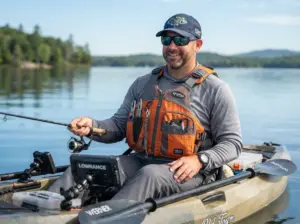
- PFD (Personal Flotation Device): Wear it, do not stow it. An inflatable belt-pack PFD is the preferred choice for most kayak anglers because it does not restrict casting motion. The U.S. Coast Guard requires a wearable PFD for every person on board.
- Whistle and signal mirror: Required by law in many jurisdictions and weighs almost nothing.
- Bilge pump or sponge: For sit-inside kayaks or after a wet re-entry.
- Paddle float: Enables solo re-entry after a capsize in open water.
- VHF radio or satellite communicator: For coastal or remote fishing where cell coverage is absent. Devices like the Garmin inReach Mini provide two-way messaging and SOS capability.
- Navigation lights: Required when fishing before sunrise or after sunset. LED clip-on lights designed for kayaks mount in seconds.
A waterproof first aid kit stored in the crate system addresses both safety and the inevitable hook-in-hand scenario that comes with years of fishing.
9. Build a Pre-Launch Checklist and Post-Session Review Habit
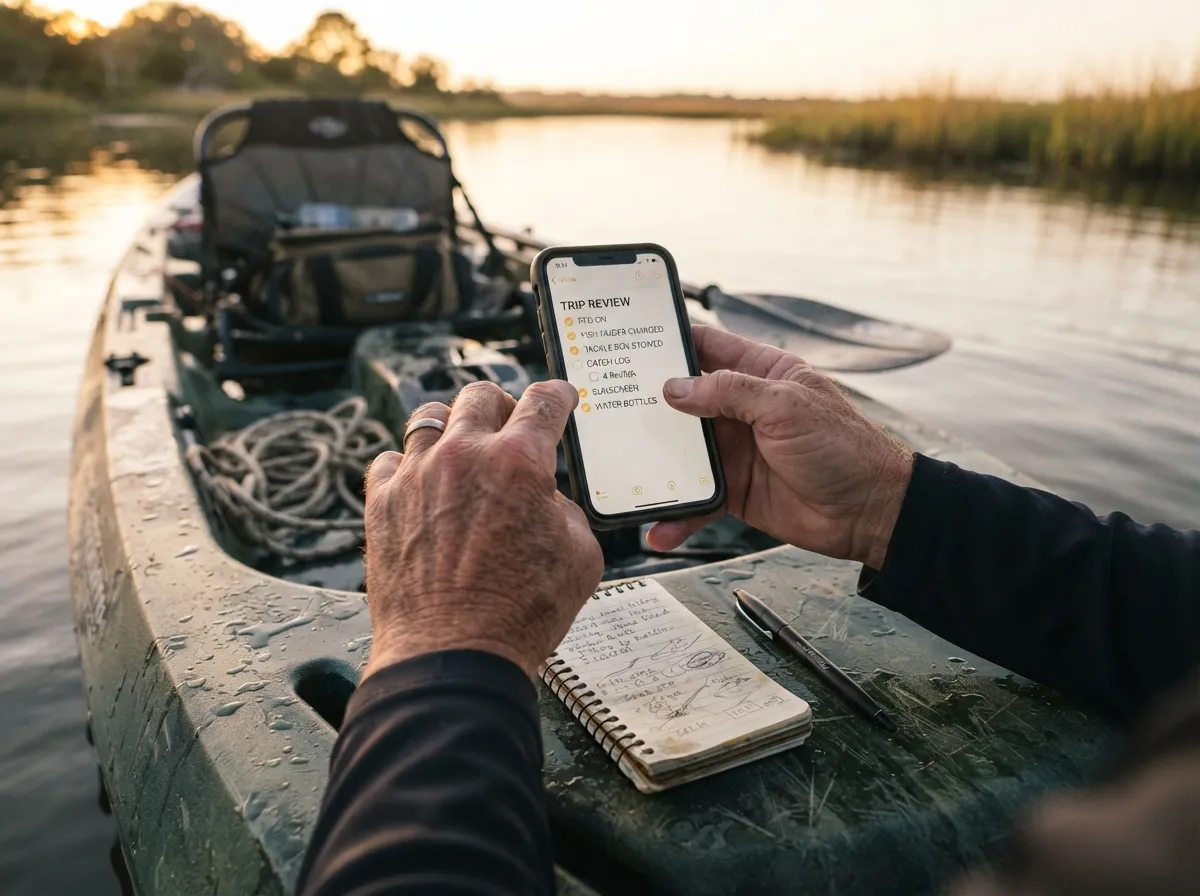
The anglers who improve fastest are not necessarily the most talented, they are the most systematic. A pre-launch checklist prevents the costly mistakes (forgotten PFD, dead fish finder battery, wrong tide window) that derail sessions before they start. A post-session review compounds learning across hundreds of trips.
Pre-launch checklist (abbreviated):
- Fish finder charged and waypoints loaded
- All rods rigged and secured in holders
- PFD on body, not in hatch
- Anchor and trolley system functional
- Phone in dry bag, emergency contact notified of location and return time
- Tide, weather, and wind forecast reviewed
- Lure selection matched to current water temperature and season
Post-session review questions:
- What time of day produced the most strikes?
- What water temperature, depth, and structure type held fish?
- Which lure or presentation outperformed others, and why?
- What gear or rigging issue slowed the session down?
- What would be done differently on the next trip to the same location?
Keeping a simple fishing log, even a notes app entry on a phone, builds a personal database that becomes more valuable every season. After three to five years of consistent logging, patterns emerge that no general fishing guide can replicate because they are specific to local water, local fish behavior, and personal skill level.
Advanced Tactics That Complement These 9 Pro Kayak Fishing Tips
Once the foundational nine tips are consistently applied, a second layer of refinement accelerates results further.
Sight-fishing from a kayak is one of the most exciting and effective techniques available. The low freeboard of a kayak puts the angler’s eyes closer to the water than any boat, improving the ability to spot fish in shallow, clear water. Polarized sunglasses with a brown or copper lens are the single most important tool for sight-fishing.
Kayak trolling is underappreciated as a technique for covering large bodies of water. Rigging one or two rods with crankbaits or spoons while paddling or pedaling between spots turns transit time into fishing time. On large reservoirs and coastal bays, trolling is often the fastest way to locate active fish before anchoring and targeting them with more precise presentations.
Night fishing from a kayak opens access to fish that are nocturnal feeders or that move shallow after dark to avoid boat traffic. Catfish, walleye, and striped bass are particularly productive at night. Navigation lights, a headlamp, and a GPS track of the route are mandatory for night sessions.
Common Mistakes That Undermine These Kayak Fishing Tips
Even experienced anglers fall into patterns that limit results. Recognizing these mistakes accelerates correction.
Mistake 1, Fishing too fast. The kayak’s mobility is an asset, but constantly moving from spot to spot without thoroughly working each location is one of the most common errors. Give productive-looking structure at least fifteen to twenty minutes of quality presentations before moving.
Mistake 2, Ignoring the wind. Wind is both an ally and an adversary. It creates drift opportunities, pushes baitfish into predictable locations, and oxygenates the water on windward banks. Anglers who fight the wind all day instead of using it strategically waste enormous energy and miss productive water.
Mistake 3, Under-weighting jigs and soft plastics. In current or wind, an under-weighted presentation loses contact with the bottom and loses the natural action that triggers strikes. Match jig weight to conditions, heavier in current and wind, lighter in calm, shallow water.
Mistake 4, Neglecting line management. Loose line on a kayak deck wraps around paddle shafts, rod holders, and feet. Use a stripping basket or keep slack line managed in the reel. Braided line in the 15-30 lb range with a fluorocarbon leader is the preferred setup for most kayak fishing applications because it is sensitive, strong, and manageable in a confined space.
Conclusion
The 9 Pro Kayak Fishing Tips to Help You Catch More Fish outlined above represent a complete system, from the moment of approach to the post-session review. None of them require expensive gear upgrades or years of specialized training. They require deliberate practice, honest self-assessment, and a willingness to prioritize skill over equipment.
Actionable next steps:
- On the next session, focus exclusively on Tip 1 and Tip 2, positioning and noise reduction. These two changes alone will produce a measurable improvement in strike frequency.
- Purchase a small digital water thermometer and begin logging temperature alongside catch data. Within a single season, patterns will emerge.
- Build a ten-item pre-launch checklist specific to your kayak, your local water, and your target species. Laminate it and attach it to the crate.
- Review one post-session log entry before every future trip to the same body of water.
Kayak fishing rewards patience, preparation, and precision. Apply these tips consistently and the catch rate will reflect it.
References
- Kayak Angler Magazine. (2023). Tournament tactics and rigging guides. Kayak Angler. https://www.kayakanglermag.com
- U.S. Coast Guard. (2022). Recreational boating safety: Required equipment for kayaks and canoes. U.S. Department of Homeland Security. https://www.uscgboating.org
- Weidner, T., & Bettoli, P. W. (2019). Fisheries habitat and fish response to structural complexity in reservoirs. North American Journal of Fisheries Management, 39(4), 812-825.
- Lindner, A. (2021). In-Fisherman guide to walleye fishing. In-Fisherman Media.
- Garmin Ltd. (2023). Striker series fish finder user manual. Garmin International. https://www.garmin.com