8 White Marlin Facts and Identification Tips Every Angler Should Know
Only an estimated 300,000 white marlin remain in the North Atlantic, a population that has declined by more than 80 percent from its historical peak. Yet every summer, thousands of anglers head offshore chasing this elusive billfish without fully understanding what they are looking at when one finally comes up behind the bait. Knowing the 8 white marlin facts and identification tips every angler should know is not just about bragging rights; it is about responsible catch-and-release, tournament accuracy, and a deeper respect for one of the ocean’s most athletic fish.
Disclosure: This post contains affiliate links. As an Amazon Associate, we earn from qualifying purchases, and at no extra cost to you.
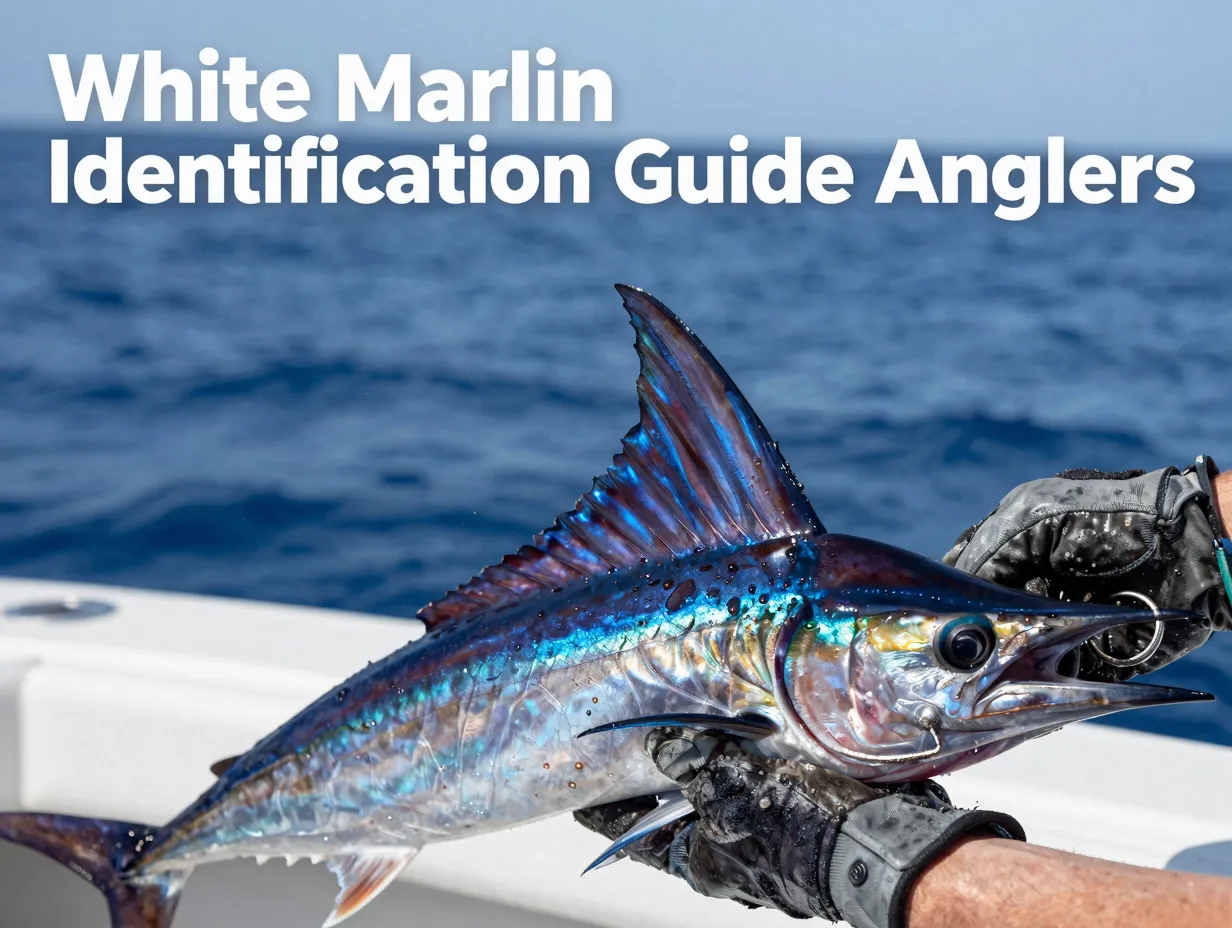
Key Takeaways
- White marlin are a protected and overfished species in the North Atlantic, making proper identification critical for conservation.
- The rounded tips on the dorsal fin and pectoral fins are the single most reliable field identification marker separating white marlin from similar billfish.
- White marlin are highly migratory, following warm water currents from the Caribbean to as far north as Nova Scotia.
- Catch-and-release survival rates improve dramatically when anglers minimize air exposure and use proper dehooking tools.
- Misidentification of white marlin as roundscale spearfish is a growing concern in tournament fishing and requires careful examination.
Why These 8 White Marlin Facts and Identification Tips Every Angler Should Know Matter
Before diving into the individual facts, it helps to understand the stakes. White marlin (Kajikia albida, formerly Tetrapturus albidus) are listed as overfished under U.S. federal management. The National Marine Fisheries Service has imposed strict annual catch limits, and tournament rules in major events like the White Marlin Open in Ocean City, Maryland, require precise identification before a fish is weighed in. Getting it wrong has real consequences, both legal and ecological.
The eight facts and tips below are organized to build knowledge progressively, from basic biology to field identification to handling best practices.
1. White Marlin Are a Distinct Atlantic Species
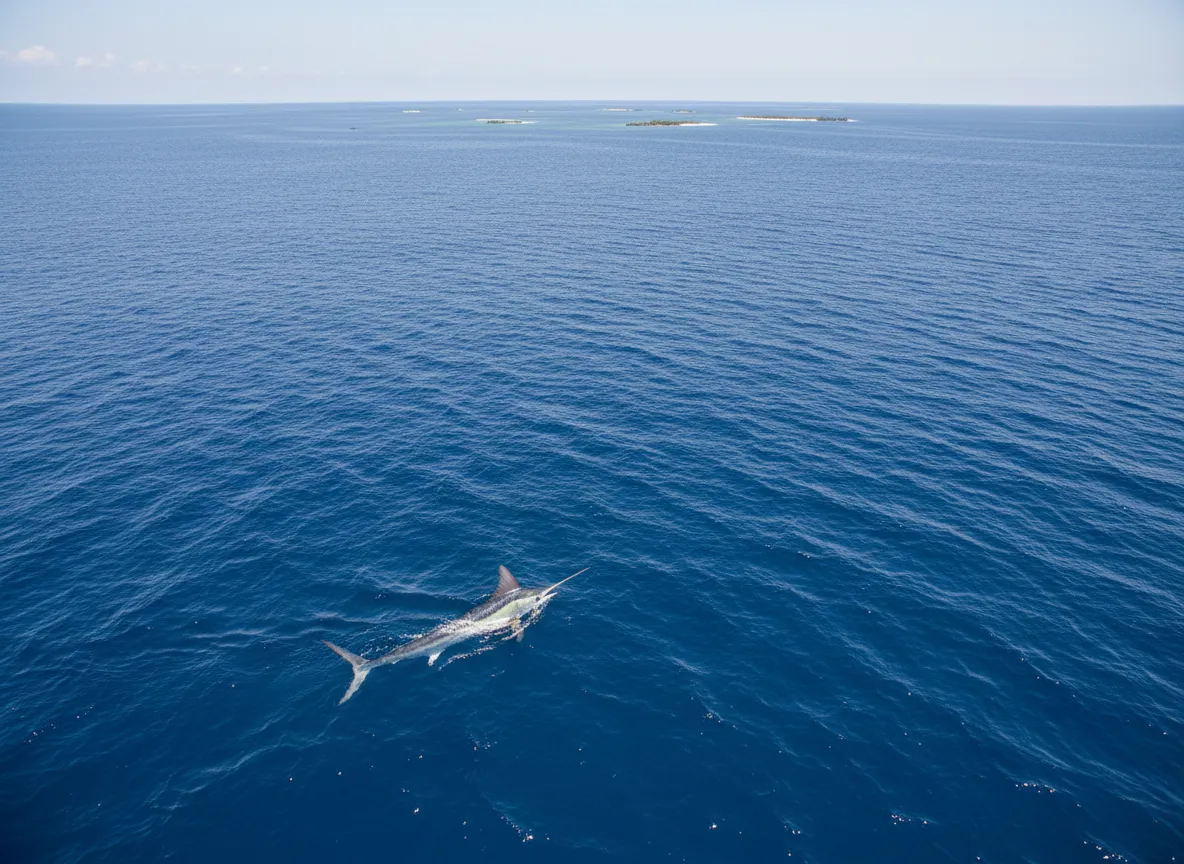
White marlin exist exclusively in the Atlantic Ocean. Their range extends from the equator north to roughly 45 degrees north latitude, covering waters off the U.S. East Coast, the Gulf of Mexico, the Caribbean, and the eastern Atlantic near the Azores and the coast of West Africa.
They are not found in the Pacific or Indian Oceans. Anglers who have caught Pacific blue marlin or striped marlin are working with a completely different set of identification cues. The Atlantic setting matters because it narrows the field of billfish species an angler is likely to encounter:
- White marlin
- Blue marlin (Makaira nigricans)
- Sailfish (Istiophorus albicans)
- Roundscale spearfish (Tetrapturus georgii)
- Longbill spearfish (Tetrapturus pfluegeri)
Understanding that white marlin share the water with these close relatives is the first step toward accurate identification.
2. The Rounded Fin Tips Are the Primary Identification Key
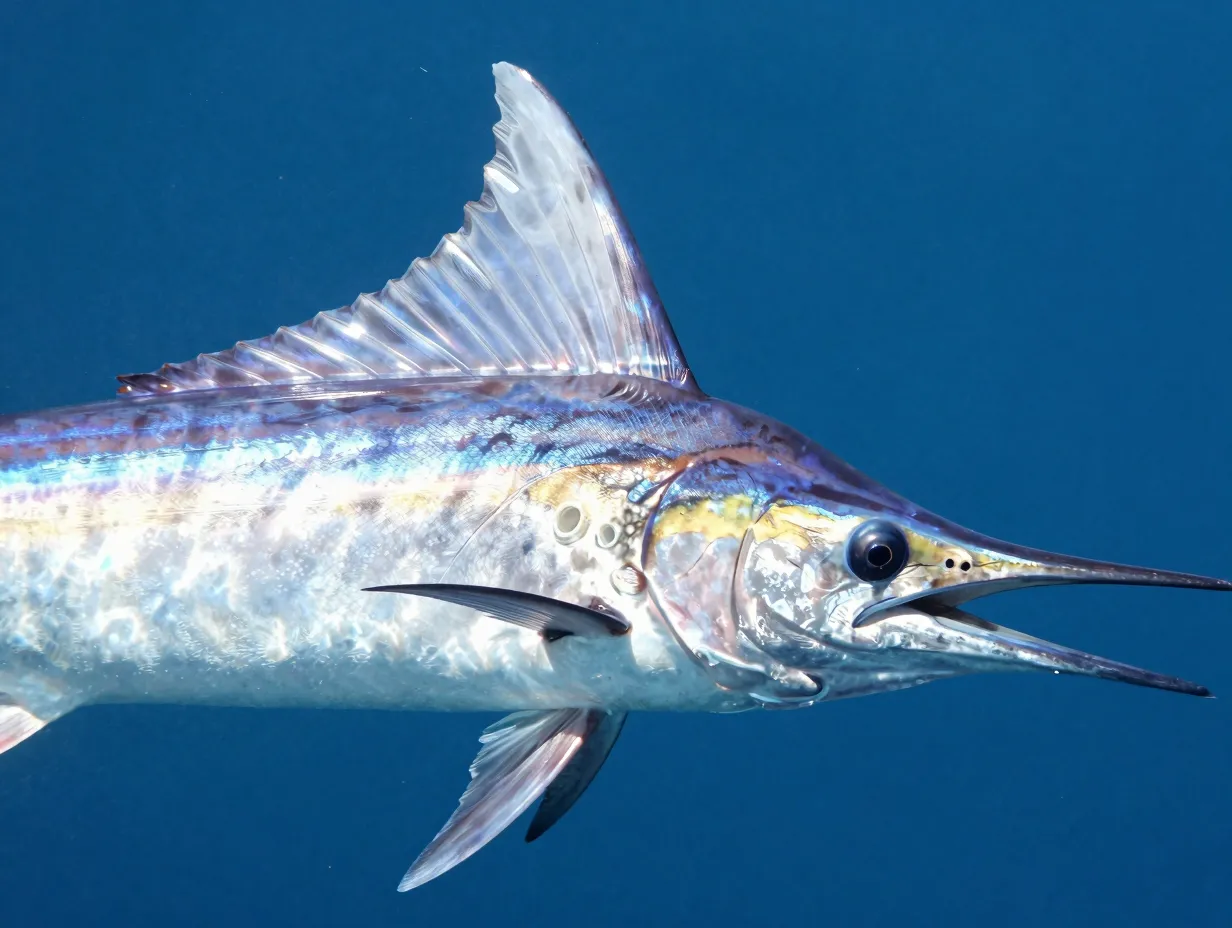
This is the single most important identification tip. White marlin have distinctly rounded tips on both the first dorsal fin and the pectoral fins. On a blue marlin, both fins taper to a sharp point. On a sailfish, the dorsal fin is dramatically tall and sail-like.
“When a white marlin comes up behind the teaser, the first thing to look at is the top of that dorsal fin. If it’s rounded, you’re looking at a white.”
Here is a quick comparison:
| Species | Dorsal Fin Tip | Pectoral Fin Tip | Body Size |
|---|---|---|---|
| White Marlin | Rounded | Rounded | Up to ~180 lbs |
| Blue Marlin | Pointed | Pointed | Up to 1,800+ lbs |
| Sailfish | Tall sail, varied | Rounded | Up to ~130 lbs |
| Roundscale Spearfish | Rounded (similar) | Rounded (similar) | Up to ~90 lbs |
The roundscale spearfish is the species most frequently confused with white marlin, which is addressed in detail in Fact 6.
3. White Marlin Are Smaller Than Most Anglers Expect
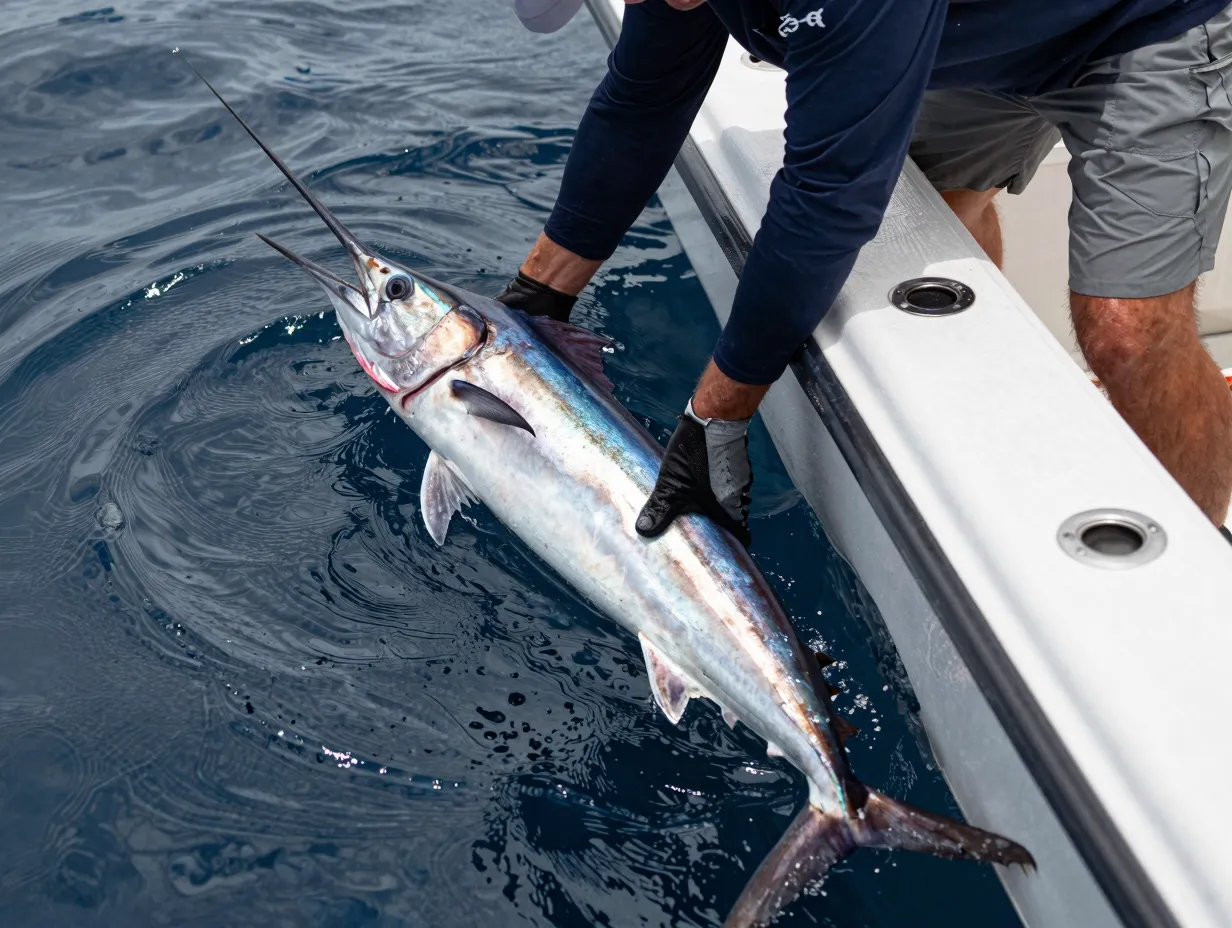
A common misconception is that marlin are always massive fish. White marlin are the smallest marlin species in the Atlantic. The average fish caught by recreational anglers weighs between 40 and 80 pounds. The all-tackle world record stands at 181 pounds, 14 ounces, caught off Vitória, Brazil.
Size context for identification:
- A fish over 100 pounds is a large white marlin, not a small blue marlin.
- If a billfish appears to weigh more than 200 pounds, it is almost certainly not a white marlin.
- Juvenile blue marlin are sometimes misidentified as white marlin due to size overlap in the 30-to-60-pound range, which is why fin shape remains the definitive check.
White marlin average between 5 and 7 feet in total length, including the bill. Their slender, streamlined body is built for speed rather than bulk.
4. Their Coloration Changes Dramatically When Excited
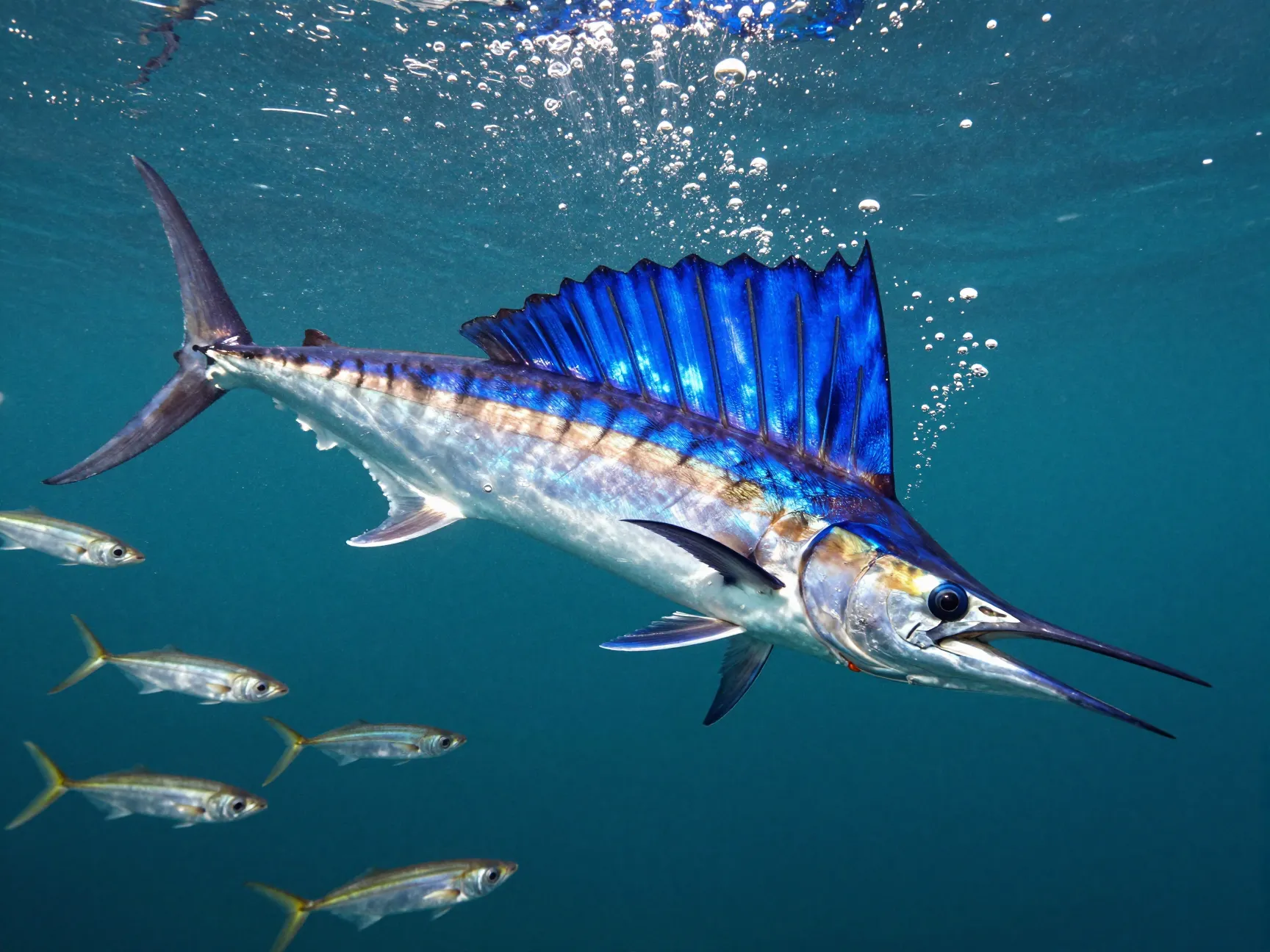
White marlin are not always white. In the water, a relaxed fish appears dark blue-green on the dorsal surface and silver-white on the belly. However, when the fish is excited, feeding, fighting, or stressed, the body lights up with vivid cobalt blue vertical bars along the flanks.
This color change is caused by chromatophores, pigment cells in the skin that expand and contract rapidly in response to neurological signals. The bars typically number between eight and fifteen and are most visible when a fish is lit up behind the bait.
Why this matters for identification:
- The bars can cause confusion with blue marlin, which also display similar barring when excited.
- The bars fade quickly after the fish dies, so a weighed-in fish may appear uniformly silver-white with little trace of the vivid coloration seen at the boat.
- At night or in low-light conditions, coloration is an unreliable identification tool, fin shape must take priority.
5. White Marlin Are Highly Migratory and Follow Warm Water

White marlin are a pelagic, open-ocean species that tracks water temperatures between 68 and 86 degrees Fahrenheit. Their migrations are closely tied to the Gulf Stream and its associated warm-water eddies and temperature breaks.
Seasonal migration patterns along the U.S. East Coast:
- Spring (April-May): Fish arrive in the Florida Straits and the Gulf of Mexico.
- Summer (June-September): The prime season along the Mid-Atlantic Bight, with Ocean City, Maryland, and the canyons off New Jersey and Delaware serving as major hotspots.
- Fall (October-November): Fish begin moving south and offshore as water temperatures drop.
- Winter: The population concentrates in tropical Atlantic waters, the Caribbean, and the waters around Brazil and Venezuela.
Successful anglers target temperature breaks, color changes in the water (from green to blue), and warm-core eddies that spin off the Gulf Stream. Sea surface temperature charts and satellite altimetry data are standard tools for locating productive white marlin grounds in 2026.
6. Roundscale Spearfish: The Lookalike That Fools Experienced Anglers
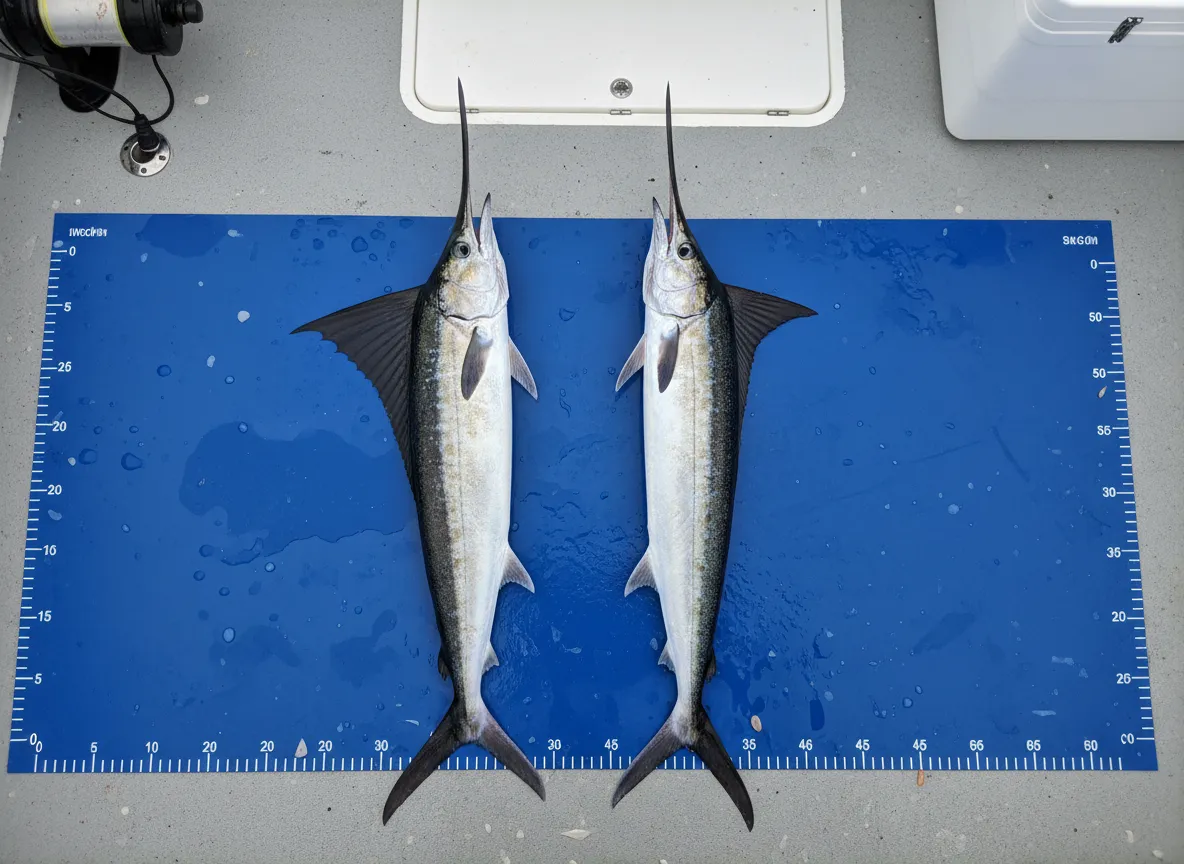
The roundscale spearfish (Tetrapturus georgii) was not formally recognized as a species distinct from white marlin until the early 2000s. For decades, roundscale spearfish were counted as white marlin in catch records, which means historical population data for white marlin may be less accurate than previously assumed.
The two species are so similar that genetic testing has been used in tournament settings to verify identification. Key differences to look for in the field:
Dorsal fin height: In white marlin, the first dorsal fin is taller at the front, with the highest point of the fin being roughly equal to or greater than the depth of the body at that point. In roundscale spearfish, the dorsal fin is lower overall and does not reach the body depth.
Lateral line: White marlin have a curved lateral line over the pectoral fin area. Roundscale spearfish have a straighter lateral line in that same region.
Vent position: In roundscale spearfish, the vent (anal opening) is positioned noticeably ahead of the anal fin. In white marlin, the vent is very close to the anal fin.
Body depth: Roundscale spearfish tend to have a more slender, less deep body profile compared to white marlin of similar length.
These differences are subtle and require a calm, methodical examination, difficult when a fish is thrashing at the side of the boat. When in doubt, photograph the fish from multiple angles before releasing it or weighing it in.
7. White Marlin Feed Aggressively on Specific Prey
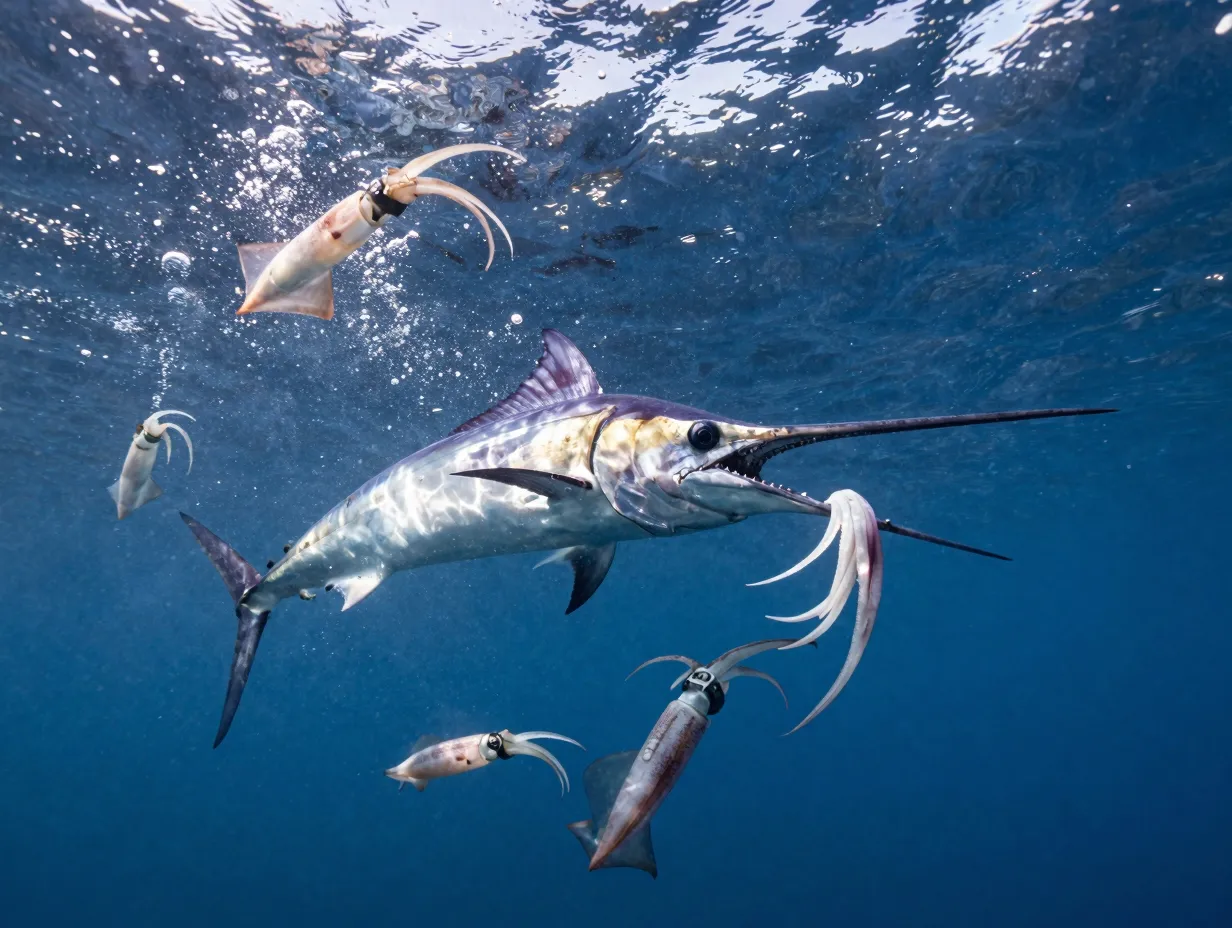
Understanding what white marlin eat improves both fishing success and appreciation for the species’ ecological role. White marlin are apex predators in the epipelagic zone, feeding primarily on:
- Squid, particularly flying squid species that congregate near temperature breaks
- Dolphinfish (mahi-mahi), especially juvenile fish
- Mackerel and other small tunas
- Flying fish
- Small bluefish and other schooling baitfish
White marlin are visual hunters that use their bill to stun or slash through bait schools before circling back to consume stunned prey. This feeding behavior explains why a white marlin will often “short strike” a trolled bait, it is using its bill to stun the bait first, not to impale it.
Practical implication for anglers: When a white marlin short-strikes a bait, slowing the boat or dropping back the bait for several seconds gives the fish time to return and eat. Immediately setting the hook after a short strike is one of the most common reasons anglers miss white marlin.
The fish’s preference for squid also explains why daytime deep drops near squid aggregations and night fishing under lights can be productive in certain fisheries, particularly in the Azores and Caribbean.
8. Proper Handling Dramatically Improves Post-Release Survival
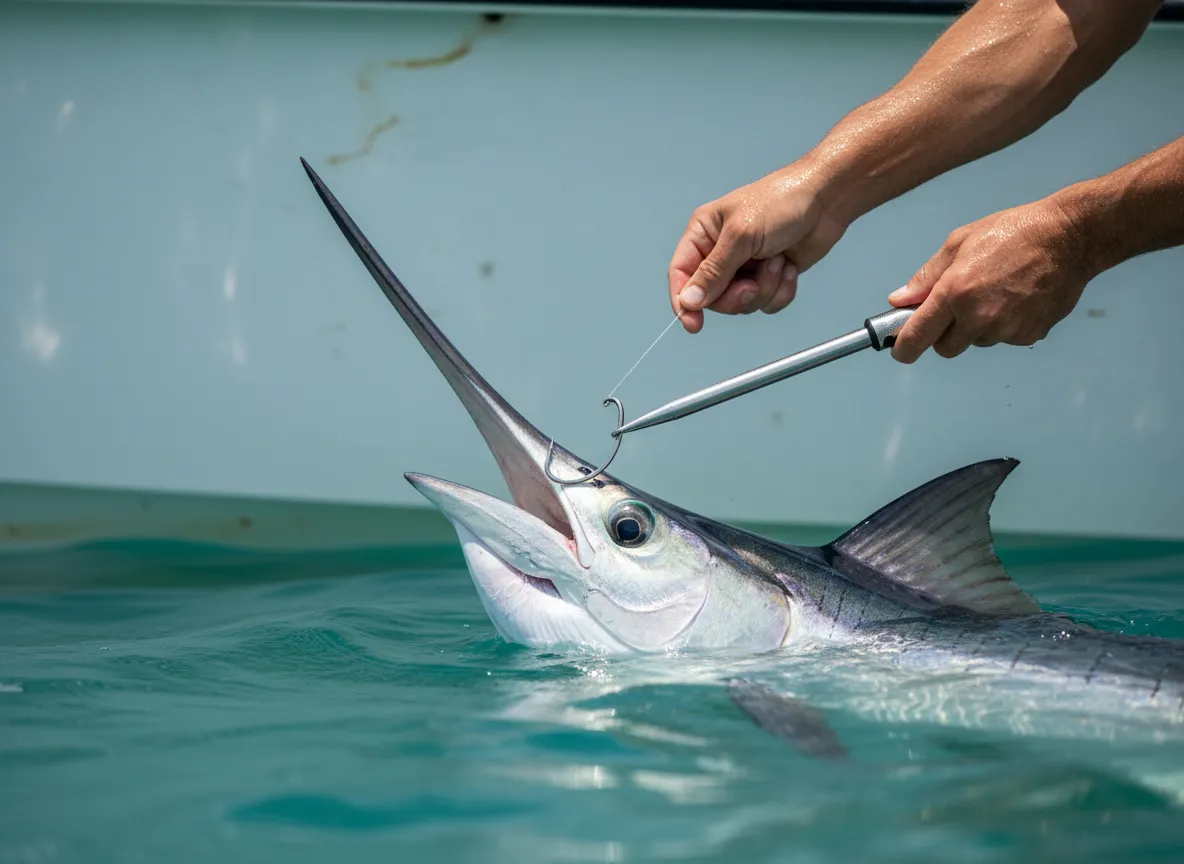
White marlin are subject to mandatory catch-and-release in most U.S. recreational and tournament fisheries. Post-release survival rates vary widely depending on how the fish is handled. Research on Atlantic billfish suggests that survival rates can exceed 90 percent when best practices are followed, but drop significantly when fish are brought aboard, air-exposed for extended periods, or handled roughly.
Best practices for white marlin release:
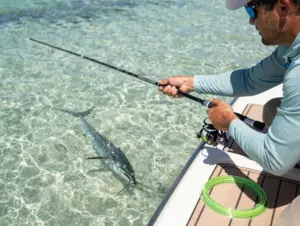
- Keep the fish in the water alongside the boat whenever possible. Avoid lifting the fish out of the water entirely.
- Use a dehooking tool to remove the hook without handling the fish’s bill or body excessively.
- If the hook cannot be removed quickly, cut the leader as close to the hook as possible. Circle hooks corrode and shed within weeks.
- Revive the fish by moving it forward in the water to pass oxygenated water over the gills. Do not move the fish backward.
- Avoid squeezing the body or applying pressure to the internal organs.
- Minimize air exposure to under 30 seconds whenever possible.
- Do not hold the fish vertically by the bill for photographs. This position strains the spine and internal organs.
Circle hooks, which are now required in many U.S. billfish tournaments, reduce deep hooking and gut hooking significantly compared to J-hooks. They are one of the most effective conservation tools available to the recreational angler.
Putting the 8 White Marlin Facts and Identification Tips Every Angler Should Know Into Practice
Mastering the 8 white marlin facts and identification tips every angler should know is a process that rewards preparation before the trip as much as skill on the water. The following checklist summarizes the most actionable points:
- Study fin shape before departure. Carry a laminated identification card showing white marlin, blue marlin, sailfish, and roundscale spearfish side by side.
- Prioritize dorsal fin and pectoral fin tip shape as the primary identification tool.
- Check the lateral line curve and vent position if roundscale spearfish is a possibility.
- Use sea surface temperature charts to locate warm water and temperature breaks before leaving the dock.
- Slow the boat or drop back when a white marlin short-strikes rather than immediately setting the hook.
- Rig with circle hooks to reduce injury and improve survival rates.
- Prepare a dehooking tool and have it accessible before the fish reaches the boat.
- Photograph the fish from multiple angles, dorsal fin, lateral line, and full body profile, for post-trip verification if identification is uncertain.
Conclusion
White marlin represent one of the most challenging and rewarding targets in offshore sport fishing, but their conservation status makes responsible angling more important than ever in 2026. The combination of accurate identification, understanding of behavior and habitat, and proper release technique is what separates an informed angler from one who simply gets lucky.
Start by committing the rounded fin tip rule to memory, it is the fastest and most reliable identification shortcut available. Then layer in the finer details: lateral line shape, body depth, vent position, and size context. Pair that knowledge with smart offshore tactics like reading sea surface temperature breaks and understanding the short-strike feeding behavior, and the odds of a successful, responsible encounter with a white marlin improve substantially.
The species needs every advantage it can get. Anglers who take the time to learn these facts and identification tips become active participants in the conservation of a truly remarkable fish.