9 Healthy Fish Recipes That Are Packed with Flavor and Good Fats
Only 1 in 10 Americans eats the recommended two servings of fish per week, according to dietary surveys, yet seafood remains one of the most nutrient-dense, heart-supportive foods available. The gap between what people know they should eat and what actually lands on the dinner table often comes down to a single barrier: not knowing how to make fish taste extraordinary. That is exactly what this guide solves. These 9 Healthy Fish Recipes That Are Packed with Flavor and Good Fats are designed to close that gap with bold seasoning, smart cooking techniques, and ingredients that deliver real nutritional value alongside genuine deliciousness.
Disclosure: This post contains affiliate links. As an Amazon Associate, we earn from qualifying purchases, and at no extra cost to you.
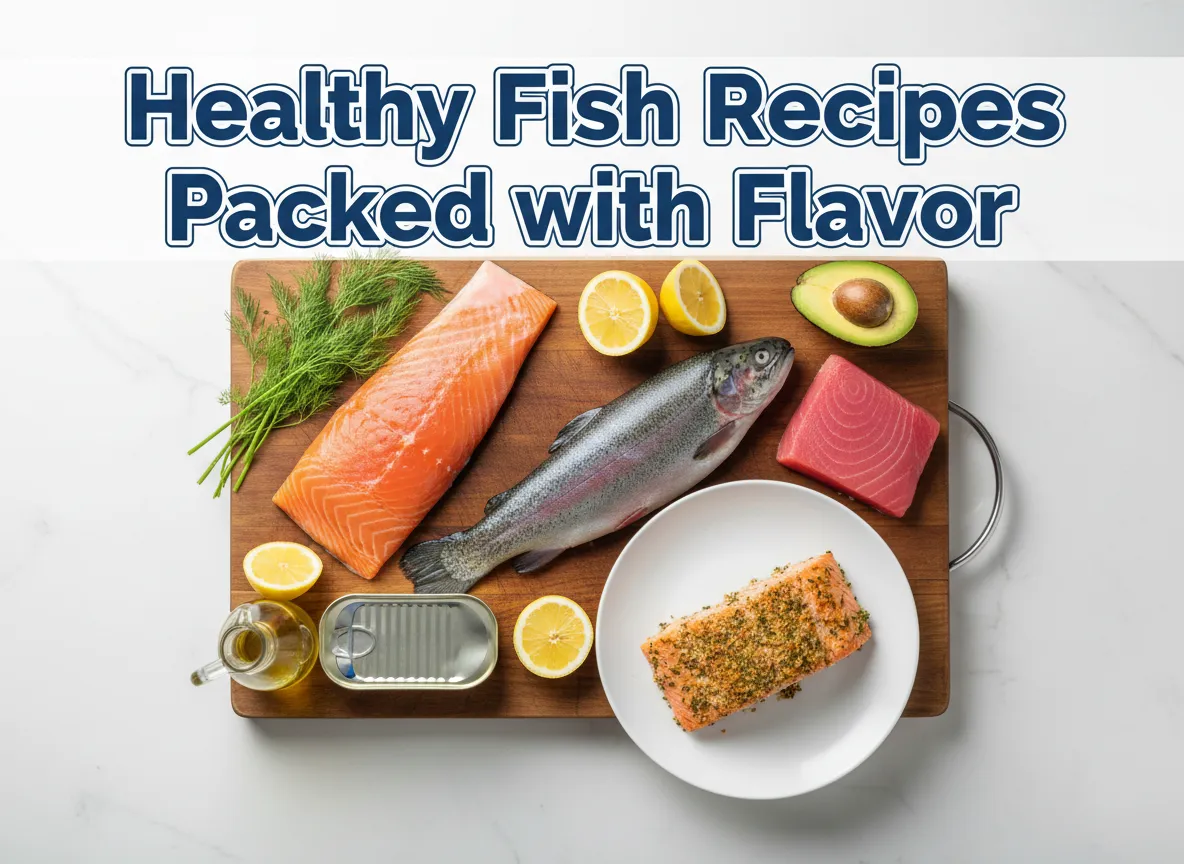
Whether the goal is improving cardiovascular health, reducing inflammation, or simply adding more variety to weekly meals, these recipes deliver on every front. Each one features fish rich in omega-3 fatty acids, the “good fats” that support brain function, reduce triglycerides, and protect the heart.
Key Takeaways
- Fatty fish such as salmon, mackerel, sardines, and trout are among the richest dietary sources of omega-3 fatty acids.
- Cooking methods matter: baking, grilling, poaching, and pan-searing preserve nutrients better than deep frying.
- Pairing fish with healthy fats like olive oil, avocado, and nuts amplifies both flavor and nutritional value.
- These 9 healthy fish recipes that are packed with flavor and good fats can be prepared in 15 to 45 minutes, making them practical for weeknight cooking.
- Variety across species ensures a broader intake of micronutrients including selenium, vitamin D, and B12.
Why Healthy Fish Recipes Belong in Every Weekly Meal Plan
Before diving into the individual recipes, it helps to understand why fish earns its reputation as a nutritional powerhouse. Fatty fish species contain long-chain omega-3 fatty acids, specifically EPA (eicosapentaenoic acid) and DHA (docosahexaenoic acid). These compounds are not produced efficiently by the human body, which makes dietary sources critical.
What makes fish fats “good fats”?
Unlike saturated fats found in processed meats, the unsaturated fats in fish actively support health. Research consistently links regular fish consumption with:
- Reduced risk of cardiovascular disease
- Lower levels of systemic inflammation
- Improved cognitive function and mood regulation
- Better eye health, particularly in aging populations
Beyond fats, fish is a complete protein source, meaning it contains all essential amino acids. It is also low in calories relative to its protein density, making it ideal for those managing weight without sacrificing nutrition.
A quick reference: omega-3 content by fish species
| Fish Species | Omega-3 per 3 oz (cooked) | Best Cooking Method |
|---|---|---|
| Atlantic Salmon | 1.8 g | Pan-sear, bake, grill |
| Mackerel | 1.6 g | Bake, broil |
| Sardines (canned) | 1.4 g | Toast, salads, pasta |
| Rainbow Trout | 1.0 g | Pan-sear, bake |
| Albacore Tuna | 0.7 g | Sear, poke bowls |
| Halibut | 0.4 g | Bake, poach |
The 9 Healthy Fish Recipes That Are Packed with Flavor and Good Fats
These recipes are organized to move from the most omega-3-dense fish to lighter white fish options, ensuring a broad nutritional range. Each recipe includes key ingredients, a brief technique overview, and a nutritional highlight.
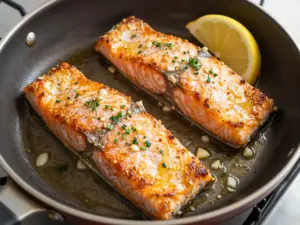
1. Herb-Crusted Baked Salmon with Lemon and Garlic
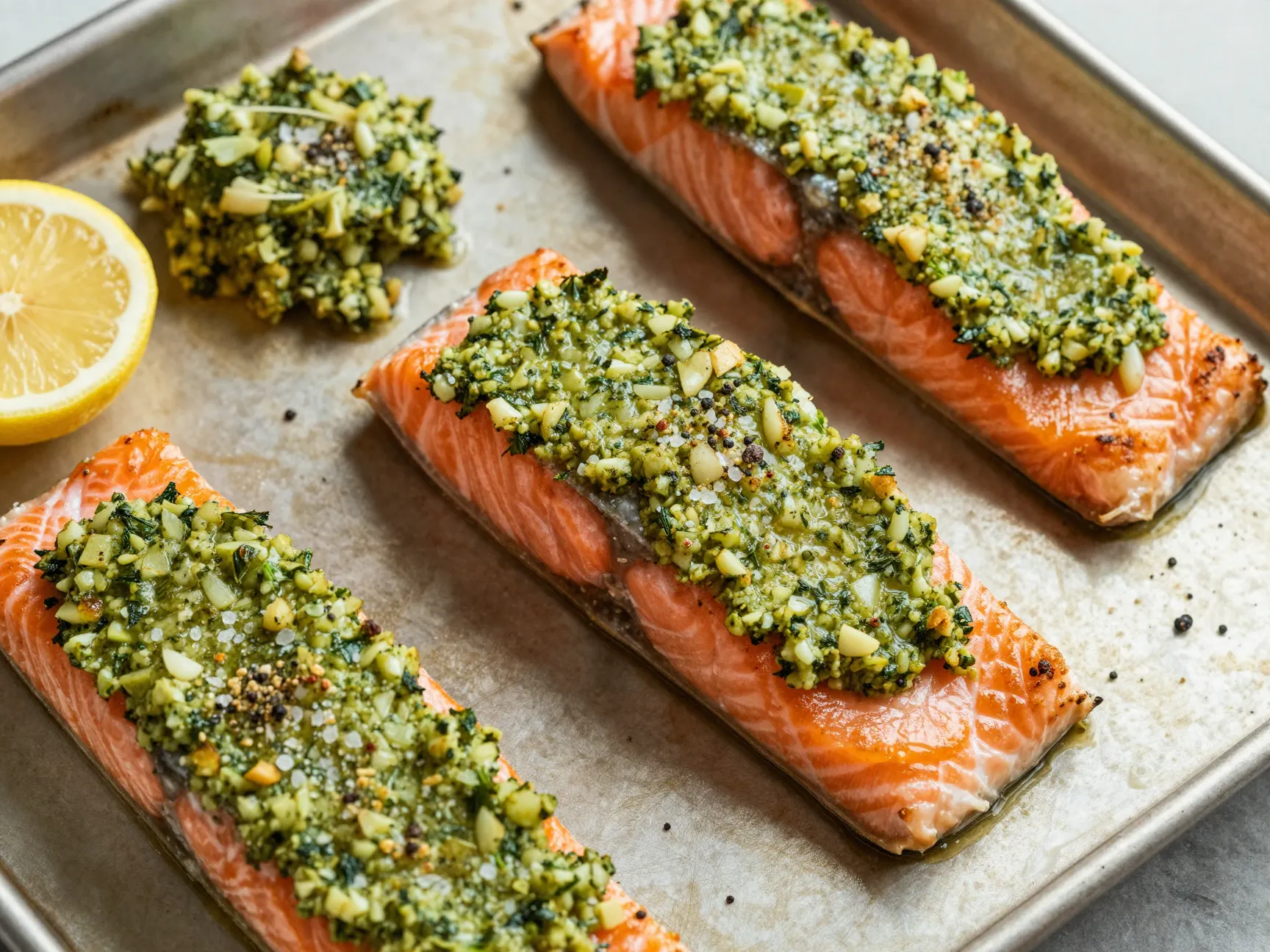
Why it works: Salmon is the gold standard of fatty fish. This preparation keeps the omega-3-rich flesh moist while building a savory, aromatic crust.
Key ingredients:
- 4 salmon fillets (6 oz each), skin-on
- 3 tablespoons extra-virgin olive oil
- 4 garlic cloves, minced
- 2 tablespoons fresh dill, chopped
- 2 tablespoons fresh parsley, chopped
- Zest and juice of 1 lemon
- Sea salt and black pepper
Technique: Preheat oven to 400 degrees F. Combine olive oil, garlic, herbs, and lemon zest into a paste. Press firmly onto the top of each fillet. Bake for 12 to 15 minutes until the flesh flakes easily with a fork. Finish with a squeeze of fresh lemon juice.
Nutritional highlight: One serving provides approximately 34 g of protein, 1.8 g of omega-3 fatty acids, and significant amounts of vitamin D and selenium.
“The combination of olive oil and salmon creates a double dose of heart-healthy fats in a single dish.”
2. Grilled Mackerel with Smoked Paprika and Olive Oil
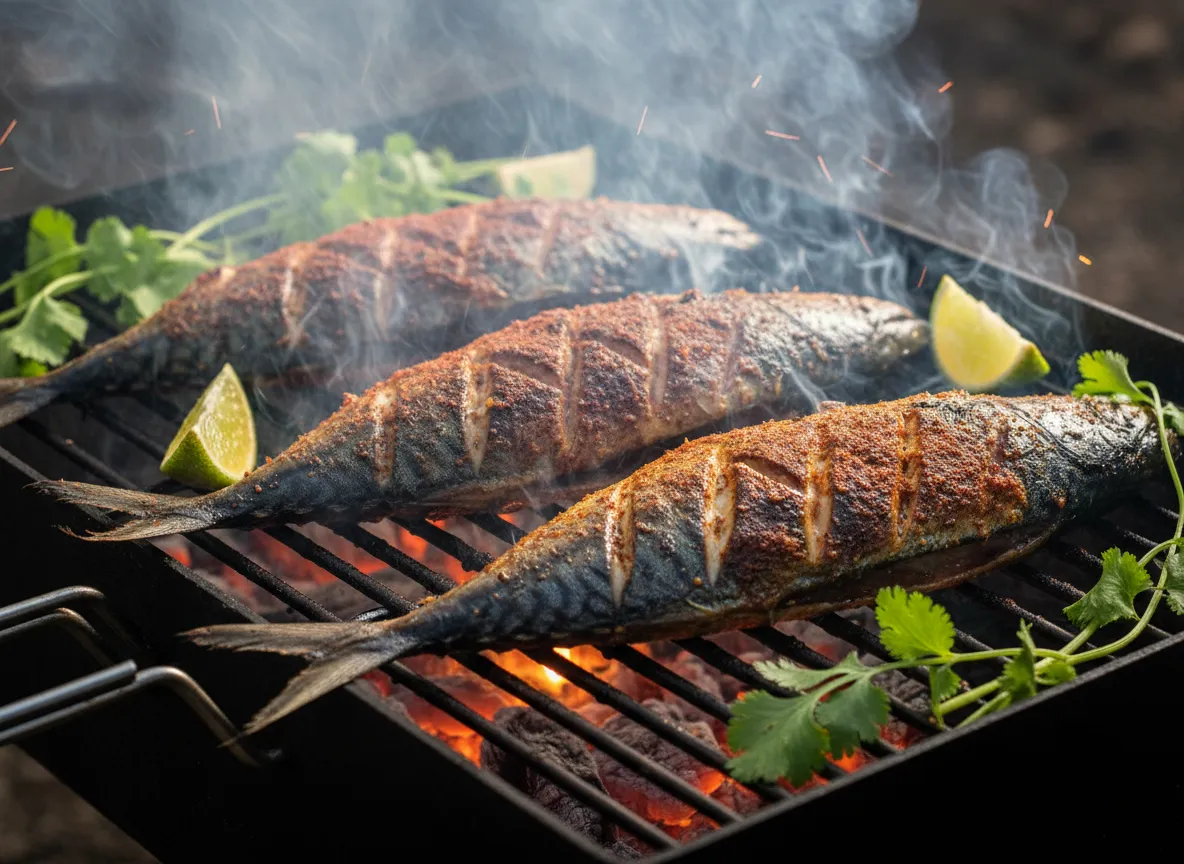
Why it works: Mackerel is one of the most affordable fatty fish available, and its bold, rich flavor stands up beautifully to smoky, assertive seasonings.
Key ingredients:
- 4 whole mackerel, cleaned and scored
- 3 tablespoons extra-virgin olive oil
- 1 tablespoon smoked paprika
- 1 teaspoon cumin
- 1 teaspoon coriander
- 2 garlic cloves, minced
- Fresh cilantro and lime wedges to serve
Technique: Mix olive oil with spices and garlic to form a marinade. Rub generously inside and outside the scored mackerel. Allow to marinate for at least 20 minutes. Grill on medium-high heat for 4 to 5 minutes per side until the skin is charred and crisp.
Nutritional highlight: Mackerel delivers 1.6 g of omega-3s per serving and is one of the richest dietary sources of vitamin B12, supporting nerve health and energy metabolism.
3. Sardine and Avocado Toast with Microgreens
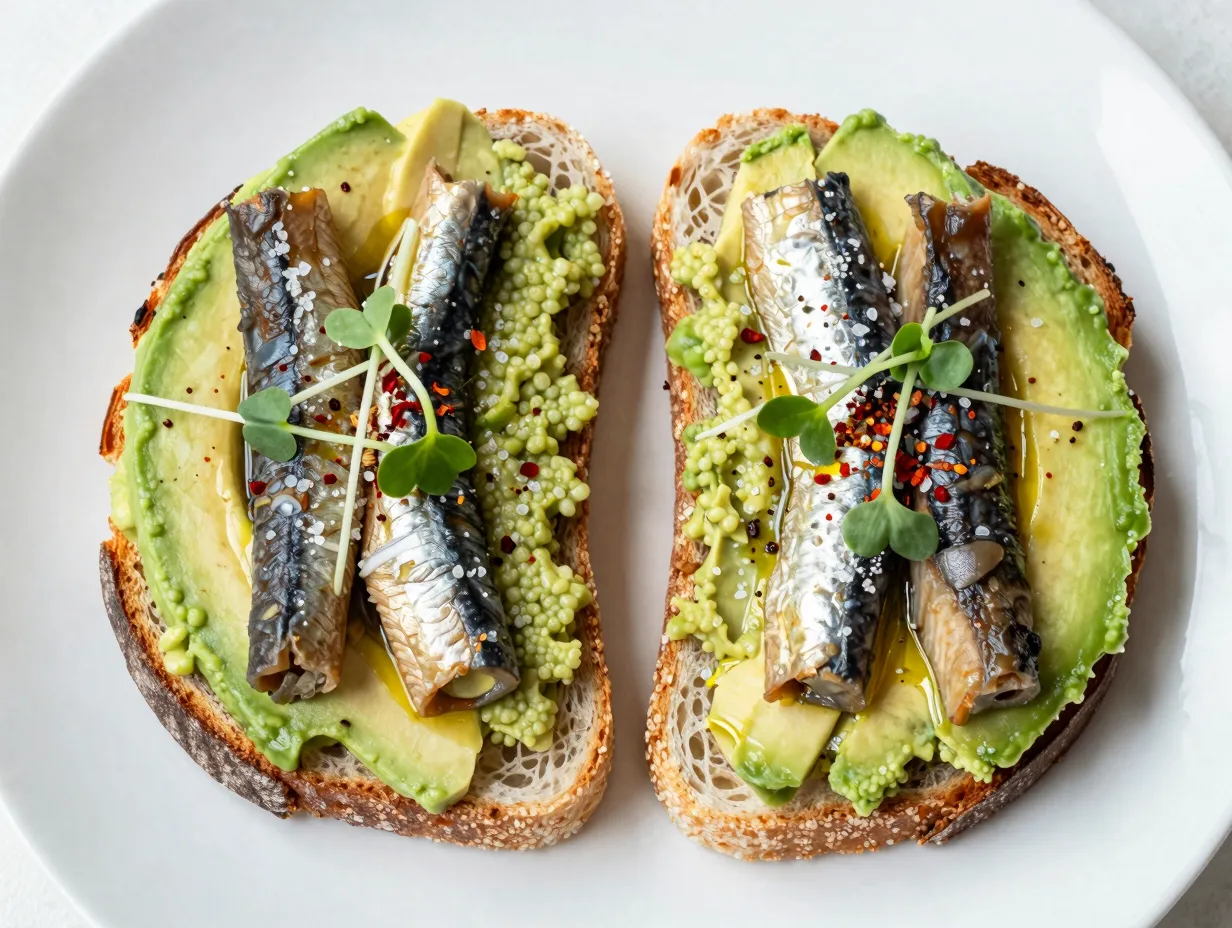
Why it works: Canned sardines are among the most sustainable, budget-friendly sources of omega-3s available in 2026. Paired with avocado, itself rich in monounsaturated fats, this recipe stacks healthy fats in a format that works for breakfast, lunch, or a light dinner.
Key ingredients:
- 1 can (4.4 oz) sardines in olive oil, drained
- 2 slices whole-grain sourdough, toasted
- 1 ripe avocado, mashed
- 1 teaspoon lemon juice
- Red pepper flakes, to taste
- Handful of microgreens
- Flaky sea salt
Technique: Mash avocado with lemon juice and a pinch of sea salt. Spread generously on toasted bread. Layer sardines on top. Finish with microgreens, red pepper flakes, and a drizzle of the olive oil from the can.
Nutritional highlight: This recipe delivers omega-3s from two sources, sardines and olive oil, plus the monounsaturated fats from avocado. One serving provides roughly 22 g of protein and significant calcium from the sardine bones.
4. Pan-Seared Rainbow Trout with Brown Butter and Almonds
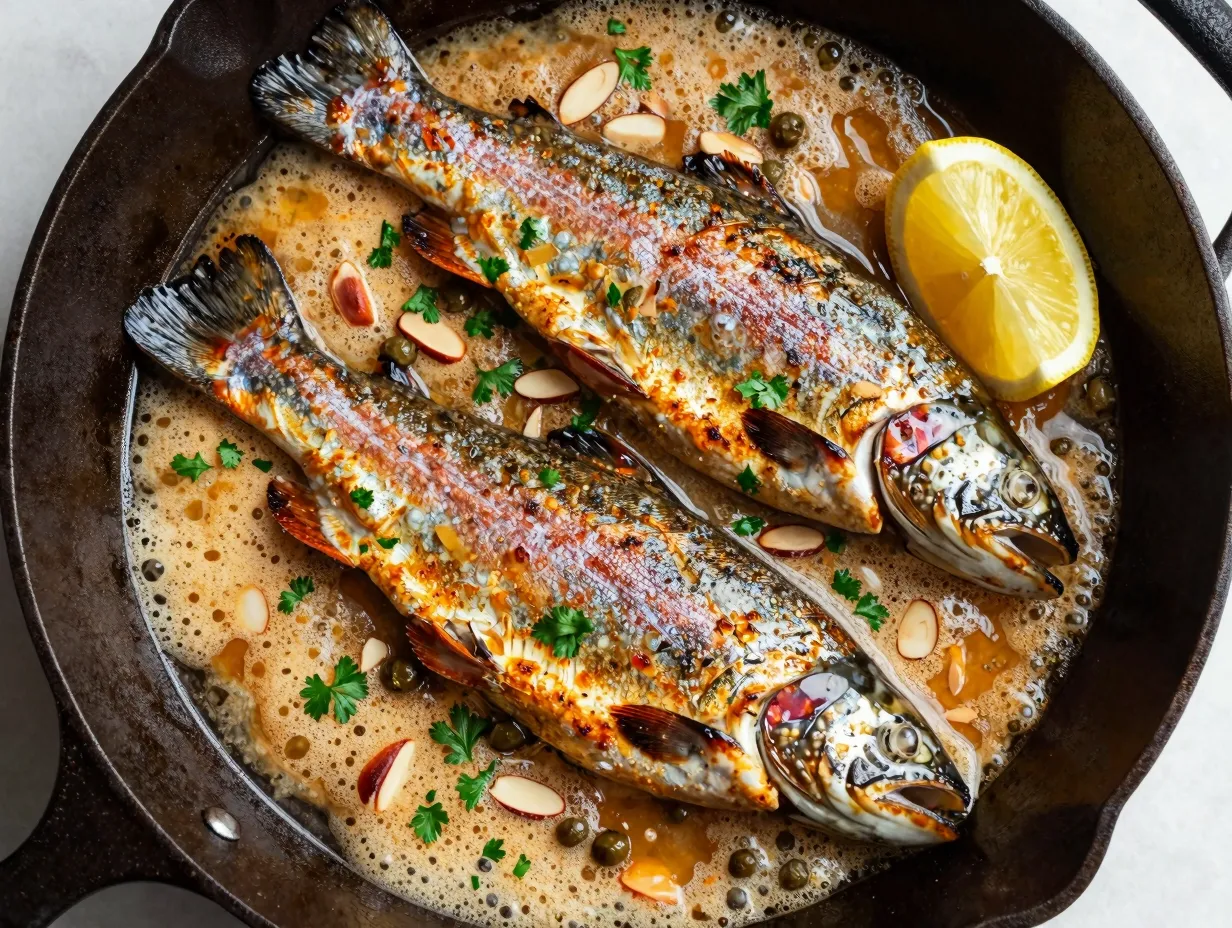
Why it works: Rainbow trout has a delicate, slightly nutty flavor that pairs perfectly with brown butter and toasted almonds. This classic French-inspired preparation, known as truite meunière, elevates an affordable fish into a restaurant-quality meal.
Key ingredients:
- 2 whole rainbow trout, butterflied
- 3 tablespoons unsalted butter
- 1/4 cup sliced almonds
- 2 tablespoons capers
- Juice of 1 lemon
- Fresh flat-leaf parsley
- Sea salt and white pepper
Technique: Season trout with salt and pepper. Sear in a hot skillet with 1 tablespoon butter for 3 minutes per side. Remove fish. Add remaining butter to the pan, cook until golden brown, then add almonds, capers, and lemon juice. Pour sauce over the fish immediately.
Nutritional highlight: Almonds add vitamin E and additional healthy fats, while trout contributes 1.0 g of omega-3s per serving along with a full spectrum of B vitamins.
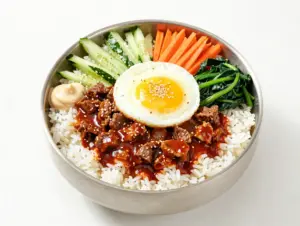
5. Tuna Poke Bowl with Avocado, Edamame, and Sesame Dressing
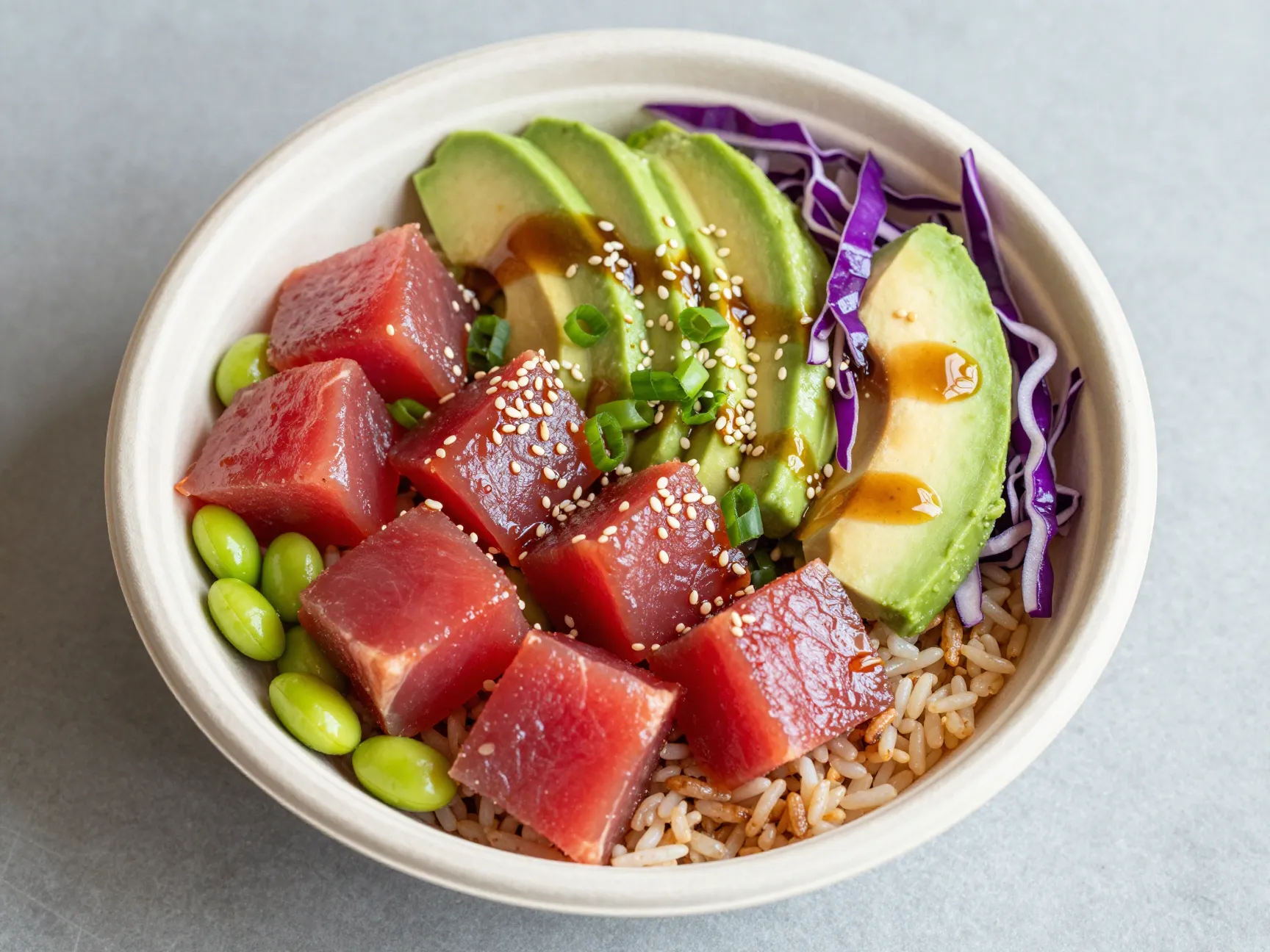
Why it works: The poke bowl format is one of the most nutrient-dense meal structures available. Raw sushi-grade tuna preserves all its omega-3 content without any heat degradation.
Key ingredients:
- 12 oz sushi-grade ahi tuna, cubed
- 2 cups cooked brown rice
- 1 avocado, sliced
- 1/2 cup shelled edamame
- 1/4 cup shredded purple cabbage
- 2 tablespoons low-sodium soy sauce
- 1 tablespoon sesame oil
- 1 teaspoon rice vinegar
- 1 teaspoon fresh ginger, grated
- Sesame seeds and scallions to garnish
Technique: Whisk soy sauce, sesame oil, rice vinegar, and ginger into a dressing. Toss tuna gently in half the dressing. Assemble bowls with rice as the base, then arrange tuna, avocado, edamame, and cabbage. Drizzle remaining dressing over the top.
Nutritional highlight: This bowl provides omega-3s from tuna and sesame oil, plant-based protein from edamame, and the monounsaturated fats of avocado, a comprehensive healthy fat profile in a single meal.
6. Baked Cod with Mango Salsa and Coconut Rice
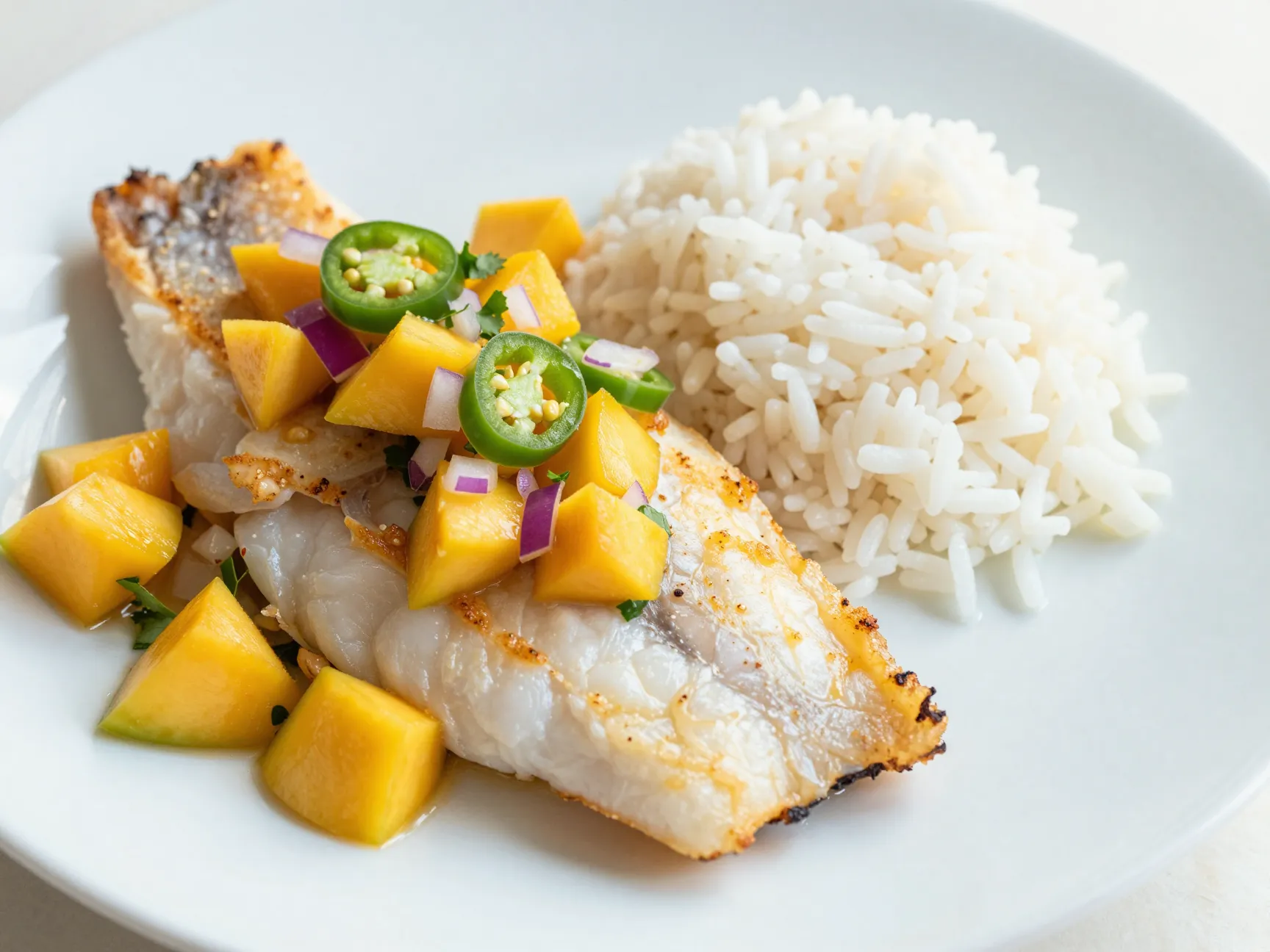
Why it works: Cod is a lean white fish lower in fat than salmon, but it is an excellent protein source and pairs brilliantly with tropical, bright flavors. The mango salsa adds antioxidant-rich vitamins A and C.
Key ingredients:
- 4 cod fillets (6 oz each)
- 1 tablespoon olive oil
- 1 teaspoon garlic powder
- 1 teaspoon onion powder
- Salt and pepper
- For the mango salsa: 1 ripe mango (diced), 1/2 red onion (finely diced), 1 jalapeño (seeded and minced), juice of 1 lime, fresh cilantro
- 2 cups jasmine rice cooked in light coconut milk
Technique: Season cod with olive oil and spices. Bake at 400 degrees F for 12 to 14 minutes. While the fish cooks, combine all salsa ingredients and allow flavors to meld. Serve cod over coconut rice topped with generous mango salsa.
Nutritional highlight: While cod is lower in omega-3s than fatty fish, it delivers 26 g of lean protein per serving with very few calories, making it ideal for high-protein, lower-fat meal days.
7. Mediterranean Halibut with Capers, Olives, and Cherry Tomatoes
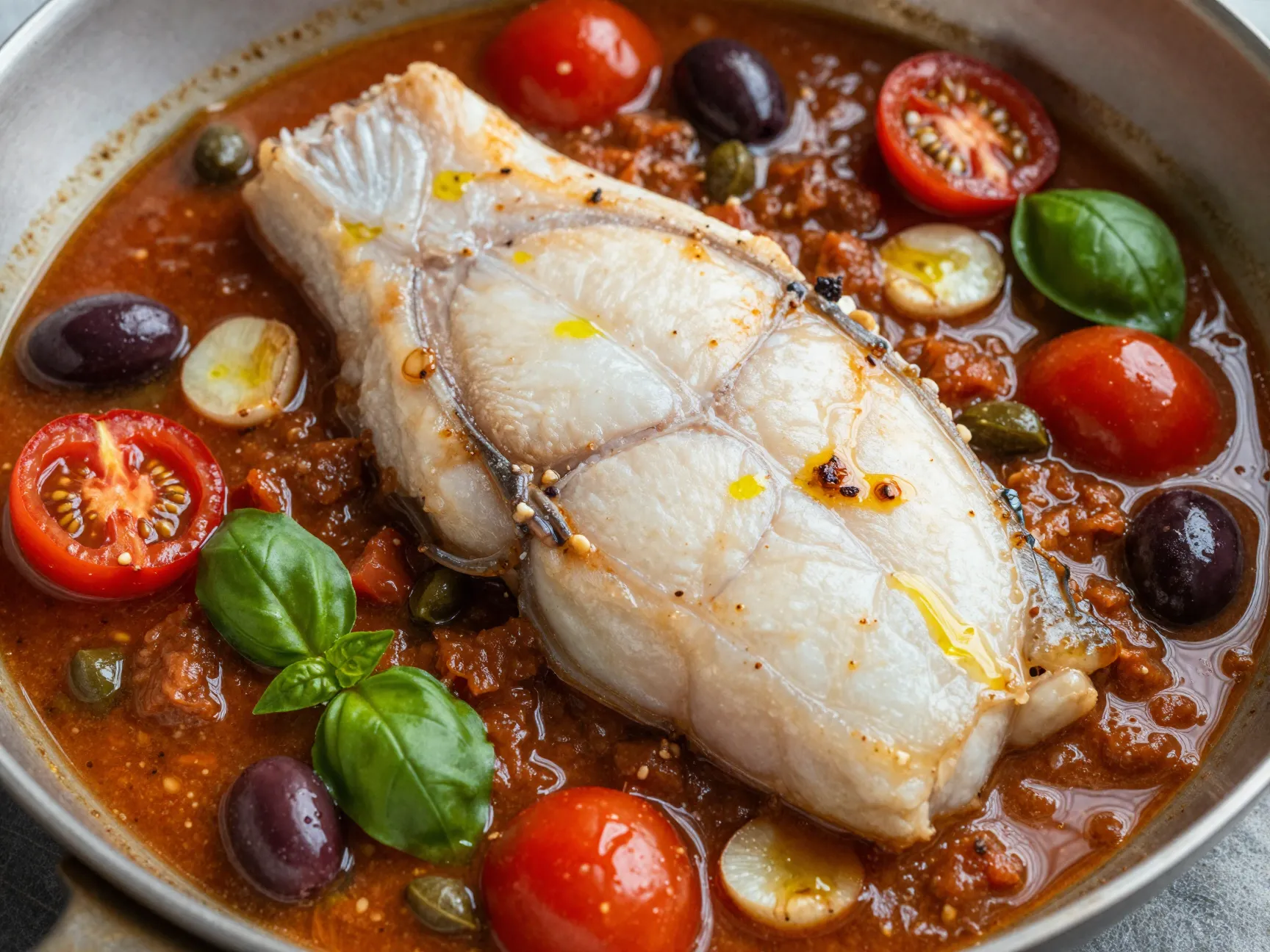
Why it works: Halibut has a firm, meaty texture that holds up well in a Mediterranean-style braise. The combination of capers, olives, and tomatoes creates a sauce rich in antioxidants and healthy fats from olive oil.
Key ingredients:
- 4 halibut steaks (6 oz each)
- 3 tablespoons extra-virgin olive oil
- 1/2 cup Kalamata olives, pitted and halved
- 2 tablespoons capers, rinsed
- 1 cup cherry tomatoes, halved
- 3 garlic cloves, thinly sliced
- 1/4 cup dry white wine
- Fresh basil and oregano
Technique: Sear halibut in olive oil for 2 minutes per side. Remove from pan. Saute garlic until golden, add tomatoes, olives, capers, and wine. Simmer for 3 minutes, then nestle fish back into the sauce. Cover and cook for 5 to 6 minutes until cooked through.
Nutritional highlight: Olive oil and olives contribute monounsaturated fatty acids (MUFAs), while halibut provides selenium and magnesium, nutrients that support thyroid function and muscle health.
8. Miso-Glazed Sablefish (Black Cod) with Bok Choy
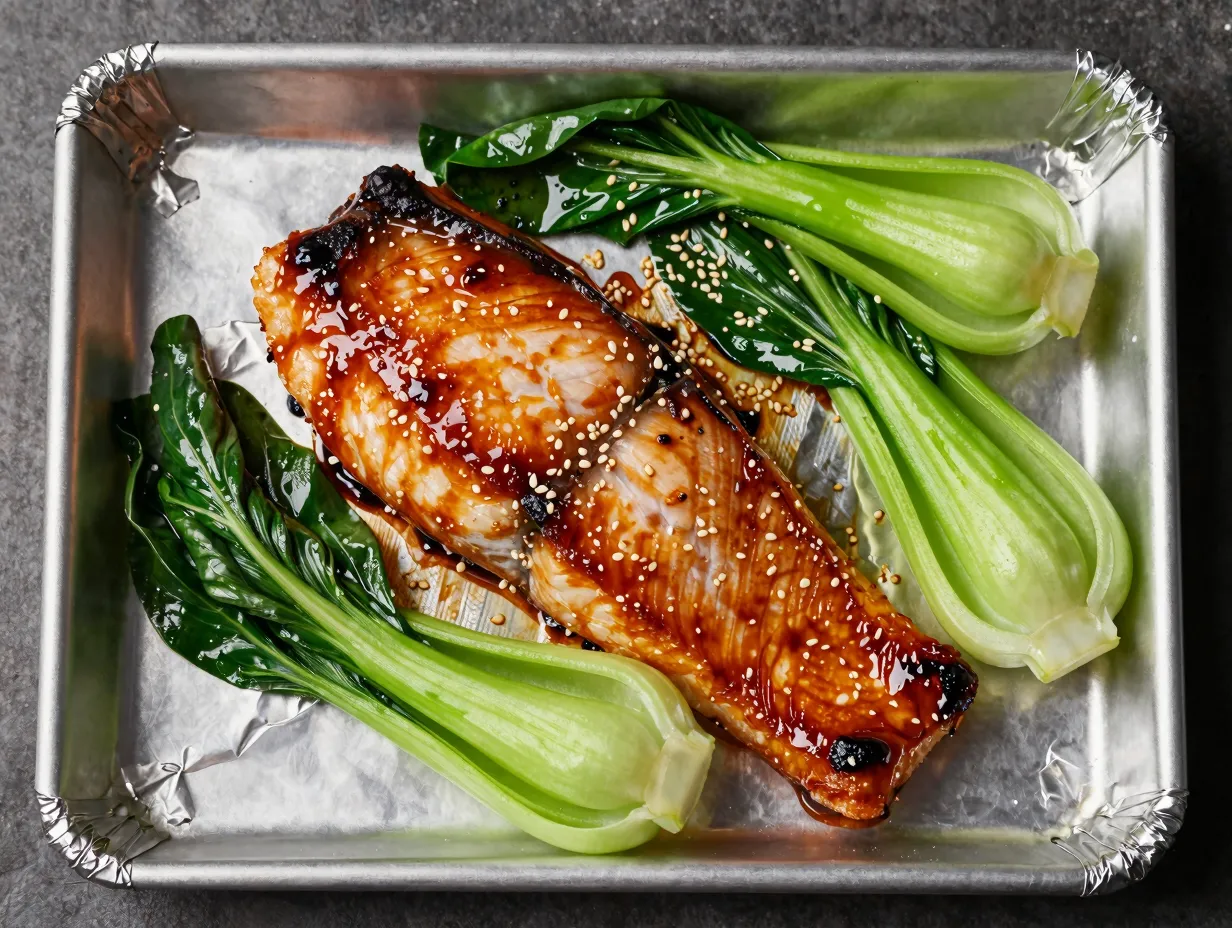
Why it works: Sablefish, commonly called black cod, is one of the most overlooked fatty fish in Western cooking. It contains omega-3 levels comparable to salmon and has a buttery, silky texture that absorbs marinades beautifully. The miso glaze adds depth and umami with minimal added fat.
Key ingredients:
- 4 sablefish fillets (5 oz each)
- 3 tablespoons white miso paste
- 2 tablespoons mirin
- 1 tablespoon sake or dry sherry
- 1 tablespoon honey
- 4 baby bok choy, halved
- 1 teaspoon sesame oil
- Toasted sesame seeds
Technique: Whisk miso, mirin, sake, and honey into a smooth glaze. Coat fish fillets and marinate for at least 2 hours (overnight preferred). Broil on a foil-lined sheet for 8 to 10 minutes until the glaze caramelizes and the fish flakes. Steam bok choy, drizzle with sesame oil, and serve alongside.
Nutritional highlight: Sablefish delivers up to 1.5 g of omega-3s per serving, along with vitamin D and potassium. Miso adds beneficial probiotics and B vitamins.
9. Anchovy and Spinach Pasta with Garlic and Olive Oil
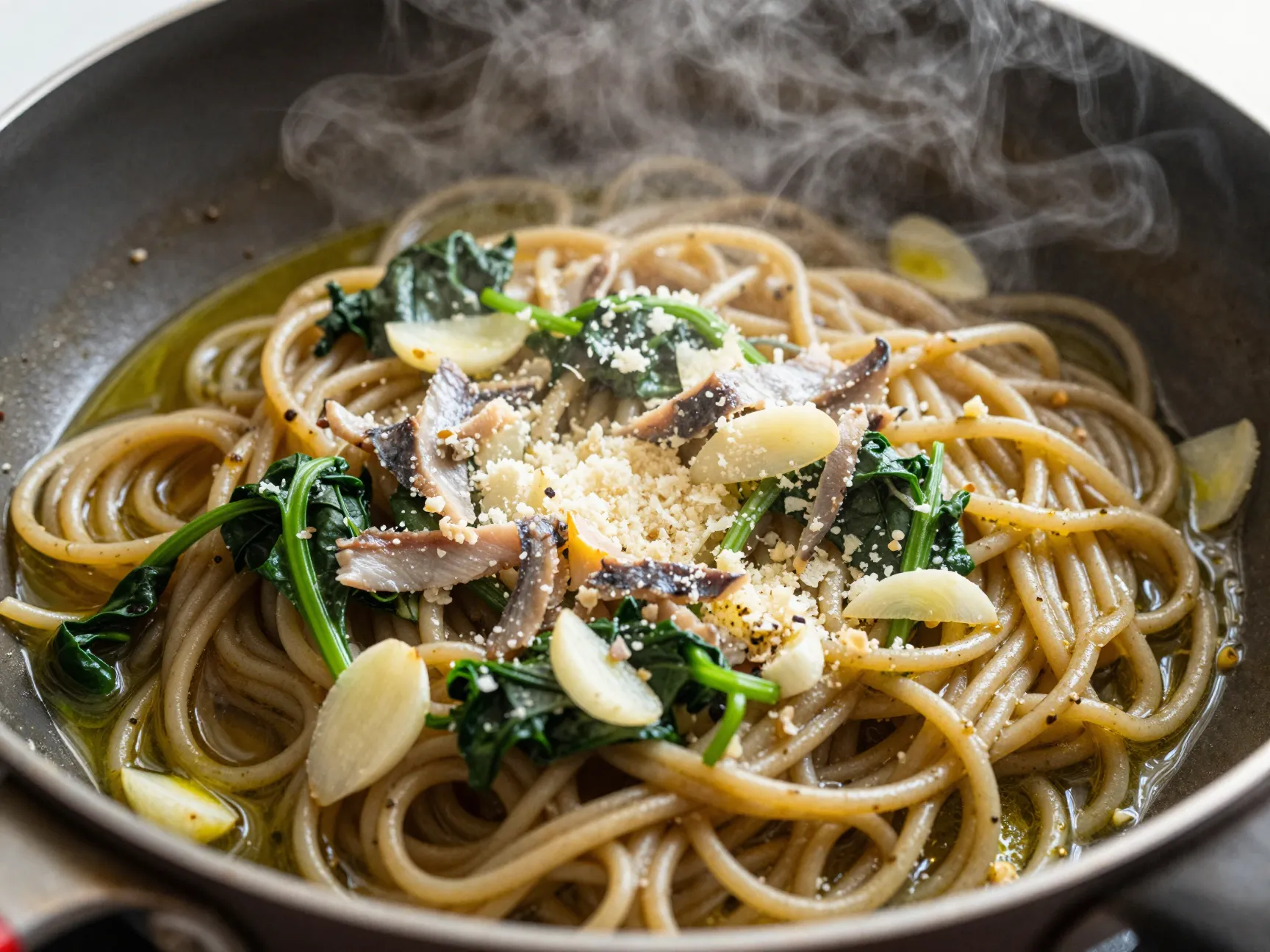
Why it works: Anchovies are among the most nutrient-dense fish by weight, yet they are frequently underused outside of pizza toppings. When cooked into pasta with garlic and olive oil, they dissolve into the sauce, creating a deeply savory, umami-rich base that most people cannot identify as fish at all.
Key ingredients:
- 12 oz whole-wheat spaghetti
- 8 to 10 anchovy fillets (in olive oil)
- 4 tablespoons extra-virgin olive oil
- 5 garlic cloves, thinly sliced
- 1/4 teaspoon red pepper flakes
- 4 cups fresh baby spinach
- Juice of 1/2 lemon
- Freshly grated Parmesan
- Black pepper
Technique: Cook pasta to al dente, reserving 1 cup of pasta water. In a large skillet, warm olive oil over medium heat. Add garlic and red pepper flakes; cook until fragrant. Add anchovies and stir until they melt into the oil. Add spinach and wilt. Toss in pasta with a splash of pasta water. Finish with lemon juice and Parmesan.
Nutritional highlight: Anchovies are exceptionally rich in omega-3s (approximately 0.9 g per 2-ounce serving), calcium, and iron. Whole-wheat pasta adds fiber, making this a complete, balanced meal.
Tips for Cooking These Healthy Fish Recipes Successfully
Getting the most out of these 9 healthy fish recipes that are packed with flavor and good fats requires a few foundational techniques. Even experienced home cooks benefit from revisiting these principles.
Buying the right fish:
- Purchase fish from reputable fishmongers or grocery stores with high turnover.
- Look for firm flesh, a mild ocean scent (not “fishy”), and clear, bright eyes on whole fish.
- For raw preparations like poke bowls, always use sushi-grade or sashimi-grade fish.
- Frozen-at-sea fish is often fresher than fresh fish that has traveled long distances.
Avoiding the most common cooking mistakes:
- Overcooking is the single biggest mistake with fish. Most fillets need only 8 to 12 minutes in a 400-degree oven or 3 to 4 minutes per side in a skillet. The internal temperature should reach 145 degrees F.
- Not patting fish dry before searing prevents proper browning. Always use paper towels to remove surface moisture.
- Moving fish too early in a pan causes it to stick and break. Let it release naturally, it will lift cleanly when a proper sear has formed.
- Under-seasoning is common with fish. Season generously with salt before cooking, as fish protein requires more salt than red meat to reach its flavor potential.
Enhancing healthy fat content:
- Use extra-virgin olive oil as the primary cooking fat for most of these recipes.
- Add avocado, nuts, or seeds as garnishes to increase monounsaturated and polyunsaturated fat content.
- Avoid replacing olive oil with vegetable or seed oils, which are high in omega-6 fatty acids and can counteract the anti-inflammatory benefits of fish.
Meal Planning with These Recipes in 2026
Incorporating these recipes into a weekly rotation is straightforward with a little planning. A practical approach is to select two or three recipes per week, alternating between fatty fish (salmon, mackerel, sardines, sablefish) and leaner options (cod, halibut) to balance caloric intake while maintaining nutrient diversity.
Sample weekly plan:
- Monday: Herb-Crusted Baked Salmon (Recipe 1)
- Wednesday: Tuna Poke Bowl (Recipe 5)
- Friday: Anchovy and Spinach Pasta (Recipe 9)
- Sunday: Mediterranean Halibut (Recipe 7)
This rotation provides omega-3s from multiple species, ensuring a varied micronutrient profile. Batch-cooking rice or grains on Sunday reduces weeknight prep time significantly.
Sustainability note: In 2026, seafood sustainability certifications from organizations like the Marine Stewardship Council (MSC) remain a reliable guide for choosing fish that supports ocean health. Look for MSC-certified labels when purchasing salmon, cod, and halibut in particular.
Conclusion
The evidence is clear: regular consumption of fatty fish is one of the most impactful dietary choices a person can make for long-term health. These 9 healthy fish recipes that are packed with flavor and good fats prove that nutritious eating does not require sacrificing taste, time, or variety.
Actionable next steps:
- Choose one recipe from this list and cook it this week. Start with the herb-crusted salmon or sardine avocado toast if time is limited, both require under 20 minutes.
- Stock the pantry with staples that appear across multiple recipes: extra-virgin olive oil, garlic, lemons, capers, and a variety of fresh herbs.
- Explore a new fish species each month. If salmon is already a regular, try sablefish or mackerel next, both are more affordable and equally nutritious.
- Invest in a reliable instant-read thermometer to eliminate the guesswork of doneness and prevent overcooking.
- Review seafood sustainability labels when shopping to make choices that support both personal health and ocean ecosystems.
Fish is not a compromise food. When prepared with intention and quality ingredients, it is among the most satisfying, flavorful, and health-forward proteins available. These recipes are the starting point, not the ceiling.