8 Best Camo Outfits for Women Who Love the Outdoors
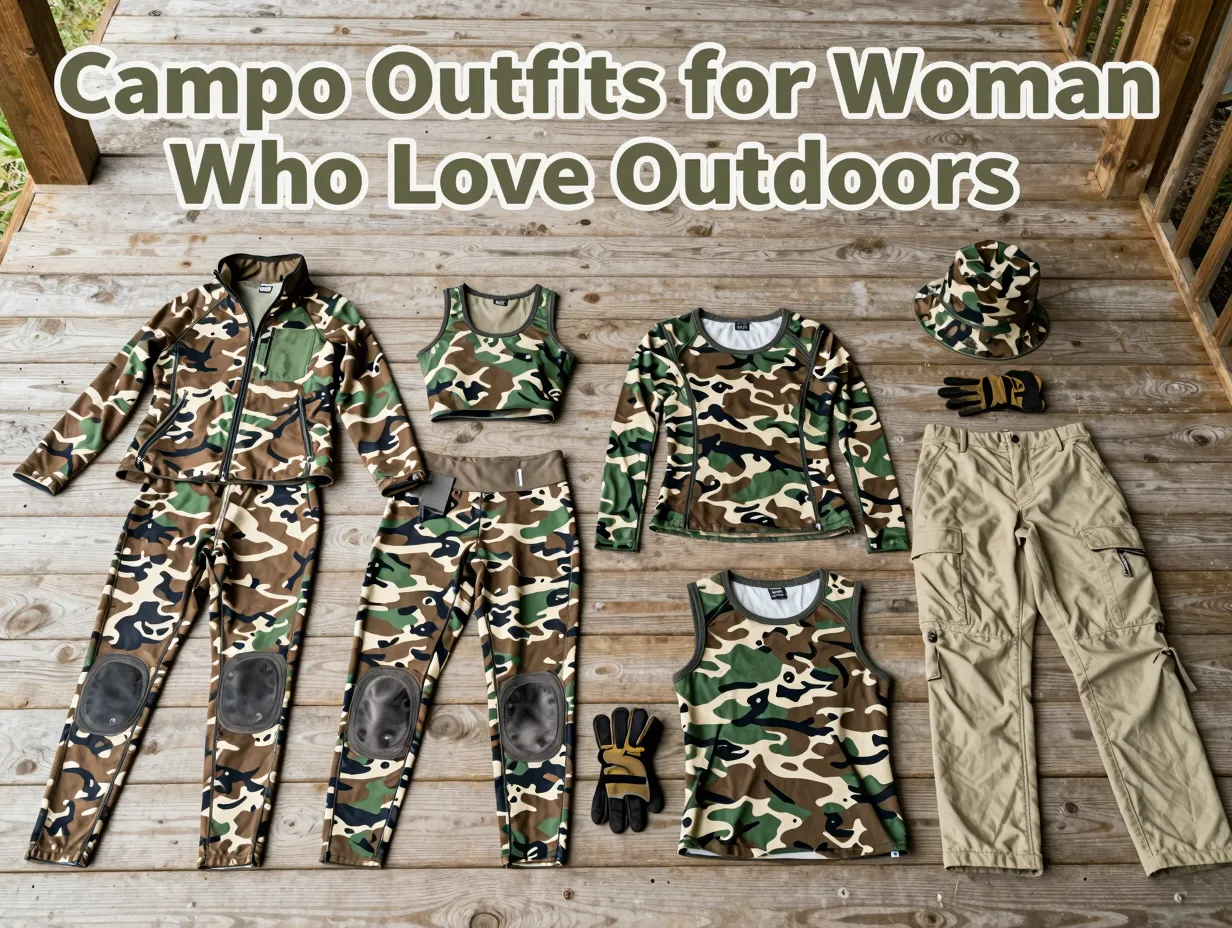
Outdoor apparel sales for women grew by more than 30 percent over the past five years, and camouflage has moved well beyond hunting camps to become one of the most versatile pattern categories in women’s activewear. Whether the goal is blending into a deer stand at dawn or simply looking sharp on a weekend trail, the right camo outfit does double duty, functional performance and undeniable style. This guide to the 8 best camo outfits for women who love the outdoors covers every major activity and body type, breaking down what to look for, which combinations work best, and how to build a camo wardrobe that performs as hard as the women wearing it.
Disclosure: This post contains affiliate links. As an Amazon Associate, we earn from qualifying purchases, and at no extra cost to you.
Key Takeaways
- Camouflage patterns vary significantly by terrain, choosing the right one improves both performance and aesthetics.
- Layering is the foundation of every effective outdoor camo outfit, from base layer to outer shell.
- Fit matters as much as pattern, women-specific cuts improve mobility and comfort in the field.
- Fabric technology (moisture-wicking, scent control, stretch) separates functional camo from purely decorative pieces.
- The 8 best camo outfits for women who love the outdoors span hunting, hiking, fishing, and casual wear, making camo one of the most adaptable pattern choices available.
What Makes a Great Women’s Camo Outfit
Before diving into the specific outfits, it helps to understand what separates a high-performing camo ensemble from one that just looks the part. Several core factors determine quality.
Pattern selection is the starting point. Woodland, Mossy Oak, Realtree, digital camo, and multicam each excel in different environments. Woodland patterns work in deciduous forests. Desert digital camo suits arid, rocky terrain. Realtree and Mossy Oak patterns are engineered specifically for hunting, mimicking bark, leaves, and brush.
Fabric performance is equally important. Look for these properties:
- Moisture-wicking to pull sweat away from skin
- Stretch panels (typically 4-way stretch) for full range of motion
- Scent-control technology for hunting applications
- Water-resistant or waterproof coatings for wet conditions
- Quiet fabric construction that does not rustle loudly in the brush
Women-specific fit is non-negotiable. Generic unisex cuts often restrict movement at the shoulders and hips. Purpose-built women’s outdoor camo incorporates articulated knees, a higher back rise, and contoured waistbands.
“The best camo outfit is the one you forget you are wearing, it moves with you, keeps you comfortable, and does its job without demanding attention.”
Finally, layering compatibility determines how versatile an outfit truly is. A great camo system includes a moisture-managing base layer, an insulating mid-layer, and a weather-resistant outer shell, all in complementary patterns or tones.
The 8 Best Camo Outfits for Women Who Love the Outdoors
The following eight outfits are organized by activity and use case, ranging from early-season hunting to casual outdoor lifestyle wear. Each entry includes the key pieces, recommended fabrics, and styling notes.
1. The Early-Season Hunting Setup
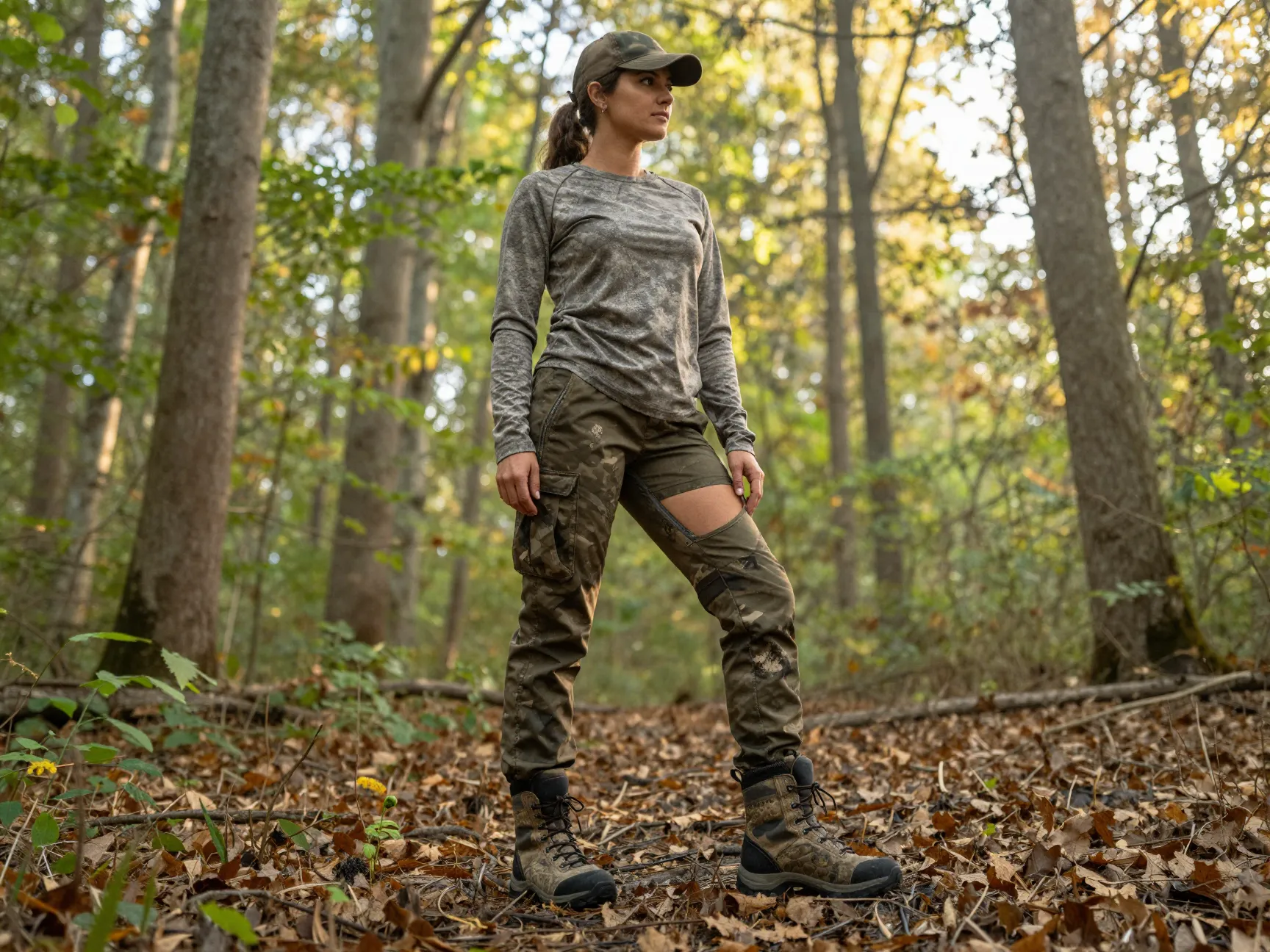
Early-season hunting, typically late summer through early fall, demands lightweight, breathable camo that manages heat while maintaining concealment. The core pieces for this outfit are:
- A lightweight camo long-sleeve shirt in a moisture-wicking polyester-spandex blend
- Camo cargo pants with articulated knees and zip-off legs for temperature flexibility
- A camo ball cap or boonie hat
- Low-cut camo hunting boots with aggressive rubber outsoles
Pattern recommendation: Realtree Edge or Mossy Oak Obsession work exceptionally well in early-season green and brown foliage.
Fabric tip: Look for shirts with built-in UPF 50+ sun protection, since early-season hunting often means sitting in open stands during warm daylight hours.
The zip-off cargo pant is a smart investment for this outfit. When temperatures climb mid-morning, the legs detach to convert into shorts without requiring a full outfit change. Pair with merino wool or synthetic-blend socks to manage moisture in the boots.
2. The Cold-Weather Hunting Layering System
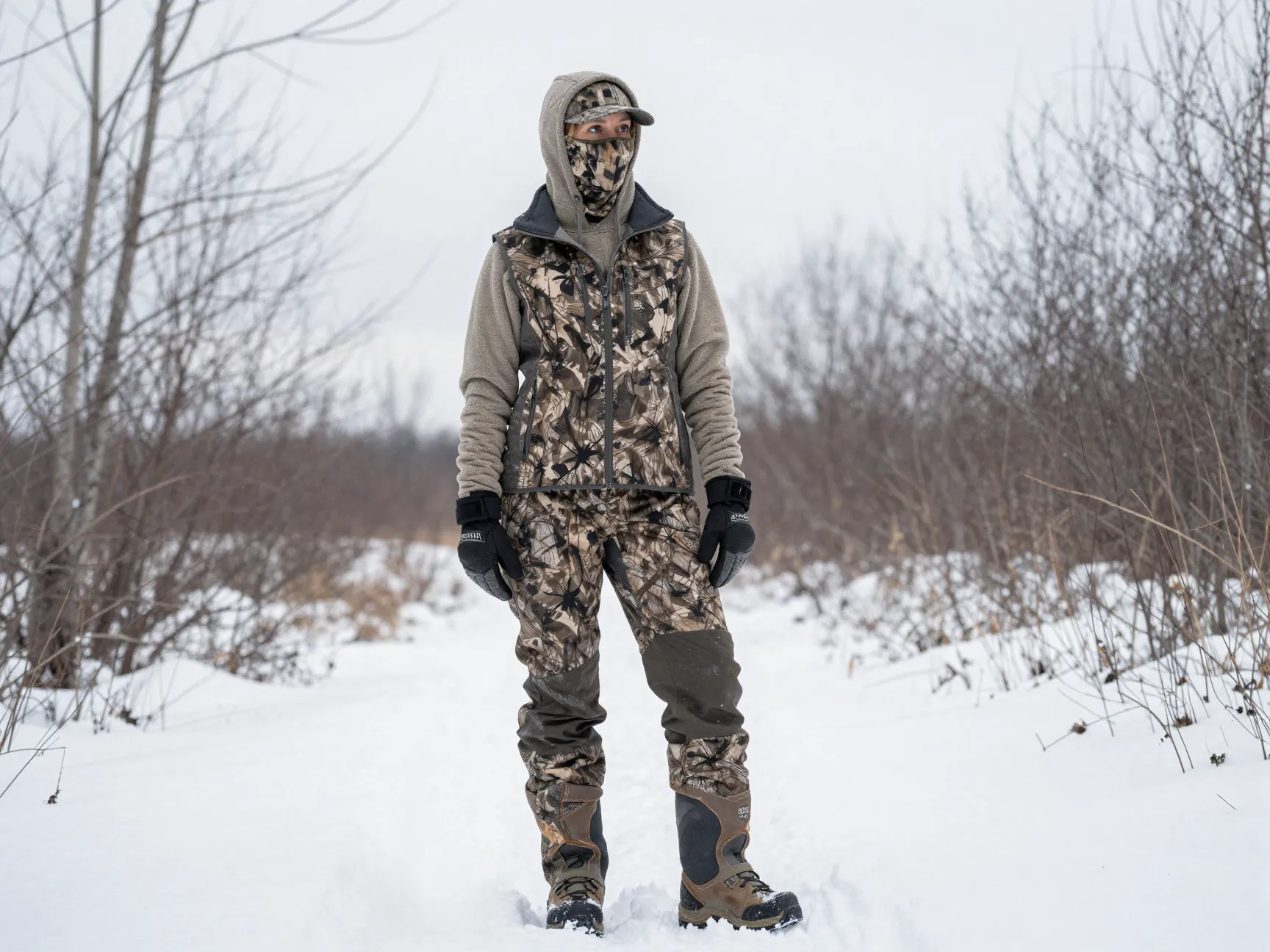
Late-season hunting introduces cold temperatures, wind, and often precipitation. A proper layering system is the defining feature of this outfit, and it is where women-specific camo truly earns its place.
Layer 1, Base: A camo or neutral-tone merino wool base layer top and bottom. Merino regulates temperature naturally, resists odor, and stays warm even when damp.
Layer 2, Mid: A fleece-lined camo hoodie or insulated camo vest. The vest option preserves core warmth while keeping arms unrestricted for drawing a bow or shouldering a rifle.
Layer 3, Outer: A waterproof, windproof camo softshell or hardshell jacket paired with insulated camo bibs.
Key accessories: Camo face mask, insulated camo gloves with trigger-finger flip-back design, and rubber-soled insulated hunting boots rated to at least -20°F for extreme cold.
Pattern recommendation: Sitka Elevated II or First Lite Fusion patterns are engineered for late-season timber and work well across this full layering system.
The insulated camo bib is one of the most underrated pieces in women’s hunting apparel. It eliminates the gap between jacket and pants, seals out wind at the waist, and provides core insulation without bulk at the hips.
3. The Hiking and Trail Outfit
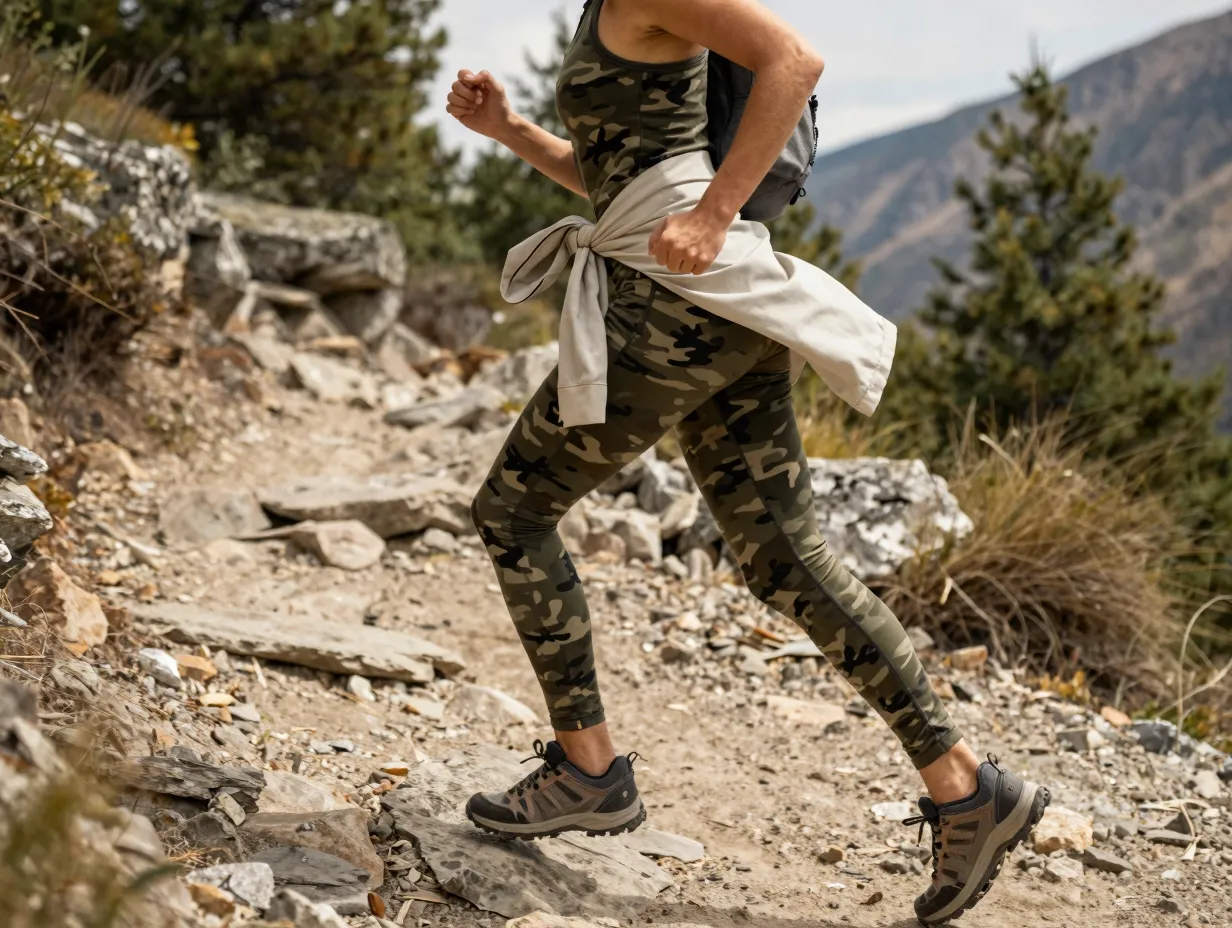
Not every camo outfit is designed for hunting. A growing number of women choose camo patterns for everyday trail use, partly for aesthetics, partly because camo fabrics are engineered for rugged outdoor performance.
The ideal hiking camo outfit includes:
- Camo trail leggings or camo hiking pants in a 4-way stretch fabric
- A camo moisture-wicking tank or short-sleeve top
- A lightweight camo windbreaker or packable rain jacket
- Trail runners or low-cut hiking boots
Pattern recommendation: For hiking, digital camo or urban multicam patterns offer a stylish edge without the heavy hunting-specific aesthetic. Brands like Prana, Kuhl, and Columbia have introduced camo-patterned hiking collections that blend performance and style.
Fit note: Camo trail leggings with a high waistband and flat seams are ideal for long days on the trail. Avoid exposed seams at the inner thigh, which cause chafing over distance.
The packable windbreaker is the MVP of this outfit. It compresses into its own pocket, weighs next to nothing, and provides critical wind and light rain protection without adding bulk to a daypack.
4. The Fishing and On-the-Water Look
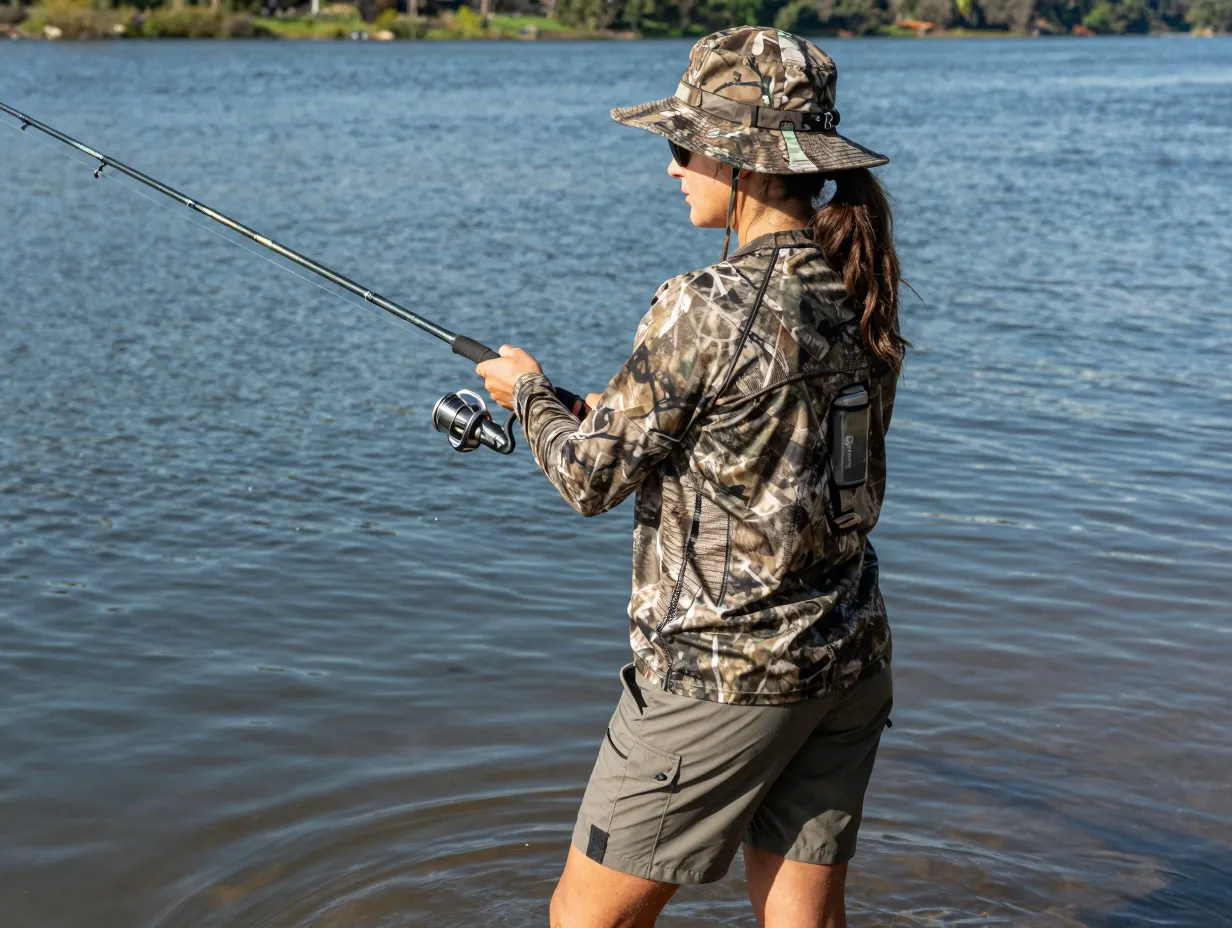
Fishing demands a different kind of camo outfit, one built for sun protection, water resistance, and freedom of movement during casting. The on-the-water camo outfit centers on:
- A long-sleeve camo sun shirt (UPF 50+) in a lightweight, quick-dry fabric
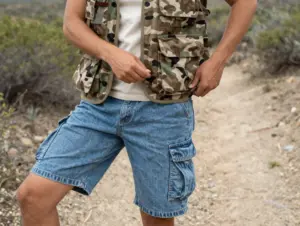
- Camo fishing shorts or convertible pants
- A camo bucket hat or wide-brim sun hat
- Water shoes or camo rubber wading boots
Pattern recommendation: Mossy Oak Elements Agua and Realtree Fishing patterns are specifically designed for aquatic environments, incorporating blues, greens, and water-texture elements that look natural on the water.
Fabric priority: Quick-dry performance is paramount. Look for nylon or polyester blends with DWR (durable water repellent) finishes. Avoid cotton entirely, it absorbs water, stays wet, and provides no insulation when soaked.
Camo sun shirts designed for fishing often include vented back panels, rod-holder loops, and chest pockets sized for fishing licenses and small tackle. These functional details make the outfit genuinely useful rather than purely decorative.
5. The Archery and Bowhunting Outfit
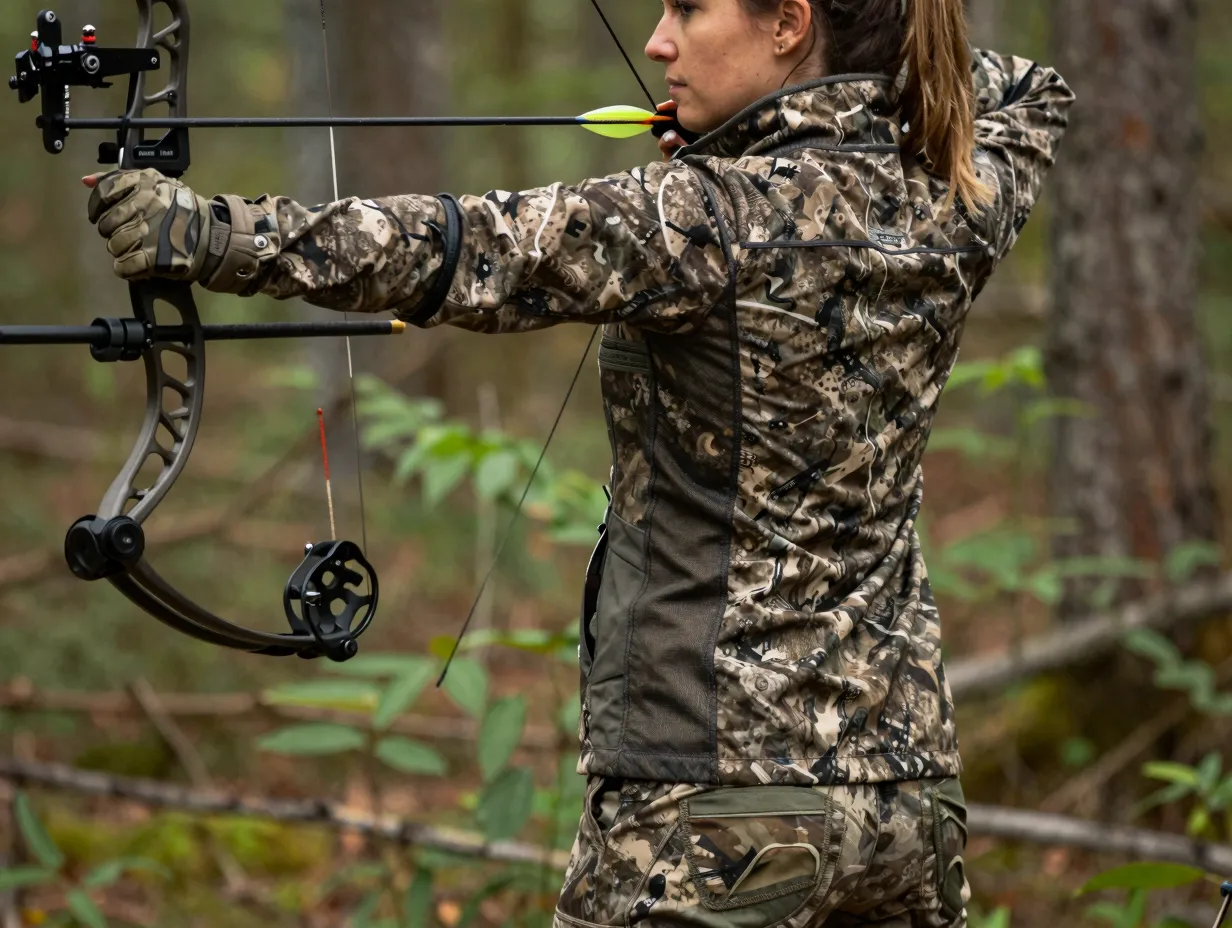
Bowhunting places unique demands on camo clothing. The draw cycle of a compound or recurve bow requires full shoulder and arm mobility, and any fabric noise during the draw can spook game at close range.
The bowhunting camo outfit prioritizes:
- A camo shirt or jacket with stretch-woven fabric across the back and shoulders
- Camo pants with articulated knees and a gusseted crotch for deep crouching
- Quiet outer fabrics, fleece-faced or brushed finishes rather than slick nylon
- Lightweight camo gloves that allow fingertip sensitivity
Pattern recommendation: Sitka Optifade Subalpine or Mossy Oak Terra Gila are popular among bowhunters for their effectiveness at close range in varied terrain.
Critical detail: Scent control becomes more important in bowhunting because shots occur at close range, typically 20 to 40 yards. Look for camo garments treated with activated carbon or silver-ion scent-control technology. Store the outfit in a sealed bag with natural scent wafers (cedar, earth) between uses.
The stretch-woven back panel is the single most important feature in a bowhunting jacket. Standard woven fabrics restrict the draw and create noise. A four-way stretch panel across the shoulders eliminates both problems simultaneously.
6. The Casual Outdoor Lifestyle Outfit
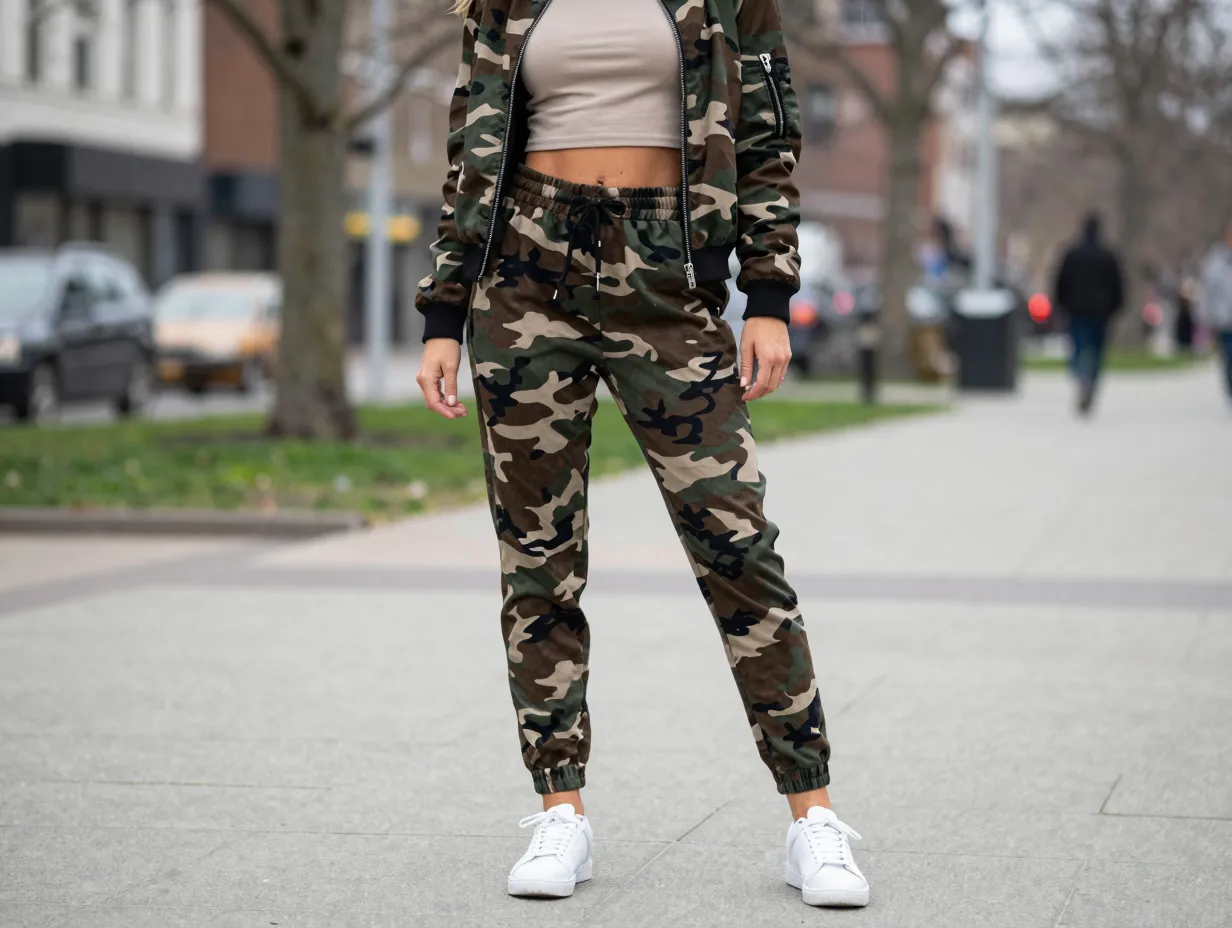
Camo has firmly established itself in casual outdoor fashion, and the lifestyle camo outfit bridges the gap between the field and everyday wear. This is the most accessible entry point for women new to camo styling.
The casual outdoor camo outfit includes:
- Camo joggers or camo utility pants in a soft cotton-blend or French terry fabric
- A fitted camo crop top, tank, or graphic tee in a complementary neutral tone
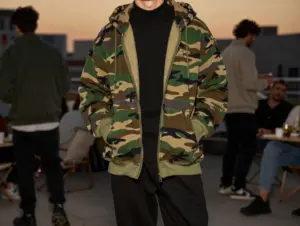
- A camo bomber jacket or oversized camo flannel shirt
- Clean sneakers, Chelsea boots, or casual hiking-style shoes
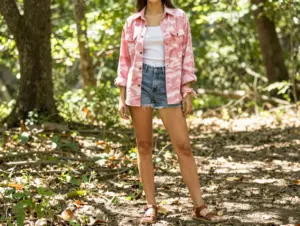
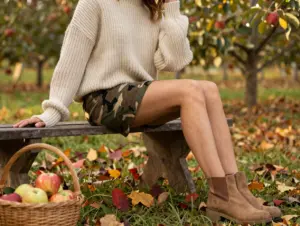
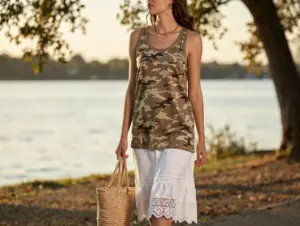
Styling note: The key to making casual camo work is contrast. Pair a bold camo print with solid neutral pieces, black, white, tan, or olive. Avoid mixing two competing camo patterns in the same outfit unless the tones are nearly identical and the scale of the patterns differs significantly.
Pattern recommendation: For lifestyle wear, classic woodland camo and fashion-forward abstract camo prints from brands like Free People, Columbia, and Wrangler Outdoor offer the most versatility.
The camo bomber jacket is arguably the most versatile piece in this category. It transitions from outdoor morning walks to casual errands without looking out of place in either setting.
7. The Mountain and Alpine Outfit
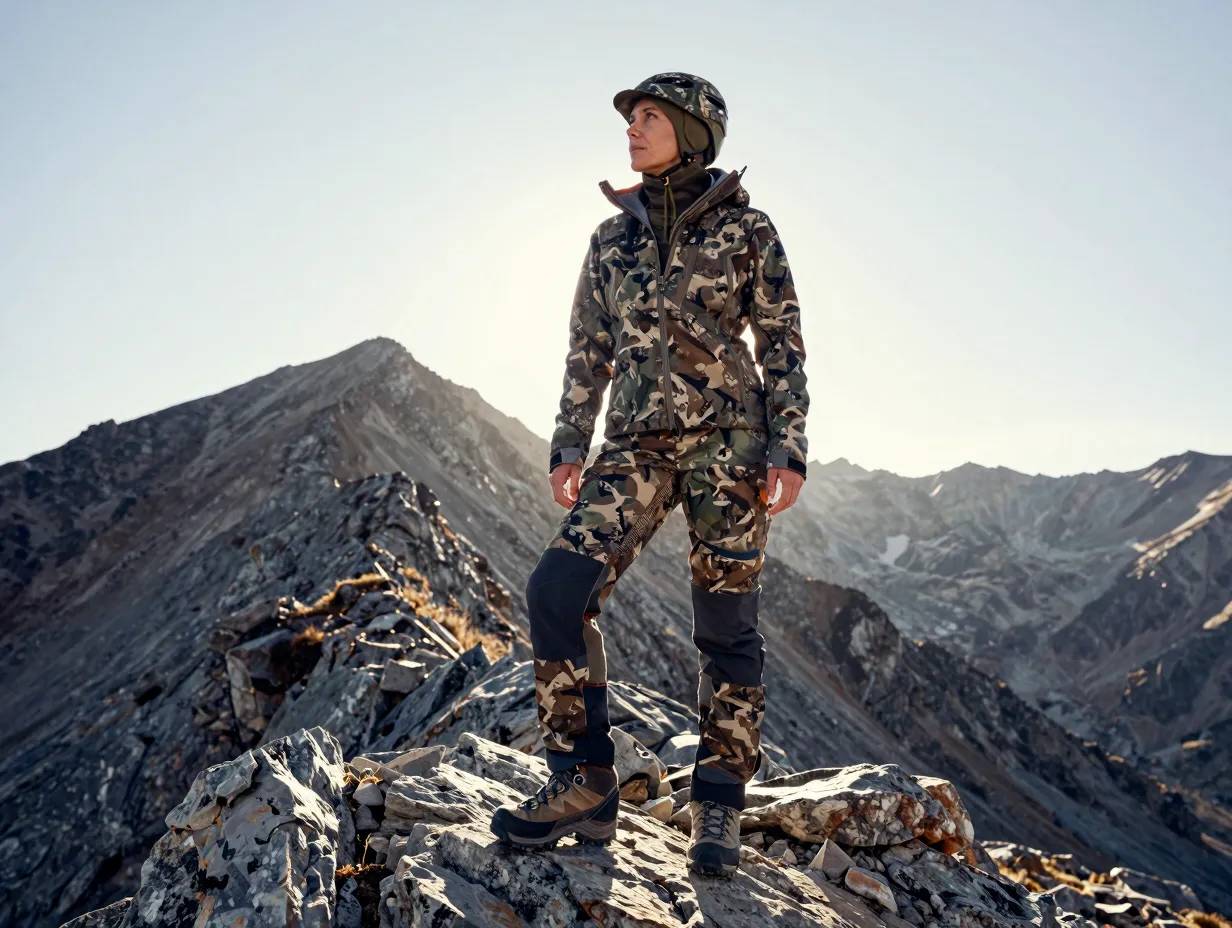
High-elevation outdoor activities, backpacking, mountaineering, alpine hunting, demand camo clothing that handles dramatic temperature swings, UV exposure at altitude, and technical terrain.
The mountain camo outfit is built around:
- A camo softshell jacket with a helmet-compatible hood and pit-zip ventilation
- Camo hardshell pants or camo technical hiking pants with reinforced knees and seat
- A camo merino wool mid-layer top
- Camo gaiters for scree and snow
- Mountaineering boots or stiff-soled backpacking boots
Pattern recommendation: First Lite Cipher and Sitka Optifade Open Country are designed specifically for above-treeline terrain, sparse vegetation, rock, and open sky. These patterns break up the human outline effectively in environments where traditional woodland camo would stand out.
Weight consideration: Every ounce matters at altitude. Prioritize camo pieces with high warmth-to-weight ratios. Down or synthetic-insulated camo jackets in lightweight packable form are preferable to heavy fleece at elevation.
The pit-zip ventilation system on an alpine camo softshell is a feature that separates purpose-built mountain apparel from general outdoor gear. During steep ascents, body heat builds rapidly. Pit zips allow rapid ventilation without removing the jacket, a critical advantage when wind and temperature can change within minutes at altitude.
8. The Turkey Hunting Outfit
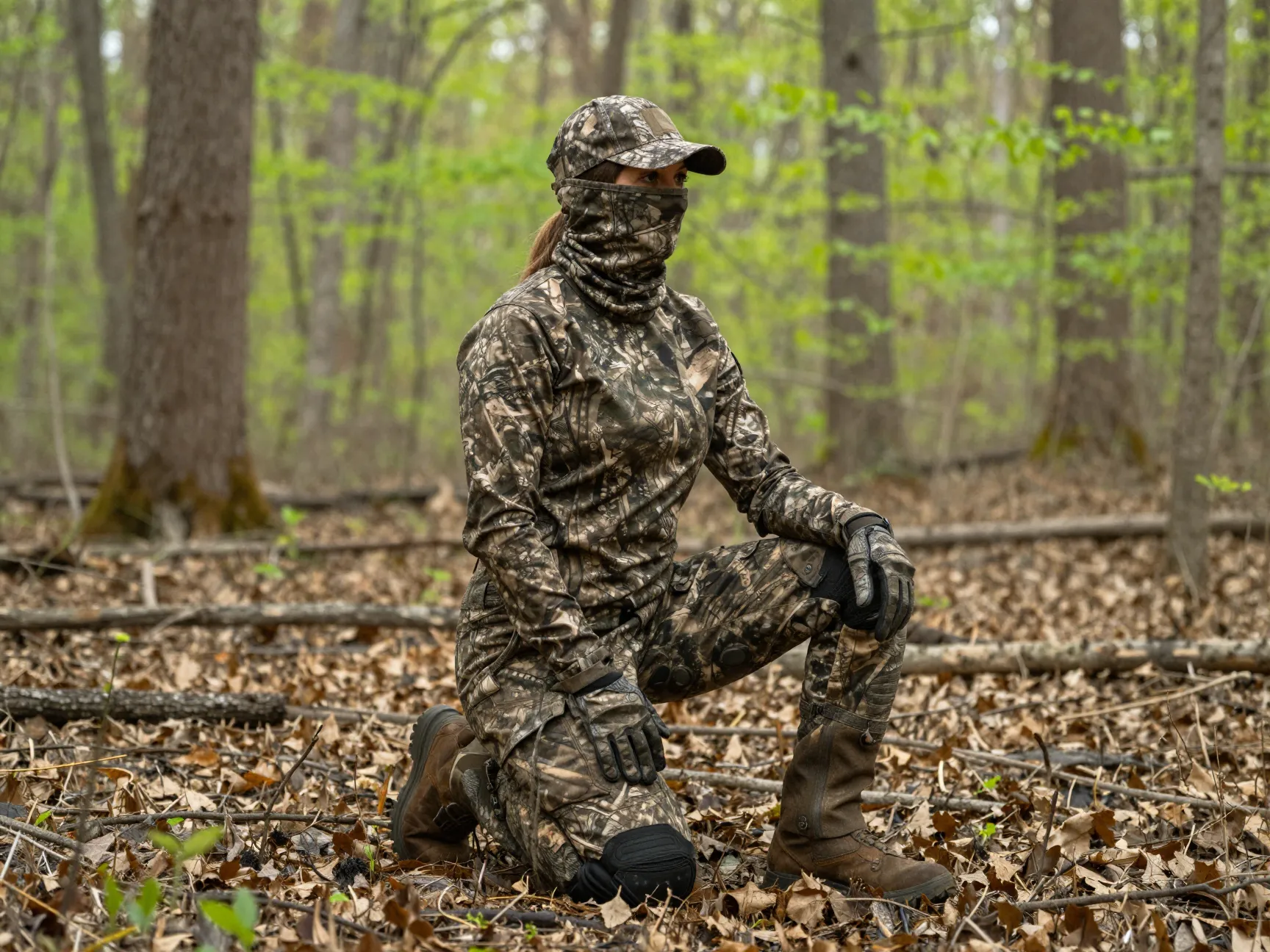
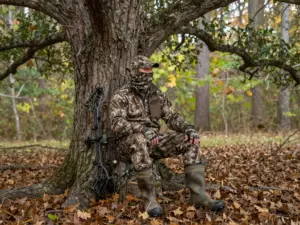
Turkey hunting occupies a unique niche in the camo world. Turkeys have exceptional color vision, among the best of any game animal, which means concealment demands a higher standard than most other hunting applications.
The turkey hunting camo outfit includes:
- A full camo head-to-toe system including face mask or face paint
- A camo shirt or jacket with a quiet outer surface
- Camo pants with knee padding built in (for long sits on the ground)
- Camo gloves with full finger coverage
- Camo boots with a quiet rubber outsole
Pattern recommendation: Mossy Oak Obsession, Realtree AP, and Realtree Timber are consistently top-rated for turkey hunting. These patterns replicate spring foliage, greens, browns, and bark textures, at the scale turkeys perceive.
The full coverage rule: Unlike deer hunting, where scent is the primary concern, turkey hunting demands complete visual concealment. Every exposed skin surface, hands, face, neck, must be covered or painted. A camo face mask that covers from the chin to just below the eyes is standard equipment.
Knee padding detail: Turkey hunters spend significant time kneeling and sitting on the forest floor. Built-in knee padding in camo pants, or removable knee pad inserts, dramatically improves comfort during long morning sits.
How to Build Your Camo Wardrobe Strategically
Rather than purchasing individual pieces at random, a strategic approach to building a camo wardrobe saves money and ensures maximum versatility. Consider this framework:
| Priority Level | Piece | Why It Comes First |
|---|---|---|
| 1, Foundation | Camo base layer set | Worn in every season, layered under everything |
| 2, Core | Camo softshell jacket | Most versatile outer layer across activities |
| 3, Activity-Specific | Pants for primary activity | Hunting bibs, hiking pants, or trail leggings |
| 4, Accessories | Hat, gloves, face mask | Complete the concealment system affordably |
| 5, Expansion | Lifestyle and casual pieces | Extend camo wear beyond active outdoor use |
Pattern consistency tip: When building a functional hunting wardrobe, stick to one pattern family (e.g., all Mossy Oak or all Realtree) across the core pieces. This ensures all layers blend cohesively when worn together. For lifestyle and casual pieces, pattern variety is welcome and even desirable.
Common Mistakes to Avoid When Choosing Camo Outfits
Even experienced outdoor women make these errors when selecting camo apparel:
Buying men’s cuts in smaller sizes. Men’s camo is cut for a different torso shape, shoulder width, and hip ratio. The result is poor fit, restricted mobility, and discomfort. Always choose women-specific cuts when available.
Ignoring noise. Slick nylon camo jackets that swish loudly with every movement are a liability in the field. Brush fabric against your hand in the store, if it sounds loud, it will be louder in the woods.
Mismatching patterns to terrain. Wearing open-country digital camo in a dense hardwood forest, or woodland camo on an alpine ridge, reduces concealment effectiveness significantly. Match the pattern to the environment.
Overlooking fit at the seat and thigh. Women’s outdoor activities involve a lot of crouching, kneeling, and climbing. Pants that fit well standing up but pull tight when kneeling are a poor investment.
Underestimating layering needs. A single camo jacket is not a system. Temperatures in the field change by 30 degrees or more between pre-dawn and midday. Build in layers from the start.
Conclusion
The 8 best camo outfits for women who love the outdoors span a wide range of activities, environments, and style preferences, from the precision demands of bowhunting to the casual confidence of a camo bomber on a weekend hike. What unites all eight is a commitment to fit, fabric performance, and pattern intelligence.
Actionable next steps for building a functional camo wardrobe in 2026:
- Identify the one or two outdoor activities where camo clothing will see the most use, and prioritize those outfits first.
- Invest in a high-quality women-specific camo base layer set before purchasing outer layers, it is the foundation every other piece builds on.
- Choose one primary pattern family for hunting or field use, and keep lifestyle camo separate with more flexible pattern choices.
- Test fabric noise before purchasing, run the fabric between your fingers and listen. Quiet fabric is a non-negotiable feature for field use.
- Revisit fit at the knees, shoulders, and seat by mimicking field movements in the dressing room, crouch, reach overhead, and step up onto a surface.
Camo clothing for women has never been more sophisticated, more varied, or more widely available than it is today. The right outfit does not just help a woman blend into her environment, it helps her perform at her best in it.