Womens Fishing Outfit Staples Every Angler Should Own
Women now make up 37% of all anglers in the United States, with 21.1 million women fishing in 2025 alone and 2.6 million first-timers stepping onto the water that year. That scale of participation has pushed major apparel brands to build complete women’s fishing systems rather than simply shrinking men’s gear. These 6 womens fishing outfit staples every angler should own reflect that shift and give you a clear framework for assembling a kit that actually works on the water.
Disclosure: This post contains affiliate links. As an Amazon Associate, we earn from qualifying purchases, and at no extra cost to you.
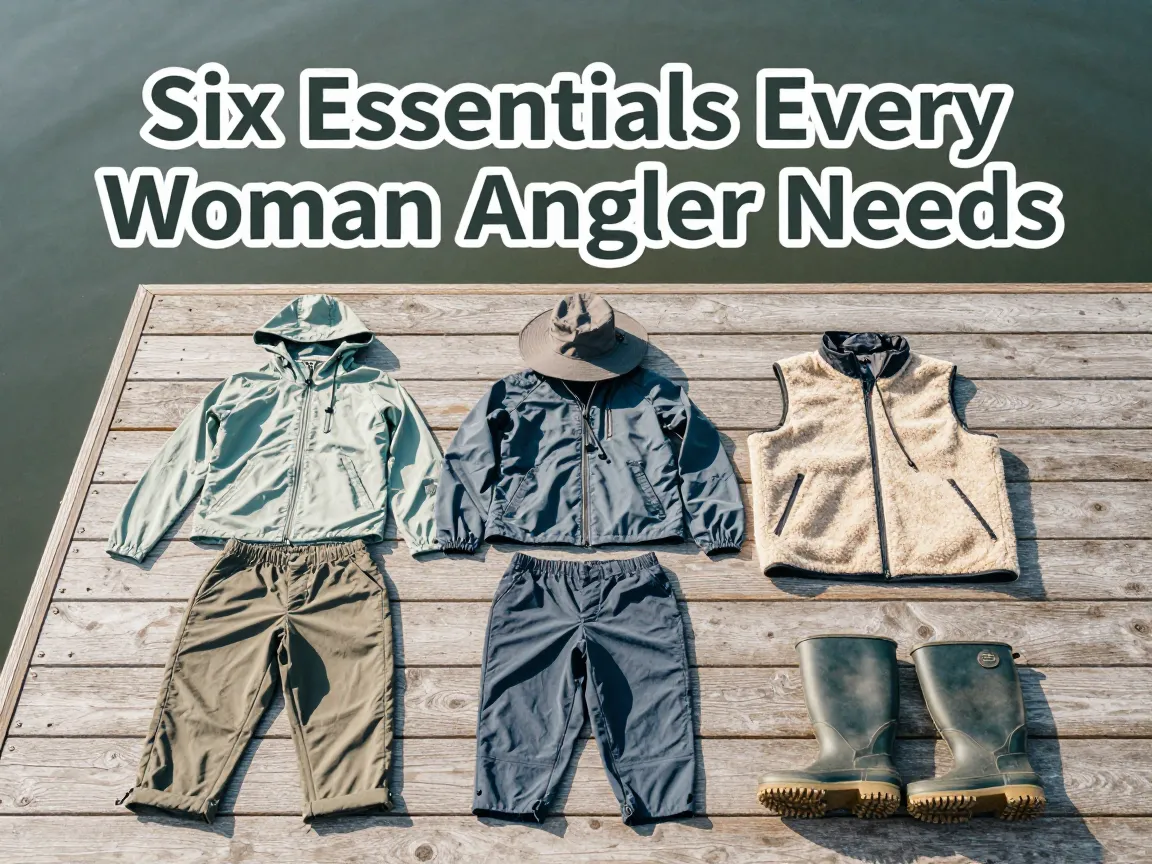
The underlying principle is straightforward. Cotton fails when wet, unprotected skin burns fast on open water, and cold mornings can turn a good fishing day into a miserable one before the first cast. A well-chosen set of staples solves all three problems without overcomplicating your packing list.
1. UPF-Rated Sun Shirt With Hood
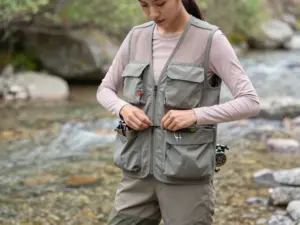
A technical sun shirt is the single most foundational piece in any women’s fishing wardrobe. Water reflects UV radiation at a rate that dramatically increases your exposure compared to everyday outdoor activities, and a standard cotton t-shirt offers roughly UPF 5 protection, which blocks almost nothing. A purpose-built fishing top rated UPF 40+ or 50+ blocks 97.5% to 98%+ of ultraviolet rays and keeps doing that all day, regardless of how wet it gets.
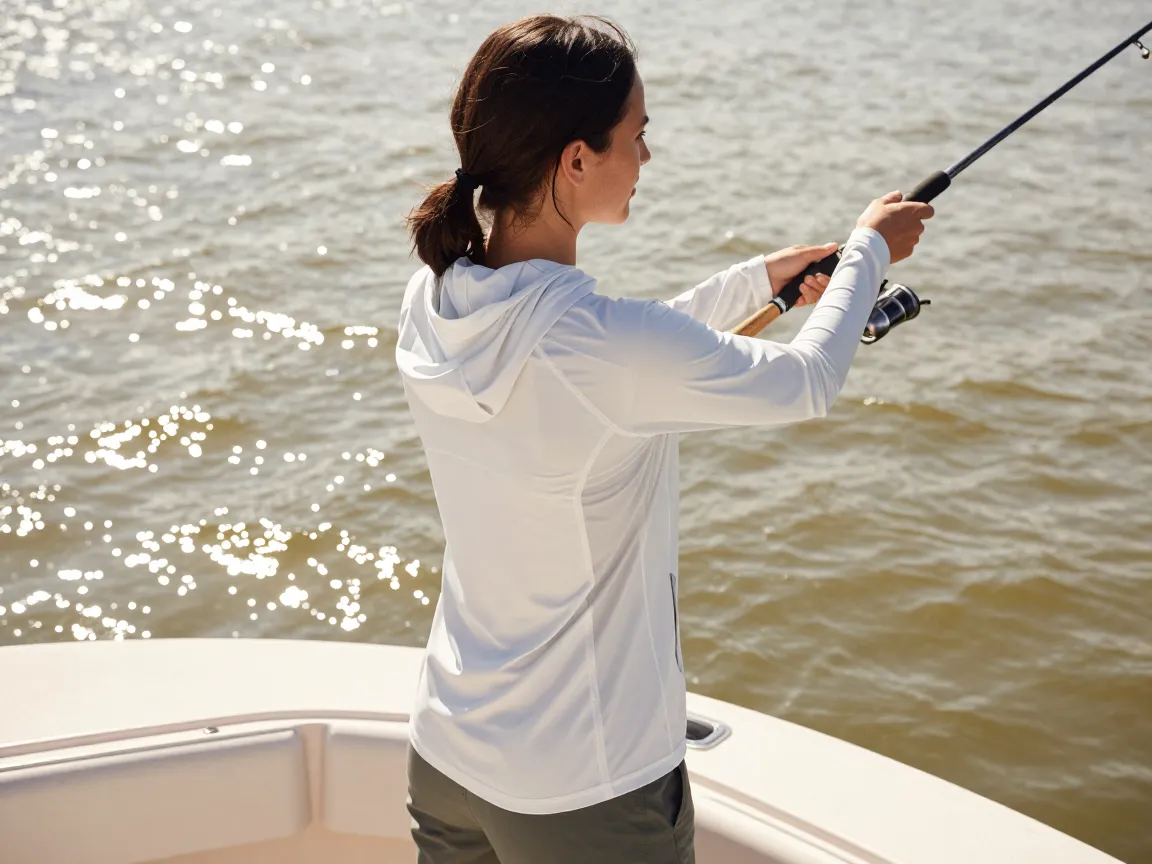
The best women’s fishing shirts are designed with more than sun protection in mind. Columbia’s women’s fishing line uses technical fabrics built for all-day comfort and protection both on and off the water, with features like vented backs, moisture-wicking interiors, and tailored shoulder seams that accommodate casting motion without bunching. Mossy Oak’s women’s fishing shirts pair UPF 40+ coverage with Hydroplex cooling technology, which matters when you’re standing on a boat deck in direct sun for six hours. Andy Thornal’s SolarFlex hoody takes the top rating at UPF 50+ and adds a hood that you can pull up without sacrificing range of motion.
Fit is what separates women’s-specific sun shirts from men’s versions cut narrower. A women’s sun shirt that fits correctly through the hip and shoulder keeps the fabric where it belongs during a cast instead of riding up or restricting your arm. Buy it in a neutral that layers under jackets and over waders, and size it so there’s room to move but not enough excess to catch in a reel.
2. Quick-Dry Technical Bottoms
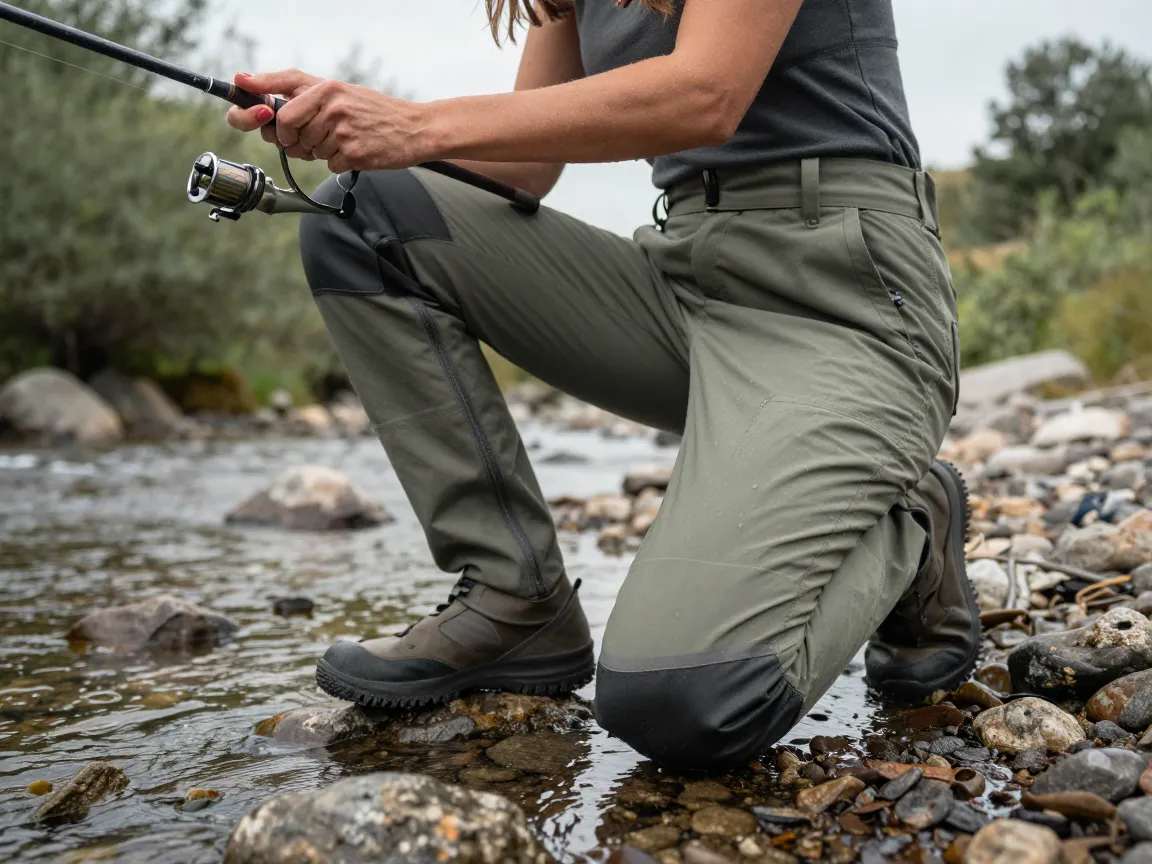
The case against cotton on the water is not subtle. Cotton absorbs water and holds it, which means a splash, a wade, or a sweaty hike to your fishing spot will leave you uncomfortable for the remainder of the day. Quick-dry technical pants and shorts typically use polyester or nylon blends that shed moisture in minutes and dry fully in under an hour.
Convertible pants are the most versatile option. Orvis’s Women’s Jackson Quick Dry Convertible Pants, carried in Andy Thornal’s women’s collection, zip off at the knee to become capris, which lets you adjust to changing temperatures across a single outing without carrying a second pair. REI’s women’s fishing clothing lineup includes multiple quick-dry bottom options across different hem lengths and waistband styles. Pelagic’s women’s collection focuses on elastic-waist lined shorts built specifically for boat and shore use, where mobility across uneven surfaces matters.
What to look for beyond fabric is articulation through the knee and hip. Fishing involves crouching, kneeling on a deck, stepping over rocks, and maneuvering in tight spaces in a kayak or on a wading platform. Pants that are cut straight through the leg restrict those movements. Look for a gusseted crotch, a slight forward pitch at the knee, and a waistband that sits comfortably whether you’re standing upright or bent at the waist landing a fish. If you fish in multiple seasons, a full-length pair with a zip-off option gives you one bottom that works from March through October.
3. Performance Fishing Cap With Sun Coverage
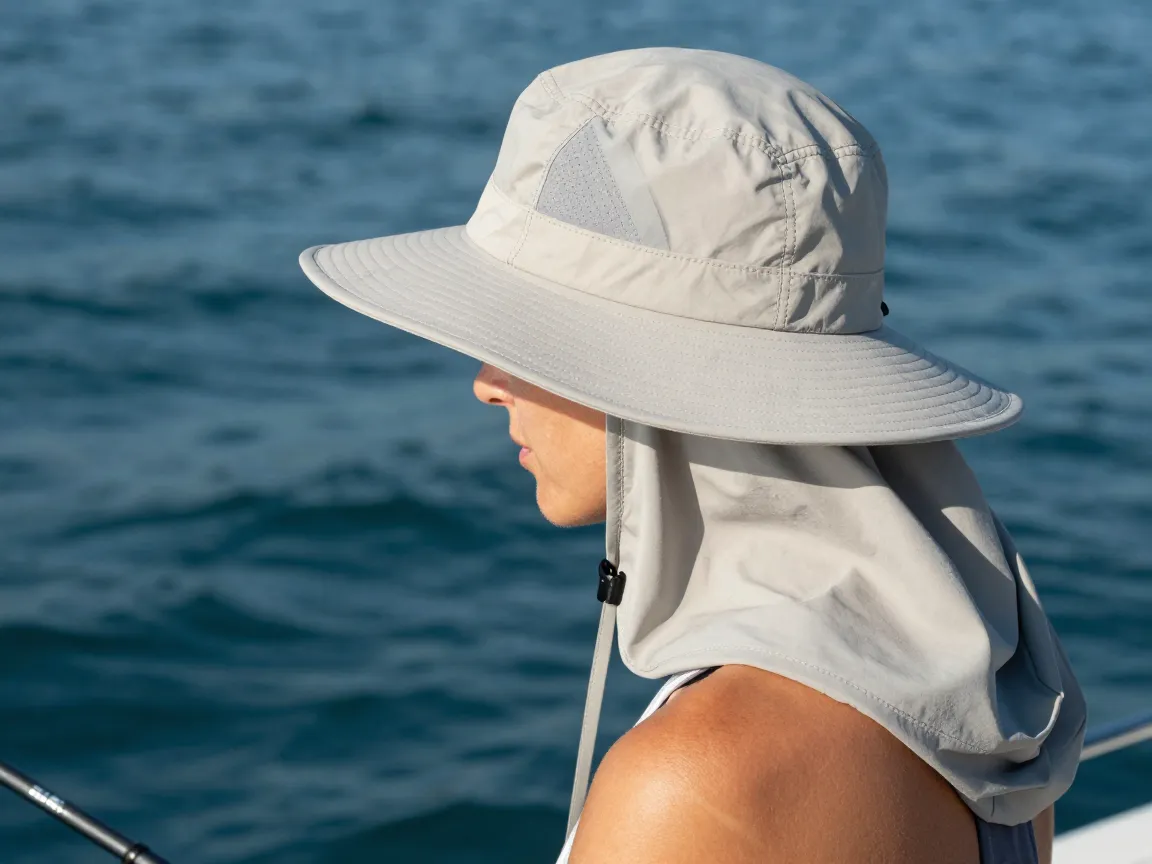
A wide-brim or long-bill fishing cap is not simply a comfort item. Prolonged sun exposure to the face and neck is a primary driver of outdoor-related skin damage, and standard baseball caps leave both areas largely unprotected. A performance fishing cap designed specifically for angling addresses that gap with features that conventional headwear skips.
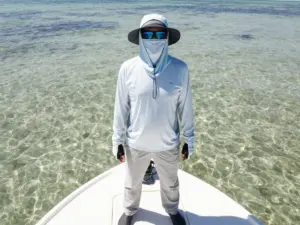
Andy Thornal lists a UPF 50+ long-bill cap with cooling panels and a snap-on neck cape as a core piece of women’s fishing apparel. The snap cape concept is worth understanding. It attaches to the back of the cap and drapes over the neck and upper shoulders, covering the area most commonly missed by hats and sunscreen alike. Cooling panels built into the crown allow heat to escape, which keeps the cap wearable in hot weather rather than something you pull off after twenty minutes.
For women who fish in cold or rainy conditions, a waterproof or fleece-lined version of a fishing cap extends usability across seasons. The key distinction between a fishing cap and a lifestyle hat is the brim construction. Fishing caps typically use a stiffer, longer bill that holds its shape in wind and blocks low-angle sun when you’re looking down at the water’s surface. That angle matters most when reading water or watching for a strike. LL Bean’s outfit guidance treats the performance cap as an essential accessory alongside the shirt and pants, not an optional add-on.
4. Lightweight Waterproof or Windproof Outer Layer
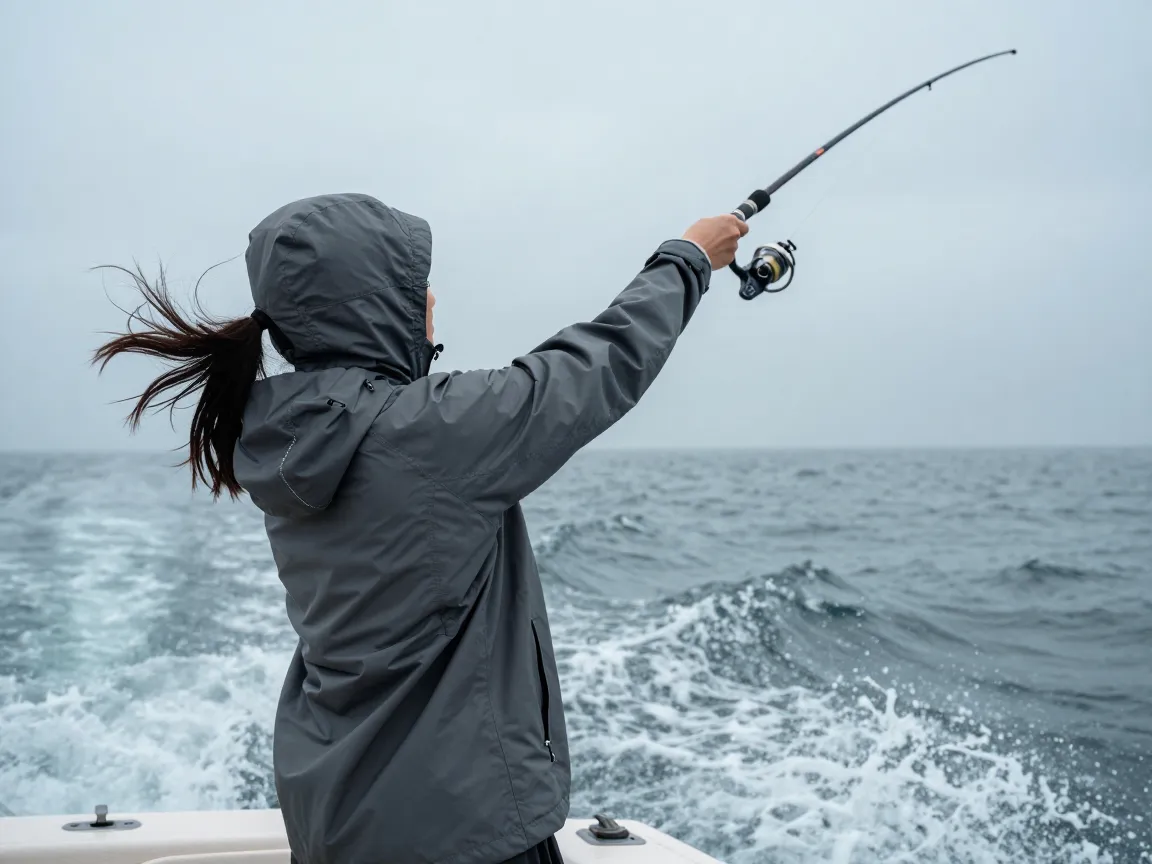
Weather changes fast on open water. Even on a forecast-clear day, wind chill on a moving boat drops the effective temperature significantly, and a brief rain squall can soak unprotected clothing in minutes. A lightweight waterproof or windproof jacket bridges the gap between your base layer and full cold-weather gear, and it packs small enough to live in a tackle bag year-round.
DSG Outerwear released the Kindra Windbreaker in November 2026 with UPF 50+ specifically for women anglers, recognizing that windbreakers serve double duty as sun-protective outerwear. Gill Marine’s women’s fishing clothing line emphasizes waterproof fisherman jackets with coverage and durability suited to harsh marine environments. Pelagic’s women’s hooded fishing shirts and outerwear pieces are designed specifically for saltwater conditions where spray is constant. The common thread across these collections is that the jacket should be packable, non-restrictive through the shoulders, and long enough to cover the lower back when you’re bent over a cooler or bending into a cast.
One practical consideration that often gets overlooked is wrist construction. A jacket with adjustable wrist closures prevents cold air and water from traveling up the sleeve during active use. Articulated elbows matter here too. A jacket cut straight through the arm forces you to fight the fabric every time you raise your rod arm. If you’re buying one outer layer that needs to work in both spring and fall, look for an interior that can accommodate a midlayer underneath rather than fitting only over a t-shirt.
5. Midlayer for Temperature Control
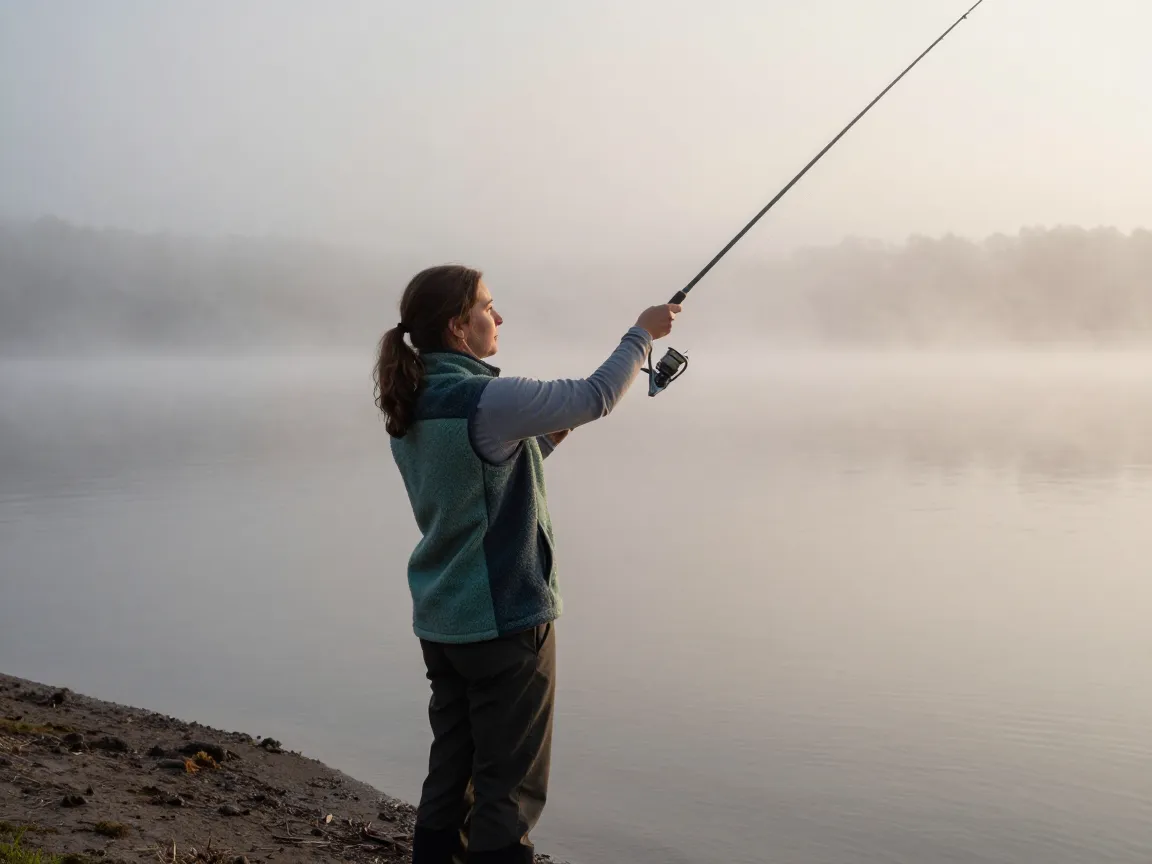
The gap between a sun shirt and a waterproof jacket is where most anglers run into trouble on chilly mornings or in late-season conditions. A dedicated midlayer, whether a fleece pullover, insulated vest, or lightweight thermal top, fills that gap without adding bulk.
Simms’ Spring 2026 women’s lifestyle collection targets this problem directly. Their flannel shirts and durable pants are designed to move comfortably from cold mornings on the water to relaxed evenings outdoors, acknowledging that fishing days span multiple temperature bands. FisheWear’s apparel guidance builds an explicit layering sequence: start with leggings or a skort, add a sunshirt when the sun climbs, then reach for fleece, thermals, jackets, or vests as conditions cool. That sequence only works when each piece is chosen to fit cleanly over or under the next one.
A fleece vest is a practical first midlayer choice because it insulates the core without restricting arm movement at all, which matters during casting. For colder conditions, a lightweight synthetic insulated jacket worn between the sun shirt and windbreaker provides warmth without the bulk of a traditional down coat. The defining quality to look for in any fishing midlayer is that it should not restrict your casting range. Hold your rod arm extended, then bring it through a full overhead cast motion before you buy. If the seam at the shoulder pulls, the garment will slow you down across a full day.
6. Non-Slip Water-Ready Footwear
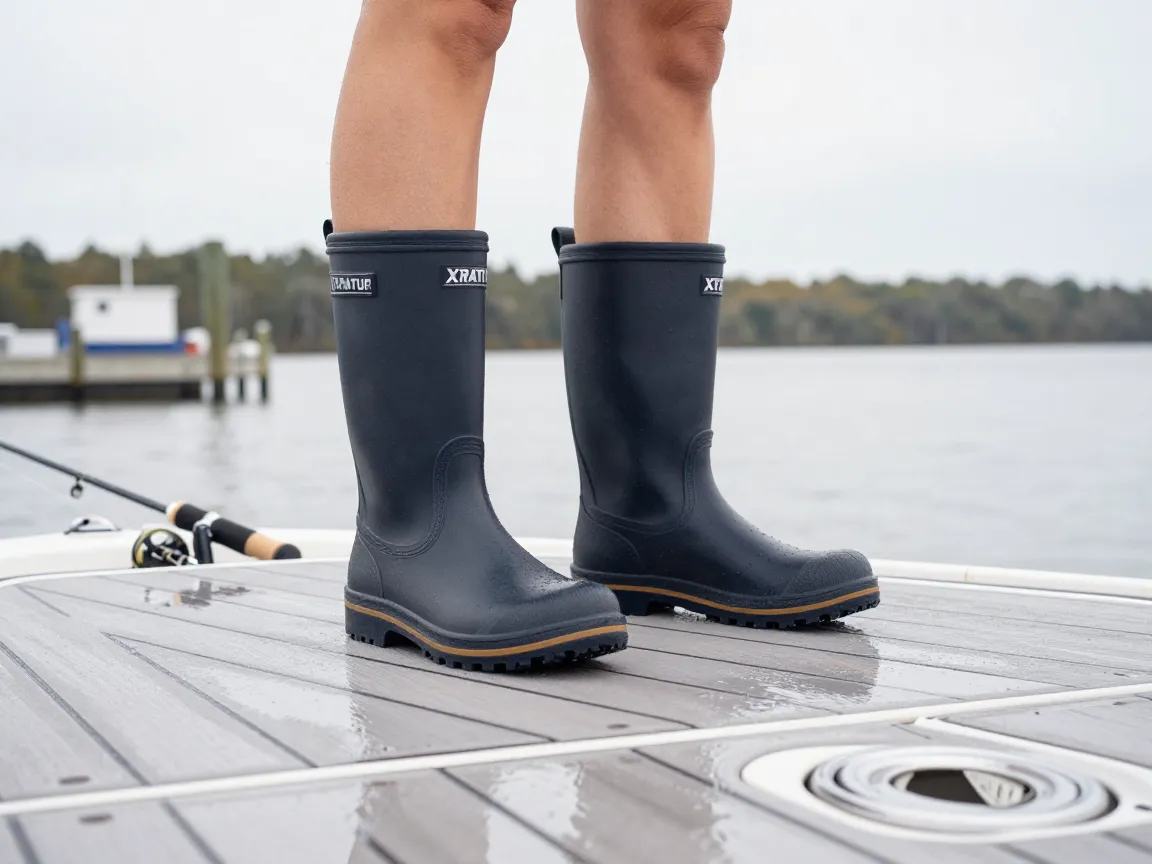
Footwear tends to be the last item a new angler considers and the first one they regret skipping. Wet boat decks, slippery rocks, and muddy banks each present specific traction problems that standard sneakers, sandals, and hiking boots handle poorly. Purpose-built fishing footwear is designed around those surfaces.
REI’s current women’s fishing clothing category, updated in November 2026, merchandises the XTRATUF 6-inch Ankle Deck Boot alongside shirts and jackets, treating footwear as a core outfit component rather than a separate gear purchase. That placement is deliberate. XTRATUF’s deck boot uses a non-marking rubber outsole designed specifically for wet, slippery boat surfaces, and the 6-inch height keeps water out during shallow wading and boarding from wet docks. The boot is a staple in saltwater fishing communities along both coasts for good reason: it stays on in mud, grips fiberglass, and cleans easily.
For freshwater wading, the equivalent is a wading shoe or wading boot with a rubber or felt sole rated for stream conditions in your state. Several states have restrictions on felt soles because they transfer invasive species between waterways, so check local regulations before buying. If you mostly fish from a boat or pier rather than wading, a deck boot like the XTRATUF handles most scenarios. The minimum requirement for any fishing footwear is a closed toe, a non-slip sole, and water drainage that doesn’t leave you walking in pooled moisture after a splash. What matters more than brand is that the footwear was designed for wet surfaces, because nothing designed for dry land performs reliably once it’s soaked.
Why Women-Specific Fit Changes Everything
FisheWear states plainly that the solution for women anglers was not smaller versions of traditional fishing gear. The modern approach is women’s fishing apparel with its own fit, personality, and point of view, built around movement, layering, and the actual geometry of a woman’s body.
That philosophy runs through each of the six staples above. A sun shirt that fits through the hip rather than hanging straight. Pants with a rise that works when you’re seated in a kayak for three hours. A hat with a brim angle calibrated for shorter average face lengths. These aren’t cosmetic differences. They affect how the gear performs across a full day on the water.
The 34% growth in female angling participation between 2015 and 2025, from 15.7 million to 21.1 million women, pushed brands to invest in genuinely engineered women’s lines. Columbia, Simms, Pelagic, Gill Marine, Mossy Oak, and DSG Outerwear all expanded or launched dedicated women’s collections in 2026. The accelerating number of first-time female participants, 2.6 million in 2025 versus 2.0 million in 2024, means more women are assembling a first fishing kit right now and need pieces that actually fit from the start.
When every piece is designed for a woman’s body, the layering system works as intended and the outfit stays in place through a full day of active fishing.
Conclusion
Start with a UPF-rated sun shirt and quick-dry technical bottoms, then add a performance cap, a waterproof outer layer, a midlayer, and purpose-built footwear. That sequence, in that order, covers the conditions you’ll encounter across seasons and water types. If you’re only buying one piece right now, make it the sun shirt. It works in every season and every fishing environment, and it’s the item you’ll regret skipping fastest.