Essential Saltwater Fishing Gear Items You Should Never Leave Behind
Salt corrodes metal in under 48 hours, UV radiation off open water is two to four times more intense than on land, and a single forgotten tool can end a trip before the first bait hits the water. That is why understanding the 6 essential saltwater fishing gear items you should never leave behind matters far more than collecting the latest tackle trends. Whether you are running 30 miles offshore for tuna or wading a backwater flat for redfish, the same six categories keep you safe, productive, and ready to handle whatever the ocean throws at you.
Disclosure: This post contains affiliate links. As an Amazon Associate, we earn from qualifying purchases, and at no extra cost to you.
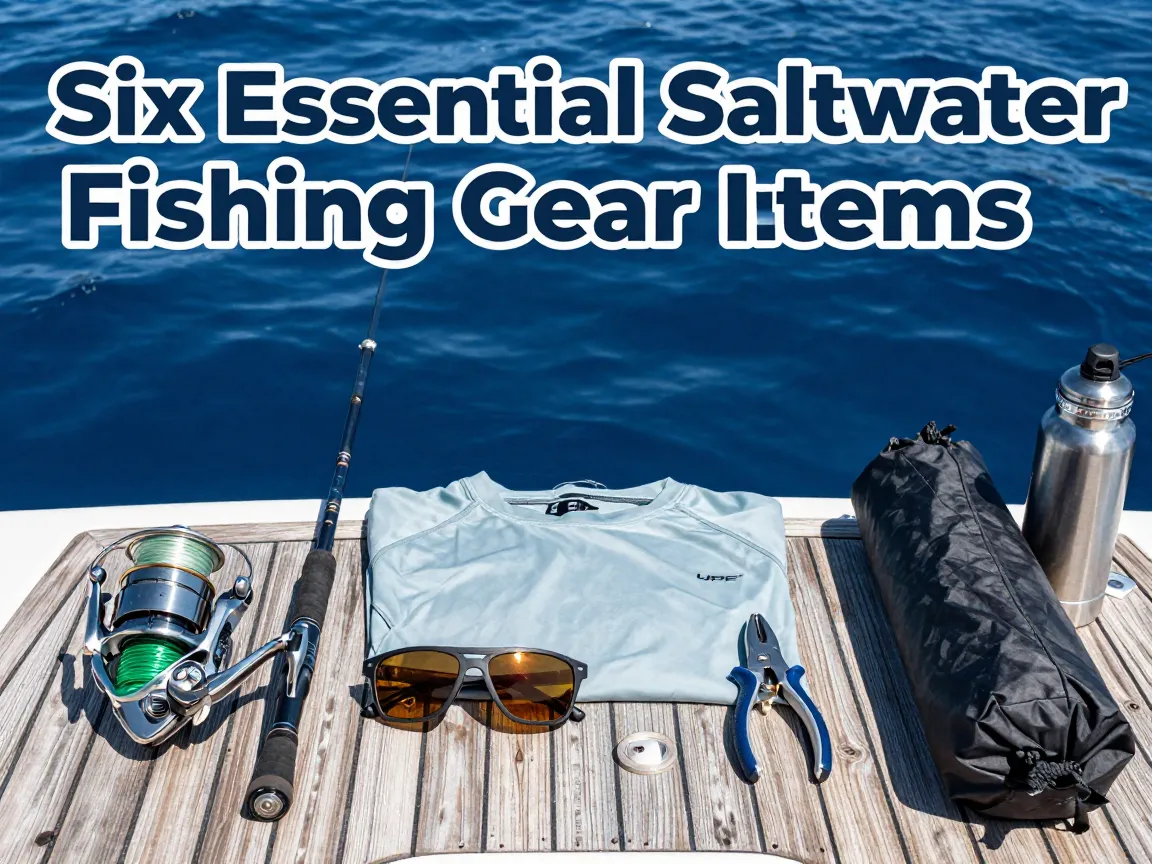
1. A Saltwater-Rated Rod and Reel Matched to Your Target
The most expensive rod in a shop is worthless if it was not built for salt. Graphite-composite construction, stainless or titanium guides, and corrosion-resistant reel seats are the minimum threshold. PENN’s Squadron IV series, released in late 2025, uses a graphite-composite blank reinforced with fiberglass and pairs it with heavy-duty reel seats designed to hold up from beach surf to offshore jigging. That combination of light weight and reinforced durability addresses the single biggest failure point in saltwater rods: frame flex that opens guide inserts and allows salt intrusion.
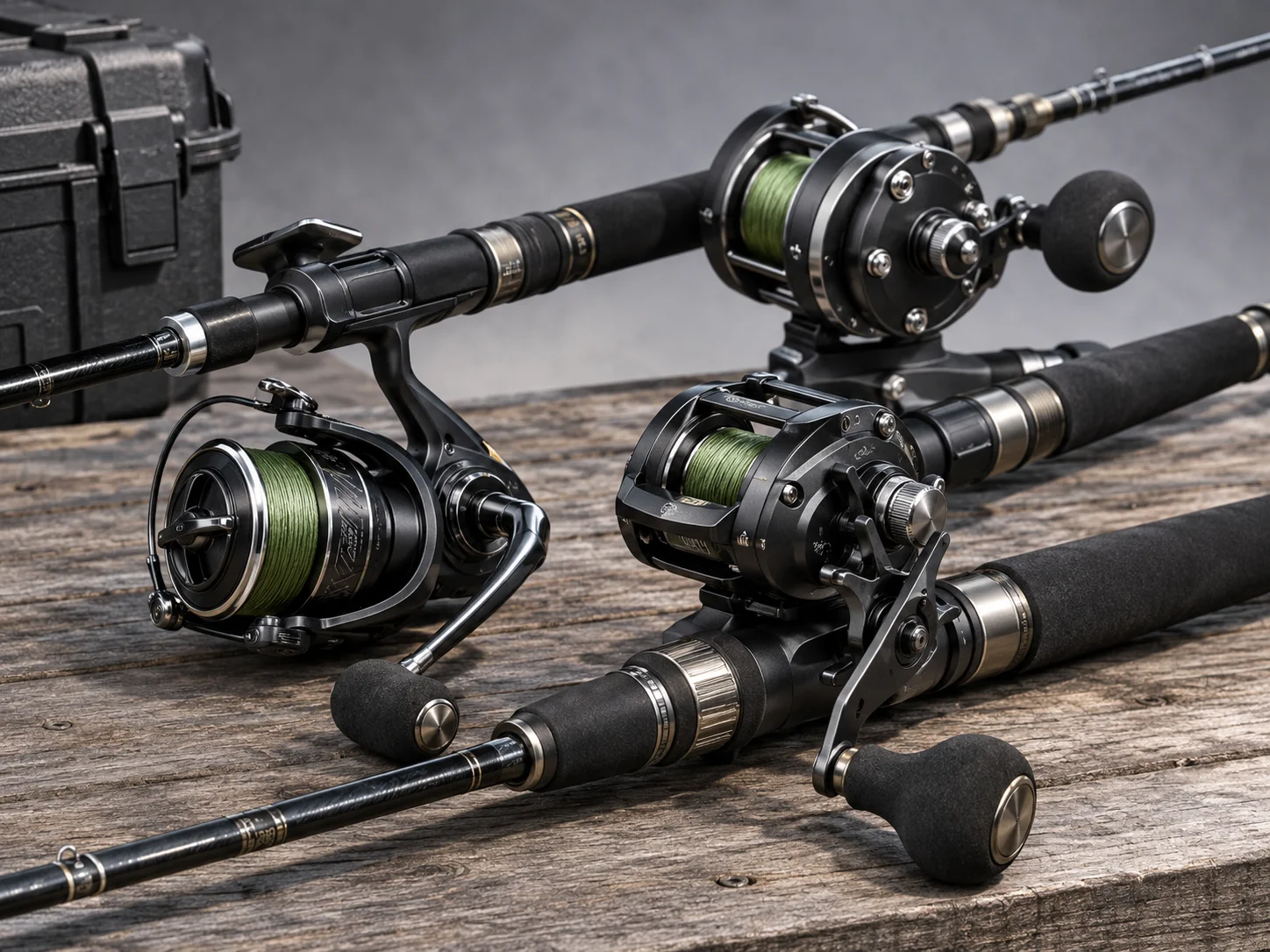
On the reel side, the conversation is shifting toward sealed drag systems and high-capacity spools. Daiwa’s SALTIGA G 35 and 35L, launched in 2025, fit a narrow, deep spool into a compact jigging frame that holds roughly 660 yards of 30-pound braid or 330 yards of 65-pound braid. That capacity matters when a wahoo or amberjack strips line before you can react. For anglers who want comparable performance without the premium price, the 2025 SALTIST SD star-drag series covers ground from jetty casting with the SLTSD30 to heavy surf and offshore applications with the SLTSD40 and 50.
The practical rule is simple: match the reel to the target species before you buy anything else. A sealed IPX6 spinning reel like the KastKing Kapstan Elite handles spray and partial submersion without corrosion issues. If you are chasing marlin or goliath grouper, you need something in the 8000-to-25000 size class with enough drag to stop a fish that runs like a freight train. What you should never do is borrow a freshwater setup and assume it will survive even one full day in salt.
Rod and reel are not interchangeable with any other category on this list. Everything else depends on having a functional, corrosion-resistant platform in your hands first.
2. High-Strength Braided Line and Matched Terminal Tackle
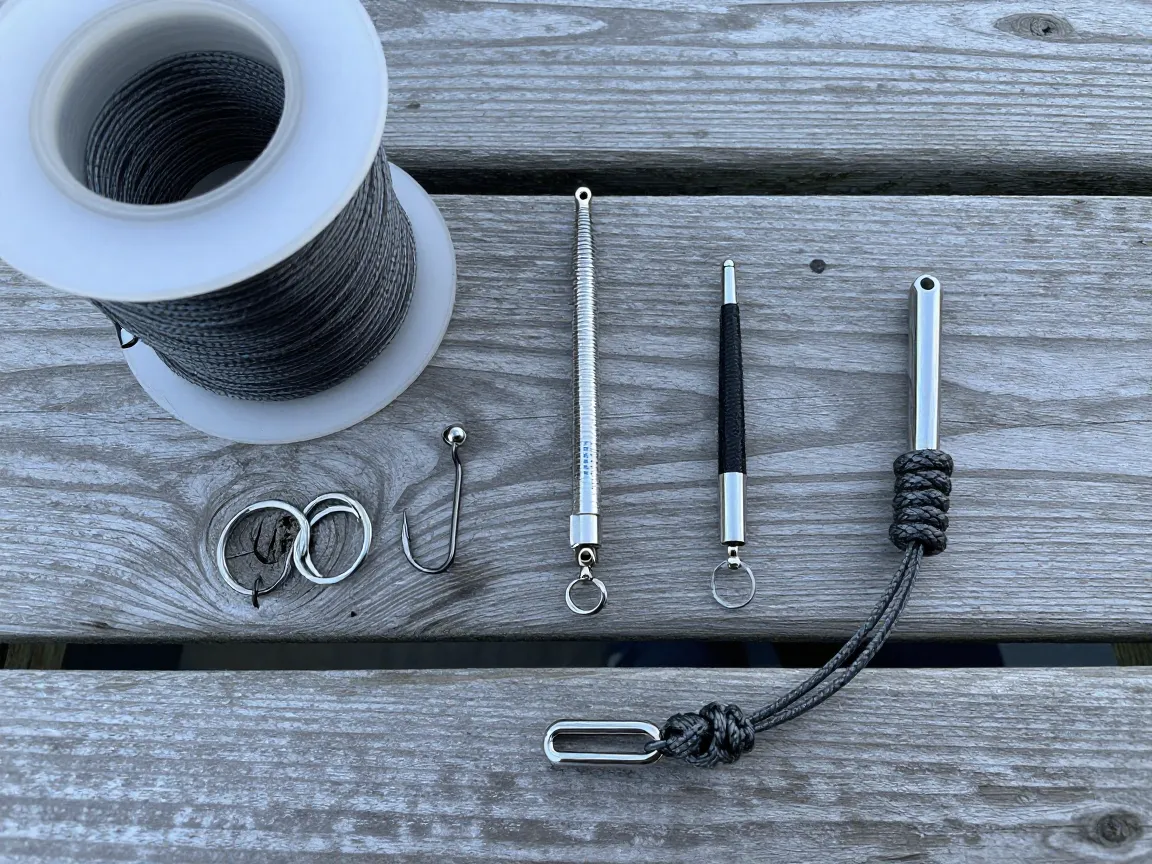
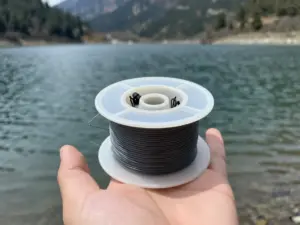
Braided line has effectively replaced monofilament as the standard for saltwater fishing, and for good reason. Braid has virtually no stretch, which means every subtle thump from a fish 80 feet down transmits directly to your hand. At the same diameter as mono, braid holds two to three times the breaking strength, allowing you to load a reel with more line at a heavier rating without adding bulk to the spool.
The specific numbers from recent gear specs make the case clearly. A 30-pound braid on a mid-size jigging reel gives you hundreds of yards of reserve when a large pelagic fish runs. For offshore work targeting king mackerel, sailfish, or tuna, the rod needs to deliver hook-setting power through the braid, which is why offshore-focused blanks like Daiwa’s Darkwater series use HVF Nanoplus graphite and X45 bias wrap to minimize blank torque during the strike. Weak braid or mismatched line weight undercuts that engineering entirely.
Terminal tackle is the other half of this category, and it is where many anglers cut corners they later regret. Corrosion-resistant hooks, snap swivels rated well above your line’s breaking strength, and fluorocarbon leaders in the 20-to-80-pound range are not optional accessories. They are the connection between you and the fish. Cheap hooks straighten under load; wire-thin split rings fail when a cobia rolls on the surface. Invest in quality components rated for the size fish you are actually targeting, not the size you hope to catch.
One useful practice before any trip: re-tie all terminal connections with fresh line, inspect every hook point, and replace any hardware showing rust or white corrosion. Five minutes of prep prevents a lost fish of a lifetime.
3. Polarized Sunglasses Built for Open Water
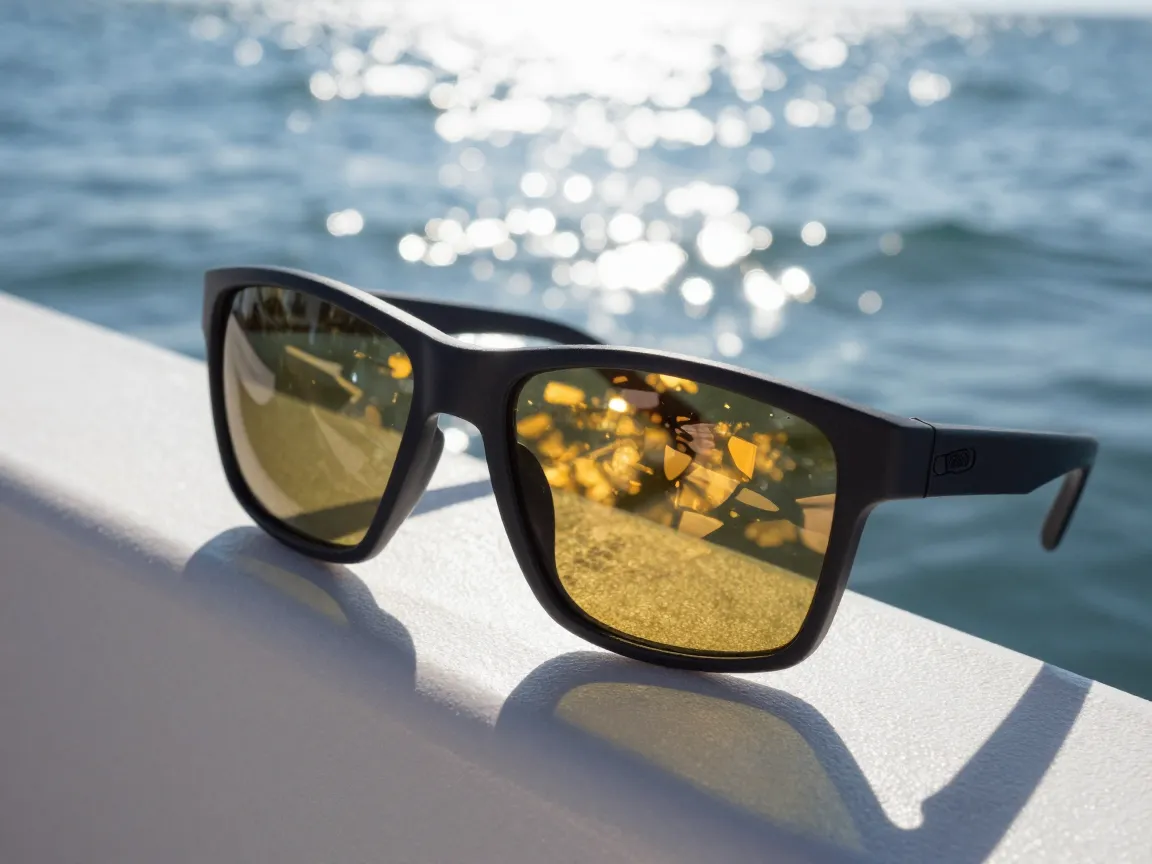
Polarized sunglasses are listed as non-negotiable in every credible 2026 saltwater gear guide, and that consensus is based on direct function, not brand promotion. Light reflecting off the water surface creates a horizontal glare layer that makes it nearly impossible to see fish, structure, or depth changes below the surface. A polarized lens cuts that horizontal component, leaving you with a clear view into the water column.
Costa Del Mar frames that specific function in practical terms: anglers wearing quality polarized lenses can spot fish and read underwater structure that is invisible to anyone fishing without them. On a flat or over a reef, that is the difference between casting to a fish you can see and blind-casting and hoping. The amber or copper lens tint common in saltwater glasses enhances contrast in low-light and partially overcast conditions, while gray lenses work better in full sun without distorting color.
The safety case is equally direct. Hours of unfiltered UV exposure off reflective saltwater accelerates photokeratitis, the eye equivalent of a sunburn, and contributes to long-term macular damage. Quality saltwater sunglasses block UV400, meaning they filter wavelengths up to 400 nanometers, covering both UVA and UVB.
Do not buy cheap polarized glasses for offshore work. The polarizing film in budget frames often delaminates within a season of salt spray and UV exposure. Wrap-around frames with side coverage prevent peripheral glare that standard lens shapes miss. Floating frames are worth the extra cost if you are on a boat, because sunglasses that sink in 60 feet of water are simply gone.
4. Sun-Protective Apparel That Does the Work
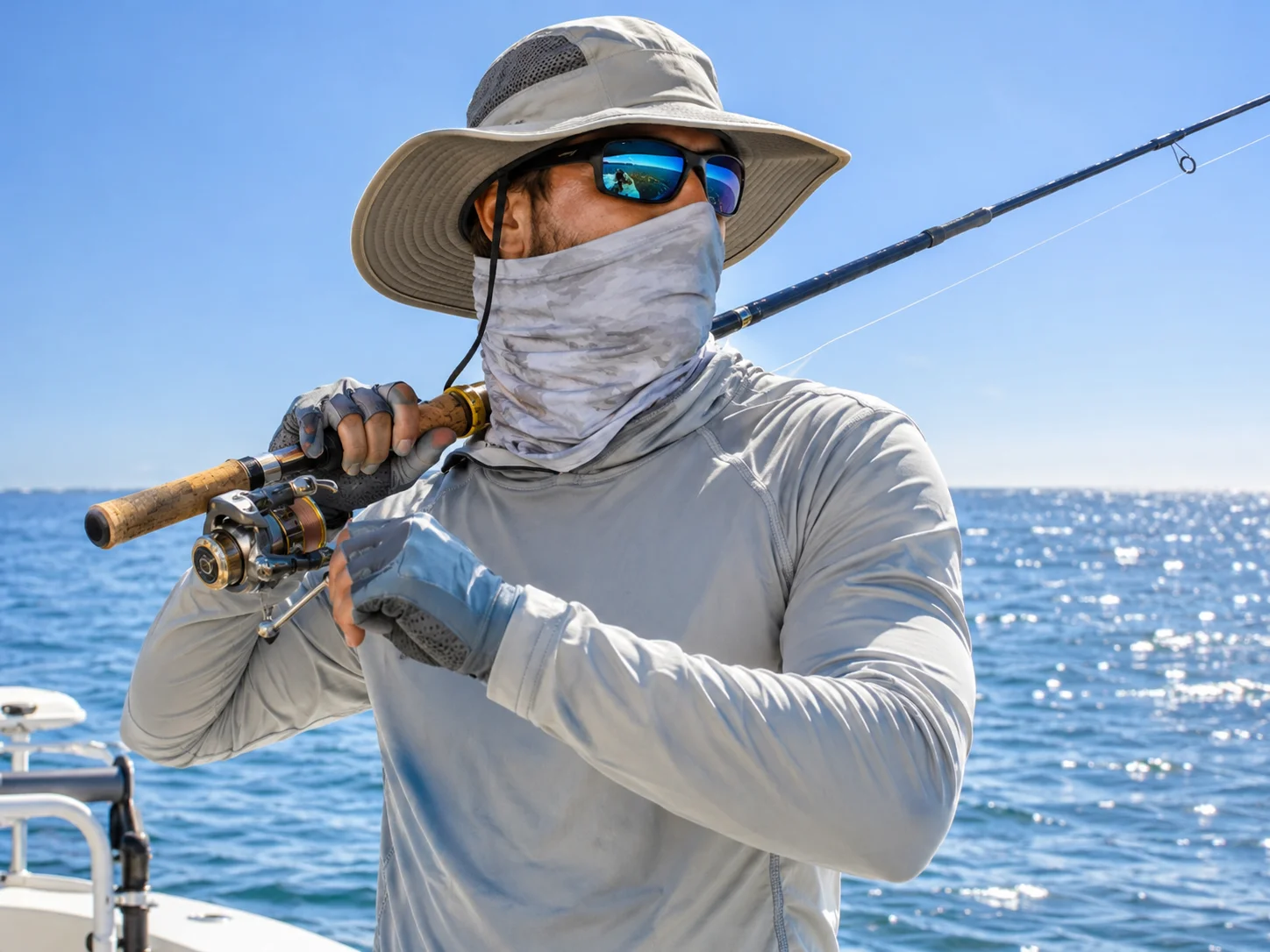
A T-shirt from a convenience store offers roughly UPF 5. A purpose-built fishing shirt rated UPF 50 blocks 98 percent of UV radiation, is built to wick sweat rapidly, and dries fast enough that it stays comfortable through a long day on the water. That gap in performance is why sun-protective technical apparel has moved from optional comfort to core gear in every serious saltwater kit.
The full coverage system that Costa’s saltwater tips outline includes a long-sleeve moisture-wicking shirt, a brimmed hat, a neck gaiter, and fingerless or full sun gloves. Each piece addresses a specific exposure zone. The neck gaiter protects the lower face, ears, and neck, which are the areas most anglers miss with sunscreen and the areas most prone to UV damage on a boat. Sun gloves improve grip on wet line and pliers while blocking UV on the backs of the hands, which can receive full sun exposure for eight hours straight during an offshore trip.
There is also a performance argument beyond UV protection. When you are overheated, your reaction time slows, your decision-making degrades, and your casting accuracy drops. Technical fabrics that actively move moisture away from skin keep core temperature lower than cotton does. On a 90-degree day with no shade and direct sun reflecting off water, that thermal management matters.
The fit matters too. Loose technical shirts snag less on boat hardware and are more comfortable in wind. Look for flat-stitched seams on the shoulder where a rod butt rests during a long fight, because standard raised seams bruise that area over hours of pressure.
5. Quality Cutting and Rigging Tools
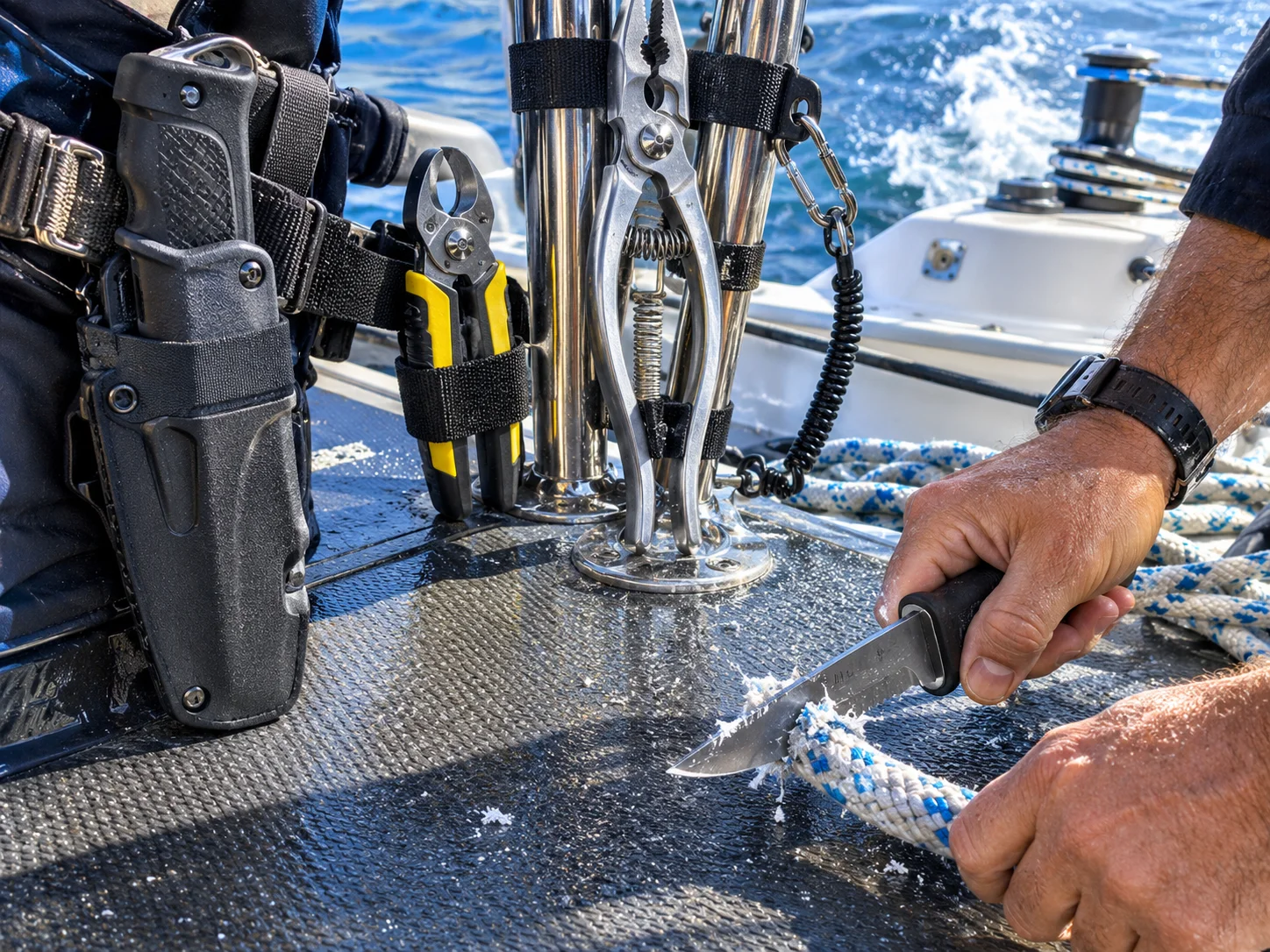
A rigging knife and a pair of heavy-duty pliers are described in 2026 offshore gear coverage as the tools anglers reach for more than any other item on the boat. That description is accurate. Pliers crimp wire leaders, remove hooks from fish mouths, cut braid, and handle split rings too stiff to open by hand. A sharp knife processes bait, cuts tangled line, and handles the unexpected situations that come with offshore fishing.
The specific detail that changes buying decisions is corrosion resistance. Standard stainless steel holds up reasonably well, but high-carbon stainless alloys and titanium-coated cutting edges maintain a usable edge longer in salt. The molded sheath matters as much as the blade because a loose knife on a moving boat is a safety hazard. New dock-to-deck knife designs with dedicated molded sheaths solve this by keeping the blade accessible but secured, which is exactly what you need during a fast-paced offshore trip when both hands are occupied.
For pliers, the minimum spec for saltwater use is a full stainless construction with a spring-loaded jaw. Aluminum handles corrode faster than the marketing suggests when exposed to salt water daily. Buy pliers with a lanyard hole and use it. Pliers dropped overboard in a marina are annoying; pliers dropped during a 300-foot jigging drift are a serious problem.
Carry at least two cutting tools: a main knife and a backup line cutter or scissors. If the primary knife goes overboard or gets dropped below a hatch, having a secondary cutter prevents the cascade of problems that follows being unable to cut line quickly when a fish wraps around the prop or a tangle develops in the dark.
6. Waterproof Storage and Dedicated Hydration
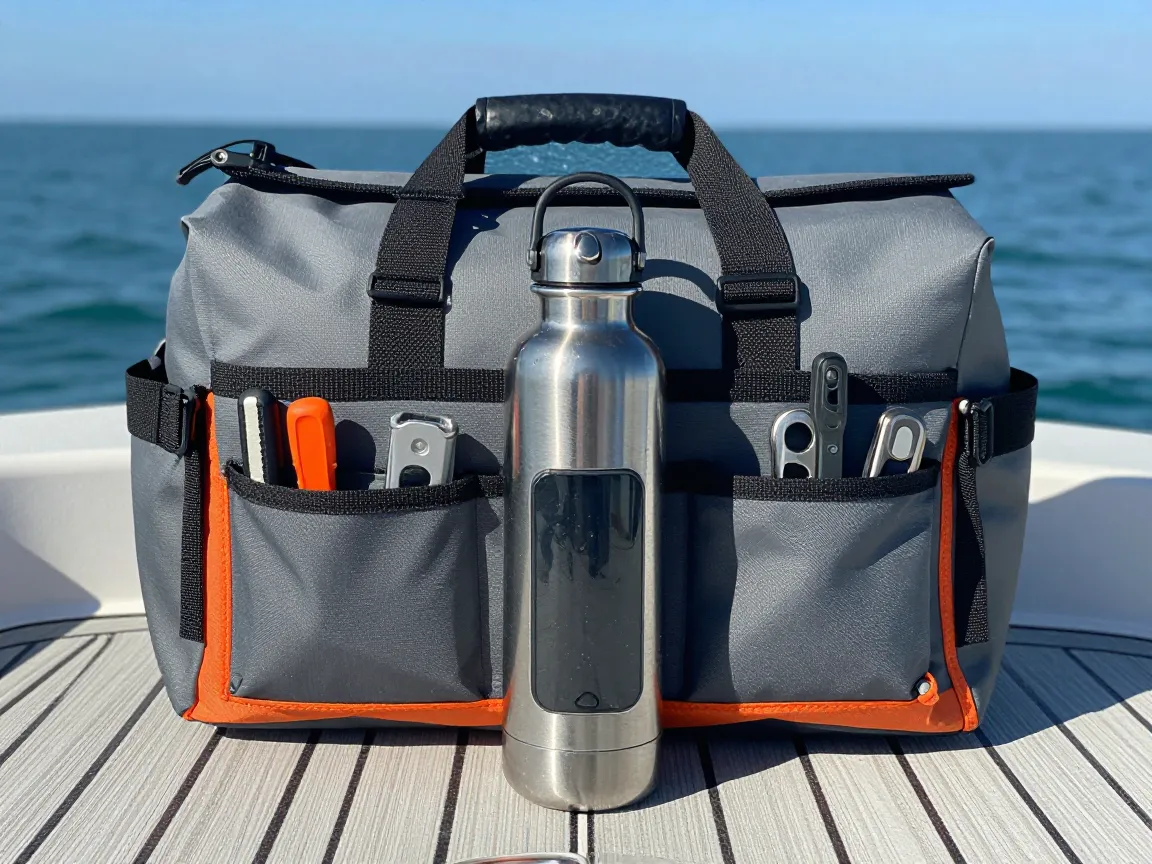
Two items get grouped in this final category because they solve the same underlying problem: protection from the saltwater environment itself. Everything that goes onto a boat or into a surf zone is at risk from spray, rain, wave wash, and accidental submersion. Electronics and valuables need a waterproof barrier between them and the ocean at all times.
A roll-top dry bag in the 10-to-20-liter range handles a phone, wallet, keys, and a handheld VHF radio with room to spare. The roll-top closure with buckle locks creates an air pocket that doubles as flotation, so the bag can survive a swamping without losing contents. Some anglers prefer waterproof backpacks for wading trips where the bag stays on the body, but on a boat, a standard roll-top bag secured to a cleat or rail does the same job with less bulk.
Hydration deserves its own treatment rather than being lumped in as a minor afterthought. A 2026 saltwater gear guide calls it one of the items anglers should never leave behind, putting a quality water bottle in the same category as the rod and reel. The reasoning is physiological: dehydration sets in faster on the water than most people expect because wind and sun pull moisture off skin without the visual cues of sweating on land. By the time you feel thirsty on a boat, you are already mildly dehydrated.
Insulated stainless bottles keep water cold in direct sun for eight or more hours, which matters when you are 30 miles from shore and the cooler is packed with bait. A bottle with a hands-free straw cap is worth the slight premium because you can drink without setting down the rod, without taking eyes off a surface school of fish, and without breaking a retrieve. Carry more water than you think you need. A full day offshore in summer heat should mean at least two liters per person, and double that if the weather is aggressive.
Proper storage also applies to sharp tools. A rigging knife left loose in a tackle bag finds the worst possible moment to cut through a bag, a hand, or a line you needed. Keep tools sheathed and organized, and use a tackle bag with dedicated tool pockets that hold gear in place when the boat rolls.
Conclusion
Every one of these six categories does a specific job that the others cannot replace. A sealed, salt-ready rod and reel gives you the platform. High-strength braid and quality terminal tackle connect you to the fish. Polarized glasses let you see the fish before it sees you. Sun-protective clothing keeps you functional across a full day of exposure. Sharp, corrosion-resistant tools let you rig, cut, and handle fish safely. Waterproof storage and proper hydration keep your gear and your body working until the last hour of the trip.
The best next step before any saltwater outing is to run through these six categories the night before, not at the boat ramp. Check line condition, replace dull hooks, fill the water bottle, and confirm the dry bag is sealed. That five-minute review catches every problem before the dock lines come off.