Fly Fishing Photography: Reading Light, Water, and the Perfect Cast
Only about three seconds separate a fly line unfurling into a tight loop and that same loop collapsing into slack. Miss that window and you have a photograph of a man standing in a river. Catch it right and you have something that stops people mid-scroll. That gap between forgettable and arresting is what fly fishing photography is actually about, and it has far less to do with camera gear than most beginners assume.
Disclosure: This post contains affiliate links. As an Amazon Associate, we earn from qualifying purchases, and at no extra cost to you.
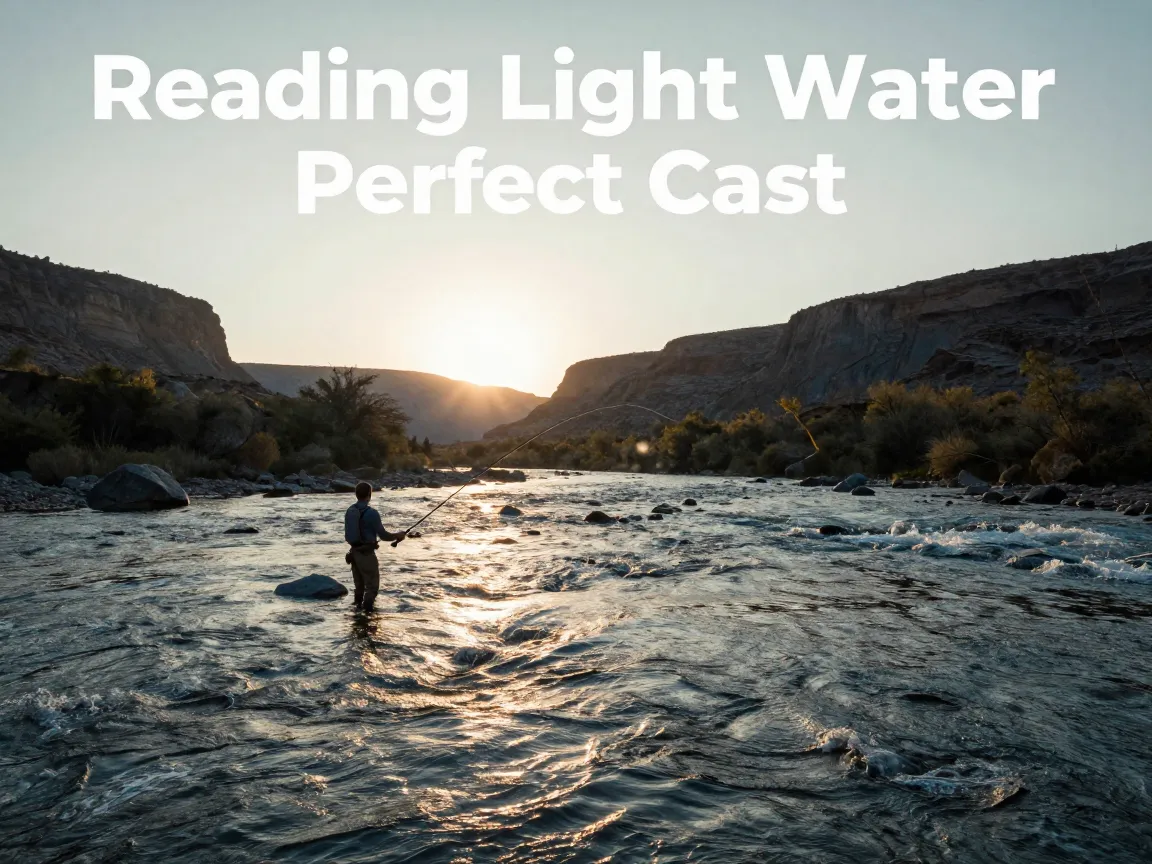
Fly fishing photography: reading light, water, and the perfect cast is a discipline that rewards patience and penalizes hesitation. It asks you to understand what an angler is about to do before they do it, to read the same current seams they’re reading, and to position yourself where the ambient light, not a flash, does the work.
Key Takeaways
- The strongest fly fishing images tend to happen between casts, not during them, because that is when genuine problem-solving body language is most visible.
- Reading water and reading light are the same skill applied to different problems; both require understanding flow, angle, and timing.
- Tight pocket water and fast current leave no margin for a reset, so anticipation and pre-positioning matter more than reaction speed.
- Deliberate composition choices, focusing on a fish’s eye, jawline, or the fly pinned in the mouth, produce more memorable images than standard hero shots.
- The expert consensus in 2026 favors honest, imperfect conditions over posed setups; authenticity is now a commercial and editorial expectation, not just an aesthetic preference.
What the Best Fly Fishing Photographers Actually Do
The romanticized version of this craft involves standing knee-deep in a perfect Montana riffle at dawn, clicking the shutter at the right millisecond. The practical version involves arriving an hour before the angler, scouting where the feeding lane runs relative to the sun angle, and deciding which 15-foot stretch of bank gives you a clear sightline when the cast finally happens.
Guide and photographer Nick Price has described his entire career as “chasing light worldwide”, a phrase that sounds lyrical but is operationally precise. Light direction, hardness, and color temperature dictate whether a river surface reads as textured or blown-out, whether a cast loop is visible or lost against the sky, and whether the fish held in the lie is a subject or just a shape. Chasing that light means adjusting travel schedules, shooting times, and sometimes giving up the technically correct casting position for the photographically correct one.
That trade-off is real and worth naming plainly: the best casting position and the best photography position are rarely the same place.
Rob Hammer’s work on trout rivers and canyon environments makes the same argument from a different angle. His projects on the Big Thompson River and in Rocky Mountain National Park document what he calls the unglamorous reality of the craft, showing up early, standing in cold water, and waiting for a convergence of ambient light and angler action that may not come for an hour. He explicitly rejects controlled or supplemental lighting in favor of responsiveness to fleeting natural light windows. That choice is not modesty; it is a recognition that artificial light on moving water almost always looks wrong.
1. Reading Light as a Technical Skill
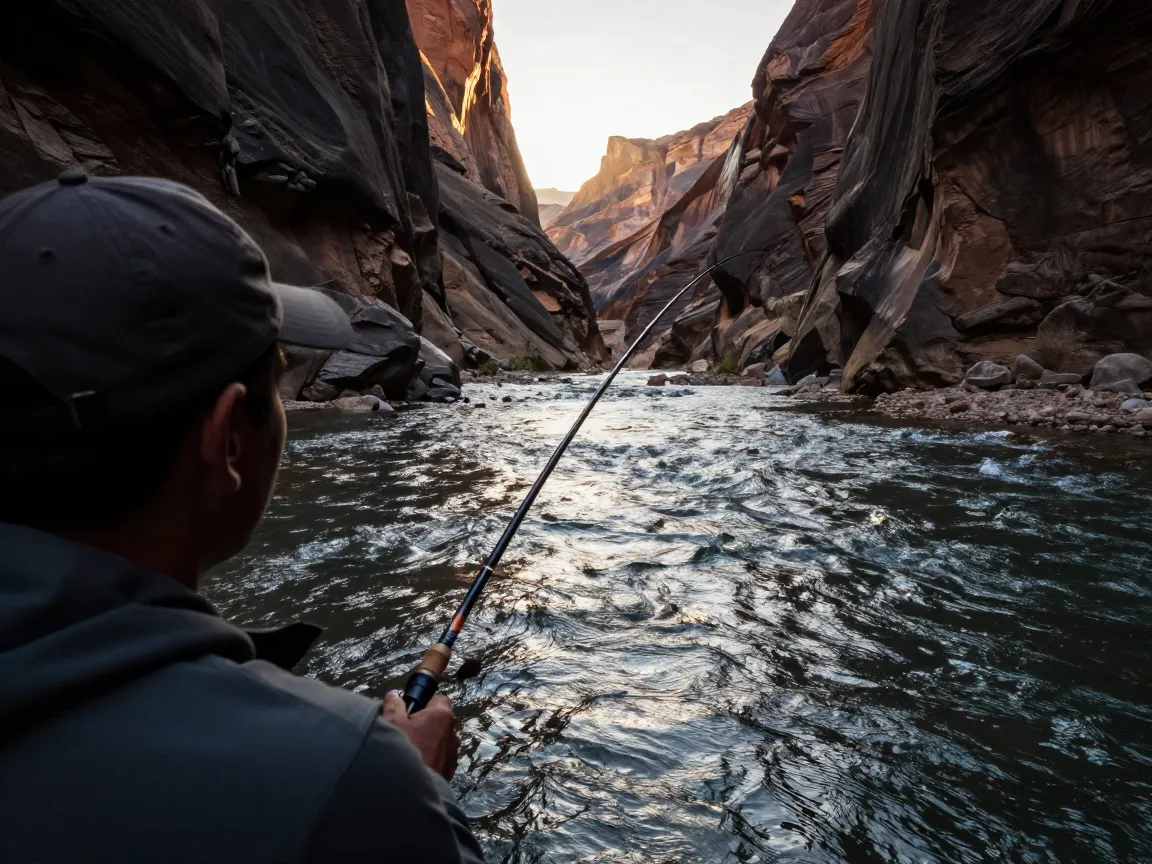
The sun’s angle relative to the water surface determines everything downstream in the image. At low angles, within roughly 45 minutes of sunrise or sunset, raking sidelight creates specular highlights on water that reveal current structure, give the fly line dimension, and separate the angler from the background. Overhead midday light flattens all of that. It is not impossible to shoot well at noon, but you are working against the physics of the surface.
Canyon rivers add a layer of complexity because the walls block low-angle light even when the sky is bright. On a tight canyon section, the workable window may be 20 minutes wide. Hammer describes this as the condition where “every cast matters” photographically, not just technically, once the light window passes, waiting another full day is the only reset available.
Color temperature shifts across the day matter too. Early morning light on a freestone river reads differently than the same river two hours later, even if the exposure values are similar. Blue-hour light before sunrise gives cold, steel tones that work well for winter steelhead photography. The warm amber of late afternoon works better for dry fly shots where you want the trout’s rise visible in the surface film.
2. Reading Water as a Photography Skill
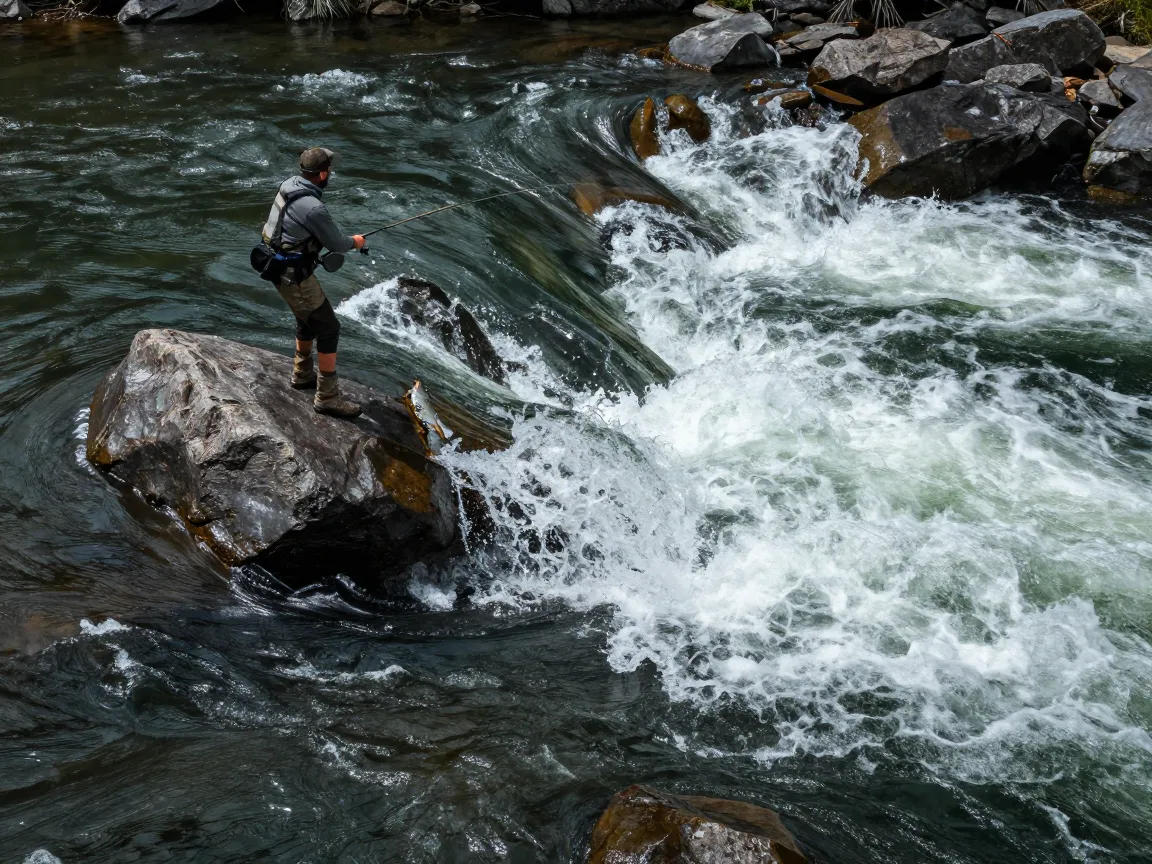
Most fly fishing photography guides skip this section. They shouldn’t. If you don’t understand where fish hold and where an angler is likely to cast next, you cannot position yourself to photograph it.
Fish in moving water hold where energy expenditure is low and food delivery is reliable, behind boulders, along current seams where fast and slow water meet, at the head of pools where current pushes subsurface food. An angler reading a run is tracking those same locations visually: surface foam lines, subsurface color changes, the downstream V-shape of a mid-current boulder. As a photographer, you’re reading all of it too, but you’re also calculating which position gives you the right angle on the angler’s body when they present to that likely lie.
The concept of a feeding lane matters specifically because it determines cast direction. If you know the feeding lane runs along the far bank seam, you know the angler will cast at roughly a 45-degree upstream angle, and you can set up where that cast crosses a patch of backlit water. That is not luck. It is applied hydraulics.
Pocket water, fast, broken water moving around and over boulders, is the hardest environment to work in because the angler’s position changes constantly. There is no “stepping back to reset a shot,” as Hammer has noted. The water moves the angler, the light shifts, and the photographic moment is gone before a repositioning is possible. Working pocket water requires committing to a fixed position and trusting that the angler will eventually present into your frame.
3. Anticipating the Cast, Not Reacting to It
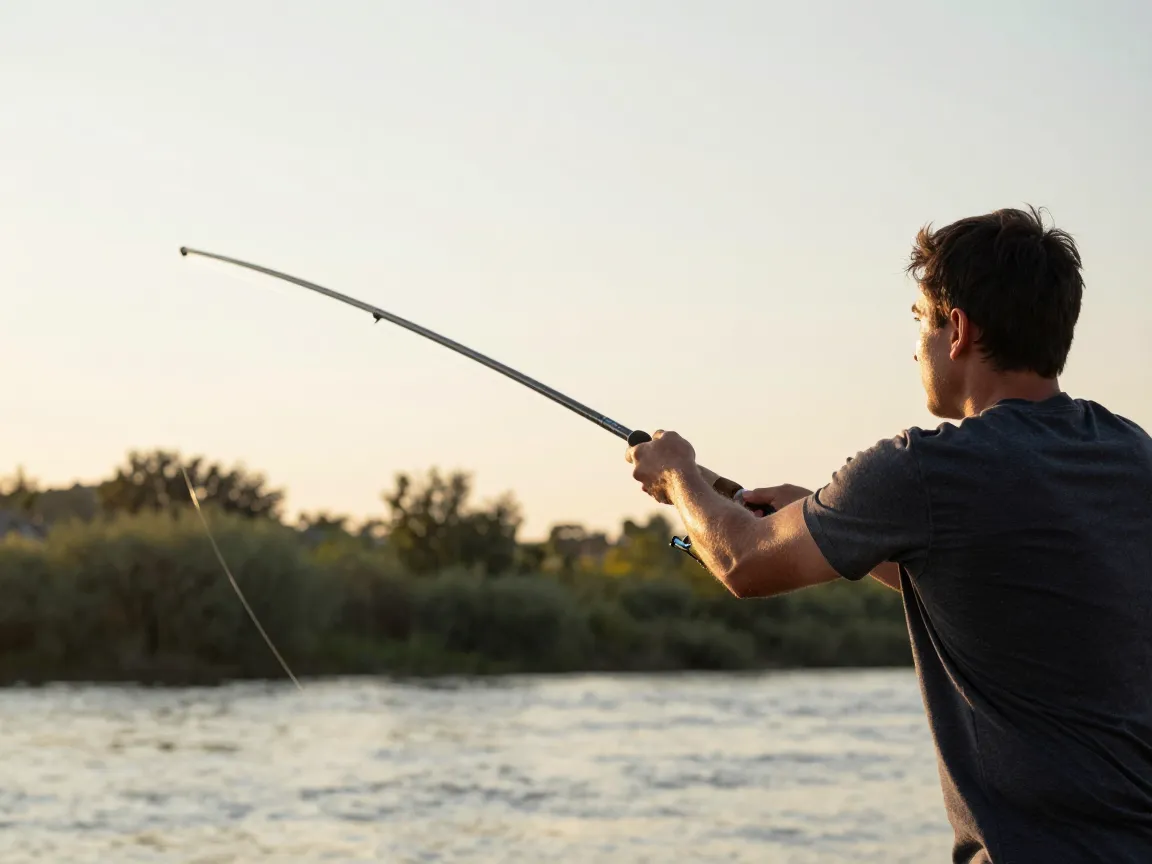
The shutter lag on modern mirrorless cameras is under 20 milliseconds. Human reaction time is 150 to 250 milliseconds. The camera is not the bottleneck. The photographer’s ability to read what is about to happen is the bottleneck.
An angler loading the rod for a backcast telegraphs several things simultaneously: how much line they are carrying, the direction of the presentation, and roughly how much time remains before the forward cast. Reading those signals correctly lets you trigger the shutter during the loading phase of the backcast, so the frame captures the full forward cast loop, the most visually compelling part of the motion, rather than the follow-through.
The Art of the Cast platform, which integrates casting instruction with photography and videography documentation, describes the goal as freezing “the perfect loop, the rising trout, the golden light.” That is a reasonable summary of the technical targets, but the word “freezing” is slightly misleading. You are not freezing a random moment; you are anticipating a specific mechanical sequence and synchronizing with it.
Burst shooting helps at high frame rates, but selecting frames from a 30-fps burst of an angler doing false casts for 90 seconds produces an enormous editing problem. Disciplined single-frame shooting, timed to the peak of the loop formation, produces fewer frames with a higher hit rate.
4. Composition Beyond the Hero Shot
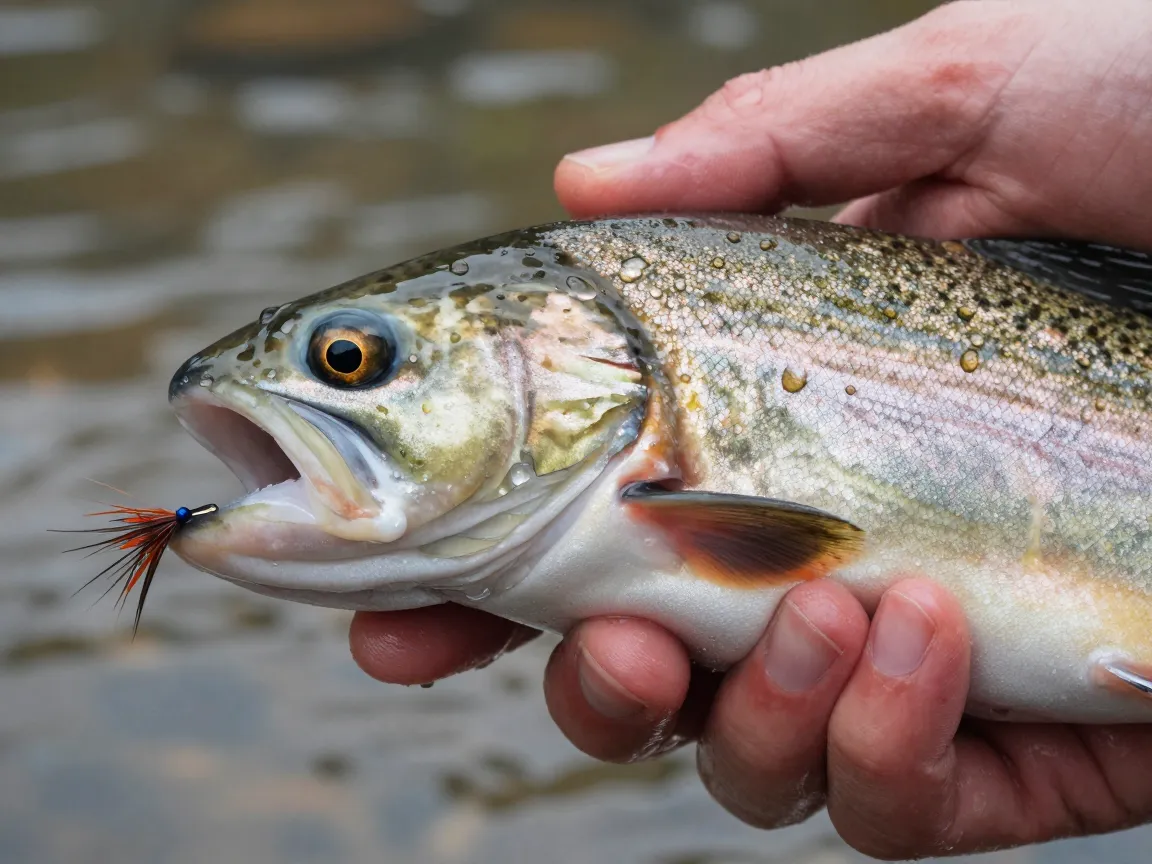
The image of a smiling angler holding a fish at arm’s length in front of a camera existed in every tackle-shop calendar for decades. It is not a composition choice anymore; it is a default that signals the photographer had no other plan.
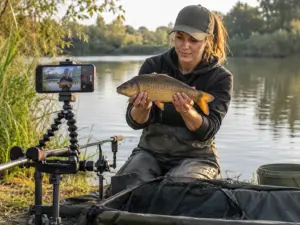
The Cal Fly Fisher’s guide to improving fly fishing photography offers a specific counter-prescription: frame the fish’s eye, the jawline, or the mouth with the fly still pinned in position. Those compositions force the viewer into the fish’s world rather than the angler’s pride. They also require close approach, which demands speed and care in handling, both of which improve fish survival rates, an alignment of ethics and aesthetics that is worth noting.
Pairing detail shots with contextual shots of water and angler movement produces a coherent visual sequence rather than a single image. Editorial work from outlets like Fly Fisherman’s Kendjam Lodge feature and American Fly Fishing’s river coverage in 2026 consistently uses this two-tier approach: one frame establishing place and action, one frame closing in on specific detail.
Fishmadman’s salmon photography from the Stevns coast in late 2026 extends this further, using photography to trace the fish’s transition from sea to river, documenting behavioral and environmental differences across that transition. The images work because they carry information, not just aesthetics.
5. The Between-Cast Moment
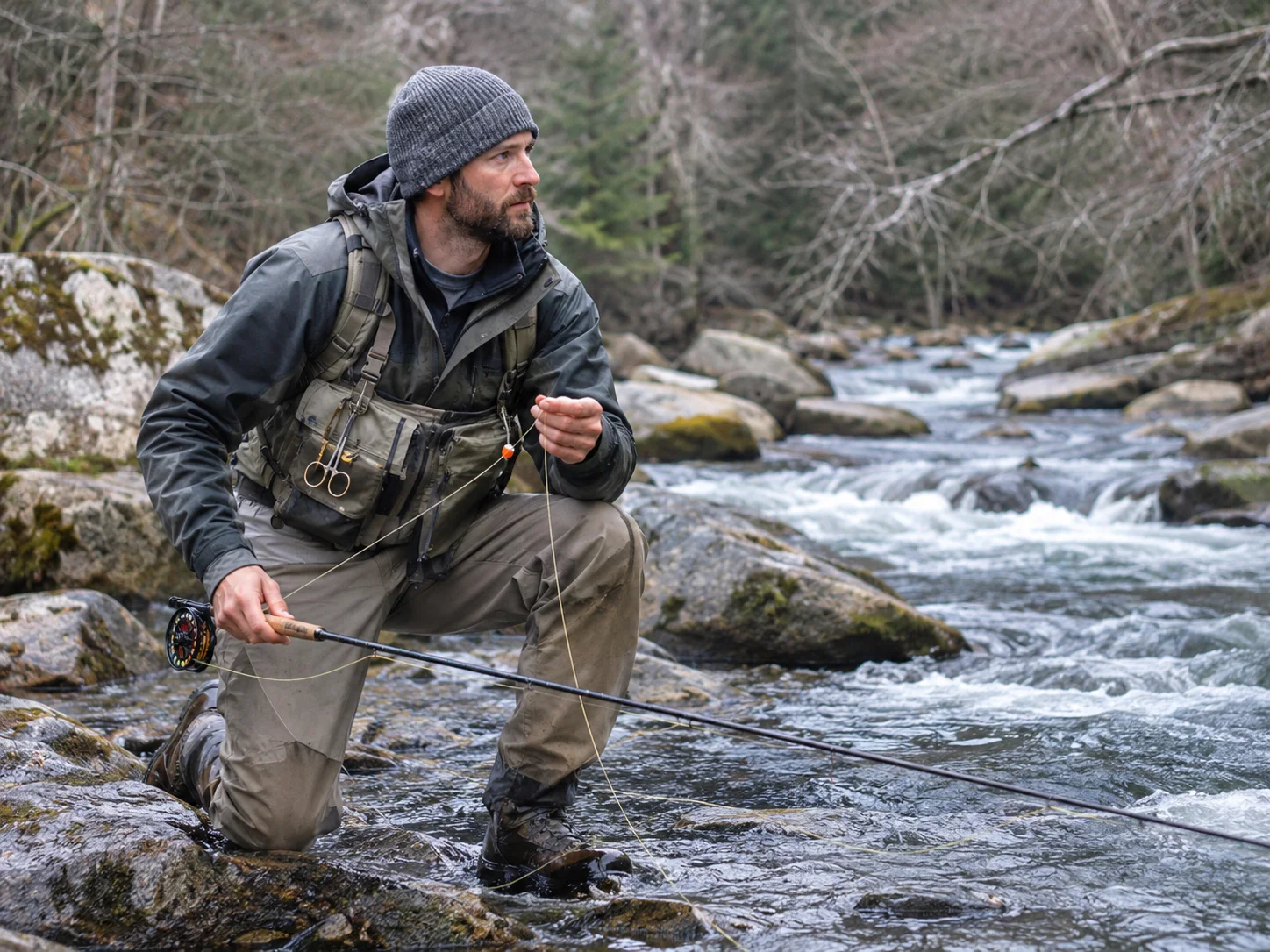
Hammer’s argument that the strongest images happen “in between casts” is counter-intuitive enough to deserve direct attention. His reasoning is straightforward: during a cast, the angler’s body is in a practised, repeated motion. Between casts, when they are adjusting footing on slippery substrate, squinting upstream at a seam, or stripping line to change length, they are problem-solving in real time. That problem-solving reads as authentic engagement in a photograph. The cast reads as performance.
This does not mean ignoring the cast. It means treating the between-cast interval as equally rich material. The angler lifting line off the water before repositioning, the moment of stillness before committing to a new target, the adjustment of a strike indicator, all of these contain narrative.
Filmmaker Aaron’s approach to fly fishing videography, documented in Fly Life Media’s November 2026 feature, makes the same point for moving image: the rhythm of cast, drift, and pause carries emotional content that a highlight reel of only the hook-sets misses entirely. The between-cast waiting is part of the story.
6. Equipment Decisions That Actually Matter
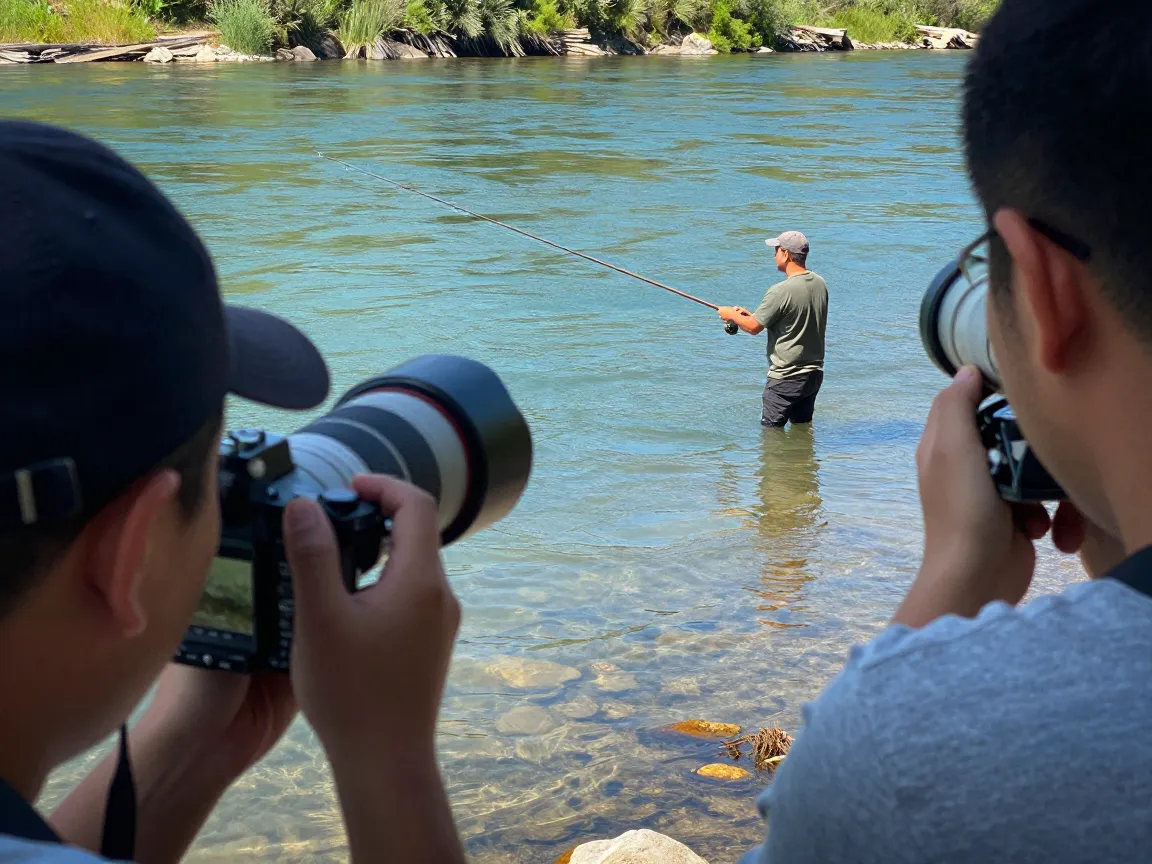
A telephoto zoom in the 100-400mm range is the most useful single piece of gear for river work, specifically because it allows working from the bank without wading into the angler’s productive water. Wading into the same run you are photographing changes the hydraulics, disturbs the substrate, and reduces the angler’s chance of success. Distance-with-reach is not a stylistic choice; it is practical consideration.
Fast autofocus tracking matters for in-flight line photography. Sony’s AI-based subject tracking, Canon’s subject detection in the R-series bodies, and Nikon’s Z-series subject recognition all perform well on this specific task as of 2026, but none of them will find the fly line if you have not established a focus point near the angler before the cast begins. Subject detection works best when given a clear initial target.
Polarizing filters cut surface glare on water and allow the camera to record subsurface structure, rocks, weed beds, holding trout, that is otherwise invisible. For saltwater flats work, where much of the photography in titles like “Salt: Coastal and Flats Fishing Photography” is built around the visual drama of clear shallow water, a polarizer is non-optional.
Loop Tackle’s Atlantic salmon features pair technical casting advice, specifically that “the angle of your cast, your mends and your retrieve all make a difference” in fly presentation, with photography shot against dramatic river backdrops. The polarizer is what makes the river’s depth and color visible in those images rather than a flat reflective surface.
Putting It Together in the Field
The practical workflow that emerges from these principles is sequential and each step depends on the previous one.
- Scout the water before the angler begins fishing. Identify the two or three most likely holding lies and determine where you need to stand to have the light at your back or side when the cast reaches those spots.
- Watch the first few casts without shooting. This gives you timing reference, how much backcast the angler carries, how they mend, how long the drift runs before they lift.
- Commit to a position that works for both the most likely cast direction and the light. Moving between casts creates disturbance and noise; stay where you are and let the shots come to you.
- Shoot the loading backcast, the forward loop formation, and the between-cast intervals with equal attention. The final selection will come from all three.
- For fish photography, pre-decide the composition before the fish is landed. Know whether you want the eye-and-fly detail shot or a wider contextual frame. Having a clear plan reduces the time the fish spends out of water.
- Review exposure and histogram after the first workable sequence, not continually. Constant chimping breaks your attention from anticipating the next cast.
This sequence won’t produce perfect results every time. Fast light changes, unexpected rises, and angler decisions that contradict your read of the water will all interrupt it. What it does is minimize the number of missed frames that come from organizational failure rather than genuine unpredictability.
Conclusion
The expert consensus across fly fishing media in 2026 is clear: authentic, technically-informed images made in honest conditions outperform posed, controlled setups at every level from social media through editorial and fine art markets. Getting there requires the same skills an angler develops over seasons of reading water, attention to detail, patience, and a willingness to wait for the right convergence rather than forcing a moment that isn’t there.
Start with one river you know well enough to predict the feeding lanes. Study the light on that water across a full day before you bring a camera. When you do bring the camera, treat the between-cast intervals as seriously as the casts themselves. Invest in a polarizing filter before investing in a longer lens. And if the light isn’t right, come back tomorrow, that choice, more than any gear decision, is what separates river snapshots from fly fishing photography worth looking at twice.