Hunting Dogs Aesthetic Ideas for Loyal, Rugged Companions
Fewer than 10 percent of hunting dog owners report choosing a breed purely for performance, the rest cite looks, bond, and “the way a dog fits a landscape” as equally important factors. That tension between function and feel is exactly what makes exploring 6 Hunting Dogs Aesthetic Ideas for Loyal, Rugged Companions so compelling in 2026. Each breed on this list is not simply a working tool; it is a visual statement, a mood, and a portrait of the terrain it was built to conquer. The six ideas below go beyond breed profiles. They frame each dog as a fully realized aesthetic archetype, an environment, a palette, a type of loyalty, so that hunters, photographers, breeders, and design-minded dog lovers can see these animals with fresh clarity.
Disclosure: This post contains affiliate links. As an Amazon Associate, we earn from qualifying purchases, and at no extra cost to you.
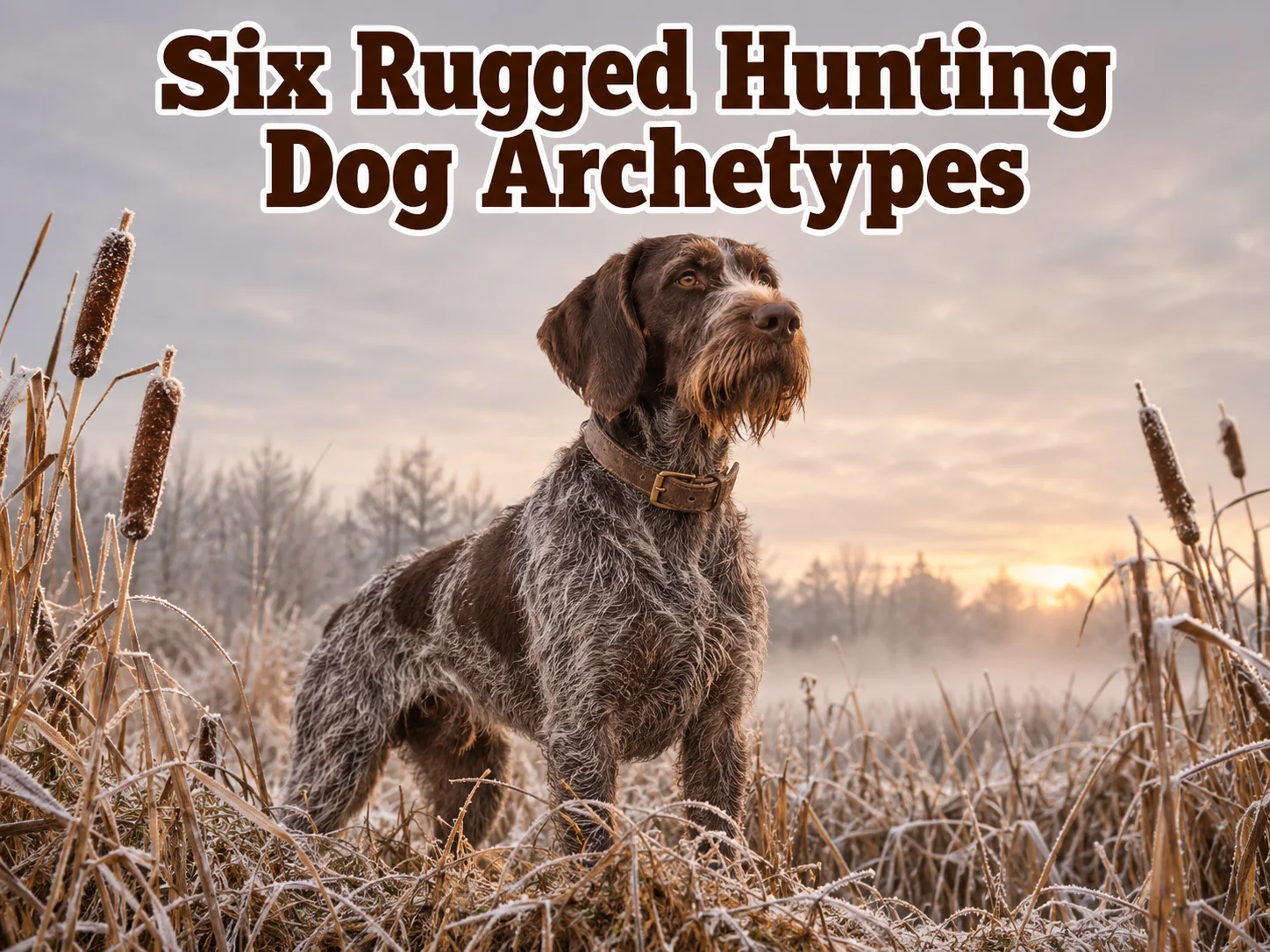
1. The All-Weather Bristle Coat, German Wirehaired Pointer in Dense Brush
The German Wirehaired Pointer is one of the clearest visual archetypes in the hunting dog world, and its aesthetic case is built entirely on texture. The breed’s dense, rough, wire-like coat was developed to protect it from cold water, thick vegetation, and punishing cover. Run your eye over a German Wirehaired Pointer stepping through frost-stiffened cattails and the coat reads almost geological, layered, resistant, earned. The beard and eyebrows add a weathered authority that no smooth-coated dog can replicate. This is a breed that looks like it has already been somewhere difficult and is ready to go back.
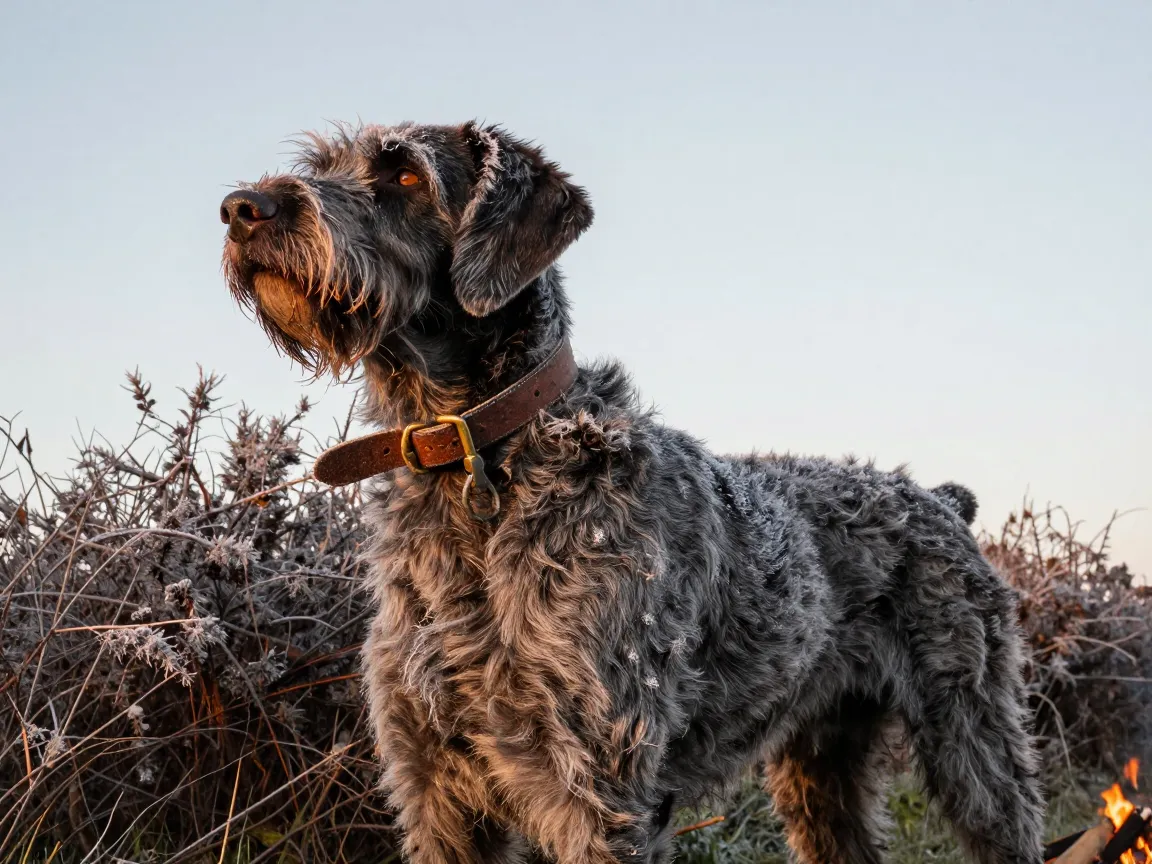
The aesthetic idea here is to lean fully into the tactile contrast of coat against environment. Imagine the dog pressed into the edge of a thicket, the wire coat picking up frost crystals while the background blurs into a muted tangle of brown and grey. Rustic leather collars with minimal hardware suit this look far better than neon safety orange vests. For photographers, low-angle shots that place the dog’s textured profile against an open, pale sky create the strongest visual tension, the rough foreground against the clean backdrop.
For breeders and brand designers, the German Wirehaired Pointer supports a palette of warm grays, raw umber, and muted olive. Rustic serif typography, hand-stamped leather textures, and aged brass hardware all echo the breed’s visual vocabulary. This dog does not perform ruggedness for the camera; it simply is rugged, and the aesthetic work is knowing how to let that read on its own terms. Campfire scenes where the dog’s coat catches firelight from the side round out a visual narrative that balances hard-use fieldwork with quiet, end-of-day loyalty.
2. Nordic Endurance, Norwegian Elkhound Against Snow and Stone
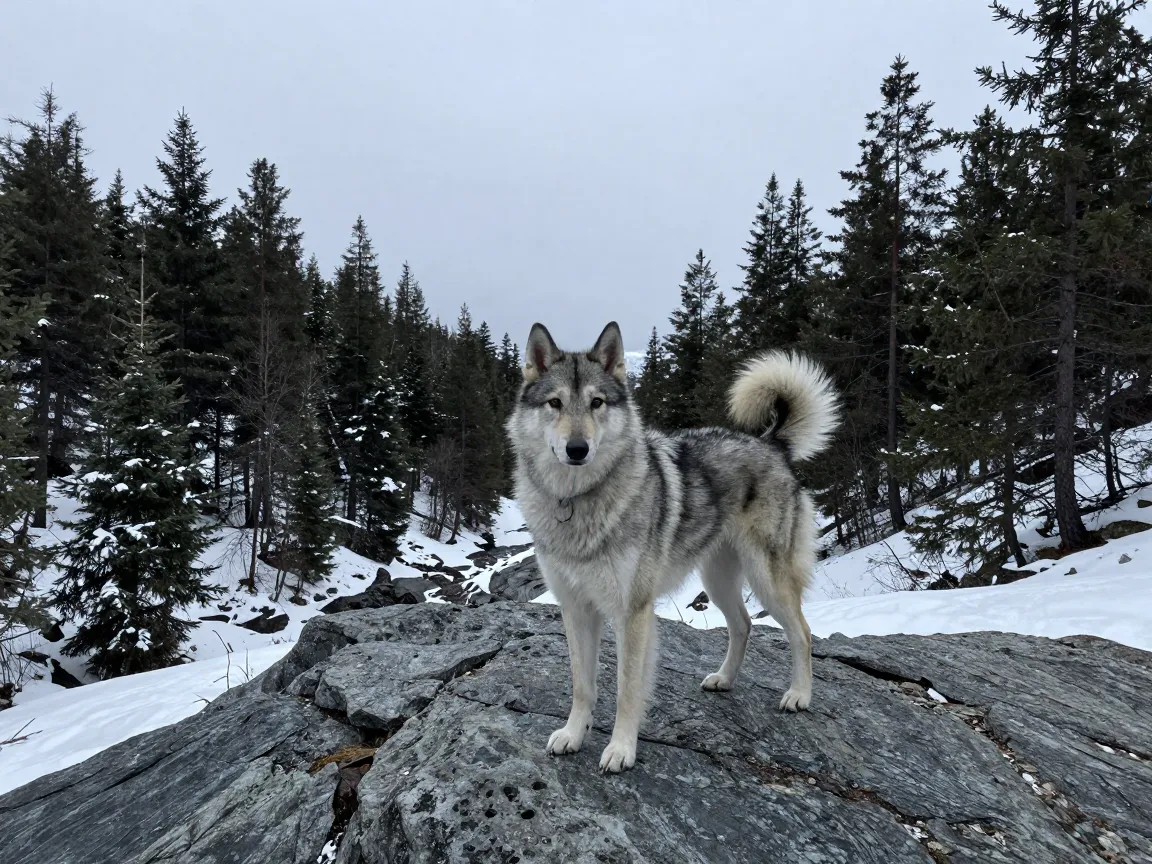
The Norwegian Elkhound carries one of the most distinctive silhouettes in the hunting dog world: compact and powerful, with a thick silver-gray double coat and a tightly curled tail held high over the back. Bred for endurance, strength, and courage in Scandinavia’s harshest climates, this dog looks like it was carved from the same material as the mountains it hunts. The silver-gray coat catches light differently at every hour, pale and almost luminous at midday, blue-shadowed at dusk, nearly white against dark pine trunks after a fresh snowfall.
The aesthetic idea built around the Norwegian Elkhound is one of extreme-climate minimalism. Think stark contrasts: the dense coat against bare granite, the curled tail against a flat grey sky, the dark eyes sharp against snow. Color palettes drawn from this aesthetic run to charcoal, slate, bone white, and the deep blue-green of conifer forests. There is nothing decorative about this dog’s appearance, every feature serves a purpose, and that functionality-as-beauty is a powerful visual principle.
For hunters who photograph their time in the field, the Norwegian Elkhound rewards patience and elevation. Shooting from slightly above the dog on a rocky hillside, with the valley floor receding behind it, communicates both the terrain and the dog’s physical authority. This is not a warm-and-fuzzy aesthetic; it is Nordic stoicism made flesh, and it pairs naturally with imagery of wool, steel, and hand-cut timber. The breed’s loyalty to its handler is fierce and long-established, so pairing a close portrait of those dark, alert eyes with the vast, indifferent landscape behind it creates an emotional counterpoint that is difficult to manufacture with any other breed.
3. Classic Waterfowl Companion, Labrador Retriever in Marsh and Mist
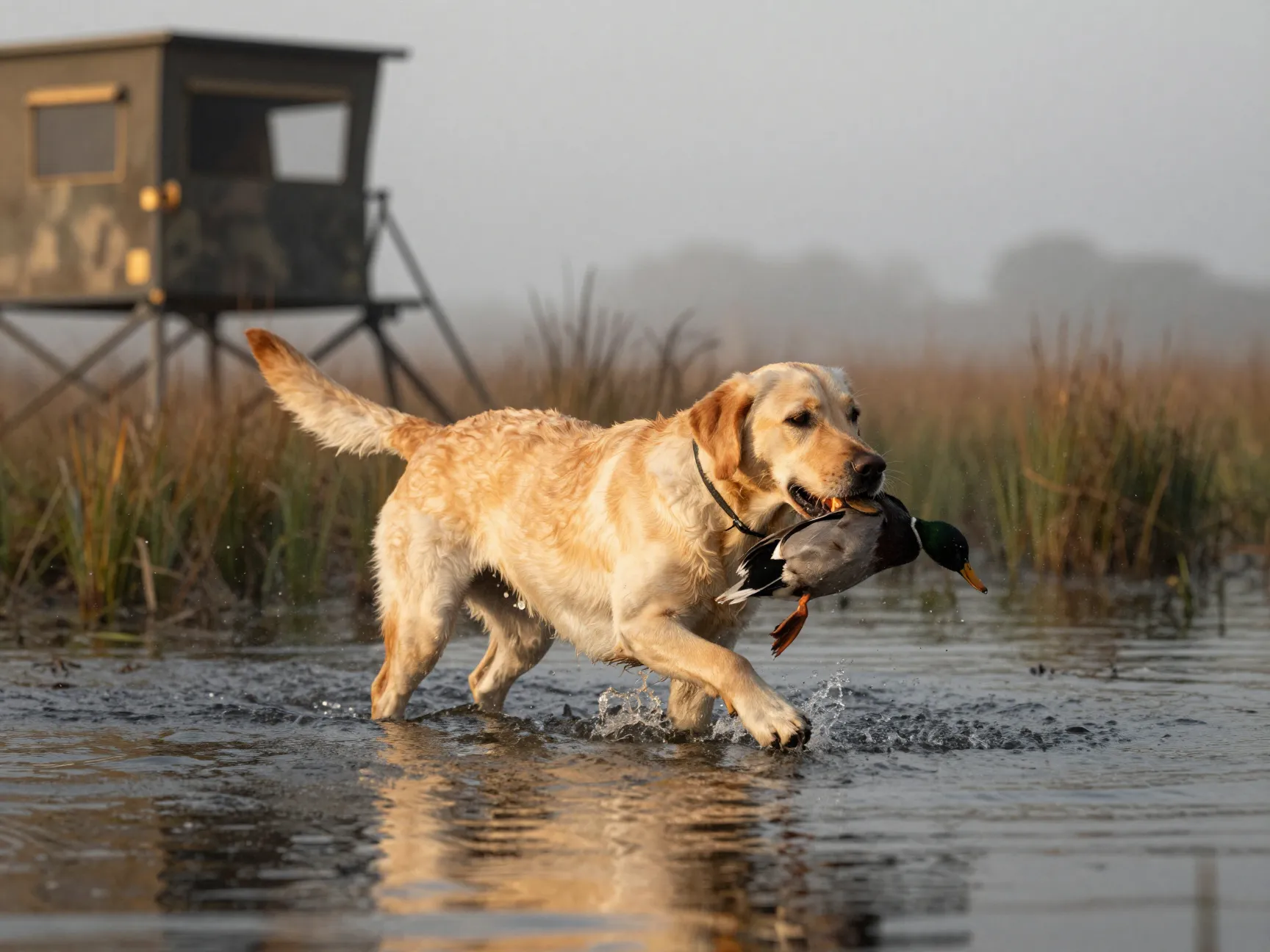
No breed has anchored the “loyal hunting companion” visual category more completely than the Labrador Retriever, and that dominance is fully deserved. The Lab is built for cold water: a dense, water-resistant double coat, an otter-like tail that works as a rudder, and a physical enthusiasm for retrieves that never seems to flag. The breed can withstand cold temperatures, swim easily through icy water, and then transition to being a calm, trainable, family-oriented dog by the time the waders come off. That range is itself an aesthetic statement.
The waterfowl aesthetic centered on the Labrador Retriever is one of the most recognizable in all of outdoor imagery: a yellow, black, or chocolate Lab chest-deep in marsh grass, mouth full of decoys or a retrieved duck, the morning mist still sitting low over the water. The color story is warm despite the cold subject, amber reeds, gray water, the dog’s coat catching the first flat light of dawn. This is an aesthetic of reliability and repetition, the visual language of a partnership that has been refined over hundreds of mornings in the same blind.
For designers working in hunting brands, the Lab aesthetic rewards a restrained, classic approach. Dark greens, marsh browns, faded canvas, and worn brass are the supporting materials. The dog itself, with its broad head and open, willing expression, humanizes even the most technical hunting gear. Portrait work that captures the Lab’s direct, steady eye contact communicates exactly the loyalty that makes this breed so persistently popular. The wet coat shaking out a spray of water, frozen in a fast shutter shot, is one of the most kinetic and satisfying images available in this aesthetic space, explosive energy in a fundamentally steady animal.
4. Appalachian Tracker, Plott Hound in Fog and Timber
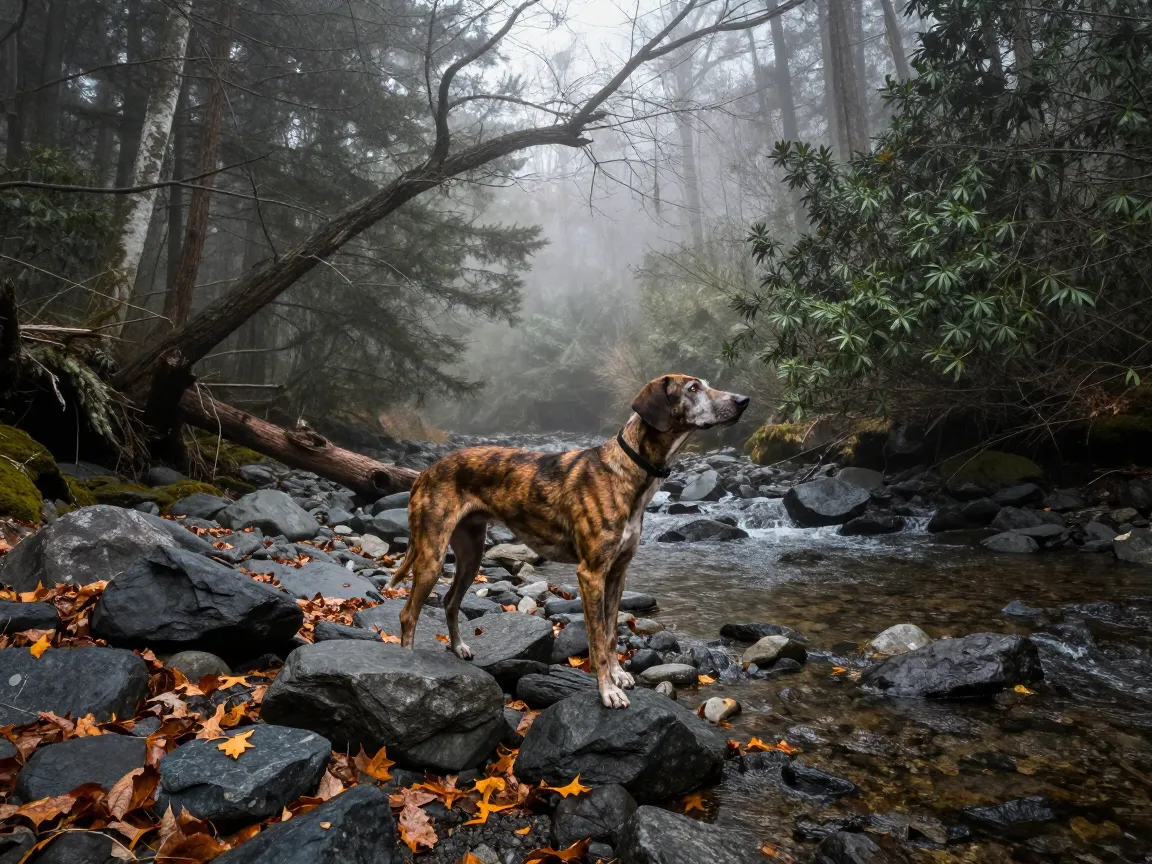
The Plott Hound is the official state dog of North Carolina, and it looks the part. Lean, brindled, and built for endurance over brutal mountain terrain, the Plott carries an aesthetic of deep American wilderness that is distinct from any European gun dog tradition. The breed is fearless and astonishingly determined, with a cold nose that can track bear and boar through dense, rocky forest, and a loud, distinctive voice that carries across ridgelines in a way that becomes part of the landscape itself. Yet come evening, the Plott is gentle and loyal with family, a contrast that is at the heart of the rugged-companion idea.
The visual aesthetic here is Appalachian fog and deep timber. Imagine a lean, brindle-coated hound picking its way along a creek bed, steep-timbered hillsides rising on both sides, low cloud sitting in the hollows. The color palette is deep and cool: slate greens, smoke grays, the warm amber of fallen leaves against dark stone. The Plott’s brindle coat, a striped, variable pattern that ranges from light buckskin to dark mahogany, reads as camouflage in this environment, as if the dog grew that coat specifically for these woods, because functionally it did.
For photographers and brand artists, the strongest Plott Hound images use the breed’s lean silhouette against large, rough forms, a fallen oak, a granite outcropping, a hillside of tangled laurel. The dog’s alert stance and lifted head, nose reading the air, says everything about focus and purpose. This aesthetic also supports night imagery better than most: a Plott Hound in the beam of a headlamp at the base of a treeing tree, eyes bright with intensity, is one of the most dramatic images available in hunting-dog photography and requires almost no staging to achieve.
5. Cold Forest Guardian, Karelian Bear Dog in Boreal Shadow
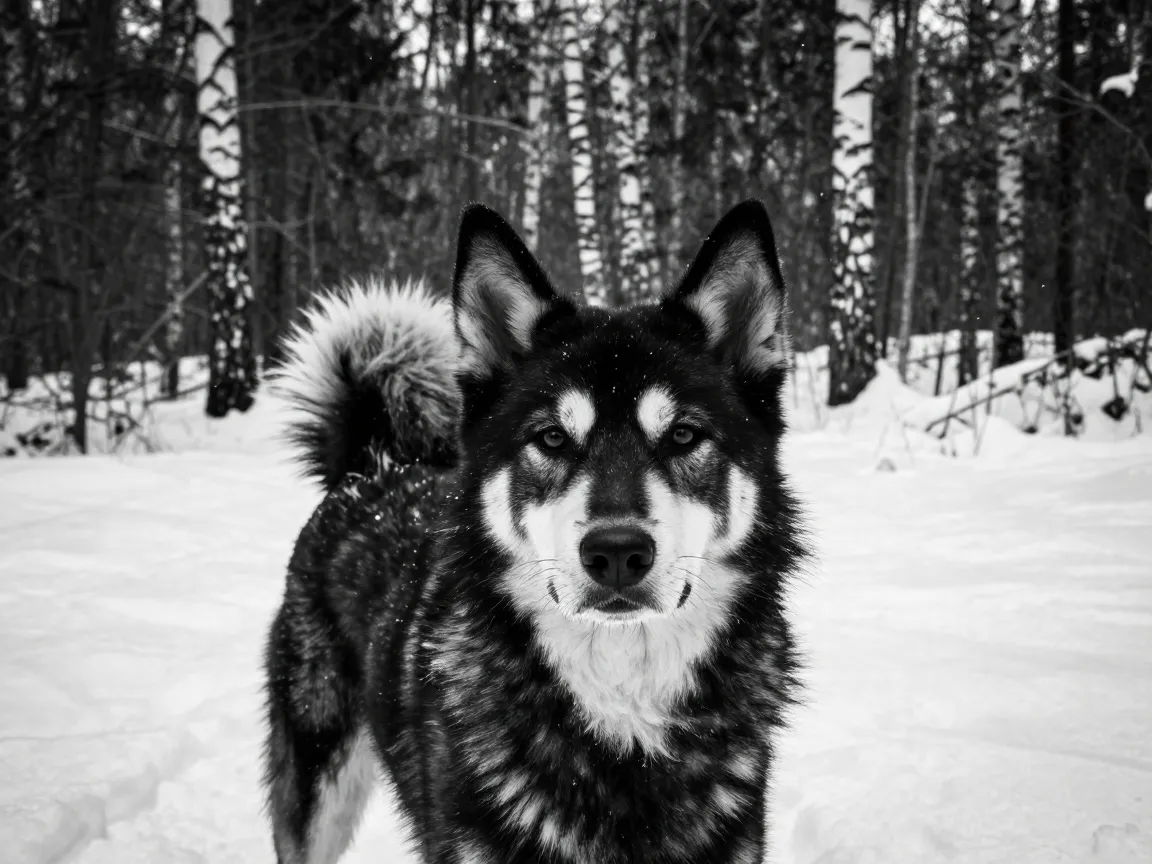
The Karelian Bear Dog is a national treasure in Finland and one of the most visually dramatic hunting dogs in existence. The coat is a sharp, high-contrast black and white, not a soft or gradated pattern, but a bold, almost graphic division of dark and light that reads immediately from a distance. The curled tail, dark eyes, and dense fur create a silhouette that belongs entirely to the deep boreal forest: birch stands, snowfall, long shadows, silence. The breed is known for courage, loyalty, and sharp instincts, and those qualities are written into its physical presence before it ever moves.
The aesthetic idea centered on the Karelian Bear Dog is one of stark, monochromatic drama. The black-and-white coat against snow is an obvious pairing, but the more interesting image places the dog in deep forest shadow, where the white patches catch the only available light and the black portions dissolve into the background. This creates a kind of visual camouflage-in-reverse: the dog is simultaneously invisible and unmistakable. For photographers, the ideal light is the flat, directionless overcast of a northern winter morning, no harsh shadows, just a cool, even luminosity that makes the coat’s contrast do all the work.
Branding and design applications built around the Karelian Bear Dog tend toward bold, graphic treatments: strong black line, minimal color, the kind of imagery that reduces well to a single-color stamp or tattoo. This is a dog that commands respect in its visual simplicity. The loyalty of a Karelian Bear Dog to its handler is as intense as its alertness in the field, and portrait photography that captures the dog’s sharp, focused gaze directly into the lens, no softness, no relaxed expression, communicates a seriousness that few other breeds can match in a single frame.
6. Boar Country Grit, Catahoula Leopard Dog in Shadowed Pines
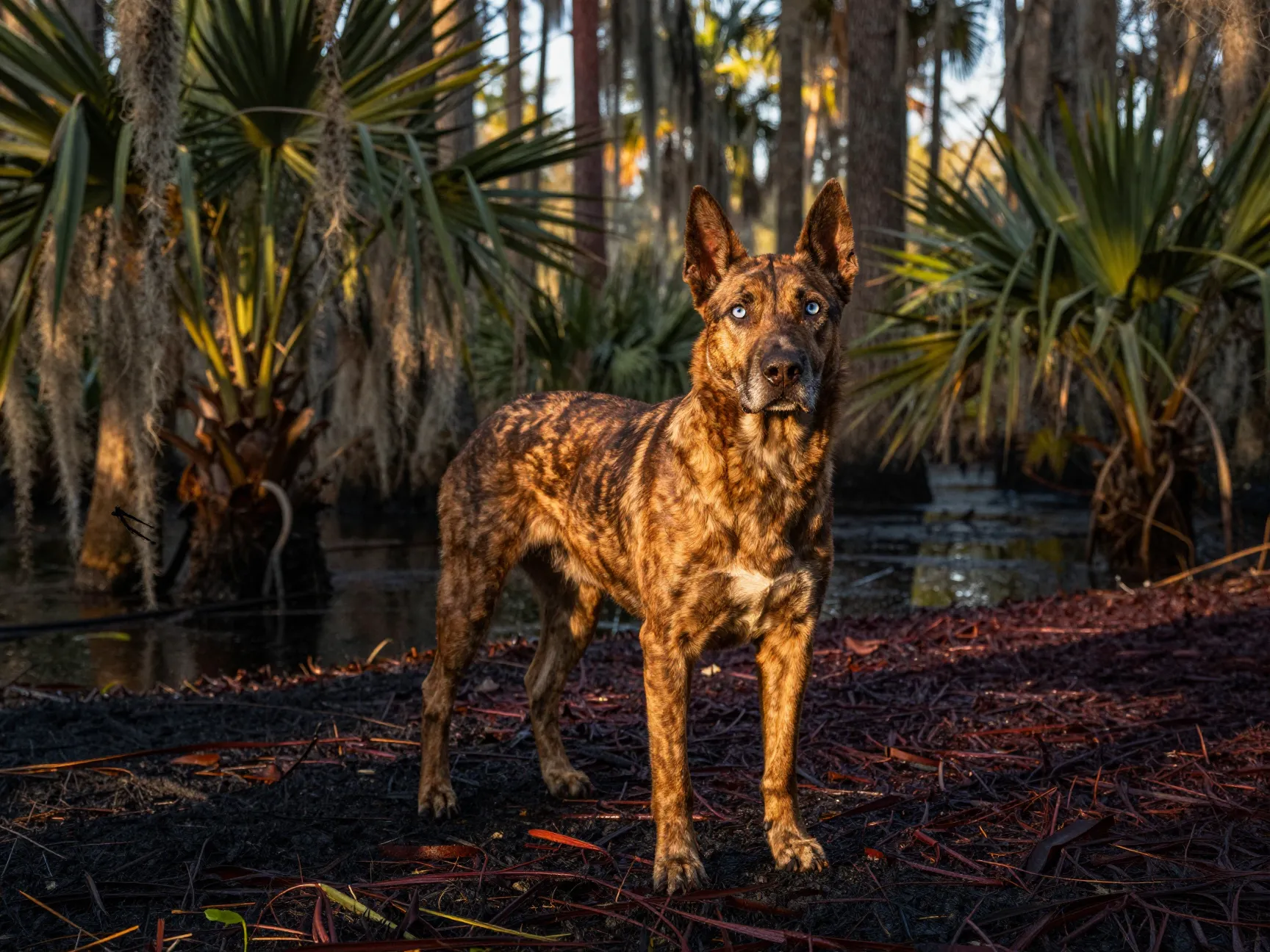
The Catahoula Leopard Dog is the most visually striking breed on this list by a considerable margin, and its coat makes the argument before its personality has a chance to intervene. Brindle patterns, merle marbling, blue or cracked glass eyes, and a muscular, well-balanced build combine to create a dog that looks hand-painted. Developed as a boar-hunting dog in the deep South, the Catahoula is elegant and loyal, with the stamina and pain tolerance required for hard contact work in rough cover. This is not a breed for uncertain handlers, and that edge is part of its aesthetic power.
The aesthetic idea built around the Catahoula is one of heat, shadow, and bayou-country intensity. The natural environment here is very different from the Nordic and Appalachian ideas explored earlier: think shadowed longleaf pine, palmetto scrub, the iron smell of black water, late-afternoon light cutting through Spanish moss in long, amber bars. The dog’s merle or brindle coat reads as part of this dappled, variable light environment, never fully resolved into a single color, always slightly shifting.
For photographers, the Catahoula rewards the same approach a wildlife photographer would bring to shooting a leopard: patience, distance, and an eye for the moment when the animal’s attention snaps to full focus. The breed’s distinctive eyes, especially the cracked-glass or marbled blue variety, are the central visual element, and any portrait that captures both the coat’s complexity and the intensity of those eyes at the same moment delivers something genuinely exceptional. Brand and design applications lean toward heat and contrast: burnt sienna, pine shadow green, the deep burgundy of oxidized iron, and bold, assertive typography that communicates the breed’s refusal to back down from difficult terrain or difficult work.
Conclusion
The 6 Hunting Dogs Aesthetic Ideas for Loyal, Rugged Companions explored here share a single underlying principle: each breed’s physical appearance is a direct record of the environment it was built to master. The wirehaired coat of a pointer in winter brush, the Nordic silhouette of an elkhound against granite, the Lab’s wet retrieval drive, the Plott’s brindle against Appalachian timber, the Karelian’s graphic contrast in boreal snow, and the Catahoula’s painted coat in bayou shadow, these are not arbitrary color choices. They are evolutionary arguments for belonging to a specific place.
The most useful next step for anyone building around these ideas is to choose the environment first and let the breed follow. Once the landscape is clear, icy wetlands, dense forest, open marsh, steep mountain, shadowed pine, the right breed, palette, and visual language become far more obvious. That environment-first thinking is what separates a genuinely compelling hunting-dog aesthetic from a simple breed photograph.