Bow Hunting Aesthetic Ideas for a Traditional, Skillful Look
Fewer than 10 percent of licensed bowhunters in North America currently use traditional equipment, yet interest in the classic look and feel of longbows and recurves has been climbing steadily since 2020. Something about a hand-drawn wooden bow, feather-fletched arrows, and a bare-bones quiver communicates a kind of quiet confidence that no compound rig with a fiber-optic sight ever quite matches. The 6 bow hunting aesthetic ideas for a traditional, skillful look explored below break down exactly how hunters are building that image in 2026, from the bow itself to the way they stand and draw.
Disclosure: This post contains affiliate links. As an Amazon Associate, we earn from qualifying purchases, and at no extra cost to you.
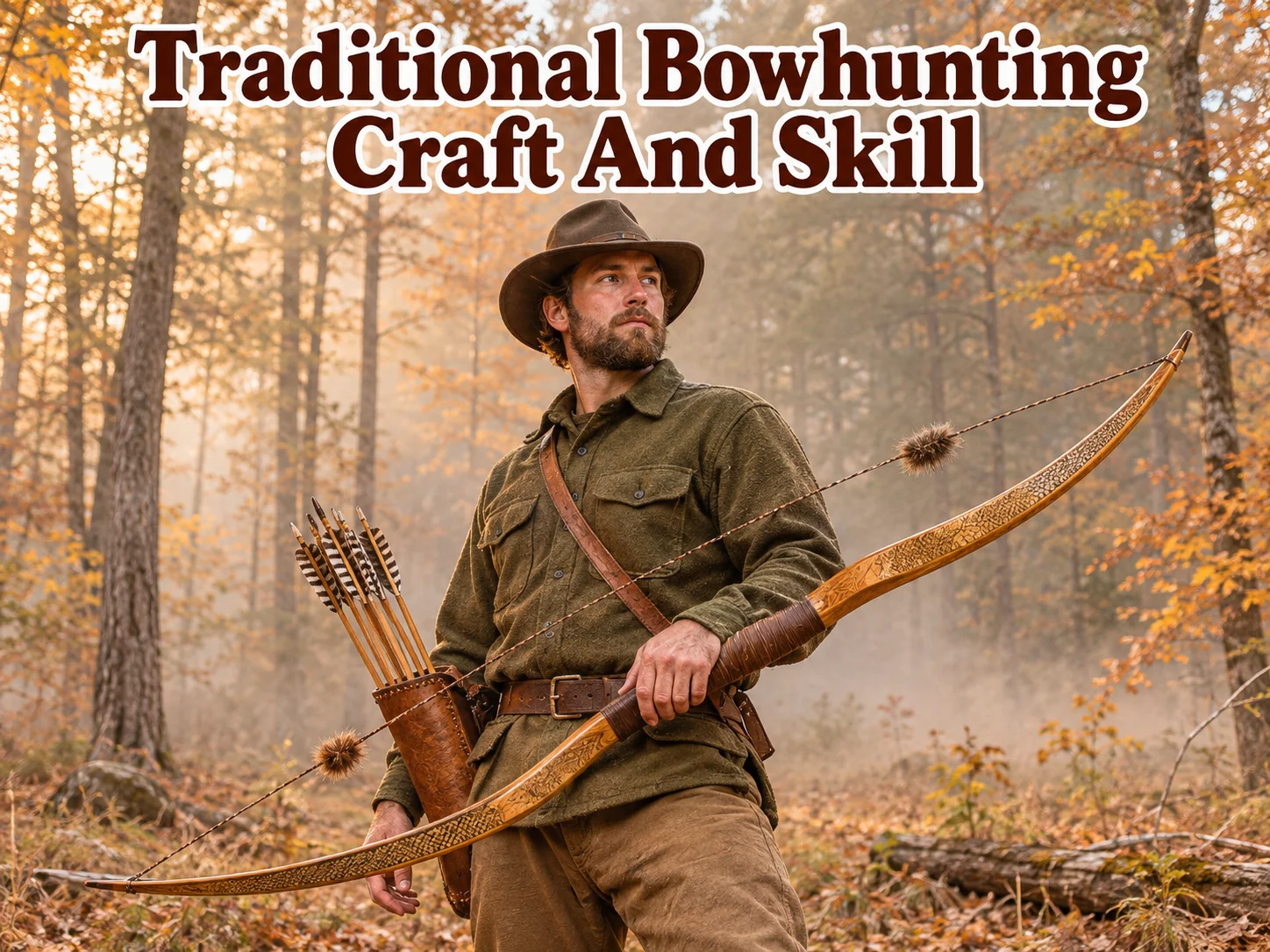
Whether the goal is to show up at a traditional gathering looking the part, to build a setup that photographs beautifully, or simply to embrace a more deliberate, craft-centered approach to the woods, each of these ideas offers a concrete starting point. The best part is that none of them requires spending a fortune, several of the most visually striking traditional setups cost less than a mid-range compound.
1. Handcrafted Wooden Bows with Natural Finishes
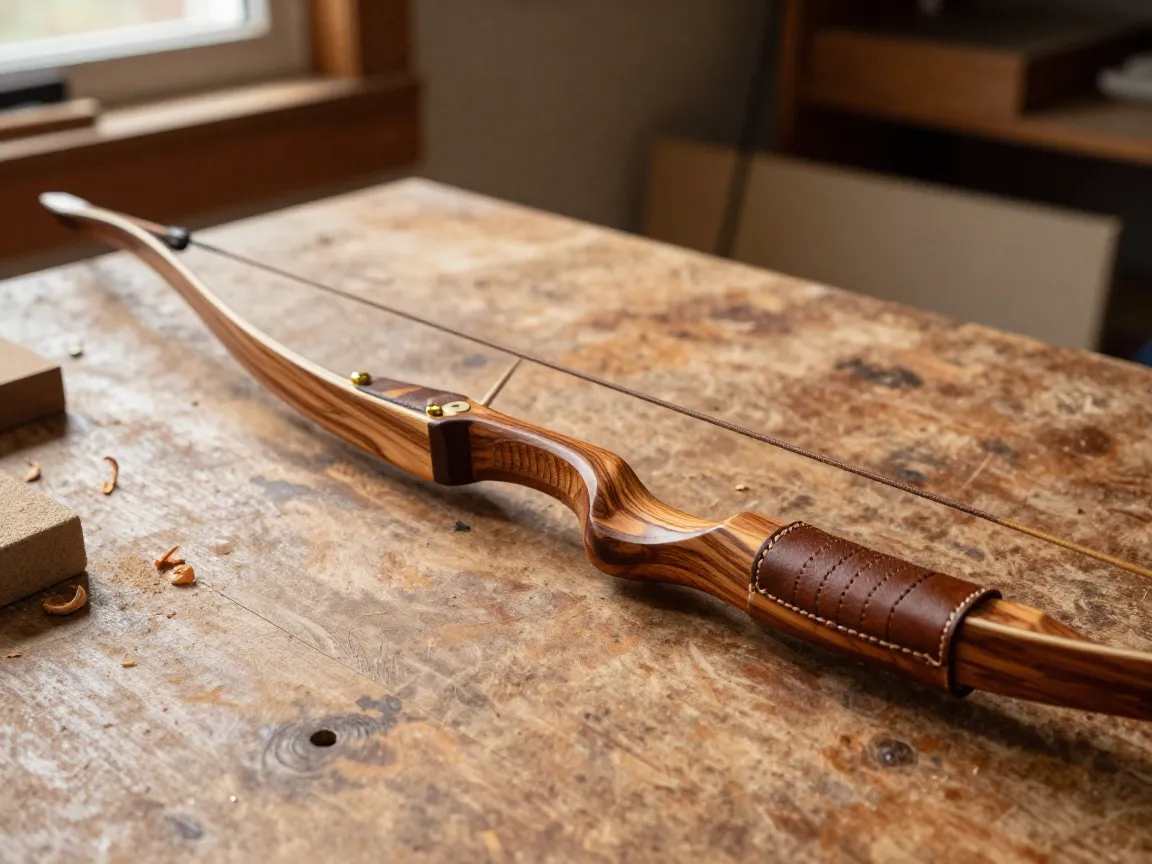
The bow itself is the first thing anyone notices, and nothing signals traditional craftsmanship faster than natural wood. Custom bowyers working in 2026 are producing longbows and recurves from dense, beautiful hardwoods, mesquite, bois d’arc, Osage orange, and black locust among the most sought-after, often laminating multiple species together for stability and visual depth. The result is a limb with visible grain patterns, warm amber tones, and a surface that looks genuinely alive rather than machined.
What separates an aesthetically strong wooden bow from a plain one is typically the backing material. Rattlesnake skin has become a recognizable signature on high-end custom bows: stretched tightly over the back of the limb, it adds a layer of protection while creating an unmistakably striking pattern that no synthetic material replicates. Some bowyers use rawhide, sinew, or even fiberglass tinted to match the wood beneath, but the natural-skin approach carries the most visual weight at a gathering or in the field.
The grip and riser area deserve equal attention. A leather-wrapped grip, hand-stitched rather than glued on with a commercial wrap, contributes texture, warmth, and the slight irregularities that signal handwork. Wooden risers with minimal metal hardware stay true to the aesthetic: a single brass arrow pass or a simple shelf rest is all the hardware needed. Every piece of shiny aluminum or molded polymer that gets removed brings the overall look one step closer to something that could have come from a mid-20th-century workshop, which is precisely the point.
For hunters who want to build rather than buy, tillering a selfbow from a stave, selecting a branch, shaping the limbs to bend evenly under load, and finishing with natural oils or bear fat, represents the deepest commitment to this aesthetic. Sealing the finished bow with plant-based oils and sanding with natural abrasives rather than power tools leaves a surface quality that factory production simply cannot match. Even viewed from across a field, a well-finished selfbow looks fundamentally different from production equipment.
2. Feather-Fletched Arrows on Classic Shafts
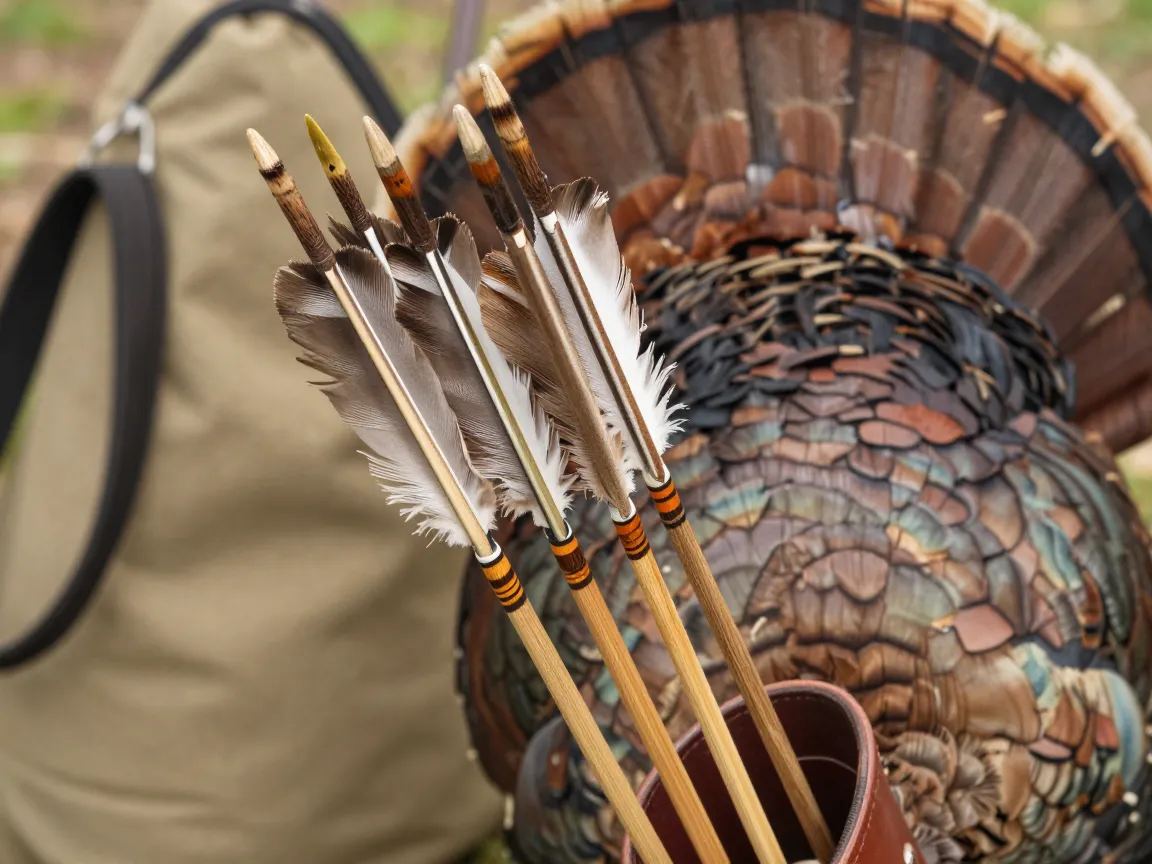
The arrow is the bow’s visual partner, and feather fletching is the single detail that most reliably marks a traditional setup as authentic. Full-length natural turkey feathers, cut to a shield or parabolic profile and bound to the shaft with traditional thread and hide glue, have a soft, slightly irregular appearance that plastic vanes never produce. When light catches a quiver full of feather-fletched arrows, the effect is immediately recognizable as old-school, which is exactly why feathers remain the standard at traditional shoots and rendezvous gatherings even when plastic would be more durable.
The shaft material matters almost as much as the fletching. Genuine cedar arrows with a hand-dipped lacquer finish in warm wood tones create the most purely traditional look, though they require consistent spine-matching and careful storage to avoid warping. Many hunters in 2026 compromise on carbon shafts that are painted or wrapped to mimic the appearance of cedar, a practical choice that retains the visual aesthetic while offering the dimensional consistency that modern broadheads and tuning methods require. From ten feet away, a well-finished carbon shaft with real feather fletching reads as traditional in every important sense.
Color selection on the fletching also communicates intent. Natural barred turkey feathers in brown, tan, and rust tones align with an earth-toned, field-practical look. Brightly dyed solid-color feathers in yellow or orange signal a more target-oriented traditional style. Either works as a deliberate visual choice, but the most cohesive setups pick one language and stay consistent, matching the feather tones to the bow’s finish, the quiver’s leather, and the hunter’s clothing palette if the full aesthetic is the goal.
Nocks, cresting, and tip selection round out the arrow aesthetic. Traditional horn nocks or simple self-nocks on wood shafts reinforce the period-correct look. Hand-painted cresting bands, the decorative rings just below the fletching, are a centuries-old tradition that also makes a quiver full of arrows look genuinely custom. Hunters who pursue the deepest level of primitive aesthetics knap their own stone broadheads, a skill that visually defines the arrow as an artifact as much as a hunting tool.
3. Flemish Twist Strings and Small Hardware Details
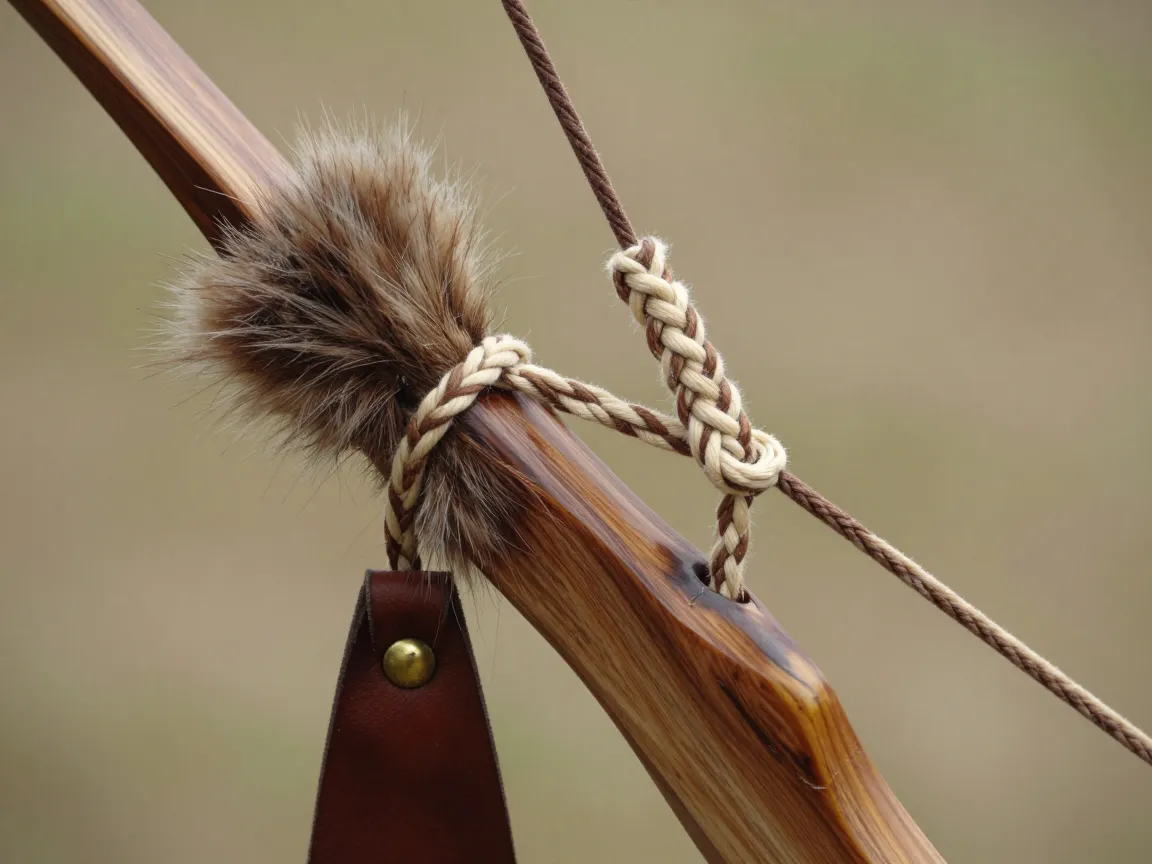
String choice is a detail that most observers will not consciously register, but it contributes meaningfully to the overall visual texture of a traditional setup. A Flemish twist bowstring, braided from multiple fibers twisted together and finished with looped rather than tied ends, has a braided, slightly irregular surface that reads as handmade at a glance. Modern Fast Flight strings can be built with this construction, so there is no performance penalty for choosing it.
The real aesthetic opportunity is in the fiber selection. Traditional string makers often alternate colored fibers within the twist, pairing natural cream with dark brown, or forest green with tan, producing a subtle variegated pattern along the length of the string. The loops at each end, particularly on a horn-tipped longbow, have a compact elegance that metal cams and cable systems never achieve. Matching the string colors to the bow’s finish or to the arrow cresting is a small detail that separates a thoughtfully assembled setup from a random one.
Fur puffs, small balls of beaver or rabbit fur spliced onto the string near the nocking point, serve a real functional purpose by dampening string vibration and reducing noise. They also provide one of the most immediately recognizable visual signatures of the traditional aesthetic. Seen on a bow at any traditional archery event, fur puffs communicate membership in a specific tradition without a word being said. Combined with a simple brass nocking point and a leather tab on the shooter’s fingers, these details make the string assembly look complete and intentional.
Leather accessories elsewhere on the setup reinforce the same language. A hand-stitched leather quiver, back or hip style, with a simple belt attachment, matches the bow’s grip material and keeps the overall color palette unified. Arrow pouches, bow slings, and even arm guards in natural vegetable-tanned leather rather than synthetic materials maintain the visual consistency that makes a full traditional setup look curated rather than assembled at random from whatever was available.
4. Earth-Tone Clothing and Wool Layers
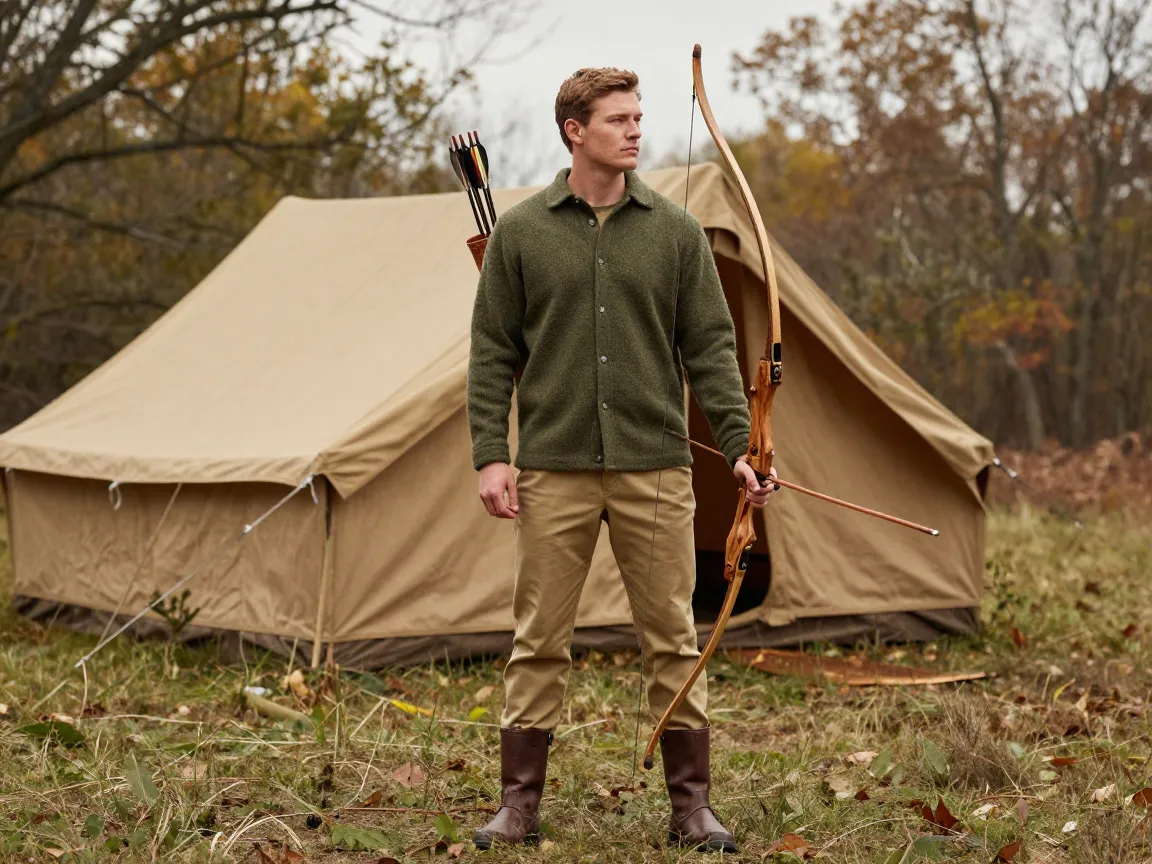
Traditional archery gatherings and hunting camps across the country have developed a recognizable dress code that is entirely informal but powerfully effective at conveying the aesthetic. Wool shirts in olive drab, brown, or forest green; canvas pants in khaki or tan; leather boots with minimal modern branding, these choices signal alignment with the pre-synthetic era of hunting that most traditional archers are referencing visually.
Wool is the cornerstone of this look for practical as well as aesthetic reasons. It is quiet in brush, regulates temperature across a wide range of conditions, and ages into a texture that polyester fleece never develops. A heavyweight wool shirt worn over a simple base layer looks inherently more historical than a branded moisture-wicking hunting jacket, even if the latter is technically more functional. Hunters who lean fully into the wool-and-canvas aesthetic often source vintage military surplus shirts and canvas brush pants that carry a patina of genuine use rather than the artificial distress finish of modern “heritage” clothing brands.
That said, the clothing element is entirely optional in terms of completing the traditional look. Many hunters wear standard modern camo or base-layer hunting clothing with a fully traditional bow setup and read as clearly traditional, because the bow, arrows, and shooting method carry the aesthetic signal far more powerfully than the shirt. The clothing layer is an enhancement for those who want to commit fully to the visual identity, not a requirement for anyone who simply wants to shoot a wooden bow well.
For hunters who do invest in the clothing aesthetic, the most cohesive approach is to match the clothing palette to the bow and arrow tones. A mesquite-and-leather bow with brown turkey feathers pairs naturally with earth tones and wool. An Osage selfbow with bright cresting and dyed fletching can carry more colorful clothing accents. The goal is visual harmony rather than period-accuracy costuming, and restraint, avoiding branded logos, neon accents, and modern tactical patterns, does most of the work.
5. Howard Hill-Style Shooting Form and Canted Bow Technique
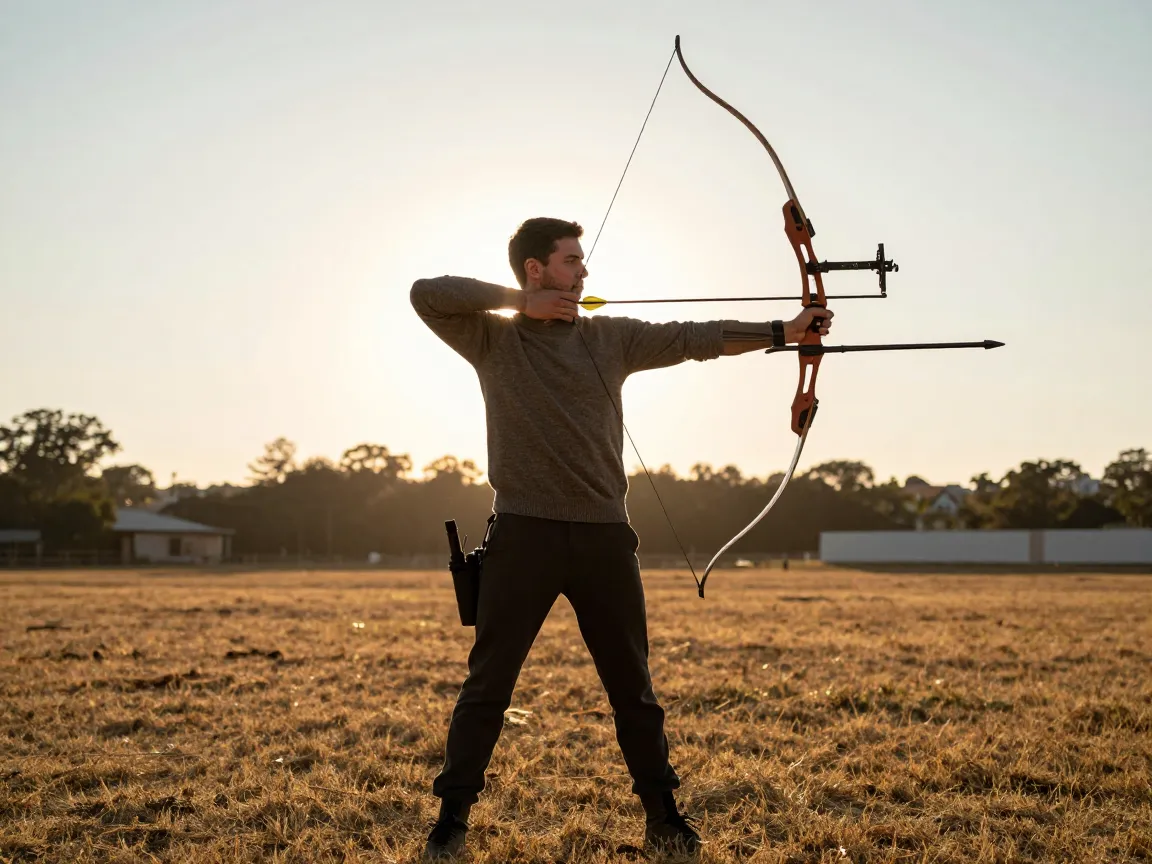
Aesthetics in traditional bowhunting are not limited to equipment. The way an archer stands, holds the bow, and draws the string carries as much visual meaning as the hardware. Howard Hill-style shooting, named after the most celebrated instinctive archer of the 20th century, is defined by a set of physical choices that look immediately different from modern compound technique and signal a deep connection to archery’s athletic tradition.
The key elements are visible from any angle. The archer cants the bow, tilts it sideways at roughly 45 degrees, during the draw, which creates a wide, open visual silhouette rather than the vertical, sight-aligned profile of modern compound shooting. The draw hand anchors at the corner of the mouth rather than the jaw or chin, keeping the draw length relatively short and the elbow high. The arrow rests directly on the bow hand, no rest, no shelf cushion, just bare skin, and the aiming is entirely instinctive, with no reference to pins or peep sights. The whole sequence, from the relaxed side-carry position through the fluid swing draw to the loose, has an athletic fluency that looks as studied and intentional as a classical sports technique.
This form is not merely cosmetic. It is a genuine skill set that requires hundreds of hours to develop to hunting accuracy, which is part of its appeal in traditional archery culture. Hunters who shoot this way are visually communicating a commitment to difficulty and to a specific historical lineage, one that connects them to Hill’s famous footage from the 1930s and 1940s. Modern practitioners who adopt the style, as documented in multiple 2026 field reports of hunters tagging game with longbows using Hill-style form, describe the technique as simultaneously more demanding and more satisfying than any sight-aided method.
Learning this form typically involves studying footage of Hill and his contemporaries, working with a coach familiar with traditional instinctive methods, and accepting an extended learning curve. The payoff is a shooting style that is instantly recognizable, visually compelling in the field or on video, and grounded in a tradition that most observers respond to with immediate respect.
6. Minimalist Setups and Instinctive Aiming as a Visual Statement
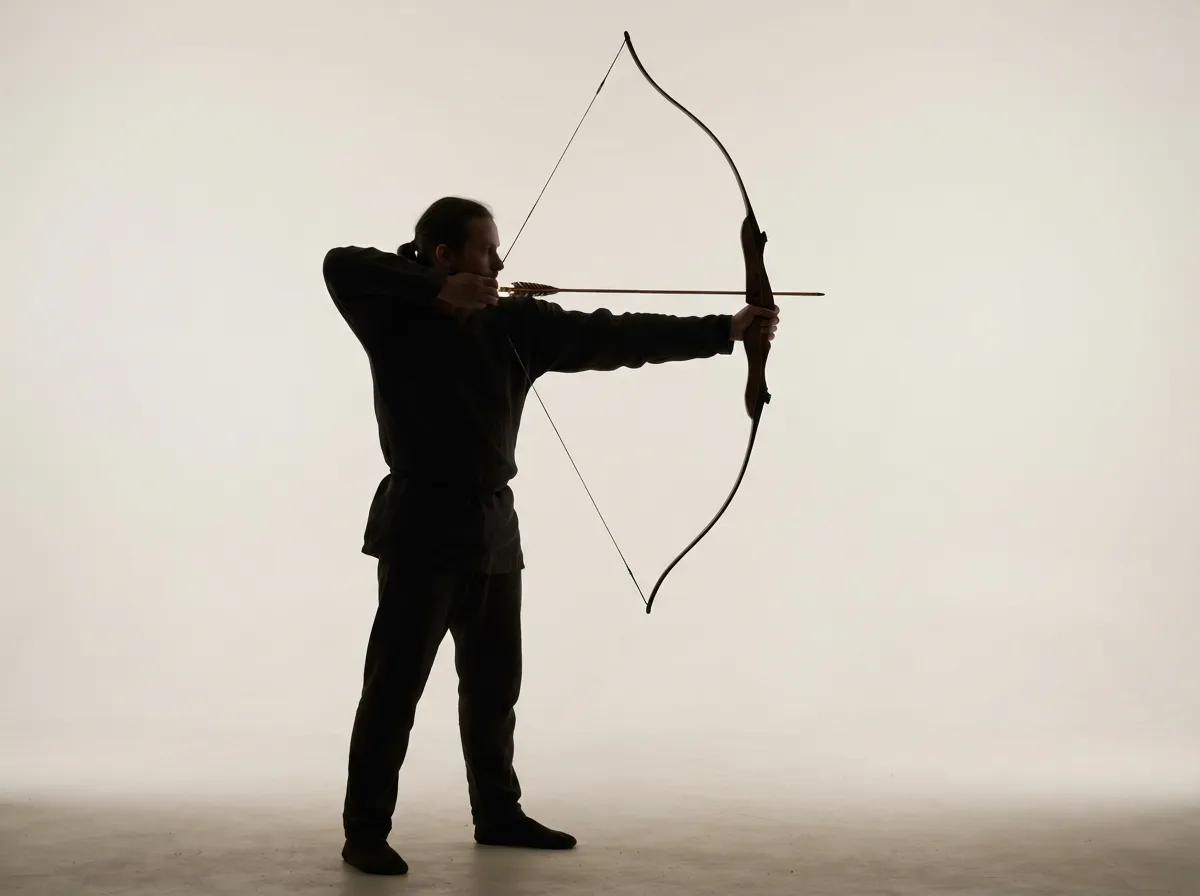
The traditional aesthetic is ultimately a statement about subtraction. Where modern compound hunting rigs accumulate accessories, fiber-optic pins, peep sights, mechanical releases, stabilizers, drop-away rests, wrist slings, a truly traditional setup removes all of them until only the essential elements remain: bow, string, arrow, and the archer’s own skill. That stripped-back profile communicates confidence in a way that is visually unmistakable.
A bare recurve or longbow, no sight window cutout beyond a simple shelf, no arrow rest beyond a leather pass or bare wood, no mechanical trigger or D-loop, looks fundamentally different from even the most tastefully configured compound bow. The silhouette is clean and symmetrical. The limbs taper from riser to tip in a single uninterrupted line. There is nothing to adjust, recalibrate, or replace in the field. This simplicity reads as mastery rather than underequipment, because anyone who has tried to shoot a bare traditional bow to hunting accuracy understands how much skill that spare profile represents.
The trend toward Traditional ILF setups, wooden risers built to accept International Limb Fitting limbs, adds a subtle modern note while preserving the clean aesthetic. From any conversational distance, a wooden ILF riser with matched wooden-limbed arms looks indistinguishable from a classic solid-limbed recurve. The practical advantages of limb swapping and modern tuning tolerances are invisible; the traditional aesthetic is fully intact. Factory takedown recurves following this pattern have made the look accessible at every price point in 2026.
Instinctive aiming, the method most closely associated with this setup, ties the visual identity together. Without a sight to reference, the archer must develop an internal sense of distance and angle that becomes automatic over time. This is not “gap shooting” with a conscious reference point, nor is it “string walking” with a measured finger position, it is the kind of whole-body spatial awareness that athletes in many disciplines develop and that looks, to an observer, like pure intuition. When an instinctive traditional archer draws, holds, and releases in a single fluid motion without any visible aiming ritual, the visual effect is one of confident, practiced skill that the full complexity of a sighted compound setup paradoxically never quite achieves.
Conclusion
Each of the 6 bow hunting aesthetic ideas for a traditional, skillful look represents a distinct dimension of the same underlying philosophy: that visible craft, deliberate simplicity, and mastered technique communicate something that modern hunting technology, however effective, does not. The handcrafted bow and feather-fletched arrow carry that message in the equipment; the Flemish string, fur puffs, and leather details reinforce it in the small accents; the clothing, shooting form, and bare minimalist setup extend it into every visible aspect of the hunt.
The most practical next step for anyone building toward this aesthetic is to start with the bow and arrows, the two elements that carry the most visual weight, and add the remaining layers gradually as skill and preference develop. A well-finished wooden recurve with real feather fletching already delivers the core of the look. Everything else is refinement.