Hunter in the Forest Aesthetic Ideas for a Wild, Woodland Vibe
The global market for nature-inspired home decor crossed $200 billion in 2025, and one of its fastest-growing micro-niches is built around something far older than any trend cycle: the image of the hunter moving through a dense, shadowed forest. The 6 Hunter in the Forest Aesthetic Ideas for a Wild, Woodland Vibe explored in this guide draw on that primal visual language, antlers, raw wood, deep green, dappled light, and wildlife art, to create spaces that feel both deliberately wild and genuinely livable. Whether the goal is a full lodge-style living room or a single moody bedroom corner, these ideas offer a clear path from blank walls to a space that practically smells like pine needles.
Disclosure: This post contains affiliate links. As an Amazon Associate, we earn from qualifying purchases, and at no extra cost to you.
1. Build Around a Statement Anchor Piece
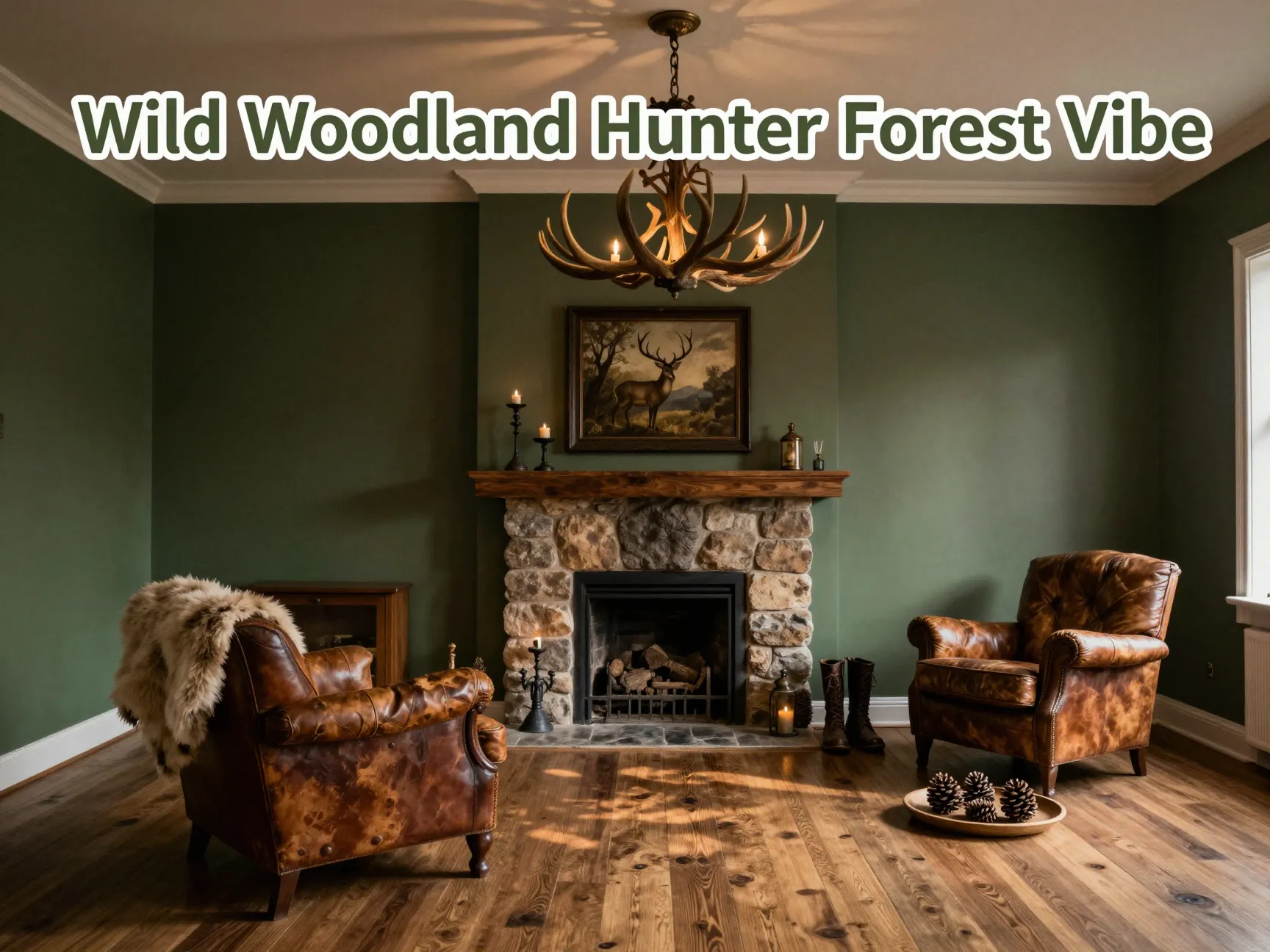
Every successful hunter-in-the-forest aesthetic starts with one dominant object that sets the entire room’s tone. Interior designers working in this space consistently point to the same principle: without a strong anchor, the look fragments into a collection of rustic objects rather than a coherent world. The anchor piece does the heavy lifting so everything else can play a supporting role.
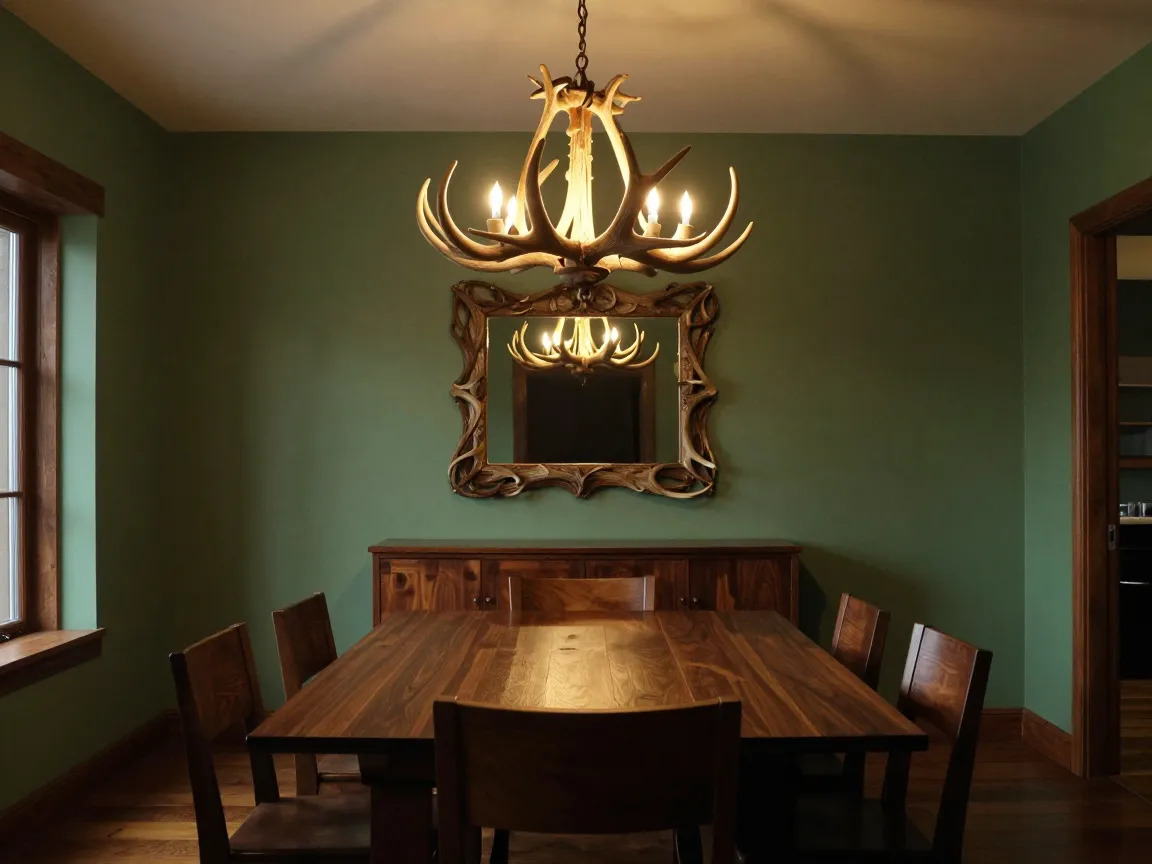
A sculptural antler chandelier hanging above a dining table is the most recognizable example. The moment it appears, the room communicates its intention without explanation. An antler-framed mirror mounted in an entryway works with the same logic at a smaller scale. For those who prefer a more contemporary angle, a large-format bronze or matte-black deer sculpture on a console table delivers the same visual authority without feeling dated. The key is that the piece must be physically prominent, a small figurine on a shelf does not anchor; it merely decorates.
Once the anchor is in place, every subsequent choice becomes easier. Furniture, lighting, and textiles can be evaluated against a single question: does this support the story the anchor is already telling? A dark wood sideboard with simple, clean lines answers yes. A brightly upholstered accent chair in a competing pattern answers no. This hierarchy prevents the common mistake of overloading a woodland-themed room with too many competing statement objects, which creates visual noise instead of atmosphere.
For practical application, choose an anchor piece before purchasing anything else in the room. If the budget is limited, a single high-quality antler lamp or a large framed wildlife print can serve as a temporary anchor while saving for a more permanent focal point. The logic holds at every price point.
2. Commit to a Deep Woodland Color Palette
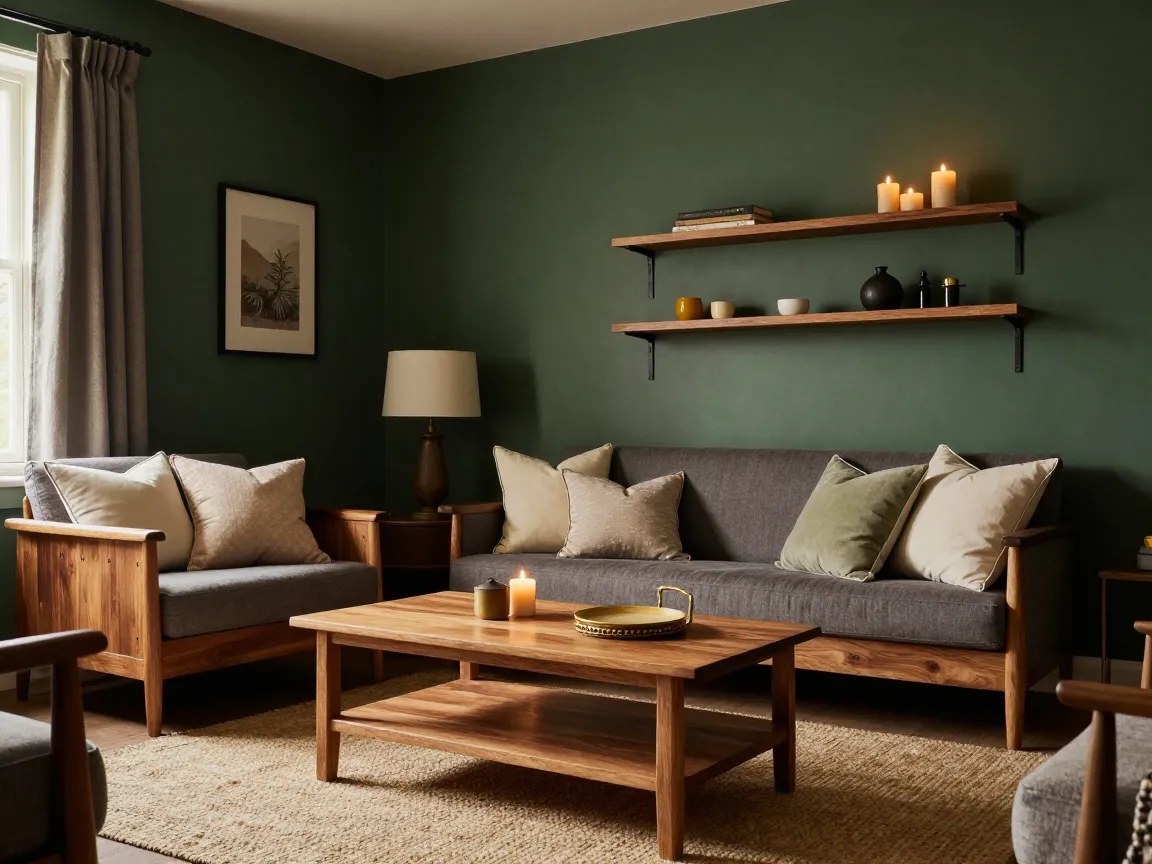
Color is the fastest and most affordable way to shift a room toward the hunter-forest aesthetic, and the direction is clear: go dark, go earthy, and go layered. The core of this palette is hunter green, a rich, slightly blue-shifted forest green that reads as sophisticated rather than cheerful. Paired with charcoal gray, warm brown, and muted blush (the color of wild roses seen through shade), it recreates the visual atmosphere of walking through a dense canopy in late afternoon.
The forestcore movement, which emerged from cottagecore and has steadily grown through 2024 and into 2026, uses this palette as its foundation. Dark leafy green on walls or cabinetry immediately shifts a room’s atmosphere. When those walls are paired with natural wood furniture in warm honey or deep walnut tones, the effect is multiplied. Earthy yellows, the color of dry autumn grasses or lichen on bark, work as accent tones alongside ruddy reds and muted terracotta, keeping the palette from feeling cold or funereal.
One useful approach is to treat the palette in three tiers. The largest surfaces, walls, floors, large upholstery, carry the deep greens and warm browns. Mid-sized pieces like rugs, curtains, and throw pillows introduce the softer tones: blush, cream, and muted sage. Small accents and objects then provide the contrast points: aged brass hardware, black iron fixtures, and the warm amber of candlelight. This three-tier structure prevents any single tone from dominating to the point of monotony.
A common mistake is to dilute the palette too early by adding bright whites or cool grays. These tones visually interrupt the forest illusion. Off-white and linen work far better as neutrals because they read as natural rather than architectural. The goal is a room that feels like it was assembled from materials found in or near a forest, not a room that quotes the forest from a safe, modern distance.
3. Layer Textures Like a Forest Floor
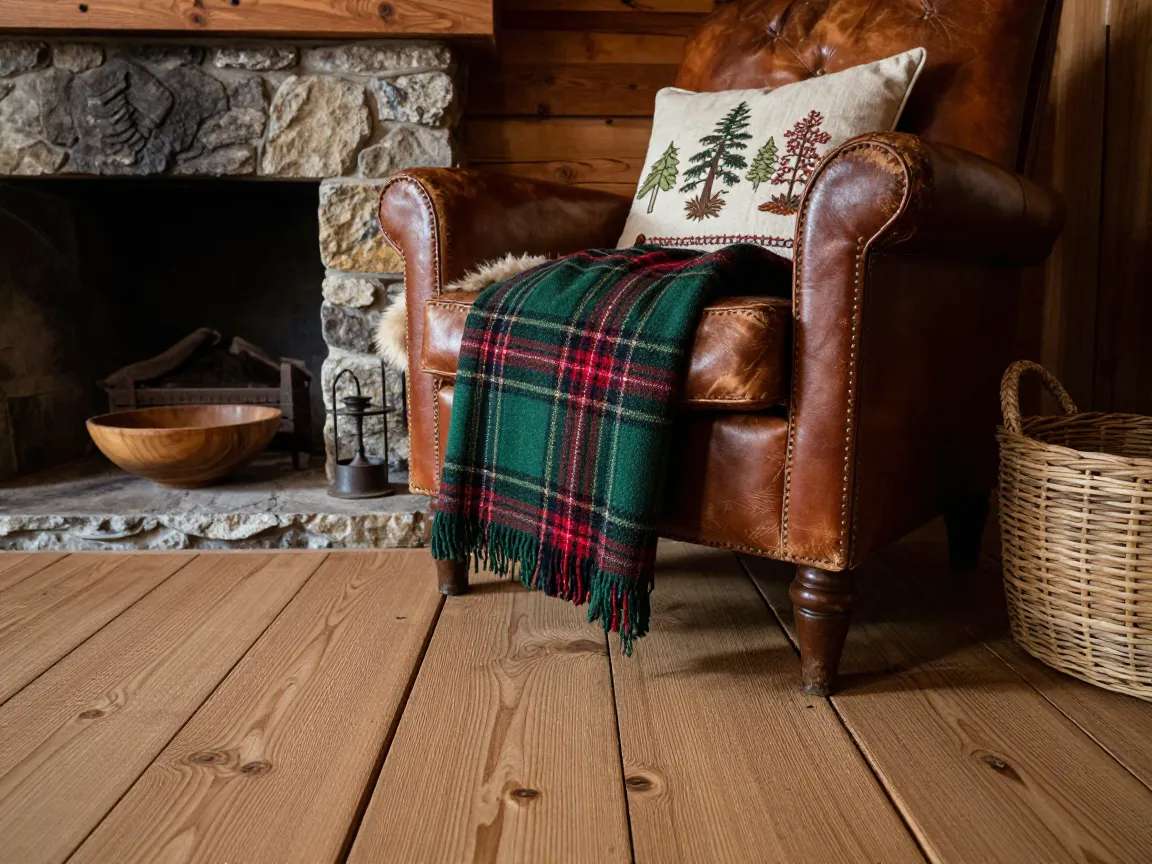
A forest is never smooth. Bark, moss, stone, mud, dry leaves, and dense undergrowth create a layered complexity of surfaces that the eye instinctively reads as natural and alive. Replicating that textural density indoors is what separates a genuinely immersive hunter-in-the-forest aesthetic from a room that simply has a few deer pictures on the walls.
The core textures for this aesthetic are leather, rough-hewn wood, smooth stone, wool, sheepskin, and iron. Leather upholstery on a deep armchair or sofa provides the aged, worn-in quality that connects the room to working outdoor gear. A wide-plank oak floor with visible grain and minor imperfections reads as forest-adjacent in a way that polished hardwood does not. A stone fireplace surround, even a small one, introduces the geological weight that anchors the room to the earth.
Soft textures are equally important and are often underused. A sheepskin rug draped over a chair arm, a heavy wool throw in a plaid of forest green and deep red, and linen cushions with simple woodland embroidery all add warmth and tactile invitation. Woodland cabin styling guides consistently emphasize that heavy layering of these soft elements is what makes the difference between a room that looks like a hunting-lodge Pinterest board and one that actually feels like a retreat someone lives in.
The practical move is to add one new texture layer at a time, standing back after each addition to assess whether the room feels richer or cluttered. A good test is to ask whether the new element could plausibly have been found, made, or used in a forest environment. Hide accessories, wooden bowls, iron candleholders, and woven grass baskets all pass. Metallic side tables in chrome or polished nickel do not.
4. Use Wildlife and Hunter-Silhouette Art Strategically
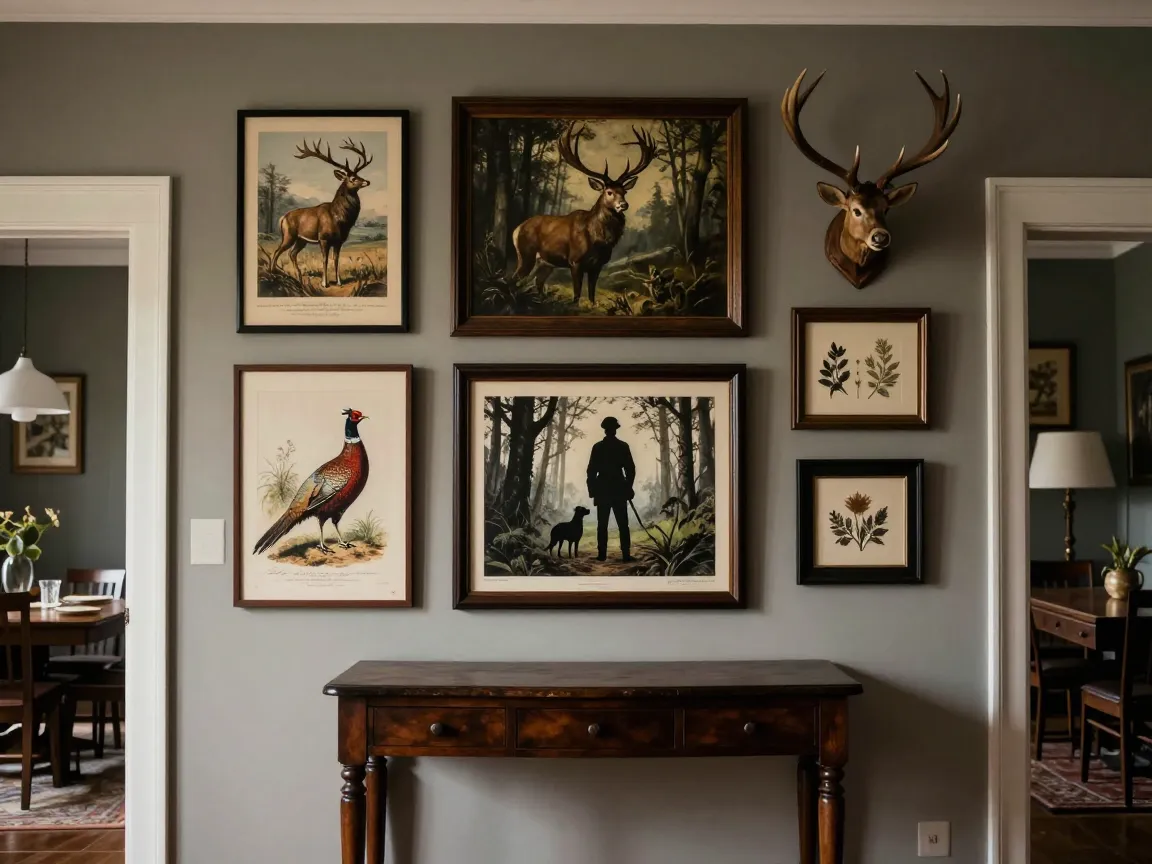
Wall art is where the hunter-in-the-forest aesthetic makes its most direct visual statement, and the options available in 2026 are significantly broader than the mounted trophy alone. The contemporary market in prints and original art includes everything from moody oil-style paintings of dogs and hunters in dense woodland to AI-generated silhouettes of hunters framing entire forest landscapes within the outline of a standing figure. Each communicates the aesthetic with different levels of subtlety, and knowing when to use which is a skill worth developing.
For a sophisticated, slightly dark-academia interpretation of the look, large-format moody nature prints are ideal. A Victorian-era illustration of a pheasant hunt, printed at poster scale and placed in a dark-stained wood frame, delivers historical weight and visual richness. A single dramatic painting of a deer in autumn light, positioned above a fireplace or console table, serves the same purpose with more direct emotional impact. These choices work particularly well in dining rooms and dens, where guests spend time studying wall surfaces.
Hunter-silhouette art, the distinctive motif of a lone hunter or hunter-with-dog rendered as a dark shape against a brighter forest background, is a strong choice for bedrooms or studies where the mood should feel more intimate and personal. These pieces are widely available as prints and are increasingly used as the basis for custom tattoo art, which speaks to their resonance as cultural symbols of the broader aesthetic.
The placement rule is simple: group artwork by weight. Large, dark pieces command primary walls opposite doorways. Smaller pieces work in clusters of three or more, mixed with physical objects like antlers or pressed botanical specimens in frames. Avoid the common mistake of distributing art evenly around the room like wallpaper, the forest itself is not evenly distributed, and the art should not be either.
5. Design the Lighting to Mimic Forest Canopy
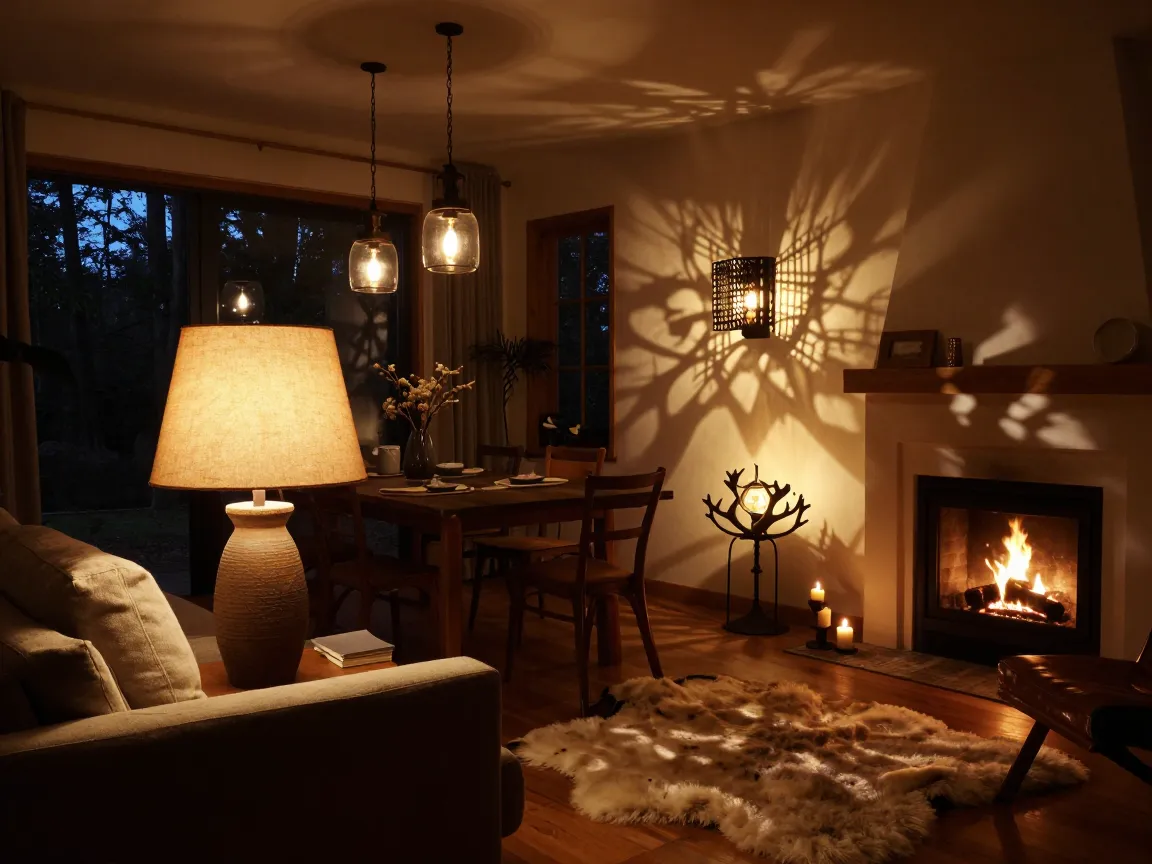
Of all the elements that contribute to the hunter-forest vibe, lighting is the most powerful and the most frequently overlooked. A room with perfect furniture, art, and color palette will still feel like a showroom if lit by flat, even overhead light. Forest light is the opposite of flat: it is dappled, directional, warm, and dramatically varied between bright pools and deep shadow. Recreating that quality indoors transforms the experience of the room.
The practical approach begins with removing or dimming the dominant overhead light source and replacing it with multiple lower, warmer sources. Rustic table lamps with linen or leather shades placed at armchair level create the warm, ground-level glow of late afternoon in a clearing. Metal-and-glass pendant lamps hung at different heights over a dining table or kitchen island create the layered quality of light filtering through branches at different angles. Sconces with open metalwork allow light to cast organic shadows on the wall, an effect that no flat shade can replicate.
Antler-base lamps and fixtures with iron or aged-brass hardware reinforce the aesthetic while doing their functional job. Fireplace light, where available, is irreplaceable: the flicker and warmth it casts across a sheepskin rug and leather chair is the single most effective tool in the entire aesthetic toolkit. For rooms without a fireplace, candles in iron holders or battery-operated alternatives placed at strategic points can approximate the effect without the installation cost.
Color temperature matters enormously. Bulbs in the 2700K to 3000K range produce the warm, amber-toned light that reads as natural and cozy. Cooler bulbs above 4000K push the room toward an office or clinical feeling that works against every other element in the aesthetic. This one technical adjustment, switching bulbs to a warmer temperature, is the single highest-return investment available in this design category.
6. Bring in Nostalgic and Tactile Memorabilia
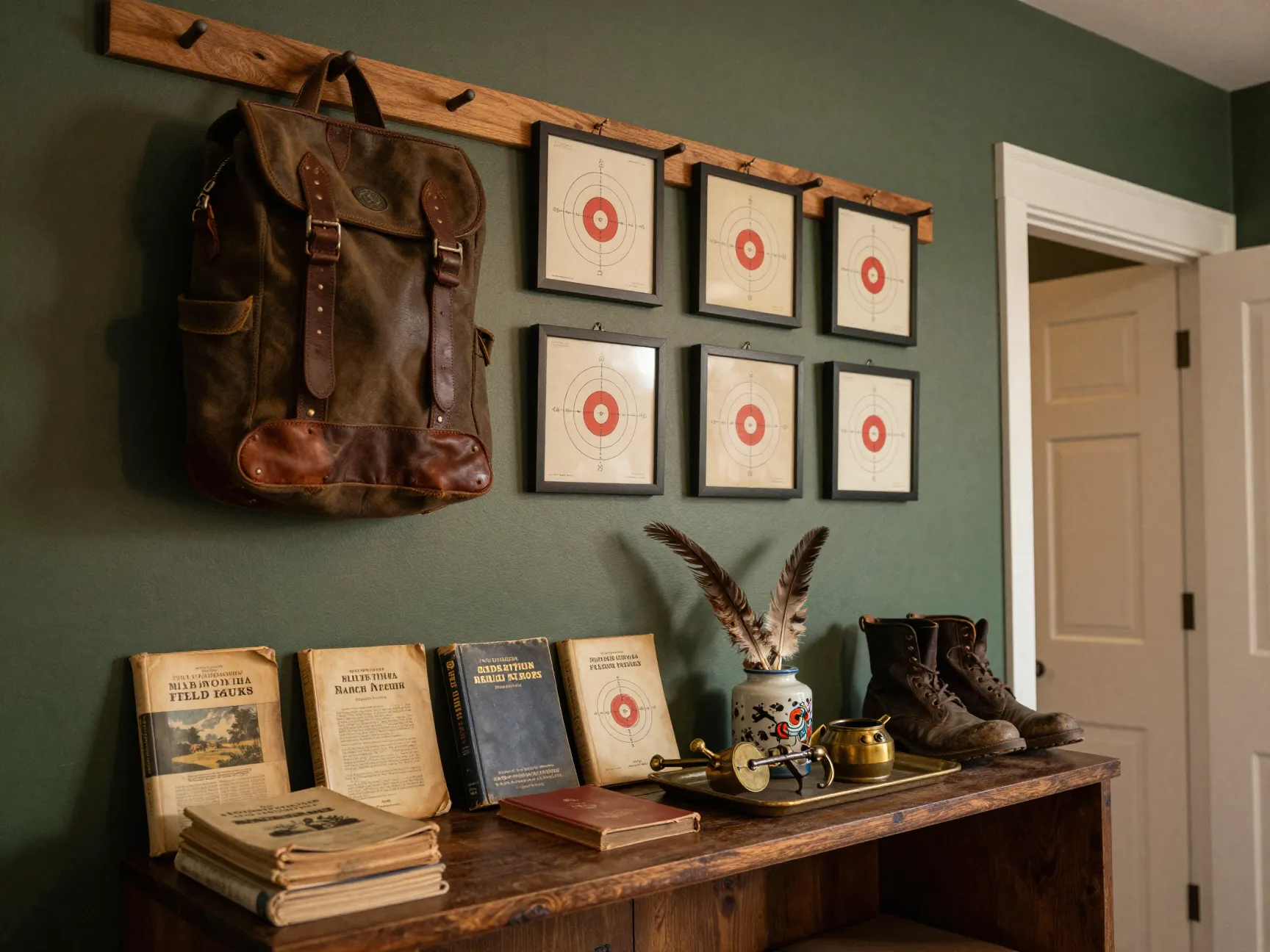
The hunter-in-the-forest aesthetic is not purely visual. It also carries an emotional register tied to memory, tradition, and the passing down of outdoor knowledge between generations. Rooms that fully commit to this vibe almost always include at least some element of nostalgic or personal memorabilia, objects that suggest a life actually lived outdoors, not simply a room decorated to look like one.
Vintage hunting gear repurposed as display pieces is one of the most effective approaches. An old leather-and-canvas game bag mounted on a wooden peg rail adds both texture and narrative. A collection of vintage shooting targets, framed simply and hung in a loose grid, tells a story of practice and patience. Early-twentieth-century field guides, stacked on a dark wood shelf alongside a few worn hardcover novels about wilderness survival, create the layered intellectual atmosphere of a sportsman’s library rather than a bare shelf.
Pheasant feathers in a ceramic jar, a set of antique brass hunting calls arranged on a tray, and a weathered pair of leather field boots placed near a doorway are all examples of the same principle: objects that carry physical history feel fundamentally different from new objects designed to look historic. The difference registers even on visitors who could not explain why the room feels so genuinely alive.
For those building this aesthetic in a bedroom rather than a den or lounge, the memorabilia approach scales down gracefully. Deer-motif or forest-print bedding in forest green, sky blue, and warm brown provides the aesthetic foundation. A single framed vintage wildlife illustration above the headboard, one leather-bound journal on the nightstand, and a wooden tray holding small objects collected outdoors, a river-smoothed stone, a pinecone, a piece of weathered driftwood, complete the picture without overpowering a room intended for rest. The goal is a space that feels curated by someone with real outdoor experience, not assembled from a themed product catalog.
Deep seating is non-negotiable in any room built around this aesthetic. A space that invites a hunter to sink into a chair and stay for the evening, warmed by amber light and surrounded by objects with genuine history, is the highest expression of the entire concept. Comfort and authenticity are not at odds in this aesthetic, they are, in fact, the same goal approached from two different directions.
Conclusion
The hunter-in-the-forest aesthetic rewards commitment. Half-measures, a single deer print on an otherwise neutral wall, or a green cushion in an otherwise beige room, read as decoration rather than atmosphere. The spaces that fully deliver the wild, woodland vibe are built from the inside out: a strong anchor piece that sets the direction, a deep and consistent color palette, layered textures that engage the senses, art chosen for emotional weight, lighting engineered to mimic a forest canopy, and memorabilia that tells a believable human story.
The most useful next step for anyone starting from scratch is to identify the anchor piece first. Every other decision becomes clearer once that central object is in place. Start there, and the forest will follow.