Supernatural Hunter Aesthetic Essentials for Your Dark, Rugged Vibe
The global dark fashion market surpassed $12 billion in 2025 and continues to accelerate into 2026, driven in large part by a subculture that has nothing to do with runways. The supernatural hunter aesthetic, think road-scarred leather, flannel layered over thermal, and a pocket full of purpose, has quietly become one of the most codified style identities in contemporary fashion communities. The 6 Supernatural Hunter Aesthetic Essentials for Your Dark, Rugged Vibe outlined below are not about cosplay. They form a complete visual and philosophical framework built around resilience, controlled darkness, and blue-collar grit that translates directly into everyday wear, photography, character design, and AI art direction alike.
Disclosure: This post contains affiliate links. As an Amazon Associate, we earn from qualifying purchases, and at no extra cost to you.
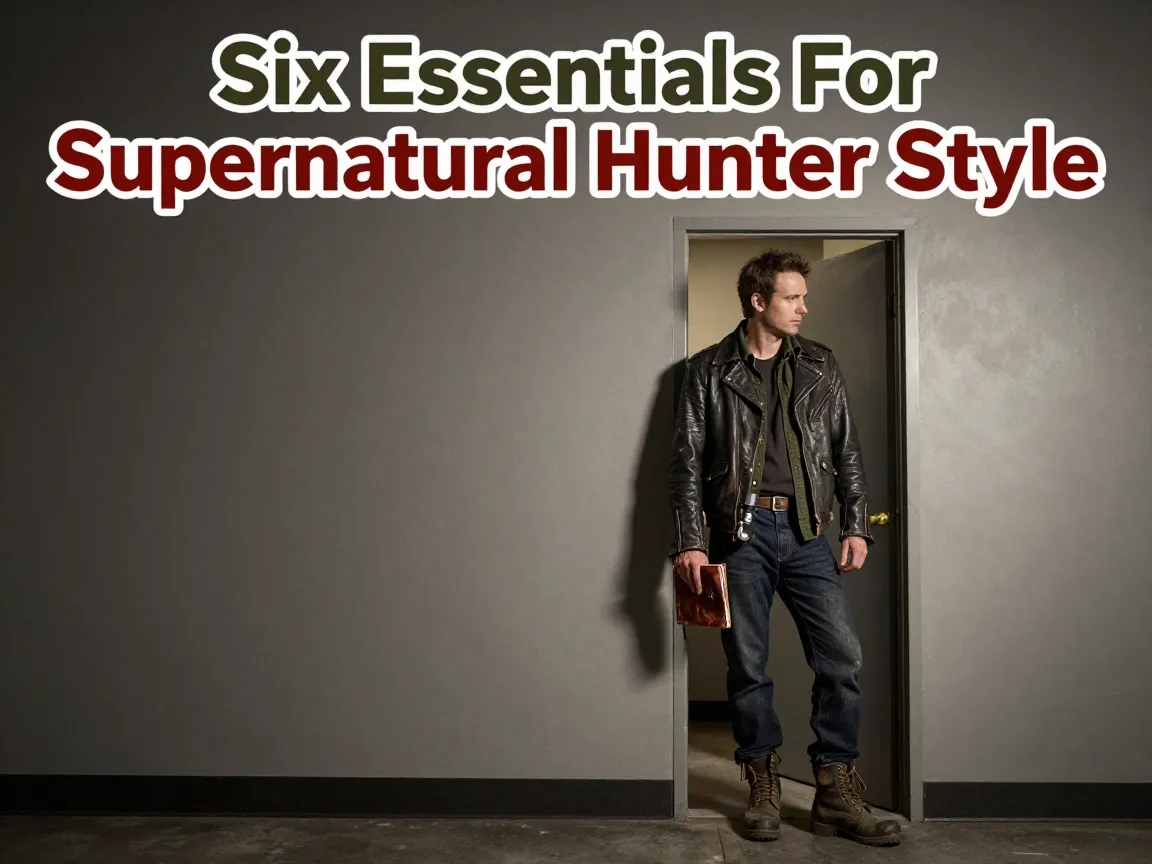
Understanding each element matters because the aesthetic works as a system. Pull one piece out of context and it reads as random. Assemble all six correctly and the result communicates lone-drifter authority without saying a word.
1. The Foundational Leather Jacket or Heavy Field Coat
No single piece does more work in the supernatural hunter wardrobe than a quality outer shell. A distressed leather motorcycle jacket or a waxed canvas field coat functions as the visual anchor of the entire look. Everything else layers underneath or accessorizes around it. The jacket signals lived experience before the wearer has spoken a single word. That is precisely why it remains the non-negotiable starting point.
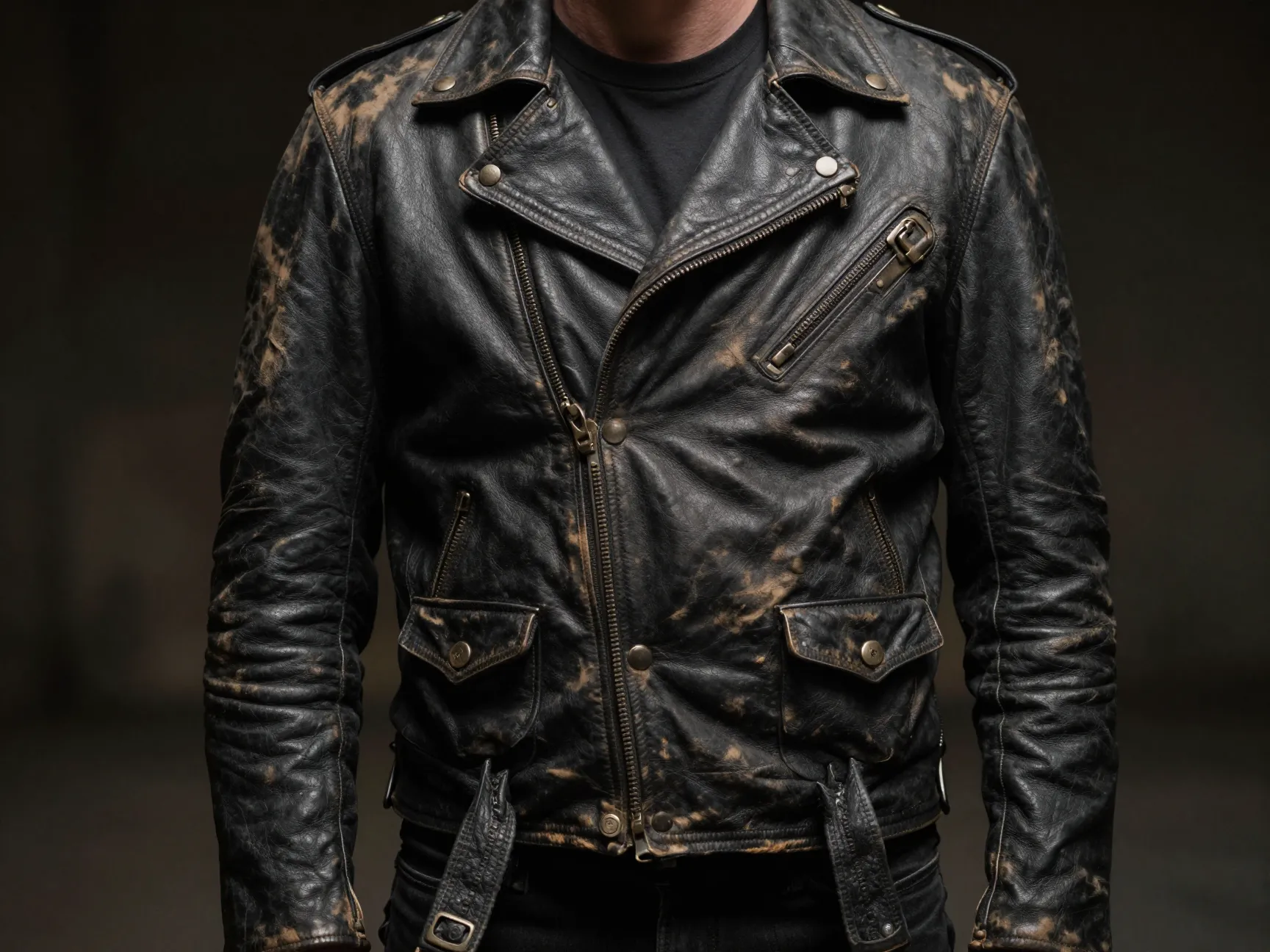
The jacket should look earned, not bought. That distinction is critical. A pristine, box-fresh leather coat reads as fashion-forward but misses the survivalism undercurrent that defines this aesthetic. The goal is stress creases at the elbows, a slightly faded collar, and hardware, buckles, zippers, snap buttons, that shows honest wear. Field coats in olive drab, blackened brown, or charcoal grey carry similar weight, particularly when they feature multiple exterior pockets. Pockets matter beyond utility; visually, they reinforce the idea that the wearer is always prepared.
Fit is a practical concern here. The jacket needs to sit loosely enough to allow full arm movement and to accommodate the layered shirts underneath without pulling at the chest. A silhouette that is too fitted undermines the blue-collar working-hunter profile. Slightly oversized through the torso with the sleeves hitting just above the wrist is the target. When in doubt, size up one and let the garment drape with authority.
For those building a photography mood board or generating AI art in this space, the leather jacket prompt should always include descriptors like “weathered,” “stress-creased at the elbows,” and “low ambient light.” Reviewers of AI-generated hunter aesthetic imagery consistently report that the texture of the outerwear is the single detail that most determines whether the final image reads as authentic or generic.
2. Layered Flannel and Earth-Tone Base Shirts
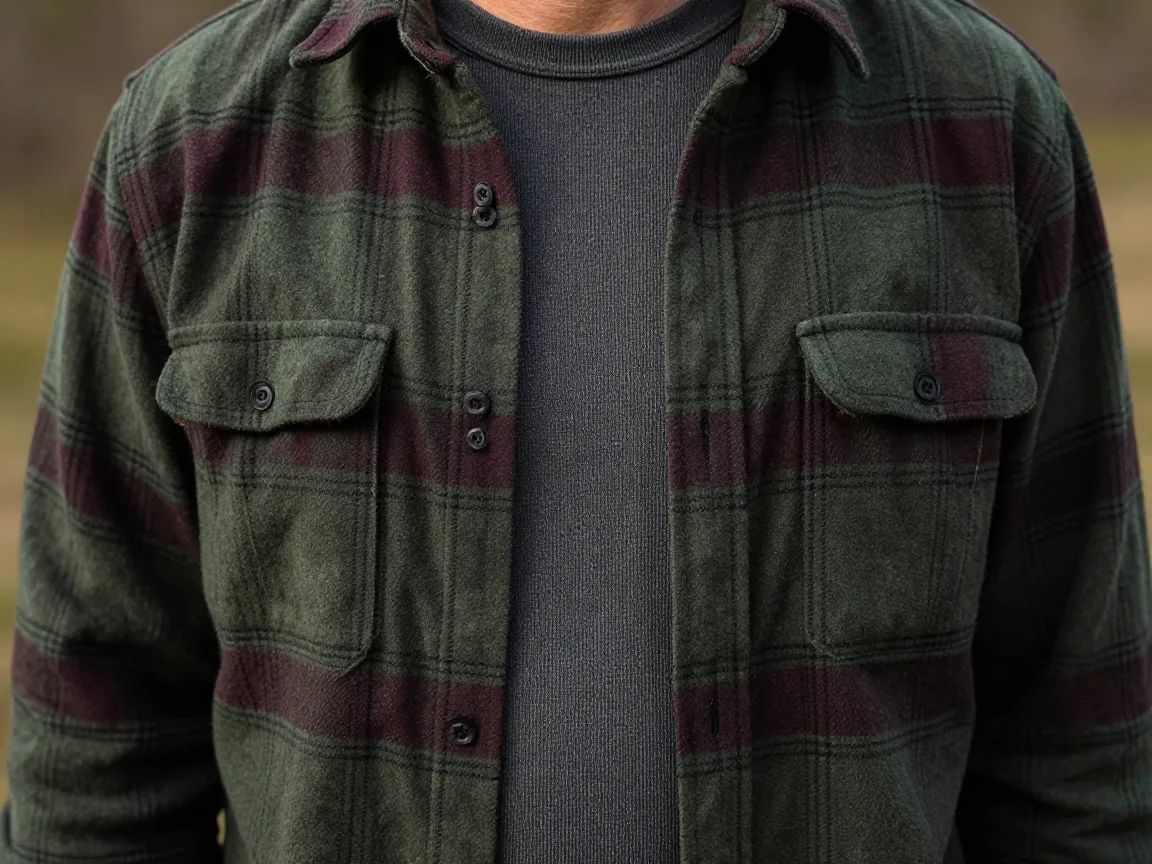
The second essential is the layering system beneath that outer shell, and flannel is the defining fabric. A heavyweight flannel shirt, unbuttoned, worn open over a dark thermal or ribbed crew-neck, creates what stylists and community guides increasingly describe as the “working hunter profile.” It references manual labor, outdoor survival, and unglamorous competence simultaneously. That combination is the ideological spine of this aesthetic.
Color selection is deliberate. Earth tones dominate: forest green, deep burgundy, burnt sienna, and navy plaid patterns with black or brown threading. These shades ground the look in nature and grit rather than urban fashion. Avoid bright primaries or any pattern that reads as preppy. The flannel should feel like it has spent time in the field, so a slightly heavier fabric weight, 5.5 oz and above, hangs with the right credibility.
The layering logic follows a specific order. Start with a plain dark thermal or long-sleeve crew in black, grey, or forest green as the base. The flannel goes over that, worn open with the collar slightly rumpled rather than pressed flat. The leather jacket or field coat goes on top. Each visible layer adds depth to the silhouette and reinforces the idea that the wearer has dressed for function across variable conditions, not for an audience. That sense of practical self-sufficiency is core to the mentality that the aesthetic encodes.
One useful styling constraint: the flannel’s longest visible layer should end at the hip rather than mid-thigh. Too long and the silhouette becomes shapeless. The layering should build upward with intention, each piece framing the one beneath it.
3. Dark Jeans and Road-Worn Leather Boots
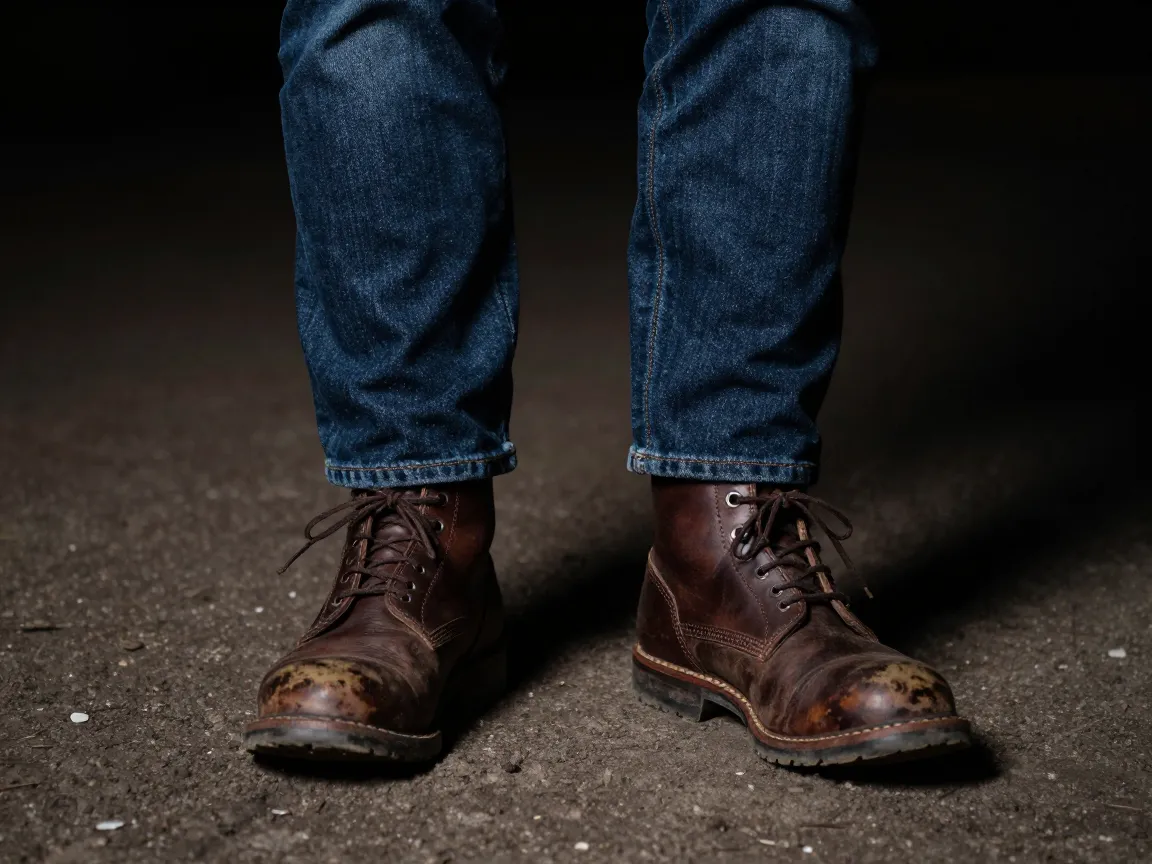
The lower half of the supernatural hunter silhouette is deceptively simple and equally important. Dark wash straight-leg or slim-straight jeans, not skinny, not wide-leg, in deep indigo or black form the base. After several wears, the jeans should develop fade lines at the thigh and knee from genuine use. Manufactured distressing can substitute early on, but the goal is a garment that looks like it has been worn through long drives, rough terrain, and uncertain weather.
The boots are where the lower half earns its authority. Heavy leather lace-up work boots in dark brown or black are the standard. The critical detail is condition: scuffed toe caps, worn-down heel edges, and weathered leather that has been resoled at least once. A clean, unscratched boot contradicts every message the rest of the outfit sends. If new boots are the starting point, a deliberate breaking-in process, outdoor use, mild conditioning followed by deliberate exposure to light abrasion, accelerates the right visual result.
Fit at the boot and jean intersection follows one consistent rule across hunter aesthetic style guides: the jean hem should stack slightly over the boot shaft rather than being tucked in. A slight stack creates a relaxed, ground-level weight to the silhouette that avoids the military-tuck look, which carries different connotations entirely. The goal is a figure that appears rooted rather than regimented, a drifter who has covered serious ground on foot.
Together, the jeans and boots complete the grounded blue-collar silhouette. They communicate that the character’s power comes from endurance and terrain familiarity, not from privilege or polish. That is a philosophical statement dressed as a fashion choice, and it is one of the reasons the aesthetic resonates so broadly.
4. Functional Gear and Survivalist Props
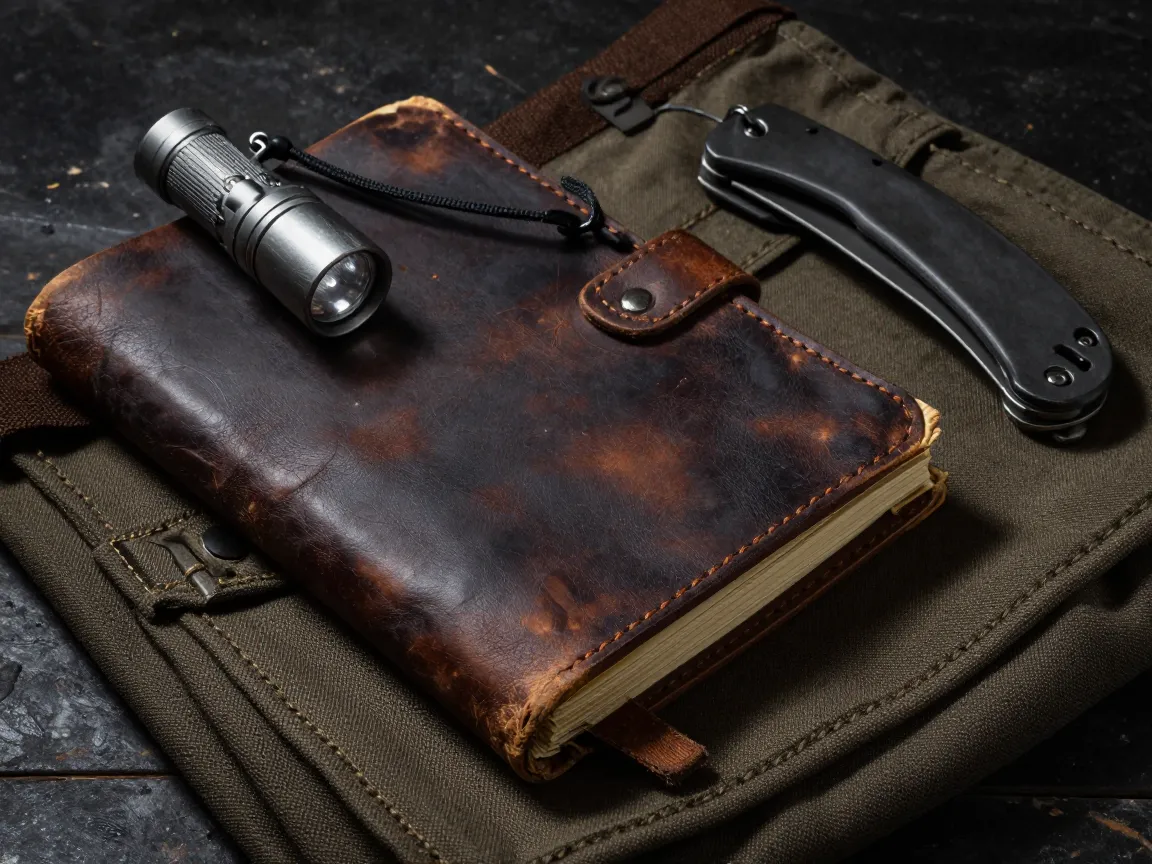
Clothing alone builds a silhouette. Props and functional gear build a world. This is where the supernatural hunter aesthetic distinguishes itself most sharply from other dark style frameworks. The objects a hunter carries, and how visibly they are carried, communicate an entire backstory of preparedness, isolation, and hidden capability.
The core prop vocabulary includes a battered leather journal or field notebook, a tactical flashlight with scuffed casing, a utility multitool or folding knife worn on a belt clip, and some form of weapon representation depending on context. For everyday style and photography, the journal does exceptional work. A thick, strap-bound notebook with dog-eared pages and a worn pen loop suggests that the wearer records what others overlook: patterns, intel, anomalies. It is a prop that implies intellectual engagement within a physically demanding existence.
The flashlight follows similar logic. A compact but heavy-duty torch, scratched aluminum casing, lanyard attached, signals that the wearer operates in conditions where light cannot be assumed. It is a subtle but powerful detail in both physical styling and AI art prompting. Contemporary design prompt databases consistently converge on the flashlight as one of the top-five visual cues that push a character from “dark aesthetic” into specifically “supernatural hunter.”
Pockets deserve separate attention. Outerwear with visible cargo pockets, particularly when one or two show the outline of a loaded object, reinforces the survivalist reading. The pockets need not contain anything dramatic. A folded map, the edge of a journal, or the shape of a flashlight against canvas fabric is enough. The implication of readiness is the point. Everything in this category should feel purposeful rather than decorative, because the aesthetic’s internal logic demands that every visible object justify its presence.
5. A Dark, Gritty Palette and Low-Key Lighting
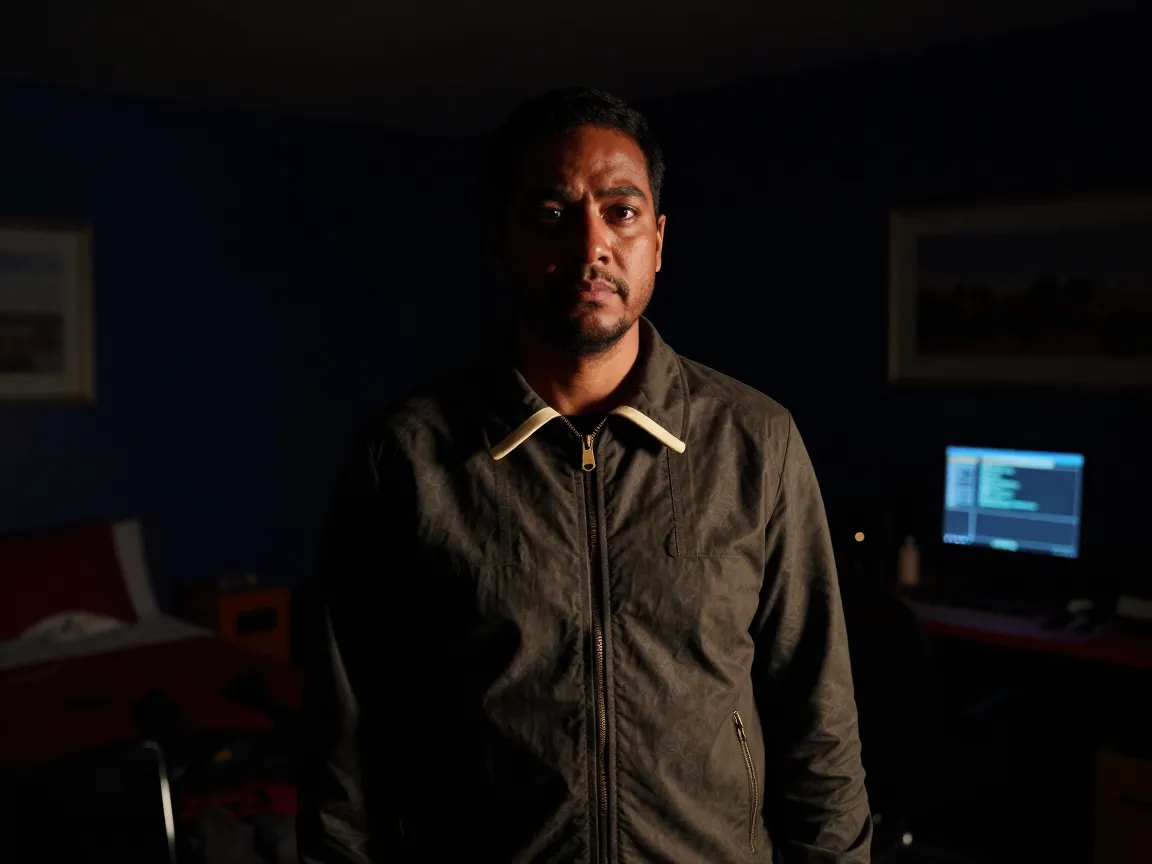
The fifth essential operates differently from the others because it governs the entire visual environment rather than a specific garment or object. The supernatural hunter aesthetic is inseparable from its color palette and lighting conditions. Remove the dark palette and the same clothes read as workwear. Remove the low-key lighting and the survivalist tension evaporates entirely.
The palette runs through charcoal, deep olive, blood red, blackened brown, and near-black navy. These are not simply dark colors; they are colors that absorb light rather than reflect it, that suggest camouflage and shadow rather than display. Accents of aged brass, burnished copper, or bone white provide contrast without brightness. This is a palette designed to feel like it belongs to environments where visibility is a tactical variable, not a given.
Lighting is the multiplier. In photography and art direction, the supernatural hunter aesthetic depends on what cinematographers call low-key lighting: a primary light source that is dim, directional, and positioned to cast deep shadows across the face and clothing. Think: a single lamp at a roadside motel, the glow of a laptop screen at 2 a.m., or a bare overhead bulb in a cluttered workspace. These light sources create contrast between illuminated edges and deep shadow that gives the image its atmospheric weight.
For anyone building mood boards or developing characters in this aesthetic space, lighting references matter as much as clothing references. Scenes from early-season television procedurals, neo-noir film stills, and certain categories of dark editorial photography all share the same low-key logic. The consistent effect is a visual environment that feels populated by people who operate just outside of normal social visibility, which is precisely the ideological territory the supernatural hunter aesthetic claims.
6. The Lone Drifter Mentality as Visual Language
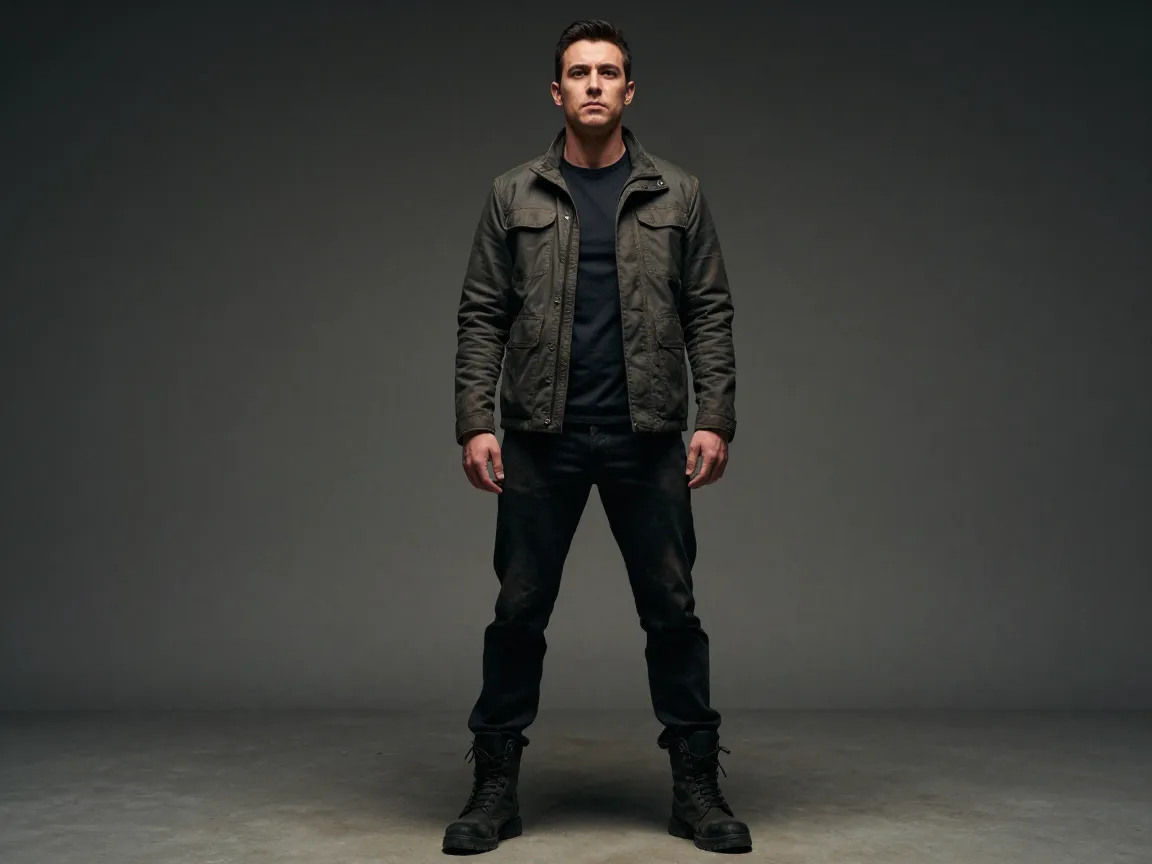
The sixth essential is the most abstract and arguably the most decisive. The supernatural hunter aesthetic is not merely a collection of garments and objects. It encodes a specific mentality, lone, blue-collar, self-reliant, strategically hidden, and that mentality must be legible in the way the aesthetic elements are assembled and presented. Without it, the look is costume. With it, the look carries genuine authority.
The lone drifter archetype has clear visual signatures. Clothing is functional and slightly worn, never brand-forward or logo-heavy. Nothing in the ensemble is purchased for status signaling. The silhouette reads as self-sufficient: equipped for a wide range of conditions, unbeholden to current trends, and shaped by use rather than aspiration. The mentality also governs body language in photography and character design. A slightly forward weight distribution, a neutral expression that suggests alertness rather than aggression, hands that appear ready rather than posed, these are the physical translations of the internal framework.
Resilience and hidden power are the two most referenced qualities in contemporary descriptions of the hunter aesthetic in 2026 style communities. Hidden power is especially important: the aesthetic deliberately avoids overt displays of strength or aggression. The danger is implied rather than announced. A hunter who looks conspicuously dangerous has already failed at the most basic tactical requirement. The power lives in the details, the worn-in gear, the loaded pockets, the journal that suggests accumulated knowledge, rather than in any single dramatic statement piece.
Practically, this means that restraint is as important as selection. The ensemble should contain one or two deliberate focal points, the jacket, the boots, with everything else functioning in a supporting role. Competing focal points dilute the mentality. A clean hierarchy of visual attention, moving from the face downward to the outerwear and finally to the boots, produces the most coherent reading of the complete aesthetic system.
The mentality also dictates how trends interact with this look. The supernatural hunter aesthetic has remained commercially and critically active precisely because it resists seasonal churn. Its components do not go out of style because they were never in fashion in the conventional sense. They belong to a parallel register of style that is defined by function, history, and attitude rather than by the fashion calendar.
Conclusion
The 6 Supernatural Hunter Aesthetic Essentials for Your Dark, Rugged Vibe work because each element reinforces every other element. The leather jacket needs the flannel layers beneath it. The road-worn boots need the dark jeans above them. The functional props need the low-key lighting to read with the right tension. And all five of those physical components need the lone drifter mentality to give them coherence.
The most effective next step for anyone building this aesthetic is to start with the outerwear and boots, the two highest-impact pieces, and let the rest of the system grow outward from that foundation. Getting those two elements right, with genuine wear and the correct silhouette, will immediately shift every other decision in the right direction.