Forest Survival Tips That Could Save Your Life on a Remote Fishing Trip
Each year, search-and-rescue teams respond to hundreds of calls from anglers who left camp for a few hours and ended up stranded overnight in dense forest. The difference between a frightening inconvenience and a genuine emergency almost always comes down to preparation made before the first cast. These 6 forest survival tips that could save your life on a remote fishing trip are drawn from current forest agency guidance, updated survival manuals, and emergency preparedness protocols revised through late 2026.
Disclosure: This post contains affiliate links. As an Amazon Associate, we earn from qualifying purchases, and at no extra cost to you.
Key Takeaways
- Pre-trip planning, including route details left with a trusted contact, is the single most effective safety measure before entering remote forest.
- Safe drinking water is your first survival priority; a person typically survives only about three days without it.
- Shelter against wind and cold must be built before dark, because hypothermia is the leading threat in unplanned overnights.
- Fire serves multiple functions at once: warmth, water purification, food preparation, and a visible rescue signal.
- Navigation tools and communication devices are only useful if you carry them, know how to use them, and have protected the battery.
- The STOP method (Stop, Think, Observe, Plan) prevents panic-driven decisions that turn manageable situations into genuine emergencies.
1. Plan Every Detail Before You Leave the Trailhead
A fishing trip that takes you thirty minutes off a maintained road puts you in terrain where a twisted ankle or unexpected weather can strand you for hours. Forest agencies consistently identify inadequate pre-trip planning as the dominant factor in rescues that could have been avoided.
Before the trip, check the official forest or park webpage for road closures, wildfire activity, trail conditions, and known animal hazards in the area. Many anglers skip this step because the drive-in looks fine from the highway, but logging operations, seasonal flooding, and fire suppression work can close the only exit road without warning. Being trapped on the wrong side of a closure at dusk is a qualitatively different problem than being caught out in the open.
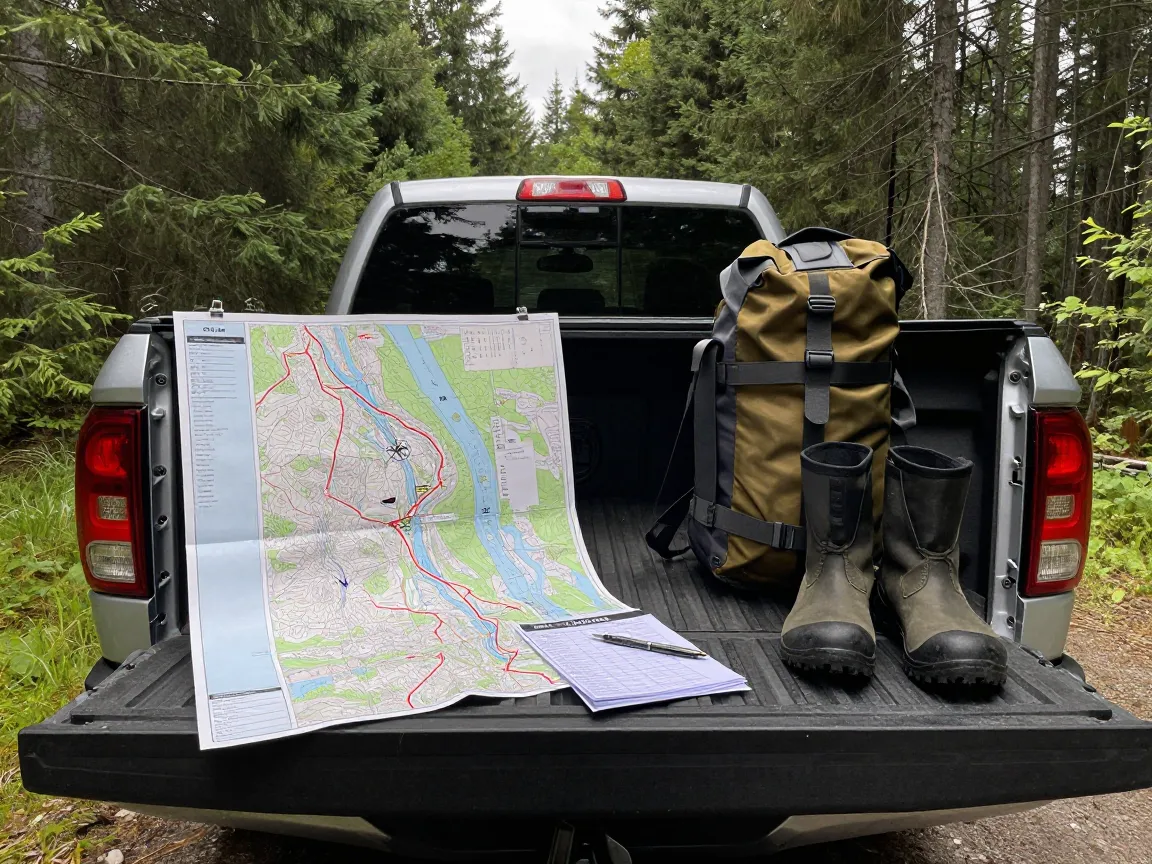
Leave a detailed plan with a trusted contact who is not on the trip with you. That plan should include the specific access road and trailhead, the name of the stream or lake you are targeting, your expected route in and out, and a hard return time after which they should call for help. Vague descriptions like “fishing up north” are genuinely useless to a search team. A named watershed, a GPS waypoint, or a marked paper map copy gives rescuers a starting polygon rather than a region.
Carry a printed topographic map of the drainage even if you plan to use a phone app. Phone GPS works without cell signal, but a dead battery makes the app irrelevant. A paper map and compass cost under fifteen dollars and add no meaningful weight to a fishing pack.
2. Secure Safe Drinking Water as Your First Priority
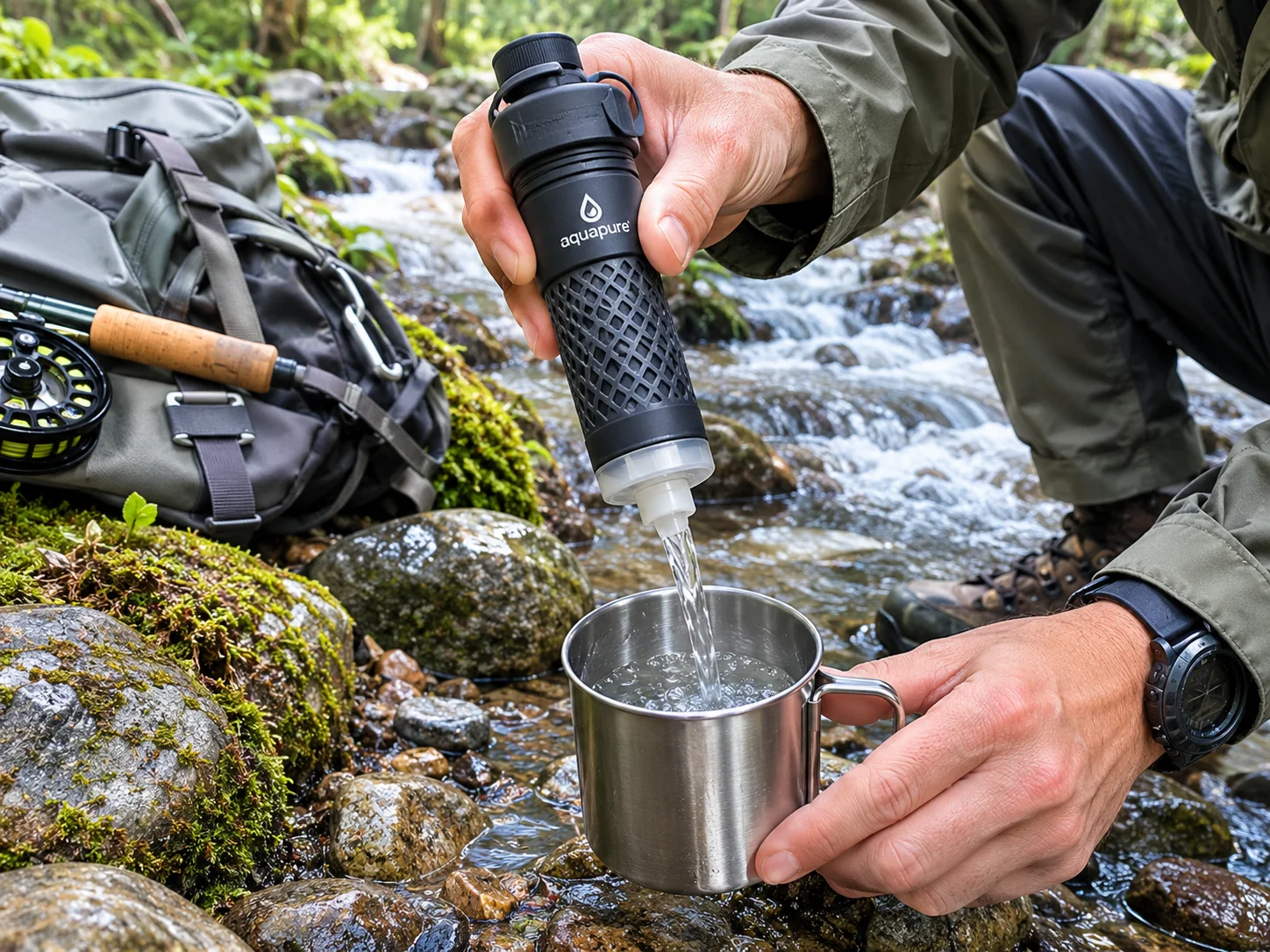
A person can survive roughly three weeks without food, but only about three days without water. On a hot summer day working upstream through rapids, dehydration can impair judgment within a few hours. Survival manuals updated through November 2026 are consistent on this point: water comes before shelter, fire, food, or signaling if you have to rank them.
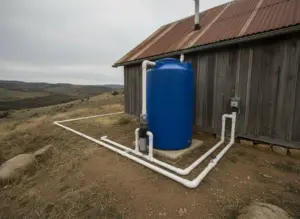
Remote fishing locations are, by definition, next to water. That proximity is an advantage, but stream and lake water in most regions carries pathogens including Giardia and Cryptosporidium that cause severe gastrointestinal illness, which worsens dehydration rapidly. Never drink untreated water from a natural source when a treatment option is available.
A compact portable filter, such as a hollow-fiber squeeze filter that fits in a shirt pocket, removes protozoa and bacteria in one step. Carry one on every remote trip regardless of how short you expect it to be. If you lose your pack, boiling water in a metal container for at least one full minute kills the same pathogens. This is why survival guides recommend carrying a small metal cup or pot even when your fishing kit is otherwise ultralight. A single-walled stainless steel cup that doubles as a camp mug weighs about three ounces and can be used directly over a fire.
If you have no container for boiling and no filter, moving water from a higher elevation source is a lower-risk choice than still water from a stagnant pool, though neither is safe without treatment.
3. Build Emergency Shelter Before Nightfall
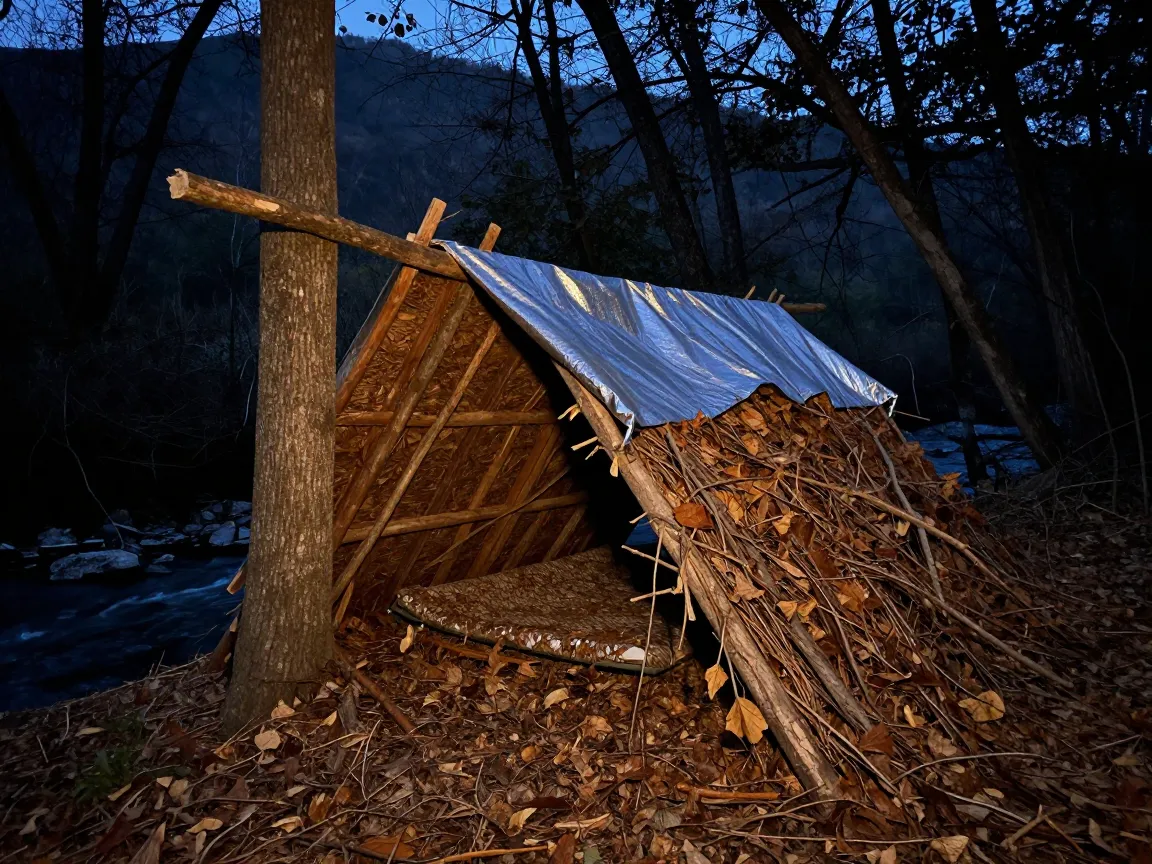
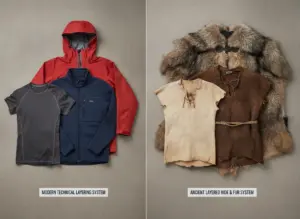
Hypothermia can develop at air temperatures well above freezing when wind and moisture combine. Wet clothing from wading, afternoon clouds moving in, and a temperature drop after sunset is a sequence that happens regularly on mountain fishing streams and can be life-threatening within hours if you have no shelter.
Forest survival resources are specific about timing: build your shelter before you are cold, not after. Once your core temperature starts dropping, fine motor skills degrade and clear thinking becomes harder, which makes construction slower and less effective. The goal is to have walls and a roof providing wind protection and retaining body heat before the light goes.
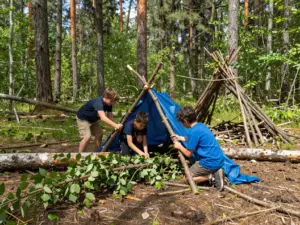
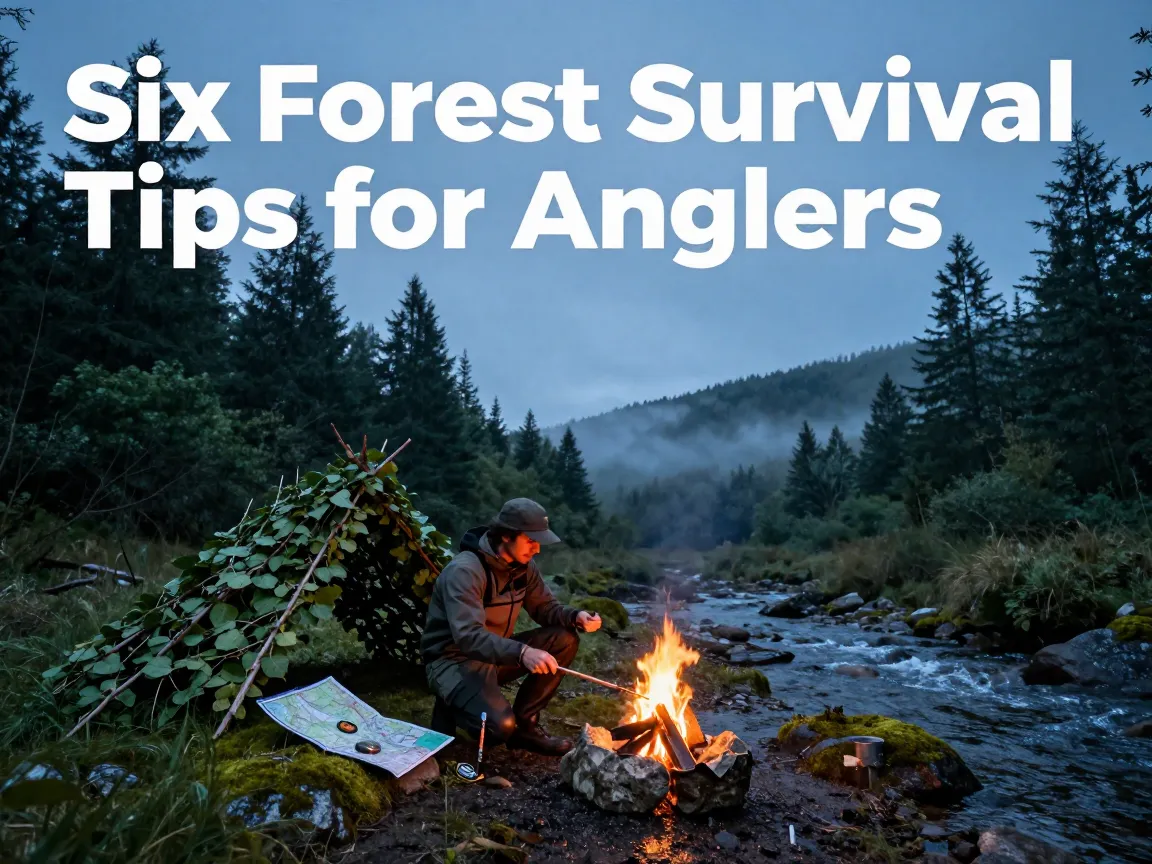
The simplest functional shelter in a forested environment is a lean-to: a horizontal ridgepole supported at each end by a forked branch or a standing tree, with a row of branches leaned against it at roughly a 45-degree angle, then covered thickly with leafy branches and leaf litter. The pile needs to be much thicker than it looks like it needs to be — at least six to eight inches of organic material provides meaningful insulation. Build the opening away from the prevailing wind. An A-frame variation, which uses the same ridgepole with branches leaning from both sides to meet at the top, offers better wind protection in exposed areas.
Your body also loses heat rapidly through contact with cold ground. Pile two to four inches of dry leaf litter, pine needles, or dry grass inside the shelter as a sleeping pad before you lie down. This matters as much as the walls.
If you are carrying an emergency space blanket — and you should be — drape it inside the shelter roof with the reflective side facing down toward your body. It reflects radiated body heat back to you rather than letting it escape through the branches.
4. Master Fire-Starting Under Pressure
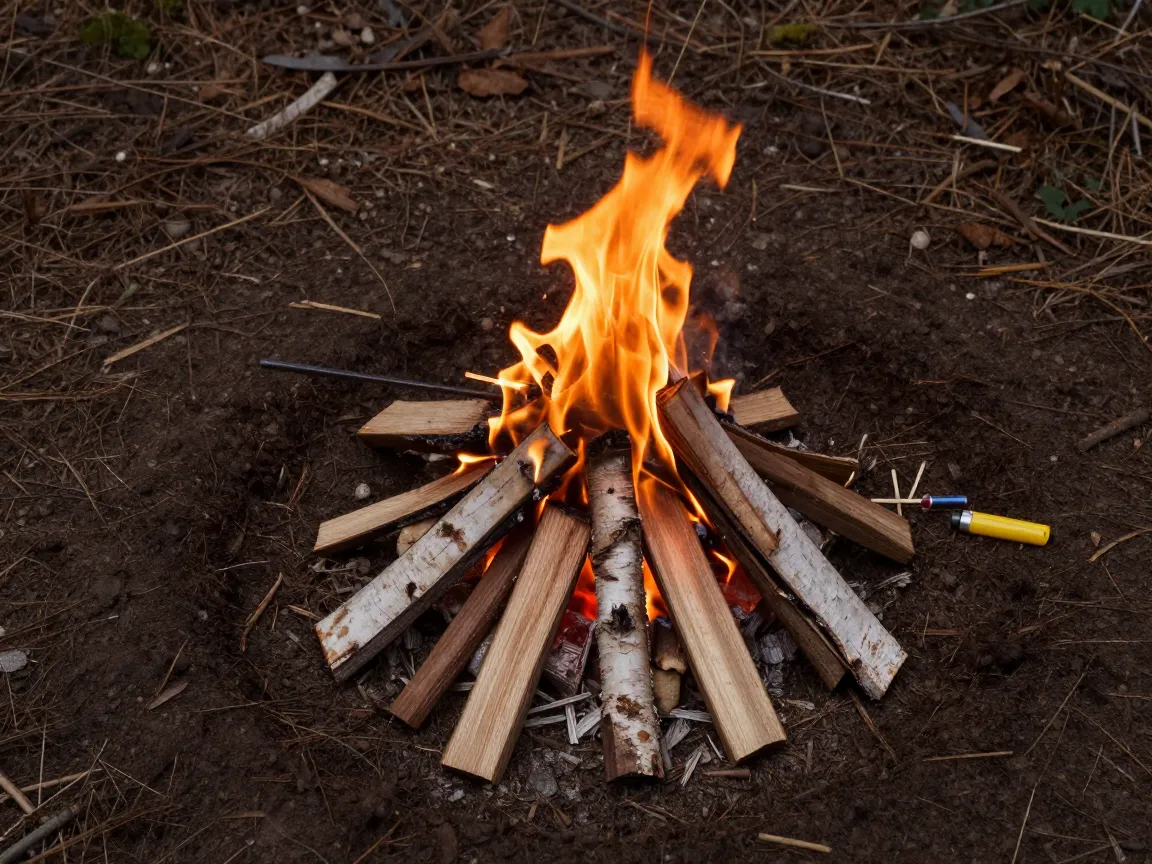
Fire does four things simultaneously: it warms your body, boils water for safe drinking, cooks protein from fish or small game, and creates a visible and audible signal for searchers. No other single skill delivers that range of outcomes.
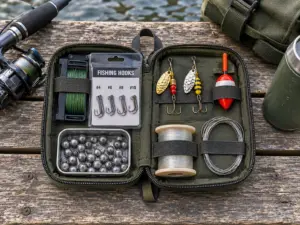
Carrying the means to start a fire is non-negotiable. Waterproof matches, a ferrocerium rod, and a disposable lighter together weigh less than two ounces and provide redundancy if one option fails. Survival guides emphasize redundancy because a lighter runs out of fluid, matches get wet despite the waterproofing label, and a ferrocerium rod requires dry tinder to catch a spark. Carry all three.
The tinder is usually the problem, not the igniter. Dry birch bark, the dead lower branches of standing conifers, dry grass from under overhanging rocks, and fatwood shavings from the center of a resinous pine stump all ignite reliably. Collect tinder before you need it. Build a loose pile roughly the size of a baseball, then arrange finger-thick sticks over it in a teepee or a log-cabin structure before striking the first spark. The common mistake is adding fuel too early, which smothers the flame before combustion is established.
Keep your fire small and controlled in dry forest conditions. A fire that you can feed with one hand is enough to boil water and stay warm. A large fire in dry duff soil can spread outside your cleared area faster than you can respond. Clear a circle of bare mineral soil at least three feet in diameter before lighting.
5. Navigate With Tools, Not Just Memory
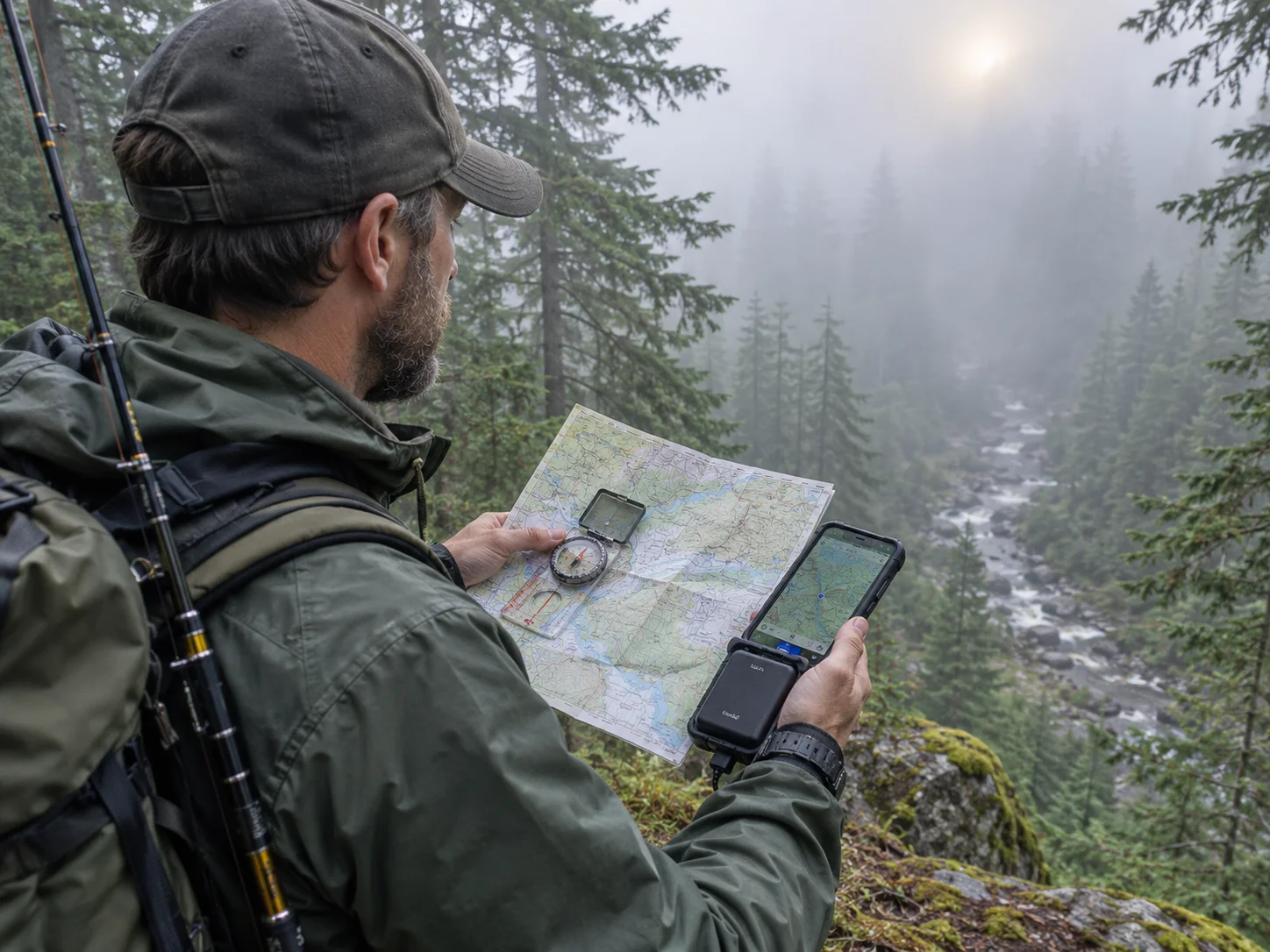
Anglers who fish the same watershed regularly develop a confident familiarity with the terrain, which is an asset until conditions change — fog, smoke from distant wildfires, or traveling farther upstream than planned can all make familiar ground disorienting. Modern forest navigation guidance treats map, compass, and GPS as a system to carry together, not as alternatives to each other.
If you become lost, the first action is not to move. The STOP method, taught in current wilderness survival programs, stands for Stop, Think, Observe, Plan. Stopping prevents you from moving further from your last known location. Thinking counters the panic response that causes people to walk in circles or abandon usable resources. Observing means identifying water flow direction, terrain shape, the position of the sun, and any landmarks visible from elevation. Planning means choosing a direction with a reason behind it, not moving to feel like you are doing something.
State emergency guidance used by several western US land management agencies recommends that if you must move, walk toward a known linear feature: a river, a road, a power line corridor. In many forested regions, walking consistently in one cardinal direction and crossing multiple drainages will eventually intersect a road. The key word is consistently. Turning frequently in response to obstacles is how people walk in large circles.
Note your planned fishing location’s sunset time before you leave the vehicle. Darkness amplifies every other risk. Plan your turnaround time to reach the trailhead with at least thirty minutes of daylight to spare, and stick to that plan regardless of how well the fish are biting.
6. Signal Effectively and Carry the Right Emergency Gear
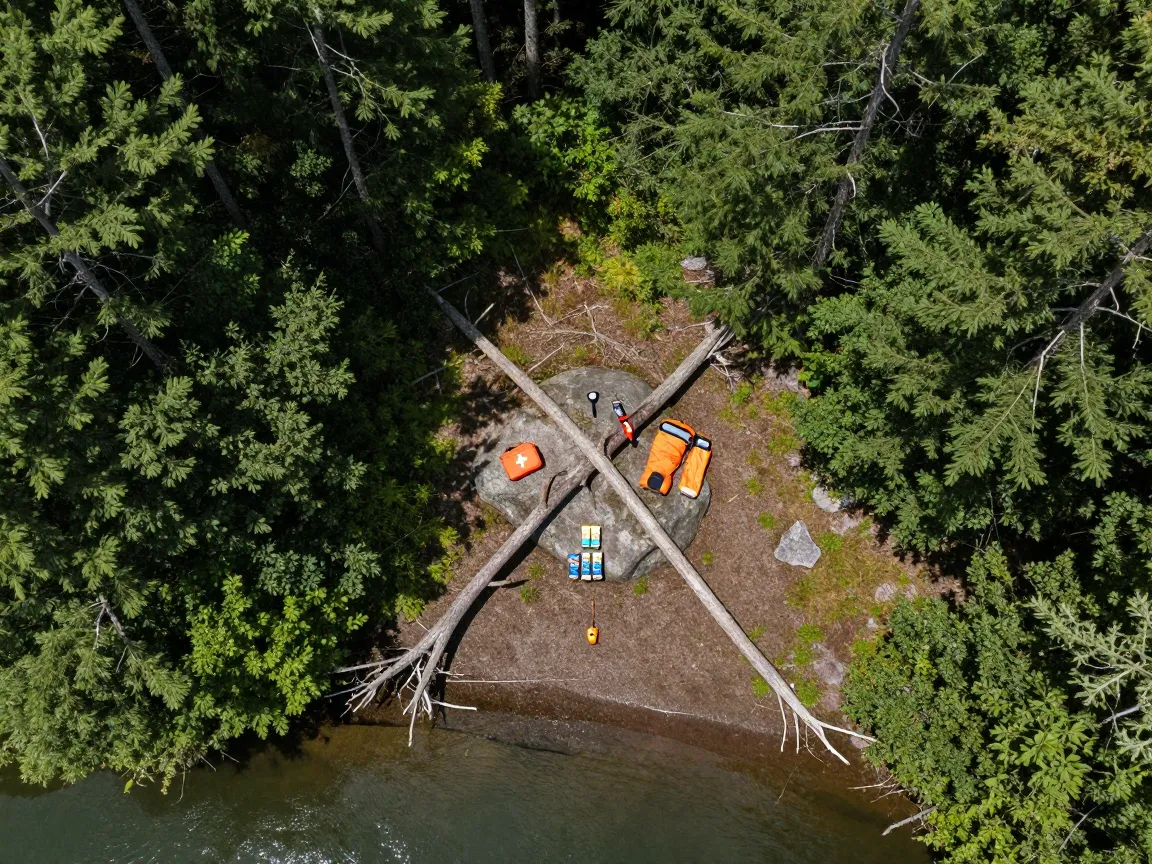
Survival skill and physical endurance matter, but rescue ultimately depends on someone finding you. Effective signaling and carrying the right gear are what bridge the gap between self-rescue and assisted rescue when conditions go beyond what you can manage alone.
A whistle carries further than a shouting voice and requires far less energy. The international distress signal is three short blasts repeated at regular intervals. A signal mirror can be seen from aircraft at several miles on a clear day. Neither item weighs more than a few grams and both should be on your person, not in your pack, because packs get separated from people.
Conserve your phone battery for a confirmed emergency call or GPS location share rather than using it for music or photography during the trip. Many search-and-rescue calls are delayed because the person’s battery died before they could transmit a location. If you are in an area with no cell coverage and you can afford it, a personal locator beacon (PLB) or a satellite communicator like a Garmin inReach sends a GPS position to rescue services without any cellular infrastructure. For serious remote fishing, that investment is rational.
Ground signals help aerial searchers. Near any clearing or open water, lay out a large X or SOS using branches, rocks, or your gear in a contrast color against the ground. Three of anything in a triangle pattern is a recognized distress signal. Stay near open water or clearings when possible, since dense canopy makes you essentially invisible from the air.
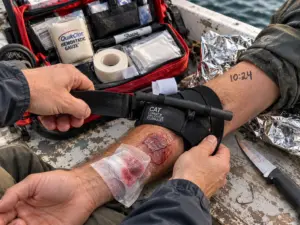
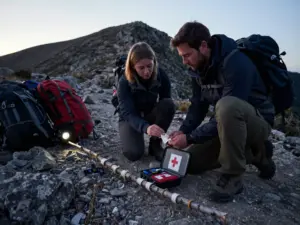
The standard emergency kit recommended in current forest safety checklists for a remote fishing day trip includes a compact first-aid kit, two extra insulating layers beyond what the forecast requires, a headlamp with spare batteries, and high-calorie snacks such as nuts, jerky, or energy bars. Minor injuries, cold exposure after dark, and simple disorientation are the most common triggers for rescues, and those items directly address all three.
Quick Comparison
| Survival Element | Primary Tool | Backup Option | Time to Prioritize |
|---|---|---|---|
| Hydration | Portable hollow-fiber filter | Metal container for boiling | Immediately upon stranding |
| Shelter | Emergency space blanket + branches | Full lean-to from downed wood | Before sunset |
| Fire | Ferrocerium rod | Waterproof matches / lighter | After shelter is started |
| Navigation | Map + compass | Phone GPS (battery protected) | Before moving from last known point |
| Signaling | Whistle + signal mirror | Ground X pattern near clearing | Continuously after stopping |
| Gear Baseline | First-aid kit + headlamp + layers | High-calorie food reserve | Carried before leaving vehicle |
Conclusion
These 6 forest survival tips that could save your life on a remote fishing trip are most useful when they inform decisions made before you leave the trailhead. Skills practiced at home take seconds to execute under pressure; skills read once and never rehearsed tend to fail when they are needed. The single most practical next step is to assemble a small survival kit this week, run through a fire-starting drill once with your actual kit, and leave a written trip plan with someone you trust before your next remote outing.