Wilderness First Aid Skills Every Fisherman Should Know Before Heading Out
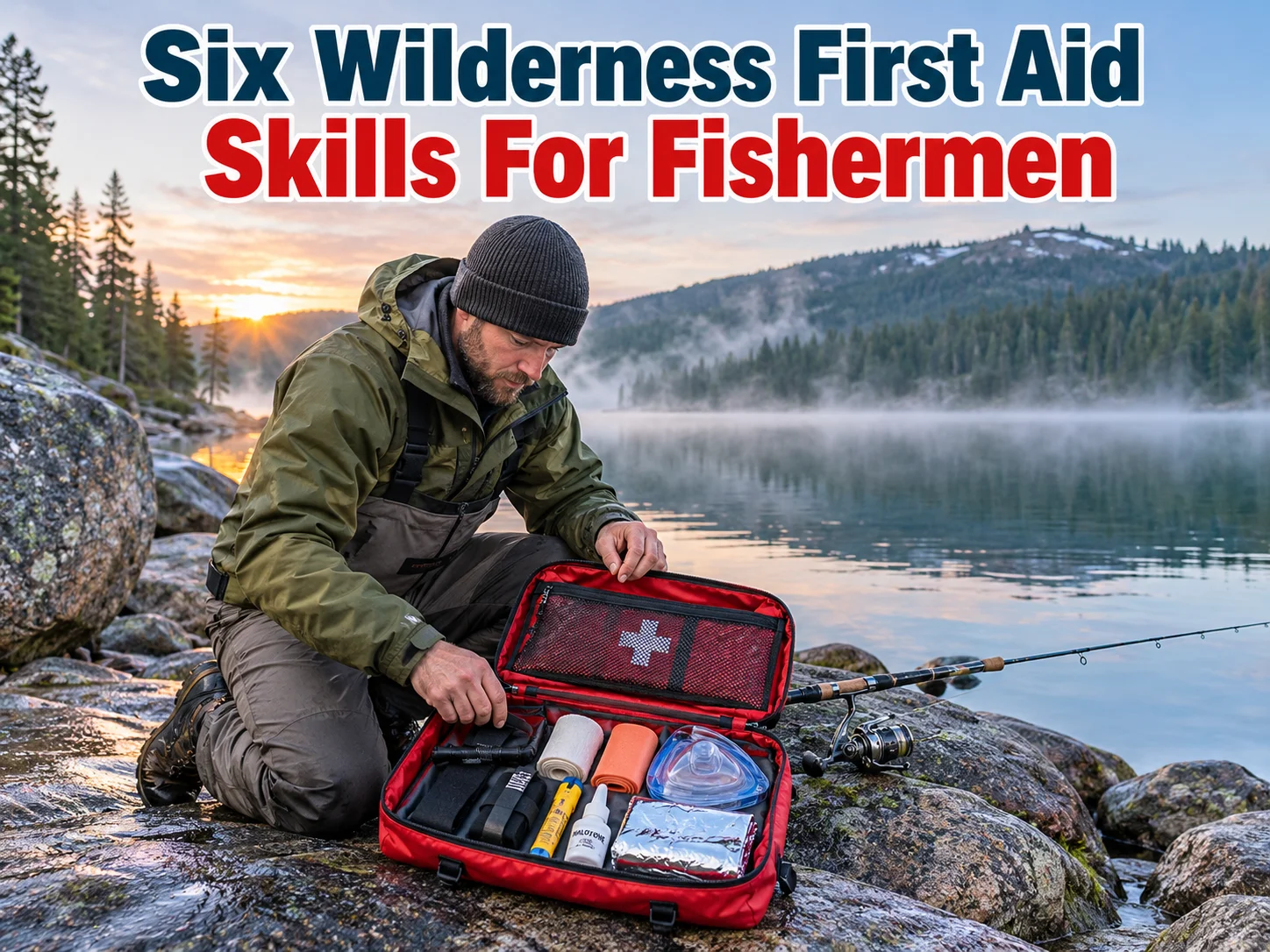
Fishing fatalities in the United States run around 500 per year, and the majority happen in remote or semi-remote settings where emergency medical services are 30 minutes away at minimum. That gap between injury and professional care is exactly where wilderness first aid lives. Knowing the 6 wilderness first aid skills every fisherman should know before heading out is not about becoming a paramedic; it is about keeping someone alive and stable until real help arrives. State wildlife agencies and commercial fishing safety programs have recognized this clearly enough that wilderness medicine training is now being folded into fishing and boating education at the state level across the country.
Disclosure: This post contains affiliate links. As an Amazon Associate, we earn from qualifying purchases, and at no extra cost to you.
Key Takeaways
- Scene assessment and communication come before any hands-on treatment; getting help moving toward you early saves lives.
- Bleeding, shock, and burns are the leading causes of preventable death in wilderness settings and can be managed with basic supplies and clear technique.
- Cold-water and immersion emergencies are the specific threat profile of fishing; hypothermia and immersion foot require active rewarming, not passive waiting.
- Fractures and sprains are common on wet, uneven terrain; improvised splinting and load decisions can prevent a walk-out from becoming a carry-out.
- CPR and anaphylaxis response are time-critical; every angler who carries epinephrine should know exactly how and when to use it.
- Neurologic and environmental conditions, including heat illness and seasickness, can degrade judgment before they produce obvious physical symptoms.
1. Scene Assessment, Priorities, and Emergency Communication
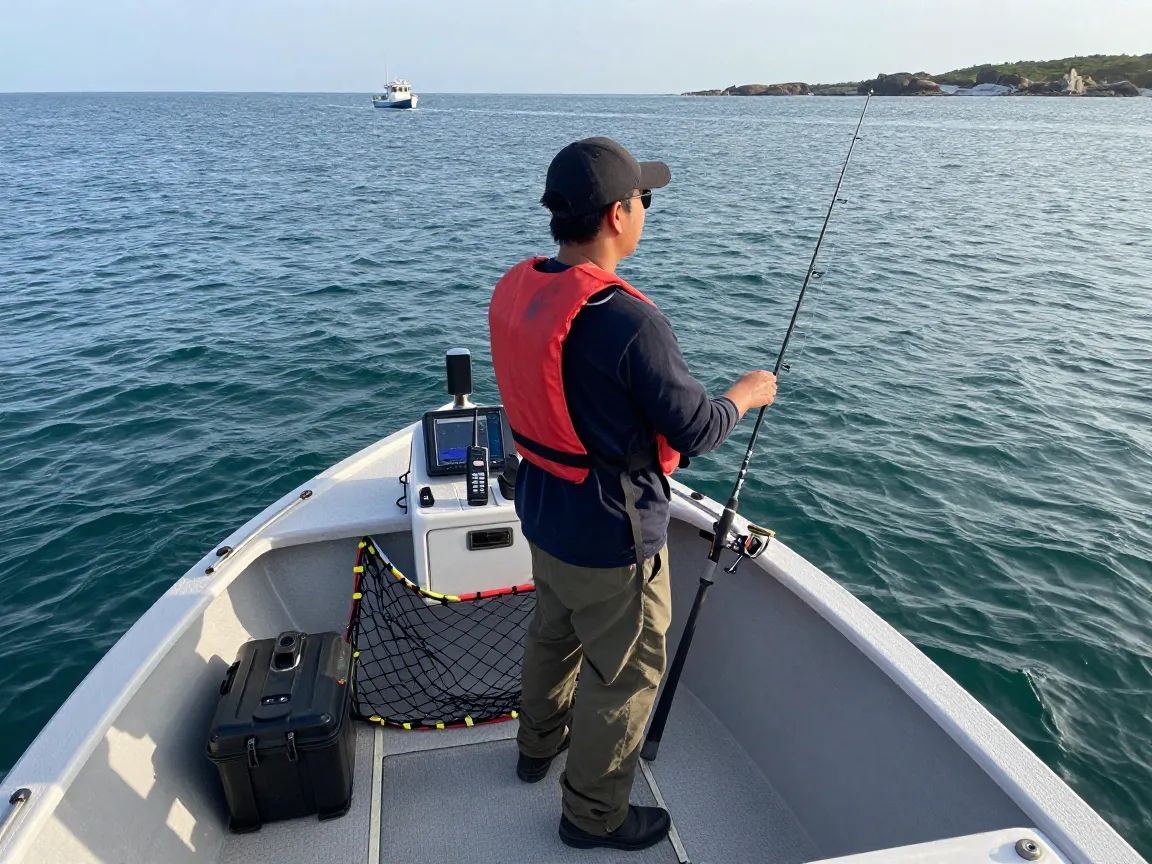
Before touching a patient, you need to know whether the scene will produce a second casualty. Fast-water environments, unstable banks, boat decks slick with fish slime, and open ocean conditions all create hazards that can injure the responder. A deliberate 10-second sweep, looking for moving water, overhead hazards, unstable footing, or boat traffic, is not a formality. It is the step that determines whether you help or become part of the problem.
Once you establish safety, the standard triage sequence applies: responsiveness, airway, breathing, circulation. Wilderness medicine adds a fourth layer that urban first aid ignores: What resources do you actually have, and how long until evacuation? That calculation shapes every decision that follows. A fisherman who is four miles from a trailhead handles a suspected spinal injury differently than one who is 300 yards from a parking lot.
Communication is the other half of this skill. On inland water, most anglers carry a cell phone. The limitation is coverage. Learning to identify landmarks and GPS coordinates before you need them takes about two minutes at trip start and can save critical time when relaying position to 911. On coastal and offshore water, the standard distress channel is VHF marine radio Channel 16, monitored continuously by the United States Coast Guard. Hailing the Coast Guard on Channel 16 with your vessel name, position, and the nature of the emergency gets a coordinated response in motion faster than any app. If you fish offshore and have never practiced a mayday call, that is a gap worth closing before the next trip.
In 2026, programs operating under the Fishing Vessel Safety (FFAST) framework have expanded their outreach to smaller recreational fleets, not just commercial operations. Many of those programs now include a communication module covering both VHF protocol and satellite messenger devices like the Garmin inReach. Having the device matters far less than knowing the activation sequence before you are cold, stressed, and in pain.
2. Bleeding Control, Wound Care, Burns, and Shock Management
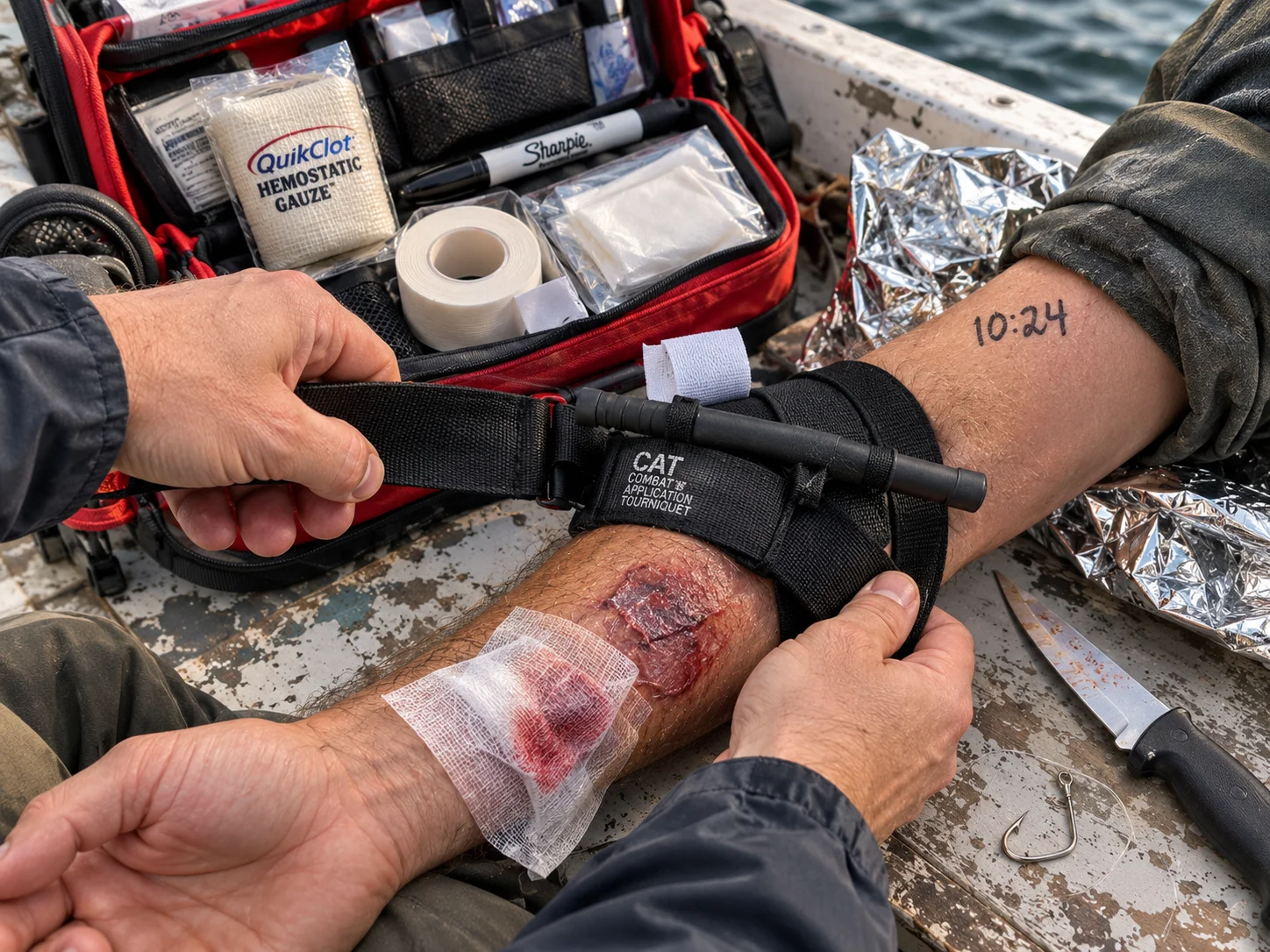
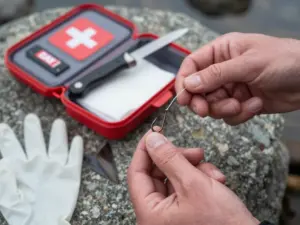
Fish hooks, fillet knives, boat propellers, and hot cooking surfaces make soft-tissue injuries common on fishing trips. Most are minor. Some are not. The difference between a nuisance cut and a life-threatening hemorrhage is volume and location, and the response to each is different enough that knowing both matters.
For arterial or high-volume bleeding on an extremity, a commercial tourniquet applied 2 to 3 inches above the wound is currently the fastest and most effective intervention. The North American Rescue CAT tourniquet is the reference standard used in military and wilderness medicine training because it can be applied one-handed. Time of application should be written on the patient’s skin or forehead in marker, that information is essential for the receiving clinician. For wounds where a tourniquet cannot be applied (neck, groin, armpit), wound packing with hemostatic gauze such as QuikClot Combat Gauze, followed by sustained direct pressure, is the technique taught in current wilderness first aid curricula.
Burns from camp stoves or boat engines follow a simple field protocol: cool running water for 20 minutes, cover loosely with clean dressing, and prevent hypothermia because burned skin loses heat rapidly. Do not apply butter, toothpaste, or ice. Blistered or full-thickness burns warrant evacuation regardless of size.
Shock management often gets listed as a separate skill, but in the field it is woven into everything else. The signs in a wilderness setting are subtle early: skin that is pale, cool, or clammy; a heart rate above 100; confusion or restlessness. The field response is straightforward, control the bleeding source, lay the patient flat, conserve heat with any available insulation, and prevent fluid loss. Oral hydration is appropriate only if the patient is conscious, not nauseated, and not likely to need surgery soon. Pushing fluid into a patient who may be on an operating table in two hours creates complications.
3. Drowning, Immersion, and Cold-Related Emergencies
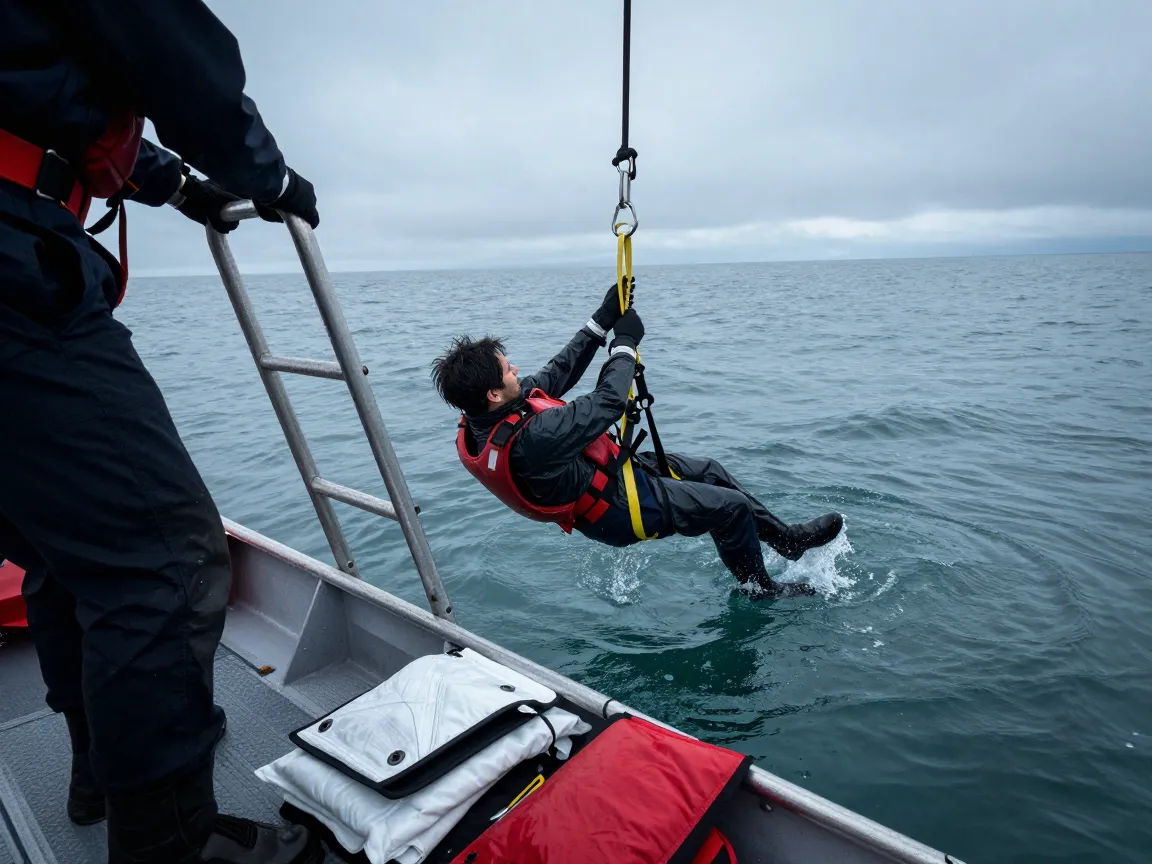
This is the category that actually kills fishermen at the highest rate. The sequence of events in cold-water immersion follows a predictable pattern that wilderness medicine instructors call the “1-10-1” framework: roughly 1 minute of cold shock (involuntary gasping that can cause immediate drowning), 10 minutes of swimming capability before cold incapacitation, and 1 hour before unconsciousness from hypothermia. The numbers are approximations, but they establish why escape from cold water in the first minutes is the survival priority.
Rescue from water should be horizontal when possible. Pulling a cold, immersed patient upright causes blood to pool in the legs, which can trigger cardiac arrest even after a successful rescue. The technique taught in wilderness medicine courses is the “horizontal lift”, keeping the patient parallel to the water surface during extraction. On a boat, that means using a ladder or sling, not hauling someone straight up over the gunwale.
Field rewarming of a hypothermic patient requires removing wet clothing, insulating from ground contact, adding heat to the core (armpits, groin, neck) using chemical heat packs, and covering the head. A patient who is shivering actively is generating heat; suppressing that shiver with sedatives or alcohol is harmful. A patient who has stopped shivering is in serious hypothermia and needs evacuation, not just rewarming. Alcohol causes vasodilation and accelerates heat loss, the opposite of what a cold patient needs.
Immersion foot, historically called trench foot, develops over hours in wet, cool conditions rather than from full immersion. Feet that are pale, numb, and swollen after a long day wading in cold water may already show early immersion foot. The field response is dry warmth, not rubbing, not hot water, and not walking further on them until circulation is restored. It is a condition that shows up in multi-day fishing trips more often than most anglers expect.
4. Musculoskeletal Injury Management
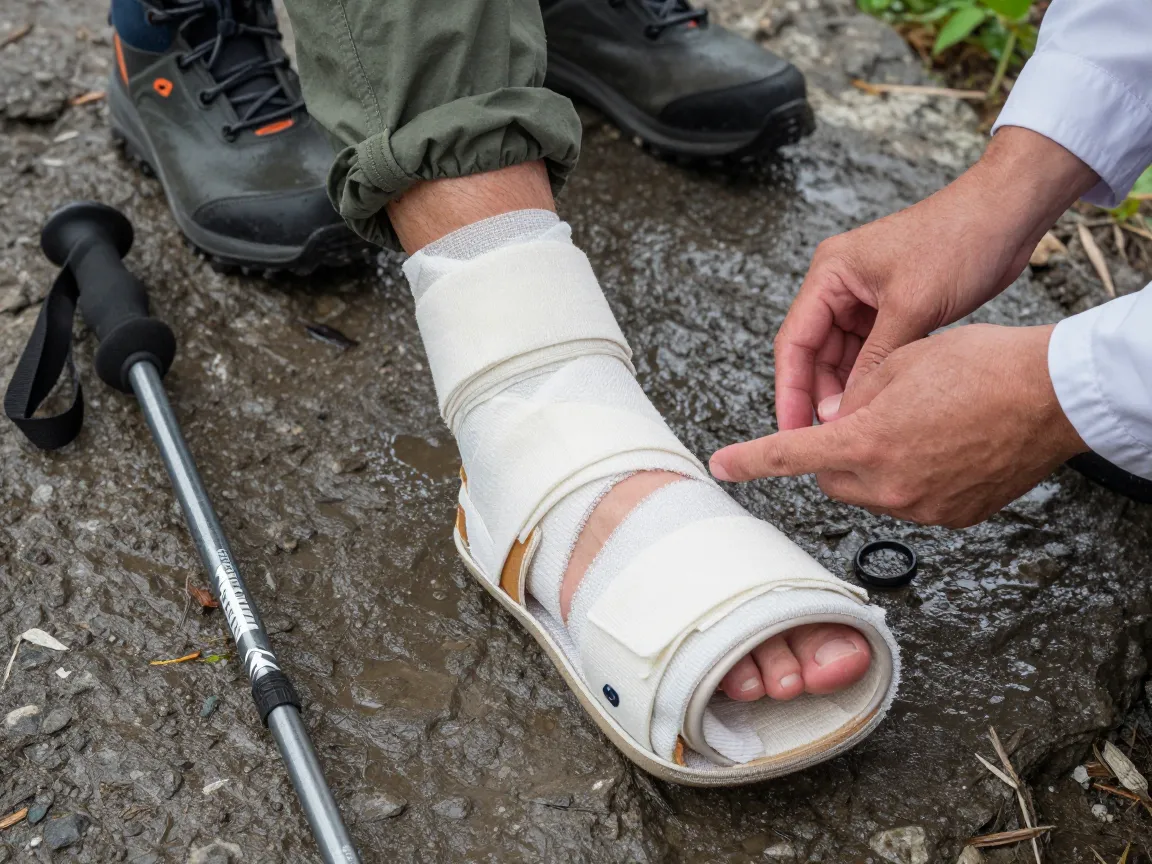
Wet rocks, steep banks, boat decks, and wading in moving current create a consistent pattern of ankle sprains, falls, and occasionally fractures. The Ottawa Ankle Rules, a clinical tool developed to decide when X-rays are needed, give wilderness responders a reasonable field test: if the patient cannot bear weight on the ankle for four steps, or if there is point tenderness over the bony prominences of the ankle, treat the injury as a fracture until imaging says otherwise.
Splinting in the field has one goal: immobilize the injury in the position found, control movement at the joint above and below the fracture, and check circulation, sensation, and movement (CSM) before and after application. SAM splints, which weigh almost nothing and fold flat, are the standard choice for a fishing first aid kit. Trekking poles, tent poles, or straight branches work as improvised rigid components. The padding layer underneath the splint prevents pressure injuries during evacuation.
Spinal injuries deserve specific mention because the wilderness protocol has evolved. Current wilderness first aid guidance, including the curriculum from the Wilderness Medical Society, allows spinal motion restriction to be relaxed in a responsive, alert patient with no neurological symptoms and a reliable mechanism of injury. This matters for fishing because an angler who slipped and fell but is walking around, has full sensation, and shows no weakness does not need to be pinned to the ground for three hours while waiting for a helicopter. Assessment skills here directly affect the quality of evacuation decisions.
For overuse injuries, shoulder tendinopathy, lateral epicondylitis from casting, low-back strain from repeated hauling, the field management is rest, ice or cold water, compression, and elevation (RICE). None of those is an emergency, but they are the most common reason a fishing trip gets cut short. Recognizing when an overuse complaint is masking an acute injury (a “pop” followed by swelling and loss of function suggests a tendon rupture, not a strain) is the distinction that changes the response.
5. Cardiac Emergencies, CPR, Anaphylaxis, and Opioid Overdose
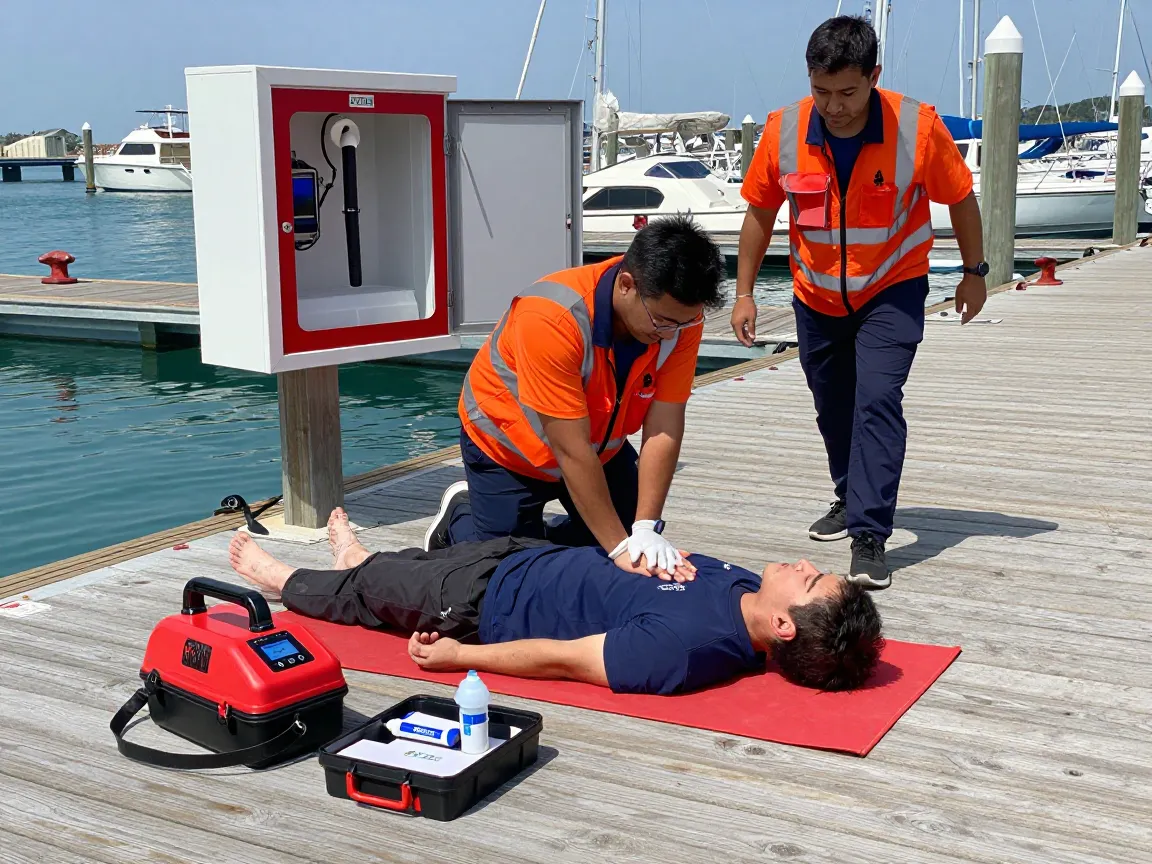
Sudden cardiac arrest in a remote setting has a survival rate that drops roughly 10 percent for every minute without CPR. In wilderness medicine, that math is unambiguous: high-quality CPR started immediately is more important than any equipment. The current guidelines from the American Heart Association specify 100 to 120 chest compressions per minute, compression depth of at least 2 inches in adults, and full chest recoil between compressions. Compression-only CPR (no rescue breaths) is acceptable for bystander responders who are not trained in rescue breathing; it is significantly better than no CPR at all.
Automated External Defibrillators (AEDs) are increasingly present at boat launches, marinas, and fishing lodge facilities. If one is available, use it. The devices provide voice instructions and are designed for use by untrained bystanders. The machine will not deliver a shock unless the rhythm calls for one. Where no AED exists, CPR continues until the patient recovers, the rescuer is physically unable to continue, or EMS takes over.
Anaphylaxis is a risk for anglers who are allergic to bee or wasp stings, which are a constant presence in outdoor environments. The only effective field treatment is intramuscular epinephrine, delivered to the outer mid-thigh. EpiPens and their generic equivalents come with a practice trainer; every angler who carries one should use the trainer at least once per season. After epinephrine, the patient needs evacuation even if symptoms resolve, because biphasic anaphylaxis, a second wave of symptoms hours later, occurs in a meaningful percentage of cases.
Opioid overdose response has been added to wilderness first aid curricula in recent years because fentanyl exposure is now a realistic scenario in both backcountry and marine settings, and because naloxone (Narcan) is now widely available without a prescription. The signs of opioid overdose are pinpoint pupils, unconscious or unresponsive state, and slow or absent breathing. Intranasal naloxone, one spray per nostril, can reverse respiratory depression within minutes. The patient may require repeat dosing. Naloxone does not harm someone who has not taken opioids, so the threshold for use is low.
6. Neurologic, Abdominal, and Environmental Medical Conditions
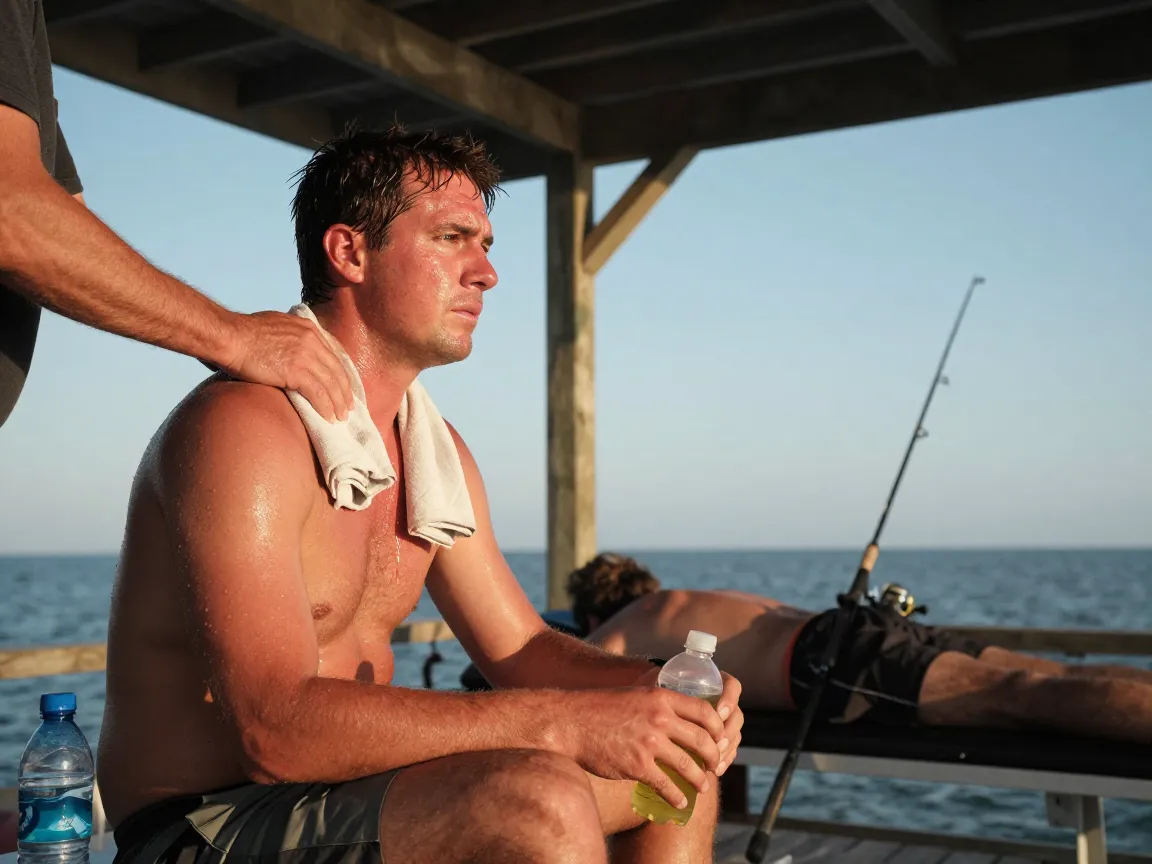
Environmental medical conditions are the category most fishermen underestimate because they build gradually and because their primary symptom is impaired judgment, which means the patient often does not recognize the problem.
Heat exhaustion develops when the body’s cooling system is overwhelmed. Core temperature in heat exhaustion is elevated but below 104 degrees Fahrenheit. The patient sweats heavily, may feel nauseated or dizzy, and will have a rapid heart rate. The field response is shade, rest, oral hydration with water or a sports drink, and cooling with wet cloths applied to the neck, armpits, and groin. Heat stroke is different in a critical way: the patient’s mental status deteriorates, and core temperature exceeds 104 F. That is a medical emergency requiring rapid cooling, immersion in the coolest available water, and evacuation. The distinction between the two is altered mental status; when the patient becomes confused or combative in hot conditions, treat for heat stroke.
Seasickness affects a large portion of offshore anglers, particularly in rough seas, and it is worth treating as a medical management problem rather than a character issue. Scopolamine patches, applied behind the ear at least four hours before departure, are substantially more effective than over-the-counter meclizine or Dramamine for most people. Severe seasickness causes dehydration and electrolyte imbalance, particularly in extended offshore trips, and can degrade the judgment and physical capacity of anyone who might need to respond to another person’s emergency.
Abdominal emergencies, appendicitis, perforated ulcer, bowel obstruction, present in the field as localized pain, rigidity, nausea, and fever. The field protocol for any suspected “acute abdomen” is nothing by mouth, evacuation, and position of comfort (usually knees drawn up). There is no meaningful wilderness treatment for surgical abdominal emergencies beyond getting the patient to a surgeon.
Neurologic emergencies worth recognizing include stroke and seizure. The FAST acronym (Face drooping, Arm weakness, Speech difficulty, Time to call 911) is a validated stroke screening tool that works without any equipment. A new-onset seizure in an adult, particularly in a patient without a seizure history, requires evacuation. Post-seizure patients may be confused and combative for 10 to 30 minutes (the postictal phase); that is expected and not a reason to restrain them forcefully. Keep them safe, roll them to their side to protect the airway, and document the seizure duration.
Quick Comparison
| Skill | Primary Threat | Key Tool or Technique | Evacuation Priority |
|---|---|---|---|
| 1. Scene assessment | Secondary injury, delayed rescue | GPS coordinates, VHF Channel 16 | Sets timeline for all others |
| 2. Bleeding and shock | Hemorrhage, hypovolemia | Tourniquet, wound packing gauze | High if uncontrolled bleeding |
| 3. Cold and immersion | Drowning, hypothermia | Horizontal rescue, core rewarming | Urgent for stopped shivering |
| 4. Musculoskeletal | Fracture, spinal injury | SAM splint, CSM checks | Moderate; depends on mobility |
| 5. Cardiac and anaphylaxis | Sudden death | CPR, epinephrine, AED | Immediate |
| 6. Environmental/neurologic | Heat stroke, stroke, seizure | FAST screen, rapid cooling | High for altered mental status |
Conclusion
The most practical next step is to register for a formal Wilderness First Aid course before your next remote trip. Mainstream providers including the Wilderness Medical Associates and the National Outdoor Leadership School (NOLS) are actively scheduling late-2026 courses oriented toward outdoor recreation, and several state fish and wildlife agencies now offer abbreviated versions through their boating safety programs. A 16-hour WFA certification gives you hands-on practice with the splinting, tourniquet, and CPR mechanics that reading cannot replicate. Pair that with a stocked kit, tourniquet, hemostatic gauze, SAM splint, emergency blanket, epinephrine if indicated, and naloxone, and the gap between injury and help becomes something you can actually manage.