Boat Fishing Outfit Ideas for Grip, Comfort, and Sun Protection
Skin damage from UV exposure accumulates faster on open water than on land because the sun’s rays reflect off the surface and hit you twice. That physical fact drives every practical decision behind the 6 boat fishing outfit ideas for grip, comfort, and sun protection covered here. The right clothing is not about looking the part. It is about keeping your skin intact, staying on your feet on a wet deck, and fishing all day without overheating or soaking through cotton that never dries.
Disclosure: This post contains affiliate links. As an Amazon Associate, we earn from qualifying purchases, and at no extra cost to you.
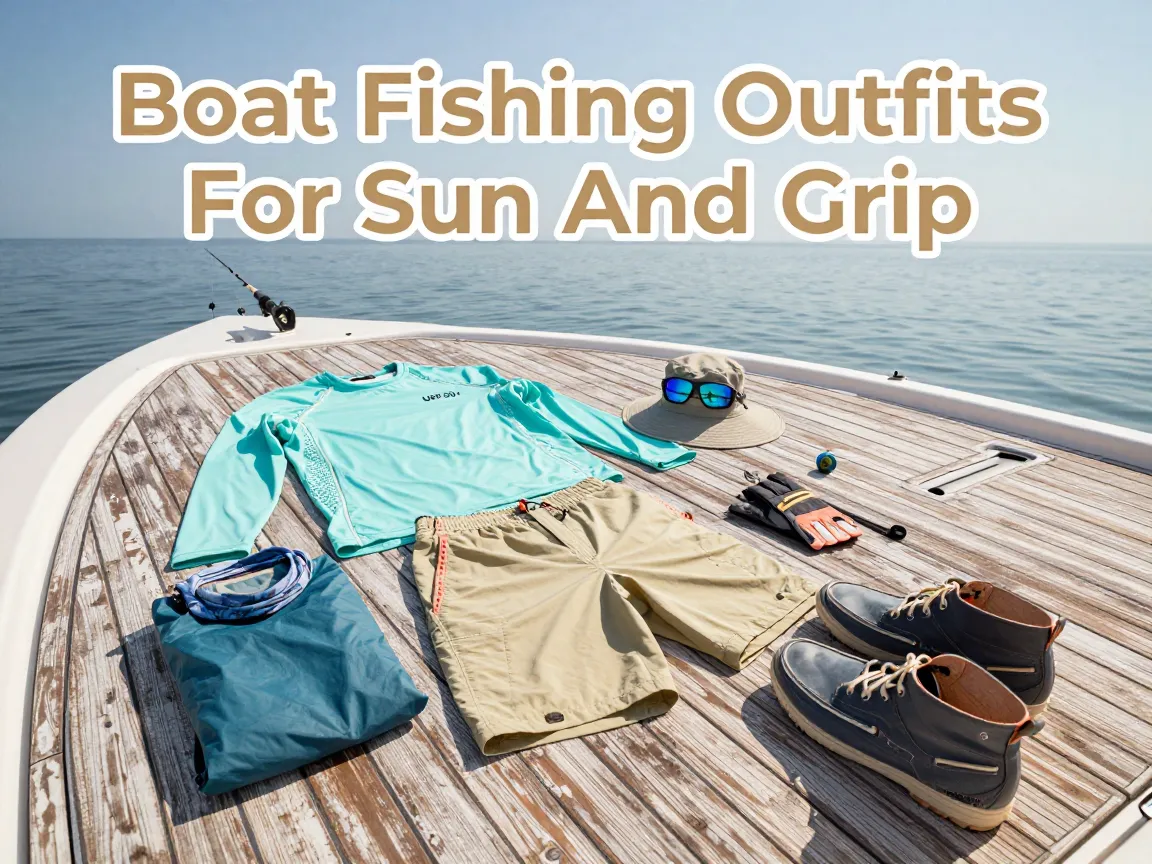
Each of the six outfits below is built for a specific scenario. The conditions on a calm inshore flat at noon are different from those on an offshore charter at dawn, and your gear should reflect that difference.
1. Hot, Calm Inshore Day Outfit
A long-sleeve UPF 50+ sun shirt is the starting point for any warm, sunny day on the water, and this outfit builds everything around it. The shirt does the work that sunscreen cannot sustain through sweat and water contact. Look for a shirt with vented panels across the back yoke and underarms. Those vents matter when air temperature climbs past 85°F and you are standing in direct sun for six hours straight. Lightweight polyester or nylon blends dry within minutes when they get wet, which will happen.
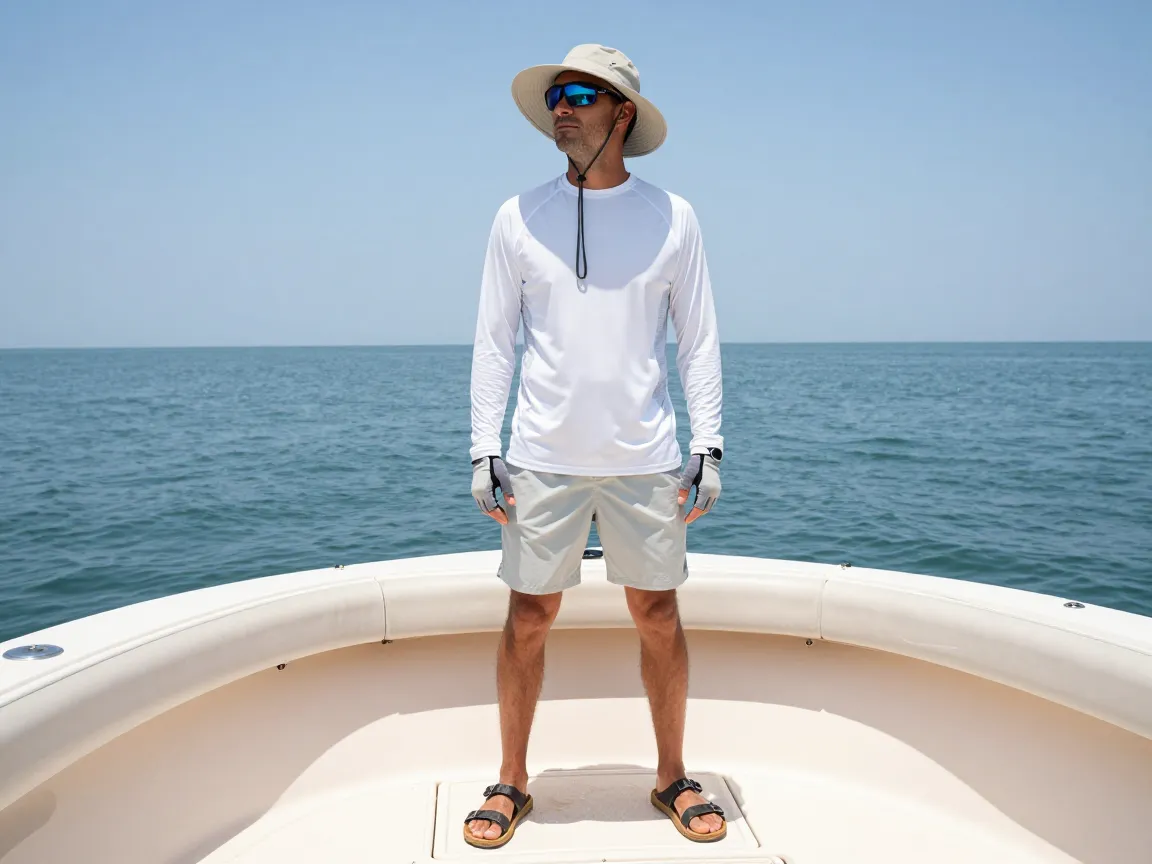
Pair the shirt with quick-dry shorts or lightweight UPF-rated fishing pants. Shorts give you airflow on dead-calm days; pants add sun coverage on the lower legs, which anglers routinely neglect and later regret. A wide-brim hat with at least a three-inch brim around the full circumference protects your ears, neck, and the back of your hands when you are casting. Polarized sunglasses belong on your face before you leave the dock. They cut glare off the water surface and let you see structure and fish that would be invisible through standard lenses.
Fingerless UPF gloves handle the gap the shirt cannot reach. The back of your hands and your fingers take direct sun all day when you are holding a rod or working a line. Standard fingerless fishing gloves with a UPF-rated back panel cost less than $25 at most tackle retailers and cover a part of the body that sees some of the highest cumulative UV exposure on a boat. For footwear, non-slip sandals or boat shoes designed to drain and dry quickly keep you sure-footed on a wet fiberglass deck without baking your feet inside closed-toe shoes on a hot day. The rubber outsole needs a siped or textured pattern specifically rated for wet surfaces. Regular flip-flops are not adequate; they slide on a wet deck under load.
2. Breezy or Showery Conditions Outfit
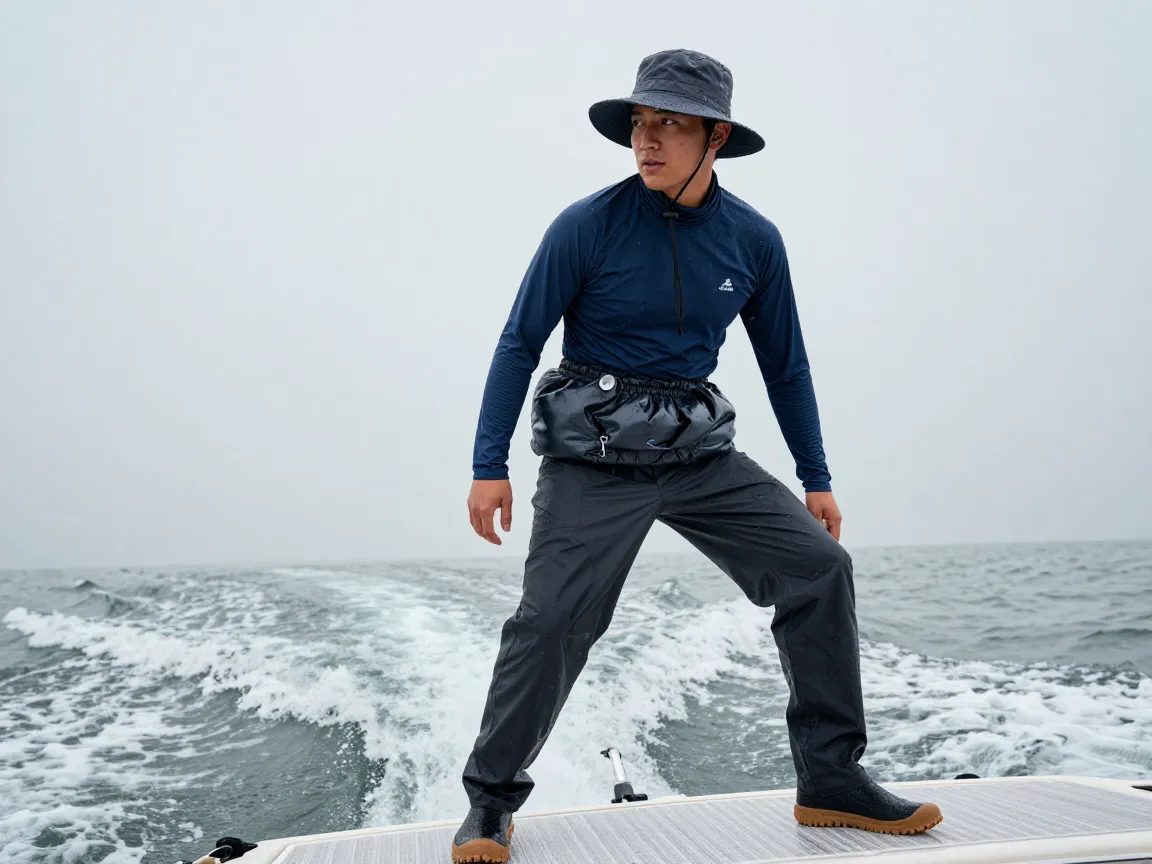
Wind and intermittent rain change the equation in a specific way. Evaporative cooling from wet skin in a breeze can drop your core temperature faster than you expect, even when the air temperature reads 70°F. The base of this outfit stays the same as the inshore setup: a long-sleeve UPF-rated fishing shirt that wicks moisture away from skin. What changes is the outer layer.
A packable windbreaker or light rain shell is the upgrade that makes this outfit work. The word “packable” matters here. You want something that stuffs into its own pocket or a small dry bag, because conditions on the water shift. You will put it on, take it off, and put it back on several times in a single trip. A shell that weighs 10 ounces and packs to the size of a water bottle does not get left at home. A heavy rain jacket does. Look for taped seams on a rain shell if you want real water resistance rather than just wind protection; water-resistant finishes (DWR coatings) repel light spray but fail under sustained rainfall.
Quick-dry pants over the sun shirt base layer keep your legs dry and reduce wind chill on exposed skin. A brimmed hat stays practical in this outfit, though a cap with a full brim performs better than a standard baseball cap in rain because it sheds water away from your face. Closed-toe shoes with grippy rubber outsoles are non-negotiable in wet, breezy conditions. Wet decks in moving water are where most boating injuries involving slips occur, and a siped rubber sole on a closed-toe shoe or sneaker provides far better traction than any open sandal.
3. Offshore and Deep-Sea Charter Outfit
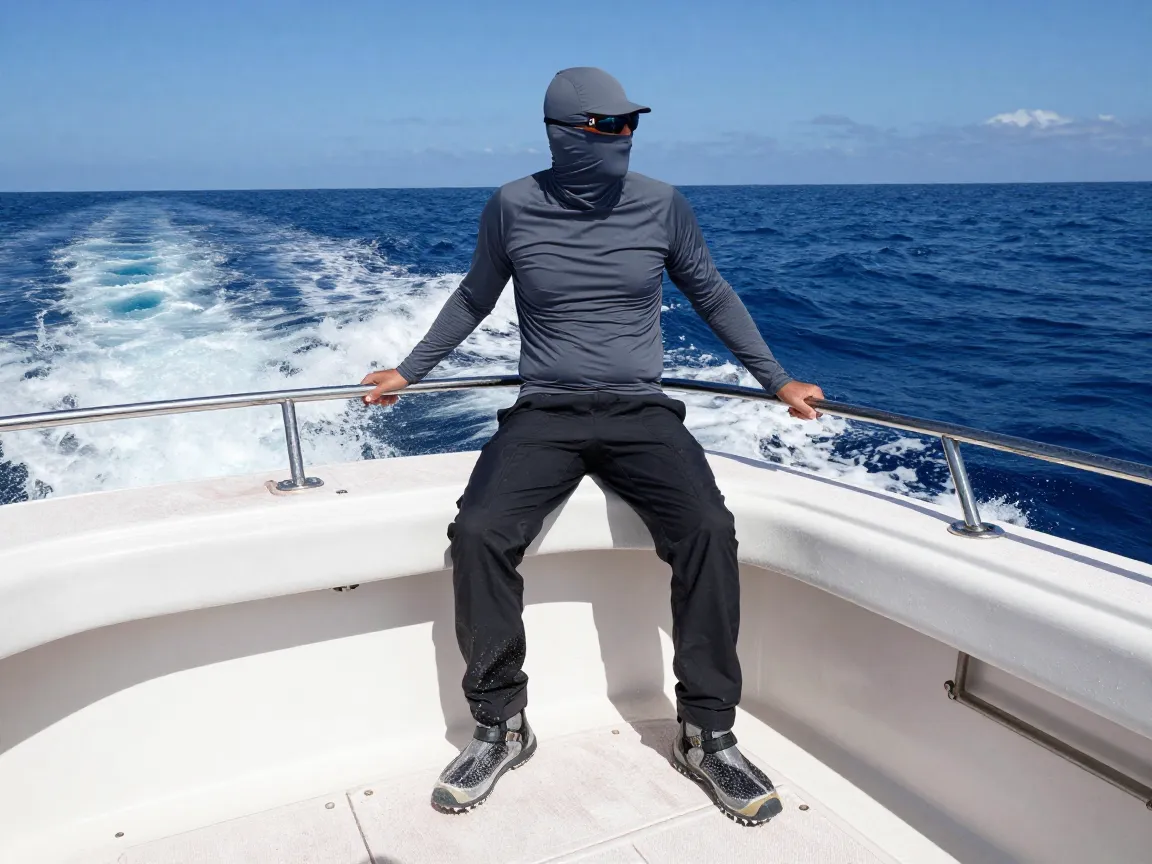
Offshore conditions on a charter boat are different in kind, not just degree. You are dealing with spray rather than splash, sustained UV exposure with no shade, potentially rough seas, and a deck that may be wet the entire trip. This outfit prioritizes full coverage and stability.
Long pants rated at UPF 50+ protect the lower body throughout a full day at sea. Pair them with a moisture-wicking long-sleeve shirt as a base, then add a spray top or lightweight waterproof jacket over it. A spray top is not a rain jacket. It is a close-fitting shell designed to block water spray and wind without trapping heat, often used in kayaking and sailing. On a charter boat making 25 knots to reach the fishing grounds, the wind chill and salt spray make this layer genuinely useful rather than optional.
A neck gaiter made from UPF-rated stretch fabric handles the gap between your collar and your hat. Offshore sun exposure on the neck and lower face is severe, particularly when solar reflection off white fiberglass surfaces and open water compounds the direct overhead UV. The gaiter pulls up over your chin when needed and drops back down when you need to drink or talk. For footwear, non-slip deck boots with siped rubber soles are the right choice offshore. They provide ankle support, keep water out during spray events, and grip aggressively on a wet surface. Standard sneakers lose grip quickly when coated in salt spray and fish slime.
4. Early-Season Cool Morning Outfit
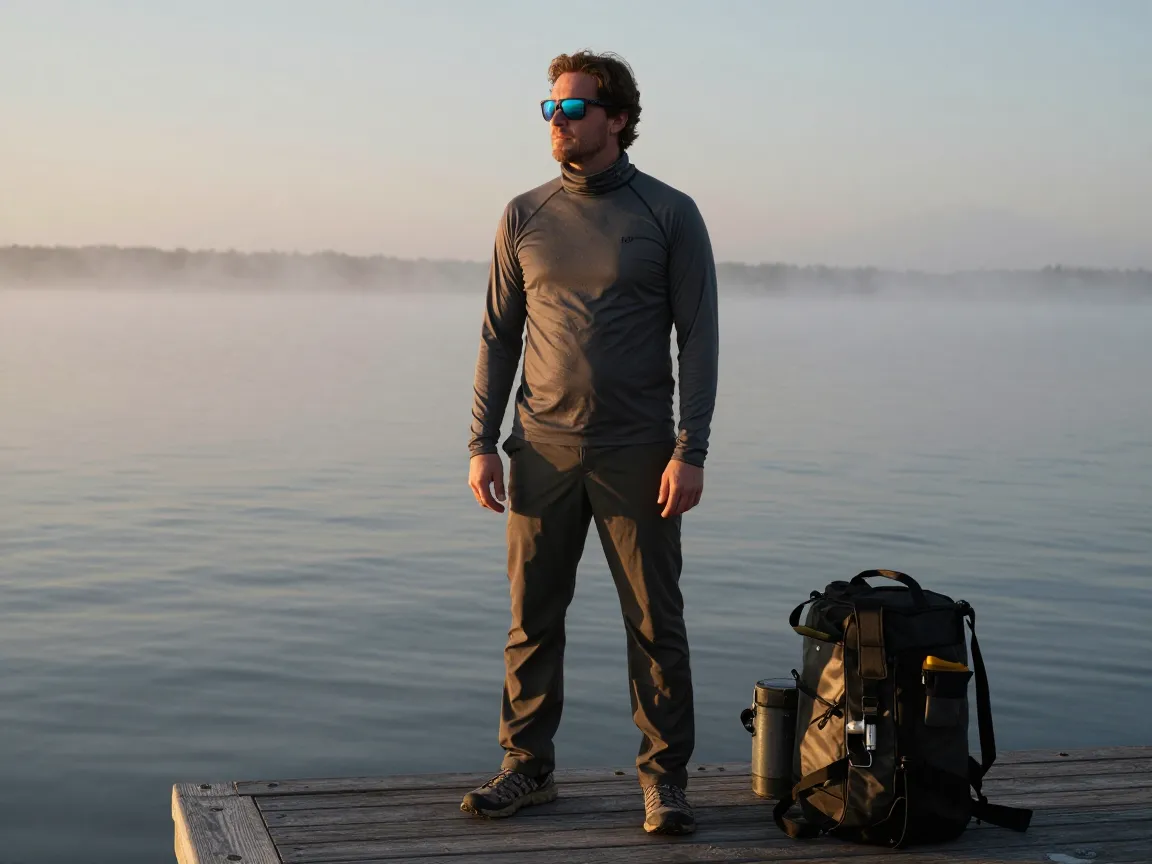
Water temperatures in early spring keep air temperatures near the surface lower than the forecast suggests, particularly before 9 a.m. Many anglers dress for the afternoon forecast and spend the first two hours cold and uncomfortable. This outfit addresses the layering problem specifically.
A moisture-wicking long-sleeve base layer against the skin does the actual work here. Its job is to move sweat away from your body when you start moving and generating heat, which prevents the clammy cold that comes from a wet cotton underlayer. Over that goes a UPF-rated fishing shirt, which adds insulation and sun protection as a combined layer. On top of both, a fleece pullover or sweatshirt handles the cold air of early morning and comes off easily once the sun is up and the temperature climbs. The key detail is that the fleece should be easy to tie around your waist or stuff into a gear bag when you no longer need it. Layers work only if shedding them is convenient.
Long pants and closed-toe boat shoes or grippy sneakers round out the lower half. This is not an outfit for sandals. Cold feet distract you from fishing. Any non-slip rubber outsole shoe that fits snugly enough to stay on under movement works here. As the morning progresses and layers come off, you should end up in a configuration similar to the inshore day outfit. Pack your sunglasses from the start regardless; UV exposure begins well before temperatures peak.
5. All-Day Offshore Sun-Focus Setup
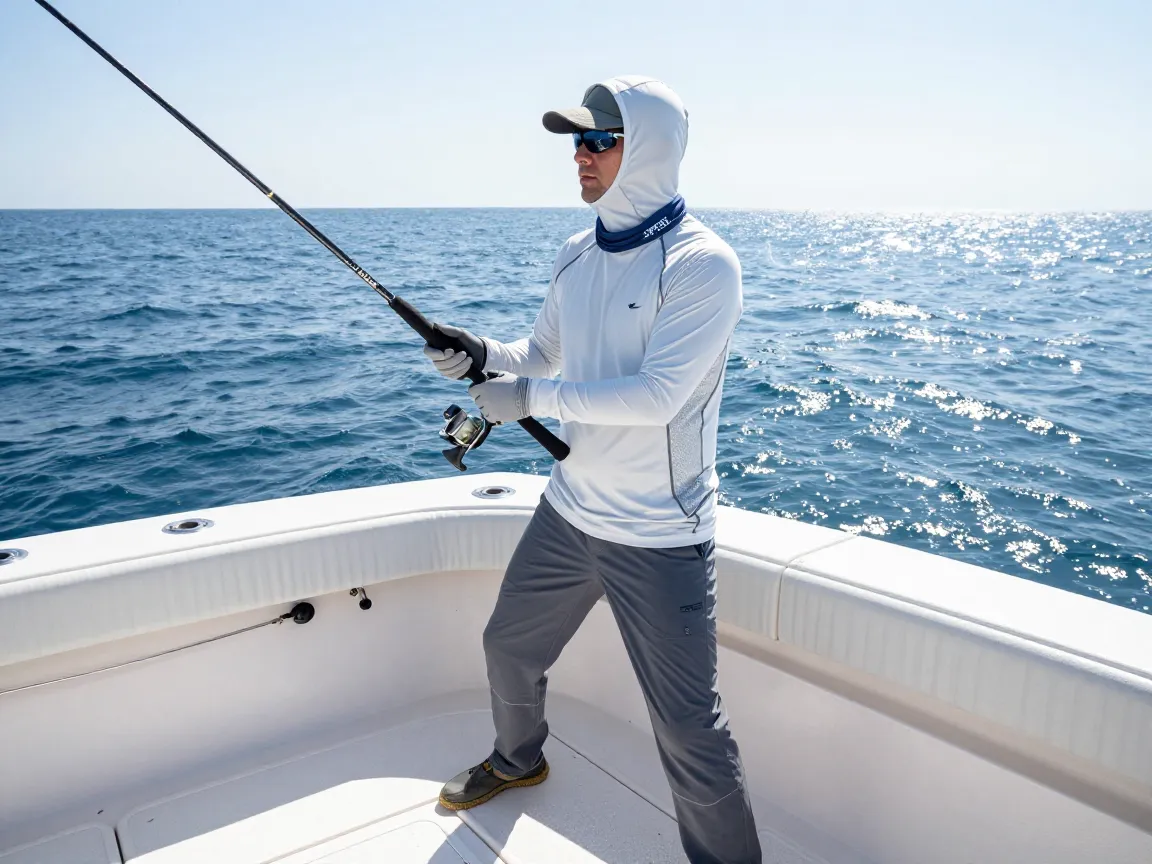
Extended offshore trips covering six to ten hours in full sun require a different kind of discipline about coverage. This outfit is specifically for anglers who want maximum sun protection rather than maximum airflow, accepting slightly more warmth in exchange for skin exposure they can defend against.
A hooded UPF 50+ fishing shirt is the centerpiece. The hood replaces a hat for periods when you need both hands on a rod and a hat would blow off, and it provides back-of-neck coverage that even a wide-brim hat cannot match when you are looking down at the water. Wear the hood under a brimmed performance cap when you can, using the hat to shield your face and the hood to cover everything else. A neck gaiter fills any remaining gap around the collar and can double as a face cover during peak UV hours between 10 a.m. and 2 p.m.
Sun gloves with full finger coverage rather than fingerless styles protect the entire hand surface throughout a long day. The difference between fingerless and full-coverage gloves matters after several hours; fingertips and knuckles receive direct UV exposure continuously on a fishing boat. Long UPF-rated pants and closed-toe deck shoes or grippy boots complete the lower body, keeping spray from soaking your feet during active fishing. This outfit runs warmer than others, so choosing a shirt fabric with active ventilation, specifically woven mesh panels rather than just a lightweight weave, makes the difference between comfort and overheating. Several technical fishing shirt brands build these panels into the back and underarm seams precisely because of this scenario.
6. Casual Inshore or Lake Trip Outfit
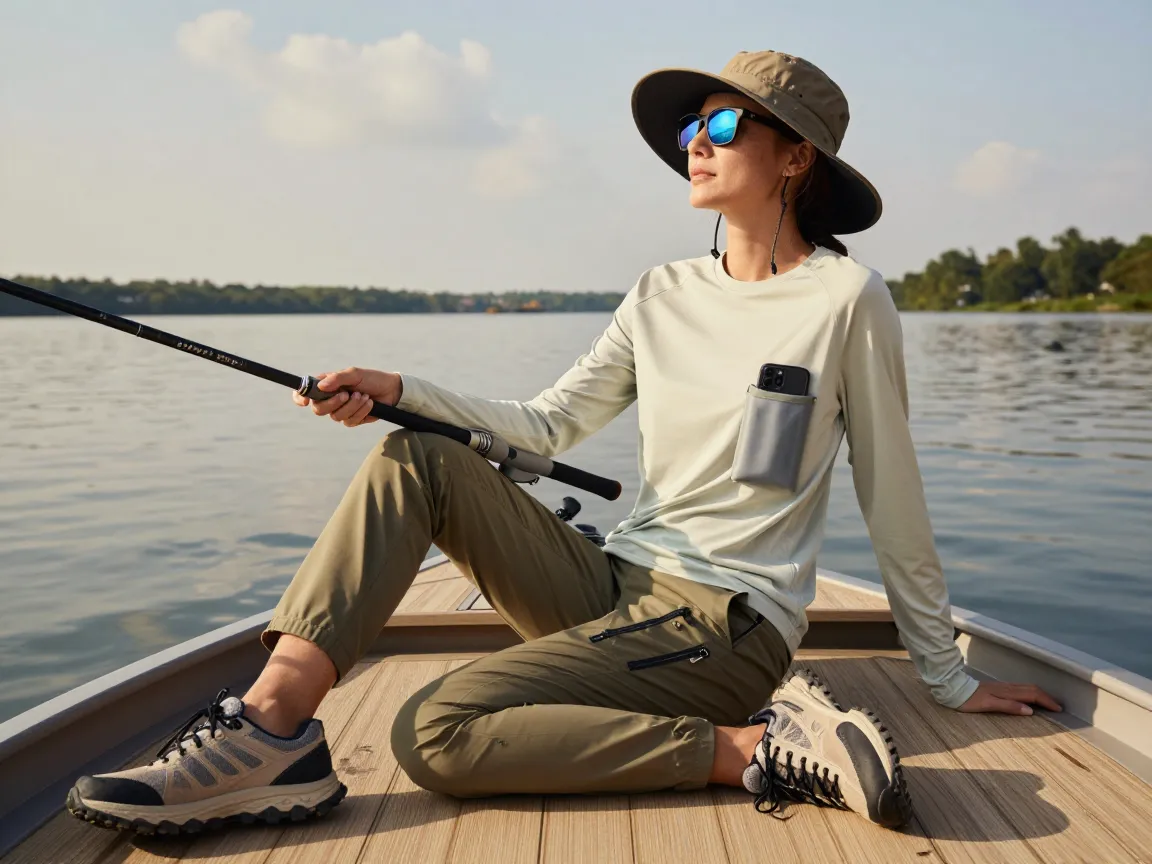
Not every fishing trip demands full tactical gear. A short afternoon on a lake or a relaxed inshore float trip calls for an outfit that emphasizes freedom of movement and practical storage rather than maximum protection from offshore conditions. That said, sun protection still applies on calm water under a clear sky.
A lightweight sun shirt or simple long-sleeve UPF-rated tee gives you baseline protection without bulk. This does not need to be a fully-featured fishing shirt with 12 pockets and a vented yoke. A clean, simple UPF 50+ long-sleeve from any performance-outdoor brand works fine. Quick-dry shorts or lightweight pants keep the lower half comfortable, and a standard wide-brim hat or brimmed performance cap handles overhead sun. Polarized sunglasses belong here just as much as on an offshore trip. Even on flat lake water on a partly cloudy afternoon, reflected UV off the surface is real and cumulative.
Storage pockets become more relevant on a casual trip where you are carrying your own gear rather than accessing a charter boat’s storage. Quick-dry pants with zip thigh pockets and a sun shirt with a chest pocket large enough for a phone in a thin water-resistant sleeve remove the need for a vest or pack. Footwear here is flexible. Any comfortable non-slip shoe works on a calm lake boat with a dry deck. The minimum requirement is a rubber outsole with enough texture to grip wet fiberglass if you do encounter spray or rain. Non-slip trail runners, lightweight boat shoes, or casual deck shoes all qualify if the sole passes that standard.
Conclusion
The consistent thread across all six outfits is not any single product. It is the combination of UPF-rated fabric for coverage, quick-dry synthetic fibers instead of cotton, and outsoles specifically designed to grip wet surfaces. Those three elements apply regardless of the scenario. If you are picking one outfit to build first, start with the basic inshore setup: a UPF 50+ long-sleeve shirt, quick-dry pants or shorts, a wide-brim hat, polarized sunglasses, and a pair of non-slip closed-toe shoes. That combination covers the most common conditions and gives you a working foundation you can layer up or specialize from there.