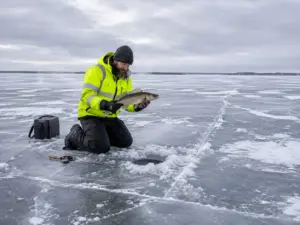
Fishing Images Pictures: Choosing the Best Shots for Your Collection
Shutterstock alone listed over 523,000 fishing-related photos and illustrations in its 2025-2026 catalog update, while iStock crossed 1 million entries under the “fisher” category. That volume means generic shots are invisible. Standing out, whether you are building a personal archive, a commercial stock portfolio, or a brand’s visual library, requires knowing exactly what makes a fishing image worth keeping.
Disclosure: This post contains affiliate links. As an Amazon Associate, we earn from qualifying purchases, and at no extra cost to you.
This guide cuts through the noise. It explains what separates high-demand fishing images pictures from the forgettable ones, what technical and compositional choices matter most, and how to organize a collection that works across real publishing and marketing use cases.
Key Takeaways
- Story-driven, lifestyle fishing scenes outperform isolated gear or trophy-fish shots in both stock demand and audience engagement.
- Geographic diversity and authentic cultural context make a collection far more marketable than a single-location set.
- Golden-hour lighting, vertical framing, and unposed subjects are the strongest recurring signals in top-performing fishing imagery right now.
- Breaking a collection into specific subcategories (technique, location, species, demographic) produces better results than one generic “fishing” folder.
- Sustainability-themed fishing visuals are growing in relevance and should be part of any forward-looking collection.
What Makes a Fishing Image Worth Adding to Your Collection
Not every photo of a person holding a rod belongs in a serious collection. The difference between a keeper and a throwaway usually comes down to three things: narrative clarity, technical quality, and usefulness across multiple contexts.
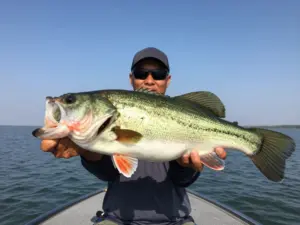
Narrative clarity means the viewer understands the scene within two seconds. A father and daughter sitting quietly on a dock at sunrise tells a story. A man standing in front of a lake holding a rod says almost nothing. Stock platforms have shifted hard toward the former. Recent catalog updates on major platforms show that the highest-traffic fishing categories favor families on docks, working fishers hauling nets, and leisure anglers framed against dramatic skies, not product-style isolations.
Technical quality is non-negotiable but often misunderstood. It is not about gear. A well-exposed shot with natural lighting, accurate color, and sharp focus on the right subject beats a technically correct but sterile studio composition every time. Platforms track download rates, and documentary-style images with natural lighting consistently outperform over-processed shots with heavy filters.
Usefulness across contexts is the third filter. Before adding any image, ask where it could realistically appear: editorial article, social media post, app background, print advertisement, educational resource? Images that fit multiple answers earn their place. Those that fit only one rarely justify the storage.
1. Prioritize Story-Driven Lifestyle Scenes
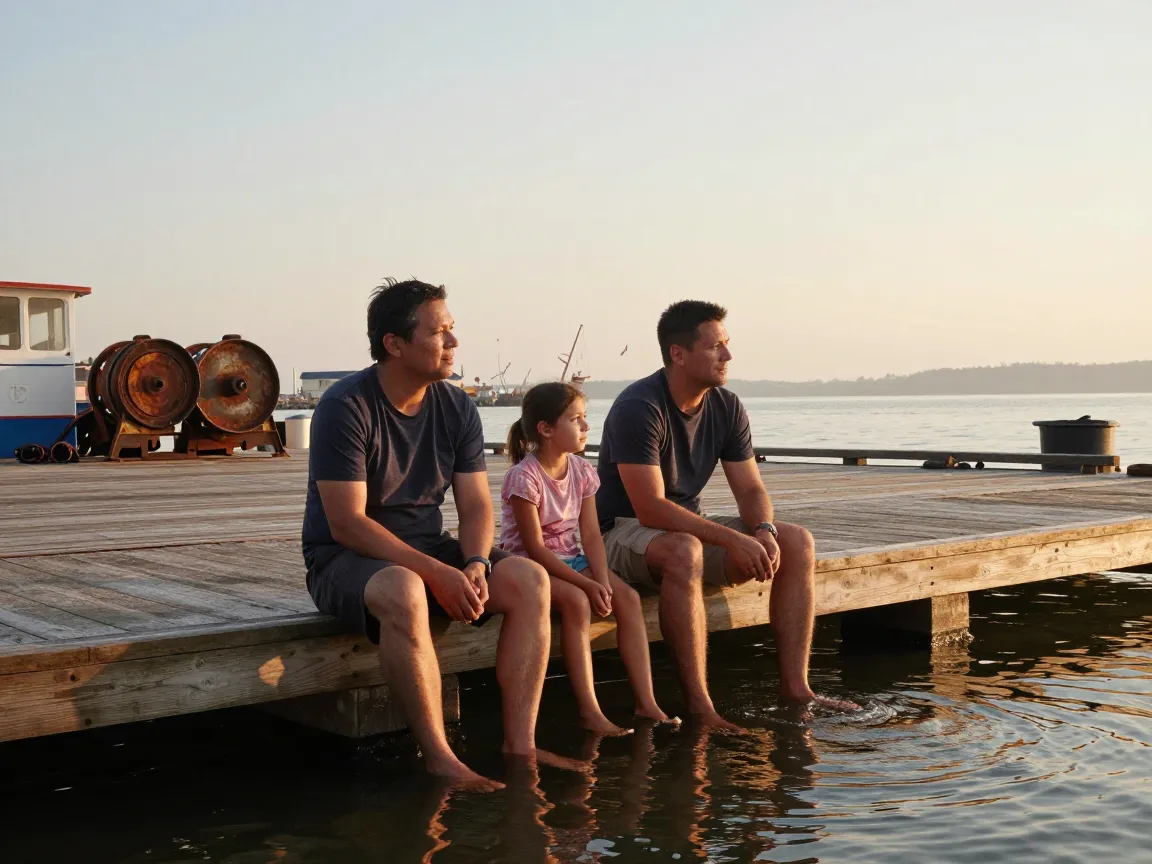
The clearest trend across updated fishing photo categories in 2025 and 2026 is the shift toward scenes that show people living with water, not just fishing from it. Families on docks, working fishers in weathered gear, solo anglers at dawn reflected in still water, these all outperform staged product arrangements or isolated trophy poses.
This matters for Fishing Images Pictures: Choosing the Best Shots for Your Collection because lifestyle scenes carry editorial flexibility that product shots lack. A marina scene with a couple rigging a boat can run in a travel feature, a gear advertisement, a lifestyle blog, or a tourism campaign. A cropped shot of a lure against a white background can go in one place.
When evaluating or shooting lifestyle fishing images, look for:
- Genuine interaction between subjects and environment (hands in water, feet on wet dock, eyes on the horizon)
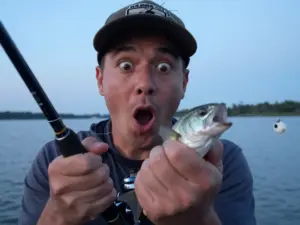
- Natural expressions rather than posed smiles toward the camera
- Background elements that reinforce place (a recognizable coastline, working harbor infrastructure, identifiable vegetation)
The goal is not candid photography for its own sake. It is images that feel lived-in enough to be believable and composed enough to be publishable.
2. Build Geographic Diversity Into the Collection
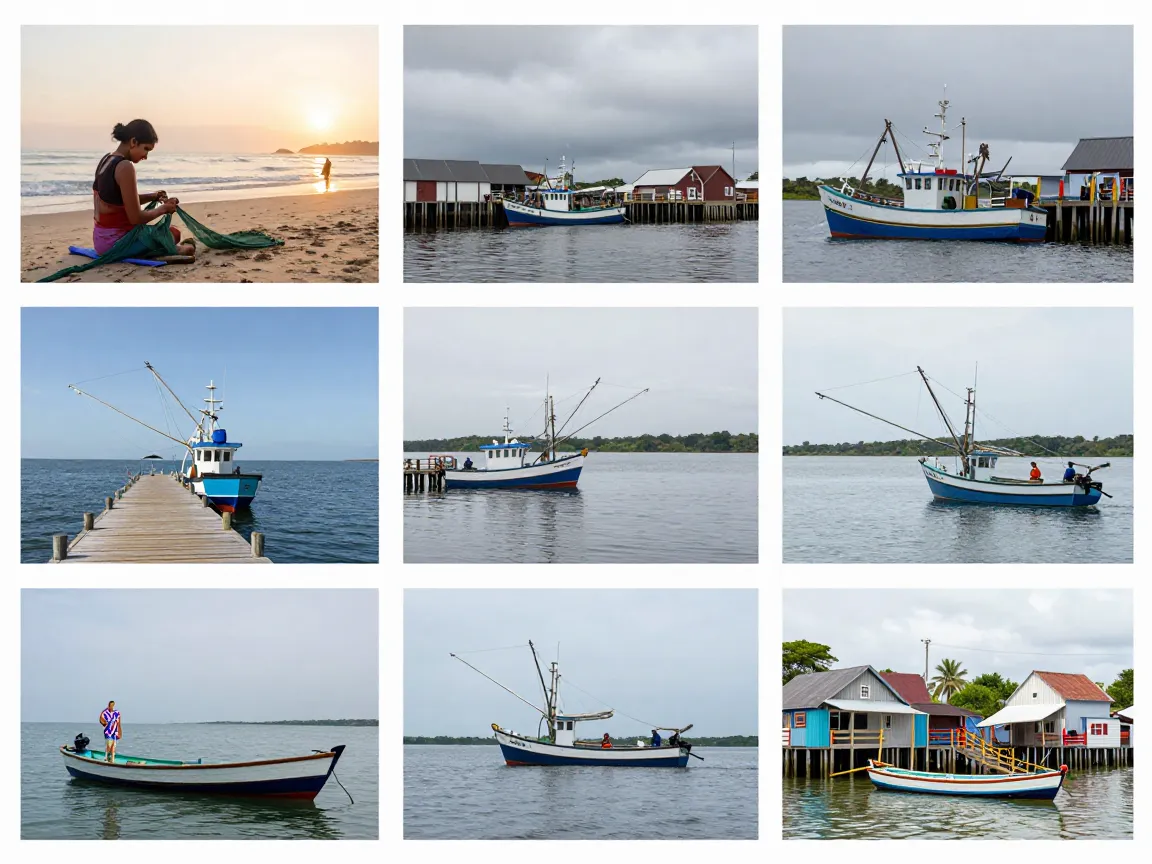
A collection anchored to one location will always have a ceiling. Editorial-style stock uploads from 2025 show fishing scenes from Freeport, New York; Weligama Beach, Sri Lanka; Lombok, Indonesia; and working harbors in Ireland and Oman, all uploaded within the same catalog cycle. Platforms reward variety because buyers need variety.
Geographic diversity does more than satisfy algorithmic breadth. Different locations bring genuinely different visual language: the light quality off a Sri Lankan beach at 6 a.m. looks nothing like an overcast Irish harbor. The netting techniques, boat types, dock structures, and clothing all differ. Each location adds authentic texture that cannot be faked in post-production.
For collectors sourcing images rather than shooting them, this means resisting the temptation to stock up only on familiar environments. A collection that covers freshwater lakes in the American Midwest, coastal fishing piers in the Northeast, working trawler harbors in Northern Europe, and artisanal fishing villages in Southeast Asia will serve far more buyers and use cases than one built entirely around a single type of water.
Variety in weather matters too. Flat, grey overcast light produces different moods than sharp morning sun or approaching-storm drama. A well-rounded collection includes both.
3. Master Golden-Hour Lighting and Silhouette Compositions
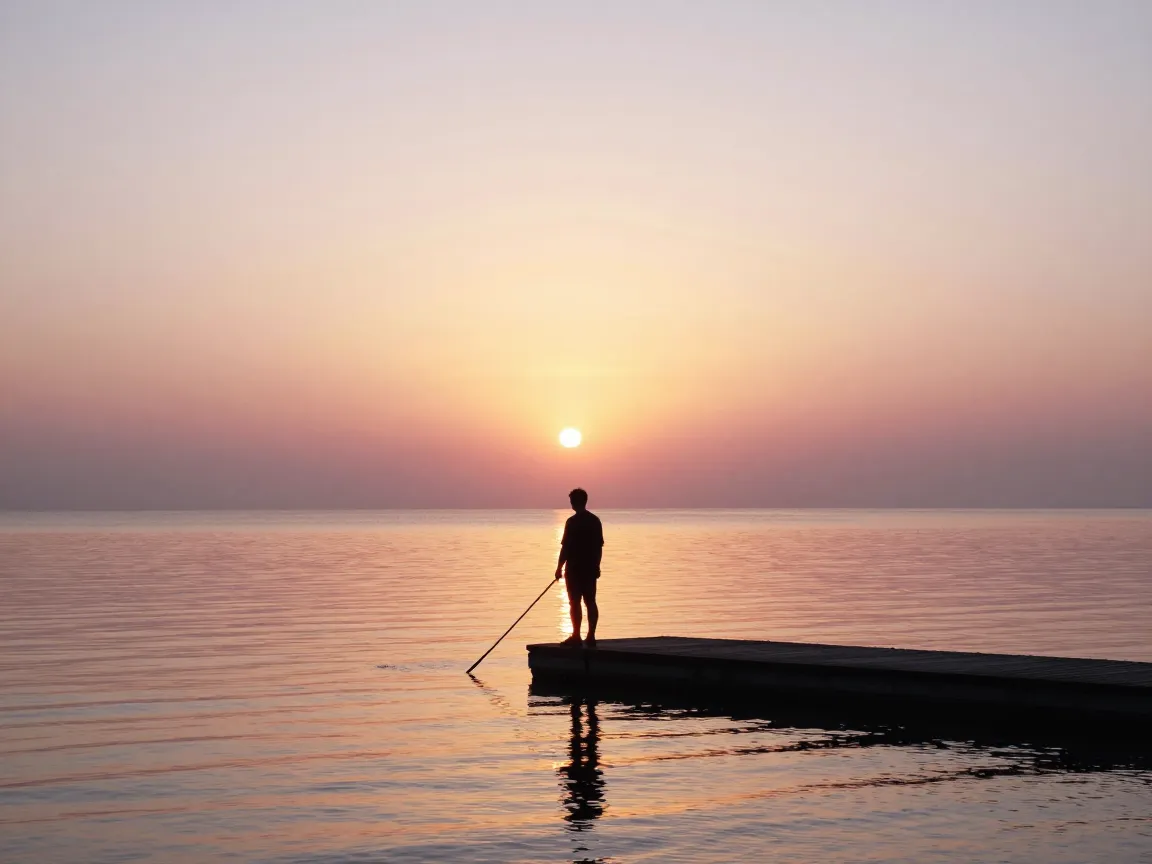
Dawn and dusk shots dominate the top-performing fishing imagery categories for a specific reason: water responds to low-angle light in ways that nothing else does. Reflected gold or pink across still water, long shadows across a dock, and hard silhouettes against a bright horizon are all native to fishing environments and genuinely difficult to replicate in other settings.
Date-stamped editorial uploads from 2025 show repeated use of dawn scenes from beach and pier locations across Southeast Asia and New England. The composition pattern is consistent: subject positioned against the light source, water surface carrying the color, minimal clutter in the frame.
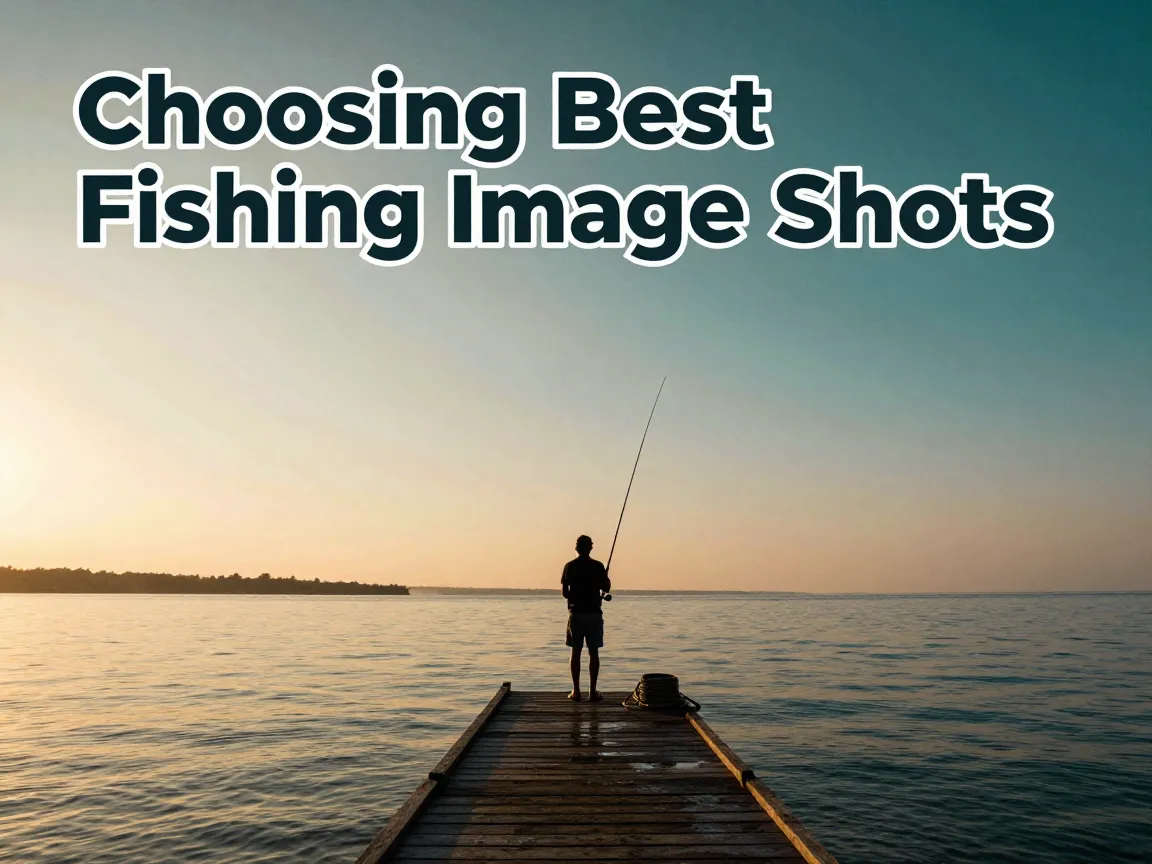
Silhouette compositions deserve specific attention. A clean silhouette of a figure casting a rod against a sunrise requires almost no post-processing and communicates the subject immediately. It also scales well, it reads clearly at thumbnail size on a mobile screen, as a full-bleed print, or as a background behind text in a digital layout.
When choosing between two technically similar shots, the one taken within an hour of sunrise or sunset will almost always perform better. This applies to still photography and to video stills used as thumbnails. Golden-hour light is not a stylistic preference in fishing imagery. At this point, it is an industry standard.
4. Use Vertical Framing for Mobile and Social Contexts
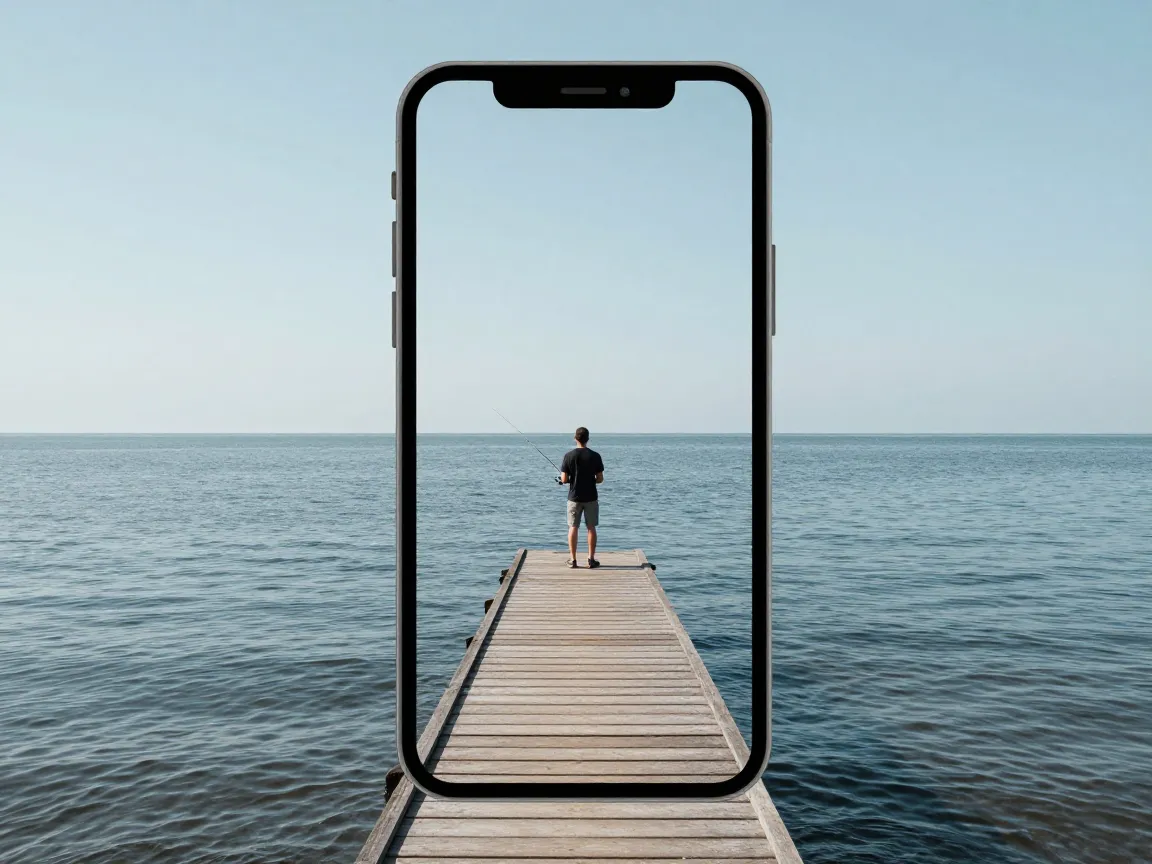
Pier shots, boat-at-dawn scenes, and jetty compositions uploaded in 2025 and 2026 show a clear increase in vertical framing relative to earlier catalog entries. The driver is obvious: mobile devices account for the majority of content consumption, and social media platforms, Instagram, TikTok, Pinterest, favor vertical aspect ratios.
For a collection intended for digital use, this has practical implications. A landscape-format fishing shot of a wide harbor will crop awkwardly for a portrait-oriented Instagram post. A vertically framed shot of an angler standing at the end of a narrow pier, subject centered, can run on mobile social, in a smartphone app background, or as a portrait-format editorial illustration without cropping.
The rule is not to abandon landscape formats, many editorial and print uses still require them. The rule is to ensure that any collection built around digital publishing includes enough vertically composed images to cover mobile contexts without forcing awkward crops.
Subject placement matters in vertical compositions. Center-frame positioning works best when the image needs to crop flexibly. Subjects positioned at the far edge of a vertical frame leave almost no room for safe cropping.
5. Categorize by Technique, Location, Species, and Demographics
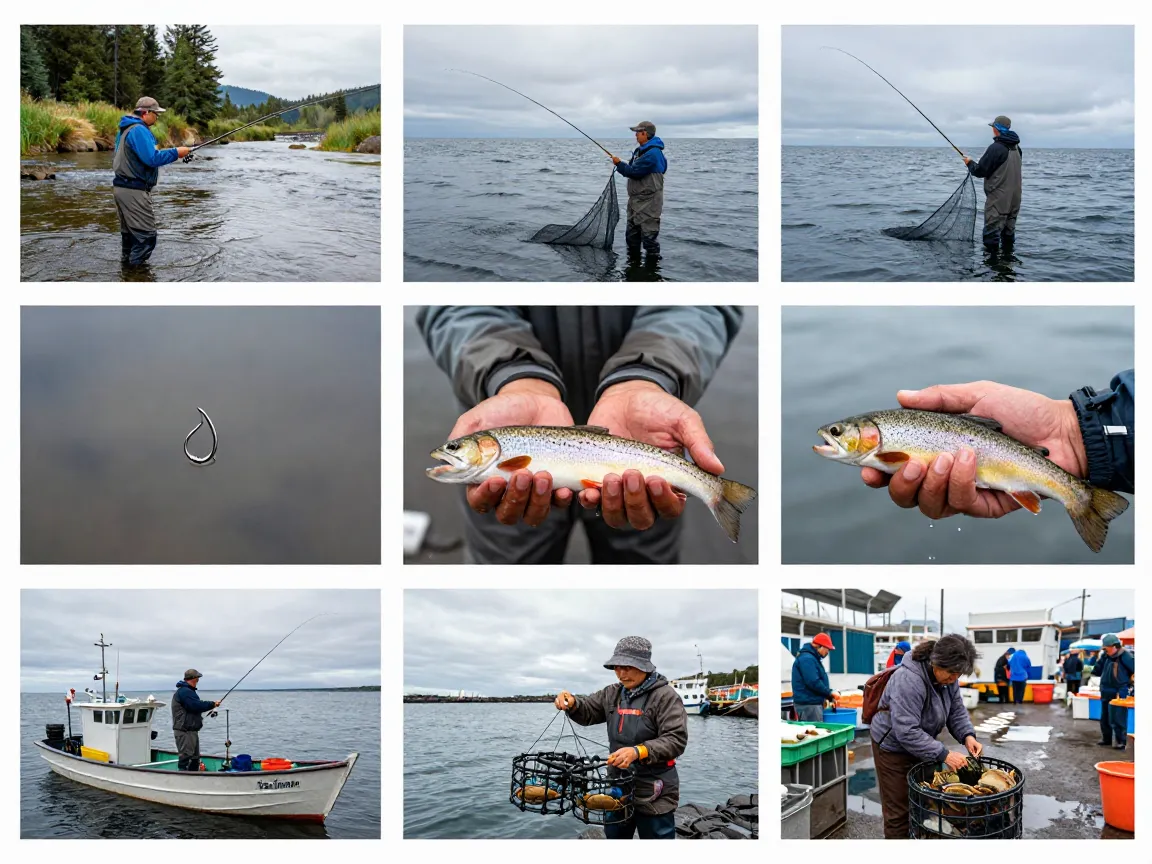
Platforms that perform best in search separate fishing content into specific subcategories: fishing techniques, fishing spot, freshwater fish, men fishing, and others. This is not arbitrary taxonomy. It reflects how buyers search and what they actually need.
A fly fisherman mid-cast in a Montana river serves a different buyer than a commercial fisherman hauling a trawl net in the North Atlantic. Both are “fishing images.” Only one will appear when a buyer searches “fly fishing technique” or “commercial trawler.”
For Fishing Images Pictures: Choosing the Best Shots for Your Collection, organizing by subcategory from the start saves significant time later and makes the collection more searchable:
| Category | Example Content |
|---|---|
| Fishing techniques | Cast sequence, net deployment, rod rigging |
| Location type | River, ocean pier, lake, trawler deck |
| Species | Trout, salmon, tuna, freshwater bass |
| Demographic | Family, solo angler, working fisherman |
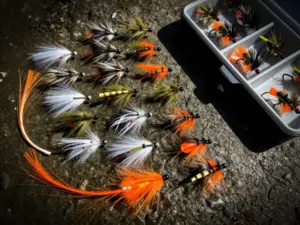
| Gear detail | Hook close-up, reel macro, tackle box |
| Cultural context | Fish market, coastal village, harbor auction |
Images that fit multiple categories should be tagged accordingly. A shot of a Korean grandmother pulling crab pots from a small boat off Jeju Island fits location (coastal ocean), demographic (older female fisherman), cultural context (traditional fishing practice), and technique (pot fishing). That image earns four times the search surface area.
6. Include Macro Detail and Underwater Perspectives
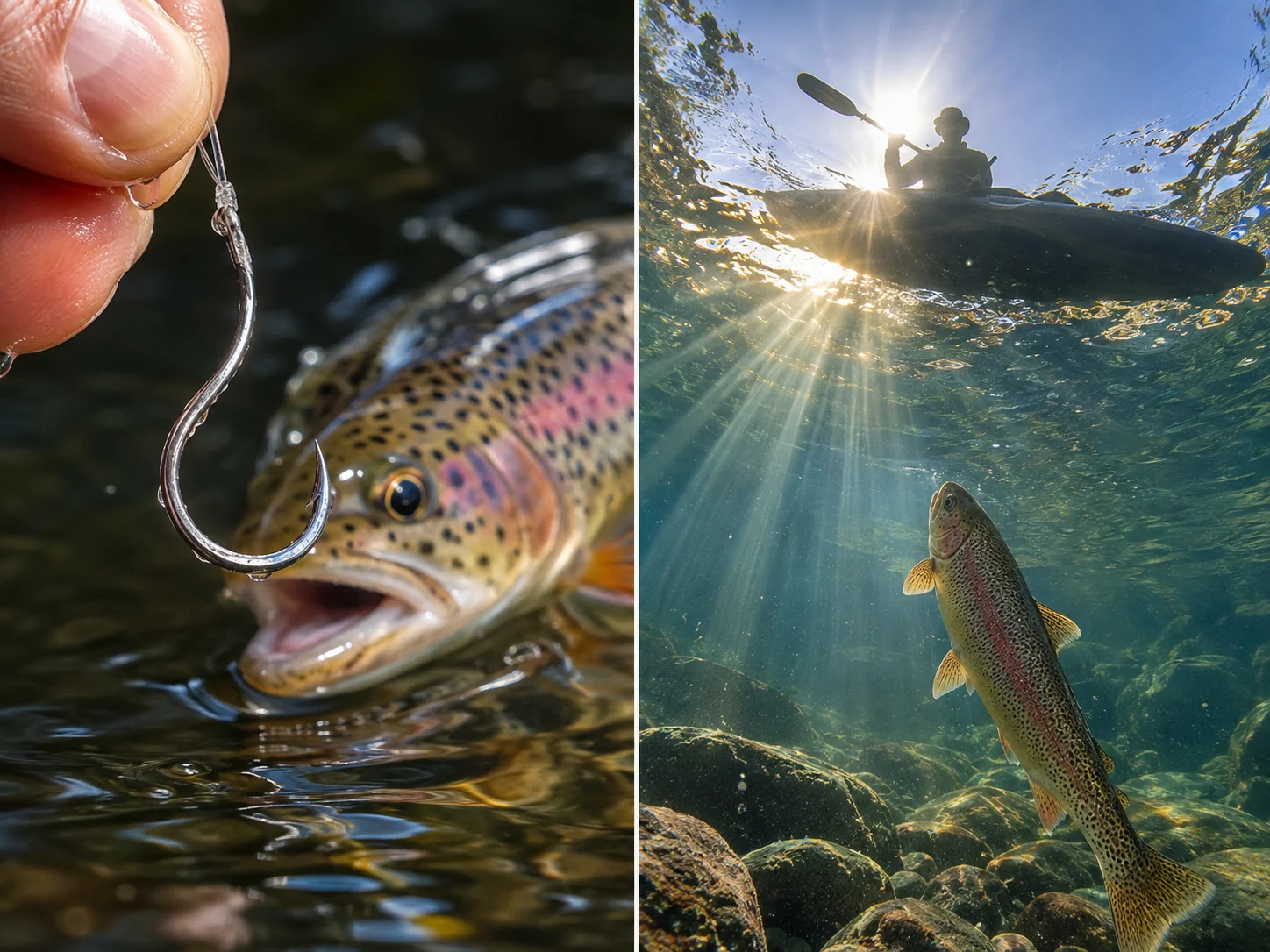
Close-up and underwater images are underrepresented in most personal collections but heavily demanded in educational, advertising, and conservation contexts. Freshwater fish catalogs on major platforms show strong representation of macro hook-and-line shots, underwater fish-eye views, and detail images of gear interacting with water.
A sharp macro of a barbless hook next to a released trout serves fly-fishing conservation content, gear retail copy, and environmental journalism, three distinct markets. An underwater shot looking up at a silhouetted kayak and angler serves travel content, conservation campaigns, and app backgrounds. Neither image requires exotic equipment. Both require deliberate compositional intent.
For anyone evaluating fishing images pictures for a collection, underwater and macro shots are worth seeking out specifically because most collections lack them. Supply is low relative to demand, which means distinctive macro and underwater images stand out more than even excellent wide-angle landscape shots.
Lighting quality in macro shots matters more than in wide scenes. A close-up of a wet hook against dark water needs sharp, controlled light to avoid muddiness. Natural sidelight, early morning or late afternoon, works better than direct overhead sun for most gear macro work.
Matching Visual Style to Intended Use
Style choice is not aesthetic preference. It is functional. The same fishing subject looks completely different rendered as a documentary photograph, a clean vector illustration, a warm lifestyle editorial, or a graphic icon, and each version serves a different need.
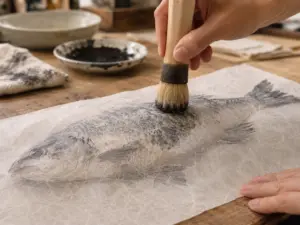
Vector illustrations and icon-based fishing graphics remain a sizable portion of platform search results. Bobber mascots, rod-and-reel icon sets, and fishing logo vectors are consistently downloaded for merchandise, app UI, and social media branding. A collection that pairs strong documentary photography with a set of clean vector assets covers far more use cases than one built around photographs alone.
Sustainability-themed fishing visuals are growing. World Oceans Day 2025 illustration sets that reference sustainable fishing practices appeared in updated fishing vector categories, and the trajectory through 2026 and into 2027 points toward continued growth in imagery depicting responsible practices, clean marine environments, and ecosystem balance. If a collection is being built for long-term relevance, adding sustainability-themed photography and illustration now is a low-cost way to stay ahead of a demand curve that is clearly moving upward.
Realism and authenticity carry more weight than polish. Fishing imagery that shows weathered hands, wet decks, actual fish, and real working conditions consistently outperforms the kind of idealized shot where every element looks slightly too perfect. Buyers across editorial, advertising, and conservation verticals have all moved toward documentary aesthetics.
Conclusion
A strong fishing images picture collection in 2026 is built on specificity, not volume. The most effective approach combines story-driven lifestyle scenes with geographic variety, deliberate lighting choices, and a clear organizational structure built around technique, location, species, and demographic categories.
Three concrete next steps for anyone building or refining a fishing image collection right now:
- Audit what you have against the six category types in the table above, and identify which are thin. Those gaps are where your acquisition or shooting effort should go first.
- Add at least one golden-hour silhouette composition and one macro gear or underwater shot per primary location type in your collection. Both are consistently underrepresented and overperforming in demand data.
- Start tagging or keywording for sustainability context, clean environments, responsible practices, ecosystem elements, so that existing images are positioned for the demand shift that platform data already shows is underway.
Volume alone does not build a collection worth using. Intentional curation does.