Will Graham Fishing Outfit Ideas That Nail the Rugged Detective Look
Will Graham’s wardrobe from Hannibal has quietly become one of the most referenced style templates in fan fashion circles, not because it’s aspirational in any traditional sense, but because it works. Season 1 alone established a silhouette, layered flannels, fishing vests, baggy work pants, beanies, so internally consistent that Reddit’s “Fannibal” community coined dedicated shorthand for it: “Fisherman Core,” “backwoods professor,” and “the human incarnation of cargo pants.” These 6 Will Graham fishing outfit ideas that nail the rugged detective look are drawn directly from that visual language, broken into actionable combinations that translate from screen to everyday wear.
Disclosure: This post contains affiliate links. As an Amazon Associate, we earn from qualifying purchases, and at no extra cost to you.
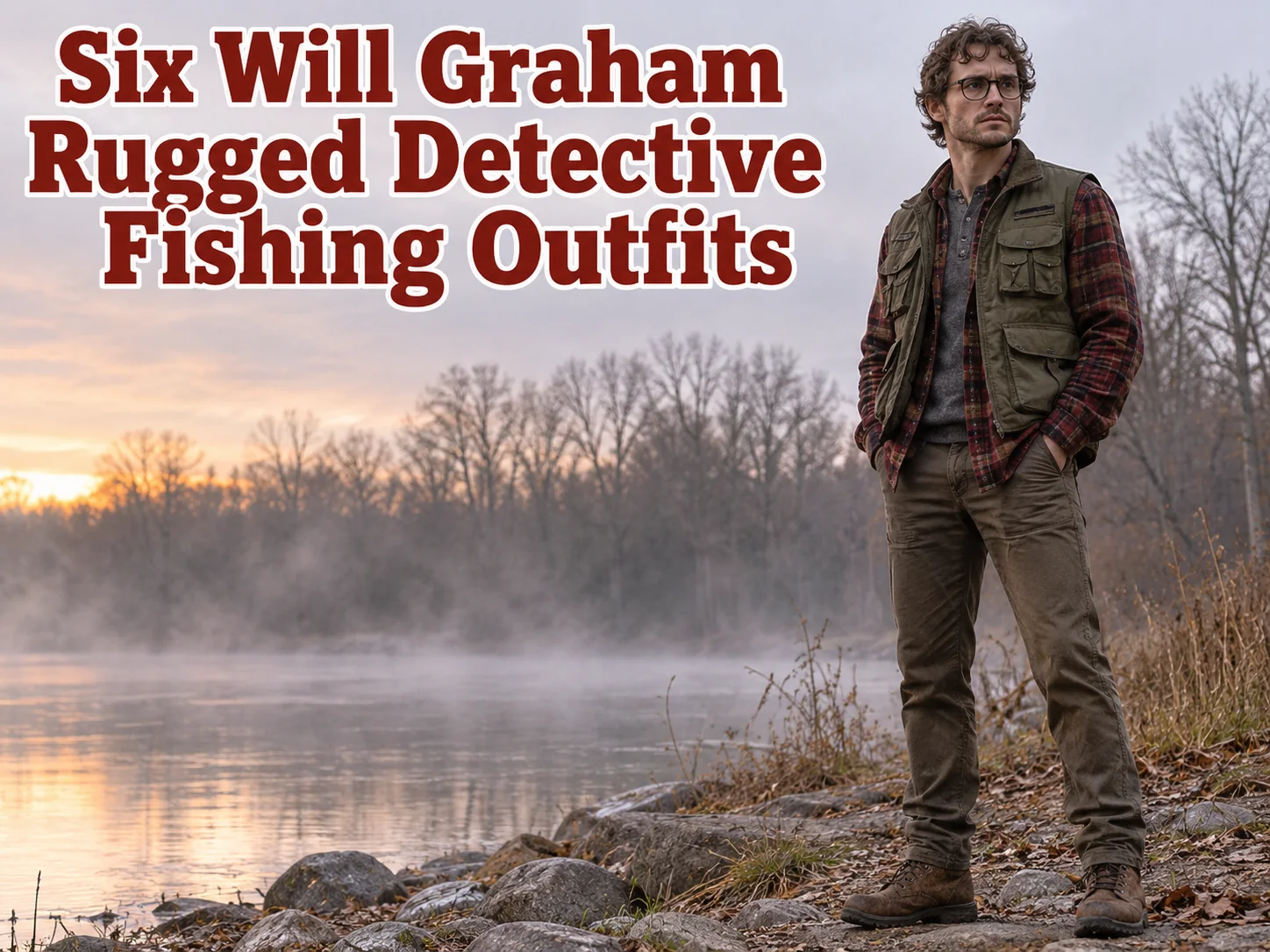
1. The Classic Flannel-Over-Henley with a Fishing Vest
The most recognizable Will Graham configuration starts with a base layer henley, typically off-white or heather gray, worn under a red or dark plaid flannel shirt left partially unbuttoned. Over that goes a fishing vest in olive or khaki, the kind with multiple front pockets. The silhouette is intentionally loose. Nothing is tucked. The pants are sturdy work denim or canvas chinos, slightly relaxed in the leg, and footwear is a lace-up work boot with a rubber sole.
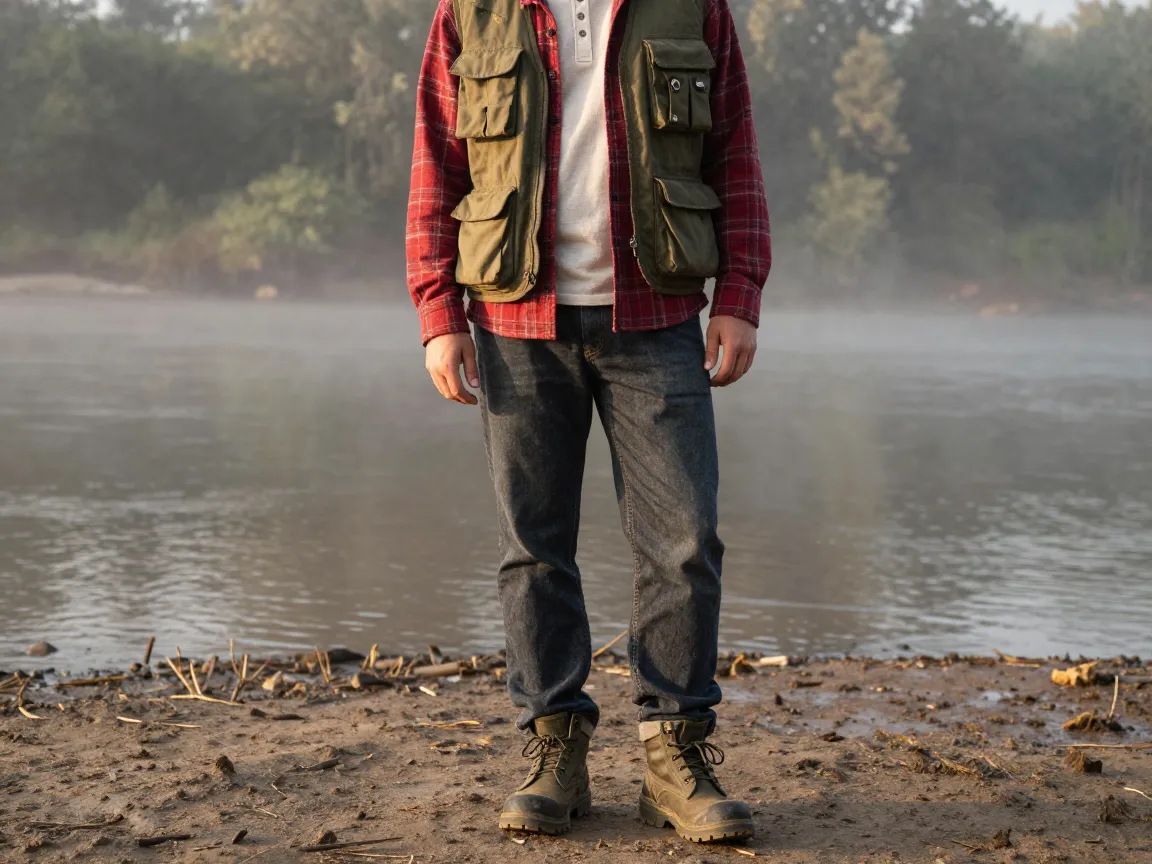
What makes this combination read as “detective” rather than just “guy who fishes” is the vest’s structure. A fishing vest with organized pockets implies someone who plans ahead, who carries tools, who has a system. When worn over a flannel rather than a performance tee, it bridges outdoor utility and a vaguely academic casualness that fits Will’s profile as a criminal profiler who teaches at Quantico and also wades rivers at dawn.
For real-world wear, the layering serves practically. A lightweight merino henley under a mid-weight flannel gives you enough insulation for a 45-degree morning without committing to a heavy jacket. Keep the vest in an earth tone, olive, tan, or dark brown, and avoid anything with excessive branding or bright piping. The vest’s job is functional understatement.
2. The Alpha Industries M-65 Field Coat in Olive
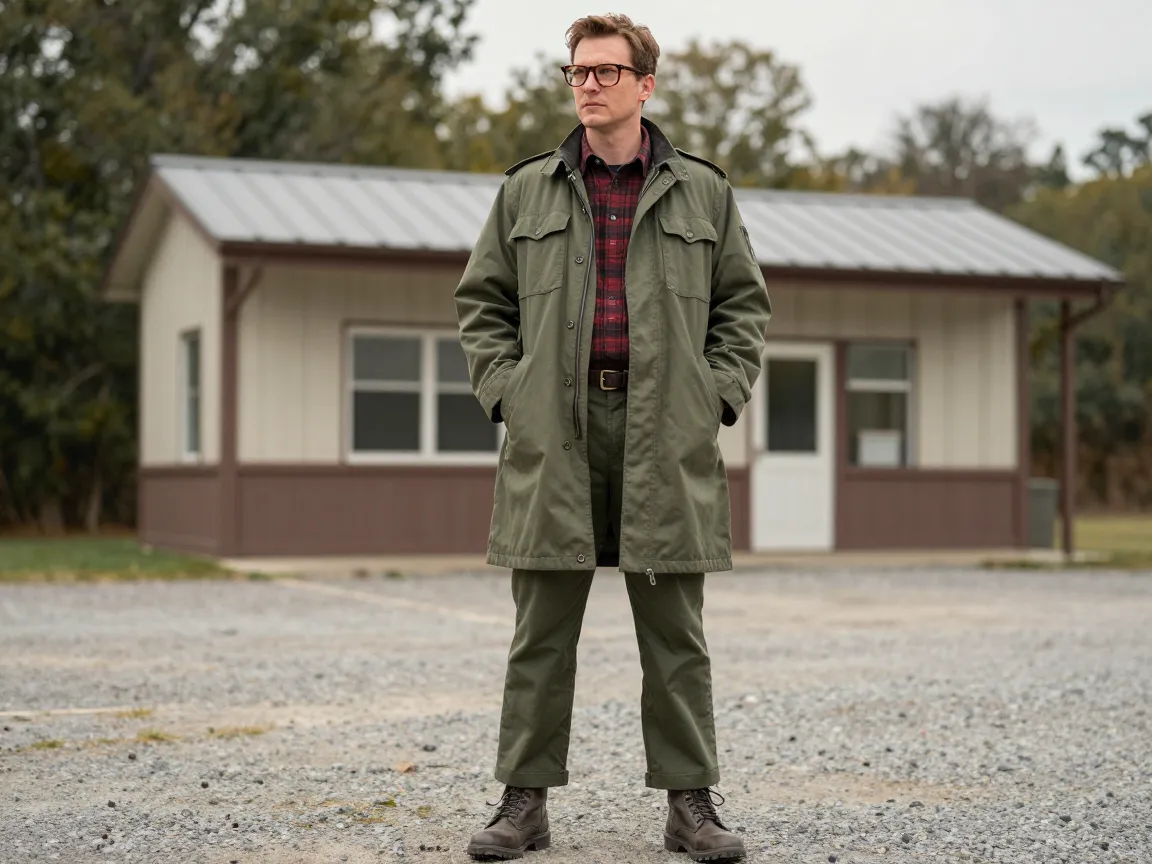
Costume guides for Will Graham consistently land on the Alpha Industries M-65 field coat in olive as the outerwear piece that defines his more “field investigator” moments. It’s a military-surplus silhouette: four front pockets, a wind flap over the zipper, a lightweight liner, and a cut that falls to the hip. Worn over a red or rust plaid shirt and paired with straight work pants and a leather belt, it creates the specific combination that DeviantArt’s cosplay documentation identified as the core recognizable Will Graham look.
The M-65 is worth understanding as a garment type rather than a strict brand requirement. What matters is the silhouette: hip-length, four-pocket, olive or dark sage, with utilitarian hardware. Alpha Industries produces the most historically accurate version, but surplus stores carry near-identical originals at lower cost. The key fitting note is that Will wears his slightly large, the shoulders sit a touch wide, the body has room. This isn’t a slim-fit military jacket. That looseness is load-bearing for the aesthetic.
Pair it with retro-style acetate eyeglasses if you’re building a cosplay-accurate version. The glasses shift the read from pure outdoorsman toward the intellectual edge that separates Will from a generic field worker. Dark brown frames rather than black keep things within his muted palette. With this coat on, every other piece can stay simple, a solid chambray shirt, straight chinos, lace-up boots, and the outfit lands.
3. Cargo Pants, Clean Shirt, and a Rumpled Jacket
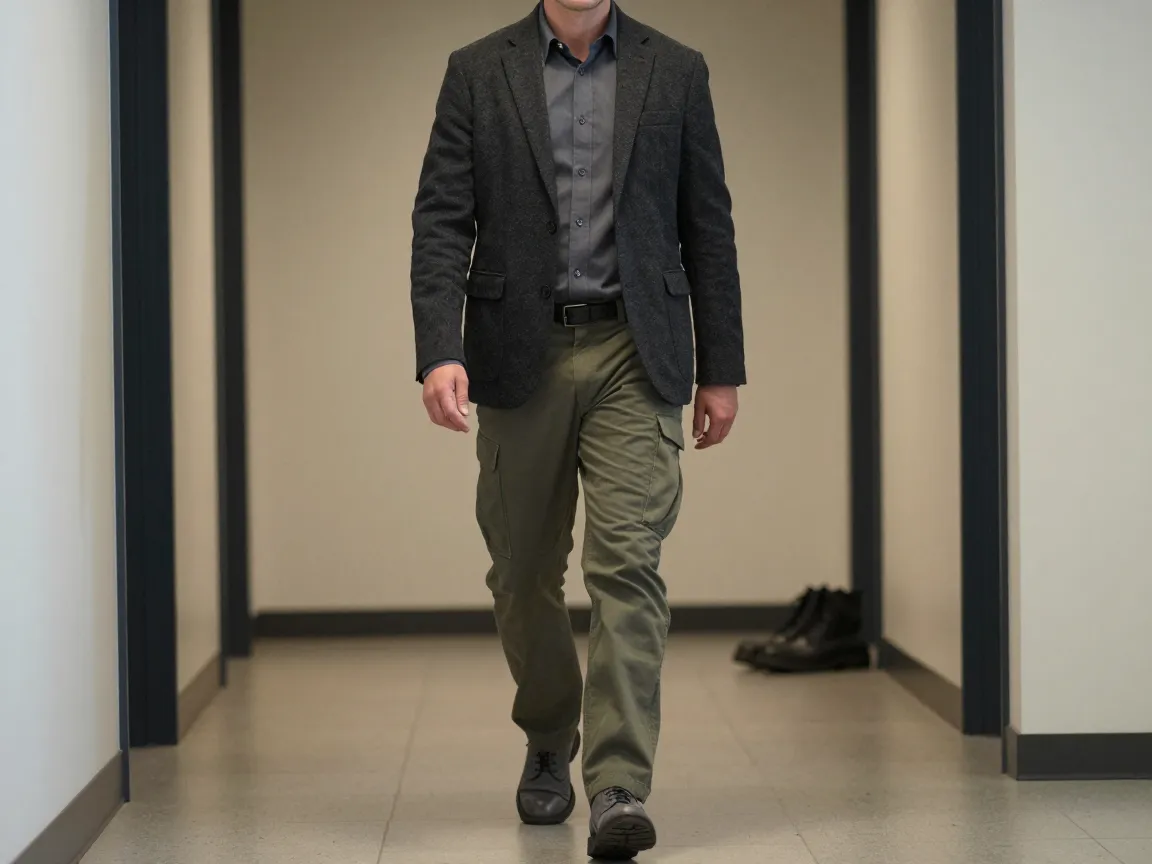
One of the essay-level observations about Will’s wardrobe in a 2016 class-analysis piece on Hannibal is that his clothing signals working-class practicality and emotional distance. Nowhere is that clearer than in the episodes where he pairs cargo pants with a clean button-down shirt and an unstructured blazer or sport jacket. This isn’t dressed-up. The blazer is usually dark, charcoal, navy, or dark brown, and the shirt is a mid-tone solid, nothing crisp. The cargo pants are straight-leg, not tactical, and the boots are low-profile work shoes.
This combination pulls directly from the Manhunter-era Will Graham aesthetic documented in BAMF Style’s breakdown of William Petersen’s version of the character: dark sport jackets, non-white textured shirts, and functional pants. That FBI-adjacent look reads as professional enough for an office setting but visually communicates that the wearer isn’t interested in dressing for an audience. The jacket says “I work somewhere official.” The cargo pants say “I also need to crouch in a field.”
The practical application here is a solid smart-casual template for anyone who finds traditional office dress codes slightly oppressive. Swap the cargo pants for dark olive chinos if cargo pockets feel too casual for your setting. The unstructured blazer, no padding, no sharp lapel, does the heavy lifting of professionalism while the rest of the outfit stays relaxed. Dark gray cap-toe oxford shoes, as worn in Manhunter’s version of this look, sharpen it without contradicting the utilitarian underpinning.
4. The Backwoods Professor: Tweed, Turtleneck, and Corduroys
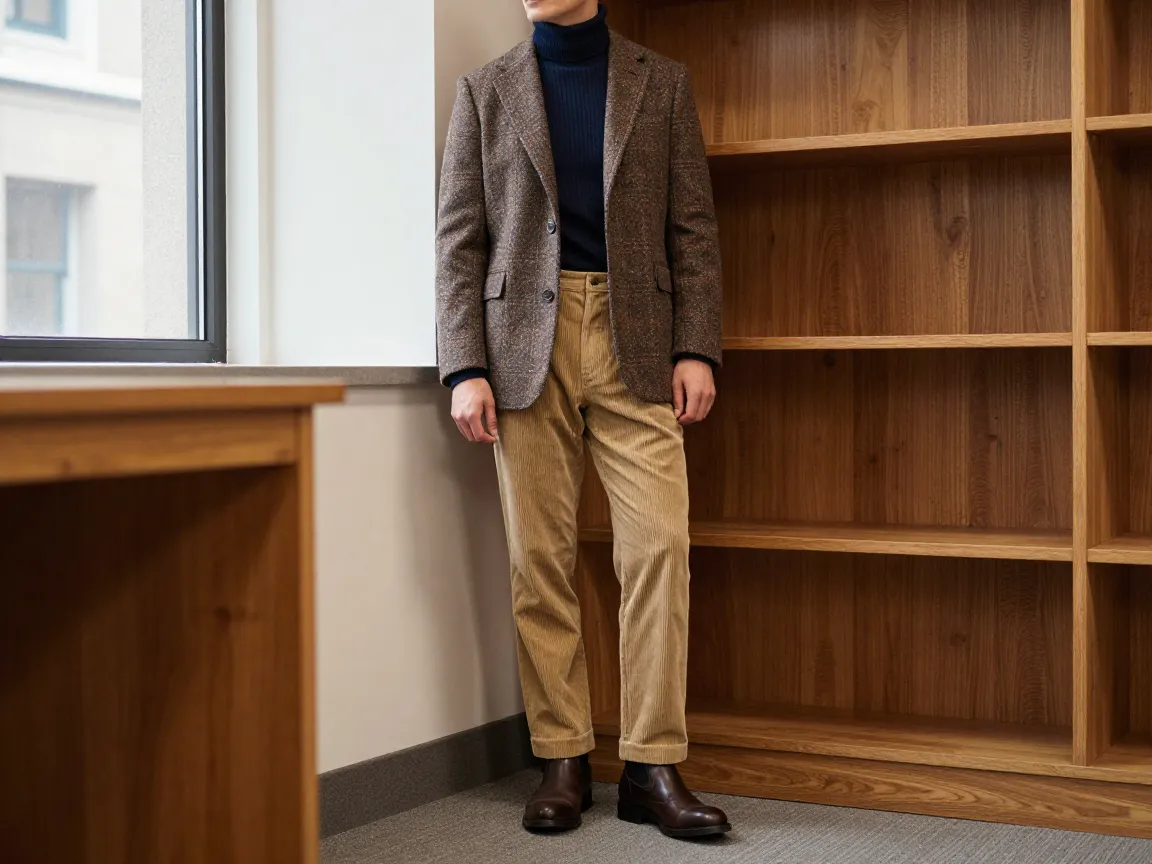
Reddit’s Fannibal community uses “backwoods professor” specifically for the Quantico-era Will Graham look, and it’s the most wearable of his modes for anyone with an actual office or teaching context. The combination is a Harris tweed sport coat, brown, olive, or rust-flecked, worn over a ribbed turtleneck in dark navy, forest green, or charcoal. The trousers are corduroy in a medium or wide wale, usually tan or brown. Footwear is boat shoes or low leather ankle boots.
Harris tweed matters here because it’s a natural fiber fabric with visible texture, produced in the Outer Hebrides to fixed standards, which gives it both a specific visual weight and a durability association that fits Will’s unpretentious character. It’s not the kind of fabric someone buys to signal wealth. It signals that you’ve owned this jacket for ten years and it still works. That’s the register Will’s wardrobe operates in consistently, things that last, chosen without ceremony.
The turtleneck as a base layer is worth taking seriously as a stylistic anchor. It eliminates the collar decision entirely and gives the tweed a cleaner backdrop than a flannel would. Keep the turtleneck lightweight rather than a heavy fisherman-knit; bulk under a sport coat turns the silhouette shapeless. Corduroy trousers in a slim-to-straight cut, not skinny, complete the look without competing with the jacket’s texture. This outfit works for a faculty meeting, a dinner, or a bookstore Saturday with equal plausibility.
5. Full Wader Rig with Performance Base Layers
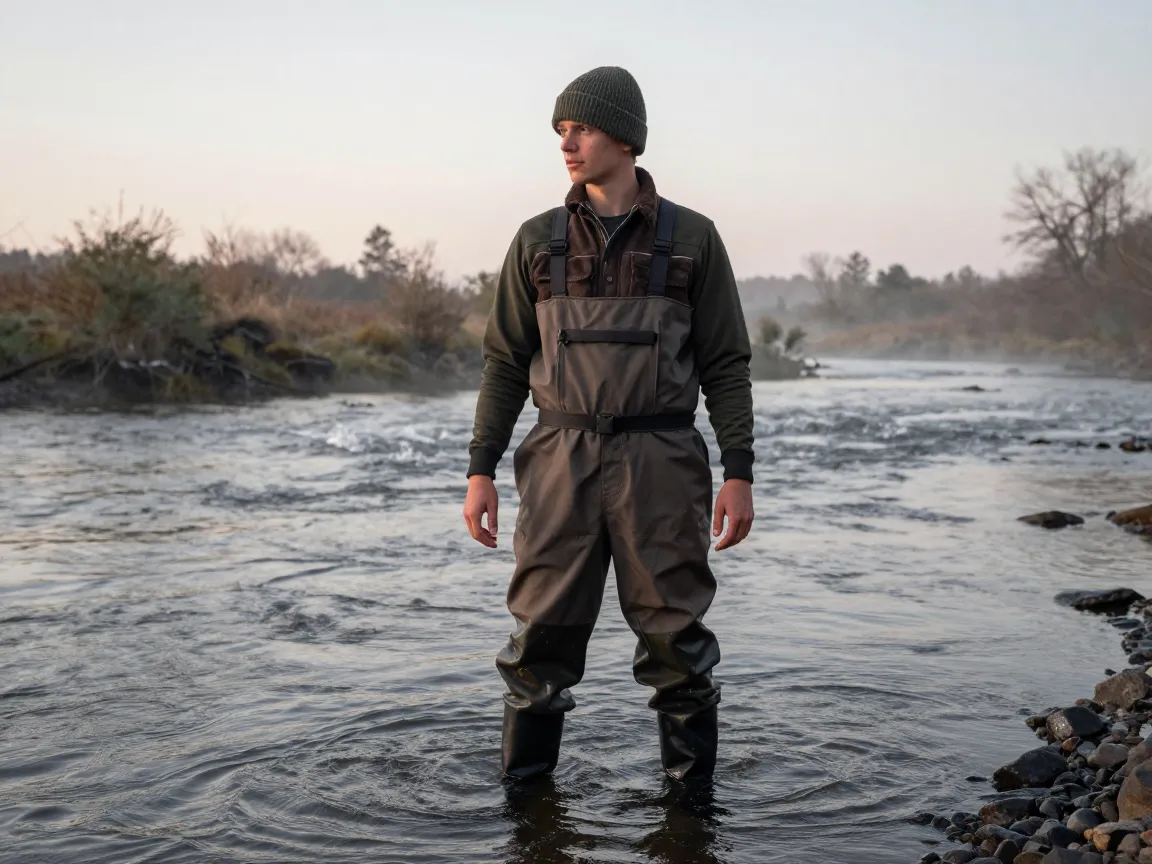
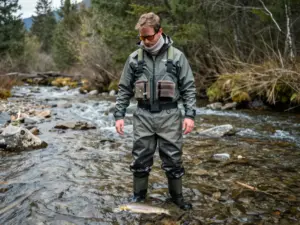
Will’s actual fishing sequences in Hannibal show a utilitarian approach to wader-rigging that has less to do with fashion and more to do with functional layering, but the visual result is distinctive enough to function as a standalone aesthetic template. The base is a moisture-wicking long-sleeve shirt, usually dark olive or slate, over which he layers a thick flannel or chamois shirt. Chest waders in brown or dark olive go over everything. A fleece or wool beanie, usually plain and fitted, finishes the look at the top.
What distinguishes this from generic fishing gear is the color discipline. Every piece stays within a narrow band of olive, brown, slate, and dull green. No high-visibility elements, no bright logo panels, no synthetic-looking textures. The 2026 “Will Graham Fishing Outfit” section in a trolling-techniques article noted that performance fabrics and neutral earth tones are the practical foundation for real-world angling layering, which turns out to be exactly what Will’s on-screen wardrobe team was working with.
For a real fishing application, chest waders from brands like Simms or Patagonia in a muted brown or olive work well with this palette. The key is resisting the urge to add technical color. Most performance fishing gear comes in dark, neutral options alongside brighter choices, consistently choosing the darker, more muted variants is what produces the Will Graham visual rather than the generic guided-tour-on-a-boat visual. A plain wool beanie, not a branded snap-back, reinforces the difference.
6. The Post-Prison Wool Coat and Scarf Upgrade
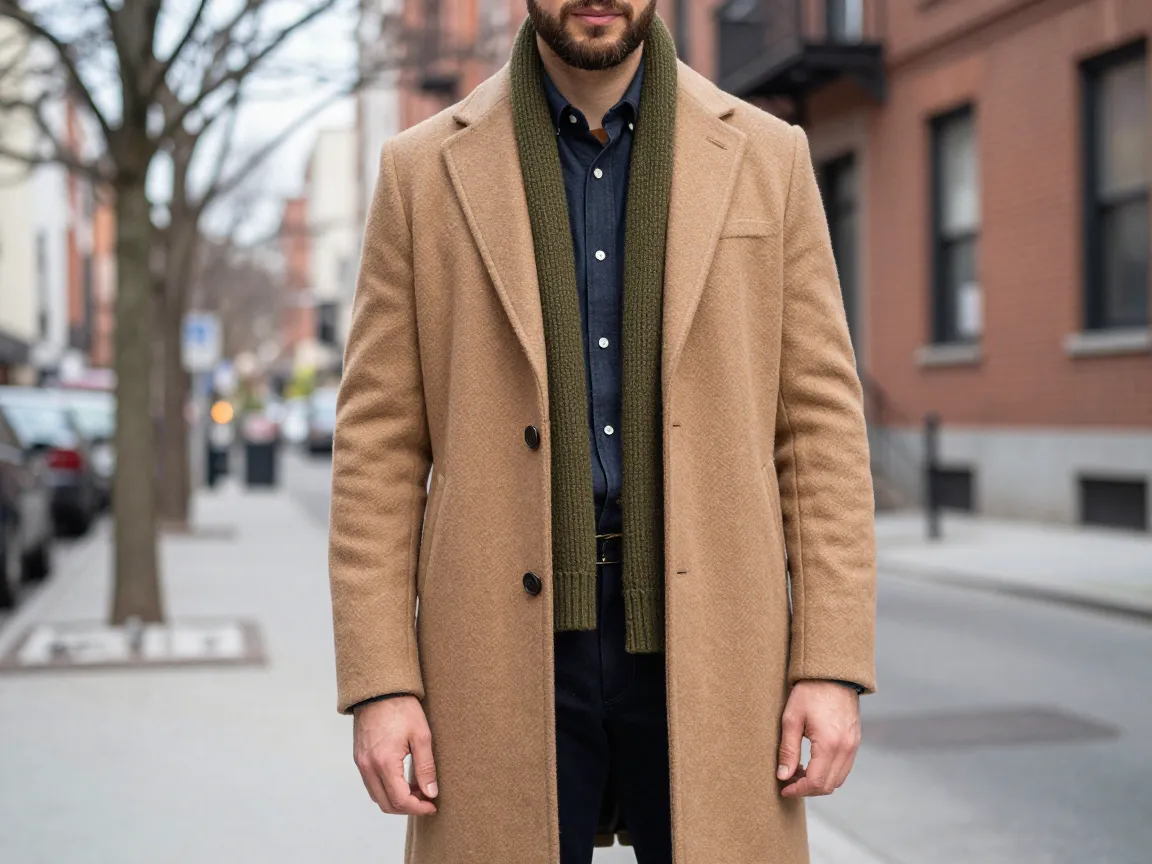
TV Ate My Wardrobe’s detailed analysis of Will Graham’s later-season wardrobe frames the transition from fishing vests to structured wool coats as a deliberate narrative shift, renewed confidence, a realignment of power dynamics. The outfit template it identifies as the clearest example of this is a refined medium-length wool coat in dark tan or camel, worn over a dark shirt, with a plain knit scarf and cleaner trousers. The beard is trimmed. The hair is neater. The silhouette has pulled itself together.
This version of the rugged detective look is the most versatile of the six because it can function as a proper winter coat outfit without any fishing-gear elements in view. The connection to the broader Will Graham aesthetic comes through color, the same earth-tone palette, and through the coat’s weight and texture. It’s not a fashion-forward peacoat or a sleek wool topcoat; it’s a substantial, slightly boxy wool coat that looks like it’s meant for cold weather rather than a runway. The distinction is in the fabric weight and the lack of architectural tailoring.
Carry this into real wear by prioritizing a wool coat with visible texture, a medium or heavy-weight twill or herringbone, over smooth melton wool. The scarf should be a simple knit or woven wool in a complementary earth tone: olive, rust, or dark navy. Underneath, a dark chambray or flannel button-down rather than a dress shirt keeps the rugged-detective register intact. This combination draws directly from Will’s on-screen arc but functions as a genuinely polished cold-weather option that doesn’t require any character knowledge to look good.
Conclusion
The through-line across all six of these looks is restraint in palette and function in construction. Will Graham’s visual identity, whether he’s standing in a river or walking into an FBI briefing, relies on earth tones, natural fibers, and pieces chosen for use rather than display. That consistency is what makes the aesthetic coherent enough to replicate.
The clearest next step is to start with look one or look four, the flannel-and-vest combination or the tweed-and-turtleneck. Both are low-cost to assemble from existing wardrobe staples or thrift finds, both work in real daily contexts, and both establish the core palette that every other look in this list builds on. Once those two feel natural, adding the M-65 field coat or the refined wool coat as seasonal outerwear pieces extends the range without requiring a complete wardrobe rebuild.