Fly Fishing Outfit Essentials for a Comfortable Day on the River
The fly fishing apparel market grew from roughly $3.45 billion in 2025 to $3.64 billion in 2026, and unit sales rose 3% in just the first four months of the year. That growth is not driven by fashion. Anglers keep spending because the wrong outfit on a river turns a good day into a cold, wet, uncomfortable one fast. The 6 fly fishing outfit essentials for a comfortable day on the river covered below are built around one principle: dress to solve the specific problems the river will give you, not to look the part.
Disclosure: This post contains affiliate links. As an Amazon Associate, we earn from qualifying purchases, and at no extra cost to you.
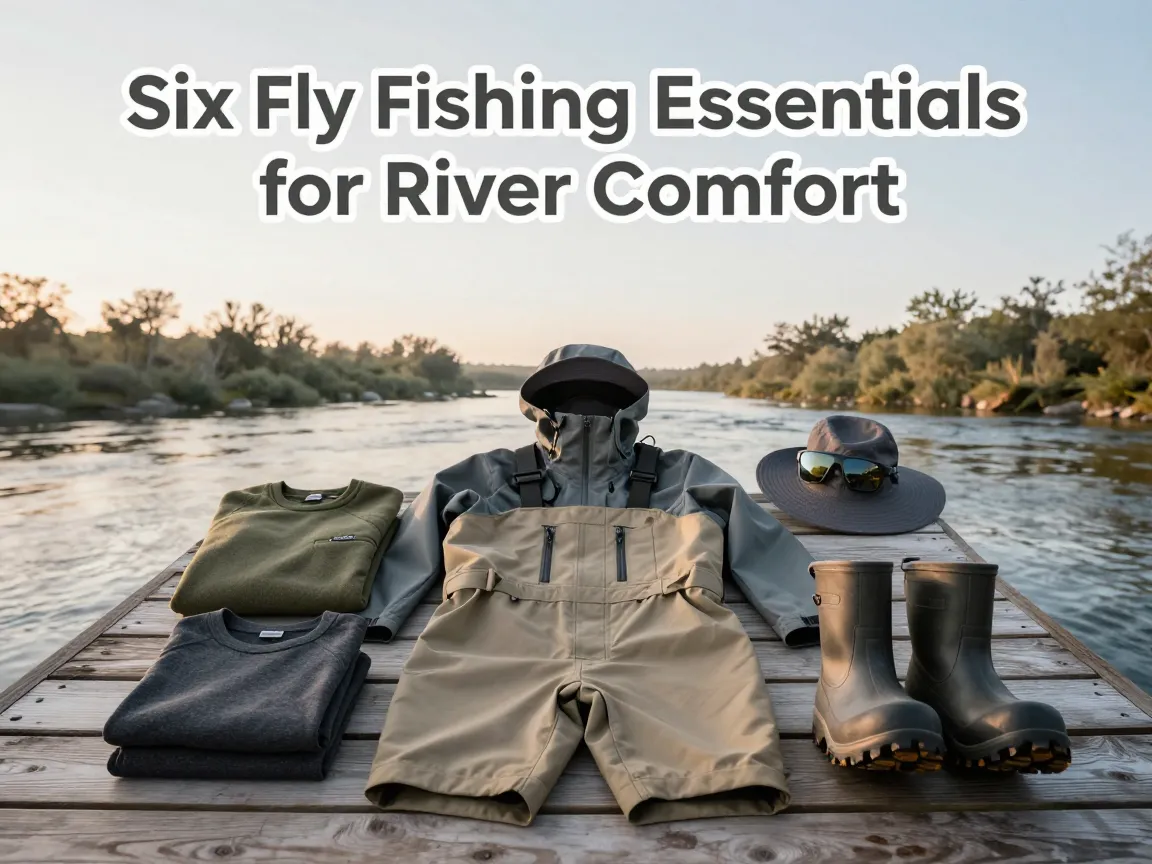
Each essential fits into a six-piece system: base layer, mid-layer, outer shell, waders, wading boots, and sun or cold-weather accessories. Get all six right and you can fish comfortably through a 45-degree morning and a 75-degree afternoon on the same day.
1. Moisture-Wicking Base Layer
Cotton is the single most common mistake anglers make at the base layer. It absorbs sweat and water, stays wet against the skin, and pulls body heat away throughout the day. A synthetic or merino wool base layer does the opposite: it moves moisture off the skin toward the fabric surface where it can evaporate, keeping you dry from the inside even when you’re working hard.
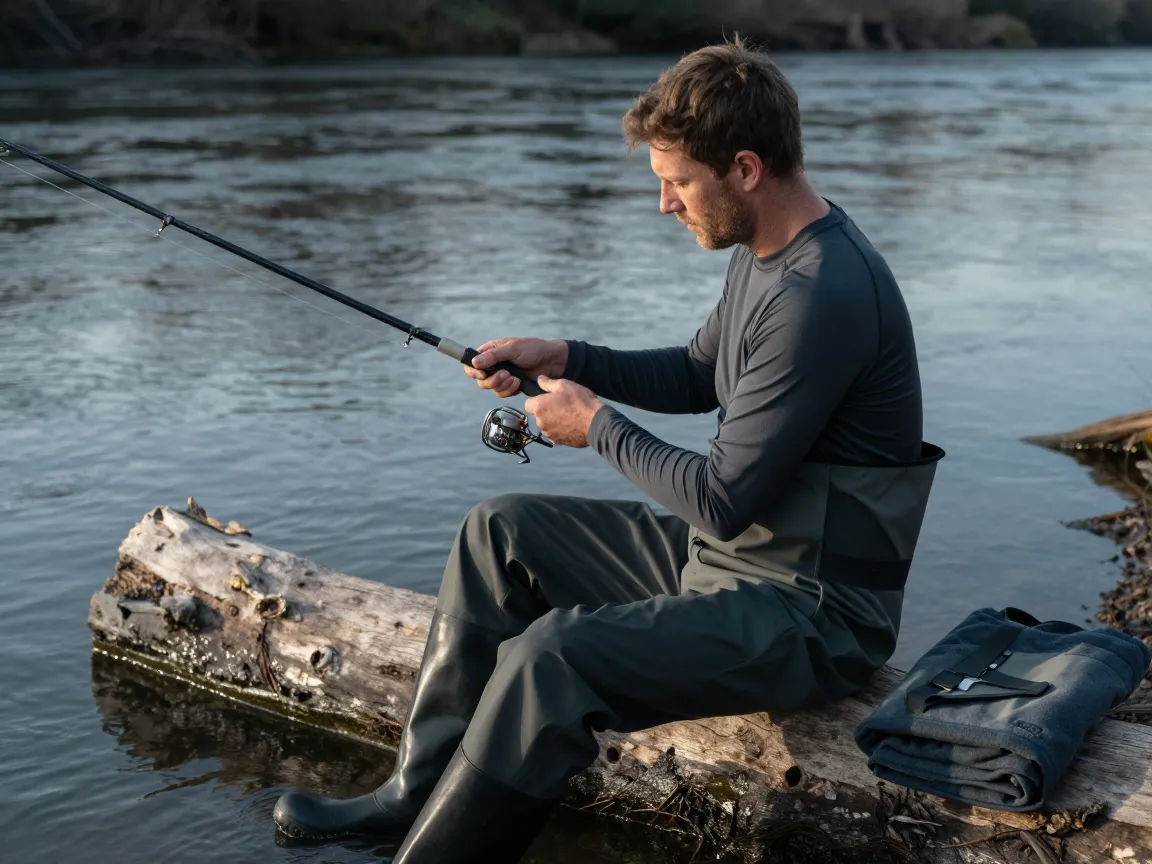
For the upper body, a long-sleeve quick-dry top works better than a short-sleeve option under waders because it prevents the wader suspenders from chafing bare skin and adds a thin layer of warmth without bulk. For the lower body, fitted long pants in the same synthetic or merino fabric sit under waders without bunching at the knees. Bulky seams and loose fabric bunch up under a wader bib and restrict movement after an hour on the water.
Merino wool has a practical edge over synthetics in one specific area: odor control. On multi-day float trips where laundry isn’t an option, a merino base layer can be worn two or three days without the synthetic smell that builds in polyester. That said, merino dries slightly slower than thin synthetics, so for warm-weather days when sweat volume is high, a lightweight synthetic base layer is the faster-drying choice.
One piece of practical advice that gets overlooked: the base layer also needs to account for water temperature, not just air temperature. If the river is running snowmelt at 42°F and you slip in, a thin synthetic base under breathable waders is what stands between you and rapid heat loss. Dress for the water, not the thermometer reading at the trailhead.
2. Insulating Mid-Layer
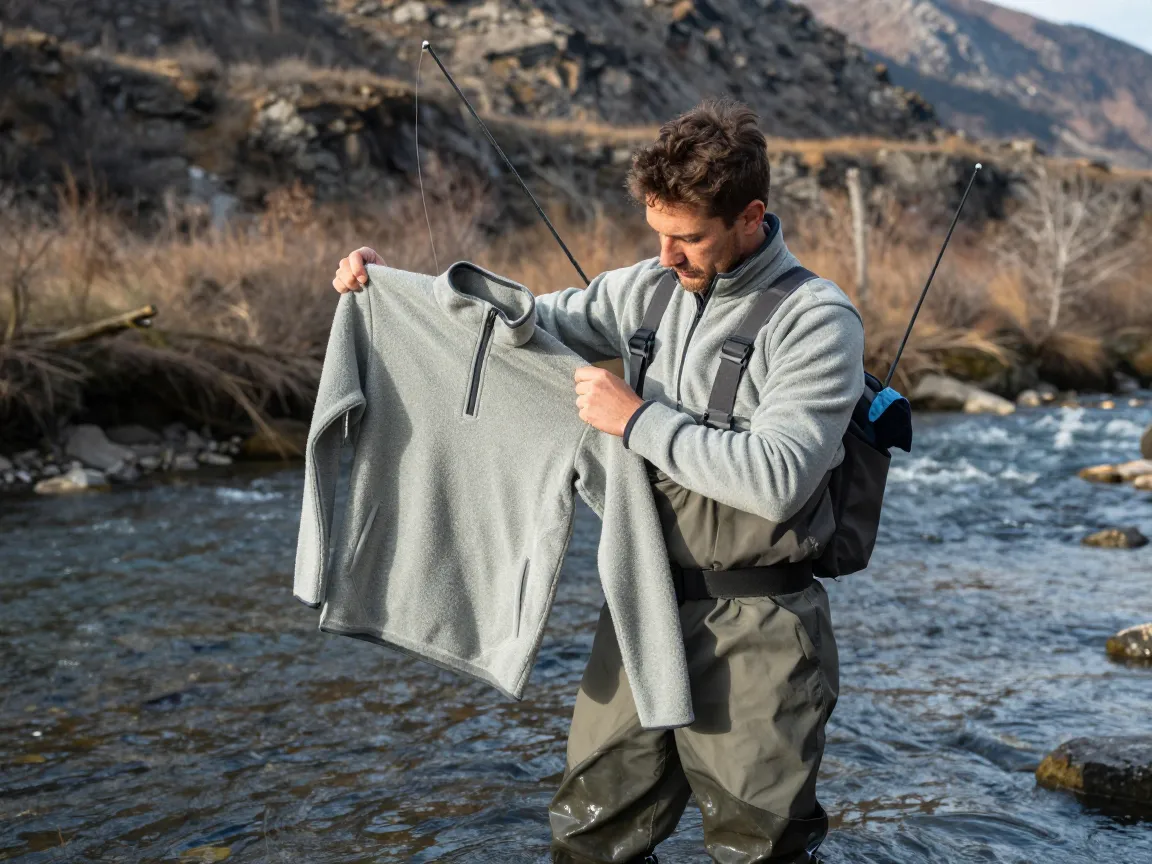
The mid-layer is the piece you’ll put on and take off more than anything else in your pack. River mornings, especially in the shoulder seasons from March through May and September through November, can open at 45°F and reach 70°F by early afternoon. A mid-layer that packs small and goes on and off over waders without a production is worth paying attention to.
Fleece is the standard choice for good reason. It retains warmth even when damp, dries faster than down, and moves with you during casting. A lightweight fleece pullover or zip-up in the 100 to 200 weight range handles most three-season conditions. For colder days, a synthetic insulated jacket, sometimes called a “puffy”, provides more warmth per ounce of weight, though it compresses less easily than fleece once it gets wet from spray.
Merino wool midweights are worth considering for anglers who run cold but hate feeling overdressed. A 250-weight merino half-zip sits between a thin fleece and a full insulated jacket in warmth, and it handles light drizzle better than most fleece without soaking through immediately.
The key habit is to pack the mid-layer in an accessible spot, not buried in a wading pack. When the sun dips behind a ridge or the wind picks up at a canyon bend, having the fleece clipped to the outside of your pack means you put it on in thirty seconds instead of fishing with cold hands for another twenty minutes while you dig for it.
3. Waterproof, Breathable Wading Jacket
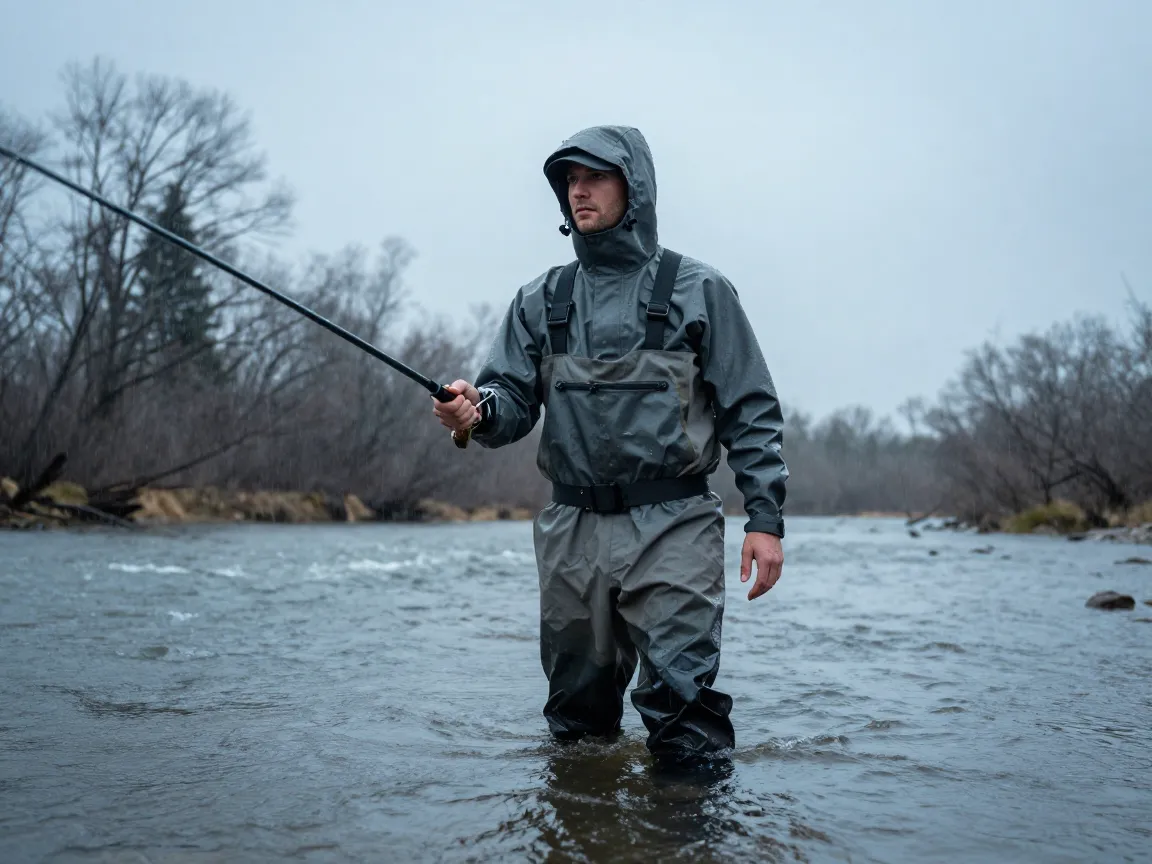
A wading jacket does two things a standard rain jacket cannot: it seals out rain and river spray at the cuffs and hem while remaining breathable enough that you don’t overheat during active wading. Standard rain gear traps sweat vapor inside. After an hour of wading upstream in a standard rain jacket, you’re as wet inside as you would have been without it.
Breathable membranes, the same type used in technical hiking shells, solve this. The jacket passes water vapor out while blocking liquid water coming in. For it to work correctly, the jacket must be worn over the top of your waders, never tucked into the wader bib. Tucking the jacket in directs rain down the inside of the wader, which defeats the entire purpose.
Look for adjustable cuffs that cinch tight enough to keep water from running down your sleeves during a backcast, a high neck or integrated hood for wind protection on exposed tailwaters, and a packable design that compresses to roughly the size of a water bottle. Full-day wading in variable mountain weather means the jacket goes on and off multiple times. If it’s heavy or awkward to pack, it stays in the car and you get cold.
Shoulder seasons are where this piece earns its price. A spring day on a Western freestone river can deliver sunshine, cloud cover, a brief hailstorm, and cold wind in the same afternoon. The wading jacket handles all of it without requiring a full layer change.
4. Breathable Waders
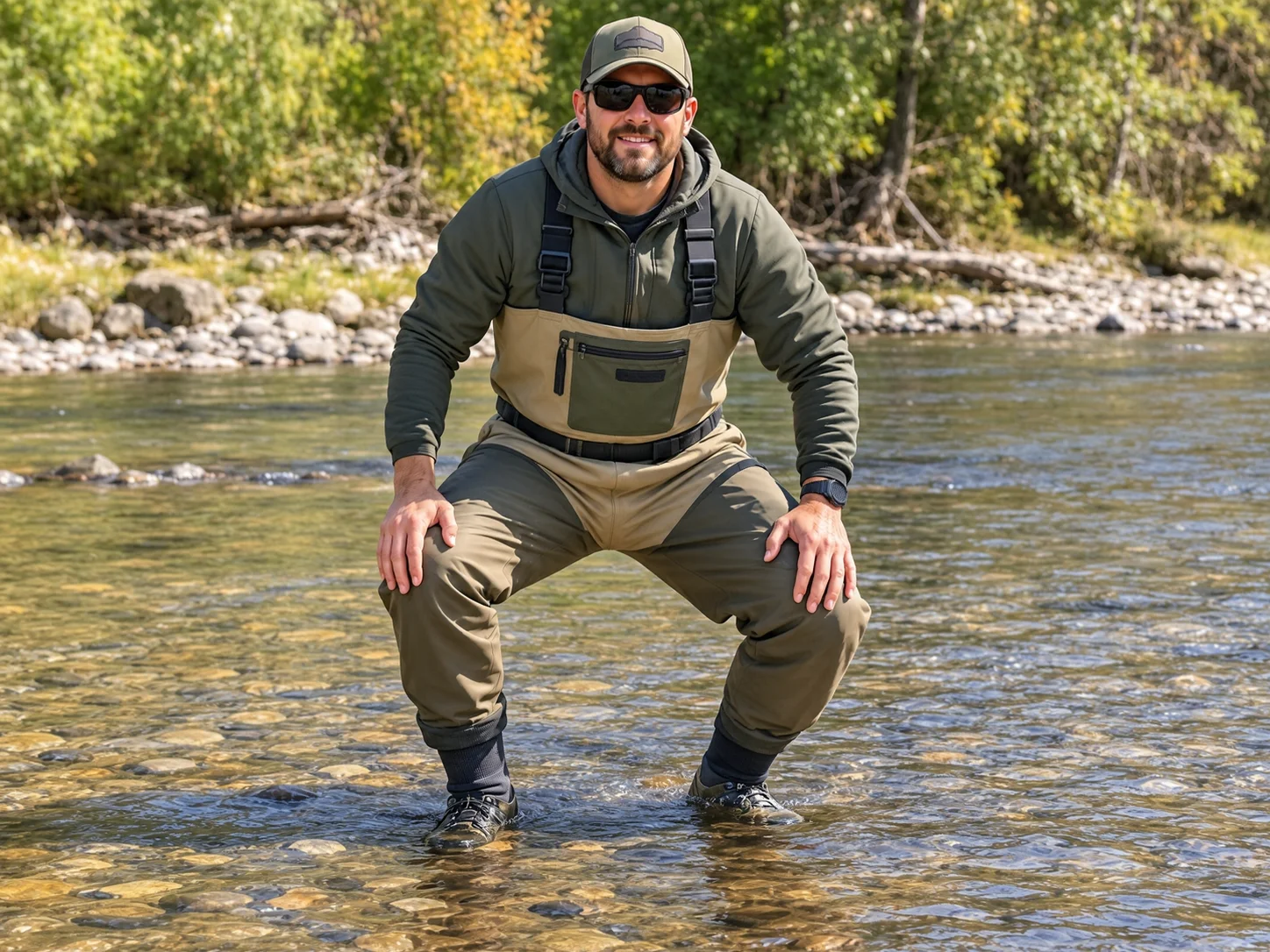
Breathable waders replaced neoprene as the standard for a reason: they work across a wider temperature range, they’re lighter, and they allow the body’s own moisture to escape rather than trapping it inside. For three-season fishing, roughly April through November depending on the region, breathable waders are more comfortable than neoprene for the majority of an average fishing day.
Current gear testing puts mid-priced breathable waders in the $250 range as the practical sweet spot for most anglers. At that price point, construction quality and fabric durability are good enough to last multiple seasons with reasonable care. Premium waders above $500 add more advanced seam construction and thinner, more flexible fabrics that reduce fatigue on long wade days, but they’re not a requirement for comfort on typical half-day or full-day river trips.
The fit matters as much as the fabric. Waders that are too tight across the seat or thighs restrict movement enough to affect your casting stance and your ability to wade safely over slick rocks. When sizing, stand in the waders in the store or test them at home with your mid-layer on underneath, then do a full deep knee bend. If the inseam pulls or the chest bib rides up, go up a size or try a different cut.
For leg layering under waders, tapered fleece tights or cycling-style thermal tights work better than standard fleece pants because they don’t bunch at the knee. The goal is smooth, non-restrictive layers that don’t create pressure points after four hours of wading.
5. Wading Boots with Proper Fit and Traction
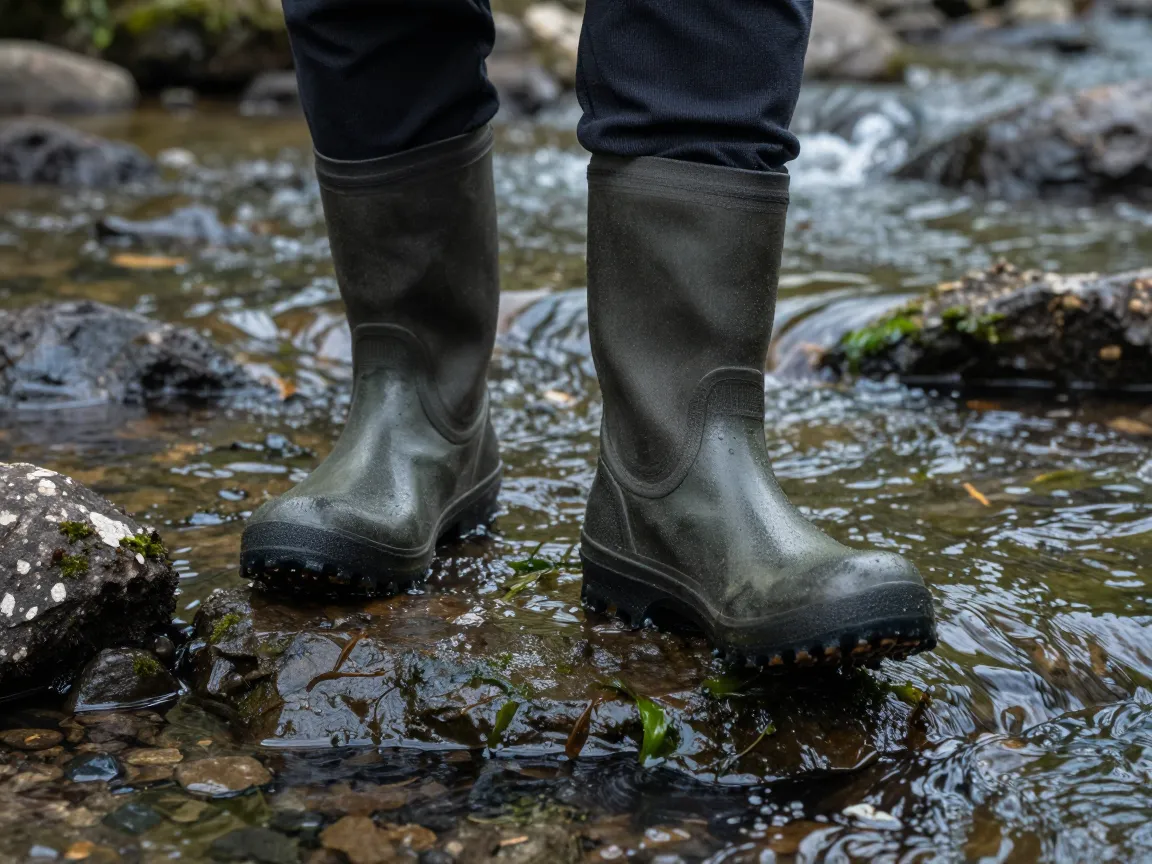
Uncomfortable wading boots make a long day on the river miserable in a way that’s hard to fix mid-trip. Blisters from tight boots, cold feet from boots that cut off circulation, and twisted ankles from poor ankle support are all preventable with the right fit before you leave home.
The most consistent advice from boot fitting guides is to size up. Wading boots are worn over neoprene or fleece socks layered on top of liner socks, which adds meaningful volume to your foot. A boot that fits your bare foot is typically one to two sizes too small once you’re in full fishing socks. When trying boots, wear the actual sock setup you plan to fish in and check that you can wiggle all five toes freely. Tight toes mean restricted circulation, which means cold feet within an hour in cold water.
Sole choice comes down to the water you’re fishing. Rubber lug soles are legal on nearly all rivers and provide reliable grip on wet rock and gravel. Felt soles, where still permitted, grip smooth algae-covered rock better than rubber but pick up and transport aquatic invasive species between water bodies, which is why many states and countries have banned them. Check local regulations before choosing felt.
Ankle support is a real variable between boot models. A stiffer upper with a higher ankle collar provides more lateral stability on uneven streambed, which matters when wading fast water or large-cobble runs. A lower, more flexible upper is lighter and more comfortable for flat, sandy-bottom rivers where technical footing isn’t the main concern. Match the boot to the water type you fish most.
6. Sun and Weather Protection Accessories
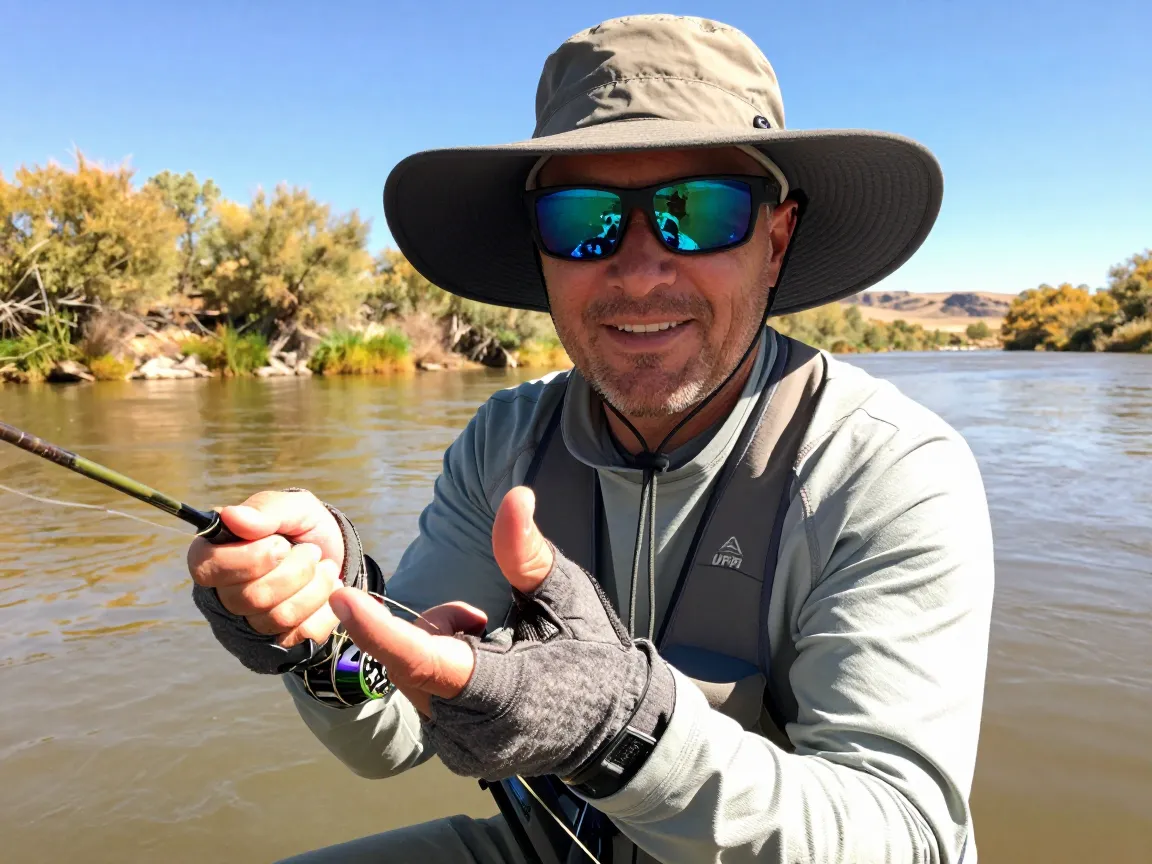
The last category covers everything that completes the outfit without fitting neatly into the layering system: hat, sunglasses, sun-protective shirt for warm-weather fishing, and hand protection for cold days. These pieces are often treated as optional. They are not.
Polarized sunglasses do two things simultaneously: they cut glare off the water surface so you can see fish and structure, and they protect your eyes from UV damage during full days under direct sun. Standard tinted sunglasses reduce brightness but don’t remove the flat glare that makes reading water difficult. Polarization is the specific lens property that eliminates that glare. For fly fishing specifically, the ability to see fish before casting is a functional advantage, not a comfort luxury.
A wide-brim hat, a 3-inch brim or wider, does more than block sun from your face. It shades the back of your neck, reduces eye fatigue by cutting overhead glare, and keeps rain off your sunglasses. A hat with a dark underside to the brim reduces reflected light from water even further. On full days on open Western rivers or saltwater flats, the difference in energy level between wearing a proper brim and wearing a baseball cap is noticeable by mid-afternoon.
For warm-weather trips, a lightweight technical shirt with a UPF 30 or higher rating replaces the need for sunscreen on your arms and chest. These shirts are made from tightly woven synthetic fabrics that block UV while still being breathable and quick-drying. On a full day in direct sun at elevation, sun fatigue is a real factor that affects how long you can fish comfortably.
Cold-weather outfits add gloves and headwear to this category. Fingerless wool or synthetic gloves let you manage line and tippet while keeping the palm and back of the hand warm. Full gloves are warmer but make fine motor work with small flies much harder. A thin wool beanie under a hat adds warmth without bulk and can be removed as the day heats up.
Conclusion
The six essentials work as a system. A good base layer is undermined by cotton mid-layers. Good waders are miserable with the wrong boots. Building from the skin out, base, mid, shell, waders, boots, accessories, and choosing each piece for the actual conditions on your target water gives you a full day of fishing instead of a few uncomfortable hours.
The most practical next step is to audit what you already own against the no-cotton rule. Most gear upgrades that meaningfully improve a day on the river start there.