Winter Fishing Outfit Layers to Stay Warm and Catch Fish
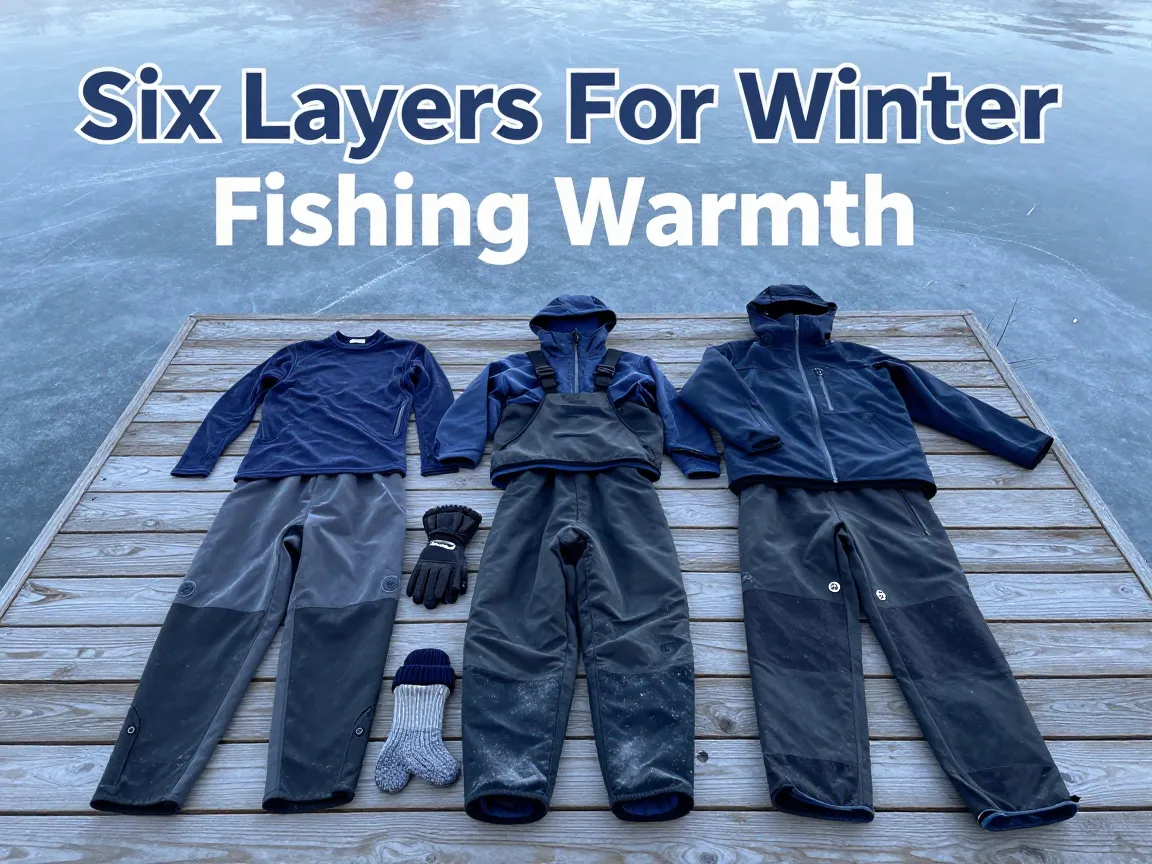
Cotton kills in cold weather. That is not an exaggeration, wet cotton against your skin in subfreezing temperatures pulls body heat away roughly 25 times faster than dry fabric. Yet most anglers who quit fishing in January do so not because of the cold itself, but because they wore the wrong materials in the wrong order. The 6 winter fishing outfit layers to stay warm and catch fish described below are built around a system, not a shopping list. Get the system right, and fishing in January becomes as productive as October.
Disclosure: This post contains affiliate links. As an Amazon Associate, we earn from qualifying purchases, and at no extra cost to you.
1. Moisture-Wicking Base Layer
The base layer’s only job is to move sweat away from your skin before it can cool you down. That rules out cotton entirely. Polyester and merino wool are the two proven options, and the difference between them is worth understanding before you buy.
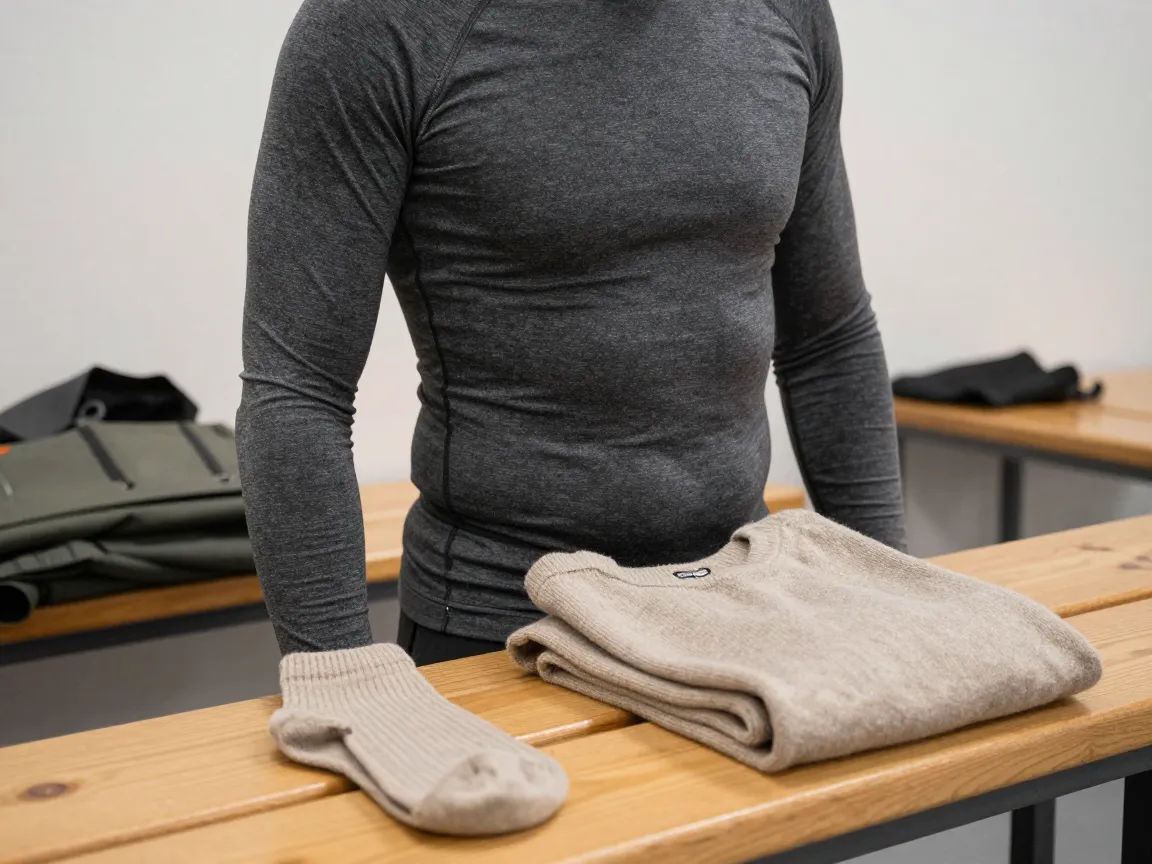
Synthetic polyester base layers dry faster and cost less. A 150-200 g/m² weight polyester set handles moderate cold and high activity well, which makes it a strong choice for river fishing where you’re wading and casting throughout the day. Merino wool in the same weight range moves moisture nearly as efficiently, resists odor far better, and stays comfortable against skin even when slightly damp. For long, stationary ice fishing sessions where you may not change clothes for eight hours, merino earns its higher price.
Fit matters. A base layer should sit close enough to wick efficiently, but not so tight that it restricts blood flow in your legs or arms. Tight socks and glove liners are common mistakes, reduced circulation accelerates cold-related injuries faster than inadequate insulation does. Buy base tops and bottoms as a matched set, include merino or wool socks at this stage, and treat the entire skin-contact layer as a system rather than a single shirt.
2. Lower-Body Insulation Layer
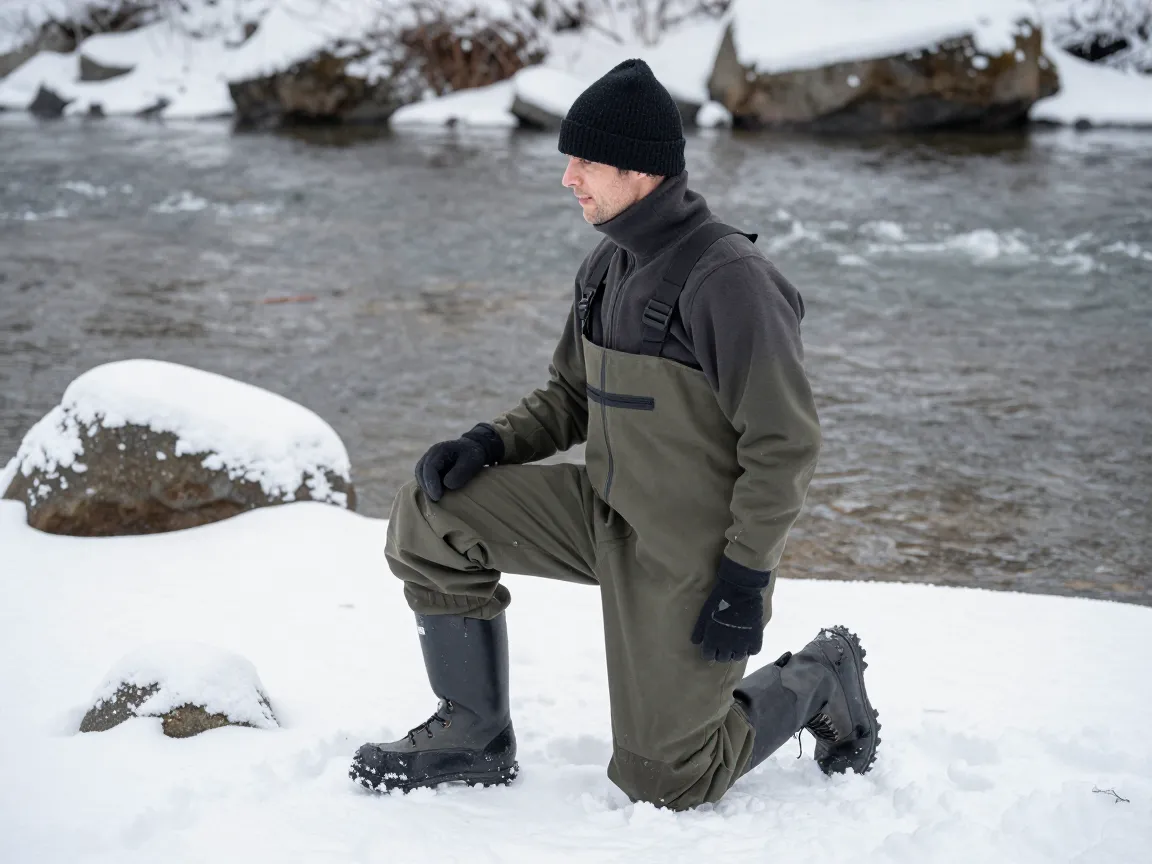
Legs lose heat faster than most anglers expect because the muscles there are large and blood vessels run close to the surface. A dedicated lower-body insulation layer between your base thermals and your outer shell or waders is what separates a fisherman who lasts four hours from one who lasts eight.
For wading anglers, fleece wader pants worn inside neoprene or breathable waders add substantial warmth without bulk that would pinch inside the wader leg. A mid-weight fleece pant in the 200-300 g/m² range is enough for temperatures down to around 32°F. Below that, insulated bib liners, think of them as insulated pants designed to layer under a heavier outer bib, provide the kind of warmth you need when you’re standing in one spot on a frozen lake for hours.
The practical test for fit is simple. Put on your base layer, then your leg insulation, then stand and squat. If you can’t squat comfortably, the layer is too bulky for active fishing and will restrict movement until you’re fatigued by mid-morning. If there’s no visible puffiness at all, it’s probably too thin for genuinely cold conditions. The right fit sits somewhere between those two points.
3. Torso Insulation Layer
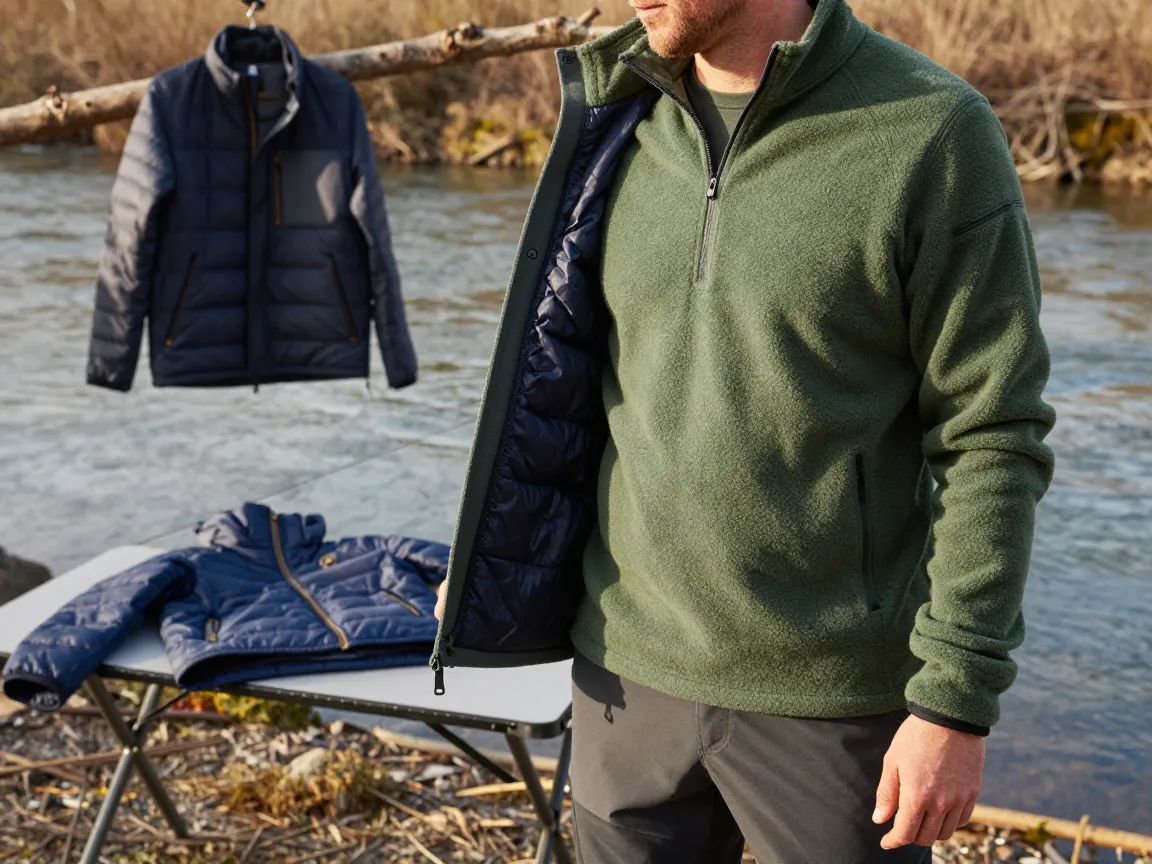
This is where most of the adjustable warmth lives, and it’s the layer most anglers get wrong by treating it as a single piece rather than a flexible system. The torso insulation layer should be thick enough to trap heat during rest or slow periods, and removable when you’re active enough to generate body heat on your own.
A 400-weight fleece pullover or jacket covers the range from about 32°F to 45°F effectively when paired with a solid base and outer shell. When temperatures drop well below freezing, a synthetic-fill insulated jacket rated to around 120 g of fill provides noticeably more warmth per inch of thickness than fleece alone. Patagonia and Orvis both recommend this stacked approach for sub-freezing fly fishing, a fleece piece as the primary mid-layer, with a lightweight insulated jacket added underneath the outer shell on the coldest days.
One thing to consider before choosing between fleece and synthetic fill is activity level. Fleece breathes better and handles moisture from exertion more gracefully. Synthetic fill is warmer when stationary but can feel clammy during long casts or hikes to a fishing spot. If you fish river systems with long walks in, fleece mid-layers are easier to manage. If you’re setting up a tip-up spread on a frozen lake and sitting for hours, the insulated jacket wins.
4. Outer Shell or Ice Suit
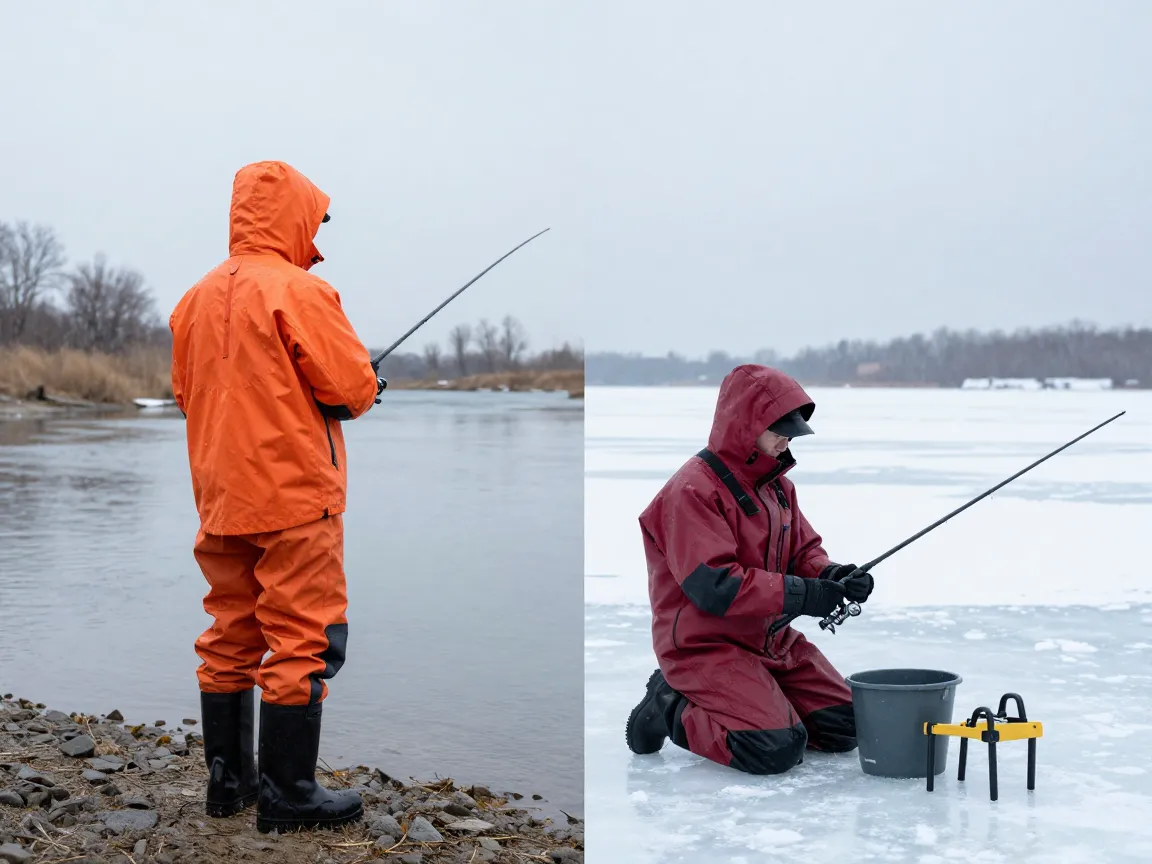
The outer layer blocks wind, sheds precipitation, and in ice fishing specifically, provides emergency buoyancy if the ice gives way. These are three distinct functions, and the shell you choose needs to match the type of winter fishing you’re doing.
For boat and river fishing in cold rain, a waterproof and breathable wading jacket or fishing rain shell works within a layered system. The key word is breathable, a non-breathable shell traps sweat from your mid-layers and defeats the moisture management you built into your base layer. Taped seams are worth paying for; stitched-only seams leak at the needle holes in sustained rain.
Ice fishing changes the equation. Once temperatures consistently drop below 20°F and you’re spending full days on a frozen lake, a purpose-built float suit, a jacket and bib combination with integrated foam flotation and heavy insulation, outperforms any standard shell-and-layers combination. Float suits are rated to around -40°F in serious ice-fishing configurations. The flotation serves a real function: anglers who have broken through ice in standard clothing in subfreezing conditions have roughly five to seven minutes to self-rescue before cold incapacitation sets in. A float suit slows that clock considerably. This isn’t a marketing claim, it’s why many organized ice-fishing tournaments require them.
If you fish both river and ice environments across a winter season, you likely need two different outer shells rather than one compromise solution.
5. Extremity Protection System
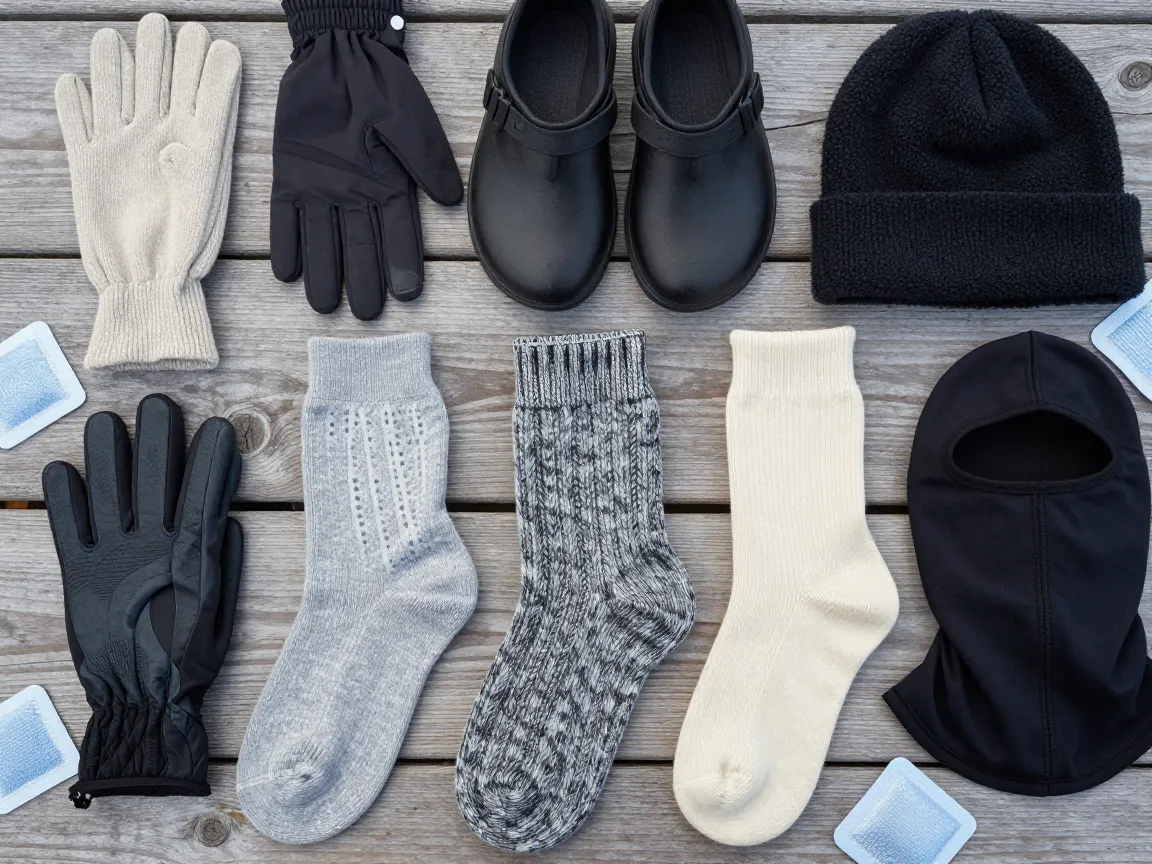
Hands, feet, and head account for a disproportionate share of heat loss because they have high surface area relative to their mass and are farthest from your core. Treating extremity protection as an afterthought is what causes most people to cut a good fishing day short.
For hands, the most functional approach for active fishing is a two-piece system: a thin liner glove worn constantly, with a heavier over-mitt or pogies that you can slip off for knot tying or bait handling and back on within seconds. Liner gloves made from merino or polyester fleece let you manage tackle with reasonable dexterity while maintaining a thermal base. Neoprene gloves work well in wet conditions but sacrifice some dexterity. Avoid gloves that are so thick you can’t feel your line, you’ll stop wearing them within an hour.
Feet need the same layered thinking. A moisture-wicking liner sock beneath a heavyweight wool or synthetic insulating sock is the starting point. For ice fishing in extreme cold, a vapor barrier layer, essentially a thin waterproof sock between the liner and insulating sock, prevents moisture from reaching the outer insulation and keeps your feet dry far longer than socks alone. Boots rated to -40°F exist and are worth the investment for dedicated ice fishing. For wading, neoprene wader socks inside wading boots handle much of the work, but an insulating sock layer underneath still makes a meaningful difference below 30°F.
Head and face coverage is straightforward but often incomplete. A fleece or wool beanie covers the top of the head. A balaclava extends that coverage to the neck and face, which matters most during wind. When windchill is severe, adding a hood from your outer shell over a balaclava adds another layer of still air that slows heat loss from the face and ears. Chemical hand warmers and toe warmers are reliable backup tools, carry more than you think you need, because they last only three to six hours and conditions change.
6. Temperature-Specific Layer Adjustments
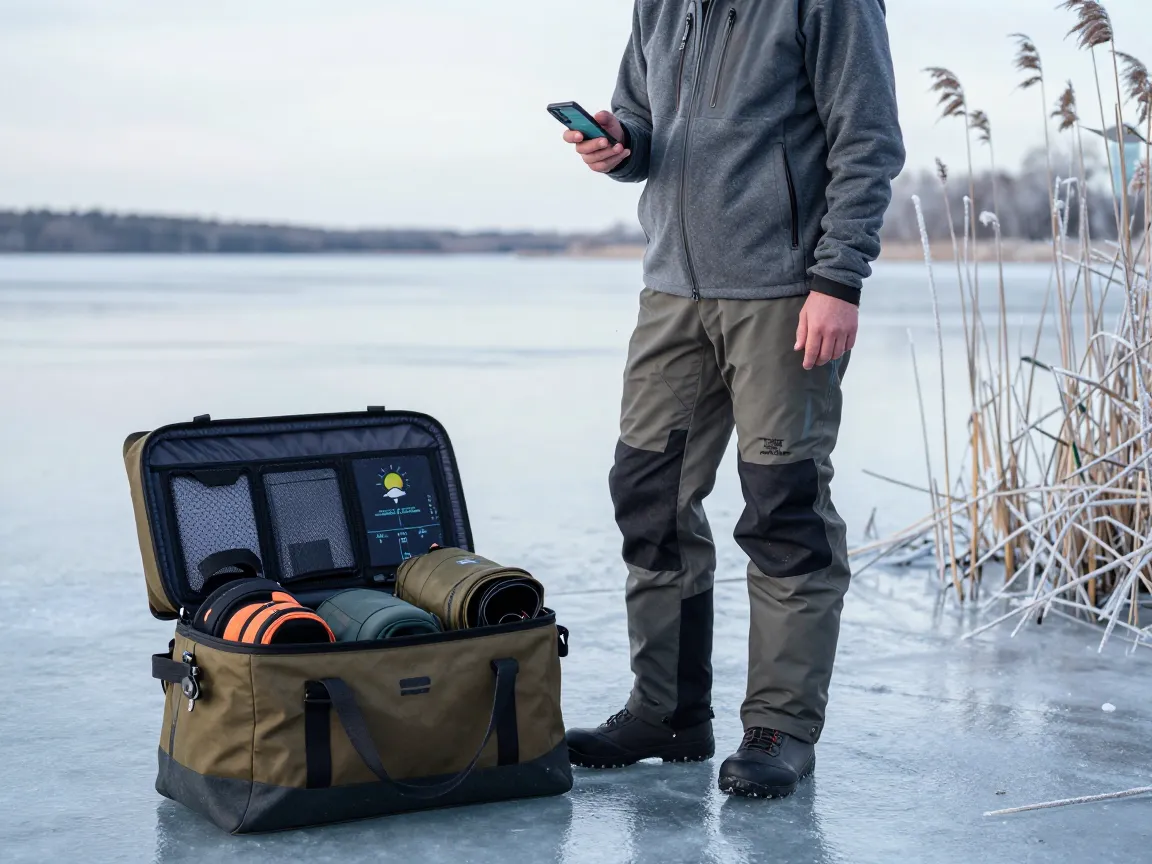
A fixed six-layer stack worn exactly the same way every day is less useful than a system you can tune to actual conditions. The practical value of understanding each layer separately is that you can add, remove, or swap individual pieces rather than overhauling your whole outfit when the forecast changes.
AFTCO’s cold-weather fishing guidance organizes outfits into three temperature bands that are worth internalizing: mild (45-70°F), cold (32-45°F), and frigid (below 32°F). In mild winter conditions, a lightweight base layer, a single fleece mid-layer, and a breathable shell is sufficient. In the cold range, you add lower-body insulation and upgrade the torso mid-layer to a heavier fleece or light insulated jacket. In frigid conditions, the full six-layer system applies, base thermals, leg insulation, fleece or insulated torso layers, an ice-rated outer suit, and the complete extremity system.
The piece most commonly dropped when anglers underestimate conditions is the lower-body insulation. Legs are easy to ignore until they’re cold, at which point your core temperature is already dropping. Add the leg layer before you need it, not after. The piece most often over-worn is a heavy insulated jacket on active fishing days, overheating causes sweat that soaks your mid-layers and leaves you colder than if you’d worn less from the start.
One concrete calibration method: check the windchill forecast, not just the air temperature, for the location you’re fishing. A 20°F day with 20 mph wind creates a felt temperature close to 0°F and demands a significantly heavier outfit than a calm 20°F morning. Most fishing-specific weather apps display this directly. Build your layer plan around windchill, and adjust at the water if conditions are lighter or heavier than predicted.
Conclusion
The difference between a productive winter fishing day and a miserable one usually comes down to a single missing layer rather than the whole system. If you have one adjustment to make before your next cold-weather trip, add dedicated lower-body insulation, it’s the most consistently skipped piece and the one that affects how long you can stay on the water more than any other. Build the rest of the system around verified materials (merino or synthetic for every skin-contact layer, waterproof and breathable for the shell), match your outer layer to the specific environment you’re fishing, and treat your hands, feet, and head as an integral part of the outfit rather than accessories.