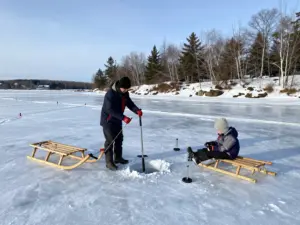
Human Survival Needs That Matter Most When Fishing Goes Wrong
Every year, fishing claims more lives per capita than nearly any other civilian occupation or recreational activity in the developed world. Most of those deaths are not random bad luck. They follow a predictable sequence of unmet survival needs, and understanding those needs in the right order is the difference between a rescue and a recovery. The 6 human survival needs that matter most when fishing goes wrong are not abstract concepts. They are specific, actionable, and each one has a known failure point that shows up repeatedly in accident investigations.
Disclosure: This post contains affiliate links. As an Amazon Associate, we earn from qualifying purchases, and at no extra cost to you.
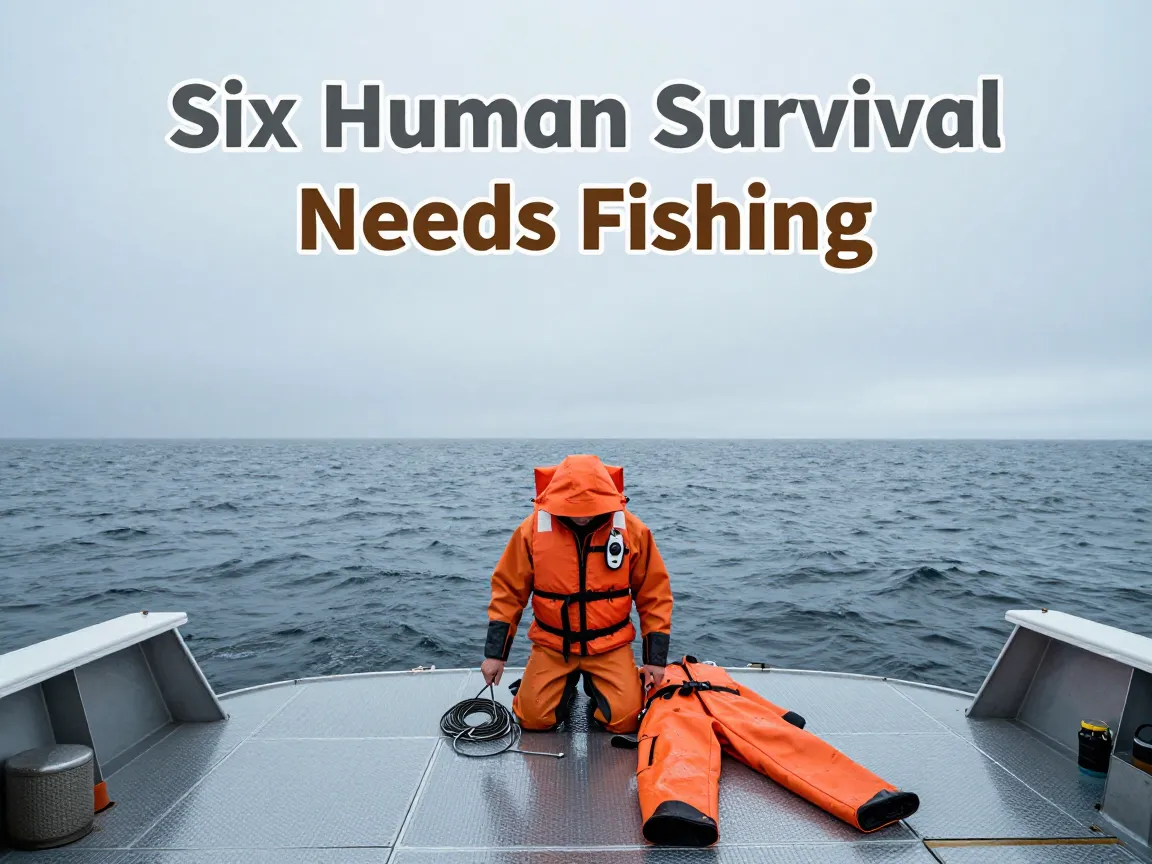
Key Takeaways
- Cold water kills faster than almost any other environmental hazard a fisher faces, making flotation and thermal protection the first two survival priorities.
- Communication gear is only useful if it is on your person before you enter the water, not stored below deck.
- Staying with the vessel or a large floating object dramatically improves rescue probability compared to swimming for shore.
- Alcohol and impaired judgment appear in a disproportionate share of fishing fatalities, making clear decision-making a genuine survival need.
- No single piece of gear or skill replaces pre-trip planning and formal boater safety training.
1. Flotation and Airway Protection
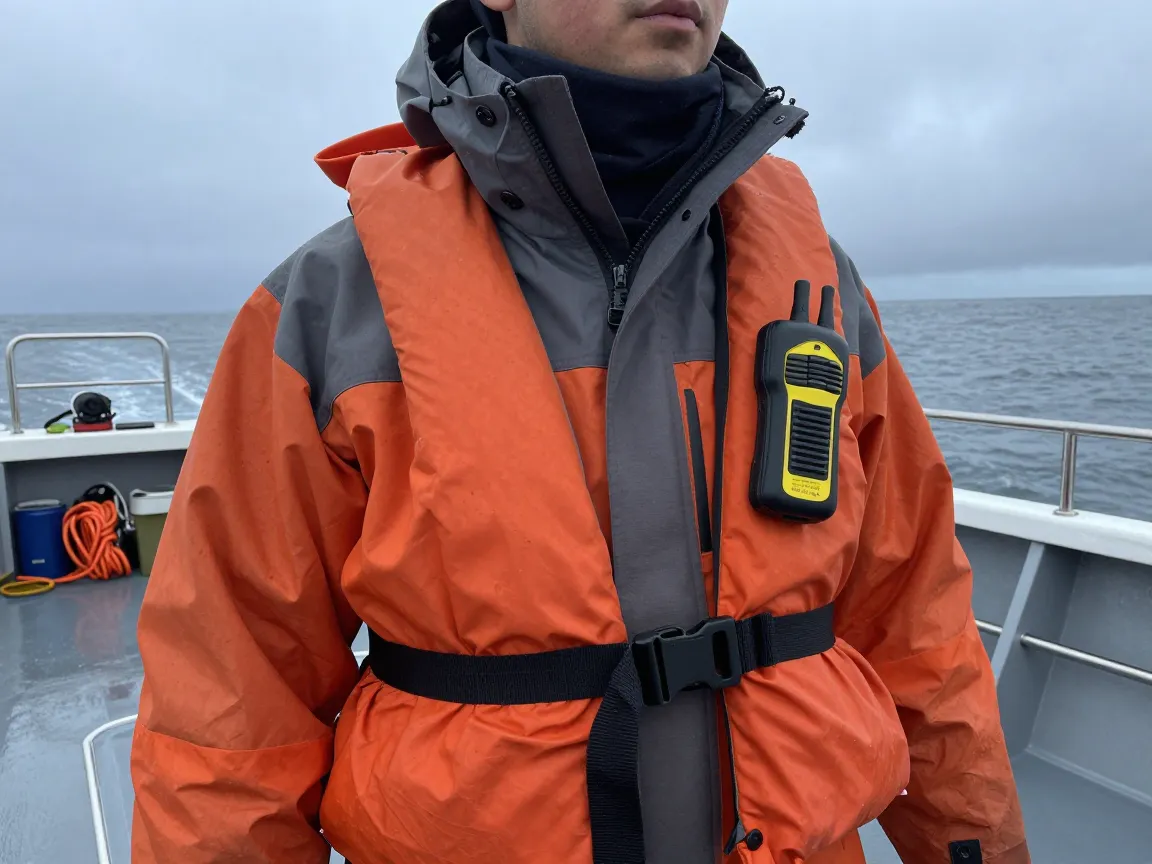
A person who falls overboard in cold water without a personal flotation device has seconds to minutes before cold shock drives uncontrolled breathing, and an open airway above the water surface is not guaranteed without a PFD keeping the face up. This is the foundational survival need because nothing else on this list matters if you drown in the first three minutes.
Modern Type I offshore PFDs and inflatable life jackets designed for commercial fishers are not interchangeable with the foam vests sold for warm-water recreational use. An offshore-rated PFD provides at least 22 pounds of buoyancy and is designed to roll an unconscious wearer face-up. That rollover function is critical when cold shock causes involuntary gasping and muscle spasm, both of which can drive the face underwater.
The consistent failure point across accident records is straightforward: the device was on board but not on the body. Coast guard incident reviews have documented cases where a PFD was found still clipped to a rail or hanging in a cabin after a fatal fall overboard. Wearing a PFD at all times on deck is a behavioral habit, and that habit has to be built before conditions deteriorate, not after a wave washes the deck.
2. Thermal Protection Before and After Immersion
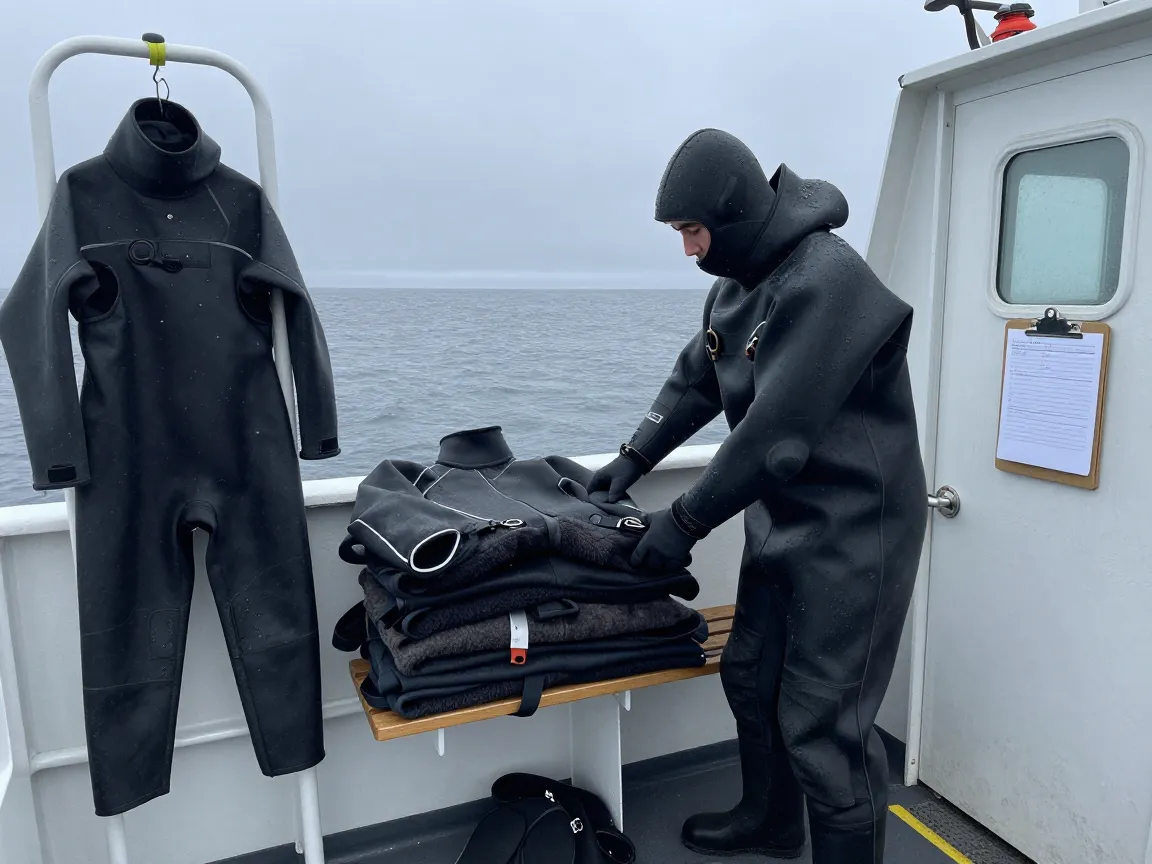
Water conducts heat away from the body approximately 25 times faster than air at the same temperature. A fisher in 50-degree Fahrenheit water without thermal protection can lose the ability to grip or swim within 30 minutes, and core hypothermia can follow within an hour. This is not a worst-case estimate; it is a mid-range outcome under documented conditions.
The November 2026 Iceland fishing disaster made the thermal protection gap visible at a national scale. Vessel crew members who survived the longest in the water were wearing neoprene survival suits, often called immersion suits or Gumby suits. Those who entered the water in ordinary foul-weather gear experienced swim failure far earlier. The suits are bulky and awkward to don, which is exactly why donning drills matter. The standard guidance from maritime safety bodies is a maximum of 60 seconds to put on a suit, and that speed is only achievable with repeated practice.
Layered insulation under a dry suit or survival suit adds meaningful time to that survival window. Wool and synthetic fleece retain insulating value even when wet; cotton does not. For fishing in water temperatures below 60 degrees Fahrenheit, a wetsuit worn under rain gear is a reasonable minimum. The suit does not need to be a full commercial immersion suit to provide benefit; even a 3mm wetsuit buys extra minutes, and minutes are the unit of survival in cold water.
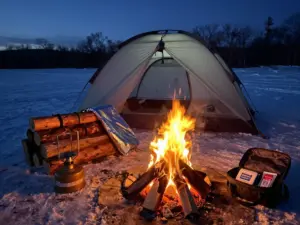
After rescue, the thermal need does not end. Active rewarming must be structured. Moving a hypothermic person aggressively or placing them in a hot shower can cause afterdrop, where cold blood from the extremities floods the core and drops core temperature further. Horizontal transport, insulation from the ground up, and warm inhalation are the standard field protocols.
3. Communication and Signaling
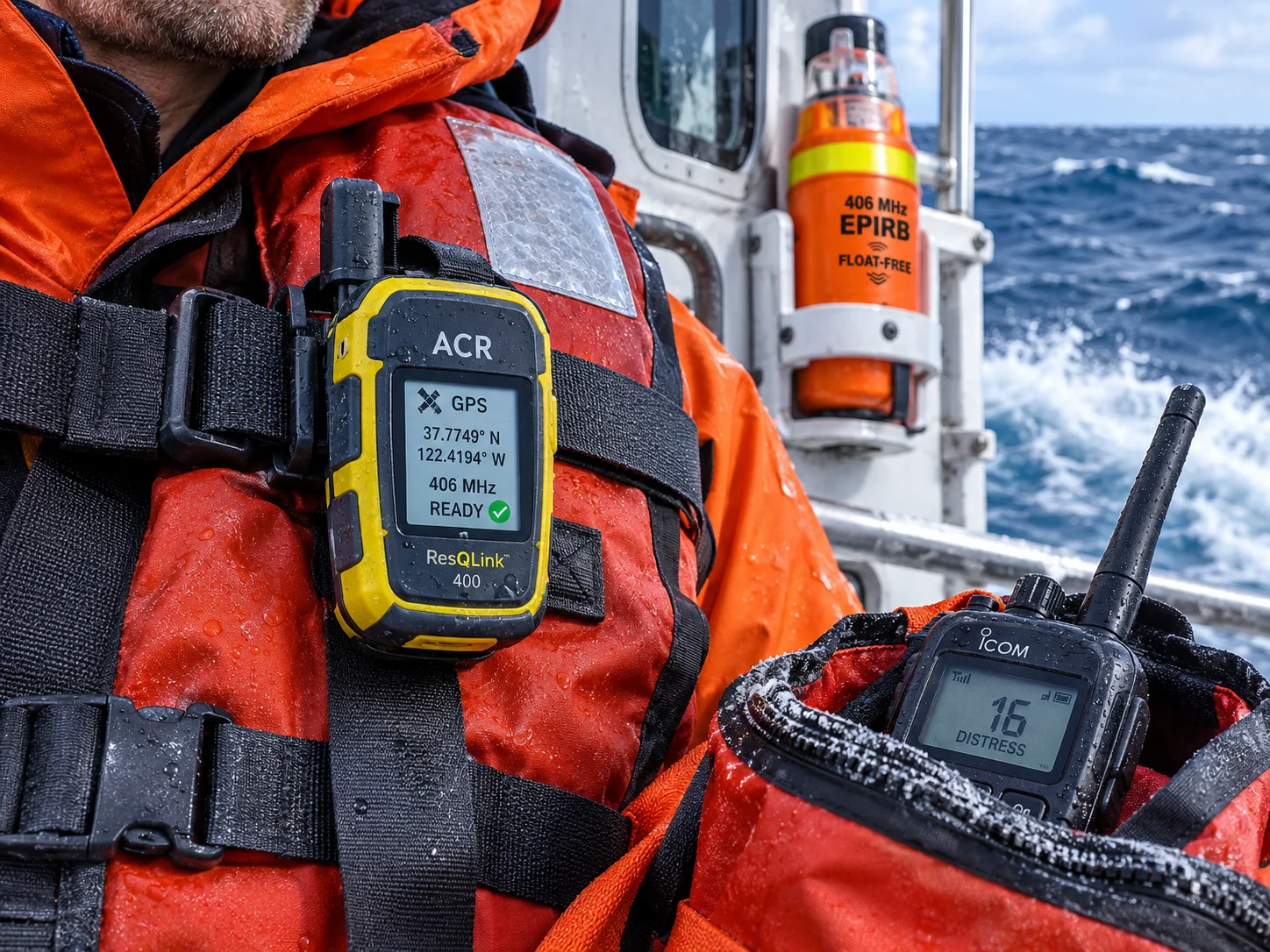
A fisher who is overboard and unlocated is not a rescue situation; it is a search situation. The difference in survival probability is substantial. A person with an activated personal locator beacon (PLB) or a 406 MHz emergency position-indicating radio beacon (EPIRB) gives rescue coordinators a GPS position accurate to within 100 meters within minutes. A person without one requires a search pattern that can cover hundreds of square miles.
The survival need here is specific: the communication device must be on your person, not on the vessel. EPIRBs mounted in a bracket on the wheelhouse float free only if the vessel sinks and only if the hydrostatic release activates correctly. A PLB clipped to a PFD goes with the person who goes overboard. That distinction has separated survivors from fatalities in documented cases.
VHF radio Channel 16 is the international distress frequency and is monitored continuously by the U.S. Coast Guard, Transport Canada, and equivalent agencies in most fishing nations. A handheld waterproof VHF radio on your person or in a ditch bag adds a voice communication layer that a PLB alone does not provide. Newer DSC-equipped VHF radios transmit a vessel identification and GPS position automatically with a single button press.
Cell phones work in coastal waters closer to shore and are better than nothing, but they are not a substitute. Salt water and impact damage disable them quickly, and coverage gaps exist in most productive fishing grounds. A PLB costs roughly the same as one day’s fuel for a small commercial vessel and requires no subscription fee.
4. Location and Self-Rescue Discipline
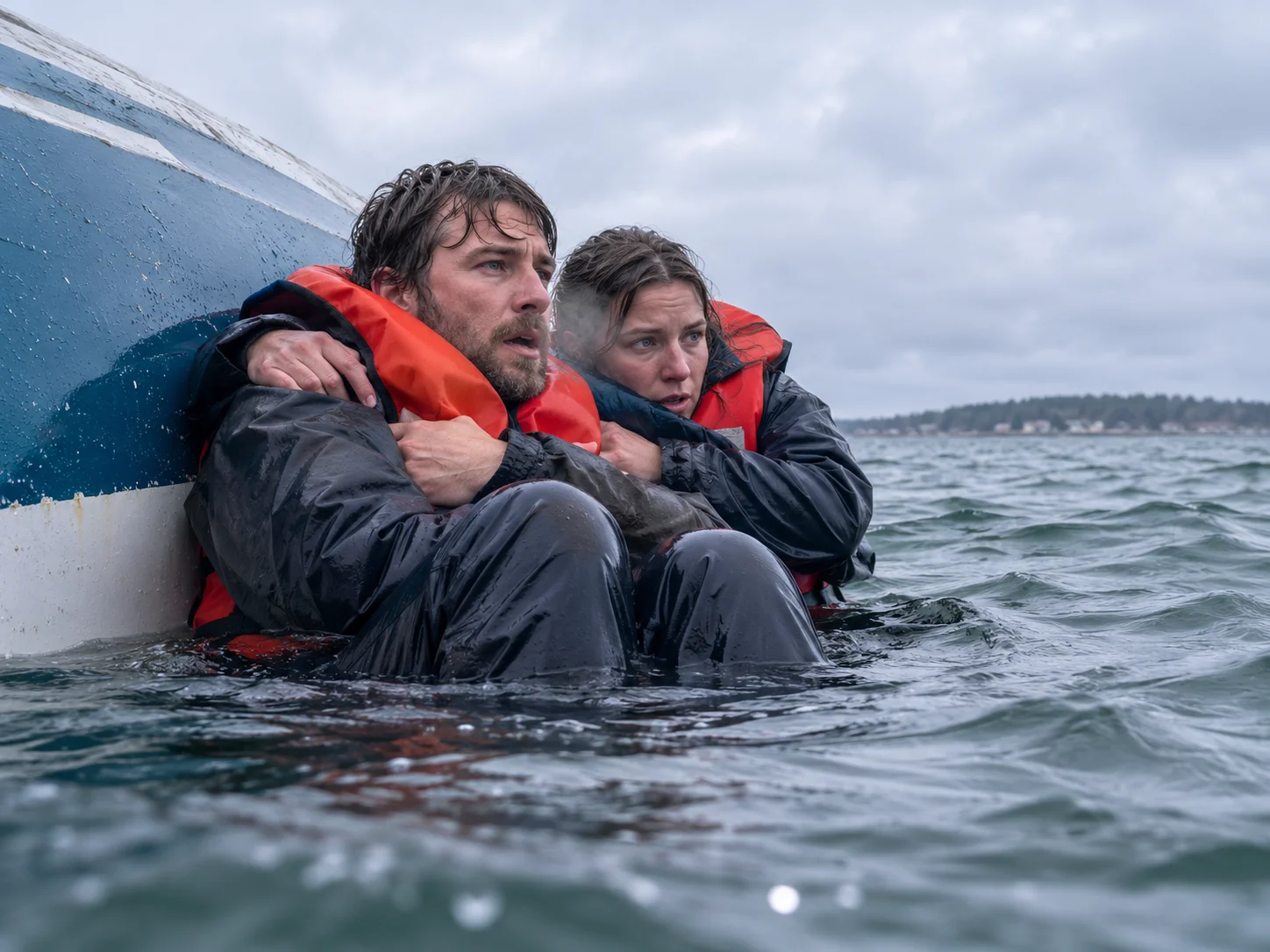
One of the most counterintuitive survival principles in maritime emergencies is that swimming toward shore almost always reduces survival probability. The temptation to swim for a visible shoreline is strong, but cold water shortens usable swimming time far beyond what most people expect. A strong swimmer in 55-degree water may be unable to swim effectively after 15 to 30 minutes even with a PFD. If the shore is 400 yards away, that is a 10-minute swim under ideal conditions. Cold water does not offer ideal conditions.
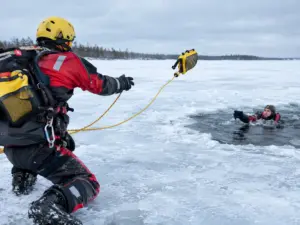
Staying with the vessel, or the largest floating object available, serves three purposes. First, a vessel is vastly more visible to rescuers than a human head in the water. Second, climbing partially out of the water on a hull or debris reduces heat loss dramatically. Third, the vessel’s last known position is typically the first place search and rescue teams look. Drifting away from it compounds every other problem.
The Heat Escape Lessening Position, known as HELP, reduces heat loss from the groin, chest, and neck by drawing the knees to the chest and crossing the arms tight across the torso. If multiple people are in the water together, the huddle position, where people cluster face-to-face with arms over each other’s shoulders, reduces combined heat loss and keeps the group together for signaling. These are not theoretical postures. They are trained behaviors with measured effectiveness in cold-water immersion research.
Knowing the three stages of cold-water immersion, cold shock (0 to 3 minutes), swim failure (3 to 30 minutes), and hypothermia onset (30 minutes onward), sets realistic expectations. Cold shock is survivable if the airway is protected and panic is controlled. Swim failure is predictable and is not a personal weakness; it is a physiological response to cold water on motor nerves. Anticipating it prevents the fatal decision to abandon a floating vessel and strike out for shore.
5. The Buddy System and Shared Situational Awareness
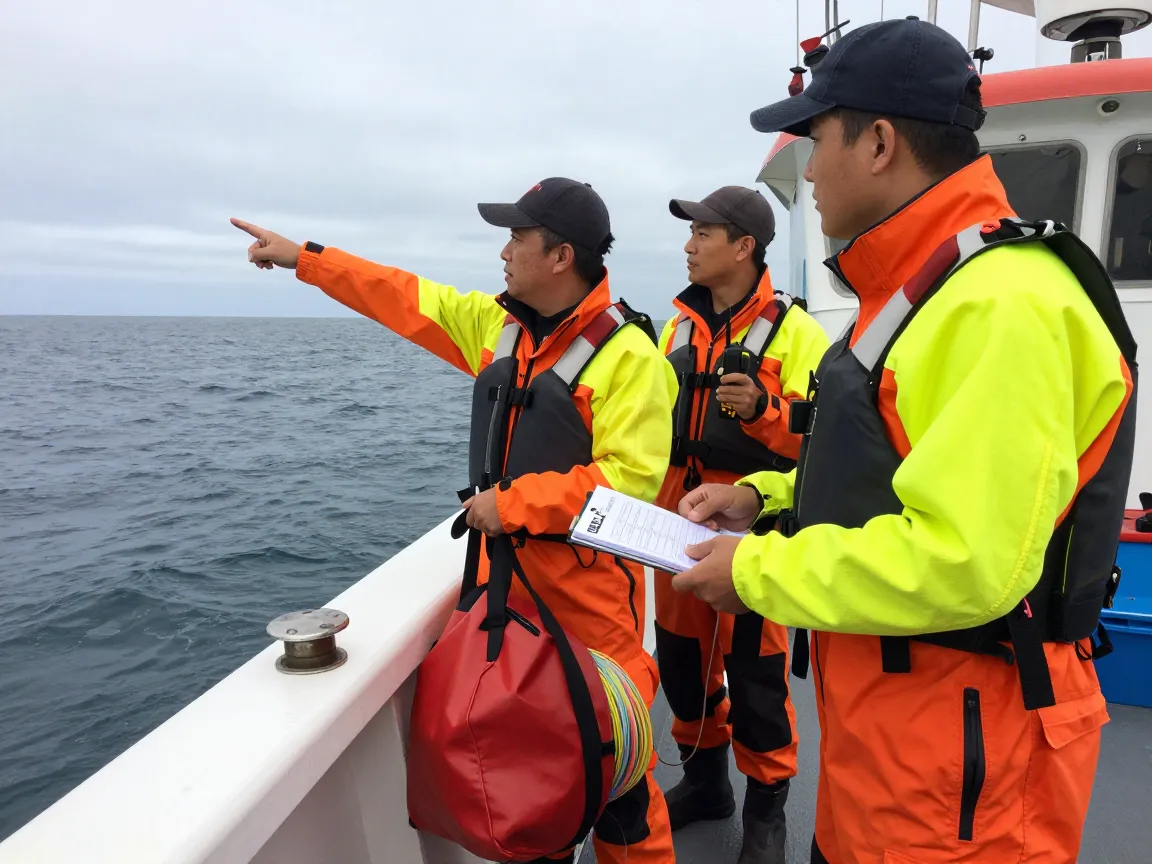
Solo fishing is legal almost everywhere and common in many small-boat cultures, but the fatality rate for solo overboard incidents is significantly higher than for incidents with a second person present. The reason is mechanical, not philosophical. A person in cold water who cannot self-rescue needs someone to throw a line, activate the EPIRB, radio a mayday, and maneuver the vessel for retrieval. One person cannot do all of those things simultaneously while also being the person in the water.
The buddy system in a fishing context means more than having a partner. It means designating a watch rotation so someone is always monitoring the other person’s position on deck. It means establishing a check-in schedule when fishing from separate vessels or separate ends of a large boat. Commercial fishing safety programs in Alaska, Norway, and Iceland have embedded these protocols into mandatory pre-departure briefings, and incident rates in those fleets have dropped measurably over the past two decades.
Shared problem-solving is the less-discussed element of this survival need. Cognitive performance degrades under cold stress. A person who has been in the water for 15 minutes may be physically present but making poor decisions. Having a second person who is dry, warm, and clear-headed to direct the rescue changes the outcome. That is why rescue drills practiced with a partner embed better than solo study; the drill has to simulate the real division of tasks.
6. Clear Judgment, Planning, and Pre-Trip Education
Alcohol is a factor in an estimated 50 percent of adult drowning deaths in the United States, including boating and fishing fatalities. That number is consistent across multiple years of CDC and Coast Guard data. It is not a secondary contributing factor in those cases; it is typically the primary behavioral change that led to the fall, the failure to wear a PFD, or the failure to execute a self-rescue correctly.
The physiological reasons are specific. Alcohol suppresses the shiver response, accelerating core cooling in cold water. It impairs balance on a wet moving deck. It produces a false sense of warmth while actually increasing peripheral blood flow and heat loss. And it compromises the decision-making needed to don a survival suit, activate a PLB, or choose not to swim for shore.
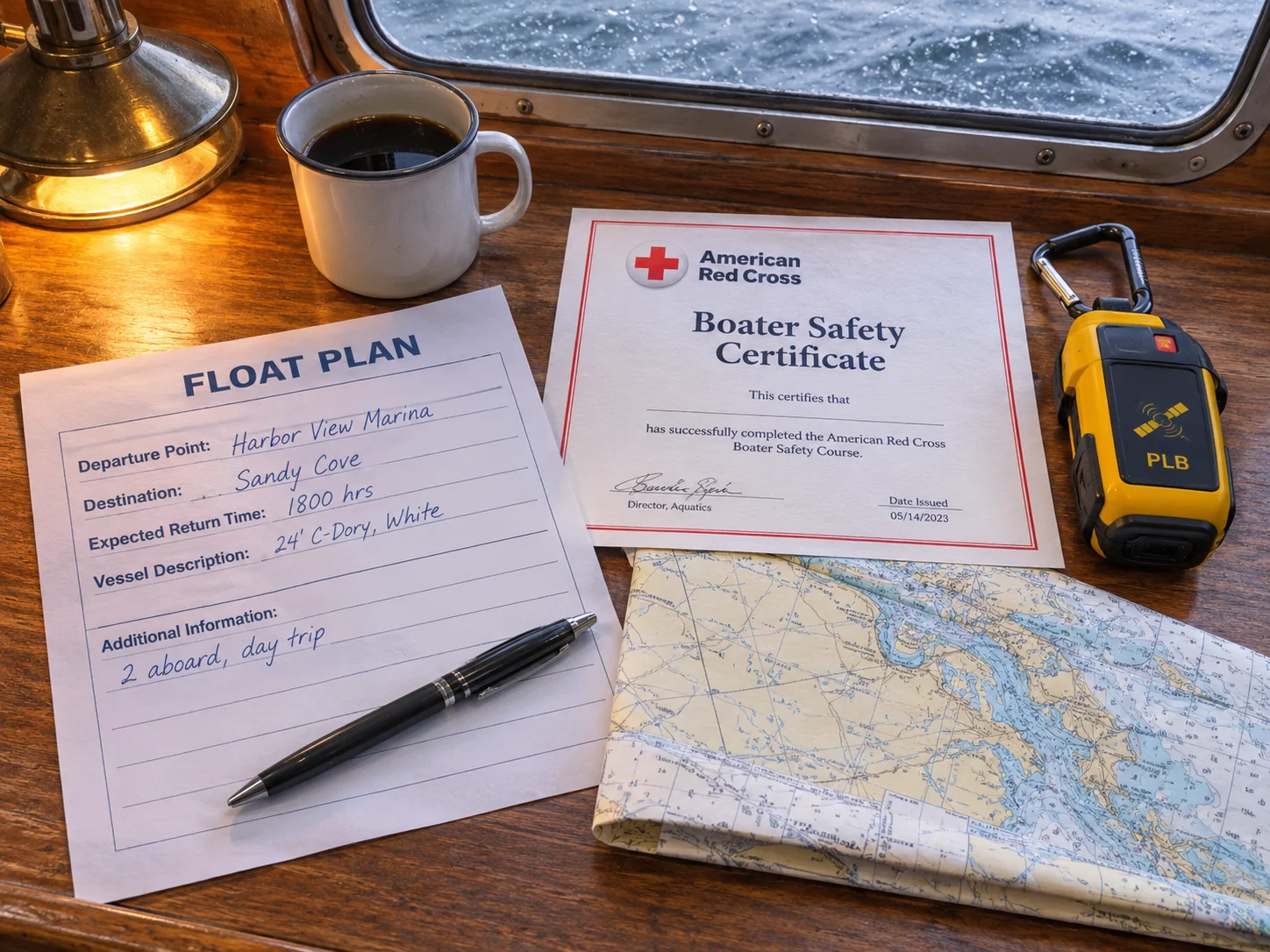
Pre-trip planning is the other component of this survival need. Filing a float plan, the practice of leaving a written record of departure point, destination, expected return time, and vessel description with a contact ashore, creates a rescue trigger if that return time passes. It costs nothing and takes three minutes. Accident investigations repeatedly note that victims who had no float plan were not reported missing for 12 to 24 hours after the incident occurred.
Formal boater safety education addresses all five of the survival needs above in a structured way. The American Red Cross, the U.S. Power Squadrons, Transport Canada’s BoatSmart program, and equivalent national bodies offer courses that cover PFD selection, cold-water immersion response, radio operation, and emergency signaling in a few hours. Many commercial fishing jurisdictions have made these courses mandatory for first-time license holders, but recreational fishers in most areas still take them voluntarily. Voluntary participation rates remain low relative to the documented benefit.
Quick Comparison: 6 Survival Needs at a Glance
| Survival Need | Primary Risk Addressed | Critical Failure Mode |
|---|---|---|
| 1. Flotation and Airway | Drowning within 3 minutes | PFD on board but not worn |
| 2. Thermal Protection | Hypothermia, swim failure | No suit or wrong layering |
| 3. Communication and Signaling | Becoming a search not a rescue | Device on vessel, not on body |
| 4. Location and Self-Rescue Discipline | Swimming to shore in cold water | Abandoning the vessel |
| 5. Buddy System | No one to execute rescue tasks | Solo fishing with no check-in plan |
| 6. Clear Judgment and Planning | Impaired decisions, delayed rescue | Alcohol use, no float plan |
Conclusion
Of the 6 human survival needs that matter most when fishing goes wrong, the one with the greatest leverage is also the least dramatic: a float plan left with a contact ashore, a PLB clipped to your PFD, and a 60-second immersion suit drill before the season starts. Those three actions cost almost nothing and address the most common documented failure points across fishing fatality investigations. The practical next step is to treat the PLB like a wallet. If you would not leave the dock without your wallet, the PLB goes in the same category starting today.