Basics in Survival Every Beginner Angler Should Master First
Drowning is the leading cause of death among recreational anglers in the United States, accounting for more than 70 percent of all fishing-related fatalities in years when national data has been compiled. That figure does not include hook injuries, heat exhaustion, or lightning strikes, all of which send thousands more to emergency rooms each season. The 6 basics in survival every beginner angler should master first exist precisely because fishing looks peaceful right up until it is not.
Disclosure: This post contains affiliate links. As an Amazon Associate, we earn from qualifying purchases, and at no extra cost to you.
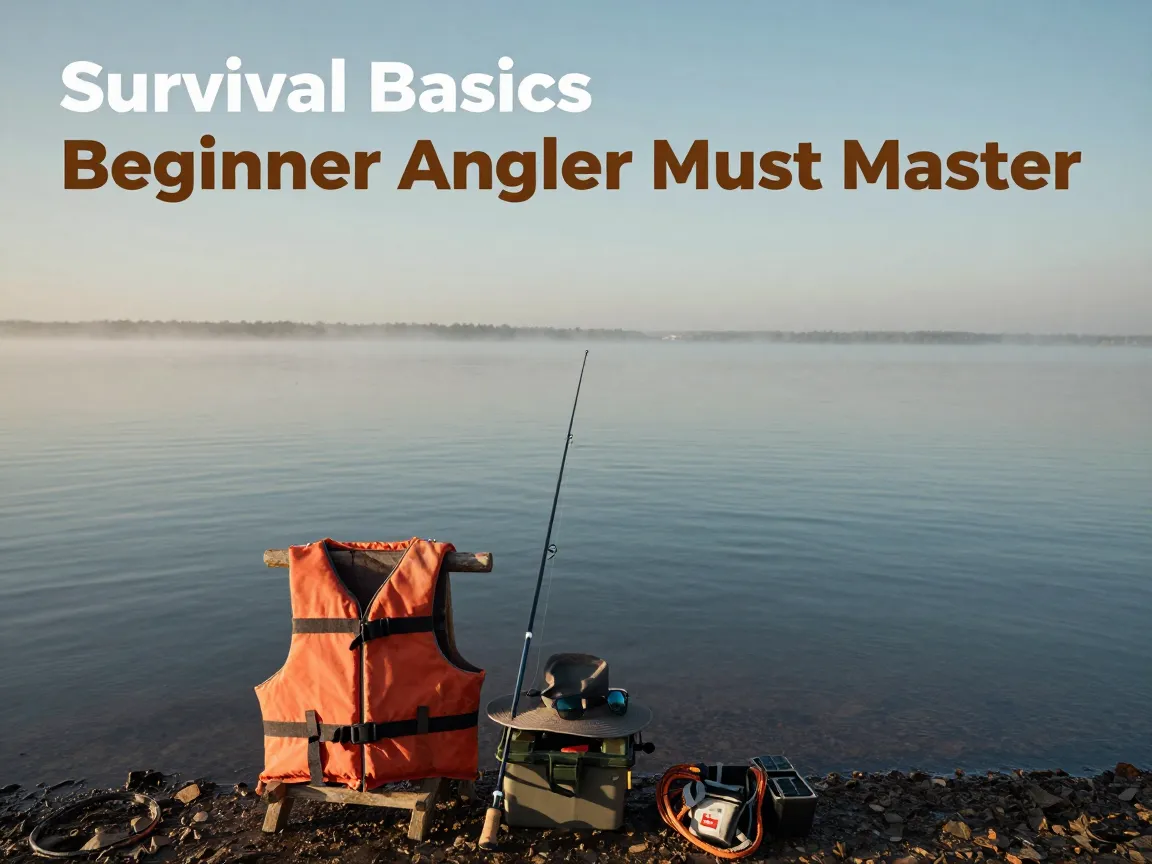
This guide covers those six fundamentals in full. Each one is grounded in guidance from state and national fishing authorities updated through late 2026. Understand them before you pick up a rod, and you will almost certainly spend your time catching fish rather than dealing with a preventable crisis.
Key Takeaways
- A properly fitted, Coast Guard-approved life jacket is the single most important piece of equipment for any angler near or on the water.
- Hook and casting injuries are among the most common beginner accidents and are almost entirely avoidable with one simple pre-cast habit.
- Situational awareness, weather, terrain, and power lines, can be learned in minutes and prevents the majority of outdoor fishing emergencies.
- Fishing with at least one other person and carrying a charged phone changes the outcome of nearly every serious incident.
- Personal health protection (sun, hydration, footwear) is a survival issue, not a comfort preference.
- Responsible fish handling is part of the survival equation too, for the fish, and for the future of the resource.
1. Wear a Life Jacket That Actually Fits
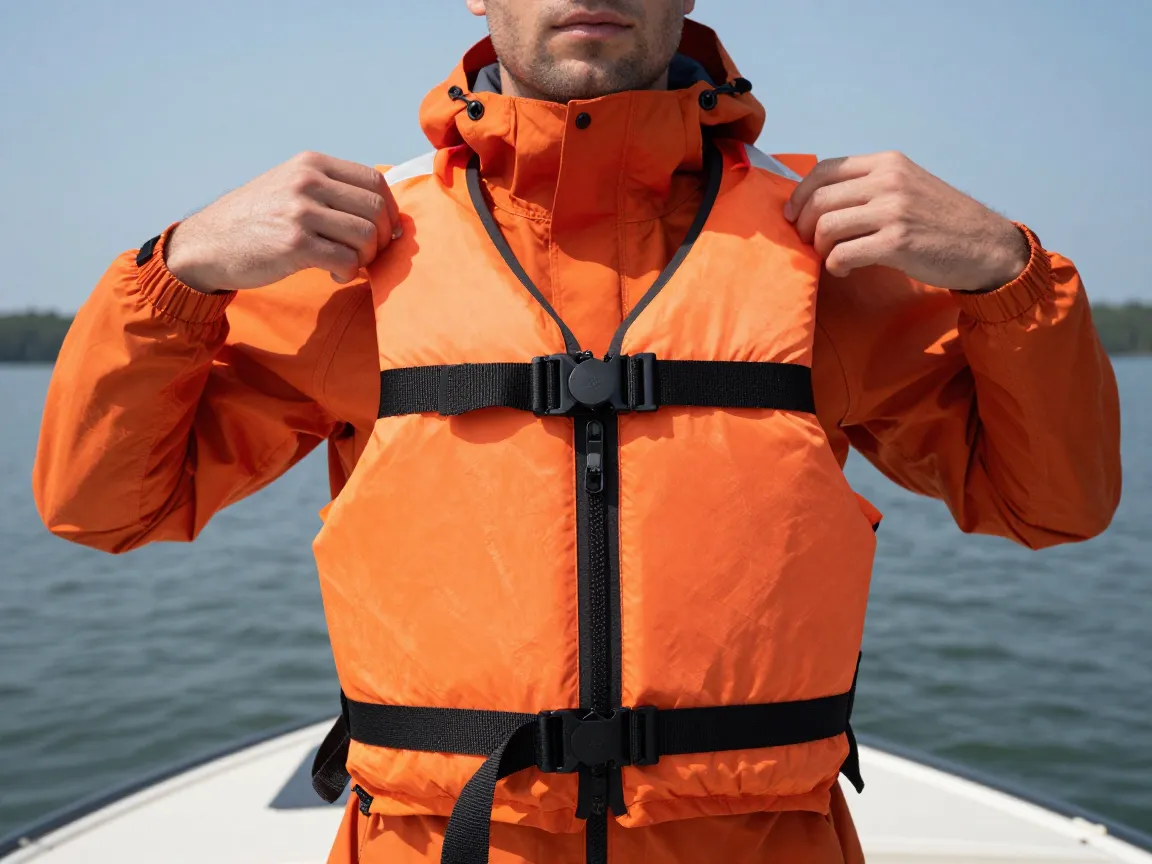
The U.S. Fish & Wildlife Service, the Iowa DNR, and RoSPA all identify wearing a properly fitted, Coast Guard-approved life jacket as the single most critical survival action for any beginner angler fishing from a boat or wading in moving water. That consensus is not accidental, it reflects decades of drowning data showing that the majority of victims were not wearing one.
A life jacket only works when it fits and when it is fastened. The standard fit check is straightforward: put the jacket on, fasten every clasp and strap, then have someone grip the two shoulder straps and lift. If the jacket rides up past your chin or ears, it is too large. Children need a fit test with their body weight in the water, since buoyancy alone does not keep an oversized jacket from slipping over a child’s head. The Iowa DNR strongly recommends life jackets for all children near deep or fast-moving water and specifies that the jacket must be fastened, not just worn.
Type I, II, and III Personal Flotation Devices (PFDs) each cover different scenarios. For calm inland lakes and slow rivers, a Type III wearable PFD is comfortable enough that most anglers will keep it on all day. If you are wading a river with any current, consider a belt-pack inflatable rated for wading, which stays out of the way until you need it. The key detail is that the jacket must be on your body, not sitting in the bottom of the boat.
For youth anglers, Texas Parks & Wildlife’s beginner booklet is explicit: anyone under adult supervision should wear a properly fitted, fastened life jacket whenever they are near the water. That guidance applies whether the child is on a dock, a bank, or a vessel.
2. Learn Hook and Casting Safety Before Your First Cast
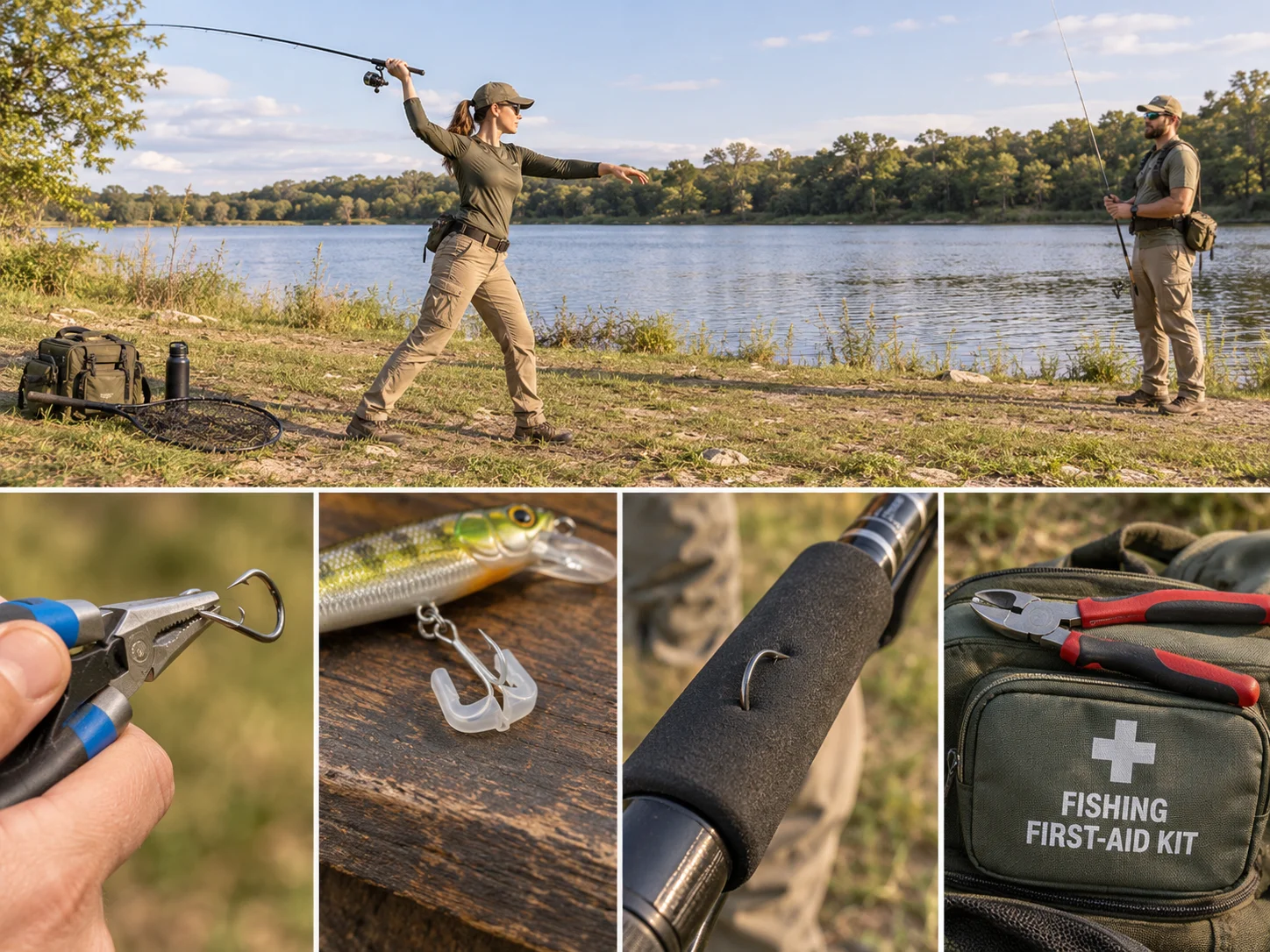
Hook injuries are among the most common accidents beginner anglers experience, and they are almost entirely preventable. The South Carolina DNR, Texas Parks & Wildlife, and the U.S. Fish & Wildlife Service all flag hook and casting safety as a core survival basic, not because hooks are deadly, but because a barbed hook buried in a hand, ear, or eye can end a fishing trip instantly and sometimes requires surgical removal.
The habit that prevents most hook injuries is a single pre-cast check: look behind you, then to both sides, before the rod goes back for the cast. A fishhook traveling at casting speed can embed in skin before the person behind you has time to react. The general guidance across multiple DNR beginner materials is to maintain at least one full rod’s length of clearance between yourself and any other person before casting.
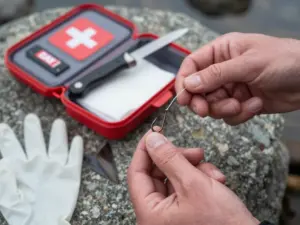
Handling hooks correctly off the water matters just as much. Keep hooks covered with a hook guard or pressed into the rod’s foam grip when walking between spots. If a hook does pierce skin and the barb is visible, wire cutters, a standard item in any fishing first-aid kit, can cut the hook shank so the barb is pushed through cleanly. If the barb is not visible, leave removal to a medical professional. Trying to yank a buried barbed hook out causes more tissue damage than the original puncture.
One practical step beginners often skip: pinch the barbs flat on your hooks with pliers when you are starting out. It makes hook removal from both fish and skin dramatically easier, and it barely affects your ability to land a fish on a relaxed recreational outing.
3. Build Situational Awareness Around Weather, Terrain, and Power Lines
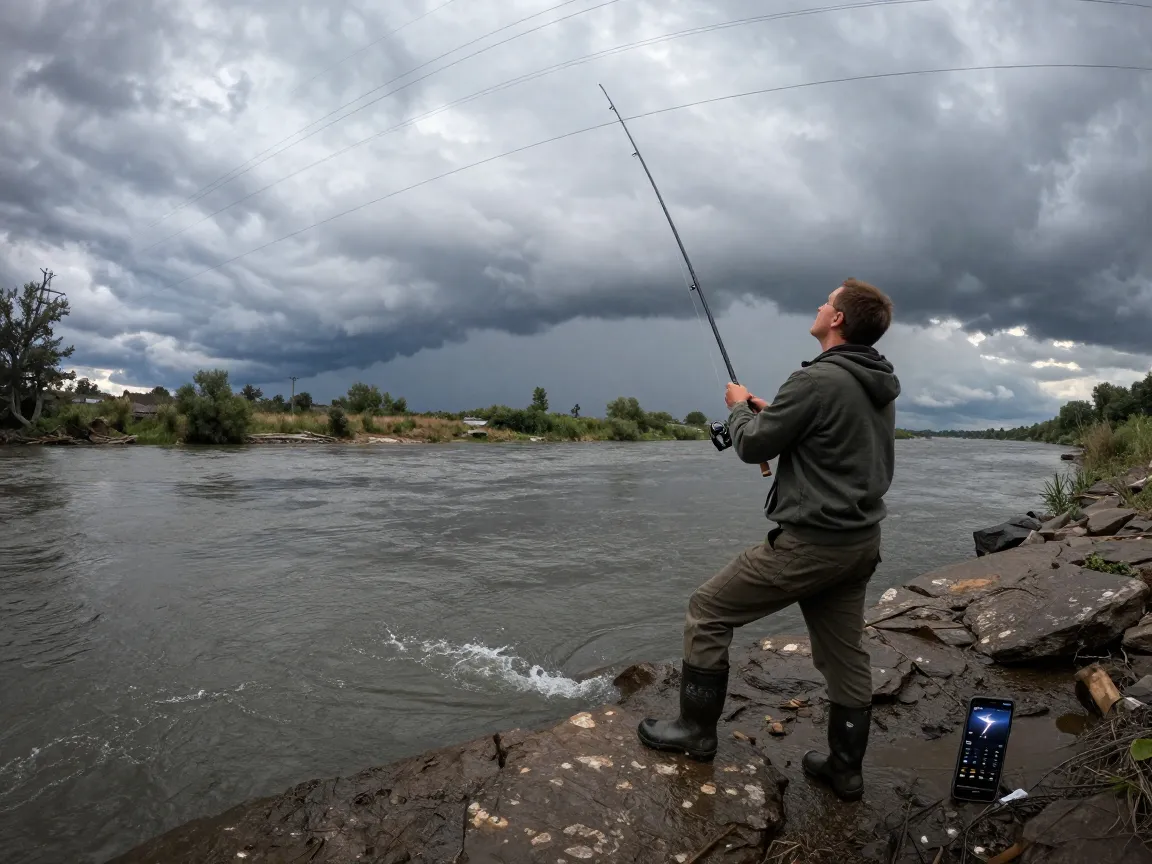
RoSPA’s 2026 angling safety advisory and Outfarer’s beginner planning guide both treat situational awareness as a core survival skill, not a suggestion. It has three specific components that beginners need to know cold.
Weather is the most time-sensitive. Lightning is the acute risk, if you can hear thunder, you are within striking distance of lightning. The standard guidance from multiple sources is to leave the water immediately at the first sound of thunder and not return until at least 30 minutes after the last clap. Checking a local weather forecast before leaving home is not optional. Free apps tied to your GPS location can show hourly lightning probability, and spending two minutes on that check can save a trip-ending scramble for shelter.
Terrain is the second element. Slippery banks, muddy embankments, and fast current are responsible for a significant share of wading accidents each year. HabitOutdoors’ freshwater safety section advises learning to read current speed before stepping in and always testing footing before shifting your weight. Felt-soled or rubber-studded wading boots grip far better than sneakers on wet rock. If the current pushes against your knee with enough force to feel unstable, it is fast enough to knock you off your feet in chest-deep water.
Power lines are the third and most underestimated hazard. Carbon fiber and graphite fishing rods conduct electricity. The standard clearance distance cited in beginner safety guides is at least 10 feet, or roughly 3 meters, between your rod tip and any overhead line. That distance applies when the rod is raised for a cast, not just when it is at rest. Before setting up at any new spot, look up.
4. Fish with a Buddy and Have an Emergency Plan
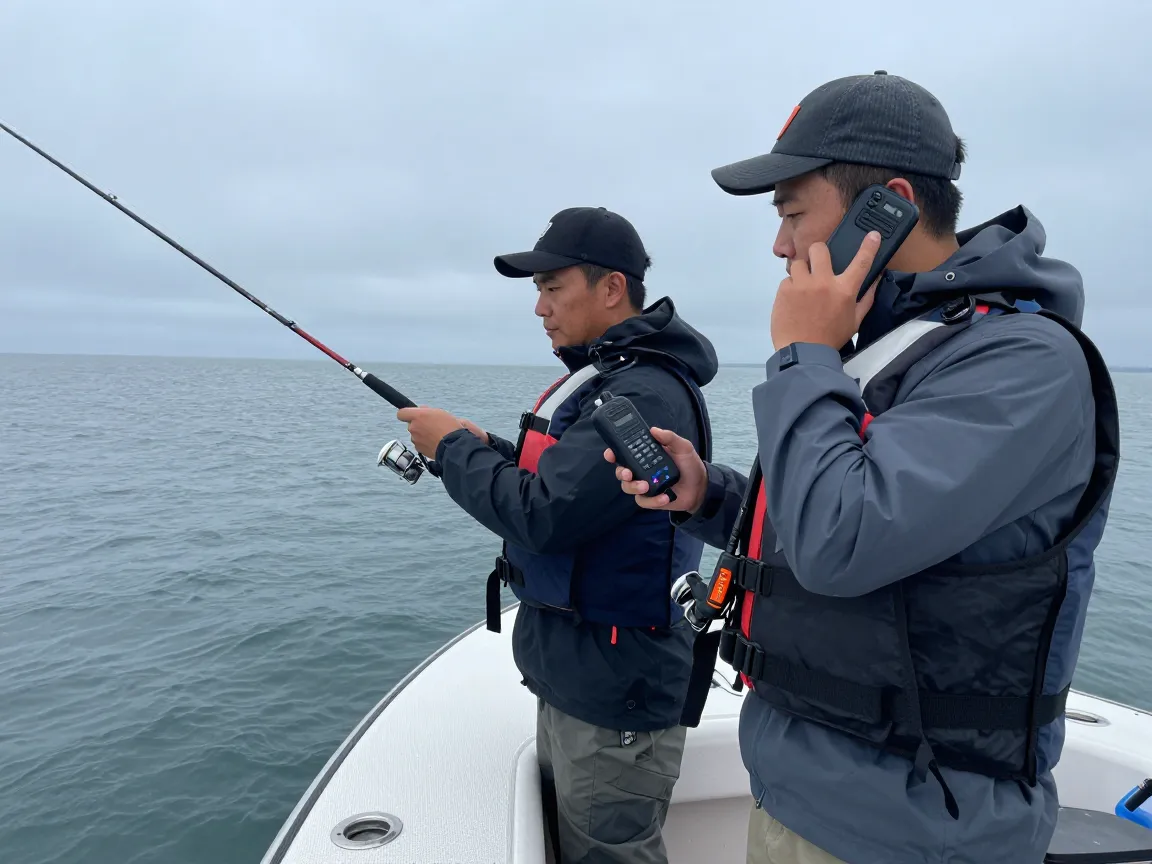
Fishing alone in an unfamiliar area is the single variable that most consistently turns a manageable accident into a fatality. RoSPA’s guidance, the U.S. Fish & Wildlife Service’s beginner resources, and Outfarer’s checklist all identify fishing with a companion as a foundational survival habit, not because two people are twice as safe in a statistical sense, but because one person can call for help while the other stays with the victim.
The emergency plan has two parts. The first is communication: carry at least one charged phone, and know whether you have a signal at your chosen spot before you need to use it. If you are fishing in areas with no cellular coverage, a waterproof VHF radio or a personal locator beacon (PLB) is a reasonable investment. The second part is knowing what to do if someone enters the water unexpectedly.
RoSPA’s “Float to Live” guidance, updated in October 2026, is worth memorizing: if you fall into cold water, your body’s instinct is to thrash and swim hard, which exhausts you within minutes. The survival response is to fight that instinct, stay as still as possible, and let the life jacket float you until you calm your breathing and can self-rescue or wait for help. This is counterintuitive enough that it needs to be learned before it is needed, not figured out in a panic.
Tell someone who is not going with you where you are fishing and when you expect to return. If something goes wrong and you cannot call for help, that person becomes your safety net. Most state DNR beginner guides mention this, and most beginners skip it.
5. Protect Your Personal Health From Sun, Heat, and Terrain
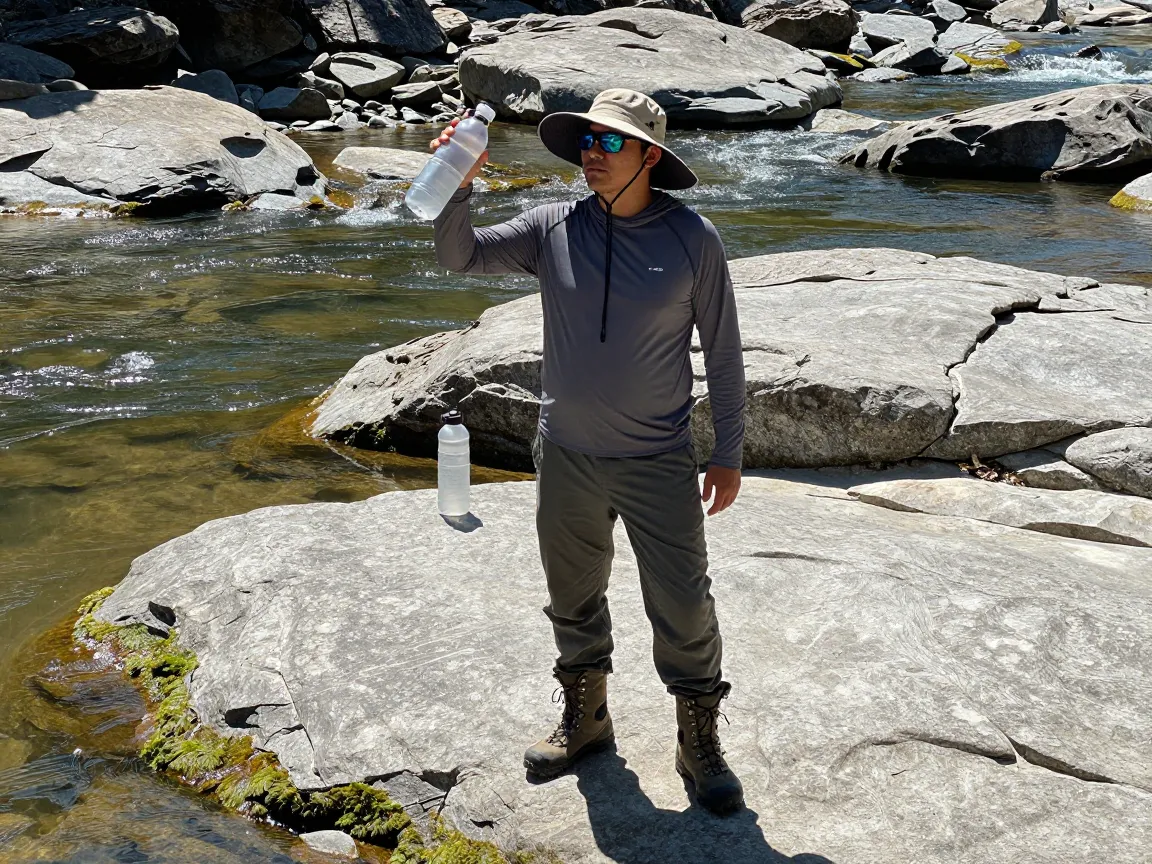
Angling Direct’s November 2026 safety tips, the South Carolina DNR’s beginner PDF, and OutdoorStack’s gear checklist all frame sun protection, hydration, and appropriate footwear as survival issues. That framing is accurate. Heat exhaustion and severe sunburn both degrade your judgment and physical ability while you are still in the field, often before you recognize what is happening.
Sun exposure on the water is more intense than on land because water reflects UV radiation back up at you from below. A wide-brimmed hat and UV-blocking sunglasses protect your face, scalp, and eyes simultaneously, polarized lenses have the added practical benefit of letting you see fish below the surface. Sun-protective clothing rated UPF 30 or higher covers more skin with less effort than reapplying sunscreen every two hours. Texas Parks & Wildlife’s youth safety guidance and SC DNR both recommend avoiding fishing during the hottest part of the day, roughly 10 a.m. to 2 p.m. in summer, particularly for younger anglers.
Hydration is straightforward but easy to underestimate. Physical exertion in direct sun burns through your body’s water reserves faster than sitting in shade. Carry more water than you think you need and drink before you feel thirsty, since thirst is a lagging indicator of dehydration.
Footwear choice is not about comfort alone. Rocky riverbeds, muddy banks, and algae-covered boulders are the terrain features responsible for most non-drowning injuries anglers report. Closed-toe shoes with grip soles are the floor. Wading-specific boots with felt, rubber lug, or studded soles are the appropriate choice for any moving water. Sandals and bare feet are not appropriate footwear on a fishing trip, even a casual one.
6. Handle Fish Responsibly to Maximize Their Survival
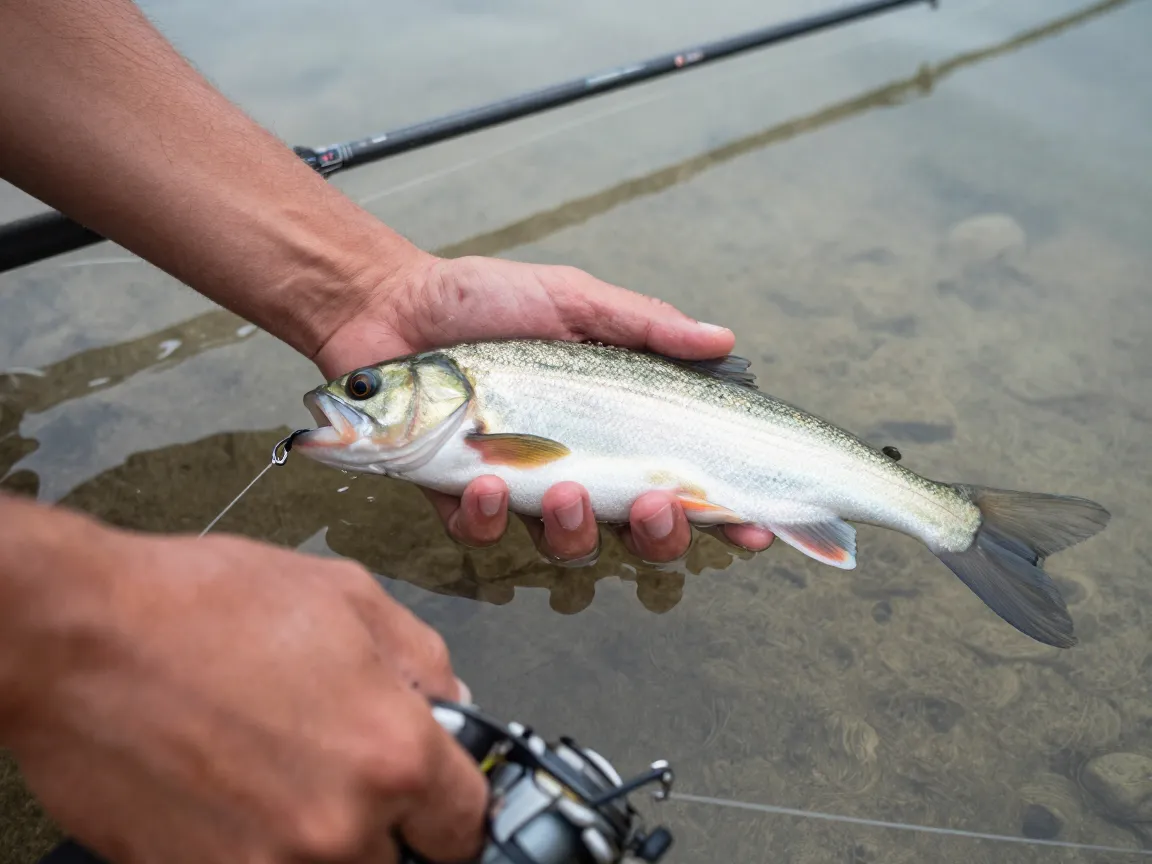
This entry is in the survival list for a specific reason: catch-and-release fishing is now the default practice on a large share of public water in the U.S. and U.K., and how you handle a fish during and after the catch directly determines whether it survives. If you are releasing fish and doing it incorrectly, you are not actually practicing catch-and-release, you are practicing delayed-kill fishing.
The Pennsylvania Fish & Boat Commission’s updated beginner guidance instructs anglers to land fish quickly, keep them in the water as much as possible, use wet hands when handling, and return the fish gently rather than dropping it. Each of those steps has a physiological basis. A fish fought to exhaustion has depleted its oxygen reserves and accumulated lactic acid in its muscles; keeping the fight short and returning the fish quickly gives it the best chance to recover. Handling a fish with dry hands strips its protective mucus layer, which leaves it vulnerable to bacterial infection after release.
The Iowa DNR adds one important specific: when a fish is deeply hooked, meaning the hook has gone past the mouth into the throat or gut, cutting the line close to the hook and leaving it in place produces higher survival rates than attempting to remove it. The fish’s body will typically shed or dissolve the hook over time. Trying to extract a deep hook causes internal bleeding that is usually fatal.
Fishing.info’s 2026 beginner guide notes that survival rates after release vary by species and hook location. Circle hooks, which are designed to catch in the corner of the mouth rather than the gut, are one practical step beginners can take to reduce deep-hooking in the first place. Many state DNR offices and national parks now require them for certain species and water types, worth checking before you buy hooks for a new location.
Quick Comparison
| Survival Basic | Main Risk Prevented | Key Habit |
|---|---|---|
| 1. Life jacket fit | Drowning | Fasten before launch, not after |
| 2. Hook and casting safety | Puncture injury | Look behind before every cast |
| 3. Situational awareness | Lightning, falls, electrocution | Check forecast; look up for lines |
| 4. Buddy system and emergency plan | Unassisted accident | Tell someone your location and return time |
| 5. Sun, heat, and terrain protection | Heat exhaustion, UV injury, falls | UPF clothing, water, grip footwear |
| 6. Responsible fish handling | Fish mortality, resource loss | Wet hands, short fight, cut deep hooks |
Conclusion
The 6 basics in survival every beginner angler should master first are not advanced skills. Each one takes less time to learn than tying a fishing knot. The gap between anglers who know them and those who do not shows up most clearly in the moments that go wrong, the unexpected swim, the embedded hook, the storm that moved in faster than the forecast suggested.
The most useful next step is specific: before your next trip, check whether your life jacket fits correctly using the shoulder-lift test, and spend five minutes reviewing your chosen spot on a satellite map for overhead power lines and water entry points. Those two actions cost nothing and cover the two survival failures that happen most often to beginners.