Fishing Clothes Men Need for a Long Day on the Water
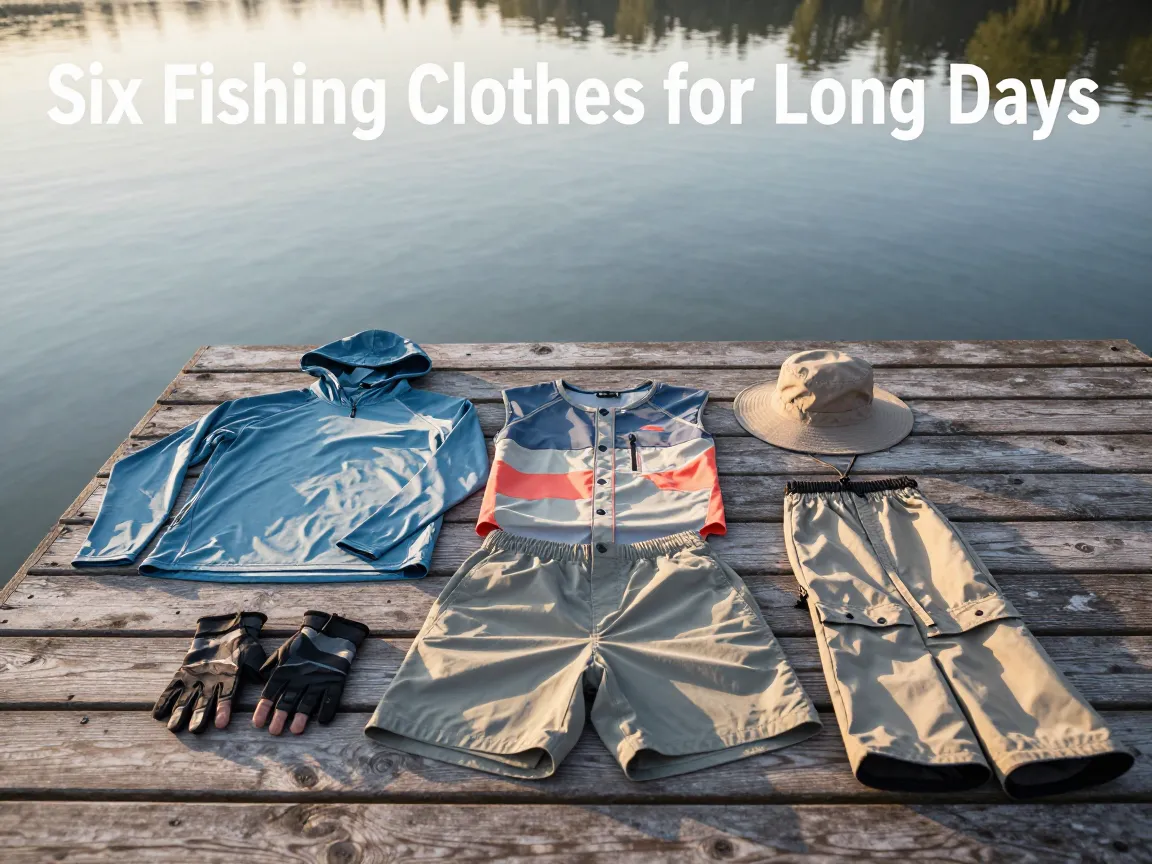
Prolonged sun exposure on open water is one of the fastest ways to end a fishing trip early. Dermatologists at the Skin Cancer Foundation note that water reflects up to 10% of UV radiation back at you, compounding the direct overhead exposure you’re already taking. Getting the clothing right before you leave the dock is not optional. The 6 fishing clothes men need for a long day on the water come down to function: UV protection, moisture management, airflow, and coverage of every exposed zone. Each piece in this list solves a specific problem that generic outdoor clothing doesn’t fully address.
Disclosure: This post contains affiliate links. As an Amazon Associate, we earn from qualifying purchases, and at no extra cost to you.
1. UPF 50+ Long-Sleeve Fishing Shirt
The long-sleeve UPF 50+ fishing shirt is the foundation of any serious angler’s outfit, and UPF 50+ is now the baseline, not a premium feature. At this rating, the fabric blocks 98% of UVA and UVB rays, which is the equivalent of wearing SPF 50+ sunscreen that never sweats off, never needs reapplication, and never gets rubbed into your eyes when you wipe your face.
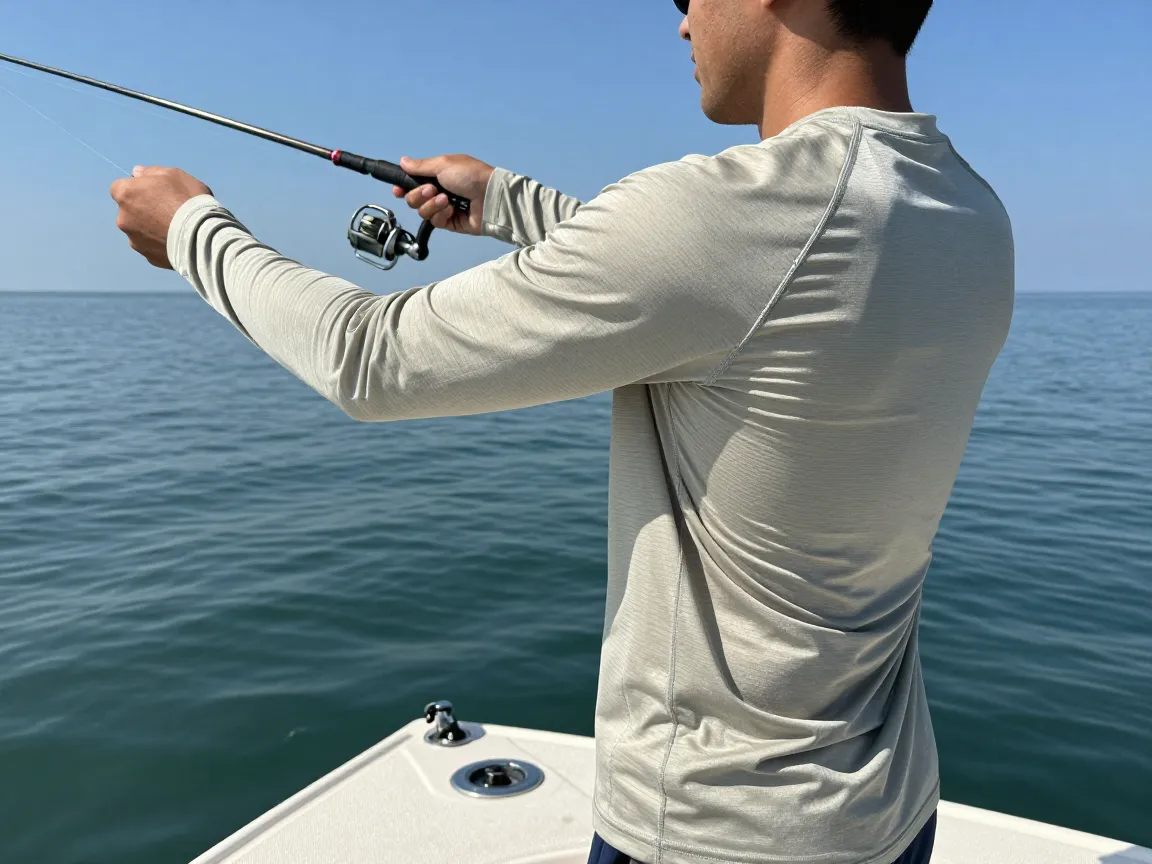
Most performance fishing shirts in this category use a high-polyester construction, often in the 88-100% range, specifically because polyester’s tight weave creates the density needed to achieve that UV-blocking threshold while staying lightweight. Fish Lake Co, Simms, and Mossy Oak all build their men’s core lines around UPF 50 long-sleeve tops, and budget options from brands like Twekfish use an 88% polyester / 12% spandex blend to add stretch without sacrificing the UPF rating.
What separates a fishing-specific long-sleeve from a standard athletic shirt is moisture-wicking construction paired with quick-dry fabric. On the water, you’re dealing with sweat, spray, and the occasional wave over the bow. A shirt that holds moisture against your skin becomes uncomfortable within two hours in direct sun. Look for shirts that explicitly state moisture-wicking and quick-dry on the label, not just UPF. Simms’ SolarFlex sun tops, for example, include odor-resistant treatment and extended wrist coverage to protect that gap between glove and sleeve. Those details matter on a full-day trip that stretches past six hours.
A well-fitted UPF long-sleeve also gives you the option to skip sunscreen on your arms entirely, which reduces cost, eliminates the chemical exposure concern, and keeps your hands cleaner when you’re handling line and bait.
2. Sun Hoodie with Integrated Hood Coverage
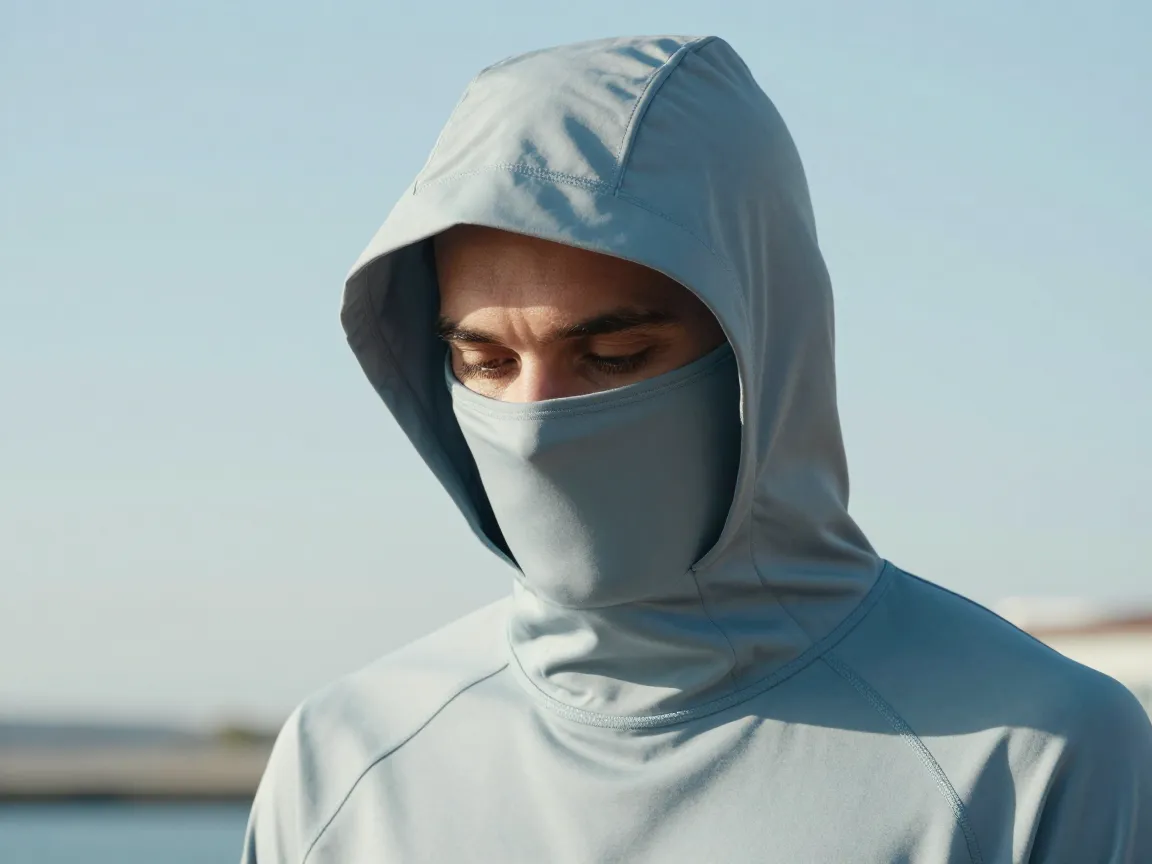
Sun hoodies have moved from niche offshore gear to a mainstream fishing essential, and the reason is straightforward. A standard long-sleeve shirt leaves your neck, ears, and the back of your head exposed. A hoodie closes those gaps without requiring a separate hat or buff for every position shift.
The best fishing sun hoodies combine UPF 50+ fabric with a fitted three-panel hood that sits close to the face without blocking peripheral vision. Simms builds matching sun gaiters into its hooded tops specifically for day-long fishing in intense sun, extending coverage to the lower face and neck. Pelagic’s Exo-Tech hooded shirt goes further, adding an integrated face mask, 4-way recycled stretch fabric, water and stain repellent finish, zipper pockets, and venting panels. That level of integration is designed for offshore environments where the sun is unobstructed and conditions change quickly.
For anglers who want economy without sacrificing UPF rating, multi-pack hoodies are genuinely viable. A 4-pack of men’s UPF 50+ sun hoodies with hoods for full neck and ear coverage is available at a price point that makes it reasonable to keep a spare dry one in your cooler bag. The fabric in these multi-pack options is described as featherlight, which matters when you’re wearing a hood in 90-degree heat.
One practical point: a hoodie works best when you’re stationary or moving slowly, like when you’re anchored and working a structure. If you’re running at speed on a center-console, the hood can fill with air and become a nuisance. In those cases, pull it down and let the long-sleeve shirt do the work until you’re back on the drift.
3. Vented Button-Down Fishing Shirt
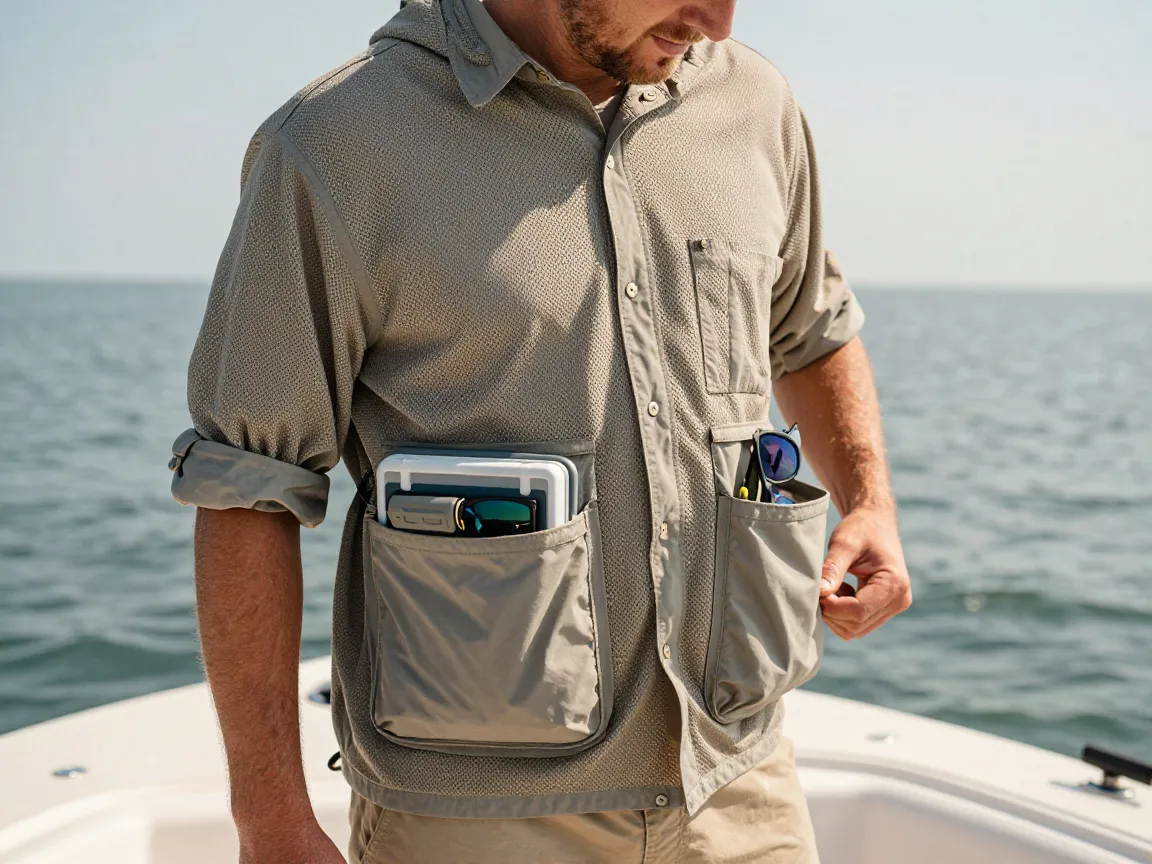
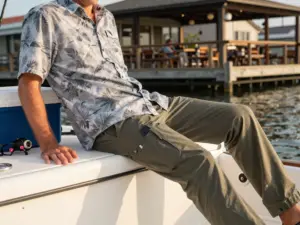
The vented button-down occupies a specific slot in a fishing outfit. It’s the piece you reach for when the temperature climbs past the point where even a lightweight long-sleeve feels like too much coverage, but you still need UV protection and somewhere to put your tools.
The design feature that defines this category is the mesh-lined cape vent on the back. It’s a panel of breathable mesh sewn into the upper back of the shirt that creates active airflow when you move. UIQUR’s UPF 50+ fishing shirt, which weighs roughly half a pound in a size 3XL, uses mesh panels and quick-dry cooling fabric to make it functional in sustained heat. The roll-up sleeves with button tabs let you shift between full arm coverage and ventilated short-sleeve mode depending on cloud cover or time of day.
Multiple pockets are a practical necessity on a fishing shirt, not a styling choice. Front chest pockets hold a small tackle box, sunglasses, or a phone without adding bulk. Some vented button-downs include interior pockets or rod holder loops specific to fishing applications.
The YESFASHION men’s sun-protection fishing shirt sold at Target frames its vented button-down as appropriate for fishing, work, and travel, which reflects how these shirts are now designed. They’re not single-use items. The same shirt you wear on a flats boat on Saturday works for a drive to a tackle shop or a casual outdoor lunch. That versatility doesn’t compromise its fishing function. It just means you get more use from a single purchase.
For fit, go one size up from your athletic shirt size. You need room to cast without the back vents pulling tight, and the relaxed cut improves airflow.
4. Quick-Dry UPF Shorts or Pants
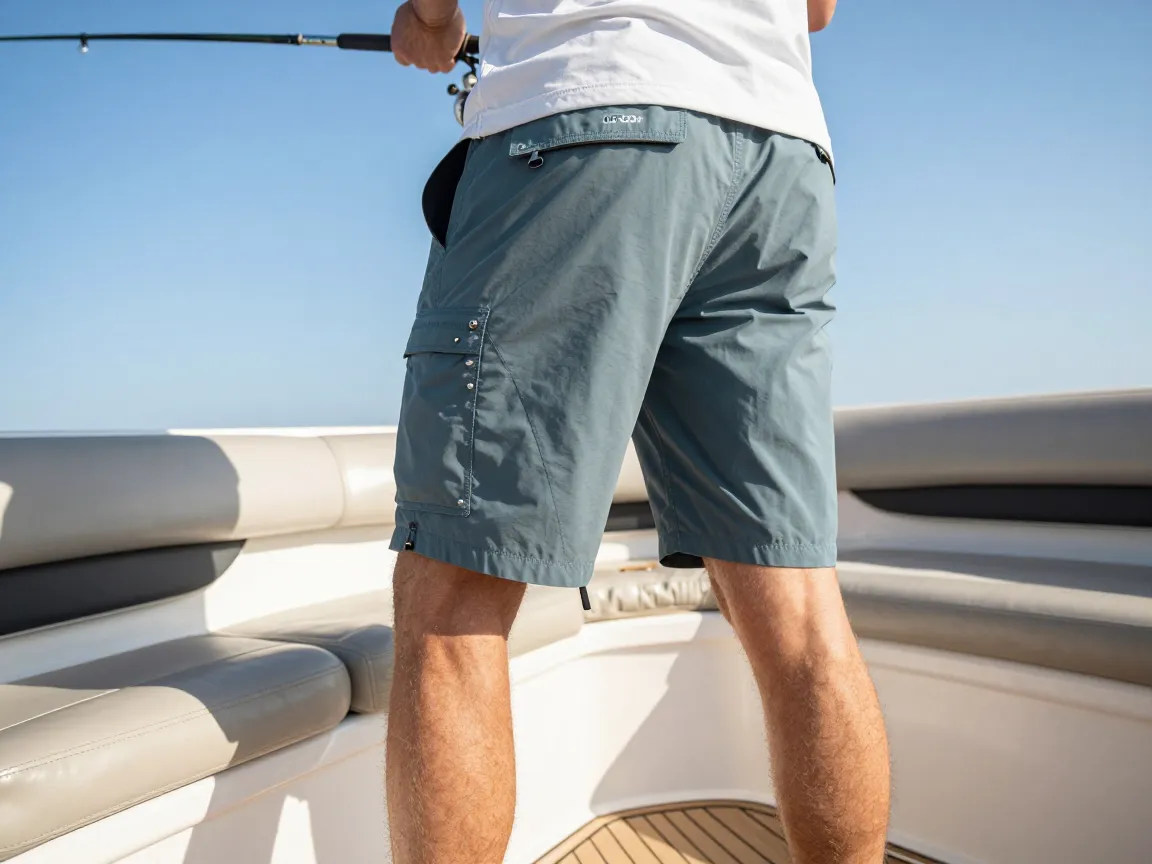
Lower-body sun protection gets less attention than shirts, but your thighs, knees, and lower legs take direct UV exposure for every hour you’re on the water without coverage. Quick-dry UPF shorts address this, and the technical construction matters as much here as it does for tops.
Mossy Oak’s fishing shorts are built with quick-dry, flex fabric for superior comfort, and the brand explicitly targets anglers who fish day after day in blistering sun. The pairing of UV-rated fabric with mechanical stretch is now standard in this category. You need fabric that moves with a wide casting motion, dries within 20 to 30 minutes of getting wet, and doesn’t feel abrasive against your skin when you’re sitting on a vinyl seat for eight hours.
Shorts are the dominant choice for warm-weather trips, but lightweight UPF pants are worth considering for cooler mornings, locations with significant insect activity, or long days when you’re standing on a flats skiff and your shins are fully exposed. Convertible pants with zip-off legs split the difference if you’re heading out in the morning and expect afternoon heat.
One thing to check before buying is whether the UPF rating applies to the whole garment or just the fabric panels. Some shorts use UPF-rated fabric in the main body but standard material in mesh liners or pockets. For serious sun protection, the outer fabric should carry the UPF 50+ rating, and the shorts should not have a loose, open weave in areas that face the sun directly.
Pockets with drainage holes or zip closures are worth paying extra for. Standard shorts pockets hold water from spray and become uncomfortable. Drainage grommets in the bottom corner of a pocket solve this without complicating the design.
5. Sun-Protective Hat with Neck Coverage
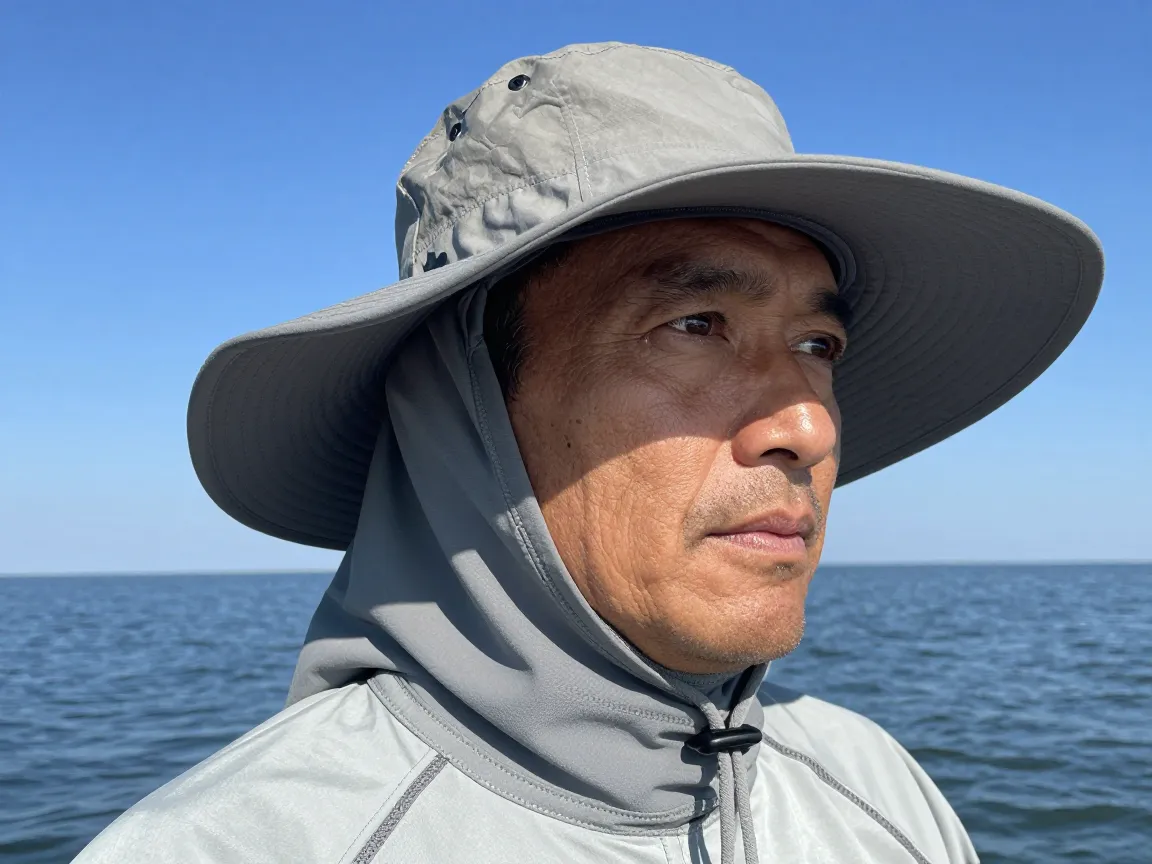
No combination of shirts and hoodies replaces a proper fishing hat. The face, forehead, and top of the ears remain exposed even in a well-fitted sun hoodie, and direct overhead sun at midday hits those zones hardest. A hat is the only piece of gear that provides overhead shade without increasing your core body temperature.
The functional choice for all-day fishing is either a wide-brim hat with a neck flap or a performance cap with a rear flap. Wide-brim hats with brims of three inches or more provide shade to the face, ears, and neck simultaneously. They work well for still-fishing, kayak fishing, or any situation where you’re not moving at speed. Hook and Tackle’s UPF 50+ hat lineup positions head coverage as part of a unified sun-protection system alongside UV shirts, which is the right frame. A hat is not a standalone accessory. It completes the system.
Coolibar’s men’s fishing and boating collection was developed with input from U.S. Coast Guard captains, and their vented Andros Fishing Tee was specifically designed for long days on the water. That same design philosophy carries over to their hat selection, where venting and UPF 50+ fabric are non-negotiable specifications.
For offshore and boat fishing where wind is a factor, a fitted performance cap with a UPF-rated neck flap and a moisture-wicking sweatband holds position better than a wide-brim hat. Many anglers use a gaiter over the neck flap for added coverage during peak sun hours, which is the same approach Simms builds into its integrated sun-protection system.
Whatever style you choose, the hat should fit firmly enough to stay on at boat speed without a chin strap. A hat that blows off is useless, and retrieving it from the water costs you time and tackle.
6. Sun Accessories: Gaiters and Fingerless Sun Gloves
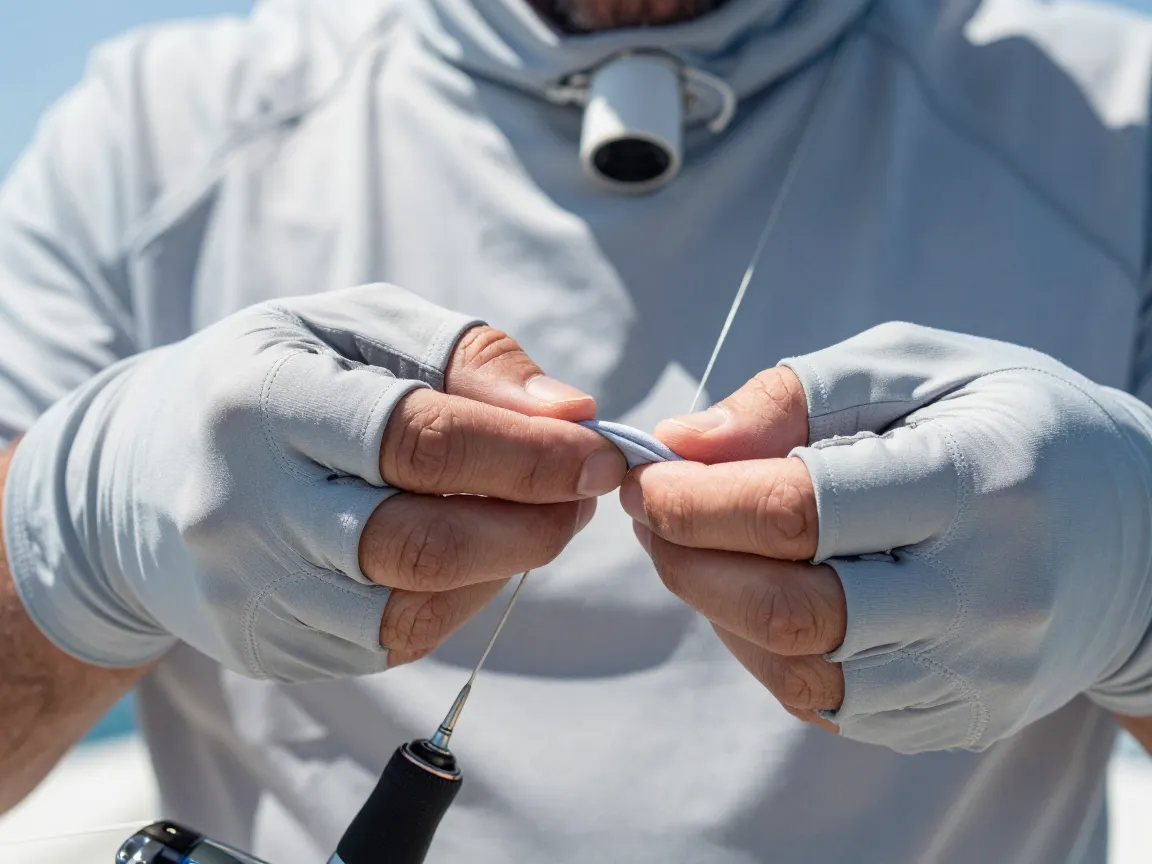
The two zones that shirts, shorts, and hats can’t reach are your hands and the lower face. These are also the zones anglers most consistently skip. After six hours in direct sun, the tops of unprotected hands will burn, and the skin on the lower face and neck gets cumulative exposure that adds up across a season.
Simms includes sun gaiters and gloves in its sun-protection lineup for exactly this reason, treating them as coverage for exposed zones that standard apparel leaves open. A sun gaiter is a lightweight tube of UPF 50+ fabric that pulls up over the chin and nose when sun exposure is intense and drops around the neck when you need ventilation. It weighs almost nothing, folds into a pocket, and covers the neck, lower face, and ears without adding warmth.
Fingerless sun gloves cover the backs of the hands, which is where sun damage accumulates, while keeping the fingertips free for knot tying, hook handling, and tackle management. Full-finger gloves exist for extreme offshore conditions, but most freshwater and inshore anglers find fingerless versions give adequate coverage without compromising dexterity.
The BARRACUDA BAY short-sleeve fishing shirt and similar crossover products highlight how this category has expanded beyond dedicated fishing gear into general outdoor apparel, but the specific combination of gaiter plus fingerless gloves remains most common in fishing-specific collections rather than hiking or travel lines. That’s because the exposure pattern on the water is different. You’re often in one position for extended periods with your hands extended forward in direct sun while your body is otherwise covered.
Carrying a gaiter and gloves in a dry bag or pocket adds no weight and takes up minimal space. On a day where the sun is stronger than forecast, having them available changes the comfort and safety profile of the trip.
Conclusion
The 6 fishing clothes men need for a long day on the water work as a system. Each piece covers a zone or solves a problem the others can’t. The long-sleeve UPF shirt handles the torso and arms. The sun hoodie adds neck and ear coverage. The vented button-down manages heat when temperatures climb. Quick-dry UPF shorts or pants protect the lower body. A sun hat covers the face and overhead exposure. Gaiters and fingerless gloves close the two remaining gaps.
If you’re building this kit from scratch, start with the UPF long-sleeve shirt and quick-dry shorts because they cover the most surface area and offer the best return per dollar. Add the sun hoodie next if you’re planning extended offshore or midday trips. The hat, gaiter, and gloves complete the system before you get on the boat.