Hunting Aesthetic Wallpaper Picks to Transform Your Screen
More than 600 hunting wallpapers are available on a single platform as of late 2026, yet most hunters still settle for a generic deer photo they found in thirty seconds. The gap between what exists and what actually looks great on a modern screen is wide, and it comes down to curation. These 6 Hunting Aesthetic Wallpaper Picks to Transform Your Screen close that gap by focusing on design quality, artistic heritage, and how each style actually performs when you unlock your phone or wake your monitor.
Disclosure: This post contains affiliate links. As an Amazon Associate, we earn from qualifying purchases, and at no extra cost to you.
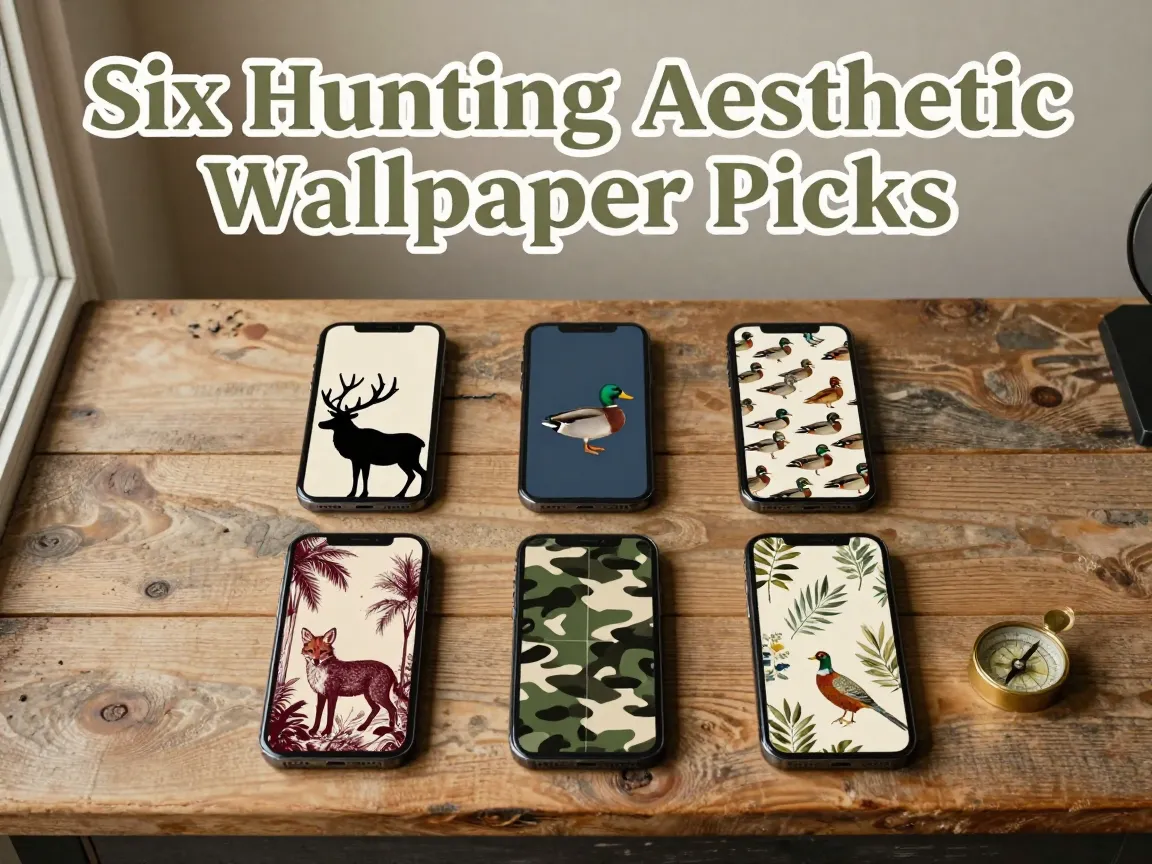
The picks below are drawn from the most distinct artistic directions currently driving the hunting-aesthetic wallpaper market. Each one represents a genuinely different visual experience, so whether you are dressing a smartphone lock screen, a tablet, or a wide-format desktop display, there is a clear candidate here for your setup.
1. Heritage Screen-Print Silhouettes from Curated Lodge-Art Collections
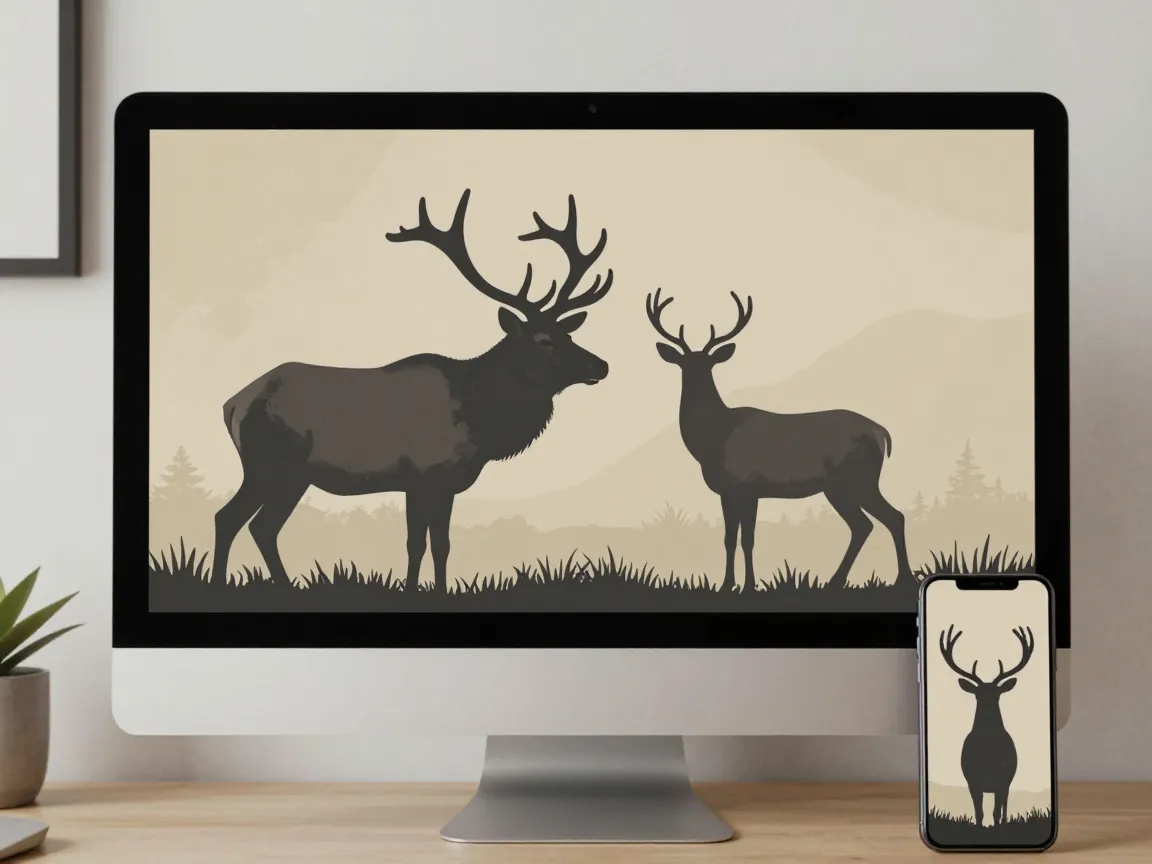
The strongest trend reshaping hunting wallpapers in 2026 is the deliberate move away from hyper-realistic wildlife photography toward bold silhouette art that echoes vintage hunting-lodge prints. Curated collections built around this philosophy, most notably the Heritage Collectible Series available through Buckeye Hunter Hub, package multiple wallpapers as coordinated sets rather than isolated images. The result is a visual language that feels intentional rather than assembled at random.
The design approach leans heavily on what illustrators call a retro screen-print look: limited color palettes anchored in muted earth tones, clean silhouettes of quarry such as mountain elk and whitetail deer, and a slight grain or ink-bleed texture that gives each image the feel of a printed poster rather than a digital render. That texture is not an accident or a shortcut, it is a deliberate choice to reference Duck-Stamp-era wildlife illustration, a tradition that many hunters associate with the golden age of sporting art.
What makes this pick genuinely transformative is how well it scales. High-DPI screens, retina iPhones, modern Android flagships, 4K desktop monitors, can expose the weaknesses of low-resolution or oversaturated photography immediately. A properly constructed screen-print silhouette, built on clean vector-like shapes before the grain is added, renders crisply at any size. Set one of these on a wide desktop monitor and it reads like a framed print. Set it on a phone lock screen and the bold composition still carries across a small display. For hunters who want their screen to look like a piece of sporting art rather than a trail camera still, this category is the starting point.
A practical note: when browsing heritage collections, look for sets that include multiple coordinated pieces rather than buying individual images. Rotating three or four wallpapers from the same series across your devices creates a coherent personal gallery feel that a single standalone image simply cannot match.
2. Mid-Century Waterfowl Illustrations with Earthy Textural Finishes
Waterfowl art has its own distinct aesthetic history, and the best current digital wallpapers in this category honor it directly. Mid-century sporting magazines and state wildlife agency prints established a visual grammar for duck and goose imagery, bold compositions, flat color areas, slightly rough printing textures, that modern designers are now translating into screen-optimized files. The appeal is real and the market has responded: several waterfowl-focused wallpaper collections updated through late 2026 have been among the most actively developed in the hunting-aesthetic space.
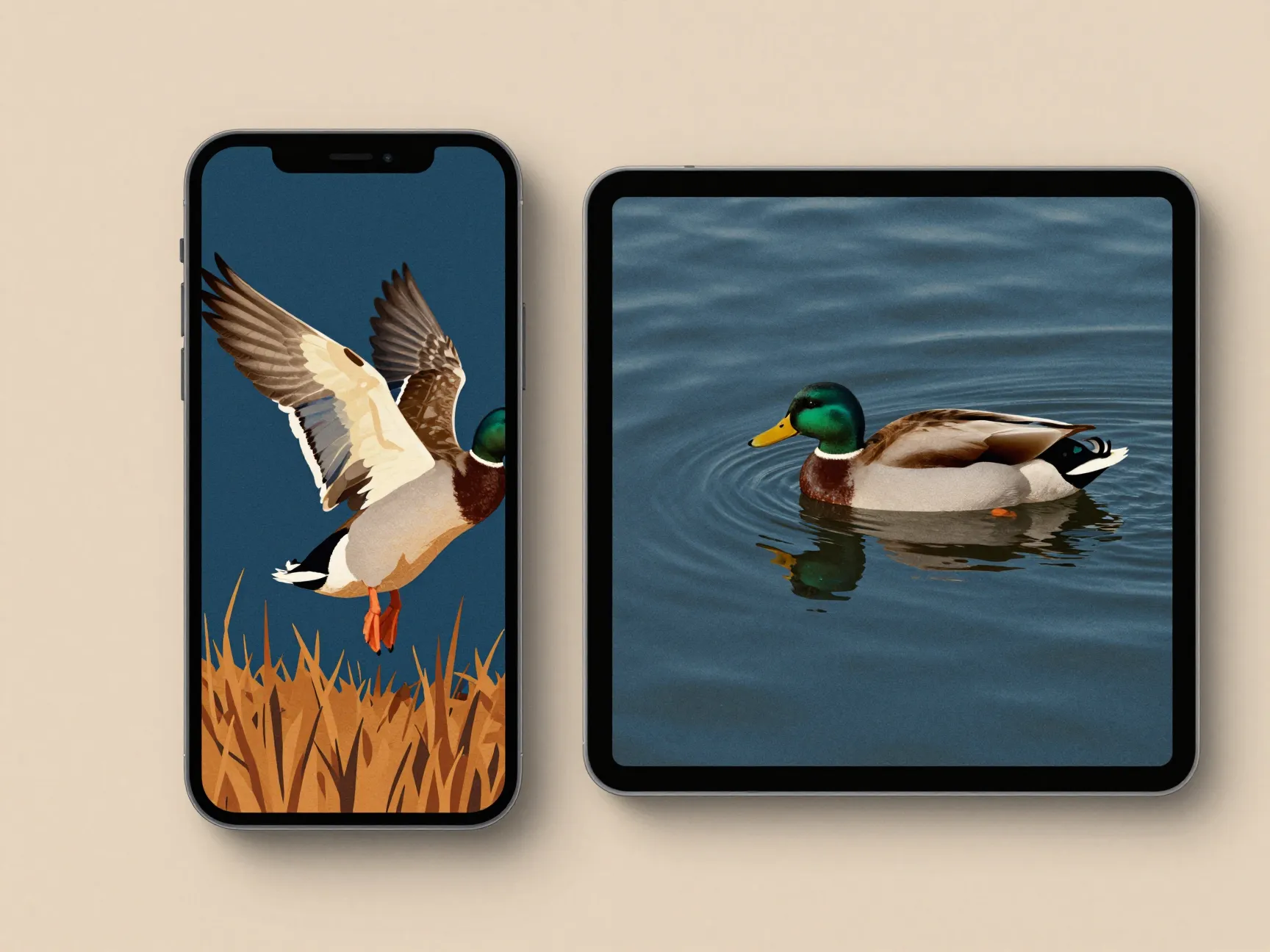
The key visual signature here is earthy tones combined with a grainy, print-like finish. Think deep slate blues for water, amber and burnt ochre for marsh grasses, and the stark white of a drake mallard’s neck ring cutting through it all. These are not the oversaturated greens and digital blues common in nature photography apps. The palette is deliberately restrained, which means the wallpaper does not fight with your app icons or notification badges, it sits behind them cleanly while still making the screen feel alive.
Specific compositions matter more in this category than in almost any other. A mallard banking hard into the wind, wings cupped, is a very different wallpaper from a mallard sitting flat on water. The former has energy and diagonal movement that works exceptionally well on a vertical phone screen. The latter might suit a horizontal tablet or desktop background where the calm of open water reads as deliberate. When evaluating mid-century waterfowl picks, pay close attention to whether the composition was designed for portrait or landscape orientation, a horizontal goose-flock sweep that looks stunning on a 27-inch monitor can feel awkward and cropped on a smartphone.
For serious waterfowlers, this aesthetic also carries a layer of identity signaling. A well-chosen mallard or wood duck wallpaper communicates an appreciation for the tradition of the sport in a way that a photo of someone’s actual hunt simply does not. It is the difference between a snapshot and a sporting print.
3. Species-Specific Wallpaper Packs Designed for Multiple Devices
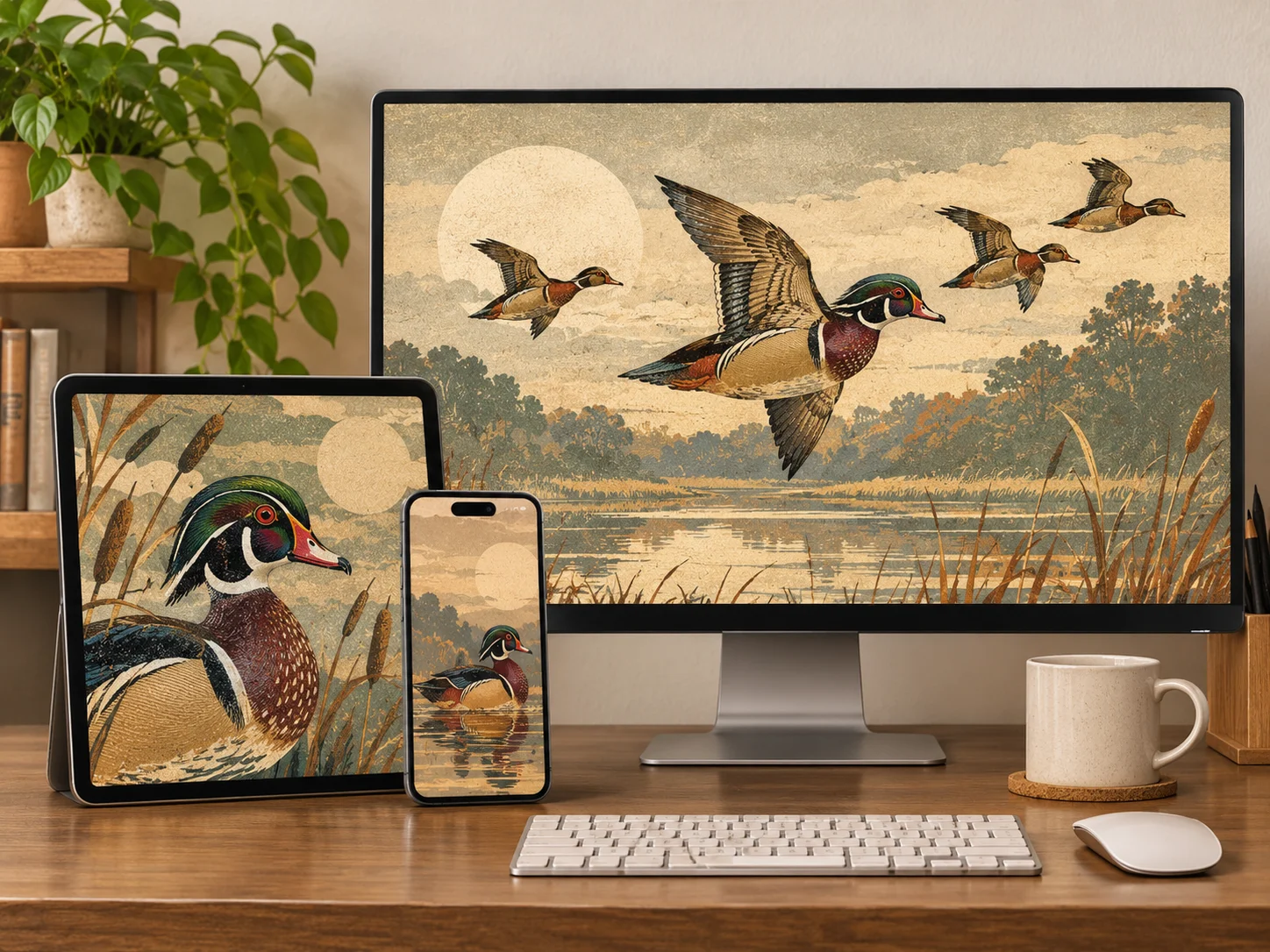
One of the more practical innovations in hunting-aesthetic wallpaper design is the emergence of species-specific packs: coordinated sets of three to six images built around a single quarry and engineered to work across different screen formats simultaneously. Rather than finding one wallpaper for your phone and a separate unrelated one for your desktop, a well-designed pack gives you a mallard series, a wood duck series, or a Canada goose series, each piece sharing the same palette and artistic style but composed specifically for the aspect ratio of a given device.
Buckeye Hunter Hub’s named series, including Mallard, Wood Duck, and Honker collections, illustrate this approach clearly. The Mallard pack, for example, includes compositions designed for vertical smartphone screens with tight, dynamic framing, while the same series includes wide-format goose-flock arrangements built specifically for the horizontal sweep of a desktop monitor. Every piece shares the same muted heritage palette and screen-print texture, so your phone lock screen and your work desktop feel like they belong to the same visual world rather than two unrelated design choices.
This matters practically because the alternative, picking individual wallpapers from different sources, almost always produces a visual mismatch. Colors clash, art styles conflict, and the overall effect is a collection of screens that feel generic rather than considered. A coordinated pack solves this without requiring any design skill from the user. Download, assign, and the curation is done.
The filtering tools that well-organized stores now offer make this easier still. Filtering by species, season, or artistic theme lets a hunter narrow hundreds of options down to a coherent shortlist in minutes. For anyone looking to assemble a personal set of six coordinated wallpapers, exactly the kind of curated selection these picks represent, this species-pack approach is the most efficient path.
4. Vintage Fox-Hunt and Equestrian Countryside Art for a Classic Sporting Feel
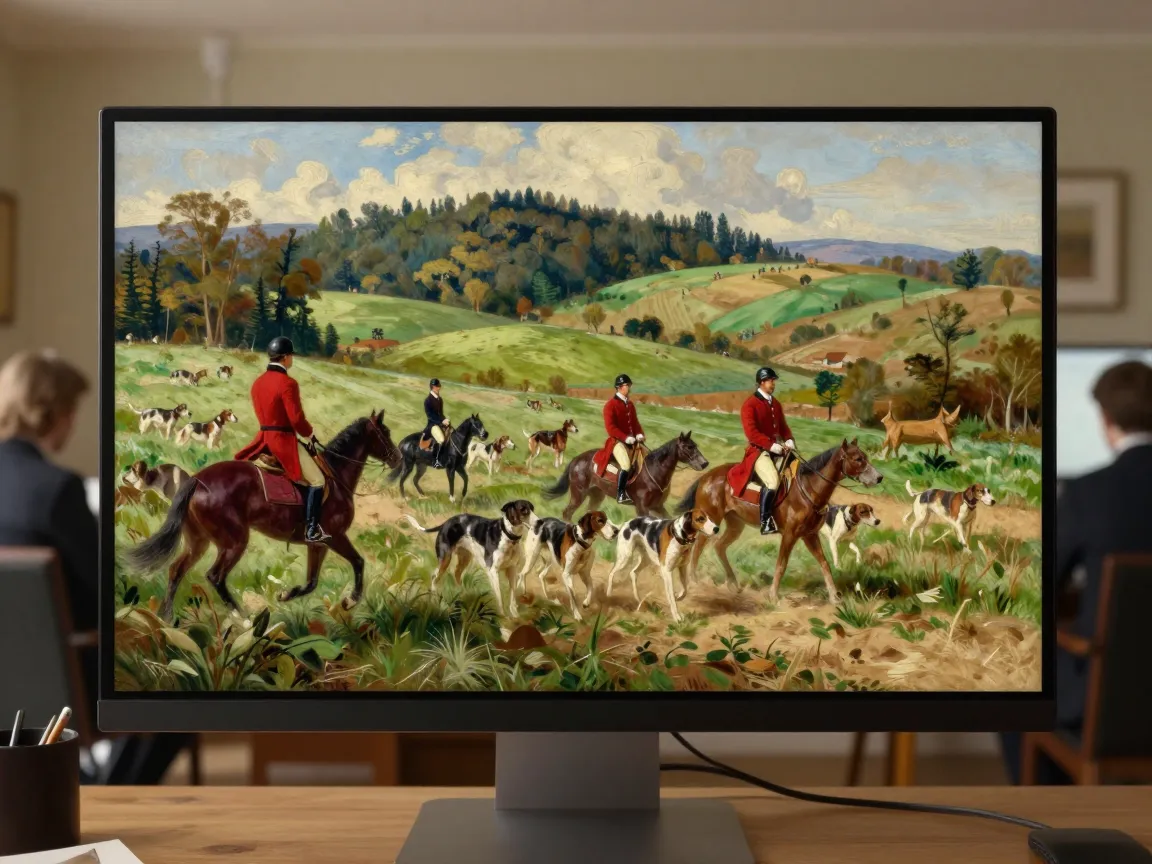
Not all hunting aesthetic wallpapers draw from American wildlife illustration. A distinct and growing corner of the market pulls from British and continental European sporting traditions: fox-hunt scenes, equestrian countryside imagery, and what sellers and collectors increasingly call an “old money” sporting aesthetic. These images reference a visual world of hounds, riders, rolling green fields, and the kind of art that once hung in English country houses and private sporting clubs.
On platforms like Etsy and Spoonflower, vintage fox-hunt and hunting-dog imagery positioned as countryside or equestrian art has found a consistent audience among buyers who want something that reads as refined rather than rugged. The palette here skews differently from American waterfowl and big-game art: deeper forest greens, burgundy, navy, and aged cream grounds rather than earthy ochres and slate blues. The artistic references lean toward oil painting and engraving traditions rather than screen-print or poster art.
For a desktop display, this category works particularly well when the image has the compositional density of traditional painting, multiple figures, layered landscape depth, and fine detail that rewards a close look. That detail does require a high-resolution source file; a compressed or low-res version of a painting-style image degrades visibly on a 4K monitor in ways that a bold silhouette might not. When sourcing from marketplaces, verify the resolution explicitly before downloading.
The practical use case is a home office or study setup where the screen is often visible to others, guests, colleagues on a video call, family. A well-chosen fox-hunt or countryside sporting print communicates a specific set of cultural references and personal interests that a wildlife photo does not. It is a conversation piece as much as a wallpaper, and that social dimension is part of what makes it a genuinely distinct pick from the other entries in this list.
5. Seamless Camo and Woodland Pattern Backgrounds for a Tactical Aesthetic
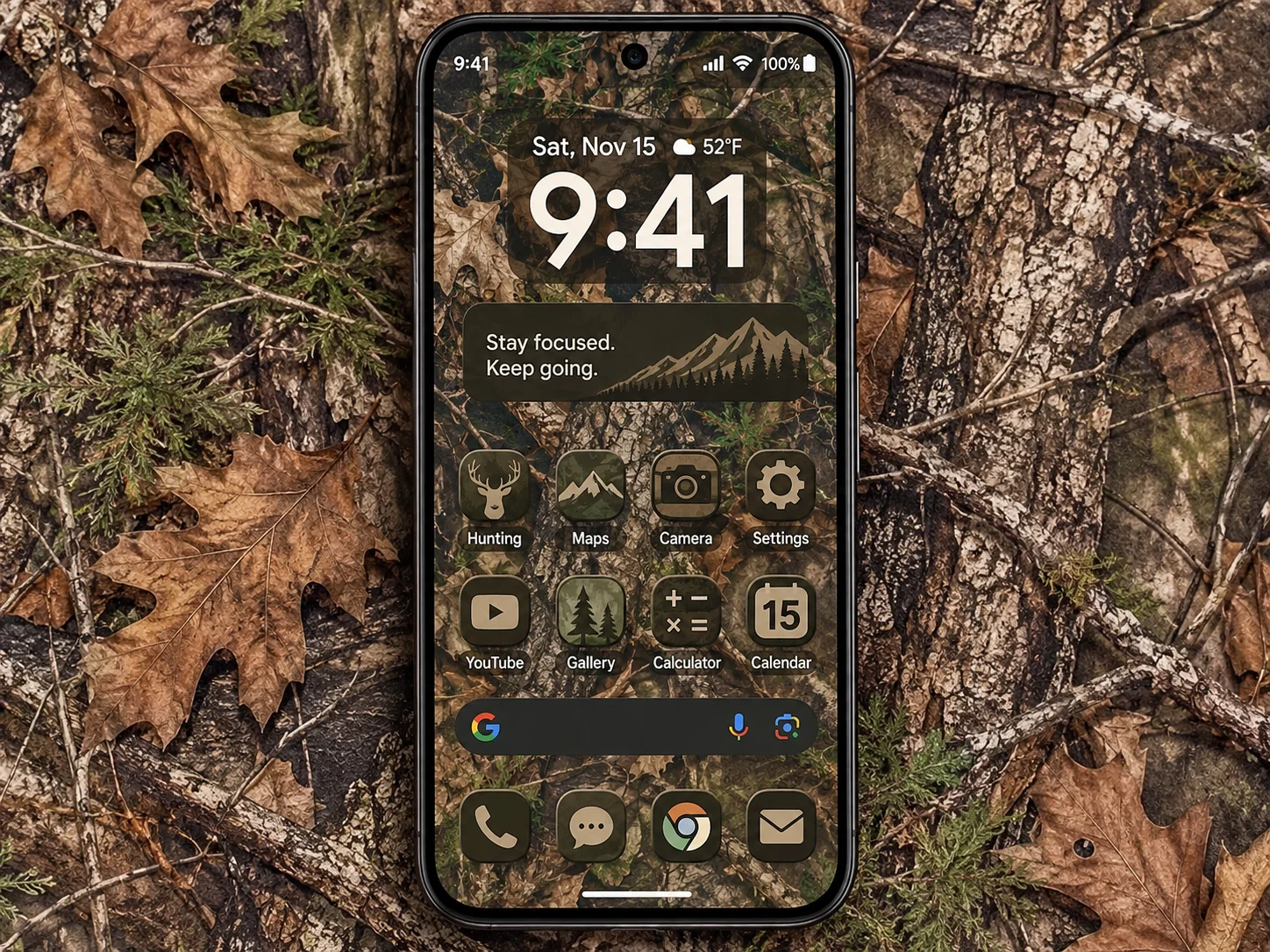
The hunting aesthetic is not limited to figurative art and wildlife illustration. For hunters who want their screen to feel functional and field-ready rather than decorative, seamless camouflage and woodland pattern backgrounds occupy a category of their own. These range from washed Realtree-style camo patterns rendered as seamless digital tiles to abstracted woodland JPG backgrounds with bark textures, leaf overlays, and forest floor color schemes.
The appeal is different from the heritage art picks above. Where a screen-print elk silhouette functions as a piece of sporting art that happens to be on a screen, a camo pattern functions more like a material, it is texture-first rather than image-first. The best versions of this aesthetic are built from actual fabric pattern sources or high-resolution natural photography, then processed to tile cleanly and sit at a mid-tone brightness level that does not compete with on-screen content.
Mid-tone brightness is worth emphasizing because it is where many free camo wallpapers fail. A pattern that is too dark buries app icons and makes notifications hard to read at a glance. One that is too light creates glare on certain screen types. The well-designed options in this category are engineered to sit in a brightness sweet spot, dark enough to feel outdoorsy and tactical, light enough to remain functional.
Platforms like WidgetClub have categorized some of these as explicitly “aesthetic” wallpapers, acknowledging that the camo pattern category has evolved beyond simple utility. For hunters who run themed home screens with custom icon packs and lock screen widgets, a carefully chosen camo background can anchor the entire visual setup in a way that a single figurative image cannot. It is a foundation rather than a focal point, and for heavily customized screens that is often exactly what is needed.
6. Lodge-Inspired Rustic Wallpapers with Cream Grounds and Muted Botanical Motifs
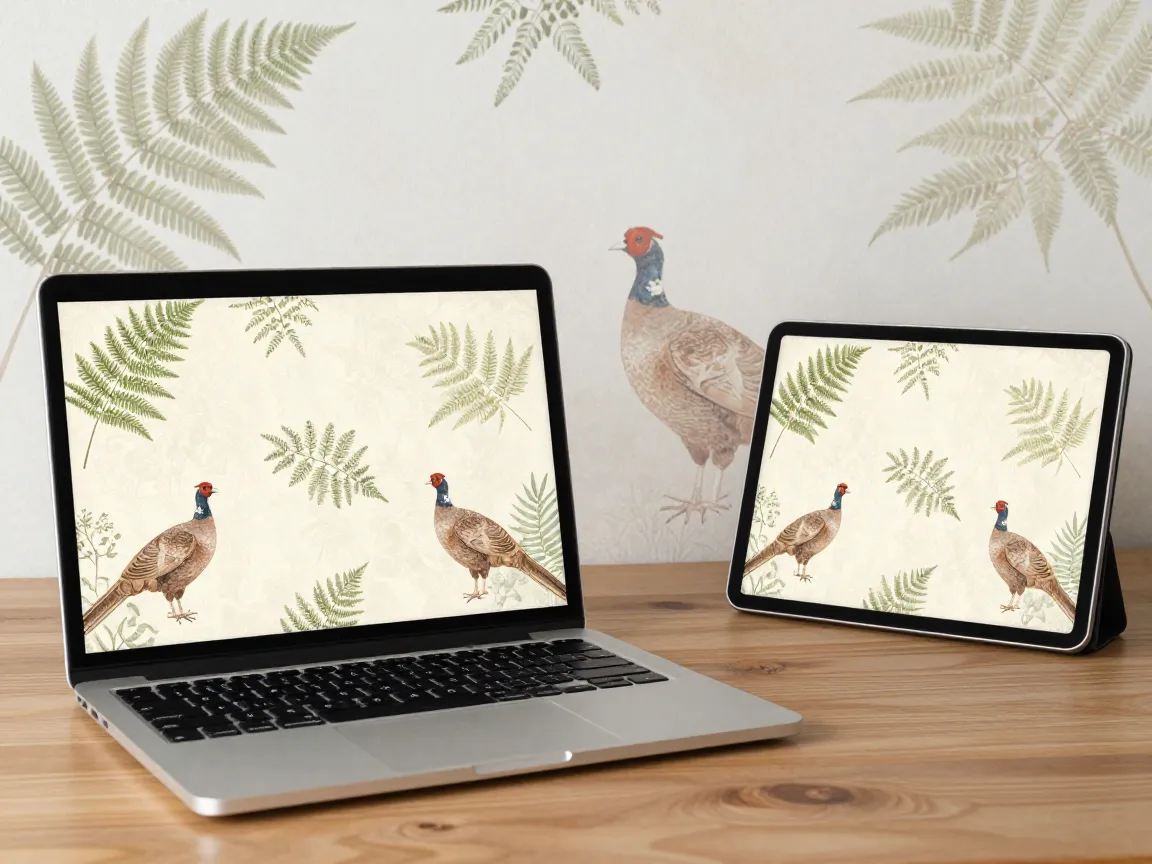
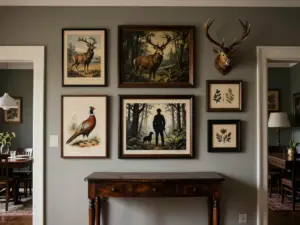
The final pick in this collection steps back from bold silhouettes and tactical patterns to focus on something quieter and more atmospheric: lodge-inspired designs that use cream or aged-white grounds, muted olive and brown palettes, and botanical or woodland motifs such as pheasants, florals, ferns, and game birds rendered in a soft, almost watercolor-adjacent style. These wallpapers draw their design language from the interior wallcovering tradition, think hunting-lodge wall treatments updated for a digital screen, rather than from poster art or photography.
Interior-inspired designs from providers like HappyWall, with entries such as “Hunting Season” and “Go hunting,” show how the same rustic, heritage color schemes that work on physical walls translate directly to screen art. On a phone, a cream-ground pheasant design reads as elegant and understated, identifiably connected to hunting culture without being aggressive or literal about it. On a wide desktop monitor, the botanical density of a well-composed lodge-style wallpaper fills the frame with the kind of layered visual interest that holds attention without demanding it.
This pick suits a specific kind of hunter: someone who wants the aesthetic signal without the visual intensity of a silhouetted elk against a blood-orange sky. It works well in professional settings, a laptop used for work during the day, a phone carried to a job site, where a dramatic hunting scene might feel out of place but a refined, pattern-based sporting design feels appropriate. It also ages well. The cream-and-olive palette does not follow digital design trends the way hyper-saturated nature photography does, which means a lodge-inspired wallpaper chosen today will still feel considered rather than dated two or three years from now.
For anyone assembling a set of six coordinated wallpapers across multiple devices, this style makes an effective anchor for the quieter screens in the rotation, a tablet used mostly for reading, a secondary monitor, or a laptop that moves between home and professional environments. Its restraint is a feature, not a limitation.
How to Build a Coherent Six-Wallpaper Set from These Picks
Choosing individual wallpapers from six different categories is only half the work. The other half is making them function together as a set rather than a collection of unrelated images. The simplest approach is to anchor the set in a shared palette, pick two or three colors that appear across most of the chosen wallpapers and use those as a filter when selecting specific images. Earth tones (ochre, olive, cream, charcoal) cross most of these categories naturally and create visual coherence without requiring that every wallpaper share an artistic style.
A second practical step is to match the composition to the device orientation before downloading. Portrait-format images for phones, landscape-format images for desktops and tablets. This sounds obvious but is frequently skipped, and a horizontally composed elk scene awkwardly cropped to fill a vertical phone screen undermines the entire aesthetic immediately.
Finally, consider the difference between lock screen and home screen. The lock screen is seen briefly and benefits from a bold, high-contrast composition, a strong silhouette or a dramatic waterfowl scene. The home screen is seen longer and with app icons overlaid, so a quieter, mid-tone background, a camo pattern or a cream-ground botanical, usually performs better functionally. Splitting the six picks across those two roles, and assigning them deliberately, is the step that separates a genuinely considered setup from a folder of downloaded images.
Conclusion
The hunting-aesthetic wallpaper market in 2026 offers far more than generic trail-camera stills, and these 6 Hunting Aesthetic Wallpaper Picks to Transform Your Screen represent the most distinct and design-considered directions currently available. From heritage screen-print silhouettes and mid-century waterfowl illustration to species-specific coordinated packs and refined lodge-inspired botanicals, each pick serves a specific screen, context, and personal aesthetic.
The single most useful next step is to visit a curated store or platform that allows filtering by species, artistic style, or season before downloading. Filtering first and browsing second produces a coherent set far more reliably than open-ended browsing, and a coherent set is what actually transforms a screen rather than merely changing it.