Must-Have Fly Fishing Gear Essentials Every Angler Needs
Fly fishing participation in the United States has grown by nearly 2 million anglers over the past decade, yet a staggering number of beginners still show up at the river with either too much gear or critical gaps in their kit. Getting the foundation right matters more than owning expensive tackle. The 6 Must-Have Fly Fishing Gear Essentials Every Angler Needs outlined below cut through the noise, covering exactly what a trout angler, or any freshwater fly fisher, must have before wading in, whether chasing rising fish on a spring creek or prospecting a freestone mountain stream for the first time.
Disclosure: This post contains affiliate links. As an Amazon Associate, we earn from qualifying purchases, and at no extra cost to you.
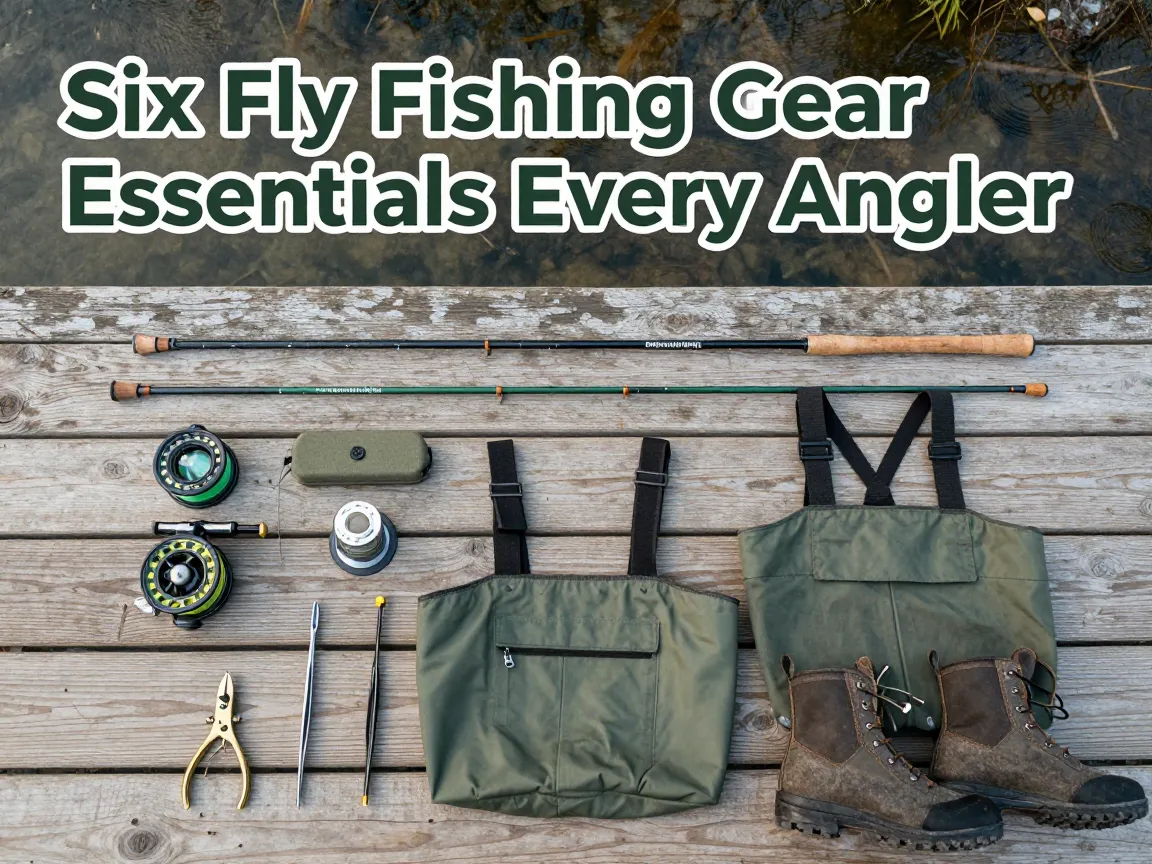
1. The Rod, Reel, and Line System
No single decision shapes an angler’s early experience more than the rod-and-reel setup. For the vast majority of trout fishing situations, a 9-foot rod rated for a 5-weight line remains the universal starting recommendation in 2026 starter guides. That length gives good reach for mending line on current, and the 5-weight rating handles dry flies, nymphs, and small streamers without demanding the precision of a lighter 3-weight or the muscle of an 8-weight.
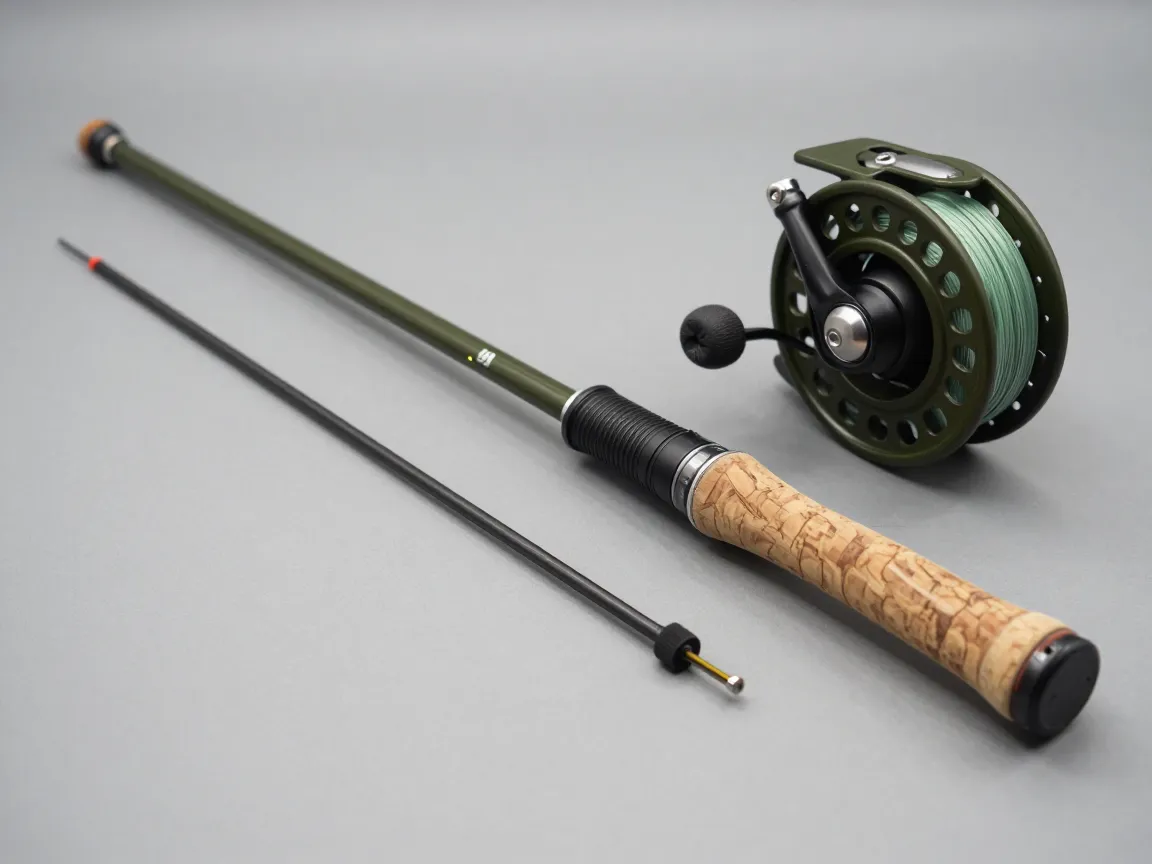
The reel matters less in freshwater trout fishing than in saltwater applications, but it still needs to balance the rod and hold line without slipping. A quality large-arbor reel designed for a 5-weight is a reasonable choice. What matters most on the reel is what goes on it: about 100 to 125 yards of braided backing, a weight-forward floating line, and a 9-foot tapered leader to start. The weight-forward taper loads the rod quickly, which is a genuine advantage for beginners still building their casting stroke. Entry-level floating lines from reputable brands like Scientific Anglers run around 70 USD, placing a functional, reliable line well within reach for budget-conscious anglers.
Matching all three components, rod, reel, and line, matters because a mismatched system creates casting problems that feel like skill gaps. An angler who struggles to feel the rod load during the back cast often discovers that swapping to the right line weight solves the issue immediately. Buy these three as a matched system if possible, or at minimum confirm the line weight is printed on both the rod blank near the handle and on the line box.
2. Leader and Tippet
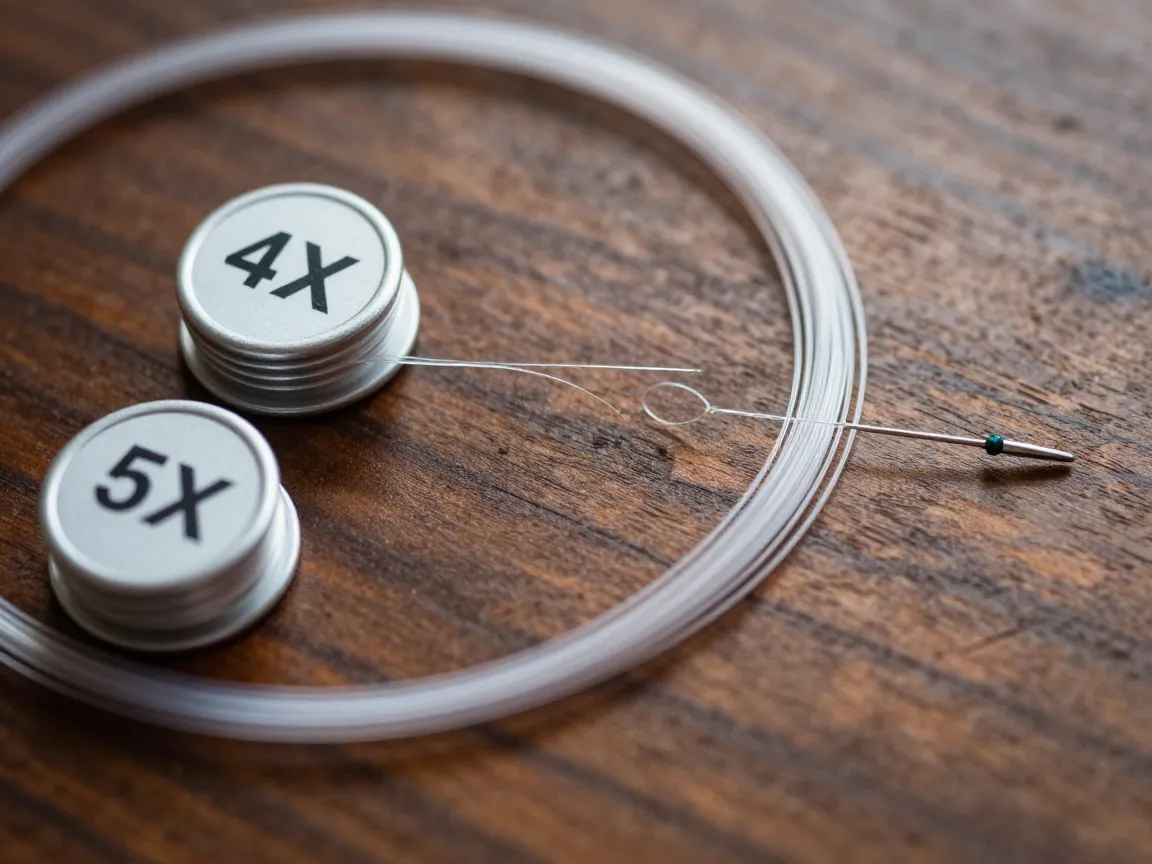
A fly line alone cannot deliver a small dry fly with any subtlety. The leader is the tapered monofilament connection between the thick fly line and the fly itself, and it serves a critical function: transferring the energy of the cast smoothly while presenting the fly without drag-inducing shadows or splash. Standard advice in 2026 beginner guides consistently calls for a 9-foot tapered leader to match the rod length.
Tippet is the fine-diameter section tied from the end of the leader to the fly. It is consumable. Every time an angler changes flies, ties on a dropper, or breaks off in a snag, the tippet gets shorter. Unlike a rod or reel, tippet is not a one-time purchase. Anglers go through one or two spools per season at a minimum, and those who fish regularly burn through considerably more. For most trout situations, a 5X tippet is a solid all-around choice, though 4X handles larger nymphs and streamers while 6X suits tiny dry flies on pressured water.
The practical takeaway here is to carry at least two tippet sizes at all times. A well-stocked vest will usually hold a 4X and a 5X spool, allowing an angler to adjust to whatever fly size the fish prefer that day. Leaders and tippet are small and lightweight, but overlooking either one, especially on a long day far from the nearest fly shop, can shut down a productive session entirely.
3. Flies and a Fly Box
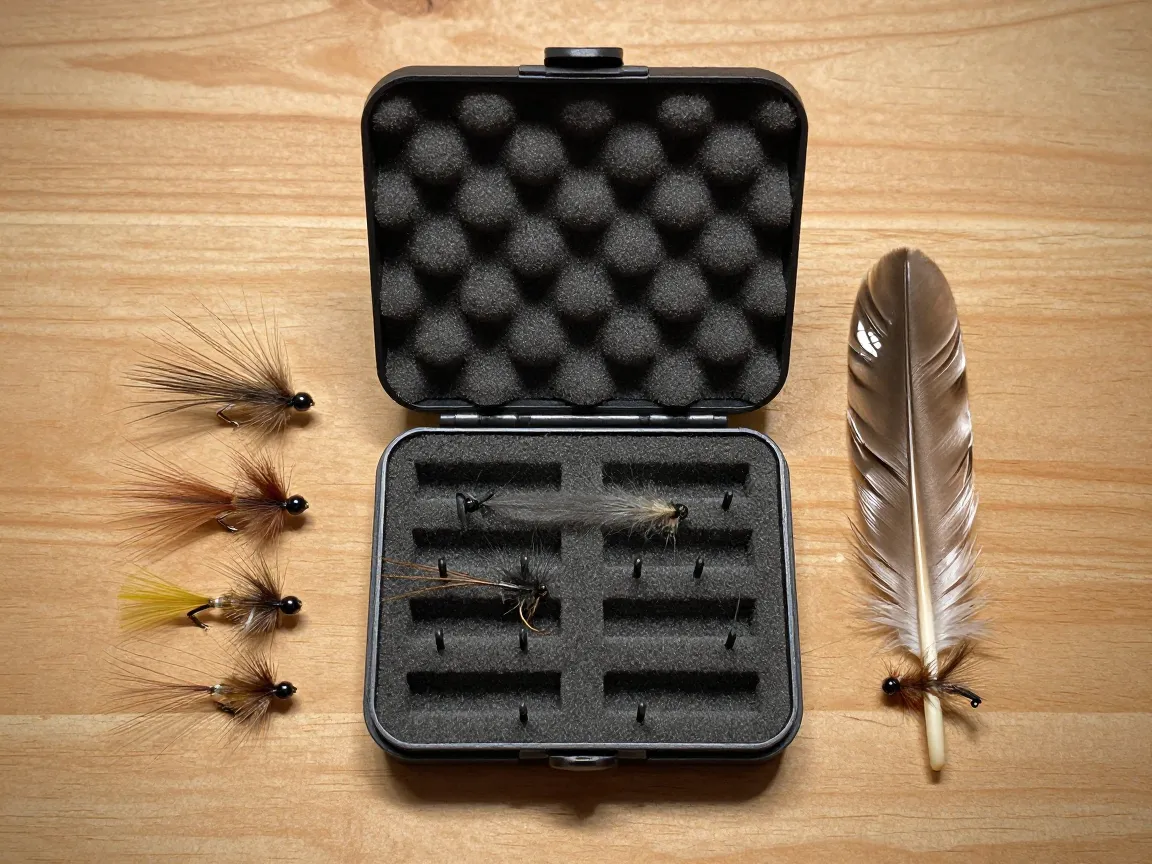
A beginning angler does not need 200 patterns. What is needed is a short list of proven, versatile flies kept organized in a durable, compact box. A July 2026 guide identified just four patterns, a Parachute Adams, an Elk Hair Caddis, a Pheasant Tail Nymph, and a Woolly Bugger, as enough to cover a wide range of trout fishing scenarios. That is not a limitation; that is a strategy. Each of these patterns imitates a broad category of food: the Adams handles general mayfly hatches, the Caddis covers caddisfly adults, the Pheasant Tail imitates subsurface nymphs, and the Woolly Bugger suggests baitfish, leeches, or large invertebrates.
Fly selection expands naturally as an angler spends more time on specific waters. A spring creek regular will add specific emerger patterns; a streamer enthusiast will build out articulated flies. But the core four, or some equivalent short list of local producers, deserves a permanent slot in any box.
The box itself matters for practical reasons. Flies are small, expensive, and easy to lose. A compact, well-organized fly box with foam or silicone inserts prevents hook points from dulling against each other. A trending 2026 option is the clip-on magnetic fly box with one-handed opening and 40-fly capacity, which lets an angler switch patterns mid-wade without digging through pockets. Whether the box is magnetic, traditional foam, or a simple compartment style, the organizing principle is the same: carry enough flies for the day’s conditions and know where every pattern is.
4. Nippers, Forceps, and On-Water Tools
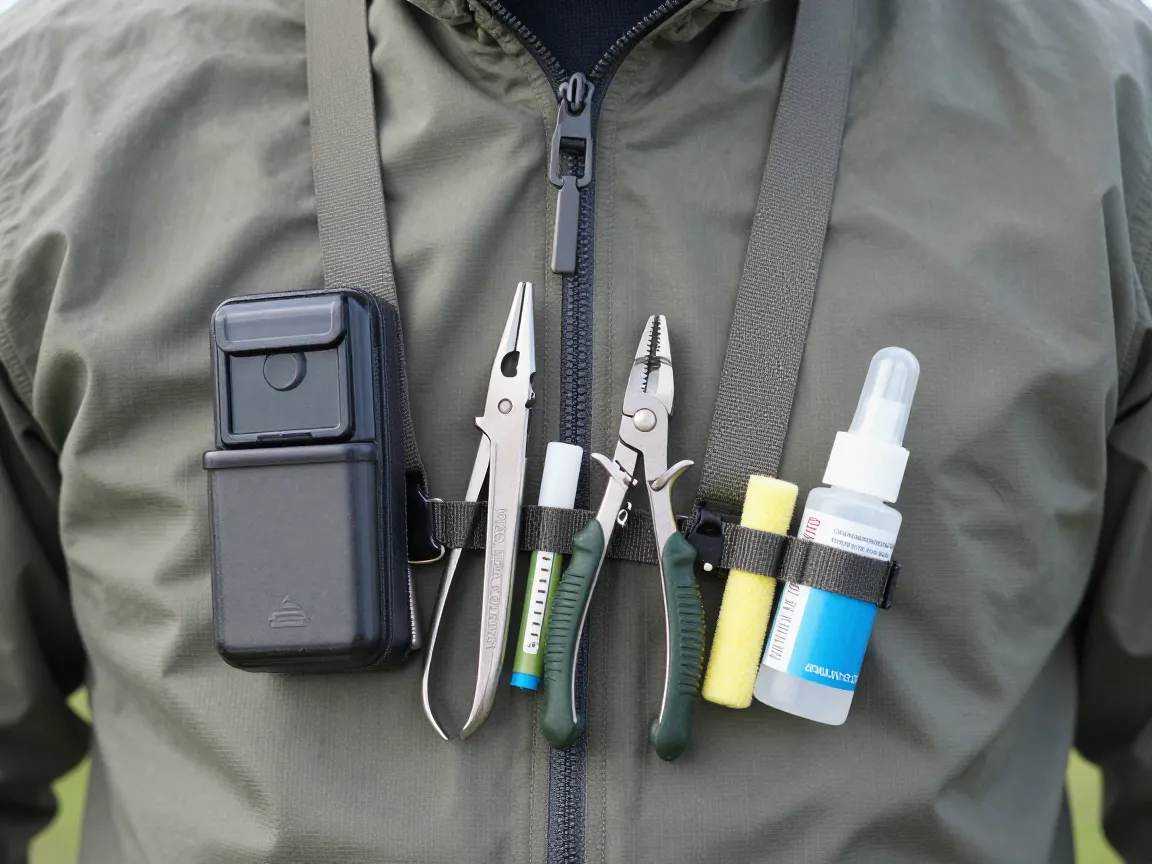
The smallest items in a fly fishing kit often matter the most during a critical moment. Nippers are the tool used to trim tippet tags and cut line cleanly. Forceps, sometimes called hemostats, allow an angler to safely remove a hook from a fish’s jaw without excessive handling, a practice that supports catch-and-release ethics by reducing injury to the fish and keeping wet, cold hands off the hook. These two tools are considered non-negotiable in nearly every 2026 gear breakdown.
Beyond nippers and forceps, a minimal on-water toolkit typically includes floatant, split shot, and strike indicators. Floatant is a gel or powder treatment applied to dry flies and leaders to keep them riding high on the surface. Without it, a dry fly sinks after a few casts and becomes invisible to surface-feeding trout. Split shot, small, pinch-on lead or tin weights, adds the extra mass needed to get a nymph down to the fish quickly in heavy current. Strike indicators, often made of foam or yarn, serve as a visual cue for subsurface takes that an angler cannot feel through the line alone.
The minimalist approach validated by veteran instructors in 2026 is to carry all of these items on a single lanyard clipped to the front of a jacket or vest. That way everything is at hand without requiring the angler to remove a pack. A lanyard loaded with a small fly box, forceps, nippers, a split shot dispenser, and a gel floatant bottle weighs almost nothing but completes the entire functional toolkit for a day of nymph or dry fly fishing.
5. Vest, Sling Pack, or Chest Pack
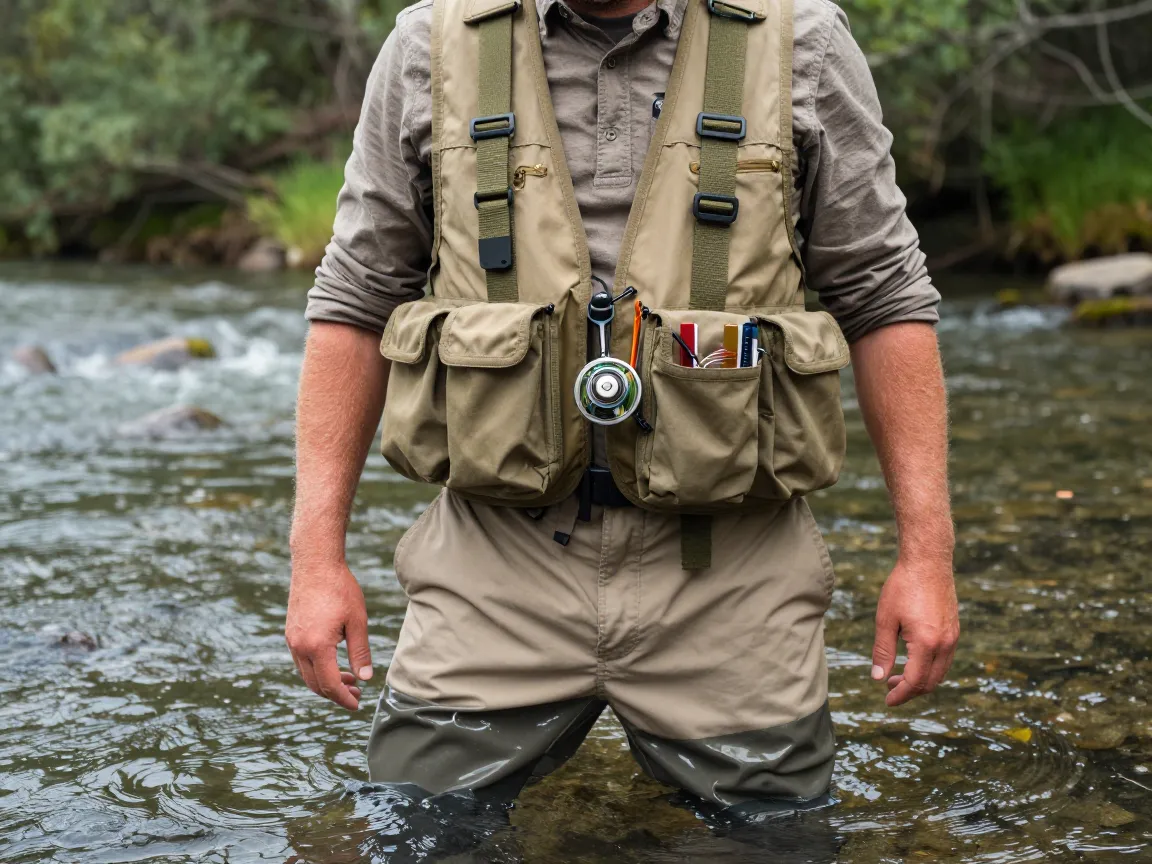
Gear does not help anyone if it is left on the bank or buried in a backpack. Some form of wearable storage, a fishing vest, a sling bag, or a chest pack, is what keeps every other essential within arm’s reach during a session. The choice between these styles comes down to personal preference and the type of water being fished.
A traditional fishing vest offers the most pocket volume and distributes weight evenly across the shoulders, which matters on long wade trips. Sling packs have become a popular alternative because they ride low on the back, stay out of the way during casting, and swing around to the front for quick access. Chest packs sit directly on the torso and keep the most-used items, fly box, tippet, nippers, directly in view. All three options are widely available in 2026 at price points ranging from roughly 30 to 120 USD depending on brand and feature set.
What all three share is the core function: organizing gear so that an angler can focus on reading the water and presenting the fly. An angler who has to stop, wade to the bank, and dig through a bag to change flies loses not just time but the rhythm of a productive session. Dedicated fly fishing storage, worn on the body, is what turns a loose collection of gear into a functional, efficient kit.
6. Waders, Wading Boots, and Safety Essentials
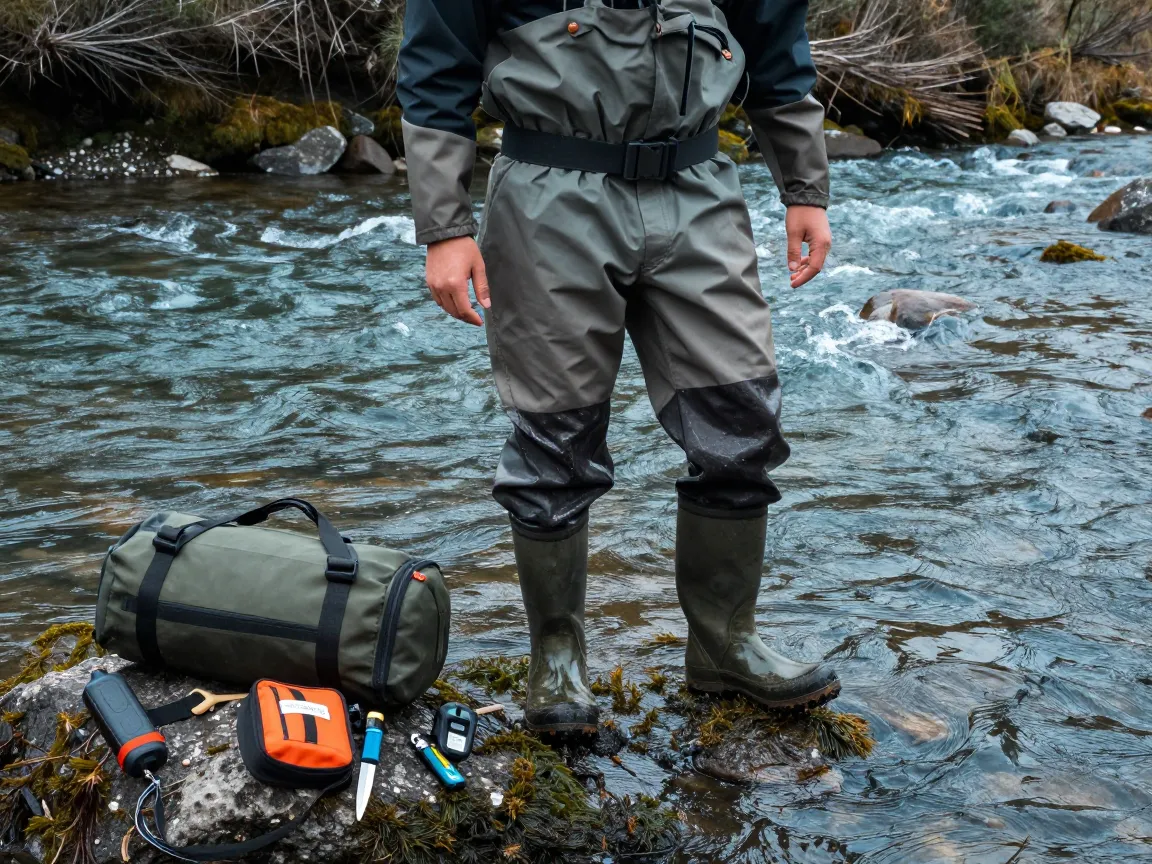
The last category is the most underestimated by beginners and the most important for safety. Breathable waders allow an angler to stand and move in the water across all seasons without getting soaked, and in cold-water trout streams, many of which run well below 60 degrees Fahrenheit even in summer, avoiding wet clothing is not just comfort but a genuine safety consideration. Breathable materials like Gore-Tex have made modern waders lighter and more packable than older neoprene designs, and chest-high or waist-high styles each suit different water depths and preferences.
Wading boots deserve equal attention. A slick, algae-covered riverbottom is one of the most common hazards in fly fishing. Quality wading boots with felt soles or rubber lugs, the appropriate choice varies by region, as some states have banned felt to prevent the spread of invasive species, dramatically reduce the risk of a fall in fast current. An angler who takes a fall in heavy water, particularly alone, faces a serious situation. Footwear is the first line of defense against that scenario.
Alongside waders and boots, a modern angler’s safety loadout should include a few non-negotiable items for remote or backcountry trips: a reliable communication device (a GPS beacon where cell service is absent), a water bottle, a small first-aid kit, a knife, waterproof matches or a lighter, and a dry bag containing a change of clothes. These items add minimal bulk but represent the difference between a recoverable bad day and a dangerous emergency. Expert guidance published in 2026 treats these survival items as standard components of any angler’s kit, not optional additions for extreme adventurers.
For anglers targeting larger fish in offshore or bluewater environments, the gear escalates considerably. Big-game fly fishing for marlin, tuna, or giant trevally requires heavy-duty, high-capacity reels, specialty sinking lines, and powerful rods rated for 12-weight or heavier. The fundamentals remain the same, balanced system, reliable line, organized storage, and appropriate safety gear, but the scale shifts entirely. That progression is worth noting because it reflects how the 6 must-have fly fishing gear essentials every angler needs at the trout stream level form the foundation that all more specialized applications build on.
Conclusion
A matched rod-and-reel system, a properly built leader with tippet, a focused selection of flies in a compact box, a minimal toolkit of nippers and forceps, a wearable storage solution, and appropriate waders and safety gear, these six categories cover everything a fly angler needs to get on the water competently and safely. The best next step is to audit what is already in the kit against this list and identify the single biggest gap. Address that one item first, and the rest of the season becomes considerably more productive.