Witch Hunters Aesthetic Ideas for a Dark, Gothic-Inspired Look
Dark, witchy aesthetics now rank among the fastest-growing identity-driven style movements online, with gothic and occult-inspired looks flooding editorial pages and social feeds alike in 2026. That momentum has created something genuinely exciting: the witch hunter archetype, once confined to cosplay events and Halloween, has evolved into a fully realized, wearable fashion sensibility. These 6 Witch Hunters Aesthetic Ideas for a Dark, Gothic-Inspired Look draw on that cultural energy and translate it into outfits that work beyond October.
Disclosure: This post contains affiliate links. As an Amazon Associate, we earn from qualifying purchases, and at no extra cost to you.
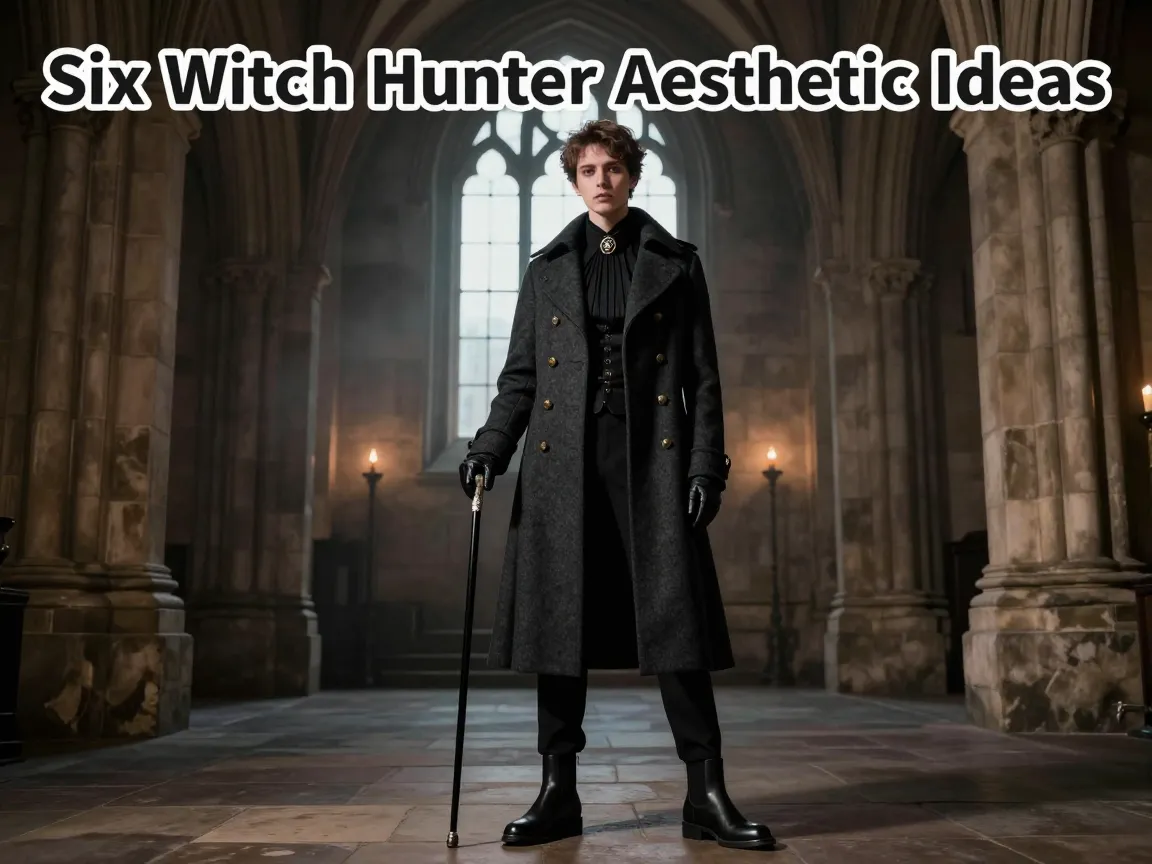
What makes the witch hunter aesthetic so compelling is its built-in tension. It sits at the crossroads of authority and mystery, structure and shadow. Unlike straightforward goth or witchcore looks, the witch hunter borrows the commanding silhouette of historical hunters, inquisitors, and rangers, then layers in occult detail, dark romance, and contemporary tailoring. The result is a style language with real range, formal enough for creative offices, atmospheric enough for evenings out, and deep enough for committed enthusiasts who want to go full editorial.
The color foundation matters here: black is the constant, but the most interesting witch hunter looks introduce deep reds, forest greens, and controlled metallics to break the monotony without losing the darkness. Each of the six directions below builds on that palette in a different way, from restrained minimalism to full gothic couture.
1. Victorian Witch Hunter
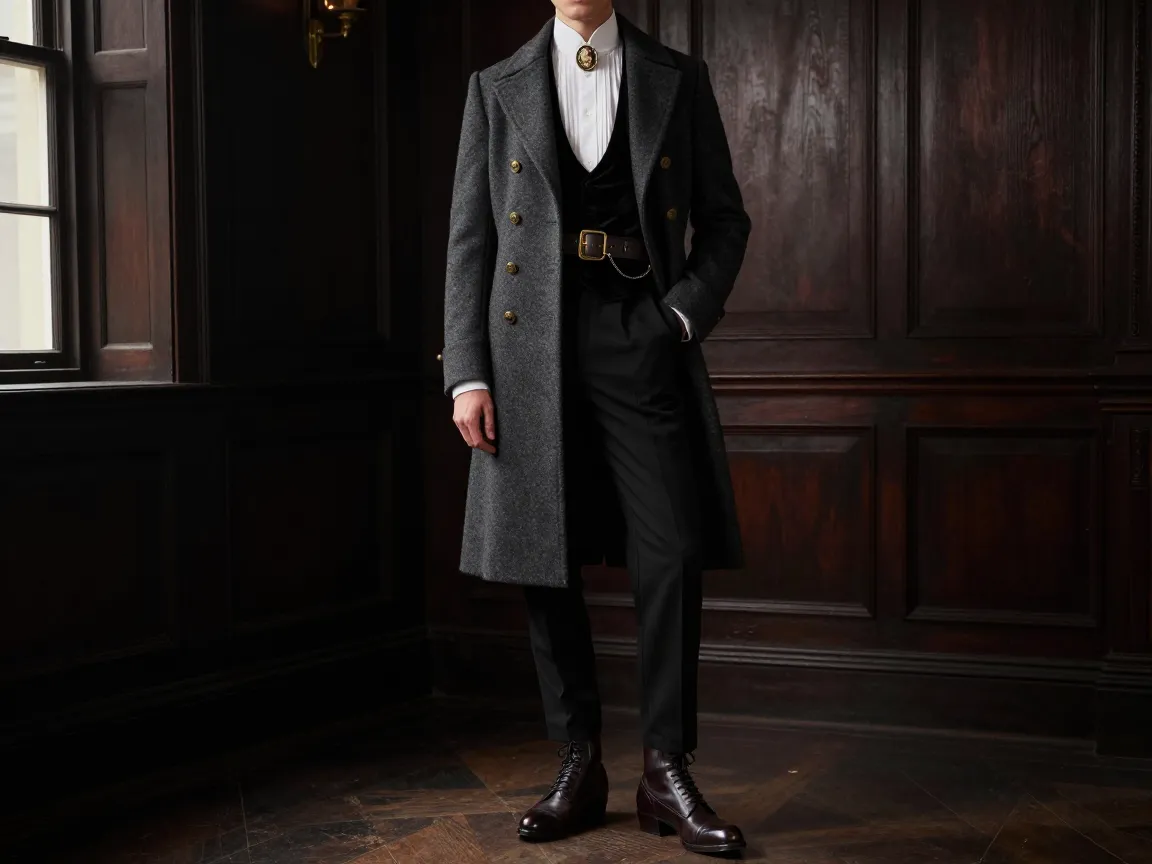
The Victorian era produced some of the most dramatic tailoring in fashion history, and the witch hunter aesthetic mines it without apology. Think long frock coats in charcoal or black wool, high-collared shirts with delicate pleating, and waistcoats that give the torso a sculptural, corseted structure. Military detailing, epaulettes, brass or antique-gold buttons, structured shoulders, adds the authority that separates this look from straightforward period costume.
The key to making Victorian witch hunter wearable in 2026 is proportion. A knee-length coat with clean, modern trousers grounds the historical drama in something a person can actually move through the world in. Layering is essential: a fitted waistcoat beneath an open frock coat creates depth and visual complexity without bulk. Fabrics like heavy cotton twill, structured wool, and matte velvet all carry the right weight and texture.
Accessories tell the story at close range. A cameo brooch at the throat, a pocket watch chain looped through a waistcoat button, or a wide leather belt with a substantial buckle all reinforce the archival quality of this direction. Footwear should be substantial, heeled Chelsea boots or lace-up Victorian-style boots in dark leather anchor the whole silhouette. The Victorian witch hunter look rewards patience and investment in individual pieces; one exceptional coat does more work than a full outfit of lesser items.
2. Gothic Minimalist Inquisitor
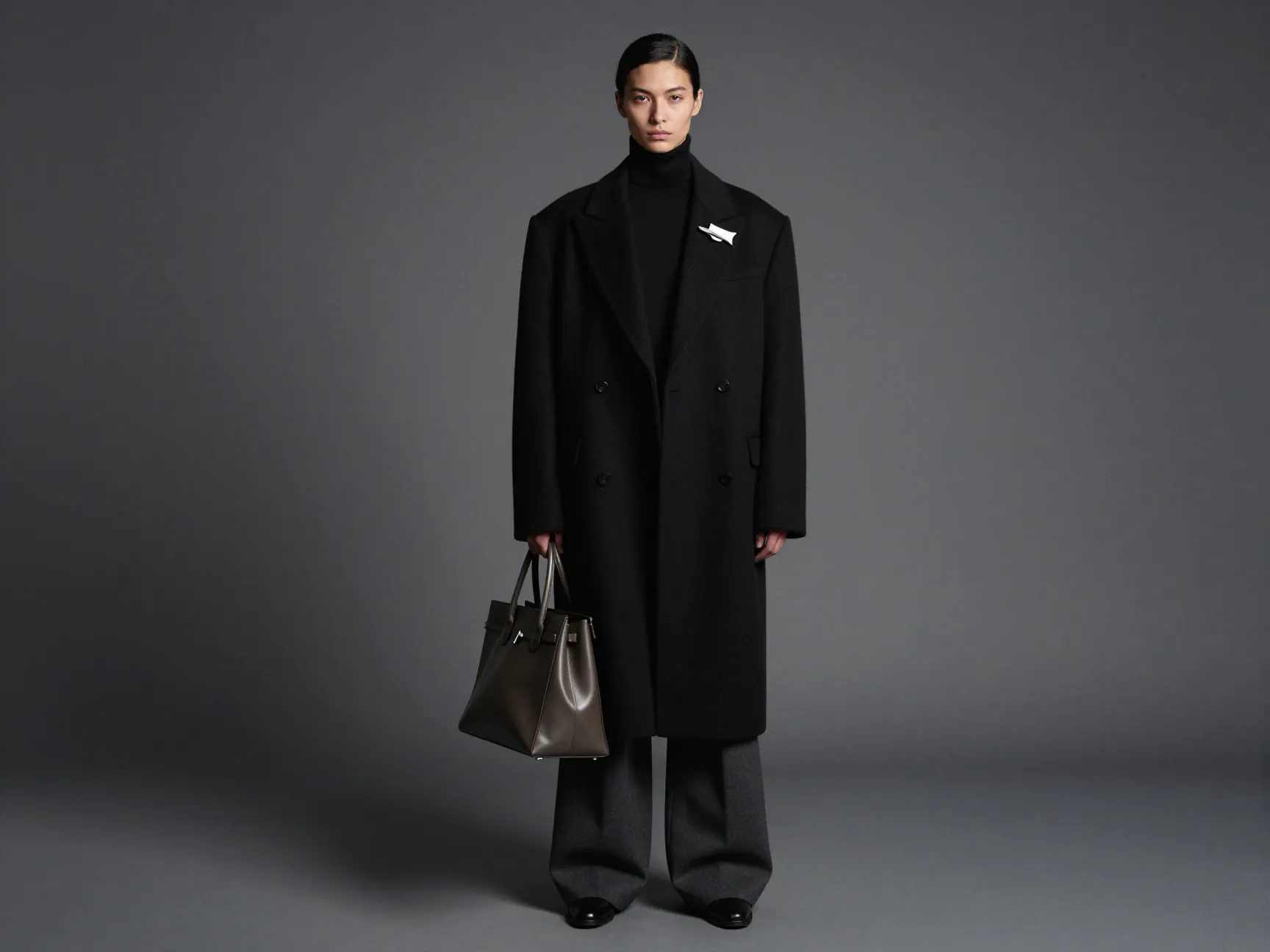
Where the Victorian direction leans into ornament, the Gothic Minimalist Inquisitor strips everything back to shape, weight, and one carefully chosen statement piece. This aesthetic draws from the cleaner end of dark fashion, think Yohji Yamamoto’s architectural black, the quiet severity of a monk’s habit translated into contemporary cut, or a single oversized coat worn over a plain black turtleneck and straight-leg trousers.
The discipline required by this look is exactly what makes it powerful. Every garment earns its place. The silhouette should be strong and slightly severe: a boxy or slightly oversized coat, a well-cut pair of wide-leg trousers, a turtleneck or mandarin-collar shirt that sits cleanly at the neck. Nothing competes with the shape itself. The color story stays tightly controlled, black, charcoal, the occasional very deep navy, with perhaps a single piece in brushed silver or dark pewter as the lone metal accent.
The statement piece concept is central to this approach. It might be a large architectural brooch positioned off-center on a lapel, a single heavy silver ring, or a structured leather bag with unusual hardware. That one object is the detail the eye finds after absorbing the silhouette. Because the rest of the look offers so little distraction, the statement piece lands with disproportionate impact. This direction also translates well into professional or creative workplaces, making it one of the most versatile of the six witch hunter aesthetics.
3. Dark Romance Hunter
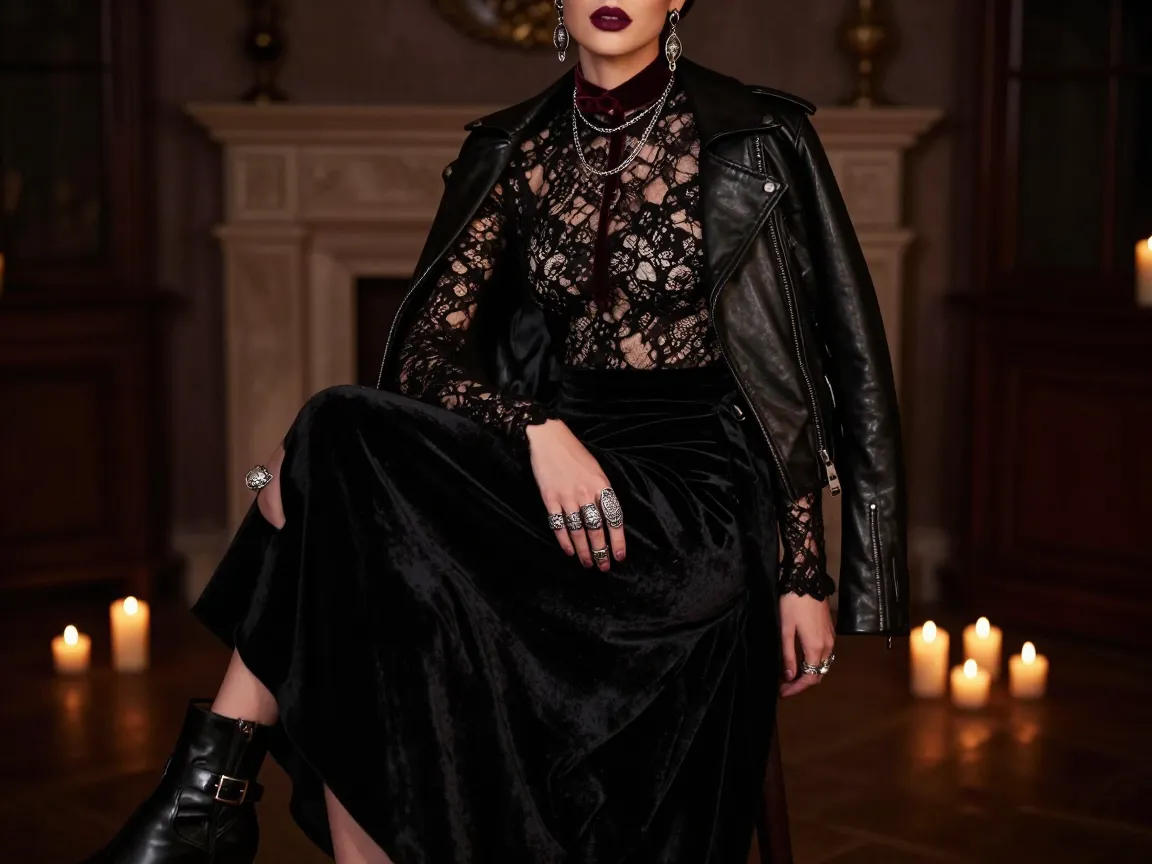
The dark romance movement has undergone a genuine revival, and its intersection with the witch hunter concept produces one of the most visually striking directions in this list. This look combines the softness of lace, sheer fabrics, and flowing silhouettes with the harder edge of leather, heavy silver jewellery, and structured outerwear. The pairing of opposing textures is the entire point, a lace blouse worn under a fitted leather jacket, or a floor-length velvet skirt belted tightly at the waist.
The ‘dark glamour’ trend that has gained traction in 2026 feeds directly into this aesthetic. It rejects the idea that darkness and elegance are opposites. A corseted bodice over a sheer black skirt reads both gothic and sophisticated. Deep red lipstick, smoky eye makeup, and candlelit-looking skin tones all extend the look beyond the clothing itself. Jewellery leans ornate: filigree silver rings worn stacked, a layered choker combining velvet ribbon with chain, or drop earrings that reference antique mourning jewellery.
The Dark Romance Hunter works particularly well for evening wear or events where atmosphere matters. The layering principle keeps it from reading as purely costume: a lace-trimmed camisole worn under a sharp blazer with velvet trousers is entirely grounded, while the lace detail does the storytelling. Keep footwear dramatic, a heeled boot with buckle detailing or a strappy dark sandal with a substantial heel both work. This is the most feminine-coded of the six directions, but its structure and leather elements keep it firmly in hunter territory rather than drifting into pure witchcore.
4. Witchcore Ranger
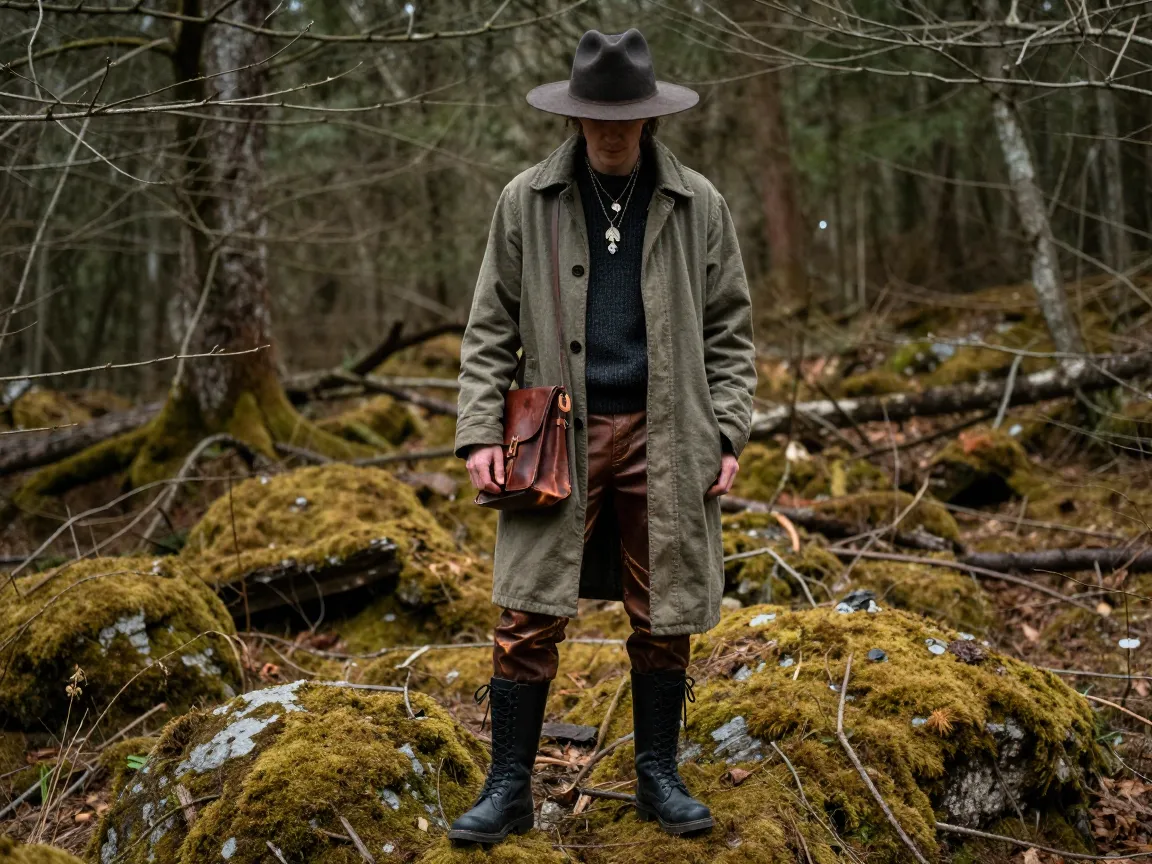
The Witchcore Ranger direction grounds the witch hunter archetype in the natural world. Where other approaches focus on tailoring and architecture, this one looks to the forest: earthy tones layered under or over darker pieces, practical garments repurposed for gothic effect, and botanical or occult accessories that signal a connection to the natural and the mysterious simultaneously.
The color palette expands here to include forest green, deep ochre, bark brown, and mossy grey alongside the essential black. Layering is functional as well as aesthetic, a heavy linen or canvas duster coat over a dark knit sweater and worn leather trousers, finished with tall lace-up boots that could plausibly handle rough terrain. The practical quality is genuine, not just decorative; this look celebrates utility alongside mystique. Pockets matter. Bags should be leather or canvas with multiple compartments, suggesting someone equipped for a purpose.
Occult-tinged accessories integrate naturally here: a charm necklace hung with botanical shapes, pressed herb pendants, mushroom charms, moon phase details, worn against a dark knit. A wide-brimmed hat in dark felt or waxed canvas brings an unmistakable ranger silhouette while nodding to the pointed-hat iconography of witch tradition. Because the Witchcore Ranger is rooted in practicality, it carries a believability that more theatrical looks sometimes lack. It is a witch hunter look that could exist in an actual dark forest, which is a large part of its appeal.
5. Goth-Corp Witch Hunter
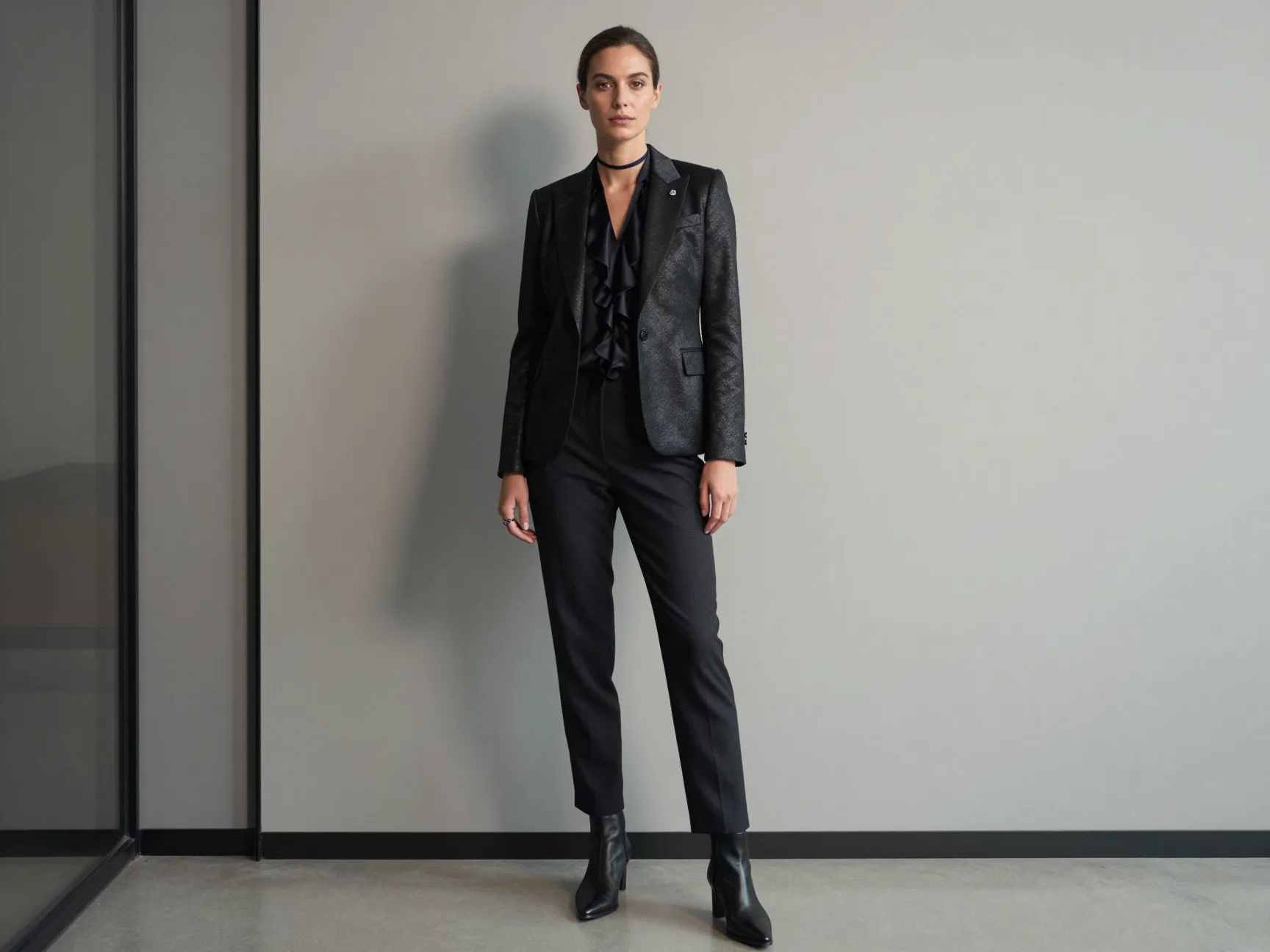
The office environment rarely makes it onto mood boards for dark aesthetics, but the Goth-Corp Witch Hunter makes a compelling case for bringing gothic sensibility into professional tailoring. This direction takes the structural confidence of corporate dressing, well-cut blazers, tailored trousers, clean silhouettes, and introduces witch hunter energy through fabric choices, accessories, and controlled darkness.
The blazer is the foundation. In black, deep charcoal, or dark forest green with subtle texture, a slight sheen, a fine check, an interesting lapel, it sets the tone. Beneath it, a witchy top does the storytelling: a blouse with delicate ruffle detailing, a draped black silk shirt, or a turtleneck with subtle occult-pattern jacquard. The contrast between the sharp professionalism of the tailoring and the atmospheric quality of the top layer creates the specific tension this look depends on.
Accessories are where the witch hunter identity comes through most clearly. A small but ornate brooch on a lapel, a slim choker just visible above a collar, or dark rings on one hand add the detail without compromising professional credibility. Footwear keeps the structure: a heeled ankle boot or a pointed-toe flat in black leather. The Goth-Corp Witch Hunter is arguably the most practical direction for people who want to carry this aesthetic into their daily working life without committing to full gothic dressing. It is also one of the strongest examples of how dark, gothic aesthetics have become genuinely mainstream in 2026, moving from alternative subcultures into the shared visual language of contemporary fashion.
6. Vampiric Witch Hunter
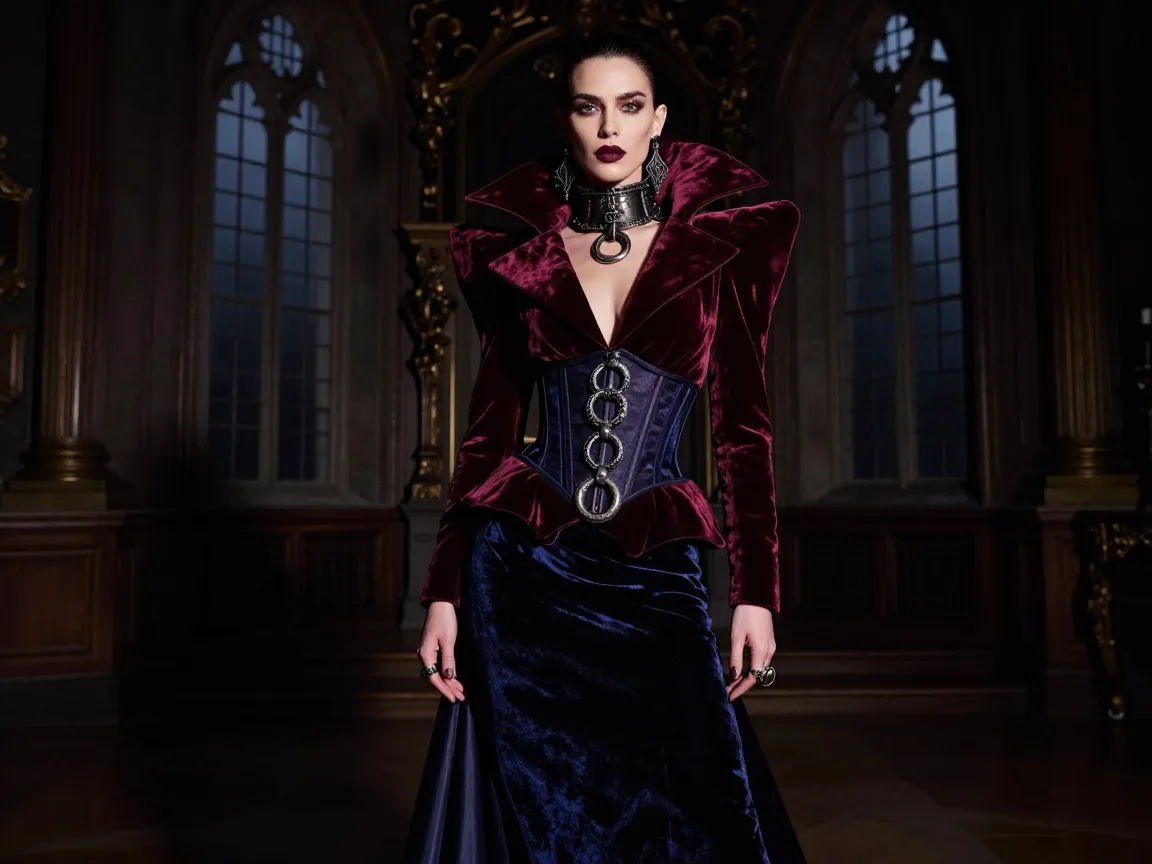
The final direction borrows heavily from vampire fashion and dark feminine couture, producing the most theatrically glamorous of the six witch hunter aesthetics. This look does not shy away from drama: sweeping silhouettes, deep jewel tones, fabrics that move and reflect light in compelling ways, and an overall impression of someone who inhabits the night with complete authority.
Velvet is the signature fabric, deep burgundy, midnight blue, or black velvet in structured jackets, wide-leg trousers, or long skirts makes an immediate visual statement. Silk, satin, and crepe add movement and contrast. The silhouette tends toward the dramatic: a cape or dramatic coat worn open over a fitted outfit, a structured jacket with an exaggerated collar, or a long dress with architectural detailing that creates presence in a room. Dark feminine couture cues from contemporary designers who work in this space, exaggerated shoulders, corseted waists, asymmetric hems, are all fair references.
The color story expands to its fullest range here: black and deep red remain central, but deep plum, midnight blue, and controlled gold or brass metallics are all in play. Makeup is an extension of the look: a deep berry or black-red lip, strong brow definition, and skin that reads porcelain-pale or richly bronzed depending on the wearer’s complexion. Jewellery leans toward statement chokers in dark metal, ornate earrings referencing antique or gothic architecture, and rings that border on medieval in their scale and detail. The Vampiric Witch Hunter is the direction to choose when the goal is full commitment, an aesthetic statement that leaves no ambiguity about its dark, gothic-inspired intentions.
Building a Cohesive Witch Hunter Wardrobe
Understanding each individual direction is useful, but the most rewarding witch hunter wardrobes tend to mix elements across two or three of these aesthetics rather than committing rigidly to one. A Victorian-informed coat worn over a Gothic Minimalist outfit produces something more interesting than either direction alone. The Goth-Corp approach creates a natural everyday backbone into which more dramatic Victorian or Vampiric pieces can be introduced on occasion.
Accessories remain the fastest and most cost-effective way to signal witch hunter aesthetic. Brooches, in particular, have undergone a significant revival and work across every direction in this list, an ornate silver brooch reads Victorian on a frock coat, minimalist-statement on a plain black blazer, and gothic-glamour on a velvet jacket. Layered chokers, leather gloves, and occult-influenced charms all carry similar versatility. Investing in a small number of strong accessories often does more for a dark, gothic-inspired look than replacing entire outfits.
The color discipline worth maintaining across all six directions is the controlled palette: black as foundation, one or two accent tones from the deeper end of the spectrum, and metallics used sparingly. This restraint is what gives witch hunter aesthetics their authority. The looks that read most powerfully are rarely the ones with the most elements, they are the ones where every element is deliberate.
Looking ahead, design observers expect dark romance and gothic minimalism in particular to maintain their influence well beyond 2026. The cultural appetite for dark, identity-driven aesthetics shows no sign of retreating, which means the investment made in building a witch hunter wardrobe now has genuine longevity. These are not trend pieces chasing a seasonal moment; they are style directions with deep roots and a clear trajectory forward.
Conclusion
The 6 Witch Hunters Aesthetic Ideas for a Dark, Gothic-Inspired Look explored here, from Victorian tailoring to Vampiric couture, share a common foundation: structured intention, a controlled color story, and accessories chosen with purpose. The single most useful next step for anyone entering this aesthetic space is to identify which one of these six directions resonates most strongly, then build outward from one anchor piece, a coat, a brooch, or a statement layer, that embodies that direction at its best. Everything else follows from there.