Water Survival Techniques Every Fisherman Should Know Before Wading In
Drowning is the leading cause of death among recreational anglers in North America, and most incidents happen in water shallow enough to stand in. The difference between a close call and a fatality often comes down to a few practiced responses that most waders never learn. These 6 water survival techniques every fisherman should know before wading in aren’t emergency backup plans, they’re the foundation of every safe trip you take into moving water.
Disclosure: This post contains affiliate links. As an Amazon Associate, we earn from qualifying purchases, and at no extra cost to you.
Key Takeaways
- Cold shock, not hypothermia, kills first. You have about one minute to control your breathing after immersion before you can act effectively.
- A snug wader belt is not optional gear. It traps air and extends your survival window by minutes.
- Methodical wading technique, side-on stance, one foot at a time, shallow crossings, prevents most falls before they start.
- If swept off your feet, back-float with feet downstream and scull toward the bank. Fighting the current accelerates exhaustion.
- Hypothermia follows cold shock but takes much longer. Managing the first two phases buys you time for rescue.
- Knowing a basic reach rescue and post-immersion care steps can save a wading partner’s life.
1. Pre-Wade Risk Assessment and Gear Setup
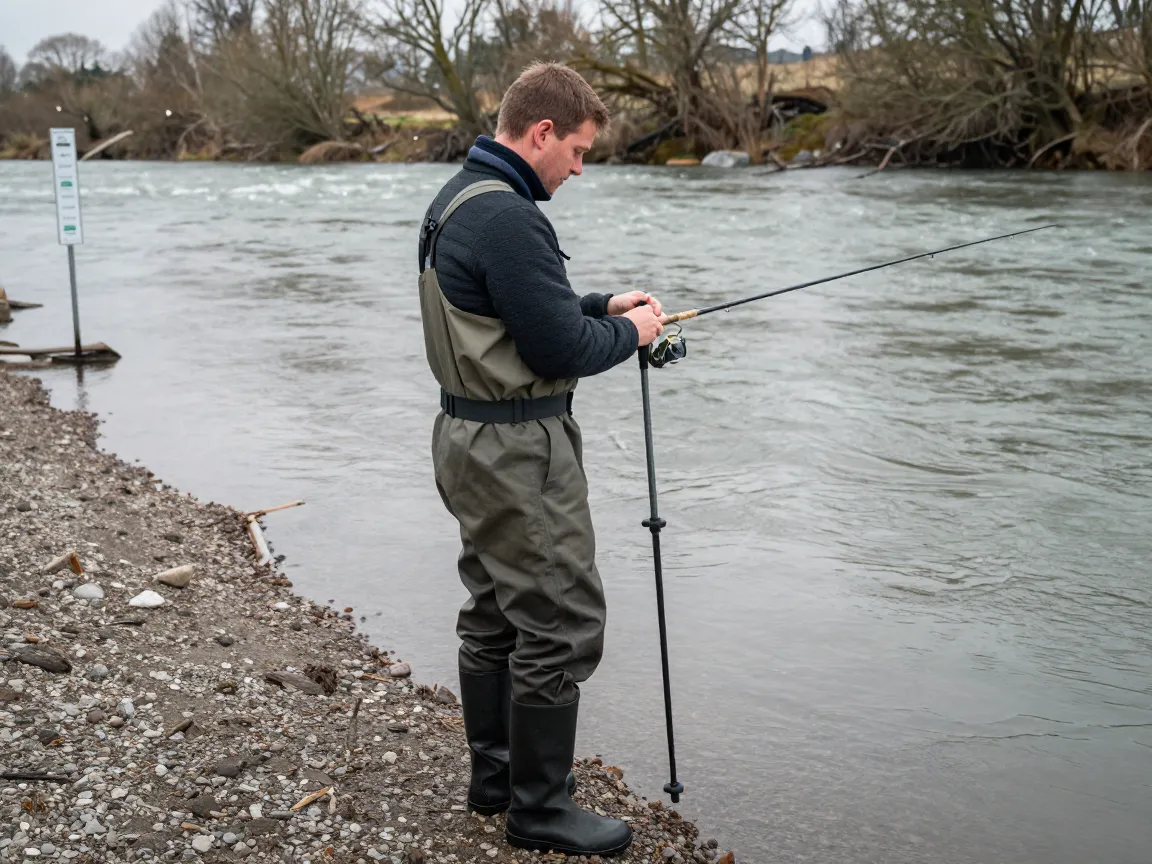
The most effective survival technique happens before you step into the water. A structured pre-wade check takes about three minutes and addresses the conditions most likely to cause serious trouble.
Start with water temperature and flow. Cold water, broadly anything under 15°C (59°F), changes your body’s response to immersion dramatically, compressing the time window you have to act. Check local gauge data for flow rate and note recent rainfall, which raises both depth and turbidity without warning. Australia’s national seafood industry training standard for wader use, updated in late 2026, formalizes this as a mandatory pre-entry competency: confirm environmental conditions including water temperature and known hazards before selecting gear.
Your wader belt deserves special attention. Worn snugly just above the hips, a belt slows water from flooding your waders if you fall and traps enough air to provide meaningful buoyancy for self-rescue. Many anglers wear it loose out of comfort, which eliminates most of that benefit. Fit it firm enough that you can slide two fingers underneath, no more.
A wading staff is not vanity gear for older anglers. On any substrate where current is present, cobbled riverbeds, slick bedrock, sandy channels, a staff planted downstream and slightly to the side gives you a third point of contact that can prevent the fall entirely. If you’re not carrying one, a sturdy hiking pole or even a stout stick serves the same function. Check it for security before you rely on it. If the staff slips on the first plant, it’s not long enough or not gripped correctly.
Dress for immersion, not just for air temperature. Moisture-wicking base layers followed by insulating mid-layers under waders extend your functional survival time in cold water by reducing the rate at which core temperature drops. Cotton next to skin becomes a liability the moment it’s wet.
2. Managing Cold Shock in the First Minute
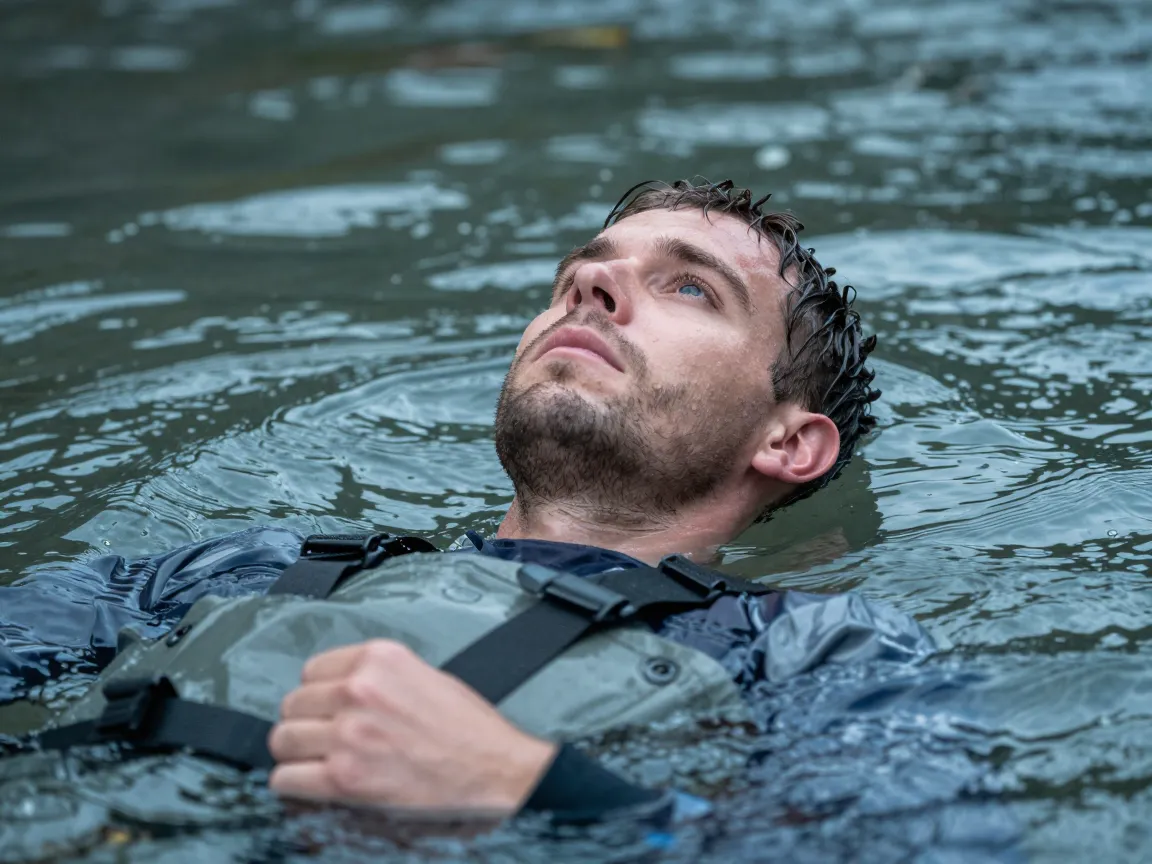
Cold water immersion does not kill people slowly through hypothermia as most anglers assume. The initial cold shock response, an involuntary gasp and hyperventilation triggered by sudden skin cooling, can cause water inhalation and cardiac stress in roughly the first 60 seconds. This phase is now emphasized as the primary lethal risk in updated 2026 wading safety guidance, ahead of hypothermia.
When cold water contacts your skin suddenly, your body gasps involuntarily. If your head is underwater at that moment, you inhale water. Even if your head stays above the surface, the uncontrolled rapid breathing that follows significantly increases the chance of swallowing water and panicking into poor decisions. Panic accelerates every downstream risk.
The practical response is straightforward but requires that you’ve thought about it beforehand. On sudden immersion, your single priority is airway control. Keep your chin up, mouth closed on the initial gasp, and focus on slowing your breathing deliberately. This takes conscious effort against a strong physiological reflex. Thinking through this scenario before it happens, even just sitting at the kitchen table, means your brain has a pre-loaded response rather than starting from scratch in cold water.
The widely cited “1-10-1 rule” gives a useful rough framework: approximately one minute to regain breathing control, ten minutes of meaningful movement capacity before cold incapacitation sets in, and up to roughly one hour before hypothermia causes unconsciousness. Treat these as directional benchmarks, not precise timers. Without thermal protection, a wetsuit or drysuit, the movement window shrinks faster than the rule suggests. The rule’s value is in communicating urgency, not false precision.
3. Stable, Methodical Wading Technique
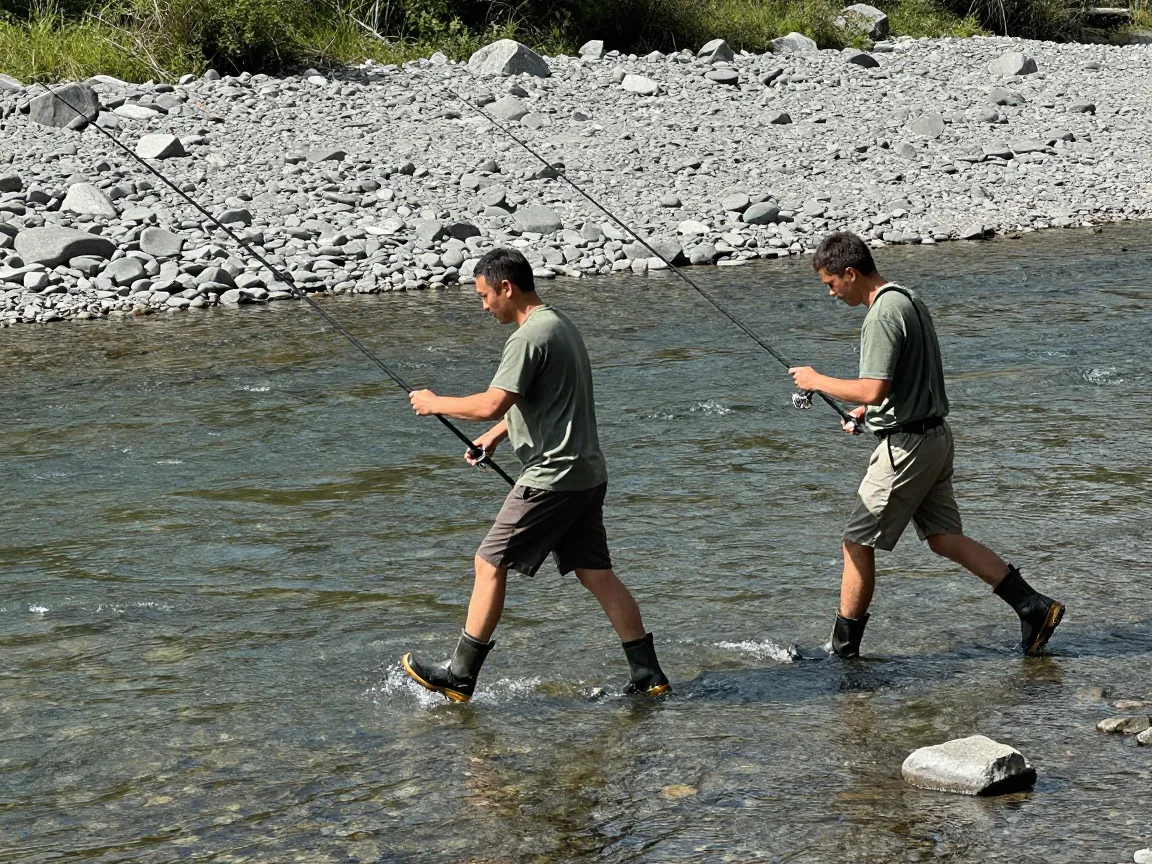
The best self-rescue is preventing the fall. Wading technique is a survival skill, not just a casting convenience.
Three mechanics matter most. First, body angle. Face slightly into the current, angled roughly 45 degrees, so current flows around rather than against the flat face of your body. Facing directly upstream or downstream gives the water maximum surface area to push against, the worst possible stability.
Second, foot movement. Shuffle. Move one foot only after the other is planted and load-tested. The temptation when crossing fast water is to step boldly and quickly. That is how anglers fall. Take short shuffling steps, feel for a stable surface, and transfer weight only when the planted foot is secure. On slick rock, felt-soled wading boots outperform rubber in most conditions, though the gap narrows on sandy or graveled bottoms.
Third, crossing selection. Cross at the widest, shallowest section available, this is typically where water is slowest. Diagonal crossings angled slightly downstream work with the current’s push rather than against it. Straight-across crossings in fast water concentrate current force on your body for longer. New Zealand’s Taupō Trout Fishery guidance, updated in 2026, recommends finding a suitable crossing point rather than forcing a crossing at a convenient but unsuitable location, obvious advice that experienced anglers still regularly ignore under time pressure.
When wading with a partner, link up. Two anglers with hands on each other’s wader straps or clasped forearms at the shoulder share load and dramatically improve stability. Neither person moves without the other being set. For three people, a downstream V-formation distributes water pressure across bodies rather than concentrating it on one.
4. Defensive Floating and Self-Rescue After a Fall
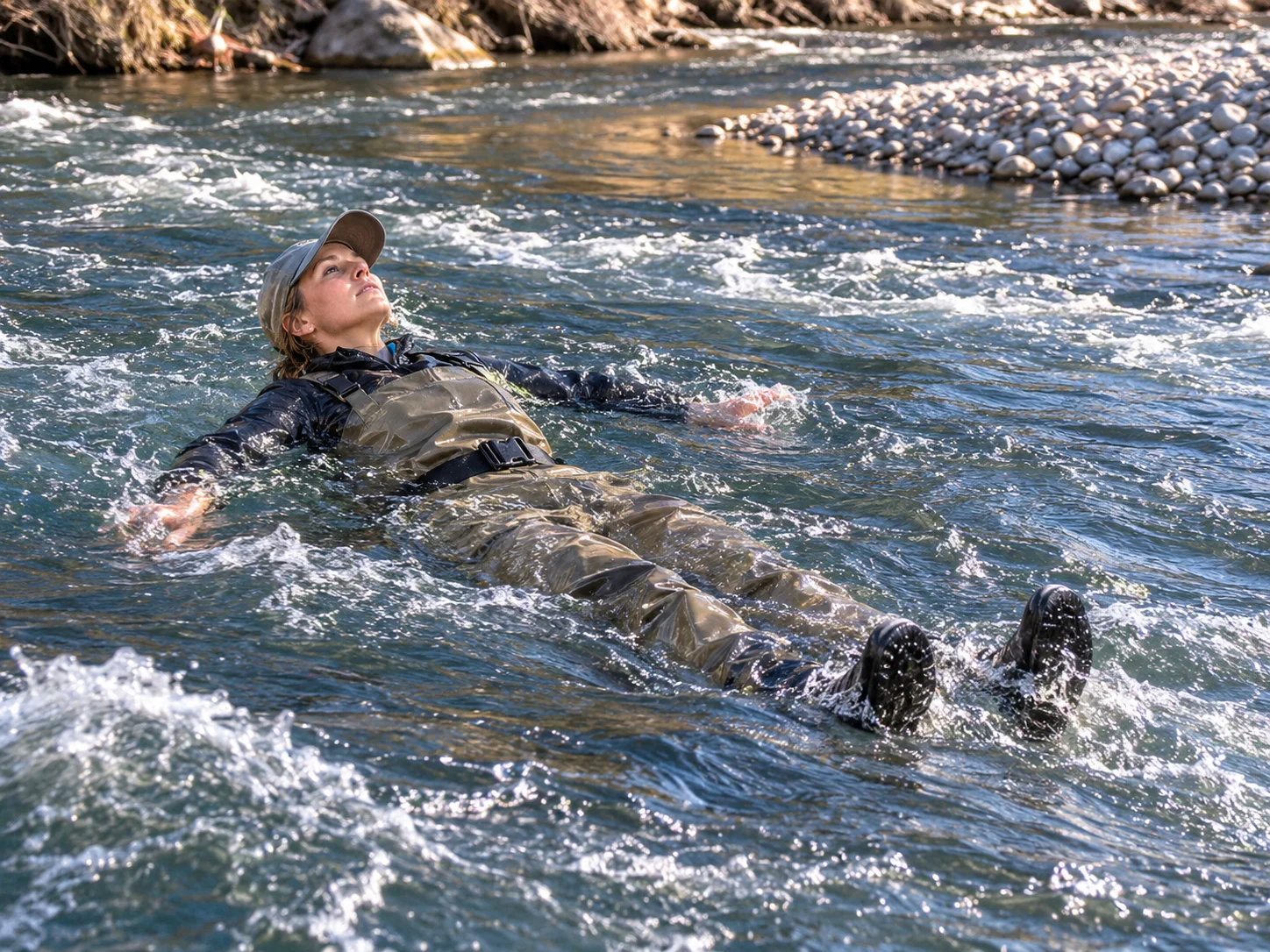
If the current takes you off your feet, your immediate response in the next ten to twenty seconds determines how the next ten minutes go.
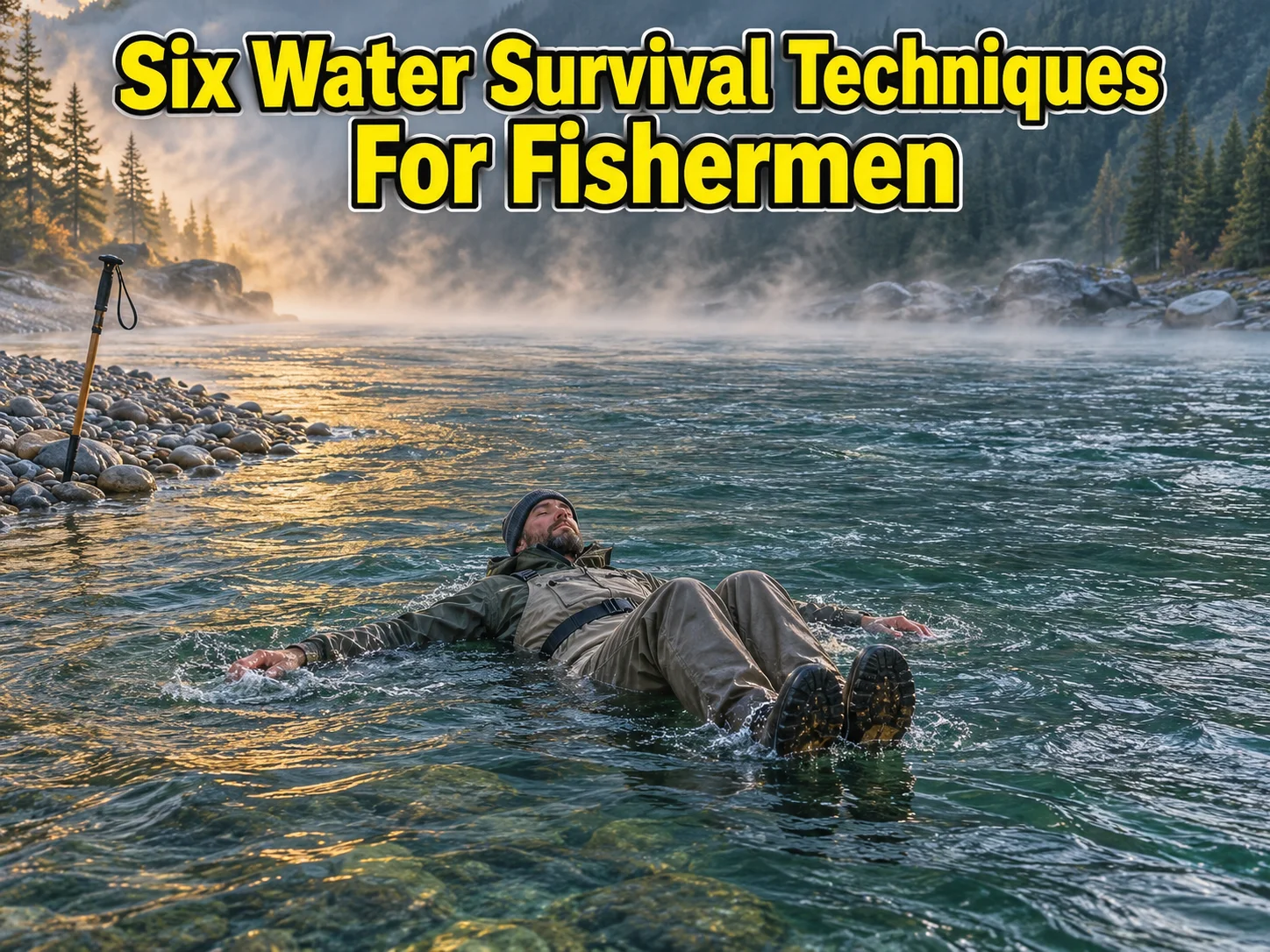
Roll onto your back. This is the core of defensive floating: face up, head back, feet downstream with toes at the surface. Feet downstream accomplishes two things. Your legs absorb impacts from rocks or debris before they reach your head, and keeping toes near the surface prevents them from catching on the riverbed and spinning you underwater. Use your arms in a sculling motion, small, controlled strokes at your sides, to maintain orientation and slow lateral movement.
Do not fight the current. Swimming hard against moving water exhausts you in under a minute and gains almost nothing against moderate flow. Your goal is directional management, not upstream progress. Angle your body toward the nearest safe exit point, a calm eddy, a gravel bar, a low bank, and use the current’s energy to carry you there diagonally rather than expending your own.
The Australian wader training resource updated in November 2026 identifies the “wader safety tuck” as the first response to sudden entry: draw knees toward the chest, preserve air in the waders, stabilize breathing. From there, you assess whether to perform a survival stroke toward an exit, apply the HELP posture if rescue is incoming, or begin swimming to shore with waders on. Removing waders in moving water is rarely necessary and wastes the buoyancy they provide when a belt is fitted.
Identify your exit point before you need it. When you wade, note the nearest safe bank access, not just the closest bank, but one you can actually climb out from. If you’re swept and disoriented, having a mental anchor point speeds up your decision by several seconds.
5. Hypothermia Management and Thermal Protection
Cold incapacitation, the progressive loss of dexterity and muscle coordination that follows cold shock, sets in gradually through the first ten minutes of immersion. Hypothermia, technically a core temperature drop below 35°C (95°F), is typically a later-stage threat. Understanding the sequence matters because managing it requires different actions at different times.
During the cold incapacitation phase, your hands lose dexterity before your legs weaken. You’ll notice difficulty gripping, then trouble coordinating strokes. This is why self-rescue efforts need to be initiated early and kept deliberate rather than explosive. All-out sprint swimming burns through your functional window in cold water faster than calm, directed movement.
If you’re waiting for rescue rather than actively swimming to shore, the Heat Escape Lessening Posture reduces heat loss from the groin, chest, and neck, the high-loss areas. Draw your knees up and cross your arms over your chest in the water. If you’re with another person, the huddle position, pressing your sides together, further reduces heat loss for both. These are not dramatic measures. They’re small positional changes that extend your functional time by reducing the rate of core cooling.
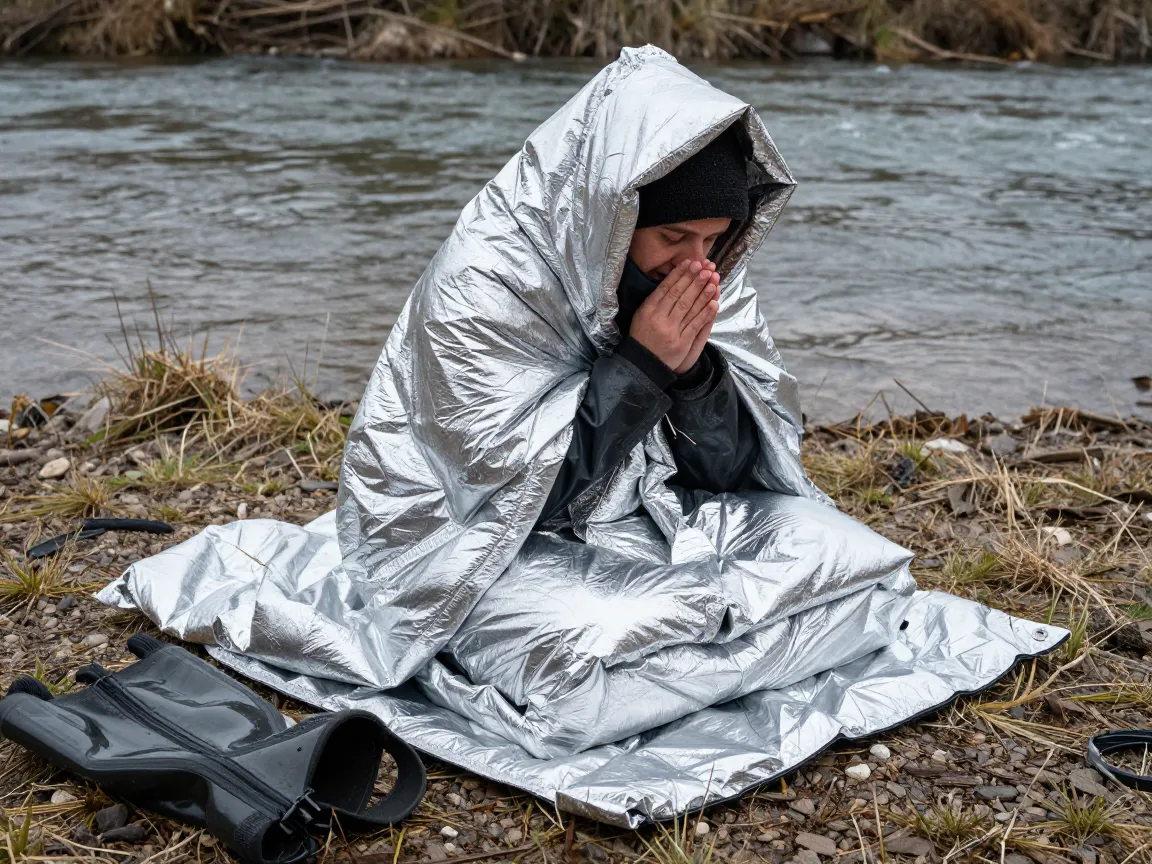
Once out of the water, the hypothermia threat doesn’t disappear. Wet clothing continues drawing heat from the body. Remove wet layers, insulate from the ground, and shelter from wind. Persistent shivering that doesn’t stop after getting out of the water is a signal to actively rewarm, not just sit still. Shivering is the body’s warming mechanism and is a positive sign early on; uncontrolled, continuous shivering that you can’t voluntarily slow is a warning that the body is struggling.
Carry a compact emergency thermal blanket in your vest or pack. They weigh almost nothing, fold to the size of a deck of cards, and can hold enough warmth to keep a hypothermia victim stable while waiting for help.
6. Partner Rescue and Post-Immersion Care
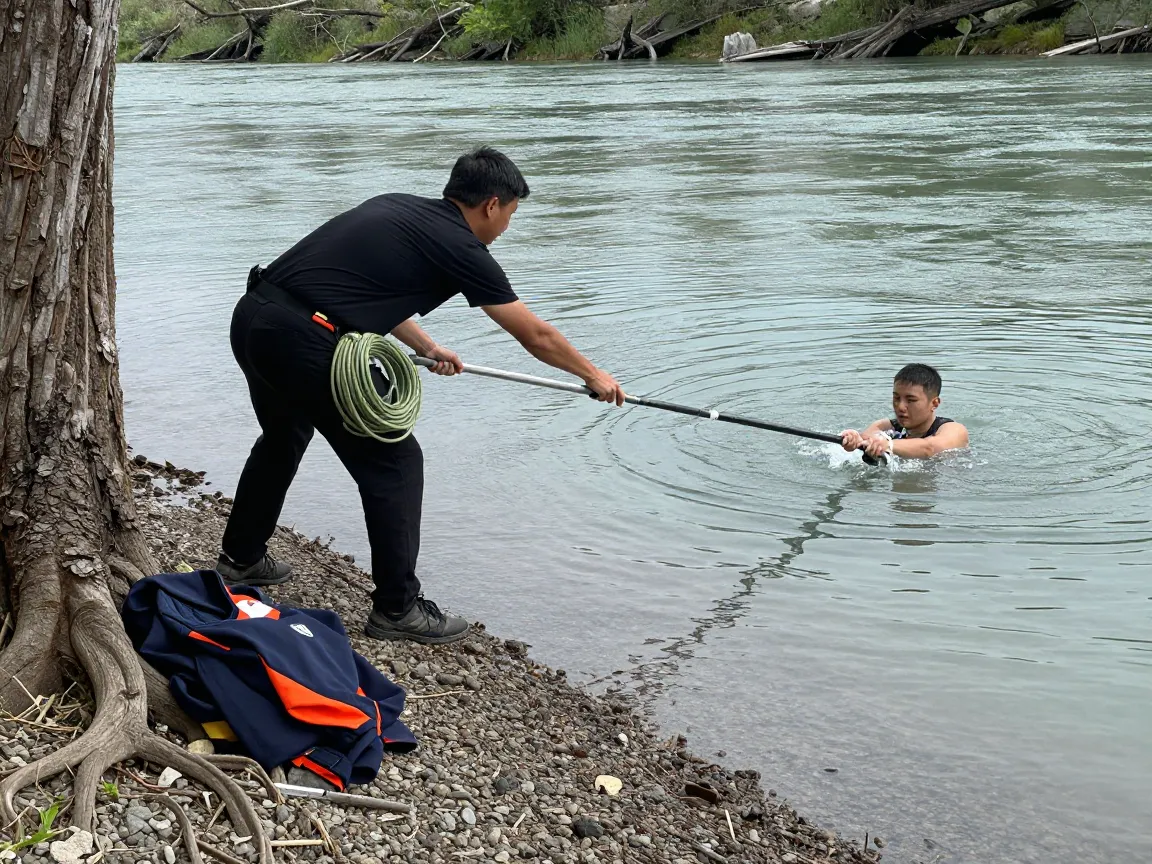
Most wading fishermen focus on their own survival techniques but stop there. The ability to assist a wading partner in trouble, without becoming a second victim, is now codified in formal training standards and covers skills that any angler can learn in an afternoon.
The first task is accurate situation assessment. Before you move, identify where the person in trouble is relative to current and hazards, what they’re doing (actively swimming, passive float, face down), and what resources you have on you. A thrown line, an extended wading staff, or a wading belt tossed as a throwing aid are common first options. The reach-throw-row-go hierarchy from water rescue training applies here: reaching from land is safest, throwing next, entering the water last. An angler who enters fast water without a plan to control their own position often becomes a second casualty.
If your partner is conscious and near the bank, extend your wading staff horizontally from a stable stance on shore. Brace your feet against something solid, a tree root, a large rock, before they grip the other end. Tell them to hold the staff, not to grab your hand. A direct wrist grip can pull you off-balance before you can release.
Post-immersion care starts the moment they’re on dry ground. Prioritize airway, breathing, and circulation, the standard ABCs. Remove wet clothing if you have dry replacements. Insulate from the ground and cover from wind. If the person is unresponsive or breathing is absent, begin CPR and call for emergency services. Hypothermic cardiac arrest responds to CPR, but the person should not be declared beyond help until they are warm and unresponsive. This is a documented medical principle: “not dead until warm and dead.”
One specific skill worth practicing: a basic search in shallow water if someone has gone under. Work from a known last-seen point, move systematically upstream, and use your wading staff to probe rather than your hands and feet. Speed matters, but moving randomly wastes time.
Quick Comparison
| Technique | When It Applies | Key Action | Common Mistake |
|---|---|---|---|
| 1. Pre-wade risk assessment | Before entering water | Check temp, flow, fit wader belt | Skipping belt check |
| 2. Cold shock management | First 60 seconds of immersion | Control breathing, keep airway clear | Panicking and gasping |
| 3. Stable wading technique | While moving through water | 45-degree stance, shuffle, diagonal crossing | Facing current flat-on |
| 4. Defensive floating | After falling in moving water | Back-float, feet downstream, scull to exit | Fighting the current |
| 5. Hypothermia management | 10+ minutes in cold water or post-exit | HELP posture, insulate after exit | Assuming it’s over once out |
| 6. Partner rescue and care | When a wading partner is in trouble | Reach-throw-go hierarchy, post-immersion ABCs | Entering water without a plan |
Conclusion
None of these six techniques requires specialized equipment or formal certification, though training courses such as swiftwater rescue and wilderness first aid will sharpen them considerably. The highest-leverage step you can take before your next wading trip is to practice the defensive float position in a controlled setting, a calm swimming pool or still lake, until it’s automatic. Everything downstream of a fall depends on what your body does in the first thirty seconds, and that response is trainable.