Urban Survival Hacks for Anglers Caught in a City Emergency
Roughly 56 percent of the global population lives in cities, yet most emergency preparedness advice still defaults to forest scenarios, bug-out cabins, and freshwater streams that are nowhere near a subway entrance. For anglers, that gap creates a false sense of security. A fishing kit and outdoor experience are real assets, but they solve only a fraction of the problems a city emergency creates.
Disclosure: This post contains affiliate links. As an Amazon Associate, we earn from qualifying purchases, and at no extra cost to you.
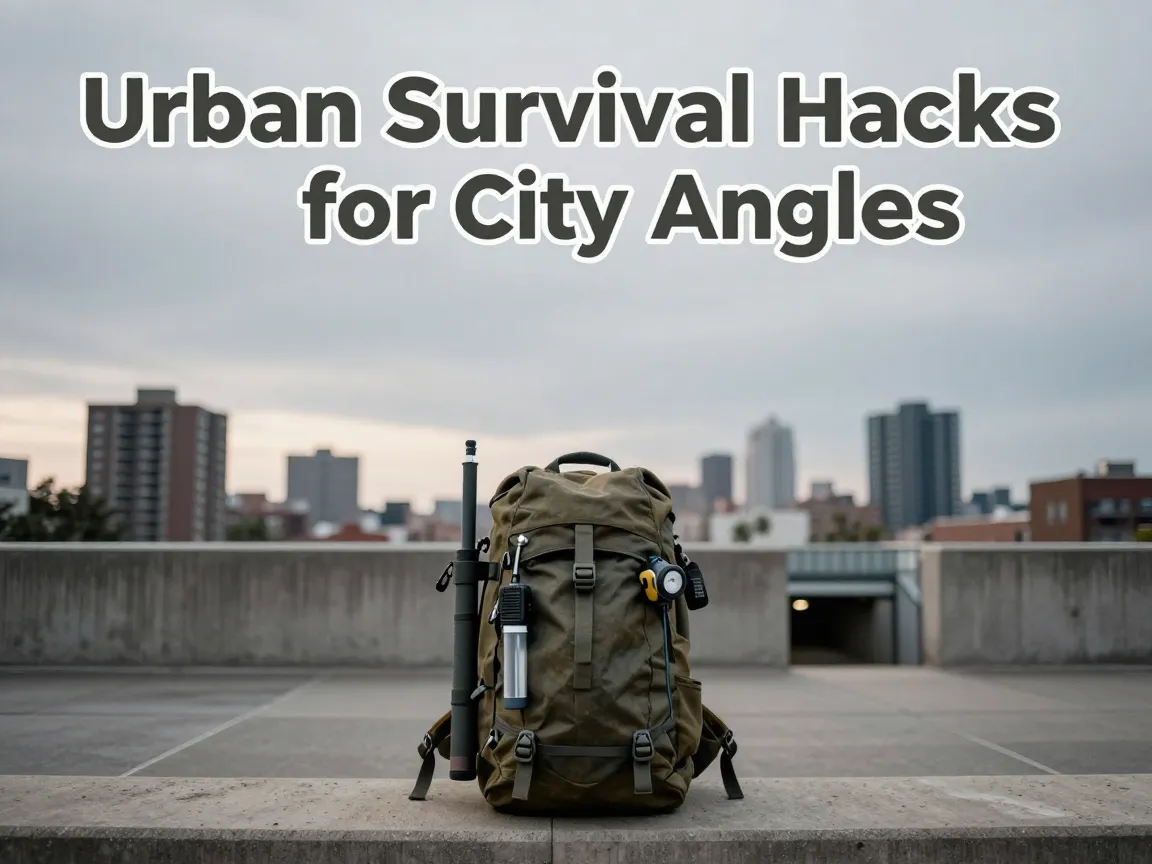
These 6 urban survival hacks for anglers caught in a city emergency are built around one core argument: your angling skills and gear give you a head start, but only if you adapt them to an urban context rather than treating the city like a lake with concrete banks. Each hack below addresses a specific failure point that catches prepared anglers off guard when things go wrong in a metropolitan area.
Key Takeaways
- Your fishing backpack is already close to a functional 72-hour go-bag; a few targeted additions complete it.
- Water treatment skills from angling translate directly, but apartment-based water sources must be identified before a crisis hits.
- Food from fishing is a supplement, not a strategy; a 14-day pantry baseline comes first.
- Moving in small, organized groups at low-traffic hours reduces exposure during urban resupply runs.
- A pre-planned logistics point outside the city, near water you already know, is more valuable than any single piece of gear.
- 2026 emergency management guidance now explicitly addresses apartment-dwelling urbanites; integrate it rather than ignoring it.
1. Convert Your Fishing Backpack Into a Functional Go-Bag Without Starting Over
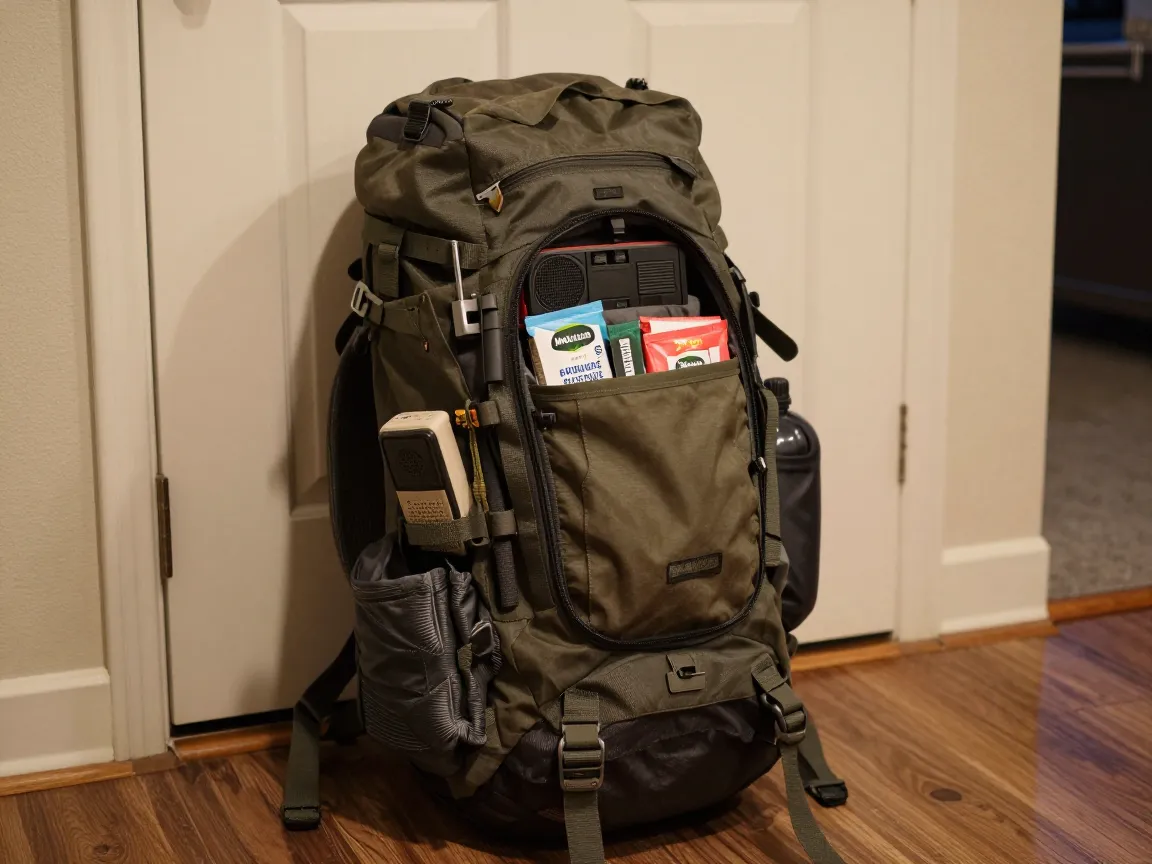
Anglers already carry more survival-relevant gear than most people realize. A mid-size fishing daypack typically holds a first-aid kit, water bottle, multi-tool, rain gear, and enough cordage to solve a dozen practical problems. The mistake most anglers make is treating that pack as gear storage rather than a deployable emergency kit.
The conversion requires targeted additions, not a rebuild. Add a 72-hour supply of calorie-dense, shelf-stable food (think compact bars rated around 400 calories each), a copy of critical documents in a waterproof sleeve, a small battery bank, and a portable AM/FM/NOAA weather radio. The fishing gear stays; it moves to one compression-packed dry bag inside the main compartment so the useful survival layers sit on top. Keep total packed weight under 25 pounds. Above that, most people slow down significantly on city streets, especially with debris or crowds.
The hands-free argument matters here. A shoulder bag or rolling case signals “I have things worth taking” in a tense urban environment. A well-worn backpack does not. It also keeps both hands available for navigating obstacles, assisting others, or managing a door. When you habitually sling that pack over your shoulder for a predawn fishing trip, the motion of grabbing it in a city emergency feels automatic rather than panicked.
One practical step: pack it completely tonight, put it by the door, and walk out with it twice this week. Any friction you notice, an awkward strap, a zipper that snags, an item buried under three layers, is friction you will not have time to fix when it matters.
2. Map Your Apartment Building’s Hidden Water Sources Before You Need Them
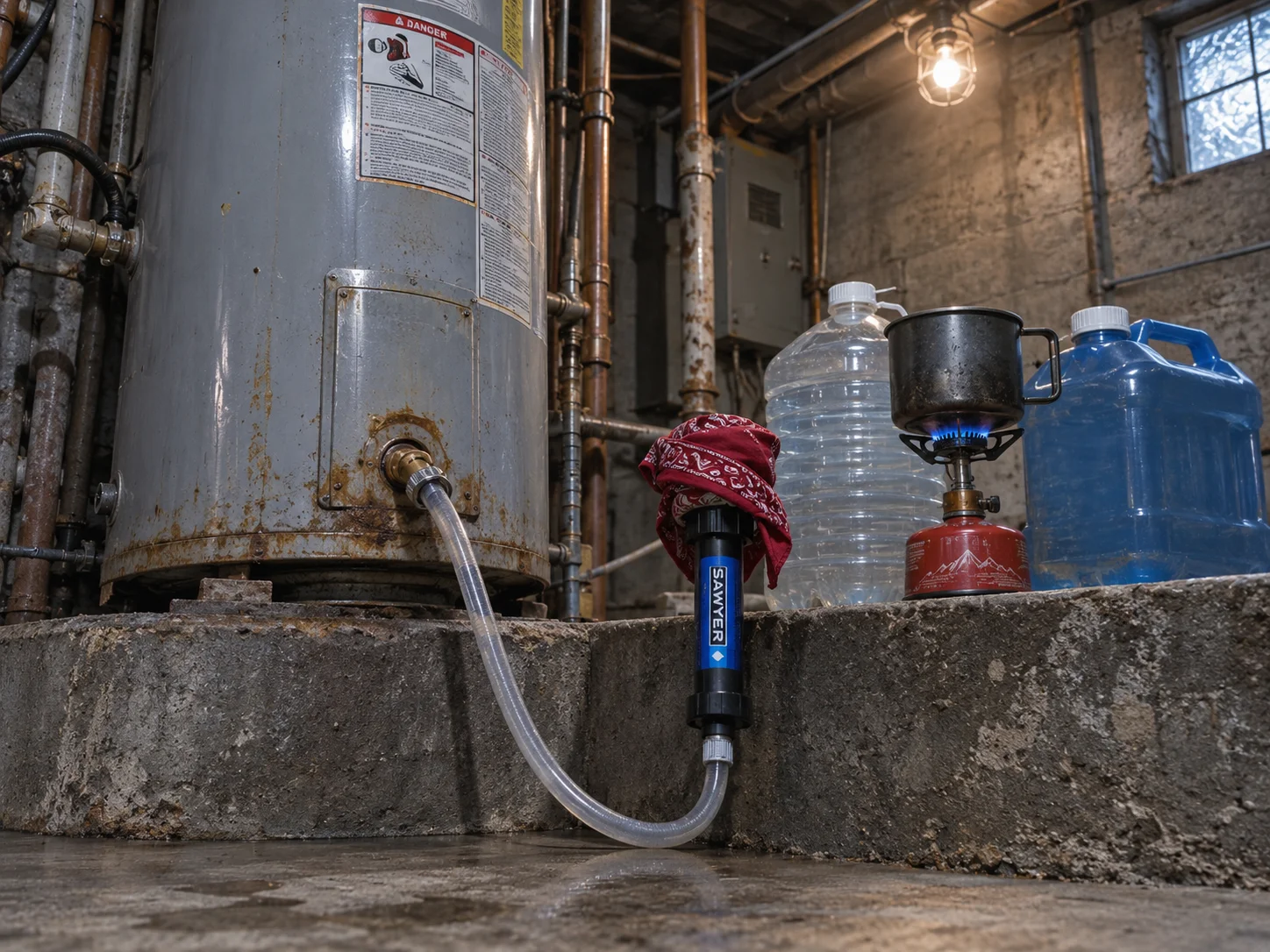
Water pressure in urban systems typically fails within 24 to 72 hours of a major infrastructure disruption. Anglers know how to treat questionable water using filters and chemical methods, but that skill is useless without a source. Rivers and canals in cities are real options, but they carry contaminants (industrial runoff, sewage overflow, heavy metals) that require more than a standard backpacking filter to address safely.
Start closer to home. A standard residential water heater holds 40 to 80 gallons of potable water. The drain valve at the bottom, combined with a short piece of hose, lets you access it cleanly. Building rooftop storage tanks, common in older urban apartment blocks, can hold thousands of gallons; find out if your building has one and whether the access point is locked. Swimming pools are a last resort because of chemical load, but they provide a large reserve for sanitation and toilet flushing, which reduces your demand on drinking-water supplies.
Anglers’ gear intersects here cleanly. A Sawyer Squeeze or similar hollow-fiber filter, standard kit for backcountry fishing trips, removes bacteria and protozoa effectively from rooftop tank water and treated municipal reserves that have sat stagnant. For urban canal or river sources, pair that filter with a pre-filter (bandana or coffee filter to remove sediment) and a boiling step using your camp stove. The same stove you use to heat streamside meals handles this without modification.
The 2026 emphasis in urban survival literature is on “apartment-first” thinking: treat your building as your first water infrastructure layer, not an inconvenience to escape. Know your building before you need it.
3. Set a 14-Day Pantry Baseline Before You Rely on Fishing for Food
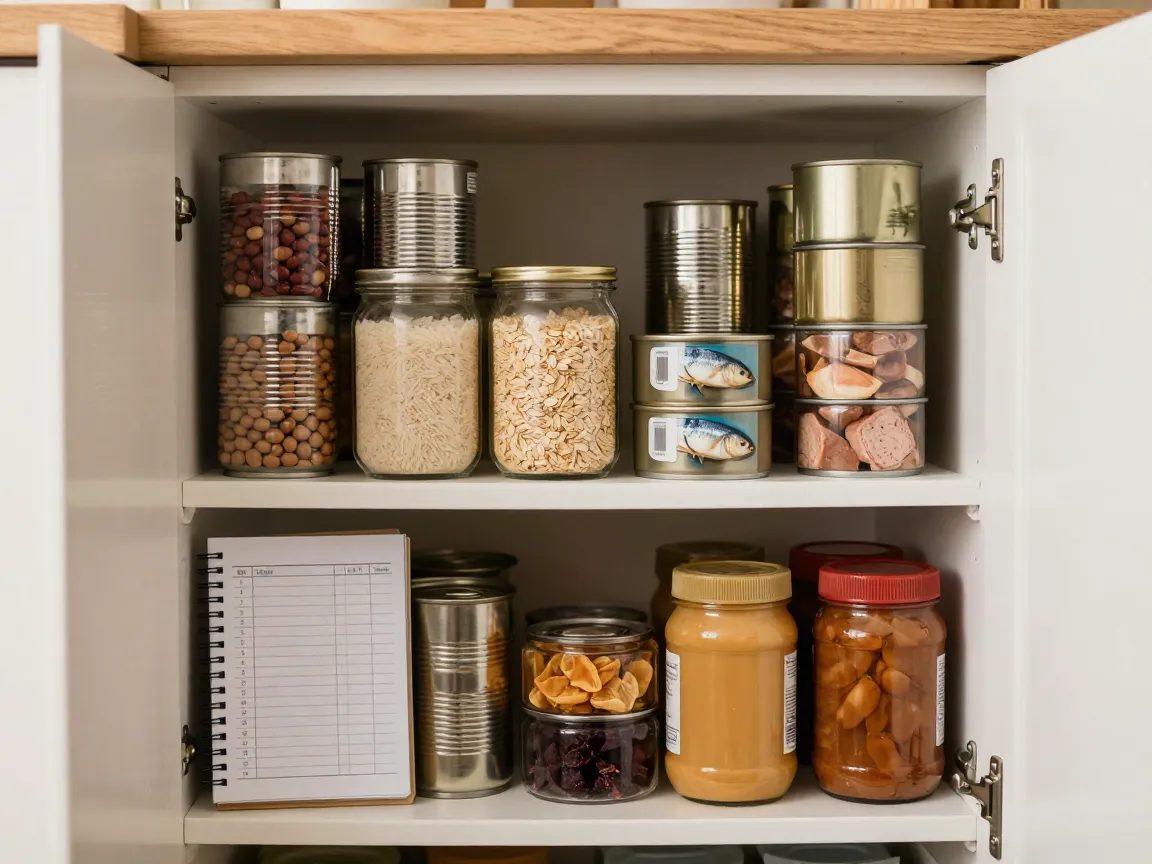
The image of the angler who can “always eat” because there are fish in the river is a durable myth. It fails in urban emergencies for three reasons: access to safe fishing spots may be blocked or contaminated; caloric yield from urban fishing is inconsistent and low; and fishing takes time and energy that may be needed elsewhere during active emergency conditions.
FEMA’s current guidance recommends a minimum two-week household food supply. That is the floor, not a comfortable cushion. For a solo adult, 14 days at roughly 2,000 calories per day means about 28,000 calories of shelf-stable food. Practically, that is canned beans, rice, oats, canned fish and meat, peanut butter, and dried fruit. Anglers often already stock canned fish at home, which is a small but real head start.
Fishing enters the picture as a supplement once the immediate crisis phase passes. After roughly 72 hours, when the acute emergency stabilizes into a longer disruption, urban waterways may become a low-risk source of protein if water quality assessments allow it. Many urban anglers already know which local waterways carry catch-and-eat advisories under normal conditions; that knowledge becomes directly relevant when deciding whether to eat what you catch. Fish from water with active contamination advisories can carry mercury, PCBs, and other toxins that cooking does not neutralize.
The practical order is: eat from the pantry, preserve energy, assess conditions, and fish selectively once the situation permits. Fishing as a primary food strategy in the first days of a city emergency is a plan built on optimism rather than logistics.
4. Apply Night-Fishing Team Discipline to Urban Resupply Runs
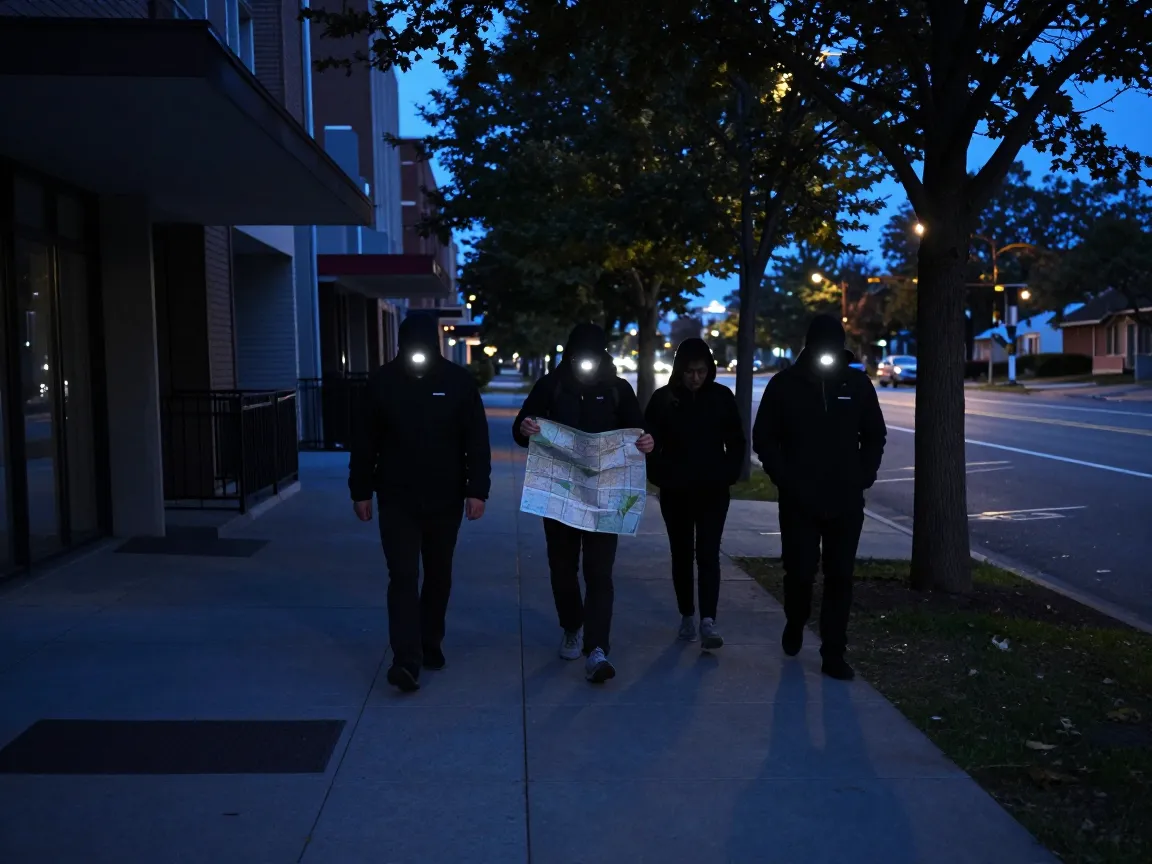
Night fishing teaches a specific set of habits that transfer directly to emergency movement through a city. A disciplined night-fishing team moves quietly, stays together, designates roles, communicates in short signals, and plans the route and return before leaving the vehicle. Those same habits, applied to leaving your apartment building to resupply or assess conditions, reduce exposure and prevent the kind of improvised solo wandering that leads to problems.
Group size matters. Two to four people is the range that balances mutual support with low profile. A solo individual moving through an unsettled urban area has no backup if something goes wrong. A group of eight is conspicuous and slow. The fishing-team model fits naturally: a designated lead who knows the route, a second person managing the kit, and an agreed turn-back condition before you leave.
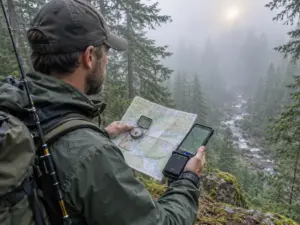
Timing follows the same logic as night fishing. Movement during low-traffic hours (3:00 to 5:30 a.m. in most cities) reduces encounters. Routes planned around natural cover, tree lines, building overhangs, wide sidewalks rather than narrow alleys, give the group more options if they need to pause or redirect. Carry a physical map. GPS-dependent navigation in a “broken digital world,” where cell networks are down or overloaded, is a 2026 reality that emergency planners now explicitly flag in public guidance.
One thing the night-fishing analogy highlights: tell someone where you are going and when you plan to return, even in an emergency. That discipline, standard for responsible anglers on remote water, is equally standard practice in organized emergency response.
5. Pre-Establish a Logistics Point Near Familiar Water Outside the City
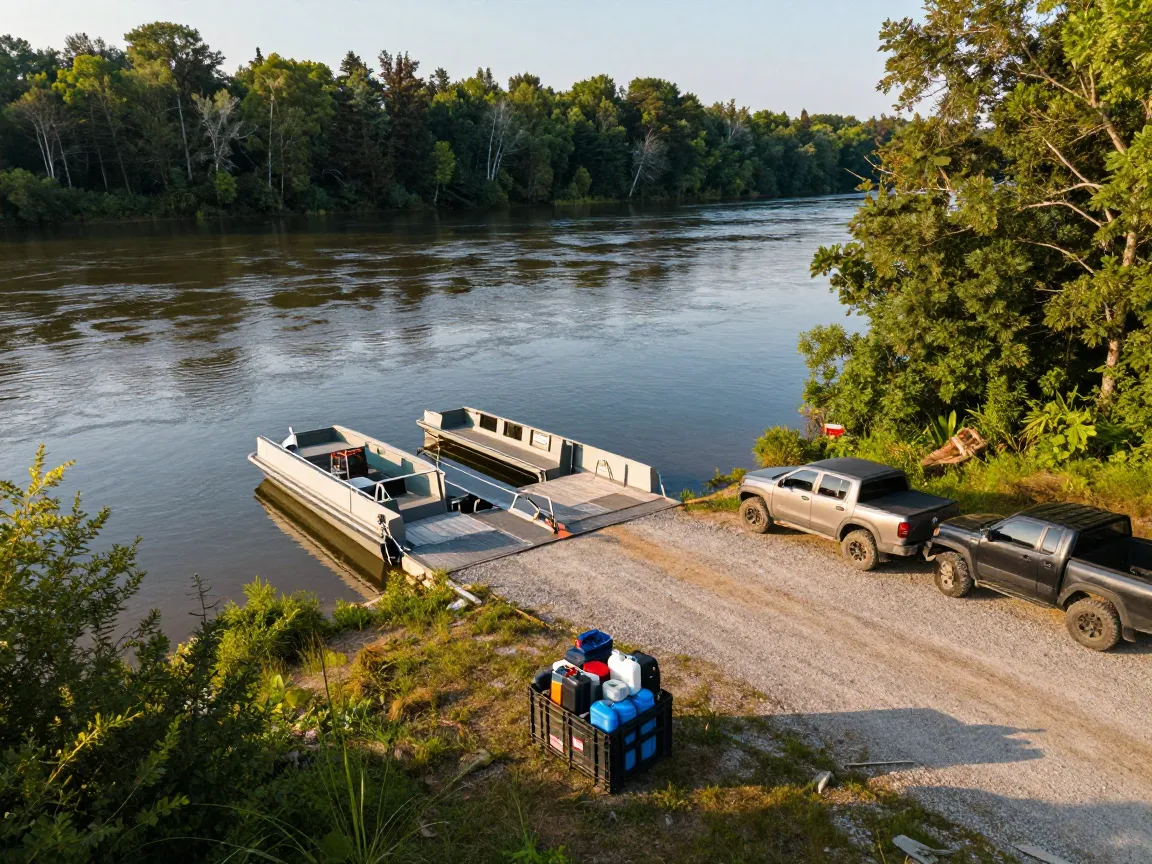
Every serious angler has a go-to spot outside the city. That familiarity, the knowledge of a specific stretch of river, a reservoir, a lake access point within 50 to 150 miles, is a strategic asset in a prolonged urban emergency. The logistics point concept formalizes it: a pre-agreed location where your household or small group can consolidate, resupply, or shelter if conditions in the city become untenable.
The location does not need to be elaborate. A family member’s rural property, a fishing cabin, a campground you know well, or simply a public boat launch with adjacent forest can serve the function. What makes it a logistics point rather than a vague plan is specificity: a written address, a primary and alternate route to reach it, an agreement with whoever or whatever organization manages access to that point, and a cached or pre-positioned supply of essentials (fuel, water, food, medications) stored there before an emergency occurs.
Anglers have a practical advantage in selecting these points. You have already scouted access roads to your fishing spots, you know which are paved versus seasonal, and you know whether the water there is fish-able and clean enough to treat for drinking. That reconnaissance is worth more than a map pin on a spot you have never visited.
The 2026 shift in urban survival thinking moves away from the “lone wolf evacuates to the wilderness” model toward a coordinated, community-linked approach. The logistics point works best when two or three households have agreed to meet there and each contributes something to the cache. One person brings the water filtration gear; another brings the first-aid supplies; your contribution might be the fishing equipment and local water knowledge.
6. Adapt Your Gear Strategy to 2026 Urban Realities, Not Bushcraft Fantasies
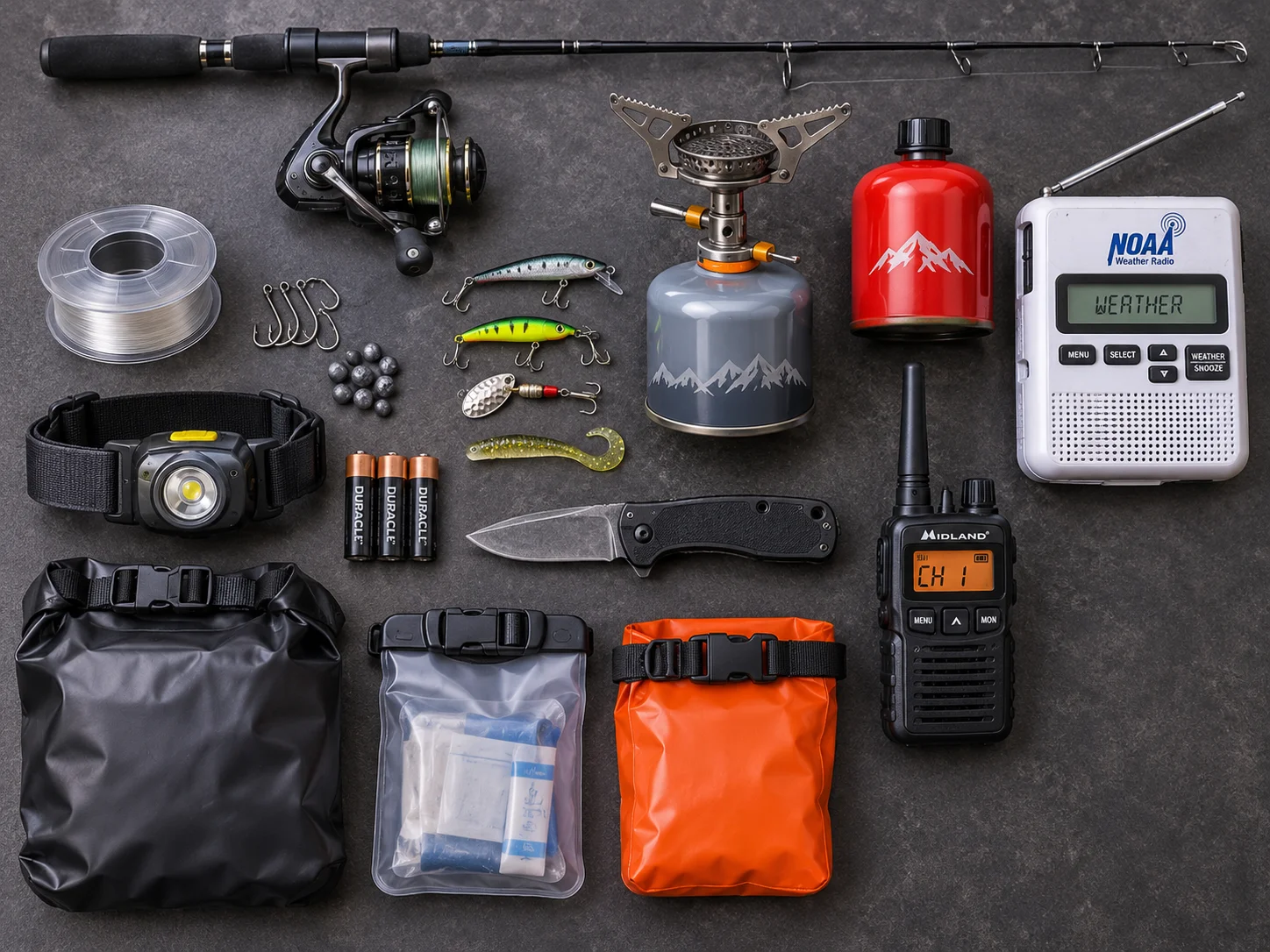
Fishing gear is purpose-built for a specific task, and that task is not urban emergency survival. A ultralight fly rod is not a defensive tool, a trotline is not a scalable food system for apartment living, and a tackle box is not a first-aid kit. The 2026 urban survival literature is notably direct on this point: specialized outdoor gear is most valuable when integrated into a broader, layered kit rather than treated as the centerpiece.
What angling gear genuinely contributes in a city emergency context is narrow but real. A compact spinning rod and reel, a monofilament spool, and a selection of hooks, split-shot weights, and small lures take up minimal space and add a meaningful protein option during extended disruptions. A camp stove with an adequate fuel supply is probably the highest-value item in any angler’s kit for urban survival: it boils water, heats food, and operates off-grid. A headlamp with spare batteries, a knife, and waterproof storage bags round out the crossover utility.
Communications gear is the category most anglers underestimate. A battery-powered or hand-crank NOAA weather radio is non-negotiable. In 2026, with public warnings delivered primarily through smartphone push alerts, a grid-down or network-congested scenario strips away the information infrastructure most people depend on without realizing it. A two-way radio (FRS/GMRS type) for short-range coordination with your group adds a layer that no amount of fishing skill replaces.
The honest position on angling gear in a city emergency is that it performs best in phase two of a disruption, once immediate safety and water/food baselines are secured. Treat it as a valuable specialist tool, not the main system.
Quick Comparison
| Hack | Primary Benefit | Phase It Applies Most |
|---|---|---|
| 1. Go-bag from fishing pack | Rapid deployment, hands-free carry | Immediate (0-72 hours) |
| 2. Apartment water sources | Off-grid water access without leaving | Immediate (0-72 hours) |
| 3. 14-day pantry baseline | Caloric stability without fishing | Immediate and extended |
| 4. Night-team movement | Low-profile resupply and assessment | 72 hours onward |
| 5. Logistics point outside city | Evacuation anchor near known water | Extended disruption |
| 6. Integrated 2026 gear strategy | Realistic, layered preparedness | All phases |
Conclusion
The most actionable next step from these 6 urban survival hacks for anglers caught in a city emergency is the simplest: open your fishing backpack tonight and assess it honestly against the go-bag framework in hack one. That single physical audit will surface every gap in your current setup faster than any checklist. The fishing knowledge and gear you already own are real assets; the work is in adapting them to the specific, unglamorous demands of a city under stress.