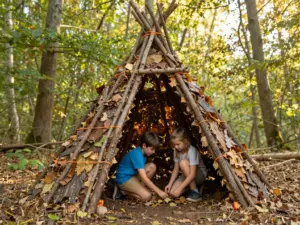
Outdoor Survival Hacks That Make Roughing It Way Easier
Roughly 158 search-and-rescue operations happen every day across U.S. wilderness areas, according to the National Park Service’s incident tracking data. Most of them involve people who had gear but lacked the knowledge to use it well. The good news is that a small set of practical skills and low-cost tools closes that gap fast. This guide covers 6 outdoor survival hacks that make roughing it way easier, with the emphasis squarely on what actually works in the field rather than what looks clever in a sixty-second video.
Disclosure: This post contains affiliate links. As an Amazon Associate, we earn from qualifying purchases, and at no extra cost to you.
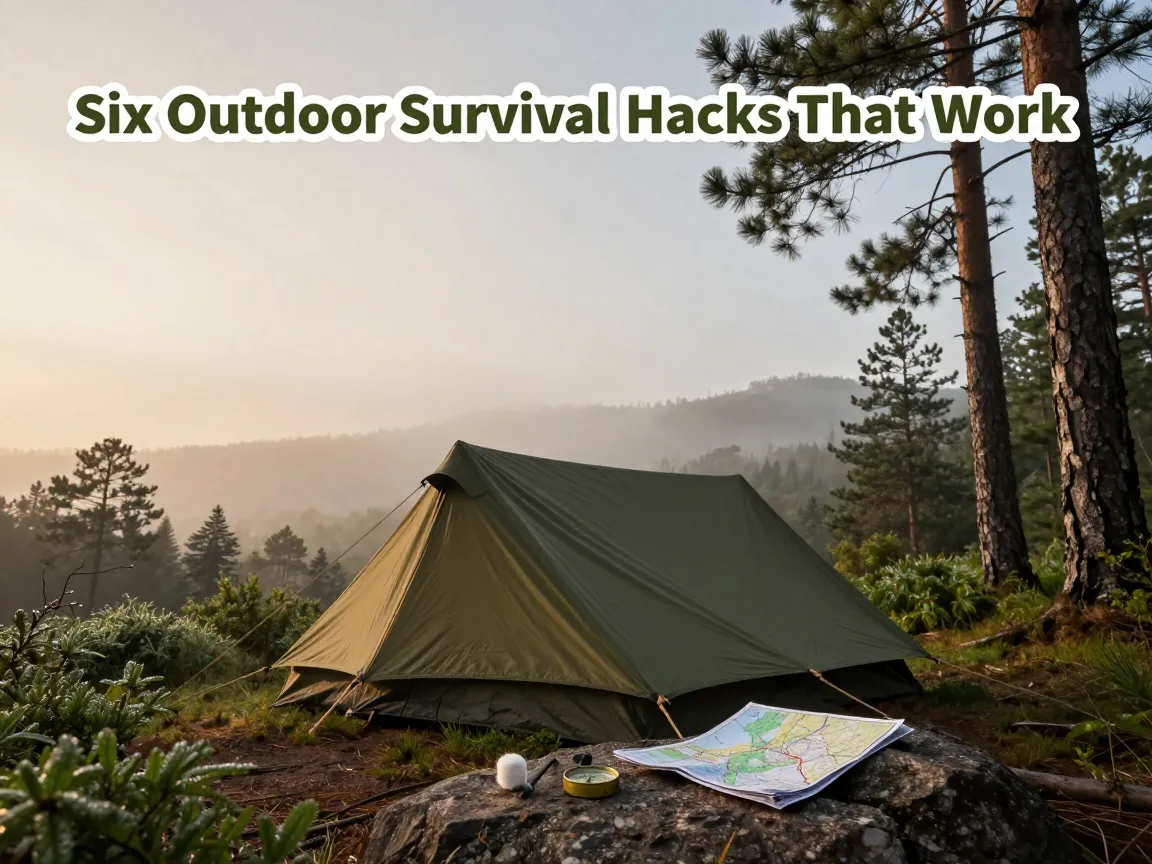
Key Takeaways
- Two items, duct tape and paracord, cover more emergency scenarios per gram of pack weight than almost anything else you can carry.
- Reliable fire starting depends on fuel preparation done before you need fire, not on the ignition tool itself.
- Offline maps downloaded before you leave a cell signal zone eliminate the single most common navigation failure in backcountry situations.
- Permethrin-treated clothing outperforms topical insect repellents for tick and mosquito protection over a full trip.
- A tarp outperforms a tent in versatility-to-weight ratio when you know three basic rigging configurations.
- Many viral survival hacks fail in real conditions; the ones below are drawn from established bushcraft instruction and wilderness first responder practice.
1. Build Your Fire Kit Around Fuel Prep, Not Fancy Igniters
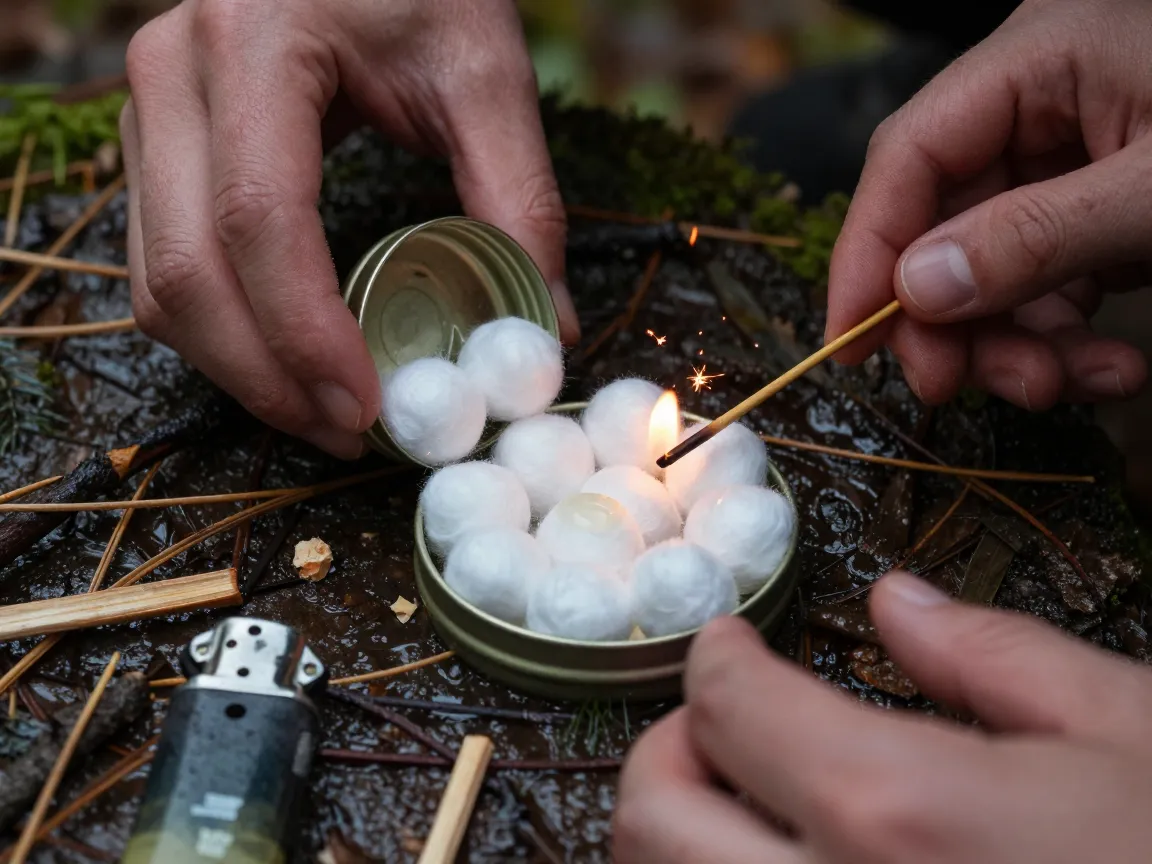
The most common fire-starting failure is not a broken lighter. It is wet or inadequate tinder. A ferrocerium rod throws a spark at roughly 3,000 degrees Fahrenheit, and that spark still dies instantly if it lands on damp pine needles or bark that has not been prepared. Experienced wilderness instructors consistently point to fuel selection and preparation as the variable that separates people who get fires going in rain from people who don’t.
The simplest and most field-proven tinder hack costs almost nothing: petroleum jelly applied to cotton balls. Each cotton ball holds the petroleum jelly in a stable form until you need it, then releases it slowly as it burns, giving you a sustained flame for two to three minutes rather than a brief flare. Store a dozen of them in a small screw-top container or a zip-lock bag. That burn time is long enough to dry out your first layer of kindling even in damp conditions.
Carry two ignition sources regardless. A windproof lighter and a ferrocerium rod cover each other’s failure modes. The lighter fails in extreme cold; the ferro rod fails if the striker goes missing. Neither one matters if your tinder is not ready when you need it. Gather and prepare tinder while conditions are still good, not when you’re cold and rushed.
2. Carry Duct Tape and Paracord as Your Primary Multi-Tools
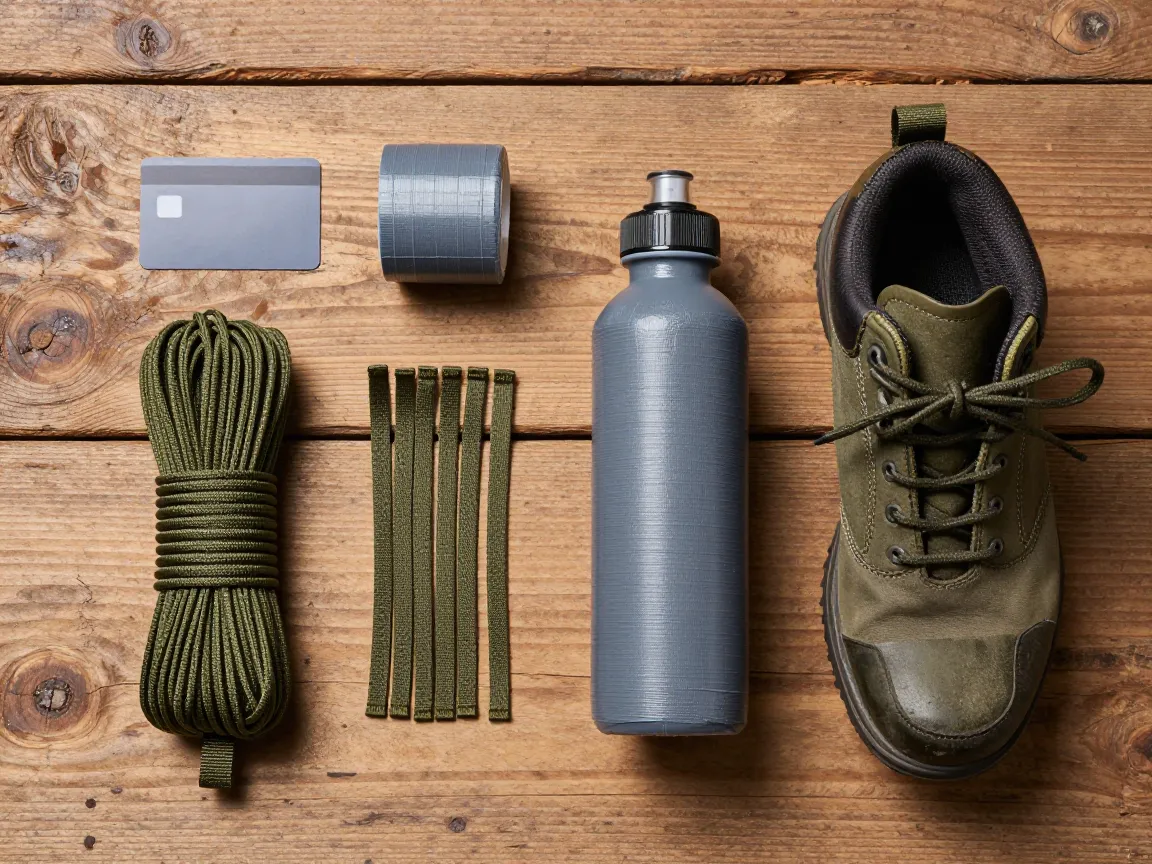
No single piece of survival gear generates a higher return per ounce than duct tape and paracord used together. Survival instructors and bushcraft educators repeat this because it keeps proving true. Rather than packing a full roll of duct tape, wrap fifteen to twenty feet around an old credit card or your water bottle. That gives you immediate access without the bulk.
Paracord’s inner strands are what most people miss. Standard 550 paracord has seven inner strands, each rated to around 50 pounds. You can strip the outer sheath for fine cordage, use individual inner strands for fishing line or sutures in a genuine emergency, and use the full cord for shelter rigging, bear hangs, clotheslines, or replacing broken boot laces. A 50-foot hank weighs under two ounces and fits in a jacket pocket.
Duct tape patches cover blisters before they tear open, seal punctures in sleeping pads, repair broken pack straps, hold a splint in place, and waterproof a seam temporarily. The combination of these two materials handles a range of problems that would otherwise require a much heavier and more expensive kit. If you are trimming your pack weight and have to choose what stays, these two items stay.
3. Rig a Tarp Shelter in Three Configurations
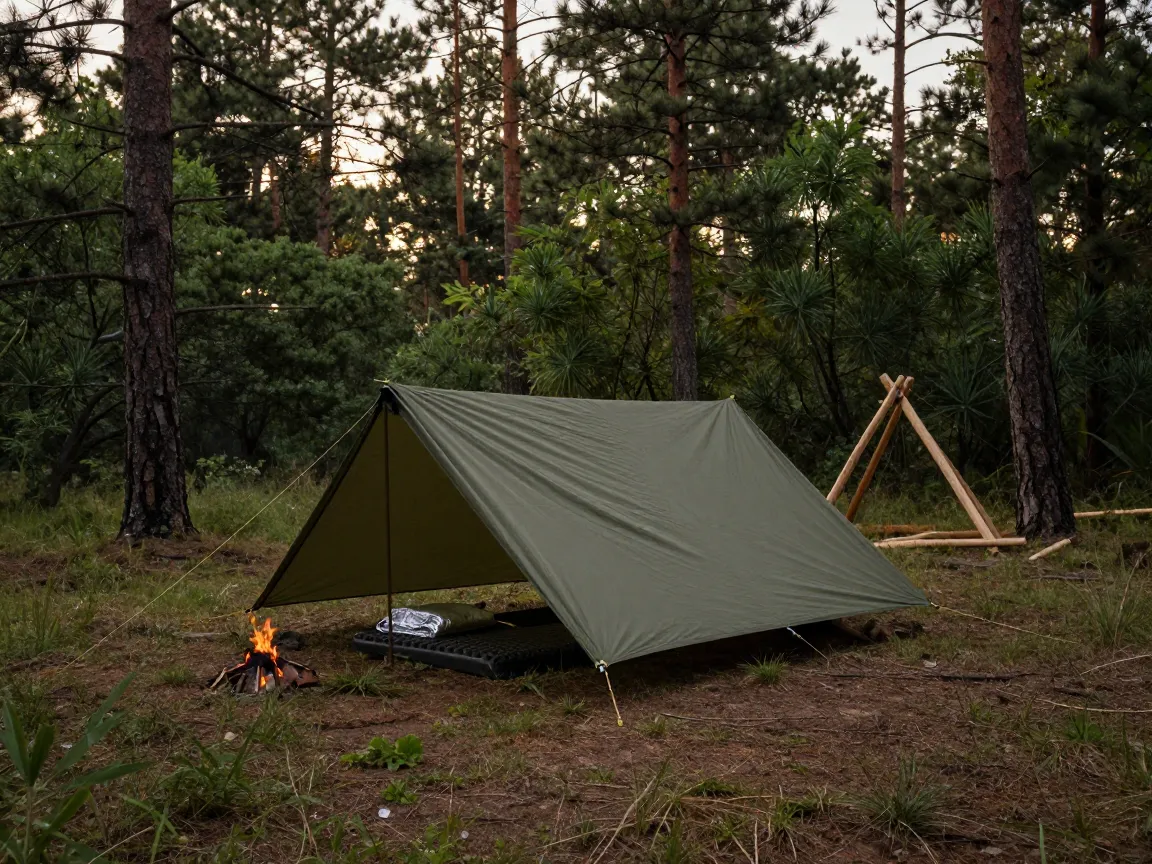
A good silnylon tarp weighing around 14 ounces beats a cheap two-person tent in almost every backcountry condition when you know how to pitch it. The three configurations worth learning are the A-frame, the lean-to, and the plow point.
The A-frame uses a ridgeline of paracord strung between two trees at roughly chest height. The tarp drapes over it and stakes out at a low angle on both sides. It sheds rain efficiently, closes off wind from both ends when staked tight, and takes about four minutes to pitch once you’ve practiced it. The lean-to sacrifices one open side for better ventilation and a wider view of your fire, which matters when temperatures are moderate and insects are your bigger problem. The plow point is a lower, more enclosed configuration that handles high wind better than either of the other two.
One useful addition: a foam sit pad or even a folded emergency mylar blanket placed under your sleeping bag adds meaningful insulation from ground cold. Ground contact pulls heat away from your body faster than ambient air temperature does. A thin barrier changes that heat loss significantly without adding much to your pack weight.
4. Download Offline Maps Before You Lose Signal
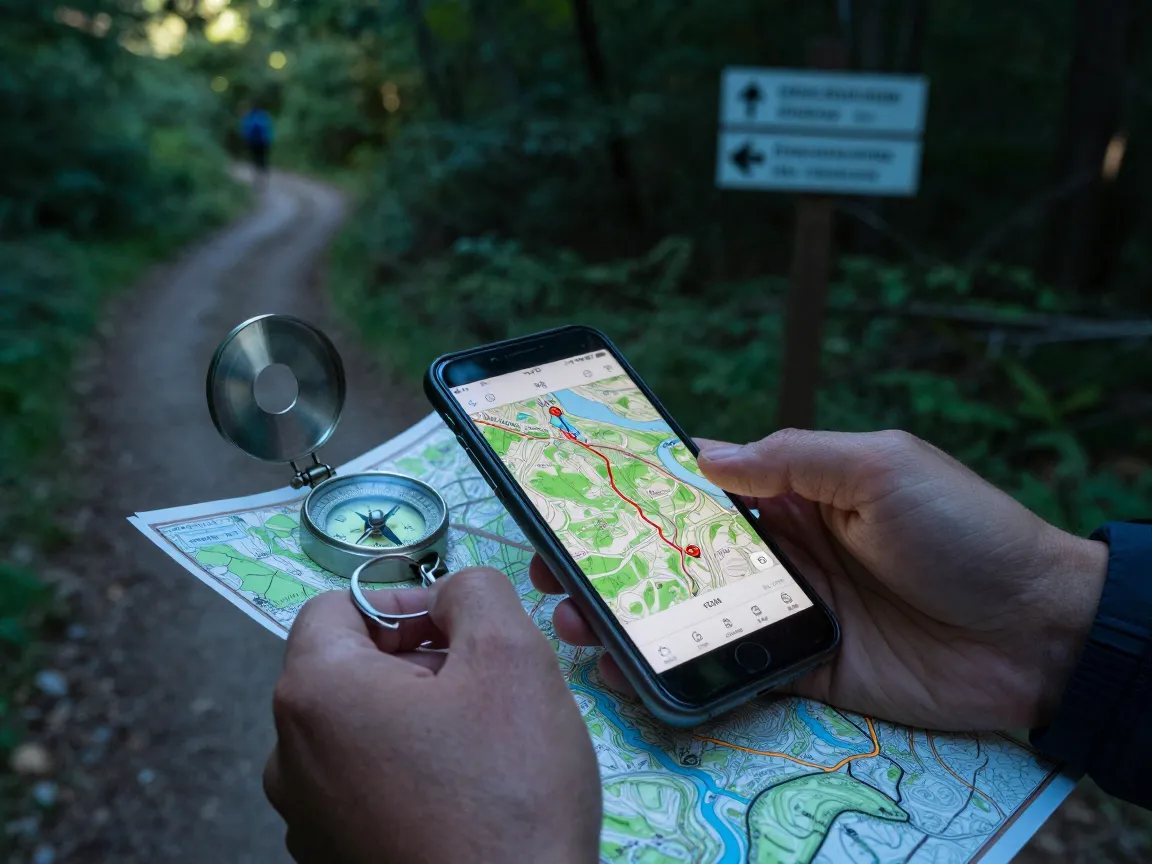
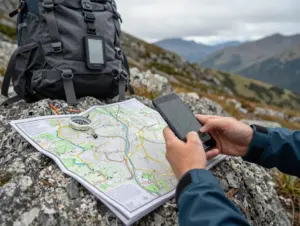
Navigation failures in the backcountry almost always trace back to the same moment: a person looked at a map on their phone, assumed they would have signal throughout, and then lost it at the first ridge. Apps like Gaia GPS, AllTrails Pro, and CalTopo all allow full topographic map downloads for offline use. Download the relevant tile set at home before you leave.
Alongside the digital backup, carry a baseplate compass and know how to take a bearing. The improvised compass trick, magnetizing a sewing needle by stroking it against a magnet or silk and floating it on a leaf in still water, is a genuine last-resort option. It works. But it only tells you which direction is north, not where you are on the landscape. That’s why the downloaded topo map matters more than the compass trick in most real situations.
A signal mirror is worth adding to this navigation and signaling category. A standard glass mirror can produce a flash visible for ten miles or more in direct sunlight. Rescue pilots are trained to look for mirror signals. A purpose-made signal mirror with a sighting hole runs under five dollars and weighs almost nothing. It works when your phone battery is dead and your whistle is too quiet to carry across open terrain.
5. Treat Your Clothing Against Ticks and Insects Before the Trip
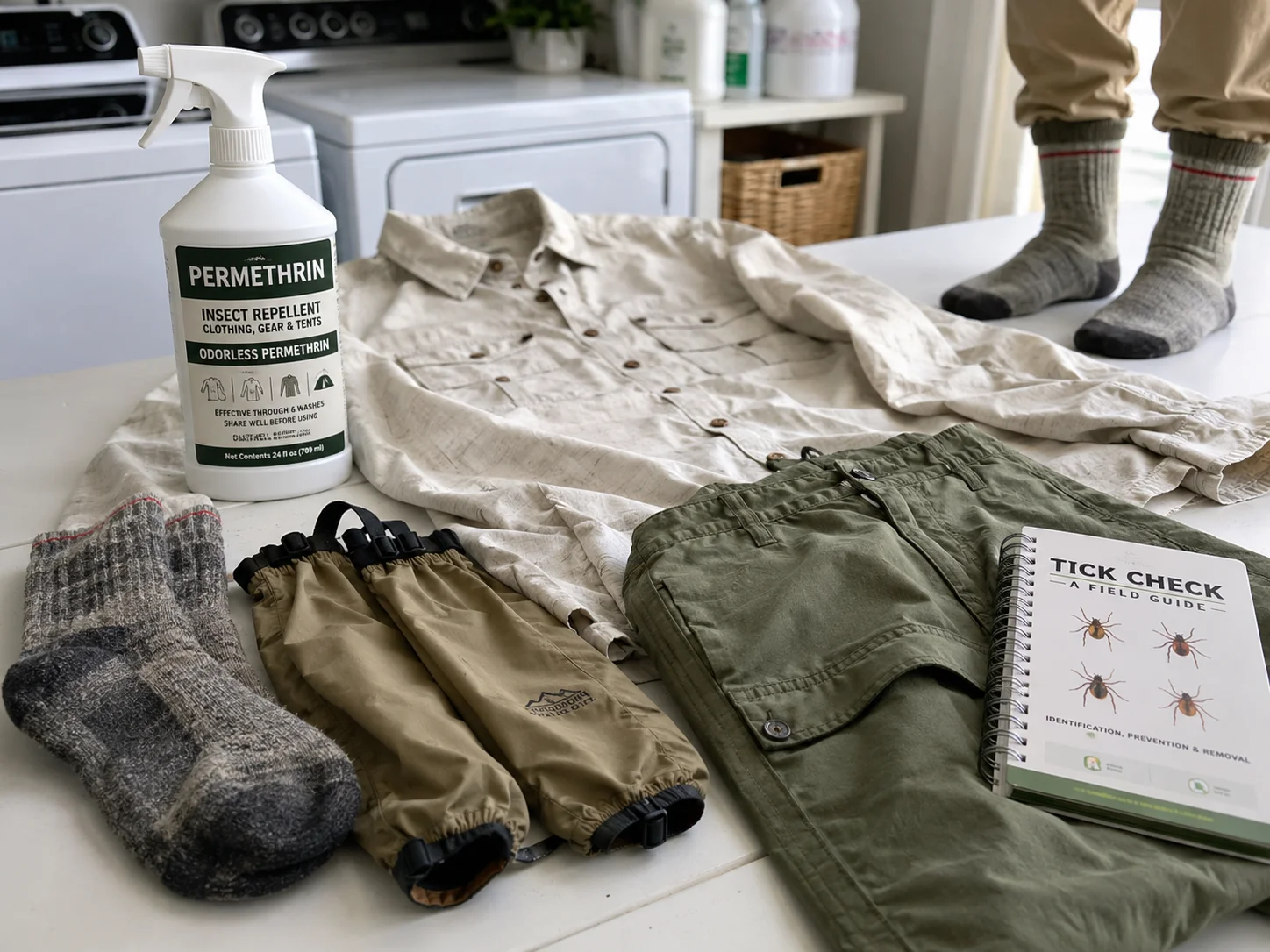
Topical repellents wash off with sweat, wear off after a few hours, and require reapplication at exactly the moments when you are most likely to forget, which is when you are tired, focused on camp tasks, or already in your sleeping bag. Permethrin applied to clothing solves most of that problem in one step done at home.
Permethrin is an insecticide, not a repellent. Applied to fabric, it kills ticks and mosquitoes on contact rather than deterring them from landing. A single treatment lasts through six or more wash cycles on most fabrics. Spray your shirt, pants, socks, and gaiters, then let them dry completely before packing. The treated fabric is safe to wear once dry and has a strong safety record when used as directed.
The mechanical side of tick protection still matters. Tuck pants into socks, check your body thoroughly at the end of each day, and pay particular attention to the back of the knees, armpits, and hairline. Permethrin handles most of the insect pressure; the physical check catches the rest. Combined, these two steps reduce tick attachment rates dramatically compared to either one alone.
6. Manage Your Footwear and Clothing as Performance Systems
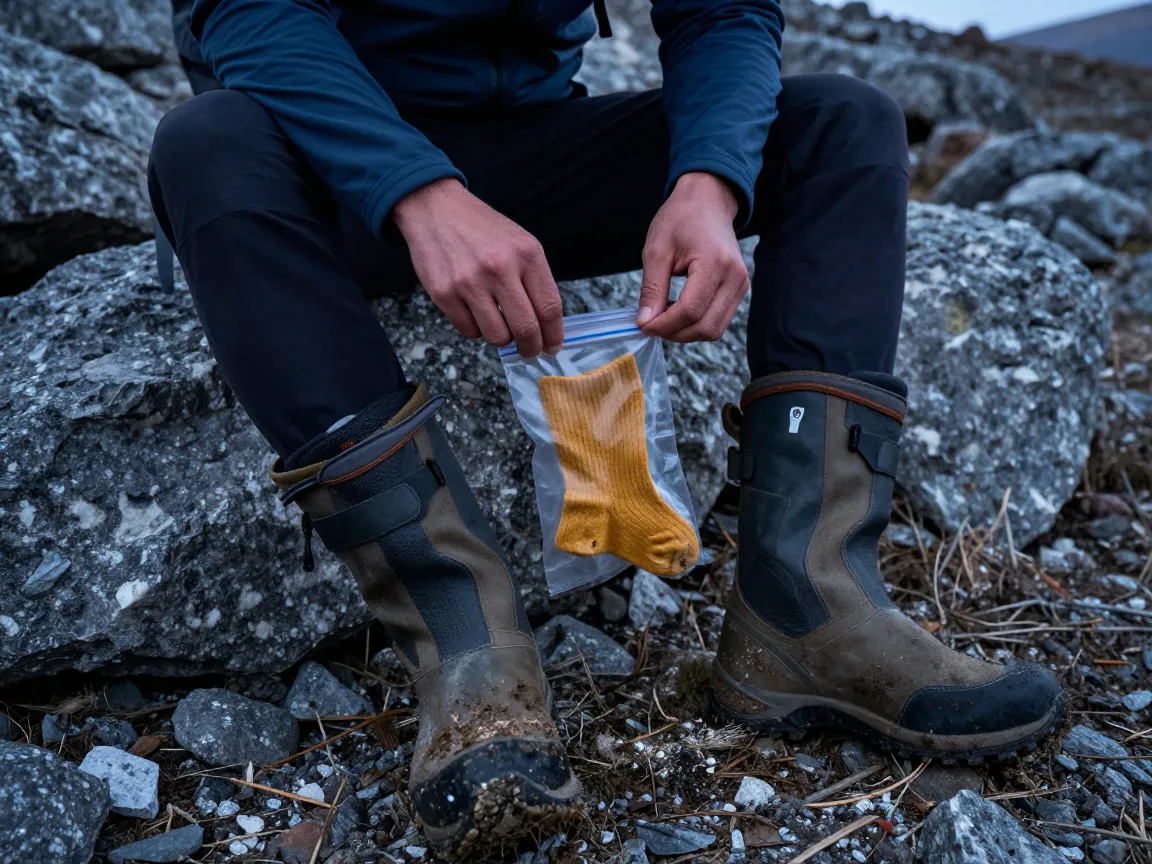
Wet feet are the fastest route from a minor inconvenience to a serious problem in the outdoors. Trench foot can develop in under twelve hours in cold, wet conditions. Carrying one dry pair of camp socks sealed in a zip-lock bag and changing into them every evening is a simple discipline that pays out in blister prevention, morale, and thermal regulation.
The same systems thinking applies to your base layer. A moisture-wicking synthetic or merino wool base layer pulls sweat away from your skin and keeps you warmer when you stop moving than a cotton shirt does. Cotton kills is not a cliché in this case; it is a material property. Cotton absorbs moisture, loses its insulating value, and dries slowly. In conditions where hypothermia is a risk, a cotton base layer is a liability.
Gaiters are underused by most hikers who are not in deep snow. Low-cut trail gaiters keep debris, mud, and ticks out of your boots and significantly reduce the friction that causes hotspots and blisters on rough terrain. They’re light, cheap, and effective enough that wilderness medicine instructors recommend them as standard equipment for multi-day trips in brush or scree.
Quick Comparison
| Hack | Primary Benefit | Cost to Add | Weight Added |
|---|---|---|---|
| Petroleum jelly tinder | Reliable fire in wet conditions | Under $3 | Near zero |
| Duct tape + paracord | Multi-use repair and rigging | Under $10 | Under 3 oz |
| Tarp shelter | Lightweight, versatile shelter | $30-$80 | 14-20 oz |
| Offline maps + mirror | Navigation and rescue signaling | $0-$5 | Under 1 oz |
| Permethrin clothing treatment | All-day tick and insect protection | Under $15 | Zero |
| Dry sock discipline + base layer | Blister and hypothermia prevention | Varies | Near zero |
Conclusion
The consistent thread across these 6 outdoor survival hacks that make roughing it way easier is that they all require a small decision made before you’re in trouble, not during it. Tinder prepared at home. Maps downloaded before the trailhead. Clothing treated the week before the trip. The hacks that fail are almost always the ones that depend on improvising under pressure with unfamiliar materials. Start with the petroleum jelly tinder kit this week; it takes five minutes to make, costs almost nothing, and immediately demonstrates the principle that preparation beats cleverness every time.