Stunning Duck Hunting Picture Ideas To Capture The Moment
Fewer than 15% of duck hunters ever come home with a photograph they’d actually frame. The hunt produces extraordinary visual material, breaking light, locked wings, a wet Labrador shaking off in the reeds, yet most images end up blurry, flat, or forgettable. These 6 stunning duck hunting picture ideas to capture the moment are drawn from the techniques used by professional outdoor photographers, Ducks Unlimited’s annual photo contest judges, and waterfowl brands that live or die by the quality of their imagery. Each idea targets a different layer of the hunt, so together they tell a complete story rather than a single highlight.
Disclosure: This post contains affiliate links. As an Amazon Associate, we earn from qualifying purchases, and at no extra cost to you.
Key Takeaways
- First and last light are not optional, they are the difference between a dramatic hunting image and a documentary snapshot.
- Dog photography rewards patience and low angles more than any other subject on the marsh.
- Detail shots of feathers, shells, and decoys create visual variety that holds a viewer’s attention across a full gallery.
- Candid, unstaged moments between shots now carry more weight with audiences and conservation organizations than posed trophy images.
- Group hero shots are still worth taking, but composition and restraint around graphic content matter more in 2026 than in any previous year.
1. Wide Environmental Scenes at First and Last Light
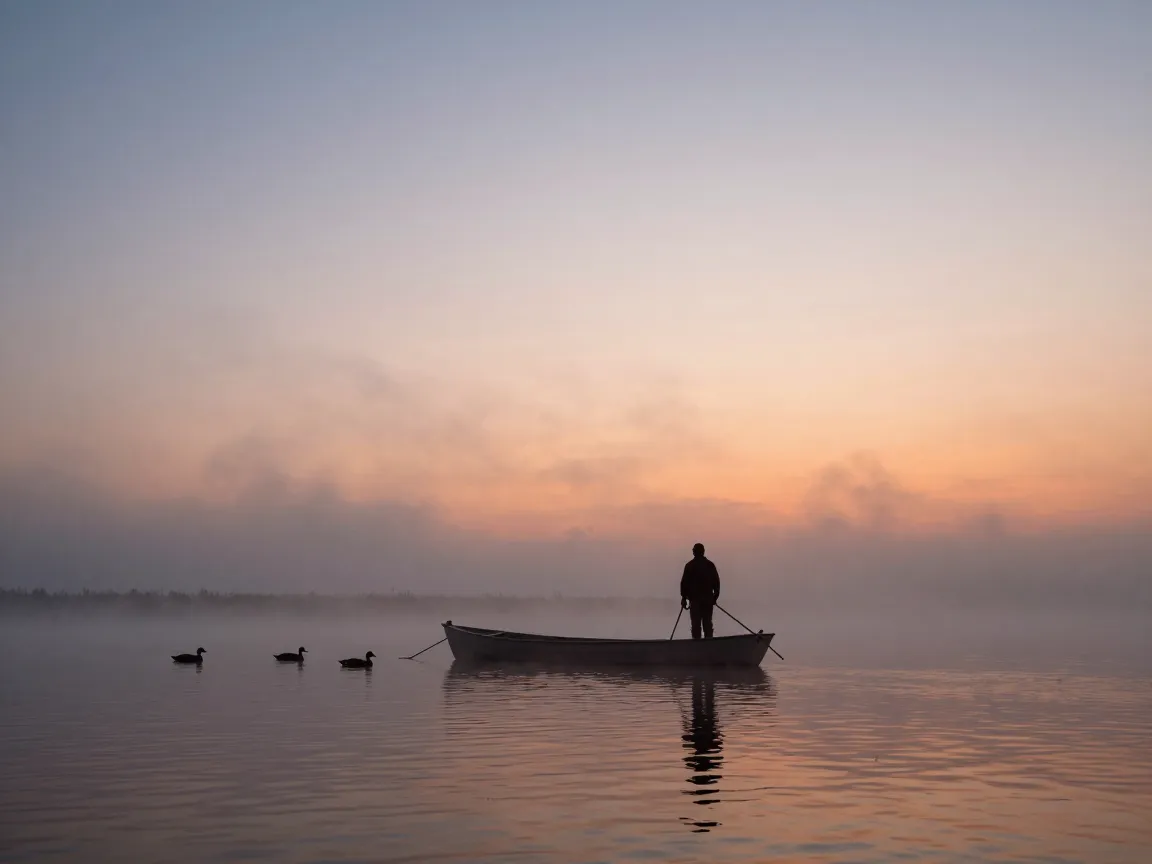
The single most important decision in duck hunting photography happens before you pick up a camera. It happens when you decide to stay in position at dawn instead of packing up the moment shooting light arrives. The twenty minutes bracketing sunrise and the equivalent window at dusk produce the kind of soft, directional light that makes an ordinary marsh look like a painting. Hunters appear as clean silhouettes against orange or pink skies, decoys become dark shapes on glowing water, and any fog or snow in the air reads as pure texture rather than noise.
Ducks Unlimited photo contest judges have noted repeatedly that images captured during those narrow windows of changing light, especially when snow or heavy weather is in the frame, routinely outperform technically cleaner images taken in midday flat light. One 2026 contest entry that drew strong commentary showed a hunter standing in the bow of a tender boat, silhouetted against a layered sky, specifically because the photographer was first on the water and prioritized light position over shooting position.
Practically, this means pushing the horizon to the top or bottom of the frame rather than the center. A low horizon with a wide expanse of sky emphasizes weather and mood; a high horizon with water dominating the bottom half works for decoy spreads with strong reflections. Neither is wrong, but centering the horizon rarely produces a memorable image. If you’re shooting on a phone, brace it against the blind rail or boat gunwale to manage the slow shutter speeds that low light demands.
2. Close-Up Action Shots of Birds Working the Spread
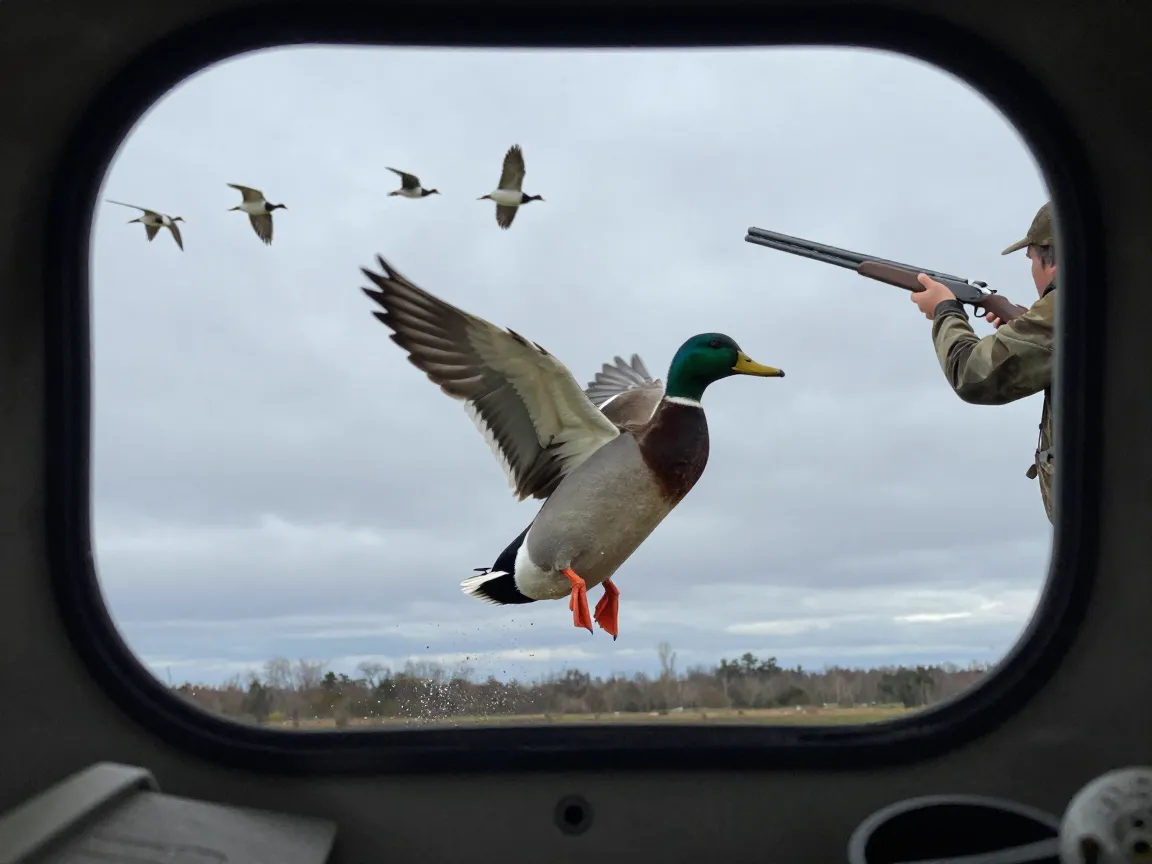
The hardest duck hunting image to capture is also the most demanded one, a bird locked up and committed over the decoys, wings cupped, dropping into the spread with its feet down. At that moment, the light is usually poor, the subject is moving fast, and you have no control over where the bird goes. That unpredictability is exactly what makes the image compelling when you get it.
Professional outdoor photographer Rob Hammer, whose duck hunting work emphasizes real-time sequences with no resets, describes the blind as the only shooting position available to you on a live hunt. Everything happens from that single vantage point. The key is to track the bird early, start the frame while ducks are still working the edges of the spread, and shoot a sequence rather than waiting for a single perfect frame. A flock crossing overhead, a drake flaring at the last second, a hunter raising a gun against a grey sky, these are all part of the same story, and any one of them can be the shot.
For sharpness at distance on fast-moving birds, continuous autofocus and burst mode are more useful than technical perfection. Realtree’s guidance for hunting photographers is direct: shoot lots of frames. The ratio of usable images to total frames is low when birds are in motion, and the only solution is volume. If your camera or phone has a sport or action mode, use it. The alternative, waiting for one ideal frame, almost always produces nothing.
3. Dog Retrieves and Eye-Level Portraits
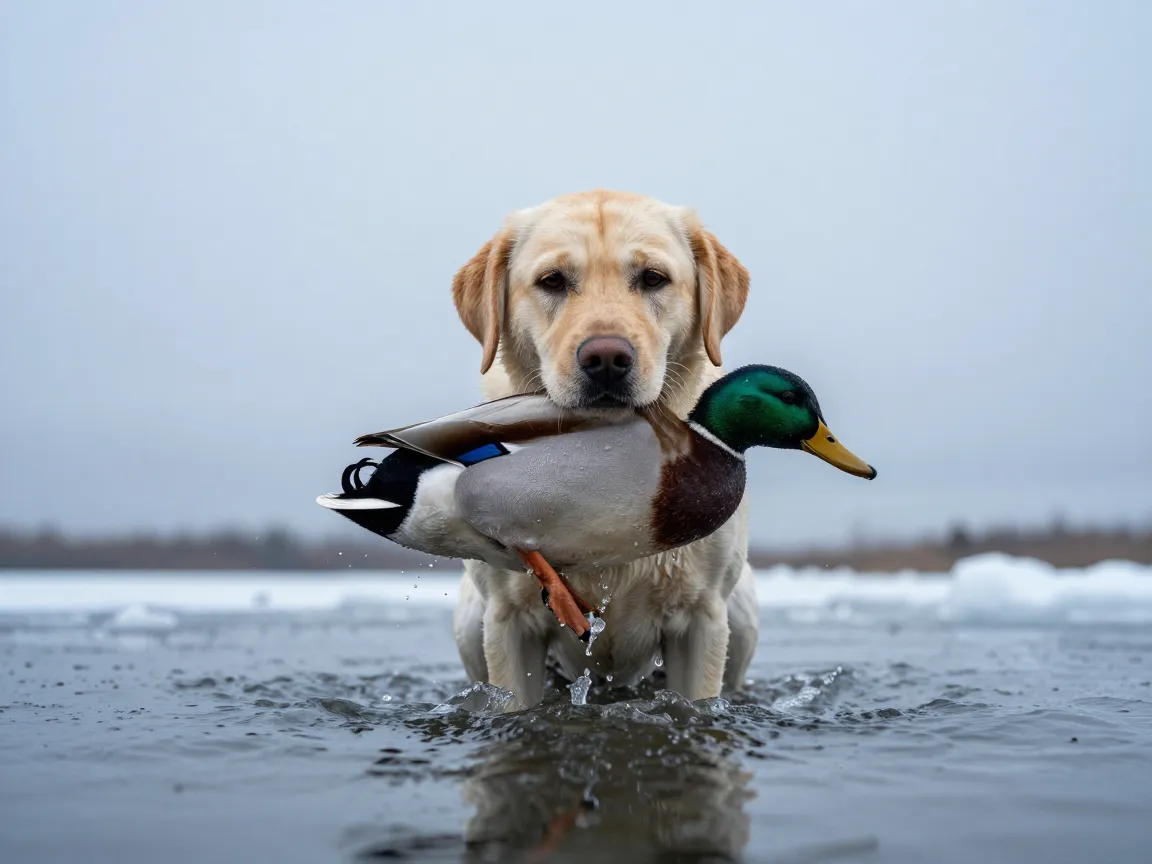
A Labrador or Chesapeake Bay retriever carrying a mallard back through breaking ice is one of the most emotionally loaded images in waterfowl hunting. It tells the whole story of the breed, the bond, and the purpose of the hunt in a single frame. The challenge is that most hunters photograph their dog from standing height, which produces an image of a wet dog from above, recognizable but rarely powerful.
Shooting from eye level with the dog changes the frame entirely. Getting low to the water or the blind floor, even lying flat in the mud, puts the viewer inside the dog’s world rather than above it. Realtree’s Bill Konway specifically recommends this angle for dogs running through water or returning with a bird. The water surface becomes a foreground element, the horizon drops, and the dog fills the frame with genuine presence.
Beyond the retrieve itself, there are quieter moments worth capturing. A dog sitting still in the blind watching the sky. A Lab’s head resting on a hunter’s knee between volleys. A dog shaking off in front of the blind, throwing a halo of water droplets that the right angle can freeze mid-air. Ducks Unlimited’s photography guidance lists all of these as prime opportunities, specifically because they show personality and the relationship between hunter and dog rather than just the mechanical act of retrieving. These images tend to perform well on social platforms for the same reason, they are relatable without being graphic.
For action retrieves, anticipate the dog’s return path and pre-focus on a spot in the water. Let the dog run into the frame rather than chasing it with the lens. This produces sharper images and a more natural composition.
4. Tight Detail Shots of Feathers, Decoys, and Gear
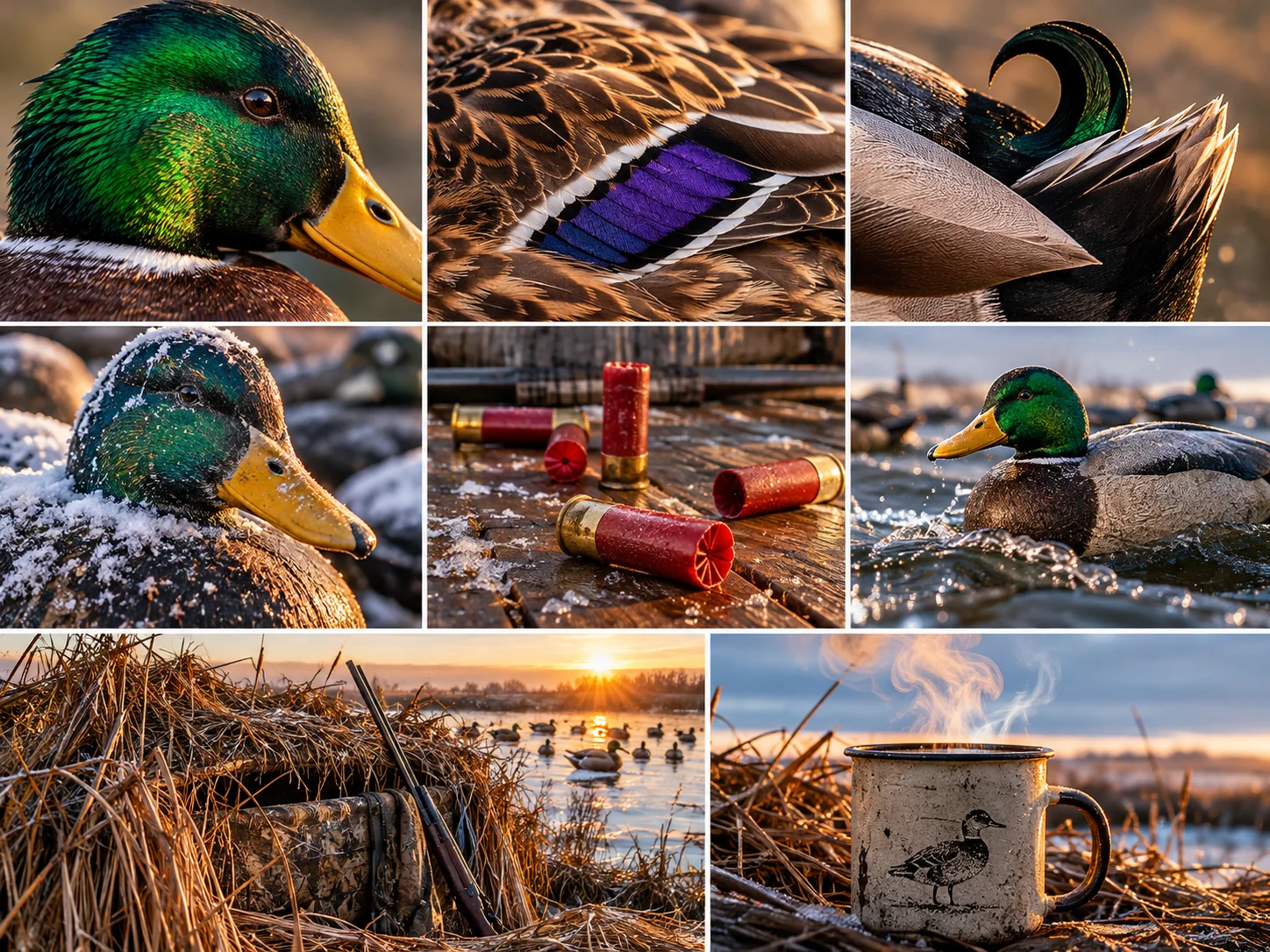
There is a category of duck hunting image that gets overlooked almost every time, and it’s the one that makes a gallery feel complete rather than repetitive. Detail shots, close-up compositions of iridescent feathers, spent shotgun hulls on a wooden blind floor, a snow-dusted decoy head, steam rising from a coffee cup against a cold sky, add visual variety that action and portrait shots cannot provide on their own.
Ducks Unlimited encourages photographers to look for single decoys floating high on the water and shoot them in isolation against a clean background, rather than always reaching for the wide spread. A foam mallard riding a swell with its paint catching the morning light is a legitimately interesting subject. So is the curl of smoke from a gun barrel after a volley, or a row of decoys laid out in the bed of a truck before the morning setup. These images are specific to this hunt, this blind, this morning, which is exactly what makes them worth keeping.
Feather detail is a consistent recommendation from Realtree for adding color and texture to a hunting gallery. The iridescent green on a mallard’s head, the purple speculum of a hen, the curled tail feathers of a drake, these require nothing more than getting close and finding good side-light. Ducks Unlimited’s “Seeing Differently” guidance pushes photographers to change vantage point constantly, dropping near the waterline to shoot decoys from an angle that makes familiar objects look unfamiliar. That approach works as well for gear and birds as it does for environmental scenes.
Detail shots also solve a practical problem. When the action is slow or the birds aren’t working, having a subject list of small compositions keeps the camera active and trains your eye for the moments when it matters.
5. Candid Lifestyle and Between-the-Action Moments
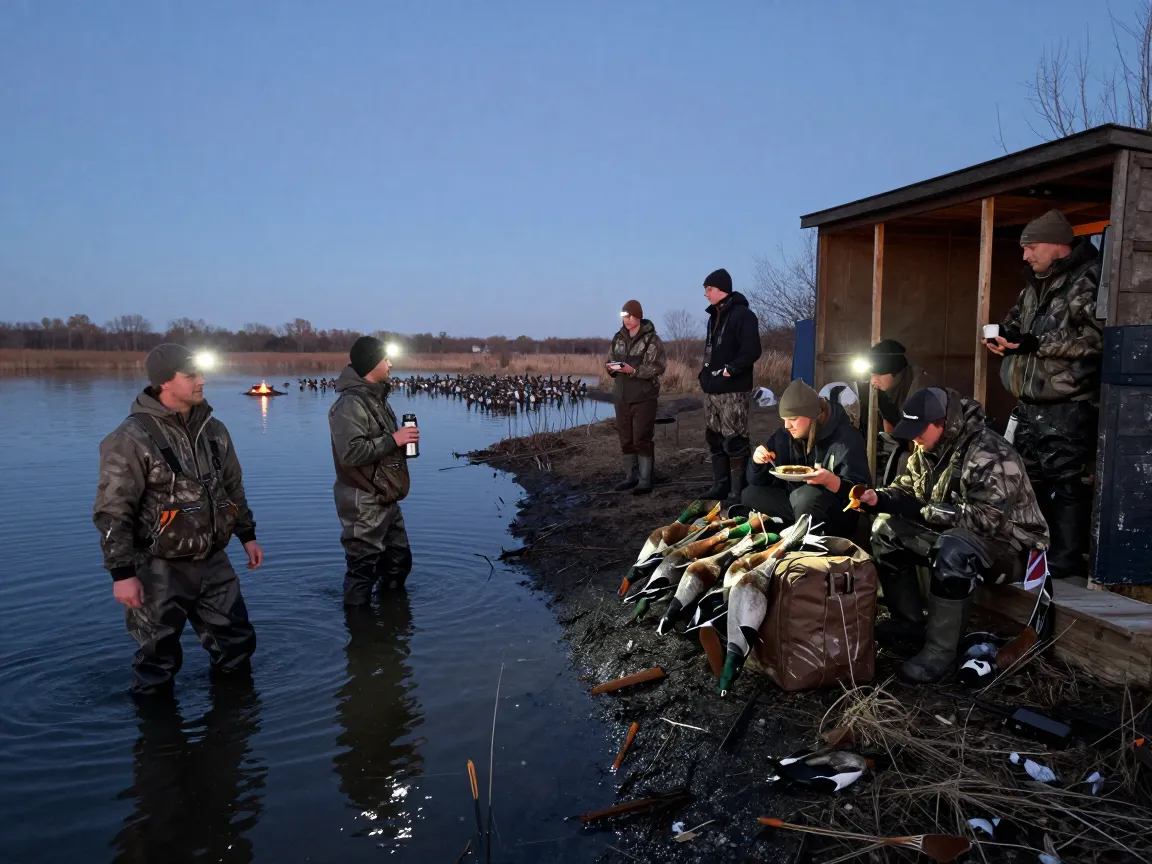
The images that hold up years later are rarely the ones from the peak of the action. They are the ones from the margins, two hunters in headlamps quietly sliding decoys into dark water at 5 a.m., someone’s hands wrapped around a thermos while the sky starts to lighten, a group hunched in the blind watching a flock work from a quarter mile out.
Rob Hammer’s approach to duck hunting photography is built entirely around this idea. His field work, which involves no staged scenes and no resets, documents the texture of the experience rather than its highlights. Waders pulled on in the dark, boots crunching frozen ground, decoy bags unloaded from a boat in silence, these are the images that communicate what a duck hunt actually feels like to someone who has never been on one, and they confirm it to everyone who has.
Grand View Outdoors recommends capturing the full arc of the trip: hunters arriving by boat, friends eating breakfast in the blind, the campfire after the last day, cooks working over a stove with birds hanging nearby. None of these require any particular camera skill. They require presence and the habit of keeping a camera ready between shots rather than stowing it when the birds stop flying.
One practical move: stay an extra hour after guns are cased, where local regulations allow. Ducks often continue to work the spread once the pressure is off, and shooting with a cased gun gives you clean access to both the birds and the hunters watching them. That window produces images that are impossible to replicate mid-hunt.
6. Group Hero Shots and End-of-Day Portraits
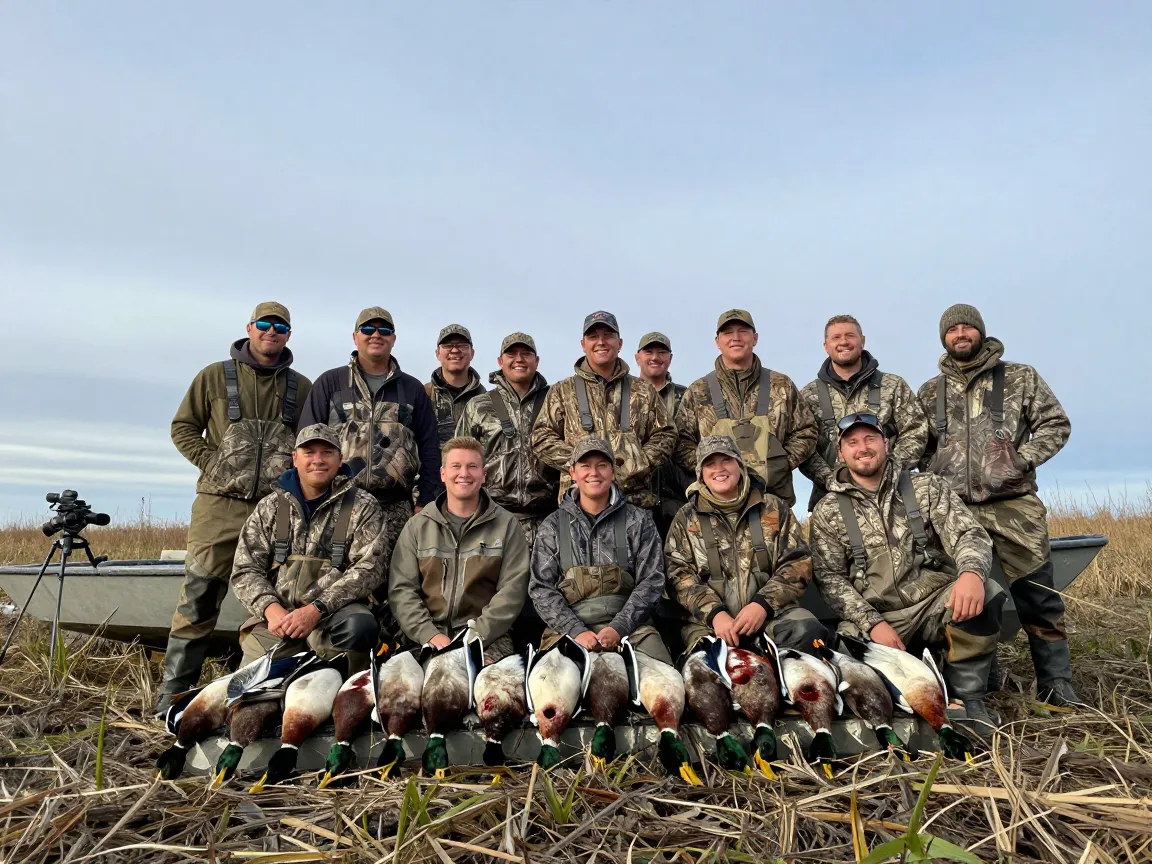
The group photo at the end of a successful hunt is a tradition that predates photography by generations. Done thoughtfully, it is also one of the most valuable images from any trip, it names the people, fixes the place, and anchors the memory in a way that action shots cannot. Done carelessly, it can be graphic in ways that damage the perception of hunting with audiences who have no context for it.
Ducks Unlimited is explicit on both points. Getting a photo of the entire crew with the day’s harvest is encouraged as a core image type. At the same time, Grand View Outdoors notes that careful posing, minimizing visible blood and shot holes, orienting birds so their most visually clean side faces the camera, reflects a practical awareness of how these images read online to audiences beyond the hunting community.
For the composition itself, Realtree’s Konway recommends shooting multiple angles and many frames rather than one static pose. Try a low angle looking up at the group against the sky, a wide shot that includes the marsh or the boat, and a tighter version focused on faces. Use natural overcast light when possible, it is more flattering on faces and reduces harsh shadows on birds. If you’re shooting in full sun, position the group so the light is even, or move into open shade.
A self-timer or a tripod with a delayed shutter allows the photographer to be in the shot rather than behind it. Grand View Outdoors specifically recommends a tripod for group and campfire shots for exactly this reason. These are the images hunters share with family members who weren’t there, so they carry a different kind of weight than content produced for social media. Getting a clean, well-lit version takes three extra minutes and lasts indefinitely.
Quick Comparison
| Picture Idea | Best Time | Key Technique | Primary Subject |
|---|---|---|---|
| 1. Wide Environmental Scene | Sunrise / Sunset | Low horizon, brace camera | Marsh, sky, hunters |
| 2. Birds Working the Spread | Active flight | Burst mode, track early | Ducks in motion |
| 3. Dog Retrieves and Portraits | Throughout hunt | Eye-level angle | Dog with or without bird |
| 4. Detail Shots | Any time | Get close, change angle | Feathers, decoys, gear |
| 5. Candid Lifestyle Moments | Pre-dawn to post-hunt | Stay present, camera ready | Hunters, camp, setup |
| 6. Group Hero Shot | End of day | Tripod, multiple angles | Full crew with harvest |
Conclusion
These 6 stunning duck hunting picture ideas to capture the moment cover the full range of what a hunt produces visually, from the first headlamp-lit decoy deployment to the last group photo on the tailgate. No single idea is more important than developing the habit of keeping a camera accessible throughout the entire experience rather than only during peak action. The next step is simple: before your next hunt, choose two or three of these ideas and treat them as specific assignments. That constraint alone will produce better images than approaching the whole day without a plan.