Life Saving Skills That Every Outdoor Adventurer Must Learn
Roughly two-thirds of recorded backcountry incidents stem not from freak weather events or dramatic falls but from deficiencies in physical preparedness and core skills. That figure comes from incident tracking through The Mountaineers, and it reframes the entire conversation about outdoor safety. Gear matters, but skills decide outcomes. The 6 life saving skills that every outdoor adventurer must learn listed here reflect what field guides, wilderness medicine organizations, and outdoor educators consistently identify as the foundation of surviving and managing emergencies when you’re far from help.
Disclosure: This post contains affiliate links. As an Amazon Associate, we earn from qualifying purchases, and at no extra cost to you.
Key Takeaways
- Pre-trip planning using the STOP mindset (Stop, Think, Observe, Plan) prevents more emergencies than any single piece of gear.
- Map and compass competency is non-negotiable; GPS devices and apps should supplement it, not replace it.
- In the first 24 to 72 hours of an emergency, shelter and temperature management matter more than food.
- Water from any natural source requires treatment before drinking, using boiling, chemical treatment, or filtration.
- Fire starting must work in wet conditions; that means practicing with a ferro rod and prepared tinder before you need them.
- At minimum, complete a Wilderness First Aid course before any trip where definitive medical care is more than one hour away.
1. Trip Planning, Risk Assessment, and the STOP Mindset
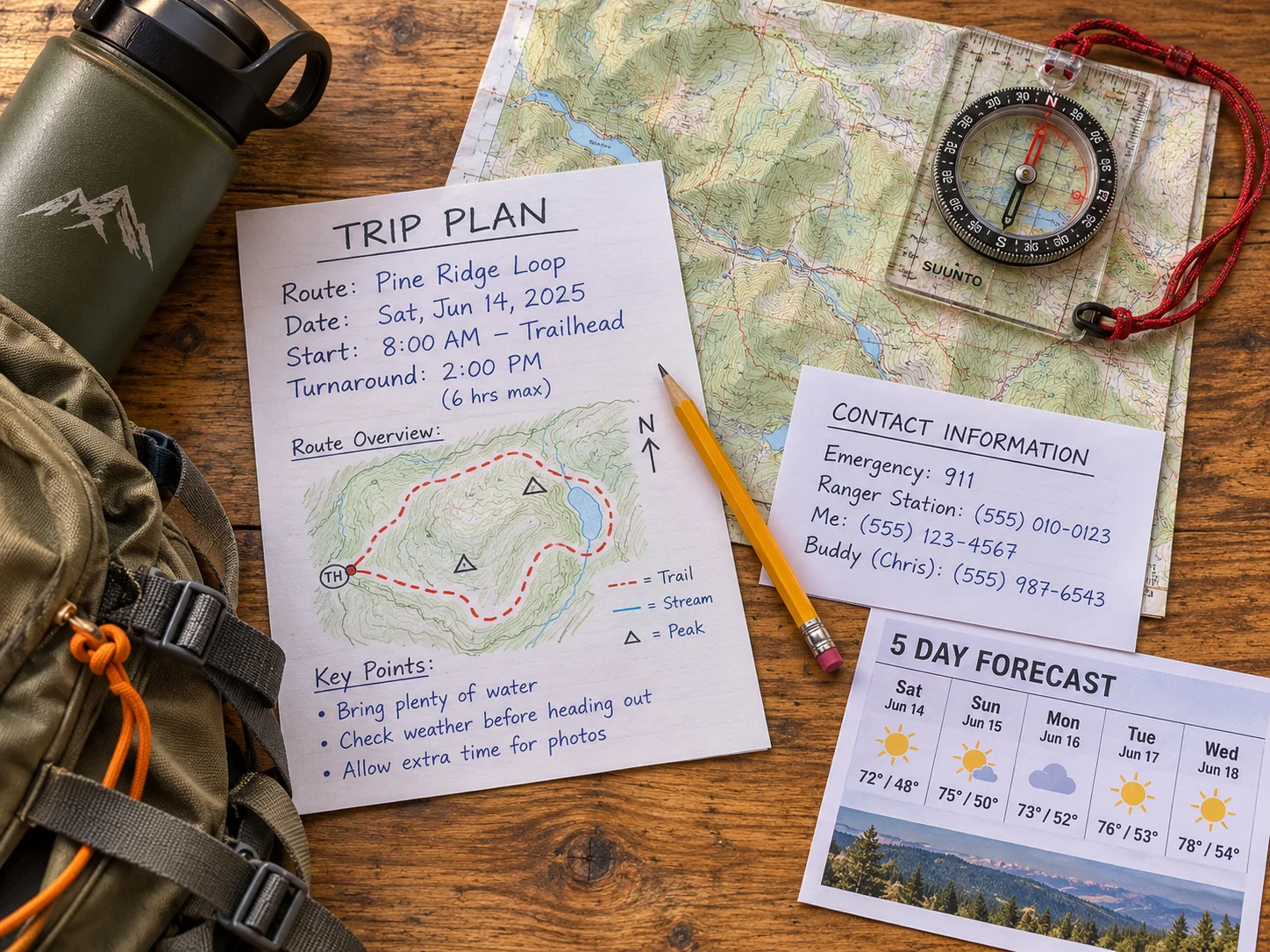
Most survival situations are preventable, and the planning phase is where prevention happens. A written trip plan shared with a reliable contact before departure is one of the most underused tools in outdoor safety. It should include your route, planned campsites, turnaround times, expected return, and what action your contact should take if you don’t check in.
Weather assessment is part of planning, not a pre-hike afterthought. Checking multi-day forecasts, understanding how mountain weather shifts faster than valley forecasts suggest, and setting firm turnaround criteria before you leave removes the pressure of making that call mid-trail when fatigue and sunk-cost thinking cloud judgment.
When something goes wrong, the STOP framework gives you a decision structure rather than a panic spiral. Stop moving. Think about your situation without rushing. Observe your surroundings, your resources, your physical condition, and the direction of safety. Plan a specific course of action before moving again. That sequence sounds obvious until you’re cold, disoriented, and two hours past your planned turnaround. At that point, most people move faster instead of stopping, which typically worsens their position. The 2026 survival guides that now treat pre-trip preparation as a primary skill, not a background task, are correct.
Risk assessment during the trip matters equally. Recognizing when a river crossing has changed from the conditions described in a trip report, or when a ridge route becomes dangerous with afternoon thunderstorm buildup, requires the judgment you build through deliberate training, not just mileage.
2. Navigation Without Relying on Electronics
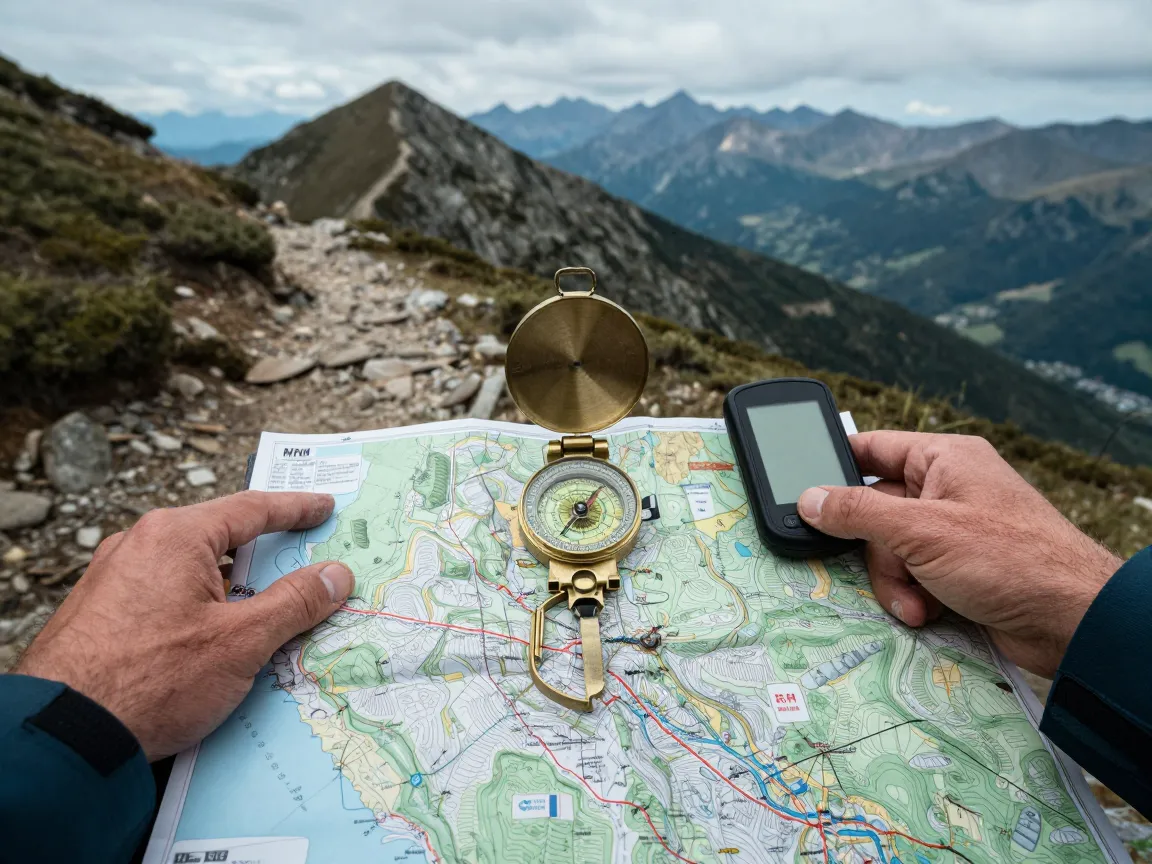
A GPS device with dead batteries is a paperweight. Phone apps lose signal in many mountain drainages, and even satellite communicators can fail under dense canopy or in extreme cold. Map and compass navigation is the foundational skill every outdoor adventurer needs before supplementing with technology.
Topographic map reading means more than recognizing contour lines. It means visualizing the terrain ahead from a 2D representation, identifying your position through terrain association, and setting a bearing that accounts for magnetic declination in your region. For most of North America and Europe, that declination ranges from a few degrees to over 20 degrees east or west, and ignoring it compounds navigational error over distance.
Compass work starts with taking a bearing from your map, then walking that bearing in the field while accounting for obstacles. Triangulation from two or three known landmarks lets you confirm your position when you’re unsure. These are learnable skills that take a focused weekend to build to a functional level.
GPS devices and mapping apps are genuinely useful, and you should carry them. Load offline maps before you leave cell coverage. Know how to enter coordinates and read UTM or lat/long formats. But the standard recommended by outdoor educators in 2026 is clear: be competent with map and compass first, then use technology as a supplement. Reversing that order leaves you dependent on a device instead of a skill.
3. Shelter Building and Exposure Management
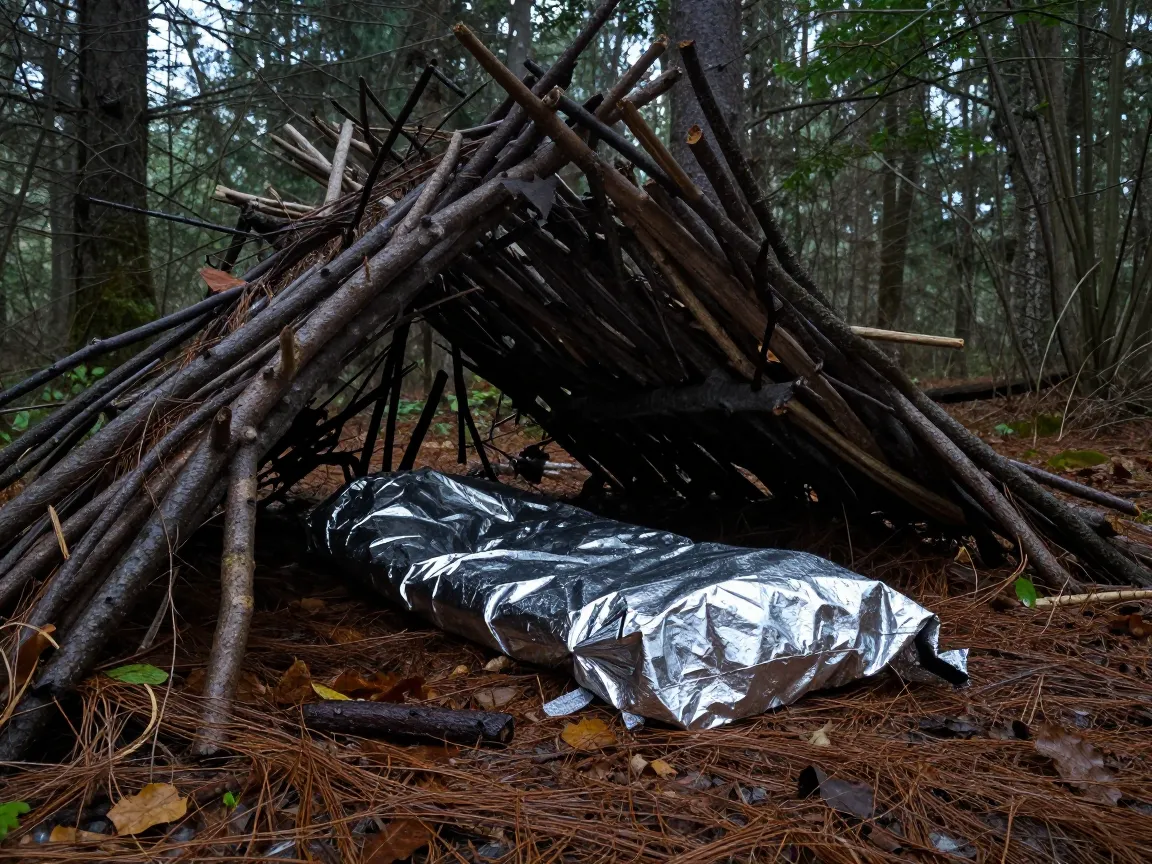
Hypothermia can begin in ambient temperatures well above freezing when wind and moisture are present. The body’s core temperature doesn’t need to drop dramatically before decision-making degrades significantly. This is why shelter and exposure management consistently rank near the top of field survival priorities, often above food and sometimes above water in short-duration emergencies.
A debris shelter, a lean-to, or even an effective use of an emergency bivy can bridge the gap between survival and deterioration over a 24-to-72-hour window. Building an improvised shelter requires understanding three things: blocking wind, insulating from the ground, and keeping precipitation off. Ground insulation is typically the most neglected element. Lying directly on cold ground pulls body heat away far faster than cool air does. A thick layer of dry leaves, pine needles, or bracken under a sleeping position is not a comfort measure; it’s a thermal barrier.
Carrying a lightweight emergency bivy in every pack removes most of the improvisation requirement. Mylar-style bivies weigh roughly 100 grams and compress small. They’re not comfortable for a full night, but they retain enough radiant heat to prevent hypothermia in many conditions.
Heat illness deserves equal attention. Heat stroke, where core temperature climbs to dangerous levels, can develop during strenuous exertion in temperatures that don’t feel extreme. Recognizing early signs in yourself or a partner, stopping activity, moving to shade, and aggressively cooling the person with any available water are responses that need to be automatic, not improvised.
4. Water Procurement and Purification
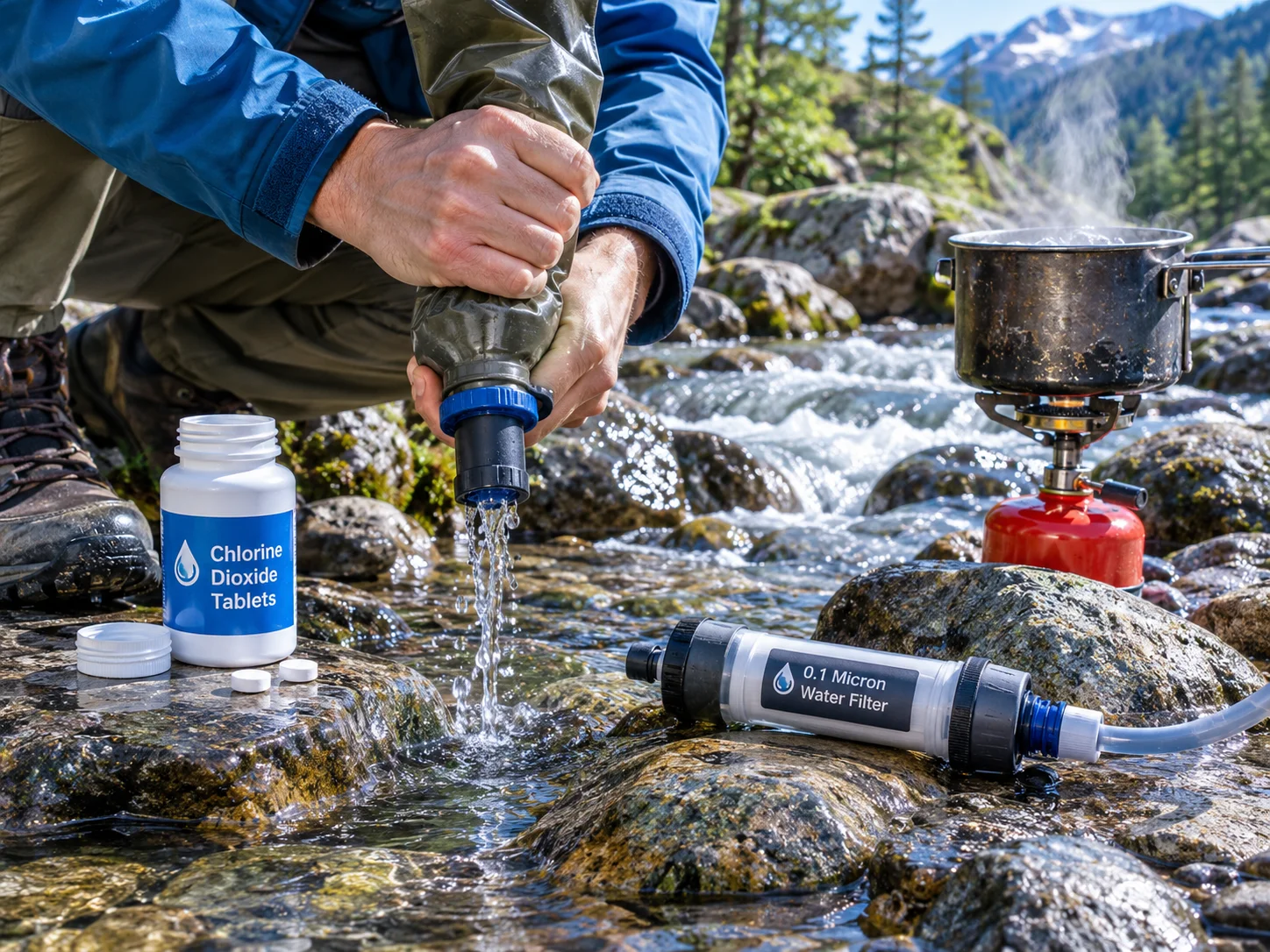
Dehydration impairs physical performance and judgment faster than most outdoorspeople expect. The standard guidance is to begin treating water before you feel thirsty. That means knowing how to find water and knowing how to make it safe.
Finding water in unfamiliar terrain follows a few reliable indicators. Following animal tracks downhill often leads to water sources. Green vegetation in an otherwise dry landscape, particularly willows and cottonwoods in North America, marks ground moisture. Moving downhill generally takes you toward drainages. Listening for the sound of running water, especially when wind is calm, works at surprisingly short distances.
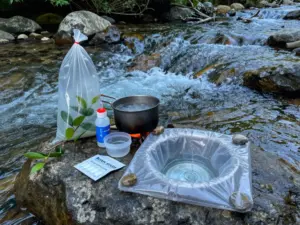
Once water is found, treatment is non-negotiable regardless of how clean the source appears. Giardia and cryptosporidium are odorless, colorless, and can be present in water sourced above any human activity. The practical treatment options are:
- Boiling: a rolling boil for one minute at sea level, three minutes above roughly 2,000 meters elevation, kills pathogens reliably.
- Chemical treatment: iodine or chlorine dioxide tablets are lightweight and effective, though chlorine dioxide requires 30 minutes contact time and longer in cold water.
- Filtration: pump filters, squeeze filters, and in-line filters remove most biological threats; a filter rated to 0.1 microns handles protozoa and bacteria but not viruses, which matter more in internationally sourced water.
Carrying at least two treatment methods is worth the marginal weight. Filters freeze and crack; tablets expire or get lost; redundancy here is practical, not excessive.
5. Fire Starting in Adverse Conditions
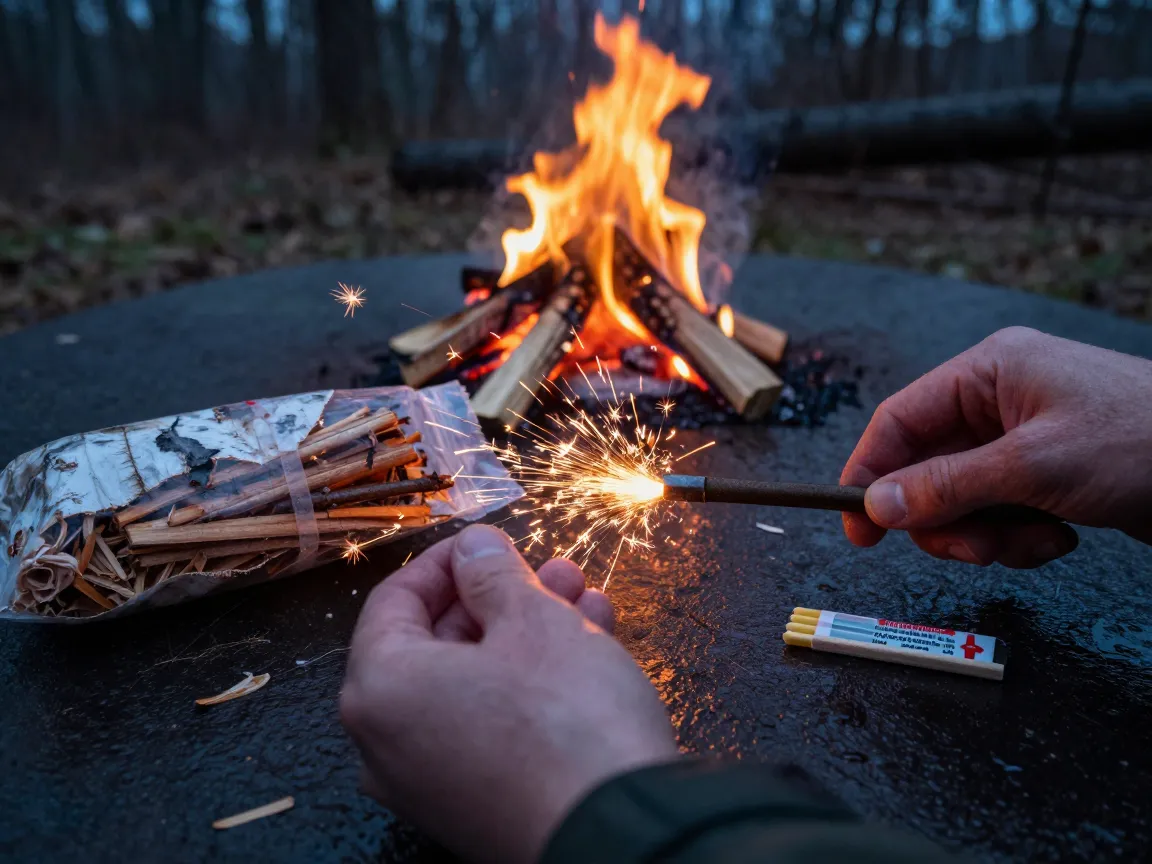
The ability to start a fire when it’s cold, wet, and windy is categorically different from starting a fire on a dry summer afternoon with dry kindling. The conditions that make fire most necessary are the same conditions that make it hardest to achieve. Practicing fire starting only in good conditions is practicing the wrong skill.
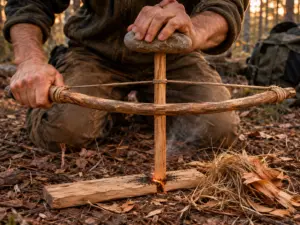
A ferro rod produces sparks at around 3,000 degrees Celsius and works when wet, making it more reliable than matches or a lighter in sustained wet conditions. But the rod alone does nothing without prepared tinder. Dry tinder preparation means collecting and protecting dry material before you need it, keeping a small amount in a sealed bag or inside a jacket pocket. Cedar bark, dry grass, birch bark, and fatwood shavings all work. The fire lay structure matters too: a tinder bundle at the base, small-diameter dry sticks arranged to allow airflow, then progressively larger fuel added only after the flame is established.
Fire serves three functions in a survival scenario: warmth, water treatment, and signaling. The warmth function is obvious, but the signaling function deserves emphasis. Smoke from a green-leaf fire is visible for considerable distances in daylight. Three fires in a triangle is an internationally recognized distress signal. Knowing how to build and sustain a signal fire while managing the smoke output is a skill worth practicing.
Carry a lighter, a ferro rod, and waterproof matches as three separate ignition sources. Any two of these can fail in field conditions; having all three is not redundancy for its own sake.
6. Wilderness First Aid and Patient Assessment
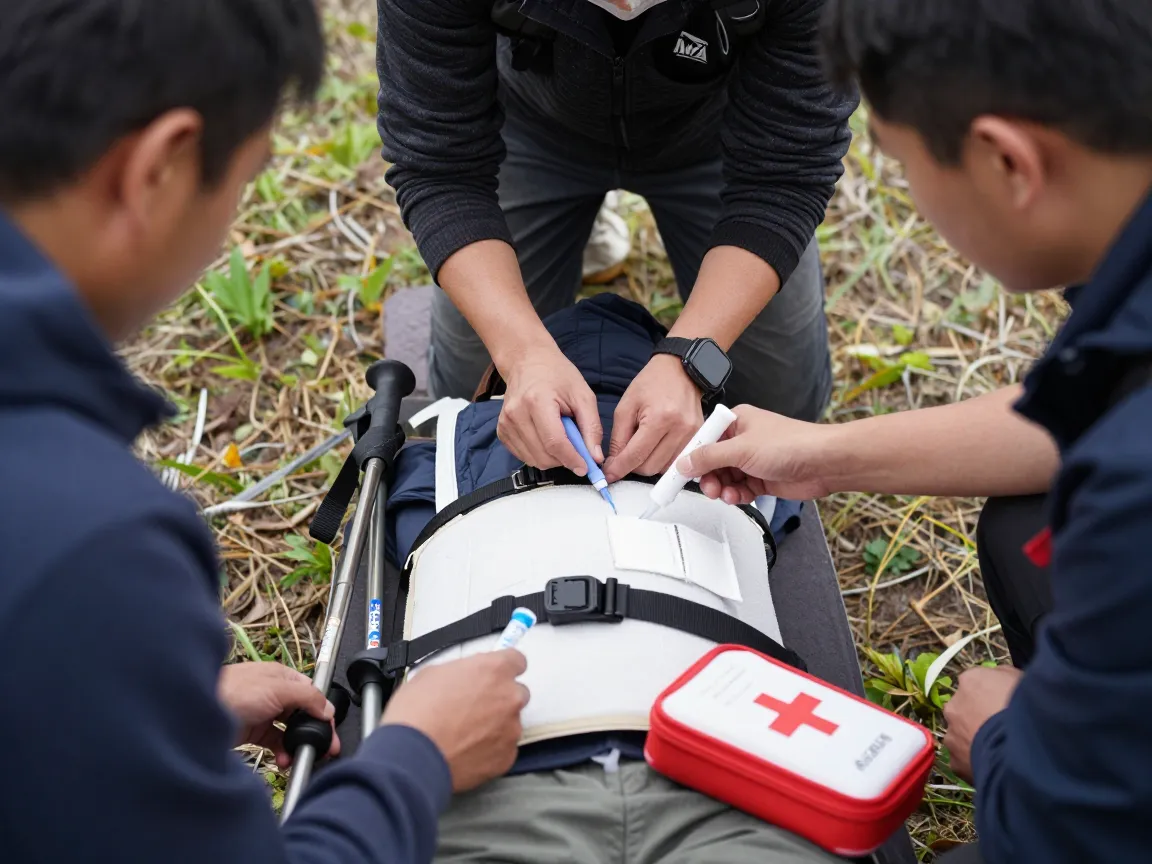
Standard first aid training prepares you for emergencies where professional help is minutes away. Wilderness medicine is a different discipline because the defining constraint is time: evacuation may be hours or days away, and the decisions you make in that window directly affect outcomes.
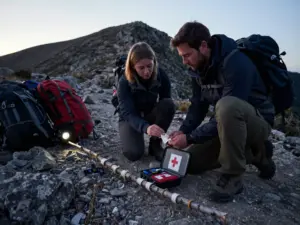
A Wilderness First Aid (WFA) course, typically 16 to 20 hours, covers patient assessment, management of common trauma and environmental emergencies, and decision-making around evacuation. It’s the minimum recommended training for anyone venturing into terrain where definitive medical care is more than one hour away. Utah State University now formalizes this in its field research policy, requiring WFA for researchers in those conditions. REI updated its wilderness first aid guidance in mid-2026 to explicitly recommend taking a course rather than relying on written references alone.
For frequent backcountry travelers, an 80-hour Wilderness First Responder (WFR) course significantly expands competency. The Pacific Crest Trail Association describes WFR as “a very good idea” for regular long-trail users. Major providers include NOLS/WMI and SOLO, both of which run courses across North America in residential and field formats.
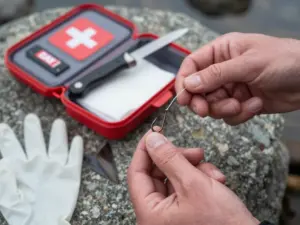
The practical core of wilderness patient assessment is a structured approach: check for scene safety, then assess the patient’s mental status (is the person alert and oriented?), airway, breathing, and circulation before moving to a full head-to-toe physical exam. Knowing how to improvise a splint from trekking poles and clothing, recognize the signs of a spinal injury before moving a patient, treat anaphylaxis with an epinephrine auto-injector, and manage severe bleeding with improvised pressure dressings are all skills that come from hands-on training, not from reading a guide.
The skills that matter most in a real incident are the ones practiced under realistic conditions. Take the course, recertify every two to three years, and carry a wilderness-specific first aid kit matched to the training you’ve completed.
Quick Comparison
| Skill | Minimum Competency Level | Key Tool or Method | Most Common Failure Mode |
|---|---|---|---|
| Trip planning | Written plan + contact left before departure | STOP framework, weather check | Skipping turnaround criteria |
| Navigation | Map and compass, then GPS | Topographic map + baseplate compass | Sole reliance on phone GPS |
| Shelter | Improvised lean-to or debris shelter | Emergency bivy as backup | Neglecting ground insulation |
| Water | Two treatment methods carried | Boiling + filter or chemical tabs | Trusting clear-looking water untreated |
| Fire | Wet-condition fire starting practiced | Ferro rod + prepared tinder | No dry tinder protection |
| Wilderness first aid | WFA course (16-20 hrs) minimum | Patient assessment protocol | Outdated or no formal training |
Conclusion
Of the six skills covered here, formal wilderness first aid training is the one most consistently skipped by otherwise well-prepared outdoorspeople. Navigation and fire get attention; medical competency often gets deferred. If you act on one thing from this article, sign up for a WFA course before your next multi-day trip. The 16-to-20-hour time investment addresses the skill gap that shows up most often in backcountry incident reports.