Fly Fishing Lures That Actually Catch More Fish
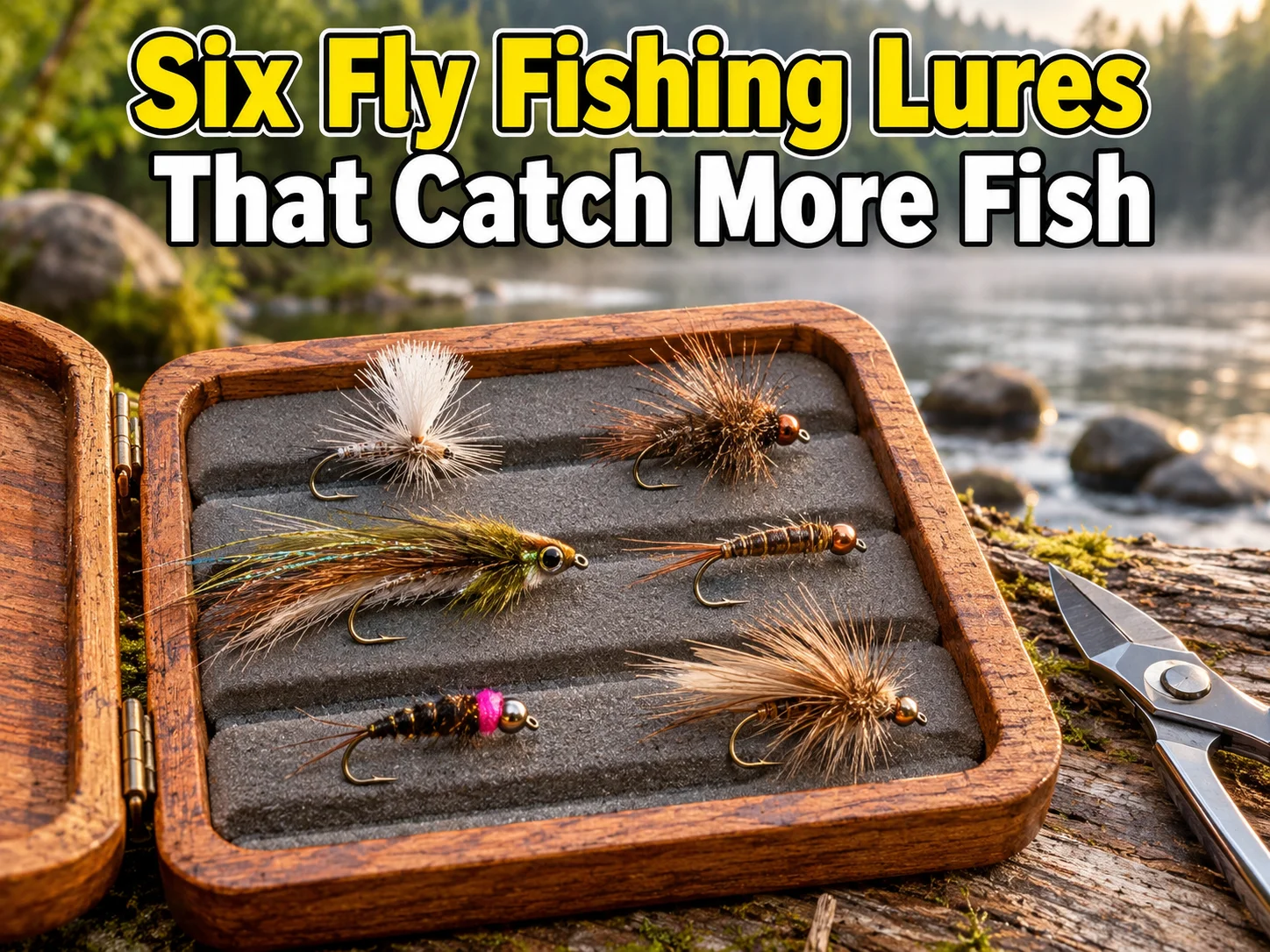
Most fly anglers own hundreds of flies but consistently catch fish on fewer than ten of them. That gap between collection size and catch rate is not a coincidence, it reflects a well-documented pattern among experienced guides and competitive anglers alike: a compact set of versatile, proven patterns outperforms a sprawling, specialized collection on almost every trip. This guide to the 6 fly fishing lures that actually catch more fish cuts through the noise and focuses exclusively on patterns with a track record of putting fish in the net across a wide range of species, seasons, and water conditions. Whether the goal is trout in a freestone stream, bass in a warm-water pond, or simply more hookups on a weekend outing, these six patterns deliver.
Disclosure: This post contains affiliate links. As an Amazon Associate, we earn from qualifying purchases, and at no extra cost to you.
1. Parachute Adams
The Parachute Adams is the closest thing fly fishing has to a universal dry fly. Its gray and brown body, combined with a white parachute post and mixed hackle, creates a silhouette that trout consistently interpret as a mayfly, midge, or caddis, sometimes all three depending on how it lands. That built-in ambiguity is the pattern’s greatest strength. Anglers do not need to identify the precise insect on the water; a size 14 or 16 Parachute Adams fished in the surface film will raise fish during most hatches and even between them.
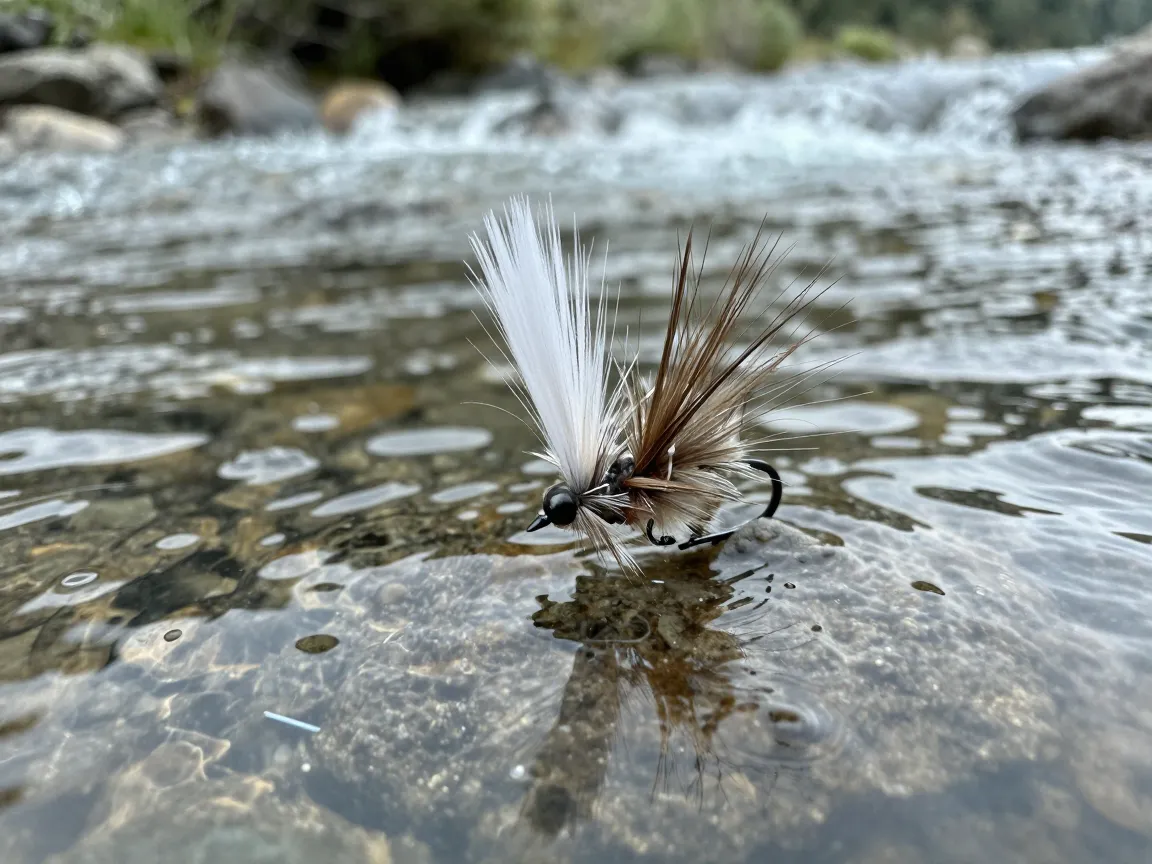
The white post solves a real problem: visibility. Tracking a small dry fly on broken, fast water is one of the first skills that defeats new anglers, and the Parachute Adams’s upright post remains visible at distances where other dry flies disappear. That visibility translates directly to hookups, because an angler who cannot see the fly cannot time the strike. Guides and gear reviewers consistently name the Adams among their core five or six patterns precisely for this reason.
From a presentation standpoint, the Parachute Adams rewards a natural drift but forgives minor drag better than comparadun or no-hackle patterns. In size 10, it also works well as a strike indicator above a dropper nymph, adding a secondary function that justifies the box space twice over. Carry it in sizes 12 through 18 to cover the broadest possible range of conditions.
2. Hare’s Ear Nymph
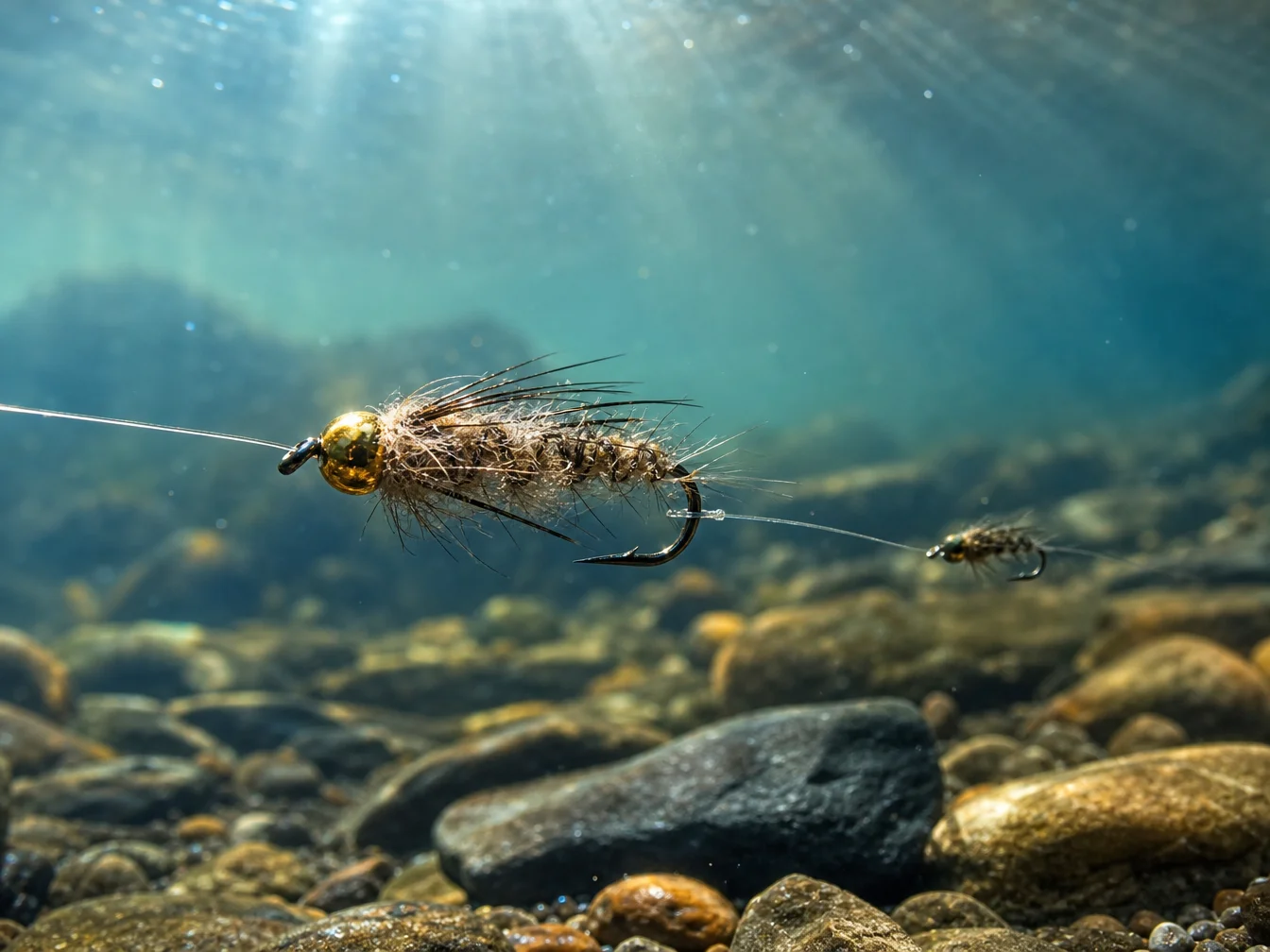
The Hare’s Ear Nymph has been in production for well over a century, and it remains in production for a simple reason: it catches fish. The shaggy dubbing from hare’s mask fur creates a rough, translucent body that pulses with subtle movement even at rest. Trout see it and register something alive, a mayfly nymph, a stonefly, a scud, or a general invertebrate, without being committed to any single identification. That flexibility makes the Hare’s Ear essential rather than merely useful.
Nymphing instructors increasingly recommend this pattern as the first subsurface fly new anglers should learn, because it produces visible results quickly and reinforces the value of a natural dead drift. The beadhead version sinks faster and can be fished in deeper runs where unweighted patterns barely scratch the zone where trout actually feed. On heavily pressured tailwaters, the slimmer, unweighted version tied on a curved scud hook often outperforms the beadhead because it matches a more vulnerable profile.
A productive approach is to fish a beadhead Hare’s Ear as the point fly on a two-nymph rig, with a smaller Pheasant Tail on the dropper. The Hare’s Ear gets the rig to depth and handles the attractor role while the Pheasant Tail provides a more precise imitation for selective fish. This combination consistently ranks among the top-producing nymph setups across guides working Rocky Mountain and Appalachian streams throughout the season.
3. Woolly Bugger
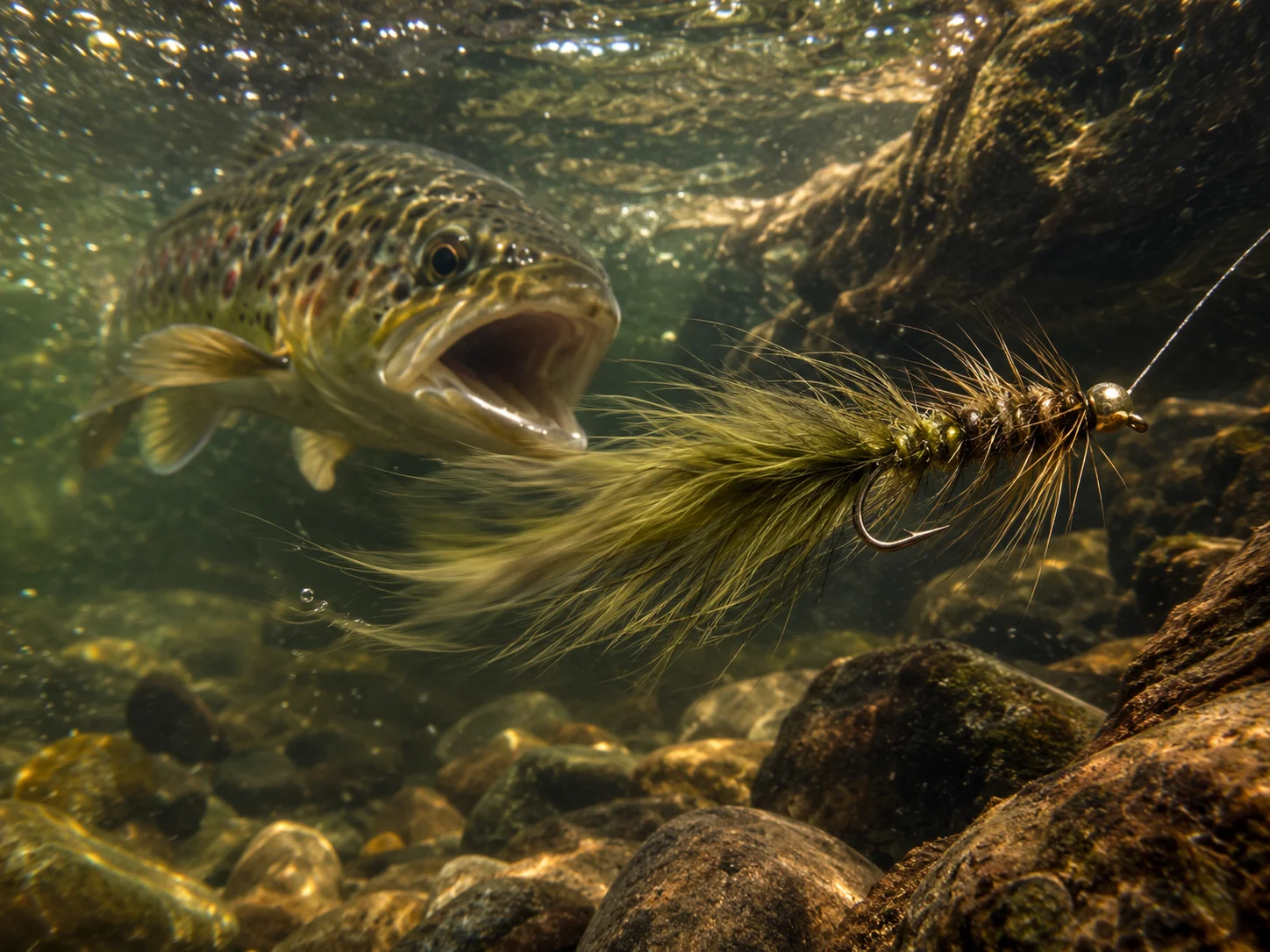
No other single fly covers more species, more water types, and more retrieve styles than the Woolly Bugger. At its core, it is a streamer, a weighted, subsurface pattern designed to be retrieved rather than drifted, but its marabou tail and chenille body create a breathing, pulsing silhouette that fish across dozens of species read as a leech, a sculpin, a crayfish, a large nymph, or a wounded baitfish. That biological ambiguity explains why the Woolly Bugger appears on nearly every guide’s short list of must-carry patterns.
For trout, an olive or black Woolly Bugger in size 6 or 8, stripped back with short, irregular pulls against a cut bank or below a dam, regularly triggers the most aggressive fish in a pool, often the largest fish, since big trout become increasingly predatory as they grow. For bass, the same pattern in a brown or rust color, fished near submerged structure, produces strikes that smaller flies rarely provoke. The pattern’s multi-species effectiveness is particularly valuable on mixed fisheries where an angler might encounter trout, bass, and panfish in the same stretch of water.
Presentation options are wider than with almost any other fly. The Woolly Bugger can be swung across current on a downstream arc, stripped back upstream in quick bursts, dead-drifted like an oversized nymph, or allowed to sink and sit near the bottom during cold-water periods when fish are lethargic. Each method produces fish under different conditions. That versatility, not any single property of the fly itself, is what makes the Woolly Bugger one of the 6 fly fishing lures that actually catch more fish.
4. Pheasant Tail Nymph
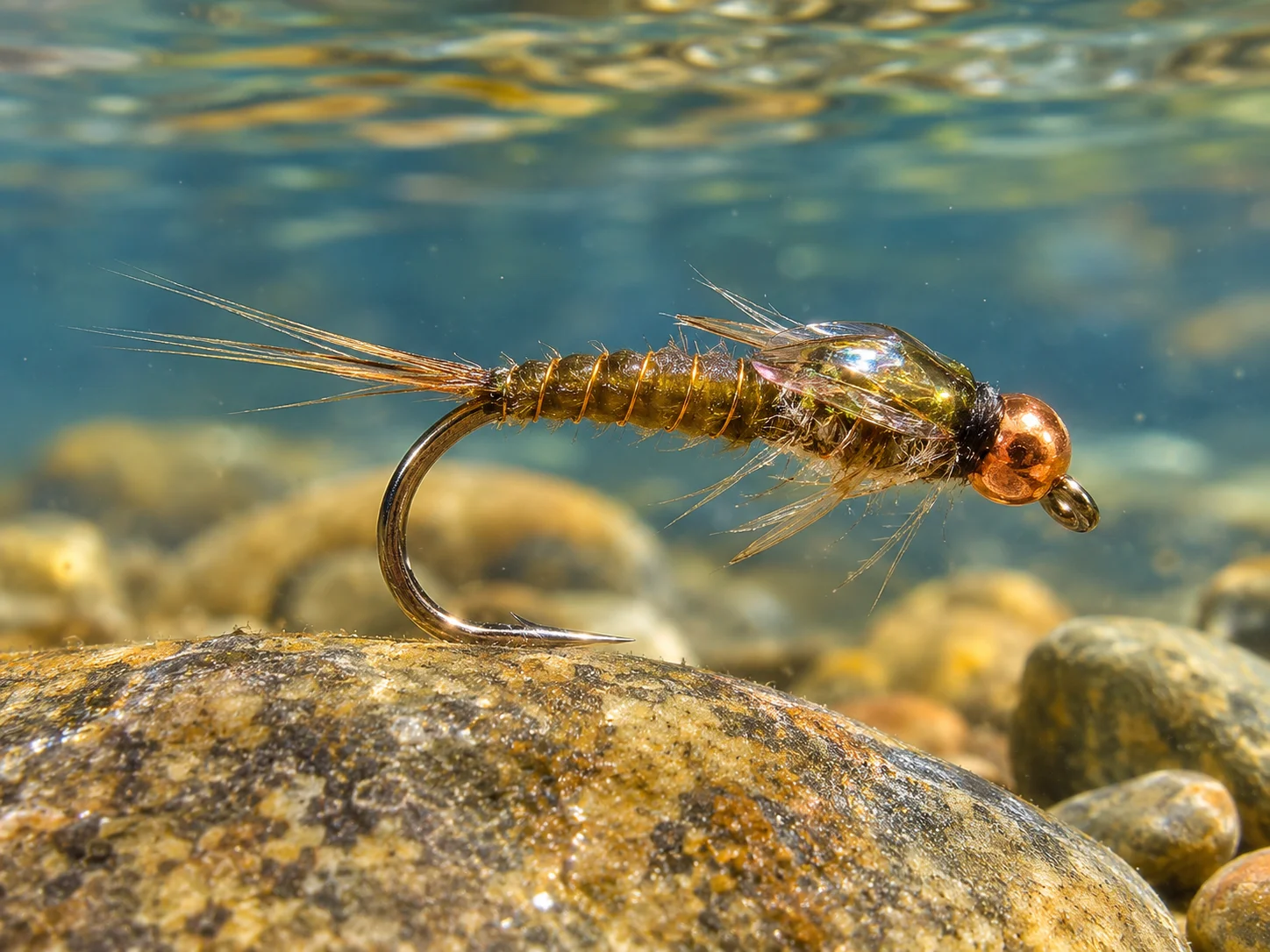
Frank Sawyer developed the original Pheasant Tail Nymph on English chalk streams in the 1950s, and the core design has changed very little since. The natural pheasant tail fibers create a segmented, slim, brownish-olive body that precisely matches the profile of a Baetis nymph, the most common mayfly group in trout streams across North America and Europe. When trout are feeding subsurface on small mayfly nymphs, as they do for the majority of their feeding time, the Pheasant Tail is simply the most accurate imitation available in a single pattern.
Modern tiers have expanded on Sawyer’s original by adding copper bead heads for weight, flashback wing cases for added attractiveness, and wire ribbing to increase durability. The beadhead flashback version is arguably the most productive all-around nymph on the market today. Guides fishing technical tailwaters routinely report that size 18 or 20 Pheasant Tails, fished on 5X or 6X tippet, turn otherwise frustrating days into productive ones when trout are keyed to tiny emergers in clear, slow water.
One constraint worth noting: the Pheasant Tail is a slim, low-profile fly that does not attract attention in heavily colored or fast water the way a Hare’s Ear does. In off-color conditions after rain, or in deep, turbulent runs, it tends to underperform larger, bulkier patterns. The practical solution is to use the Pheasant Tail as a dropper below a heavier attractor nymph rather than as a solo fly in challenging water. When conditions are right, clear, moderate-depth runs with visible nymphing trout, few patterns in any fly box will outfish it.
5. Tungsten Perdigon Nymph
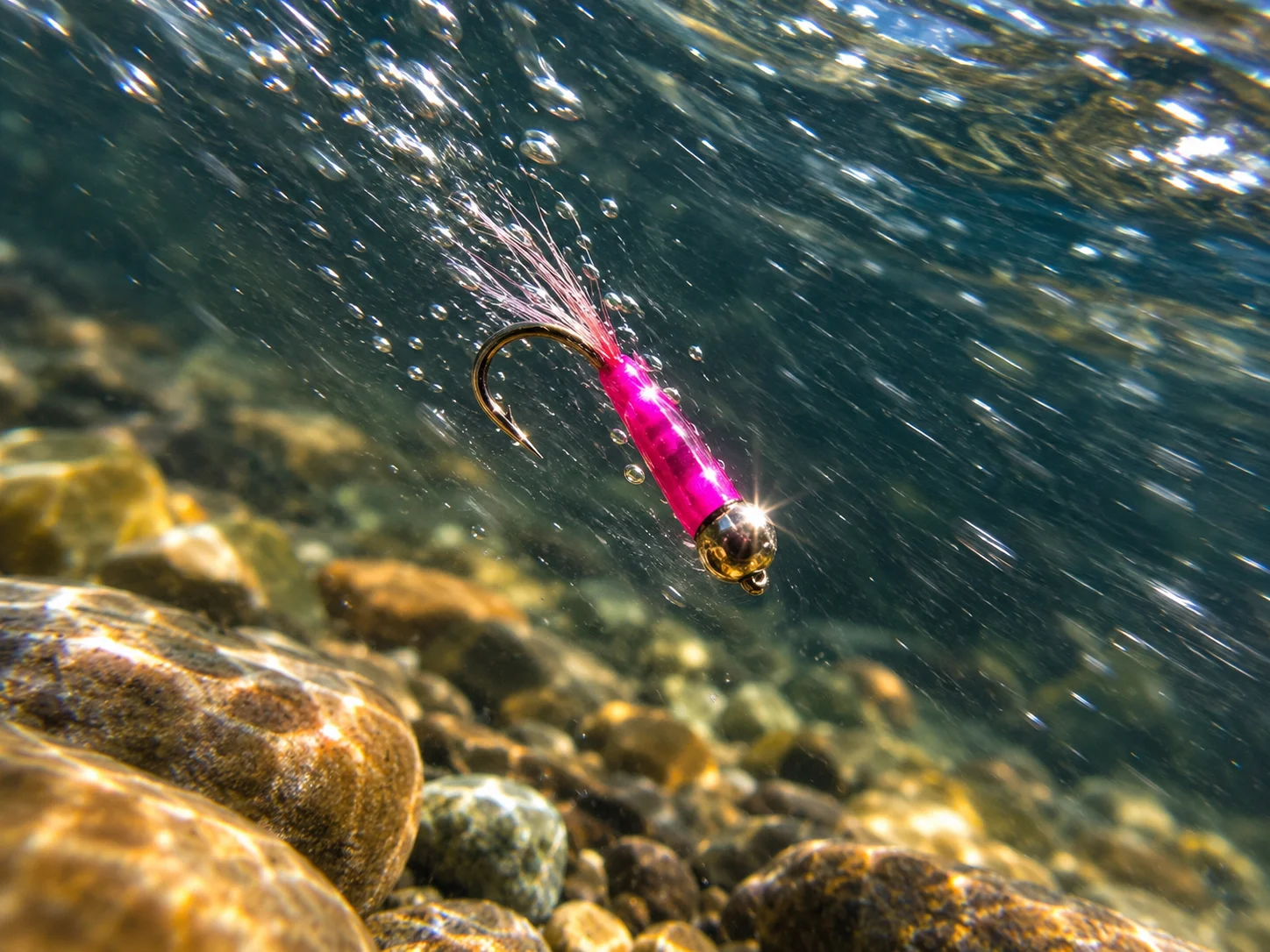
The Perdigon is the newest pattern on this list, and it earned its place through on-water results rather than tradition. Developed by competitive European fly anglers in the FIPS-Mouche circuit during the 2010s, the Perdigon trades the natural materials and rough dubbing of classical nymphs for a smooth, epoxy-coated body, a heavy tungsten bead, and minimal dressing. The result sinks dramatically faster than any traditional nymph of comparable hook size. That speed is the entire point.
In practical terms, a size 14 Tungsten Perdigon reaches the feeding zone in a third of the time a beadhead Hare’s Ear would, which means it spends more of every drift at the depth where trout are actually holding. On fast, deep runs, the kind of water that frustrates anglers who cannot get their nymphs down before the current sweeps them out of position, the Perdigon consistently produces hookups where other patterns produce nothing. Field reports from guides in 2026 specifically identify more hookups at the top of the drift as the key advantage, because the fly is on the bottom before the fish have been disturbed.
The epoxy coating also increases durability substantially. Traditional dubbed nymphs can begin to unravel after a dozen fish; a Perdigon will fish for dozens of outings without losing its profile. For anglers who want to maximize time actually fishing versus time re-tying, that durability has real value. The pattern is available in dozens of color combinations, but UV pink, UV orange, and olive-brown are the three that consistently appear in top-ten match reports. Keep at least one Perdigon in sizes 14 and 16, this is one fly where the tungsten bead size matters more than the body color.
6. Elk Hair Caddis
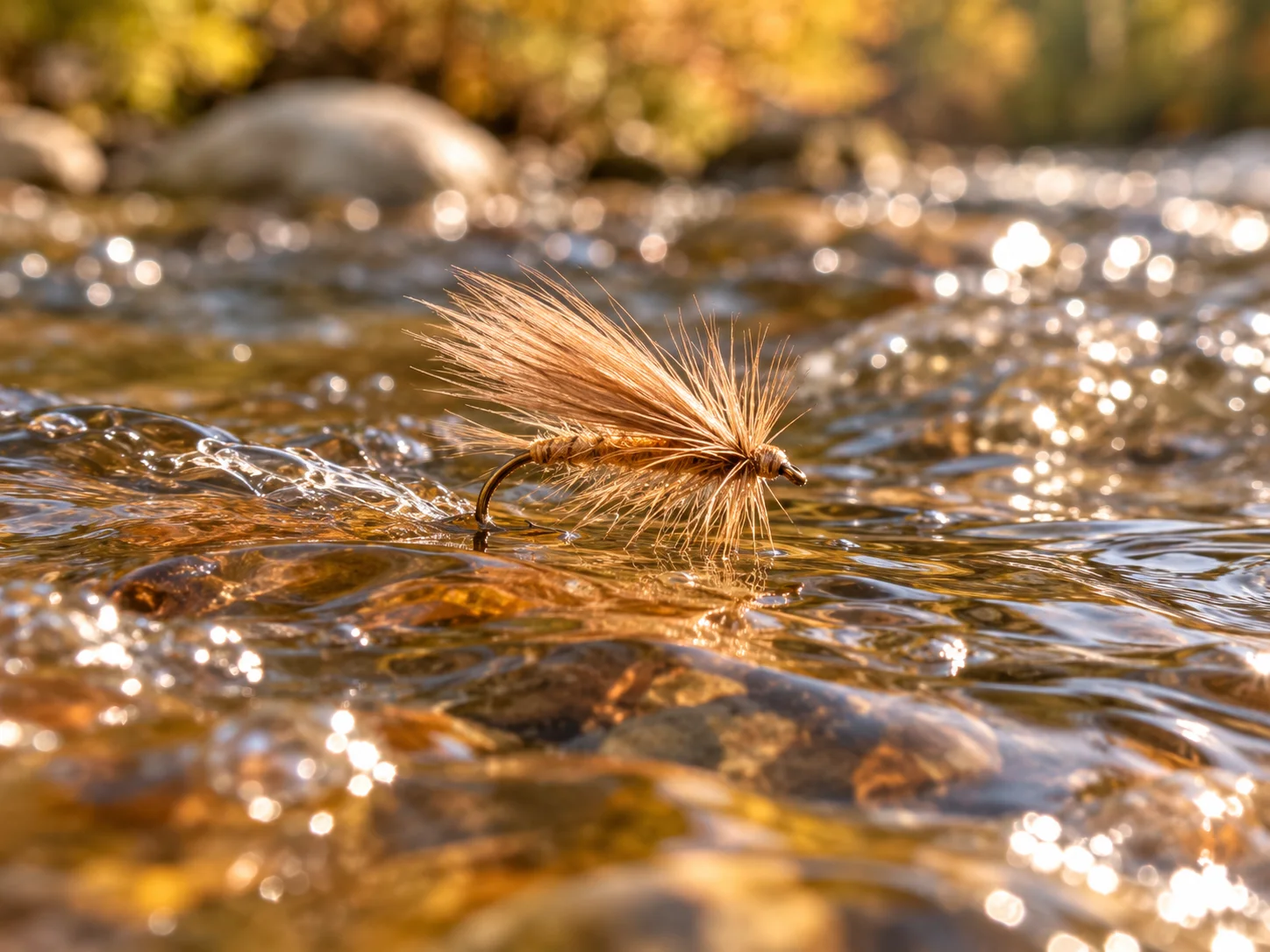
The Elk Hair Caddis is the definitive caddisfly imitation, and caddis are the most widely distributed aquatic insects in freshwater streams worldwide. While mayfly hatches get more attention in fly fishing literature, caddis hatches often produce heavier, longer, and more chaotic rises, the kind where trout throw all caution away and feed aggressively on the surface. Having a reliable caddis imitation at that moment makes the difference between a spectacular day and a missed opportunity.
Al Troth’s original design uses tan elk hair for the wing and body hackle that angles back toward the tail, creating a shape that accurately mimics an adult caddis in the act of hatching or laying eggs. The wing is naturally waterproof and highly buoyant, allowing the fly to ride high even in rough pocket water where foam patterns would eventually swamp. In sizes 14 and 16 with a tan or olive body, it covers the majority of caddis hatches across most trout rivers from April through October.
Beyond pure imitation, the Elk Hair Caddis excels as a searching pattern between hatches. Skittered lightly across the surface with short rod-tip twitches, it mimics an emerging or egg-laying caddis perfectly and regularly draws strikes from fish that have not shown themselves all morning. This skating retrieve is one of fly fishing’s most exciting techniques, strikes are explosive and immediate, and the Elk Hair Caddis handles it better than any other widely available pattern. Pairing a size 14 Elk Hair Caddis with a Pheasant Tail dropper creates one of the most productive tandem rigs available for stream trout, covering both surface and subsurface feeding simultaneously.
Why These Six Patterns Work Together
Selecting patterns that complement each other is as important as selecting patterns that individually catch fish. The six listed here cover all three feeding zones, surface, mid-column, and bottom, along with the three main food groups trout prioritize: aquatic insects in nymph form, hatching or adult insects on the surface, and baitfish or invertebrates large enough to trigger a predatory response. The Parachute Adams and Elk Hair Caddis handle dry-fly presentations across the two most common insect families. The Hare’s Ear and Pheasant Tail cover general nymphing from shallow riffles to moderate runs. The Tungsten Perdigon dominates in deep, fast water where other nymphs fail to reach bottom. The Woolly Bugger handles every situation where a larger, moving target outproduces smaller, drifted flies.
Experienced anglers often describe a small set of patterns they fish on nearly every outing, returning to them not out of habit but out of verified confidence. That confidence matters. An angler who trusts a fly fishes it in the right places, with the right presentation, and for the right amount of time before moving on. The same fly fished with hesitation or changed prematurely never shows its full potential. Building familiarity with a compact, versatile set, rather than cycling through a large box of unfamiliar patterns, is one of the most reliable ways to improve catch rates without spending more money on gear.
The industry has reinforced this point consistently through 2026. Tackle manufacturers are focusing their development resources not on entirely new fly categories but on improving the materials and construction of proven patterns. Better hooks, more lifelike materials, and improved durability are appearing in updated versions of Woolly Buggers, Perdigons, and nymph standards, a clear signal that the six types of flies covered here will remain at the core of productive fly fishing for the foreseeable future.
One useful caveat applies to warm-water fishing. Anglers targeting bass or panfish alongside trout will want to consider supplementing the Woolly Bugger with a Deer Hair Popper or similar surface attractor. Aggressive warm-water species respond disproportionately well to topwater presentations, and a small foam or deer-hair popper can out-produce every other fly in a warm, shallow pond on a summer evening. For pure trout fishing, the six patterns listed here are sufficient. For mixed-species days, one surface bass fly deserves a slot in the box.
Conclusion
The 6 fly fishing lures that actually catch more fish share one defining quality: they work in multiple situations rather than excelling in only one. The Parachute Adams and Elk Hair Caddis cover the surface across different insect families. The Hare’s Ear and Pheasant Tail handle the subsurface nymphing that accounts for the majority of trout feeding time. The Tungsten Perdigon gets down fast in water other nymphs cannot effectively fish. The Woolly Bugger handles predatory fish, mixed-species water, and moments when nothing subtle is working.
The practical next step is straightforward: build a small box containing each of these six patterns in two or three sizes, fish them exclusively for a full season, and develop the presentation skills that reveal what each one is capable of. The results will speak for themselves.