Creative Grooms Cake Ideas For A Duck Hunting-Themed Wedding
Roughly 25 percent of groom’s cakes in the United States now feature an outdoor hobby theme, and waterfowl hunting consistently ranks among the top five. That number reflects a genuine shift: couples stopped treating the groom’s cake as an afterthought and started using it to tell a specific story about who the groom actually is. These 6 creative grooms cake ideas for a duck hunting-themed wedding cover the full range of budgets, skill levels, and presentation styles available in 2026, from fully sculpted three-dimensional centerpieces to sleek modern bases dressed with custom toppers.
Disclosure: This post contains affiliate links. As an Amazon Associate, we earn from qualifying purchases, and at no extra cost to you.
Key Takeaways
- A sculpted duck-in-the-marsh cake built on stacked 6-, 8-, and 10-inch tiers gives enough height for a full three-dimensional wetlands scene.
- Crisped rice treats and modeling chocolate are the standard structural foundation for sculpted animals and oversized objects, keeping weight manageable without sacrificing detail.
- A dessert table pairing a small sculptural centerpiece cake with themed cupcakes or mini tarts is one of the most cost-effective duck hunting cake formats for 2026.
- Custom hunting-themed toppers placed on a clean buttercream base require no sculpting skill and still deliver strong visual impact.
- Hyper-personalization, whether that means recreating the groom’s actual dog or his favorite marsh location, is the detail that makes guests remember a groom’s cake.
1. Realistic Duck-in-the-Marsh Tiered Cake
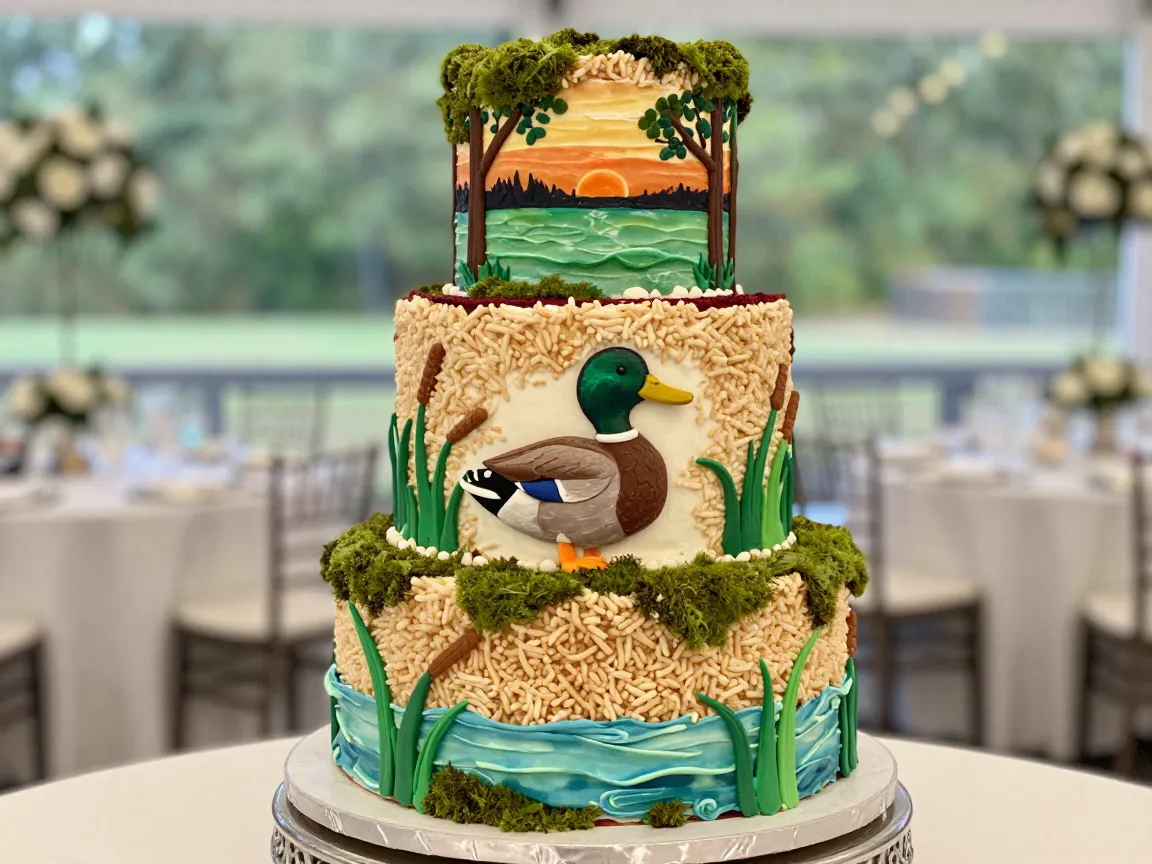
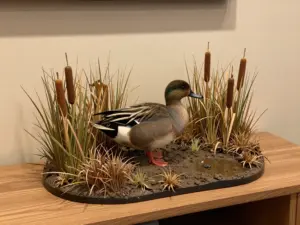
The standard build for this design stacks three tiers, typically 6-, 8-, and 10-inch layers, so the finished cake stands tall enough to hold a full duck-blind scene without looking compressed. Red velvet is a common flavor choice because the contrast between the dark crumb and the decorating work reads well when guests cut into it, but the flavor is entirely independent of the visual design.
The duck itself starts as a crisped rice treat core molded into the bird’s body shape, then coated in modeling chocolate before the decorator hand-paints feather coloring and shading with edible paints. That layered approach, rice treat structure first, modeling chocolate second, paint third, is what produces the feather texture and iridescent green that a mallard drake requires. Skipping the modeling chocolate and going straight to fondant produces a flatter, more cartoonish result, which is fine for some aesthetics but misses the lifelike quality this design is known for.
The marsh background uses mossy green fondant or piped buttercream to suggest shallow water, with hand-pressed fondant reeds and grasses arranged around the duck’s base. Those elements serve a structural purpose too: they conceal the internal supports keeping the bird upright. A decorator who has built this design before will usually frame the duck slightly off-center so the reeds on the heavier side act as a natural visual anchor. For couples who want their favorite marsh location represented, adding a hand-painted horizon line across the top tier with specific tree silhouettes or a sunrise is a straightforward personalization that costs little extra.
2. Oversized Duck Call Sculpture Cake
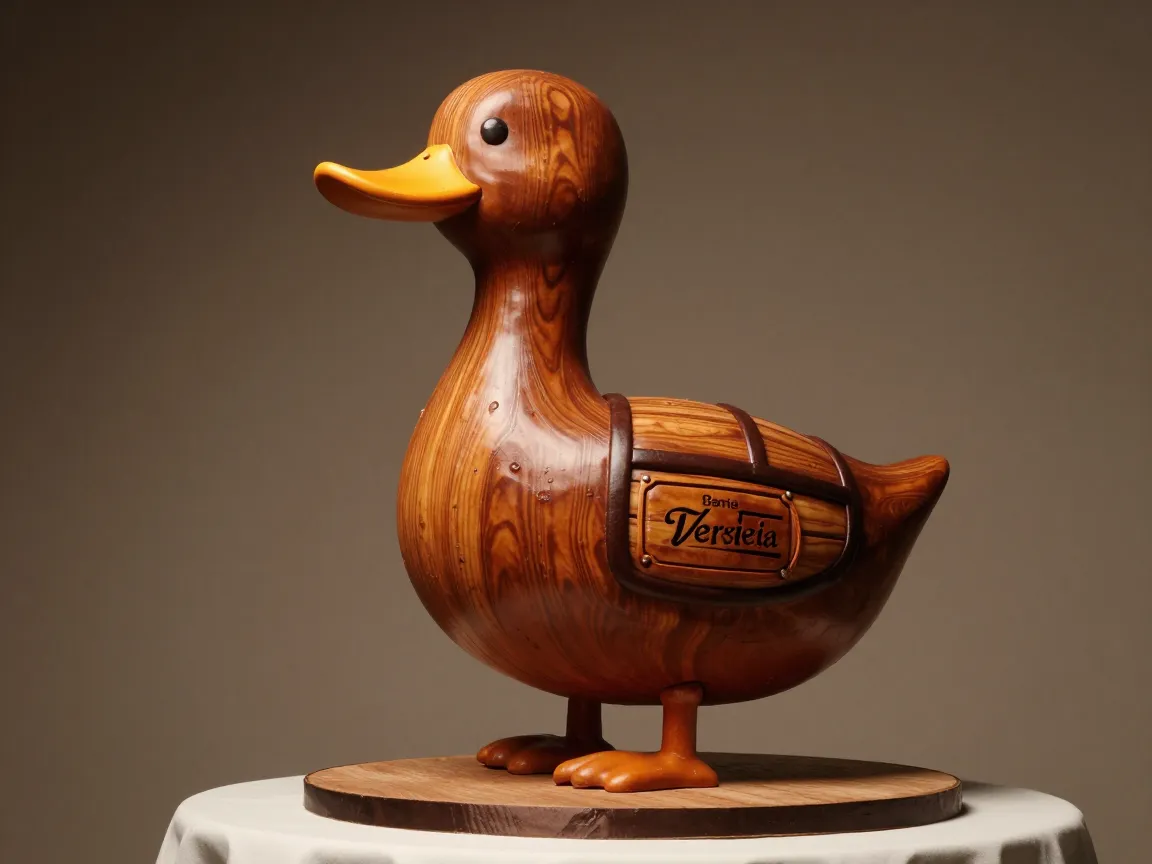
A single duck call does not look like much sitting on a table, but scaled up to cake size and finished with a woodgrain paint job, it becomes one of the most striking sculptural centerpieces available for a hunting-themed reception. The concept scales a standard 4-inch call, such as a Rich-N-Tone model, into a multi-portion cake large enough to serve a table, then treats the whole piece as a freestanding sculpture rather than a traditional tiered structure.
Airbrushing or careful hand-painting in brown and amber tones creates the woodgrain effect on the outer fondant surface. The finishing step, a coat of confectioner’s glaze, mimics the glossy acrylic or lacquered wood finish of a real high-end call. That glaze layer is what separates an average execution from a convincing one. Without it, the surface reads as matte fondant regardless of how well the grain pattern is painted.
This design works particularly well when the groom hunts with a specific call he cares about. Some decorators will ask for a photo of the actual call, the brand markings, the barrel color, and the insert style, then replicate those details on the cake version. The result connects the cake directly to a real object in the groom’s kit rather than a generic prop. Portion-wise, a sculpted call at this scale typically serves 20 to 30 guests depending on the internal cake volume, so it functions as a standalone centerpiece for smaller wedding parties or as a companion piece alongside a main wedding cake for larger ones.
3. Life-Size Labrador Retriever Cake
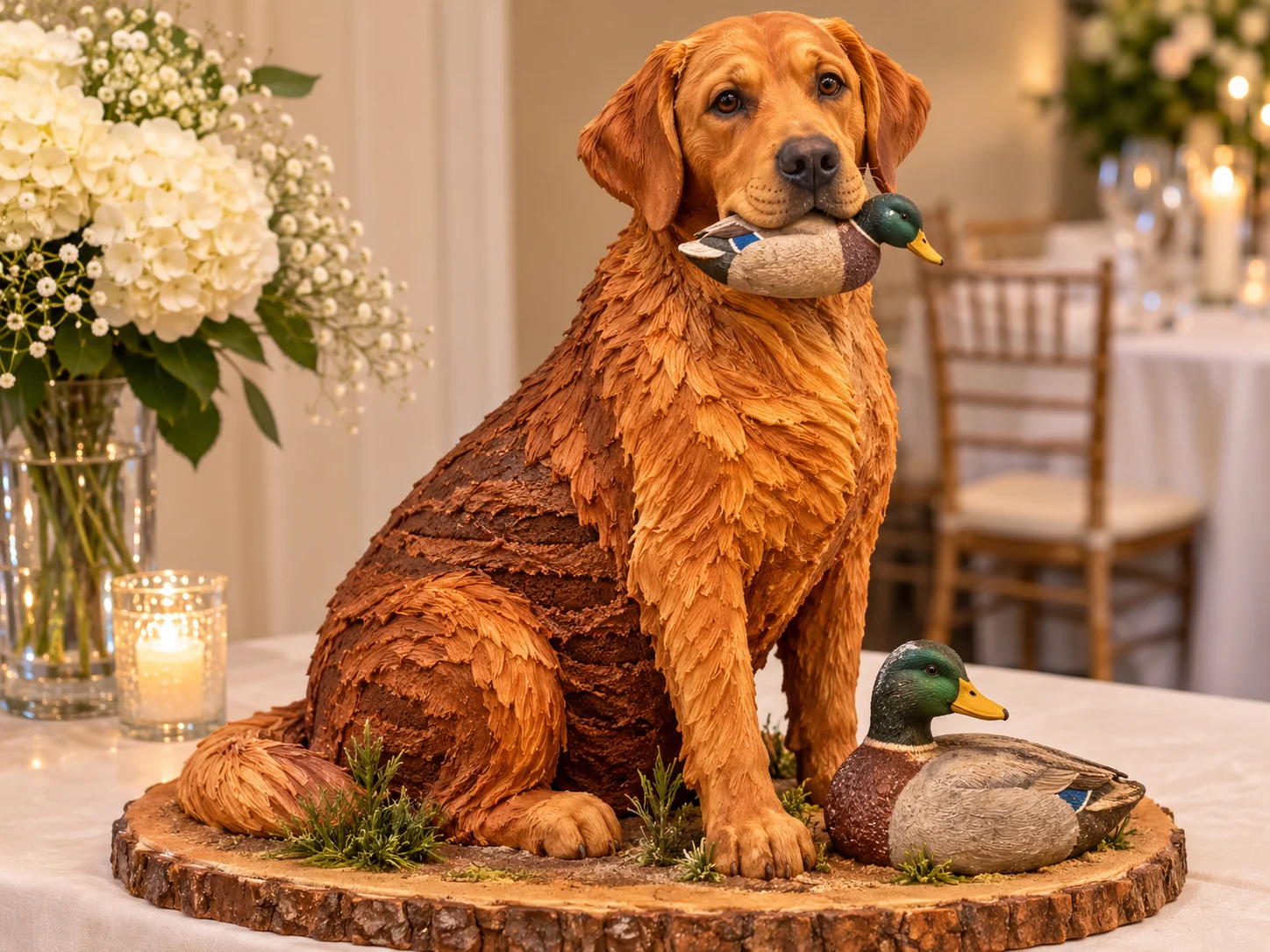
For grooms whose hunting dog is as central to their identity as the sport itself, a sculpted retriever cake personalizes the display in a way no decoy or duck call can match. Several professional groom’s cake galleries updated through 2026 document life-size Labrador designs posed with ducks or decoys, and the most memorable documented example recreated a specific dog named Duke using German chocolate cake for the body and a sculpted rice treat head covered in marshmallow fondant and modeling chocolate.
The build sequence matters. Carving the dog’s body from a block of stacked cake layers gives the sculptor control over posture, whether the dog sits, stands, or retrieves. The head is almost always a separate rice treat sculpt because the neck-to-head weight ratio would cause a pure cake head to sag or separate. Modeling chocolate applied over the rice treat allows the decorator to pull and texture fur details that fondant alone cannot hold. Final coloring comes from airbrush work and hand-painted highlights using gel or liquid food colors.
Personalizing this cake requires a good reference photo of the actual dog. Ear shape, coat color variation, and body proportion differ enough between individual Labs that a generic yellow, black, or chocolate Lab cake feels noticeably different from a portrait of a specific animal. Sending the baker two or three clear photos, one from the side, one from the front, and one showing the dog’s typical resting posture, is the most useful thing a couple can do before the consultation. The final detail, placing a small fondant duck in the dog’s mouth or a sugar decoy at its feet, grounds the sculpture firmly in the hunting context.
4. Camo or Silhouette Hunting Sheet Cake
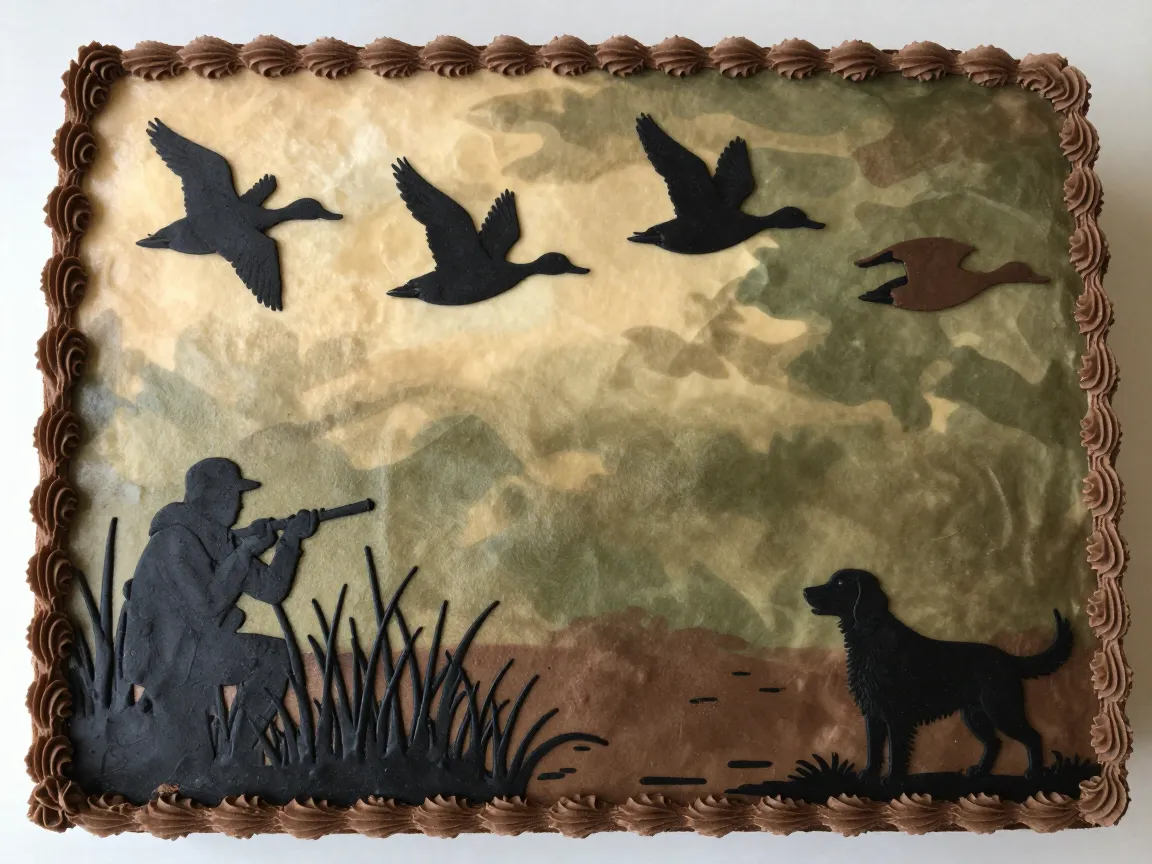
Not every couple has the budget for full sculpting, and the sheet cake format handles that constraint honestly. A rectangular cake iced in chocolate buttercream gives a decorator a clean canvas for piped hunting silhouettes: ducks in flight, a hunter in a blind, marsh grass, or a retriever at the water’s edge. The graphic quality of a well-executed silhouette in black or dark brown against a lighter background can read as more sophisticated than a rushed sculpted cake that runs out of detail budget.
Supermarket bakeries with custom order departments can produce this format using edible image printing, where a high-resolution duck hunting artwork file is printed onto a sugar sheet and applied directly to the iced surface. That option brings the total cost down considerably compared to handwork and is worth considering when the groom’s cake budget is under $150. The trade-off is that edible image prints have a slight sheen and a flat quality that piped work does not. Couples who want depth and texture are better served by a bakery that will pipe the design by hand.
A camo gradient across the sheet cake base, moving from light tan at the edges to dark olive in the center, gives the whole surface a hunting context before any silhouettes are added. That gradient is achievable with standard buttercream using a bench scraper technique and two or three colors blended while the icing is still soft. It requires no airbrushing equipment, which makes it accessible to smaller local bakeries that may not have specialized tools.
5. Statement Cake Plus Dessert Table
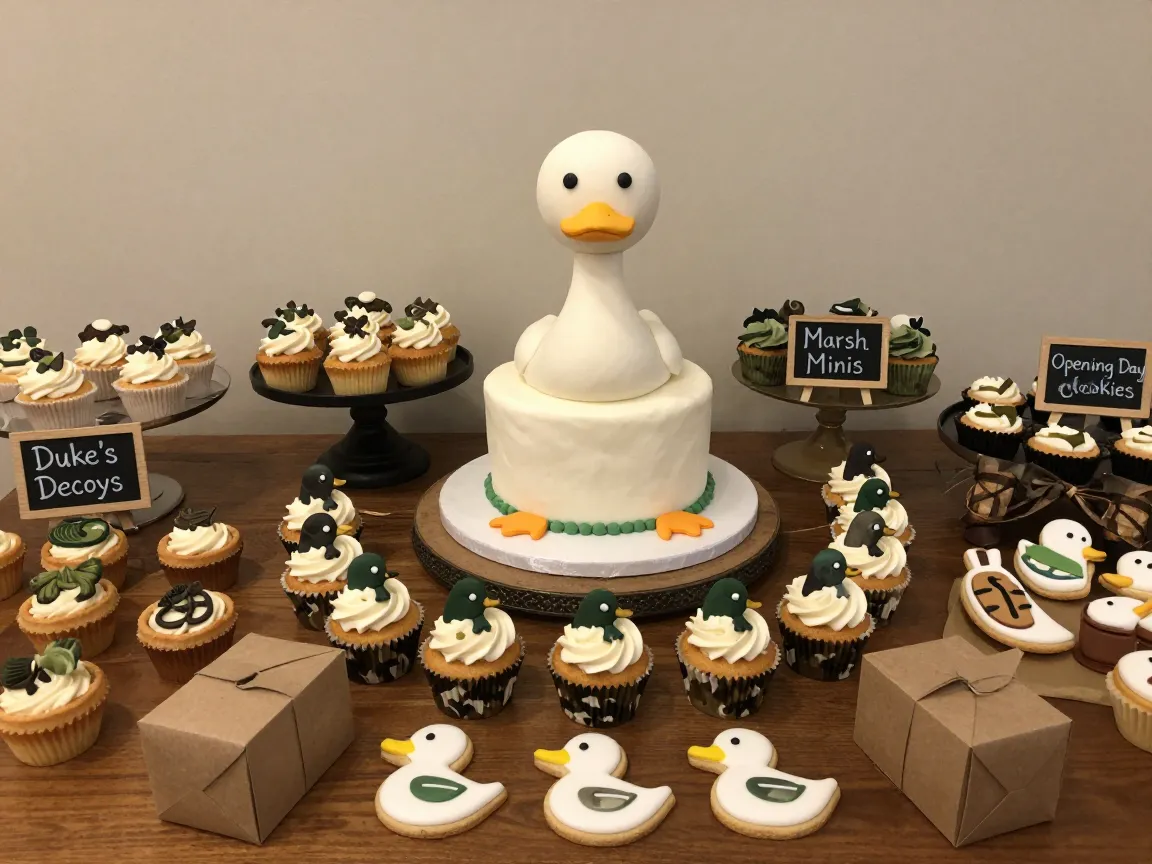
One of the cleaner presentation trends for 2026 wedding receptions pairs a small, highly detailed sculptural cake with a surrounding dessert table of bite-size sweets. For a duck hunting theme, this means a compact sculpted duck or duck-call cake as the visual centerpiece, standing roughly 8 to 10 inches tall, surrounded by cupcakes topped with small fondant mallards, mini tarts decorated with camo buttercream, or sugar cookies cut into duck and shotgun shell shapes.
The arrangement solves a problem that large sculptural cakes often create: the most labor-intensive parts, the sculpted duck or the painted woodgrain, are rarely visible once the cake is cut and plated. With the dessert table format, the centerpiece stays intact as a display piece while guests serve themselves from the surrounding sweets. The couple can choose to cut the centerpiece at the end of the reception or preserve it, since the guest servings come from the table, not the sculpture.
Coordinating the table elements tightens the overall look. Cupcake liners in camo print, kraft paper mini boxes for the tarts, and small chalkboard signs labeling each item by name (“Duke’s Decoys,” “Marsh Minis,” “Opening Day Cookies”) reinforce the theme through the full spread rather than concentrating it in one piece. This format also allows the baker to price the sculptural centerpiece separately from the dessert volume, which can make budgeting more flexible.
6. Custom Hunting Topper on a Modern Base Cake
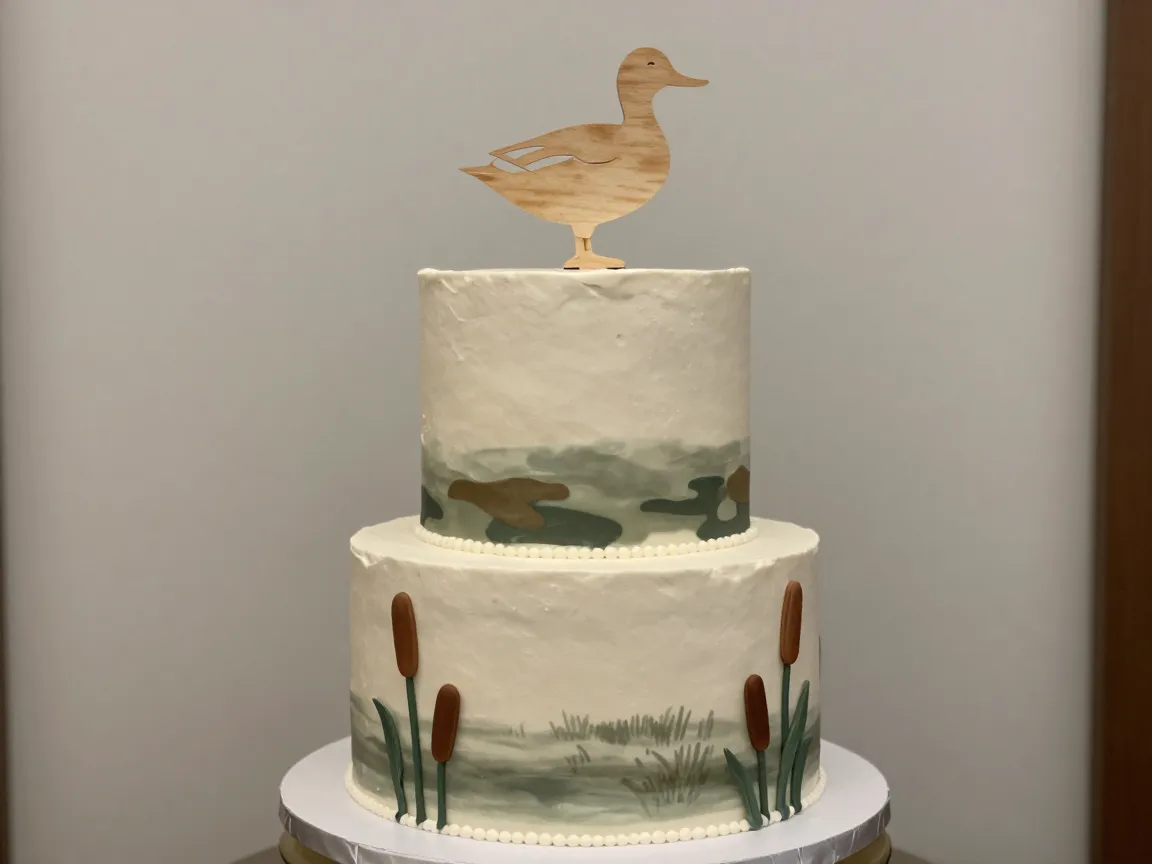
The 2026 wedding cake market supports a wide range of specialty topper makers who produce duck-hunter silhouettes, hunter-and-retriever combinations, duck and rifle pairings, and mixed hunting-and-fishing motifs in resin, wood, and metal finishes. Placing one of these toppers on a clean, contemporary buttercream cake, whether a single-tier square, a wide flat round, or a rectangular tablescape format, delivers a strong duck hunting statement without requiring any sculpting skill from the baker.
Trend reporting from major wedding publishers in 2026 notes a broader return to retro figurines and nostalgic toppers, with couples choosing sculpted handler-and-dog figures or vintage-style decoy replicas as their centerpiece element. That cultural moment makes a hunting topper feel current rather than kitschy, which is a meaningful shift from five years ago when novelty toppers read as dated. A clean modern base in a single muted color, dusty sage, slate blue, or warm ivory, lets the topper carry the visual weight without competing for attention.
The base cake can still reference the hunting theme through its surface treatment. An airbrushed camo gradient, a band of fondant cattails around the base tier, or a simple hand-painted wetlands horizon line across the side of the cake all add context without overwhelming the topper. For couples who want maximum personalization without maximum cost, commissioning a custom laser-cut wooden topper that spells out the groom’s name alongside a duck silhouette is a practical middle-ground option available from several Etsy-based specialty shops, with typical lead times of two to three weeks.
Quick Comparison
| Cake Style | Skill Level Required | Relative Cost | Best For |
|---|---|---|---|
| Duck-in-the-marsh tiered | High | High | Centerpiece, large receptions |
| Oversized duck call sculpture | High | Medium-High | Grooms with a signature call |
| Life-size Labrador retriever | High | High | Grooms whose dog is iconic |
| Camo or silhouette sheet cake | Low-Medium | Low | Budget-conscious couples |
| Statement cake plus dessert table | Medium | Medium | Flexible budgets, large guest counts |
| Custom topper on modern base | Low | Low-Medium | Couples wanting current aesthetics |
Conclusion
Every one of these 6 creative grooms cake ideas for a duck hunting-themed wedding is currently executable by experienced wedding cake artists, and the technical methods, crisped rice treat structures, modeling chocolate, edible paint, and airbrushing, are well documented enough that most decorators in mid-to-large markets will recognize them on sight. The most useful next step is gathering your reference materials before the baker consultation: photos of the actual hunting dog, the specific duck call brand, the marsh location, or the decoy style the groom uses. The more concrete the reference, the more personal the finished cake, and personal is what separates a memorable groom’s cake from a forgettable one.