Easy Fishing Knots Beginners Can Tie in Seconds
Roughly 49 million Americans fish at least once a year, yet most first-timers lose their first good fish not because of bad luck but because an unknown knot slipped. The 6 easy fishing knots beginners can tie in seconds covered here solve that problem without requiring any special tools, years of practice, or a background in sailing. Master these six and you can attach a hook, join two lines, and secure line to a reel, which covers the full range of connections you’ll need for most freshwater and inshore saltwater fishing.
Disclosure: This post contains affiliate links. As an Amazon Associate, we earn from qualifying purchases, and at no extra cost to you.
The goal is narrow on purpose. Learning a handful of knots well is more effective than memorizing a dozen specialized ones you’ll fumble under pressure on the water.
Key Takeaways
- Six knots cover every major connection point: hook/lure, line-to-line, and reel spool.
- The Palomar and Improved Clinch each retain roughly 95% of line strength when tied correctly.
- All six work with monofilament; most also work with fluorocarbon and braided line.
- Strength comes from pulling both ends slowly and evenly, not from speed.
- Practicing each knot ten times at home before your first trip removes on-water fumbling entirely.
1. Palomar Knot
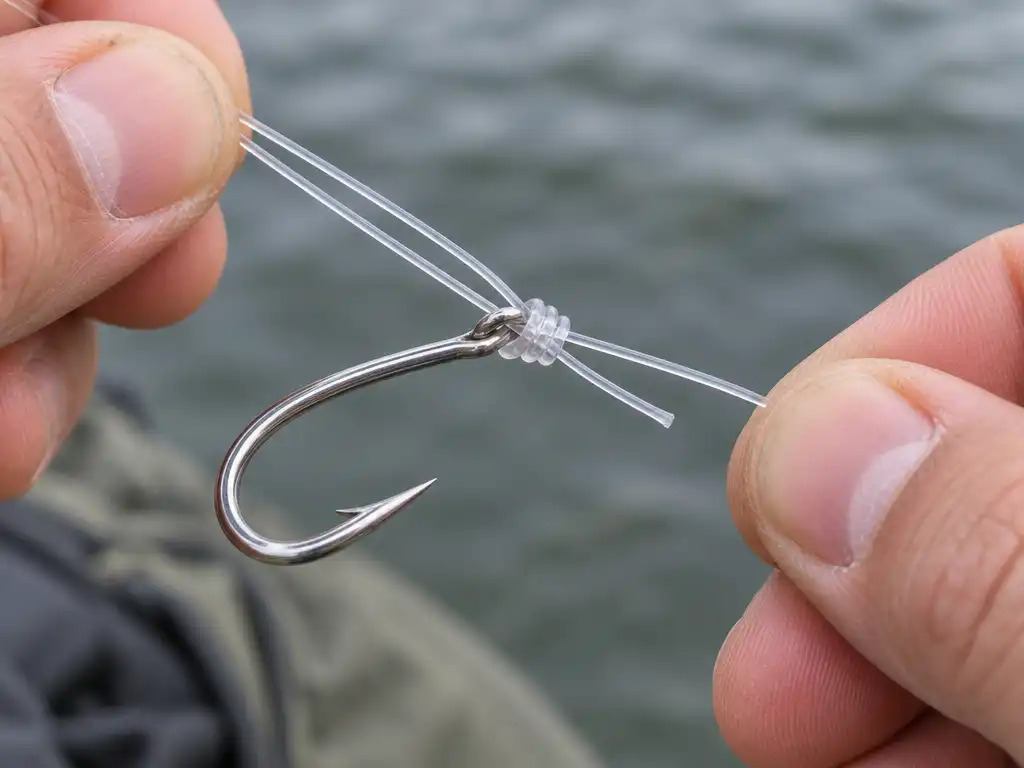
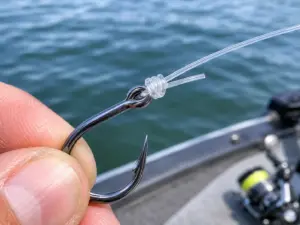
The Palomar is the knot most beginner guides place first, and for good reason. It retains close to 95% of line strength across monofilament, fluorocarbon, and braided line, which is an unusually wide compatibility for such a simple tie. Most anglers can learn it in under five minutes.
To tie it, double about six inches of line and pass the loop through the hook’s eye. Tie a simple overhand knot with the doubled section, don’t tighten it yet. Pass the entire hook through the remaining loop, then hold the hook and pull both the main line and the tag end simultaneously until the knot cinches down onto the eye. Trim the tag end to about an eighth of an inch.
The doubled line passing through the eye is what gives the Palomar its strength. That design distributes pressure evenly across two strands rather than one. The one situation where it becomes awkward is on hooks or lures with very small eyes, where passing a doubled loop through requires a bit more patience. With braided line, some anglers pass the loop through the eye twice before tying the overhand, which keeps the knot from slipping on the slick braid surface.
Practice this one first. It’s the most forgiving knot on the list when tied imperfectly, which matters a lot when you’re cold, excited, or working in dim light before sunrise.
2. Improved Clinch Knot
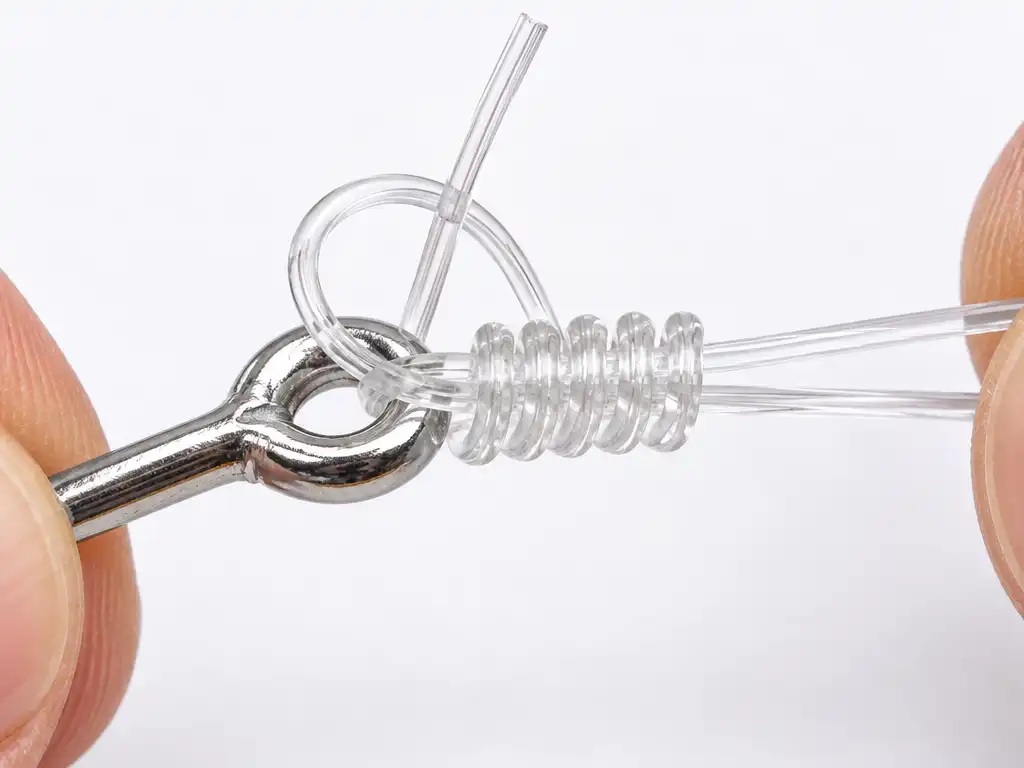
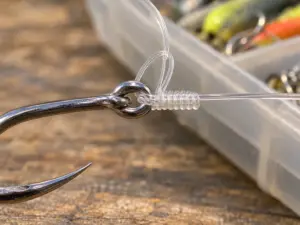
The Improved Clinch is probably the most widely used terminal knot in North American freshwater fishing. Many guides describe it as the first knot new anglers learn, partly because the motion, wrapping line around itself several times, feels intuitive after one or two attempts.
Thread four to six inches of line through the hook eye and double it back alongside the main line. Wrap the tag end around the main line five times, working away from the hook. Pass the tag end through the small loop directly above the eye, then back through the large loop you just created. Pull the main line and the tag end together slowly while sliding the coils toward the eye, then trim.
The “improved” part refers to that final tuck back through the large loop. Without it, you have a basic Clinch knot, which is weaker. The extra tuck prevents the coils from unraveling under load. Five wraps is standard for monofilament in the 8-20 lb range; with heavier mono or fluorocarbon, four wraps is enough because thicker line creates more friction per wrap. With braid, the Improved Clinch is not ideal, the slick fibers can allow the coils to slip. Use the Palomar or Uni knot instead when fishing braid.
Speed comes with repetition. After tying this knot twenty times on your couch, you’ll be able to tie it in under thirty seconds on the water without looking down.
3. Uni Knot
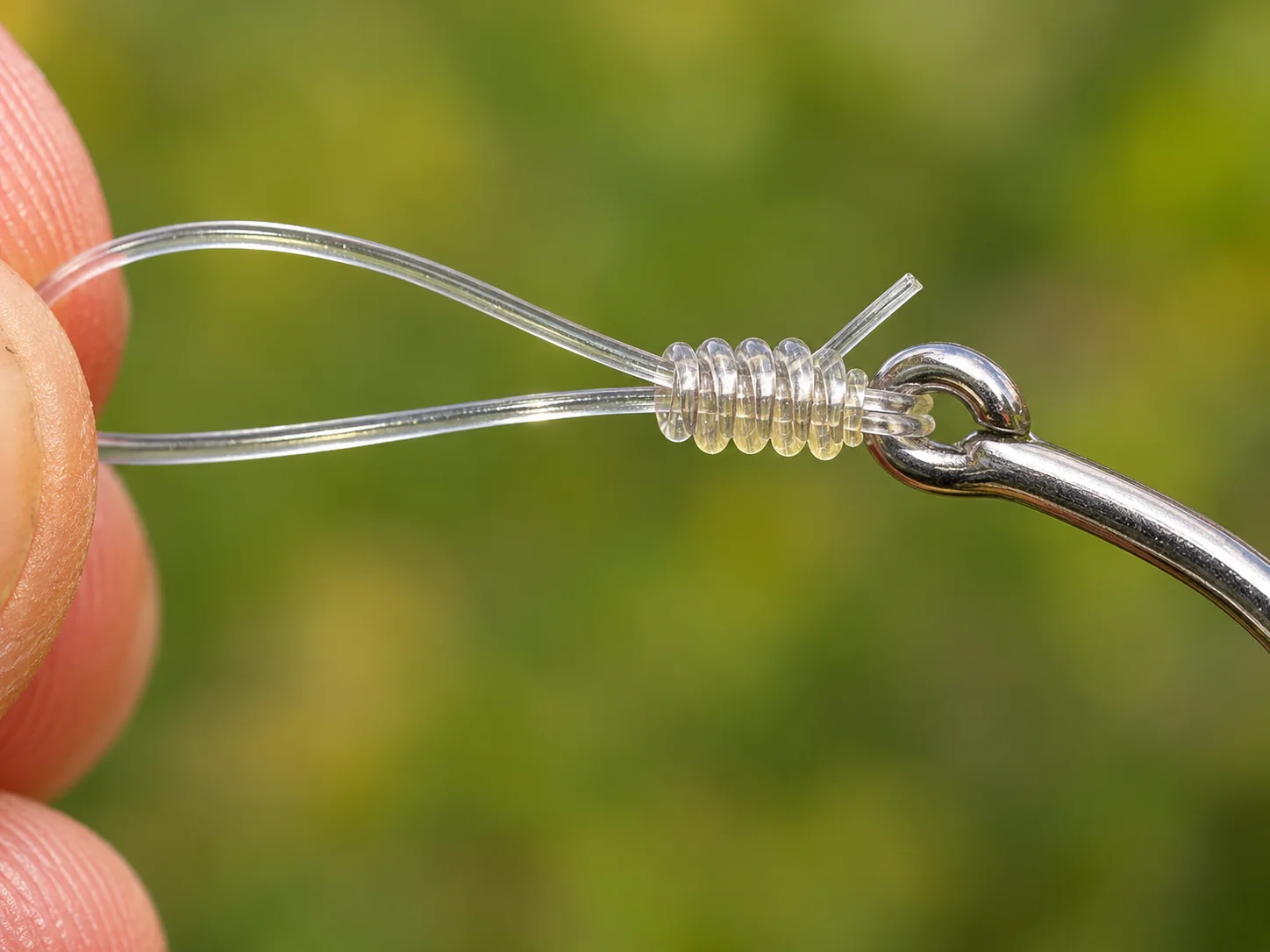
The Uni knot, sometimes called the Duncan Loop, is the single most flexible knot on this list. It attaches hooks and lures, connects lines, and works reliably on mono, fluorocarbon, and braid, all with the same basic tying motion.
Pass six inches of line through the eye and fold it back to form a loop alongside the main line. Run the tag end around both strands inside the loop six times, working toward the eye. Pull the tag end to tighten the coils into a barrel shape, then slide the knot down to the eye by pulling the main line. Trim the tag end close.
What makes the Uni useful for beginners is consistency. Once you can tie it in one application, the muscle memory transfers directly to other uses. For line-to-line connection, you tie two Uni knots, one on each line, and slide them together, which is essentially the Double Uni covered next. For braid, reduce the wraps to four; braid is thinner so more wraps create a bulkier knot without adding meaningful strength.
The Uni also allows you to leave a small loop at the eye rather than cinching the knot tight to the eye, which gives lures more movement in the water. That detail matters more with small jigs and soft plastic lures than with weighted rigs, but it’s worth knowing from the start.
4. Double Uni Knot
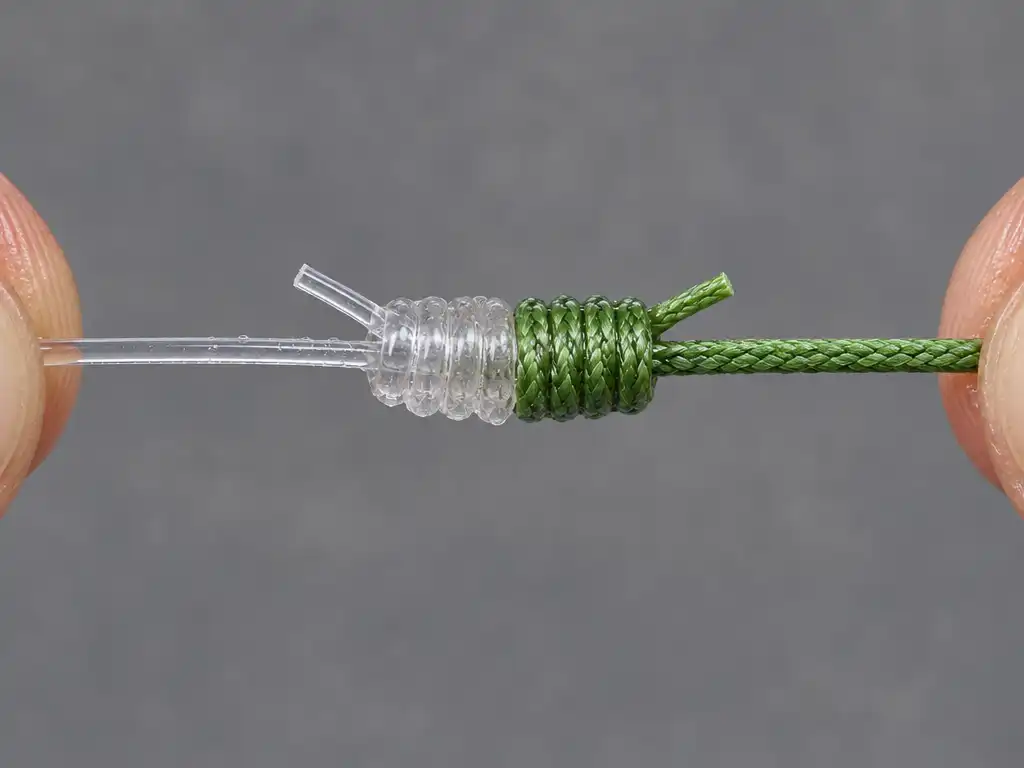
As braided main lines paired with fluorocarbon leaders become standard for bass, walleye, and inshore saltwater fishing, beginners need at least one reliable line-to-line connection. The Double Uni is the easiest option that also holds well under real fishing pressure, retaining around 90% of the lighter line’s breaking strength.
Overlap the ends of the two lines by about six inches, with each end pointing in opposite directions. Using one line, form a loop and wrap it around both lines four times before passing the tag end through the loop and pulling tight. Repeat the same process with the second line. Then pull both main lines in opposite directions to slide the two knots toward each other until they meet. Trim both tag ends.
The 90% strength figure assumes you wet the knot before the final pull. Friction between dry monofilament or fluorocarbon coils generates heat, which weakens the nylon at the knot point. A quick lick or dip in the water before cinching removes most of that heat. This applies to nearly every knot on this list, but it matters most on the Double Uni because there are more friction surfaces.
For connecting braid to fluorocarbon specifically, four wraps on the braid side and five on the fluorocarbon side produces a tighter, more symmetrical connection. The difference in line diameter between braid and fluoro makes equal wraps unnecessary, more wraps on the thicker material keeps both knot barrels close in size, which helps them slide together cleanly.
5. Arbor Knot
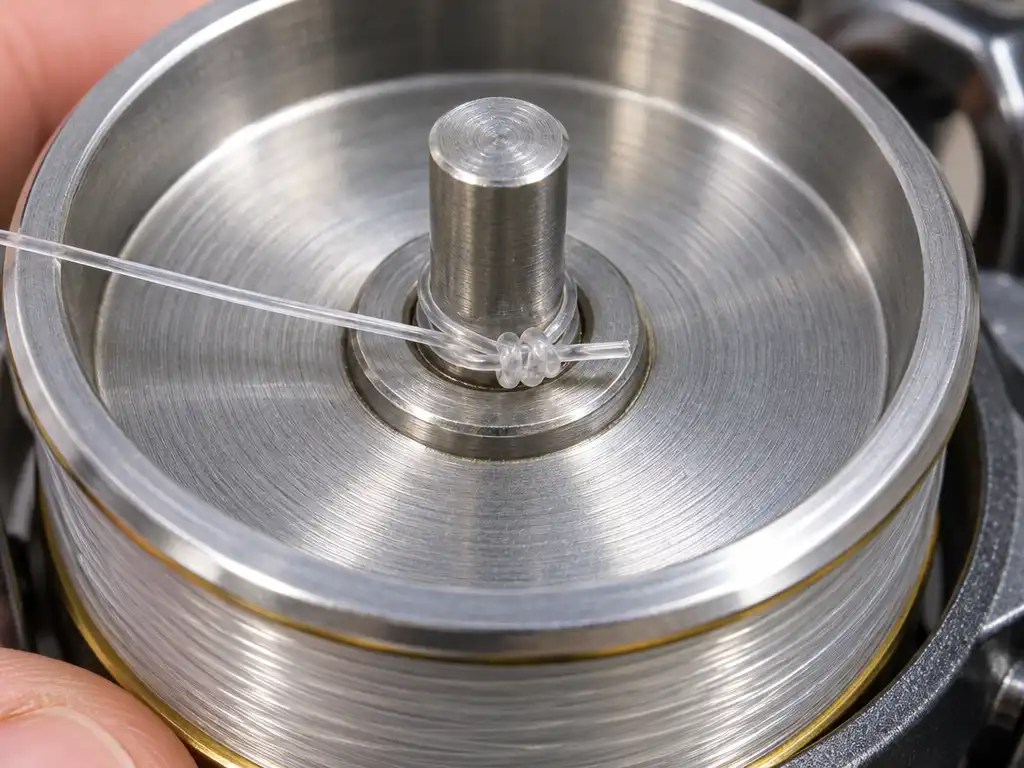
Every angler eventually has to put fresh line on a reel, and the Arbor knot is the standard way to attach line to the spool’s arbor, the central post inside the reel. It’s the simplest knot on this list structurally, and it’s also the most forgiving of imperfect execution.
Wrap the line around the spool arbor once. Tie an overhand knot with the tag end around the main line. Tie a second, smaller overhand knot in the tag end itself, about an inch from the first. Pull the main line so the first knot slides down to the arbor and the second knot jams against it, acting as a stopper. Trim the remaining tag end.
The Arbor knot doesn’t need to be particularly strong. Under normal fishing conditions, the drag system absorbs any sudden load long before it reaches the arbor. The knot simply needs to stay put when you start winding line onto the spool. That said, leaving an inch or more of tag end past the second overhand knot is a common mistake, it creates a bump under the wound line that can cause uneven spooling. Trim it close.
This knot works identically for spinning reels and baitcasting reels. If you’re spooling braided line directly onto a baitcaster without a monofilament backing, adding a small piece of electrical tape over the arbor knot before winding prevents the braid from slipping around the smooth metal spool.
6. Surgeon’s Loop
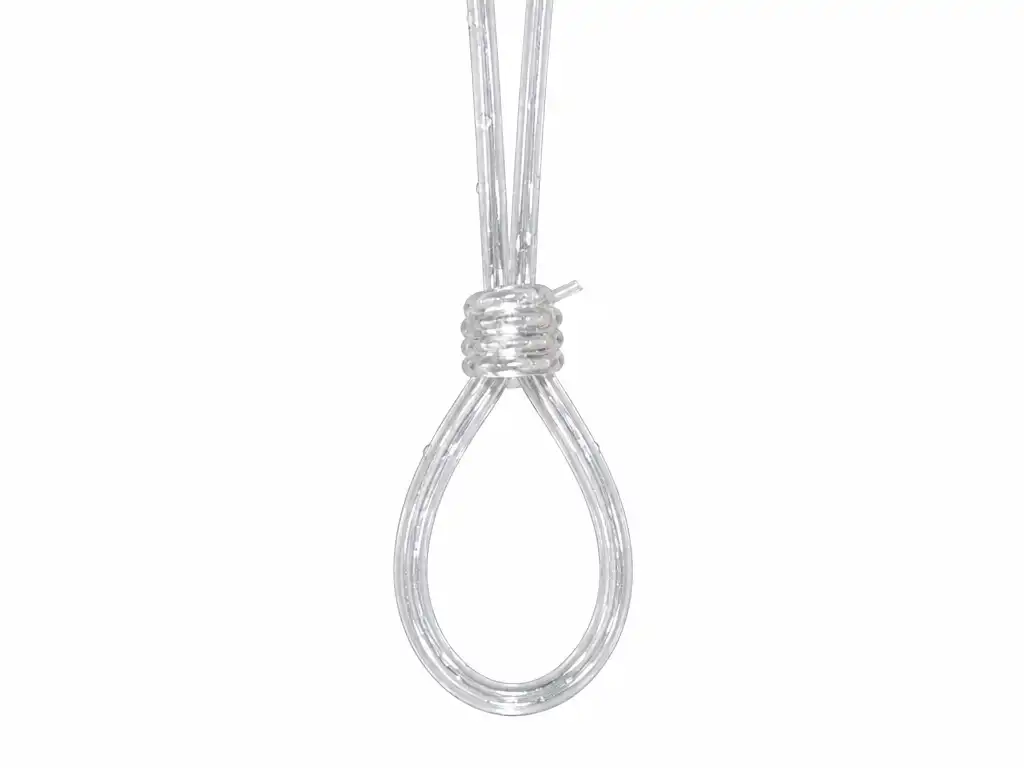
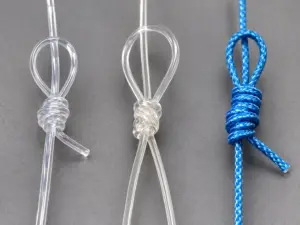
The Surgeon’s Loop creates a fixed loop at the end of a line that retains roughly 95% of line strength, comparable to the Palomar. Its main uses are building a loop-to-loop connection between a main line and a leader, and creating a dropper loop for attaching a second hook or weight to a rig.
Double the last few inches of line into a loop of whatever size you want. Tie an overhand knot with the doubled section, but before tightening, pass the loop through the opening a second time. Wet the knot and pull the loop and both strands of the standing line simultaneously until the knot cinches. Trim the tag end.
That second pass through the opening is what separates a Surgeon’s Loop from a basic loop knot. It adds one extra tuck, which spreads the load across more material and keeps the loop from deforming under tension. The finished loop should be even and symmetrical, with the knot barrel sitting neatly at the base.
For loop-to-loop connections, the loops from two lines interlock like two chain links. Slide one loop through the other, pass the terminal end of the second line through the first loop, and pull snug. This setup is especially useful when fishing with pre-tied leaders, since you can swap leaders quickly without retying a knot. Many pre-packaged fluorocarbon leaders already have a loop tied in one end for exactly this reason.
Quick Comparison
| Knot | Primary Use | Line Types | Approx. Strength Retained |
|---|---|---|---|
| Palomar | Hook/lure attachment | Mono, fluoro, braid | ~95% |
| Improved Clinch | Hook/lure attachment | Mono, fluoro | ~95% |
| Uni | Hook/lure, line-to-line | Mono, fluoro, braid | ~90% |
| Double Uni | Line-to-line connection | Mono, fluoro, braid | ~90% |
| Arbor | Line to reel spool | Mono, fluoro, braid | Low load, not critical |
| Surgeon’s Loop | Loop building, loop-to-loop | Mono, fluoro | ~95% |
Conclusion
Six knots is genuinely enough to get started. The Palomar handles most hook and lure attachments, the Improved Clinch covers situations where the Palomar’s doubled loop won’t fit, the Uni bridges both worlds cleanly, the Double Uni connects your braid to a fluorocarbon leader, the Arbor gets line onto your reel, and the Surgeon’s Loop builds loop-to-loop systems for quick leader changes.
The single most useful next step is to buy a cheap practice hook, one with the point removed or a small clip hook, and tie all six knots tonight using spare line. Twenty minutes of practice at a table removes nearly all the on-water fumbling that costs beginners fish.