Genius Fishing Gear Organization Hacks Every Angler Needs
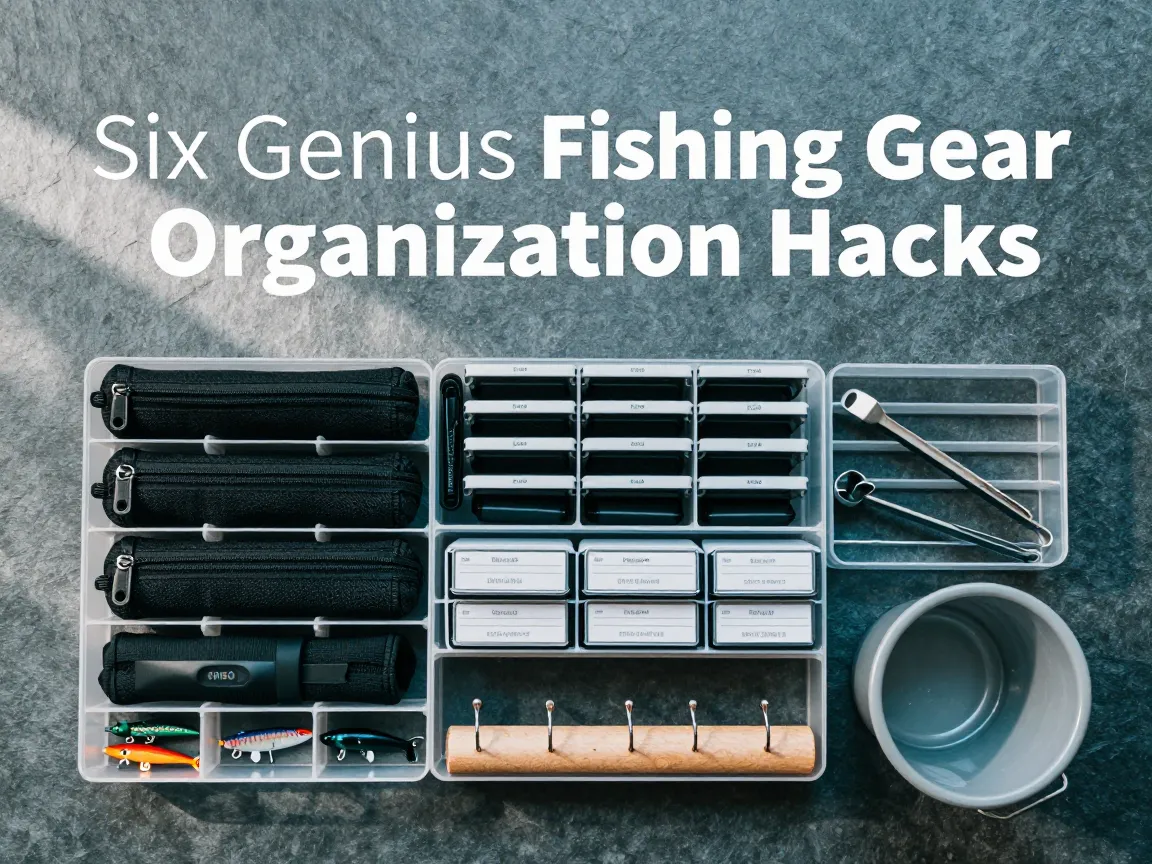
A study of recreational fishing habits found that the average angler spends roughly 20 minutes per trip just searching for tackle, time that could be spent on the water. Multiply that across a full season and it adds up to hours of wasted fishing time, all because of a disorganized kit. The 6 genius fishing gear organization hacks every angler needs outlined here address the root causes of that problem: wrong storage formats, mixed categories, and no system for keeping gear lean between trips. These aren’t minor tweaks. Each one changes how quickly you get fishing and how well your gear holds up over time.
Disclosure: This post contains affiliate links. As an Amazon Associate, we earn from qualifying purchases, and at no extra cost to you.
1. Switch to Modular Utility Boxes for Core Tackle
The standard single-compartment tackle box that most anglers start with eventually becomes the thing they hate most about fishing. Lures tangle, hooks rust against each other, and finding a specific jig head means dumping everything out. Modular utility boxes solve this by letting you configure the interior to match what you’re actually carrying.
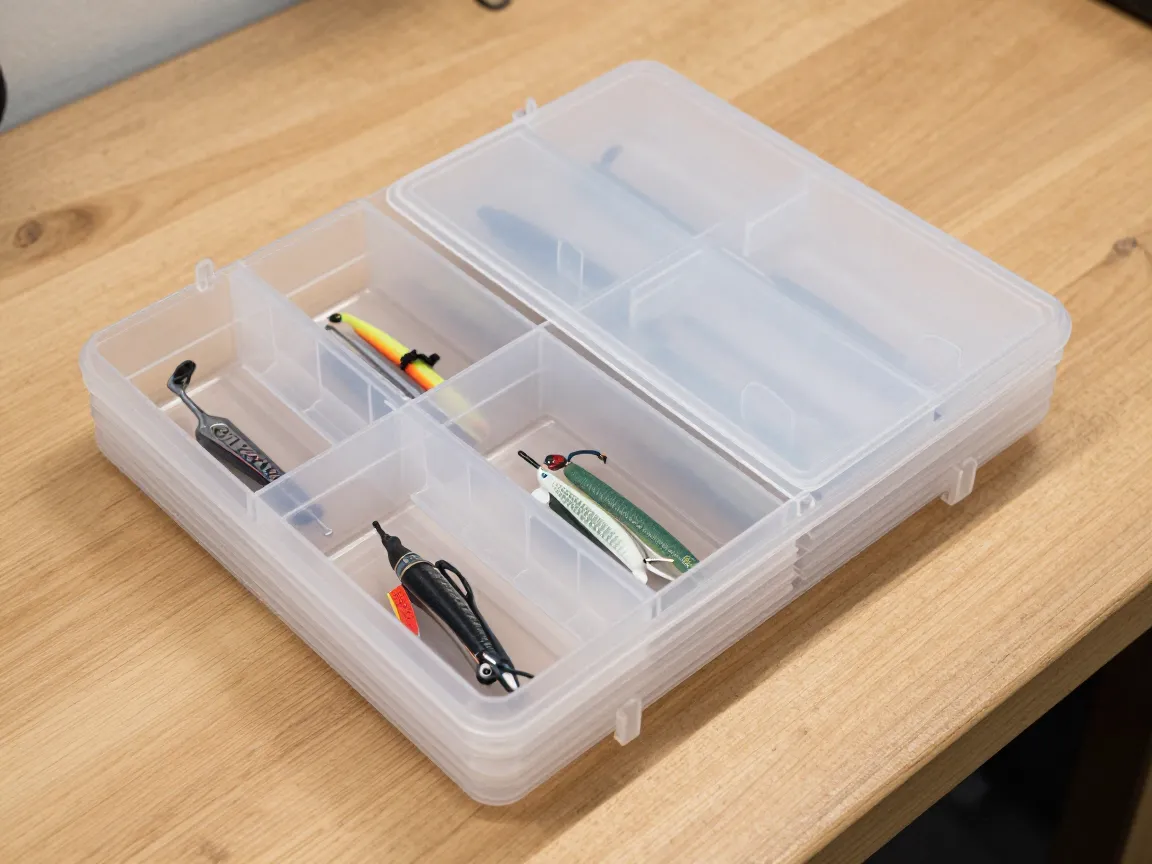
Plano’s 3700 and 3600 series trays are the most common reference point in the freshwater market, and for good reason: their adjustable dividers let you create compartments sized precisely for the baits you use most. Stack four of them inside a larger utility case and you have a system that separates crankbaits from soft plastics from terminal tackle without any of them touching. When one tray gets disorganized, you pull that tray and reset it without disturbing the others.
The upgrade worth making in 2026 is to waterproof or water-resistant modular options. Boxes from Flambeau’s Tuff Tainer line use Zerust vapor corrosion inhibitor technology built into the plastic itself, which slows rust formation on hooks and swivels stored inside. That detail matters most for saltwater anglers, but freshwater anglers who leave gear in hot vehicles or damp bags benefit as well. Buy the boxes sized for your most-used bait categories first, then expand. Starting with one well-configured modular tray beats owning six half-organized ones.
2. Organize by Technique or Target Species, Not by Bait Type
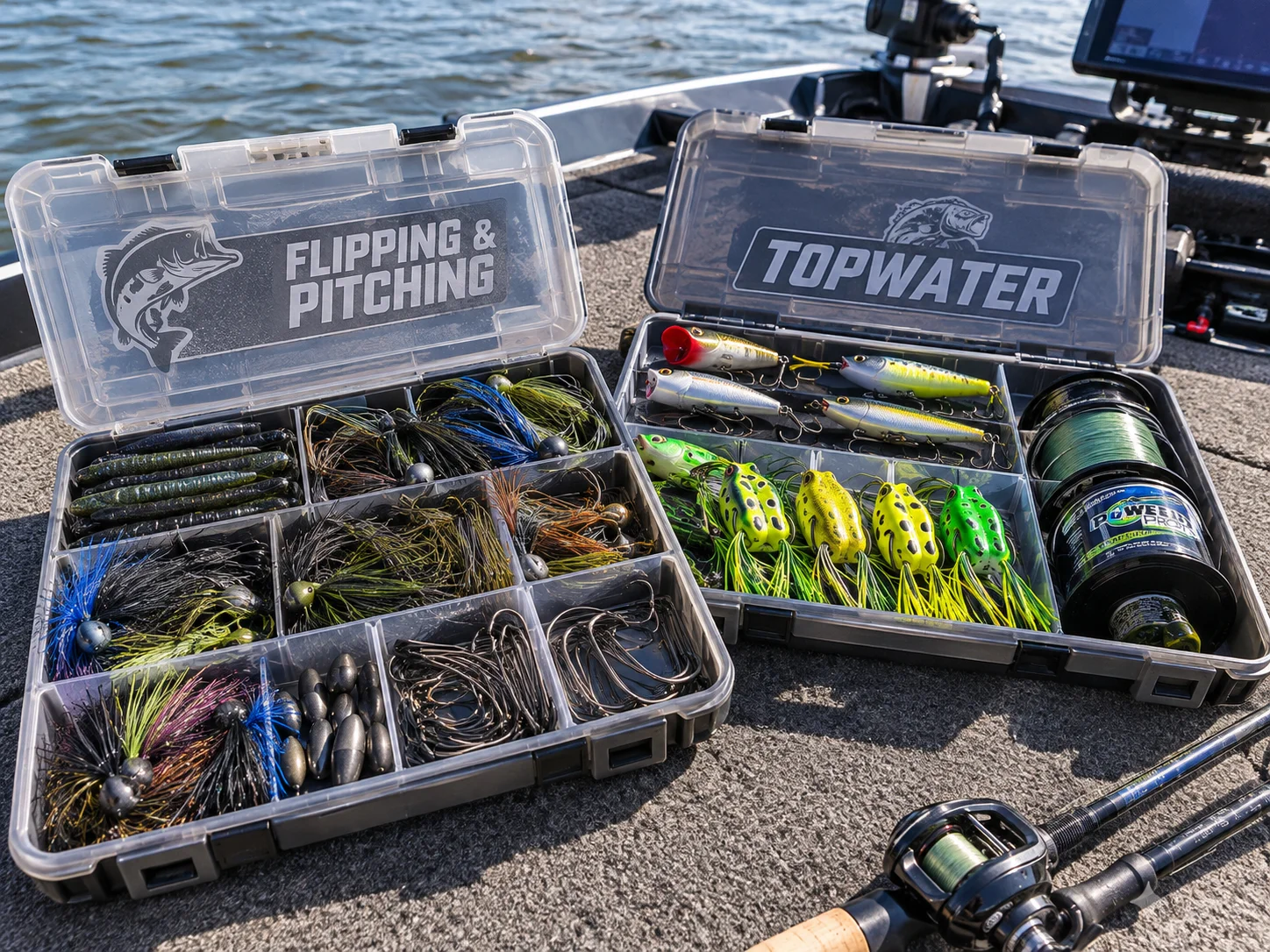
Most anglers organize tackle by what it looks like, all crankbaits together, all jigs together. The problem is that when you’re fishing a specific situation, you need several different bait types that all work for that situation, and they’re spread across three different boxes. Reorganizing by technique or target species keeps everything for a single approach in one place.
A bass-fishing example makes this concrete. A flipping and pitching box might hold a selection of heavy jigs, matching trailers, tungsten weights, and EWG hooks, nothing else. A topwater box holds poppers, walking baits, hollow-body frogs, and the braided line spools you use with them. When conditions change and you switch from flipping to topwater, you grab one box and put the other away. You’re not digging across your entire kit.
This system also makes pre-trip preparation faster. Instead of thinking about what baits to bring, you think about which techniques fit the water you’re fishing and pull those boxes. For multi-species anglers, say, someone who splits time between walleye and smallmouth bass, species-specific boxes work the same way. The walleye box has blade baits, live-bait rigs, and jig heads in sizes that match walleye forage. It stays in the bag until you’re on walleye water. The mental load of deciding what to bring drops considerably when the decisions are already built into the system.
3. Build a Dedicated Storage System for Soft Plastics
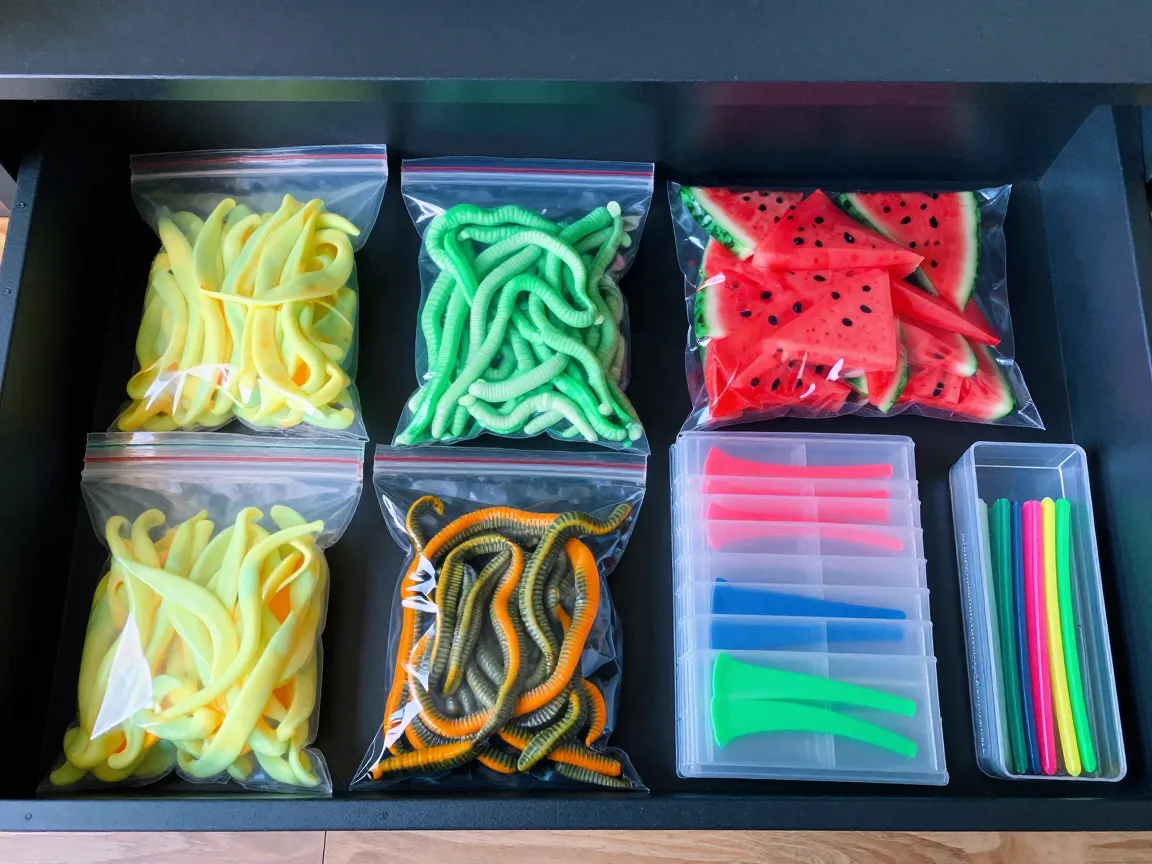
Soft plastics are the most problematic category in any tackle collection. They bleed color onto each other, they melt when stored with certain hard plastics, and they dry out or deform when left in direct sunlight. A dedicated soft plastic storage system prevents all three problems and costs very little to set up.
The minimum setup is a set of resealable plastic bags, not the flimsy bags soft plastics come in, but heavier zip-lock freezer bags sorted by color family or bait style. Keep all chartreuse and green-pumpkin worms separate from red and watermelon plastics. Color bleed is real: a white swimbait stored against a red creature bait for a week will come out pink. Separation prevents that.
A step up from bags is a soft-plastic-specific binder system. Several manufacturers sell binder-style organizers with plastic sleeves that hold soft plastics flat, visible, and separated. Tackle Webs makes a popular version; Plano’s Flip Stik organizers work similarly for stick-style plastics. These binders sit flat in a bag or boat storage compartment and let you flip through options without touching every bait. For serious soft plastic users who run 20 or more color variants of the same bait, this format is faster than any box-based system. Store them out of direct sunlight, UV exposure degrades plastisol faster than most anglers realize, and a cool, dark storage location extends the lifespan of soft baits noticeably.
4. Store Rods Vertically with Protective Sleeves
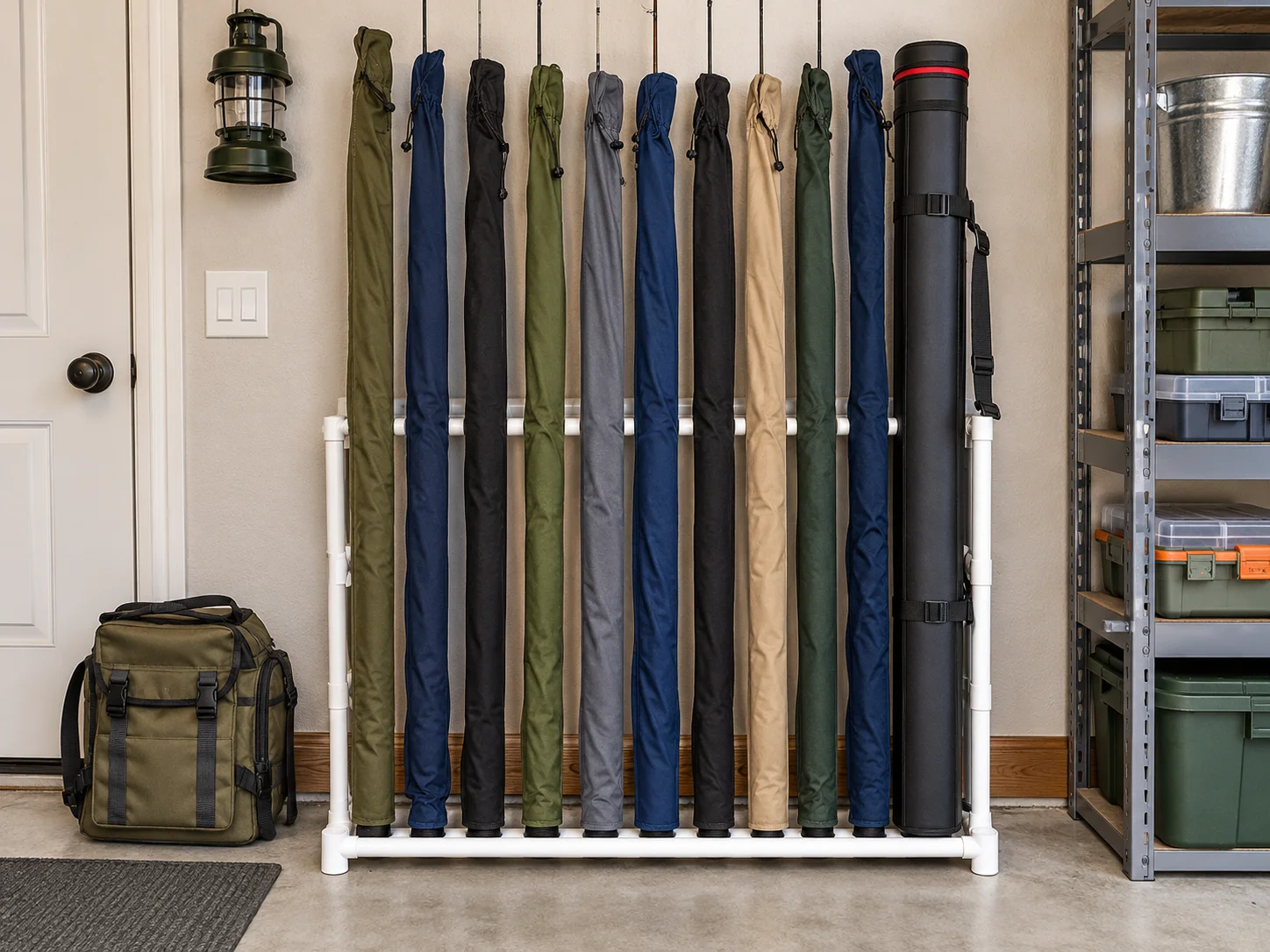
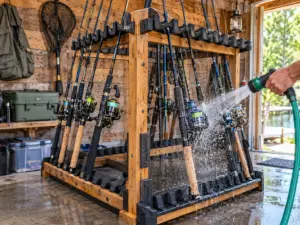
Rod tangles cause more tip breakage than actual fishing does. When rods are stored horizontally in a pile, in a truck bed, a boat locker, or the corner of a garage, the guides catch each other, the tips flex under the weight of other rods, and ferrules on multi-piece rods wear unevenly. Vertical storage eliminates nearly all of that.
A simple PVC pipe rack mounted in a garage corner or utility room can hold 10 or more rods upright, tips up, with zero contact between them. For vehicle transport, a commercial rod vault mounted to a truck bed or roof is the cleanest solution, Ride Right and Big Catch both make models that lock and weatherproof at the same time. On a boat, vertical rod holders built into the gunwale or console are standard on most bass and walleye rigs for a reason.
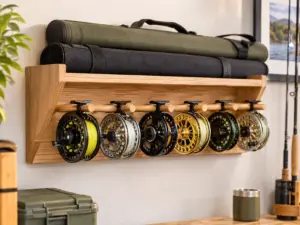
Protective rod sleeves add a second layer of insurance for rods in transit. Cloth sleeves that zip over individual rods keep guides from catching on anything and prevent the tip sections from flexing against hard surfaces. For multi-piece travel rods, a hard tube case is worth the investment, a broken tip section on a quality spinning rod costs as much to replace as the tube would have. The habit of sleeving rods before they go into any bag or vehicle is one of the cheapest ways to protect an expensive collection.
5. Use Labeled Bins and a One-Shelf Rule for Seasonal Gear
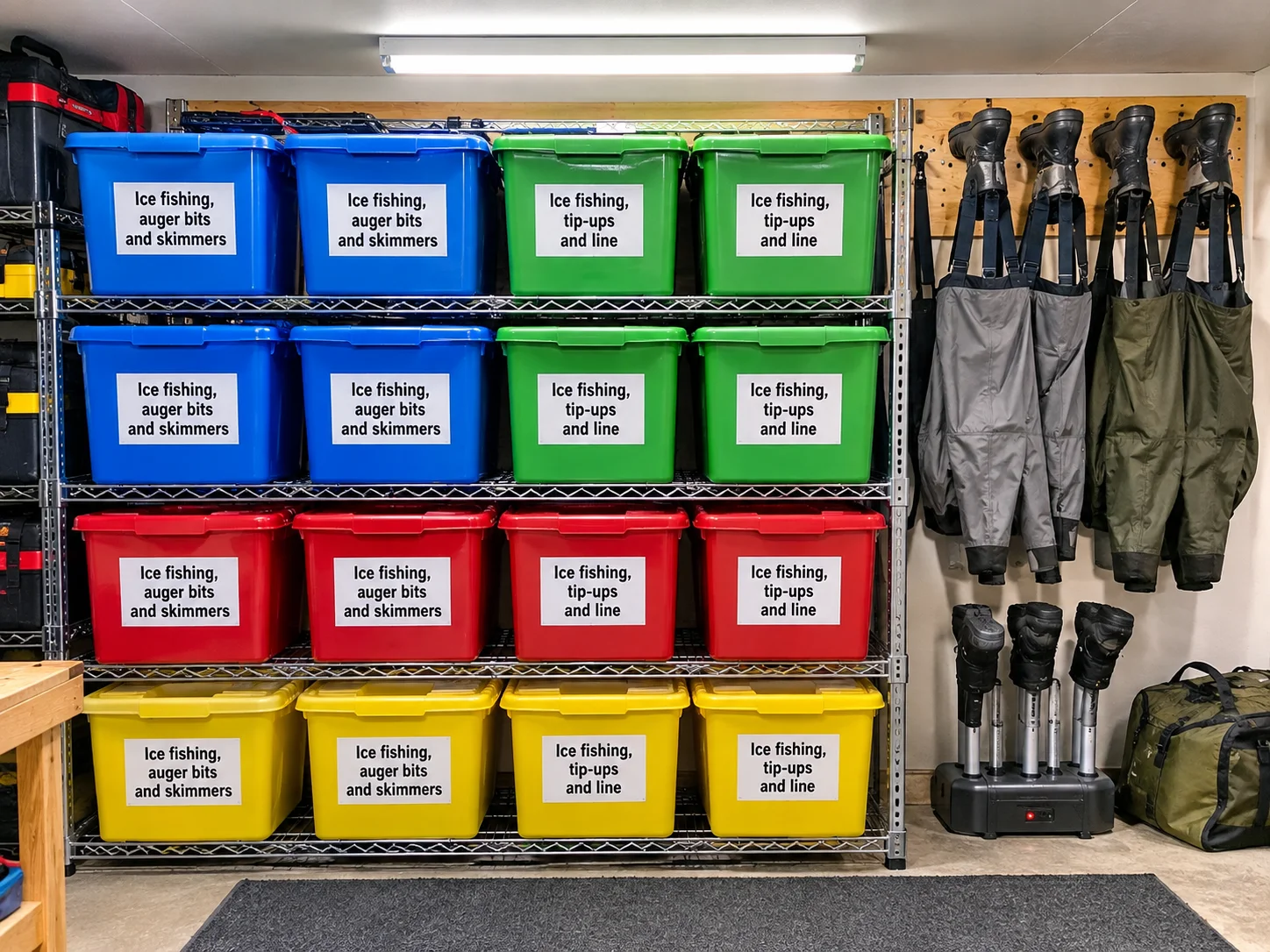
Seasonal gear, ice fishing equipment, waders, landing nets, rod-building supplies, tends to accumulate in disorganized piles because it doesn’t have a fixed home. The fix is a one-shelf rule: every category of seasonal fishing gear gets exactly one bin on exactly one shelf. When the bin is full, something gets removed before anything new goes in.
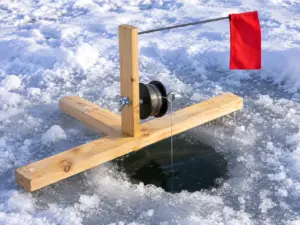
Label each bin specifically. “Ice fishing” is too broad. “Ice fishing, auger bits and skimmers” and “Ice fishing, tip-ups and line” are specific enough that you can find what you need without opening everything. Printed labels on the front face of each bin, combined with a consistent bin color per category, make scanning a storage room take seconds instead of minutes. This matters most at 4:30 a.m. before an ice trip when the light is bad and time is short.
For waders and wading boots, the organization principle shifts from bins to wall space. Hanging waders inverted on a boot dryer or a dedicated peg rack prevents the neoprene or Gore-Tex from developing fold-line creases and dries the boot liner properly after use. Damp waders stored folded in a bin grow mildew in a single week during warm months. A peg rack costs less than one pair of replacement waders. Pocket systems, vest pockets, chest pack pockets, and wading jacket pockets, also benefit from a fixed assignment: the same pocket always holds forceps, the same pocket always holds tippet, and so on. When you’ve been doing that for two seasons, your hand goes to the right pocket before you’ve thought about it.
6. Apply Boat-Specific Hacks: Hook Rails and Rinse Buckets
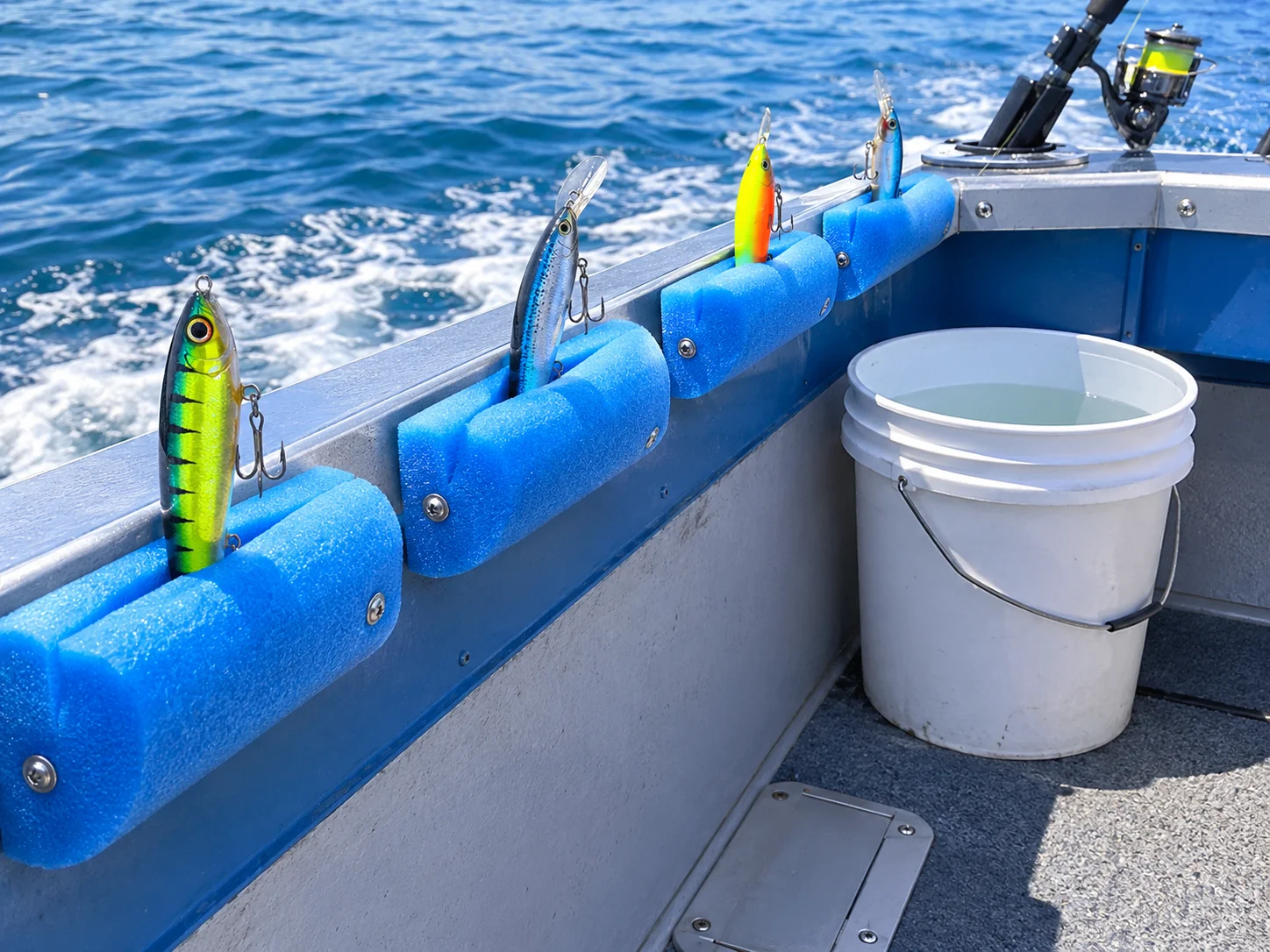
Boat organization has its own set of problems that land-based anglers don’t face: limited deck space, constant motion, saltwater corrosion, and the need to access gear quickly during a moving bite. Two low-cost hacks address the most common boat organization failures.
The first is a pool-noodle hook rail. Cut a standard pool noodle into 12-inch sections, slit each section lengthwise, and mount them along the gunwale using stainless screws or heavy-duty adhesive. Lures with hooks get clipped into the foam during a fishing session, keeping them off the deck, out of livewells, and away from bare feet. A single pool noodle costs under two dollars and can organize 20 or more rigged lures along a boat rail. This isn’t a complicated system, it’s a foam strip that happens to solve a real problem. The key is mounting it at a consistent height so lures hang freely without swinging into the hull.
The second is a dedicated catch-all rinse bucket. A 5-gallon bucket with a few inches of fresh water in the bottom sits in a fixed corner of the deck. Any lure that’s been used goes into the bucket before it goes back into a tackle box. This one habit prevents saltwater corrosion on hooks and split rings, removes slime and scale residue from soft plastics, and means that nothing in your tackle boxes is wet when you pack up. For saltwater anglers, corrosion is the primary cause of hook degradation, a stainless or tin-coated hook rinsed after every use lasts several times longer than one put away with saltwater dried on it. Run a quick rinse cycle on the bucket contents before leaving the ramp and your gear comes home genuinely clean.
Keeping the System Working Over Time
The hacks above solve the setup problem. The harder problem is maintenance, specifically, the tendency for organized systems to drift back toward chaos after a few trips.
Three practices keep any tackle organization system functional long-term. First, purge at the end of each season. Pull every box, every bin, and every bag. Discard bent hooks, cracked lures, frayed leaders, and anything that hasn’t been used in two seasons. Keeping tackle lean means the system stays fast to navigate. Second, replace consumables before they run out rather than after. A spool of fluorocarbon leader material that’s down to its last 10 feet belongs in the shopping list before the next trip, not discovered on the water. Third, re-label whenever a bin’s contents change permanently. A label that no longer matches what’s inside is worse than no label, it actively slows you down.
For anglers who fish from multiple platforms, say, a kayak one weekend and a bass boat the next, keeping platform-specific kits in separate bags rather than a single shared kit removes the repacking step entirely. A kayak bag stays rigged for kayak fishing. The boat bag stays rigged for the boat. The 15 minutes of reorganization you skip every time you switch platforms adds up across a season to a meaningful amount of additional fishing time.
The single next step worth taking today: pick the one category of your tackle that causes the most friction, the tangled crankbaits, the bleeding soft plastics, the rods that always end up piled, and apply the relevant hack from this list to that category first. One fixed problem builds the confidence to fix the next one.